Stenophylla, A Coffee With Real Potential & Poster Child For Food Diversity

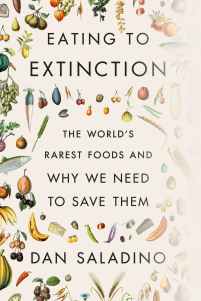
Our thanks to Dan Saladino, a food journalist and author of Eating to Extinction: The World’s Rarest Foods and Why We Need to Save Them as well as recipient of a James Beard Award for food journalism.

He offers an inside look at a relatively unknown coffee varietal with potential, and at the same time, an argument in favor of diversity, in his article Edible Extinction: Why We Need to Revive Global Food Diversity:
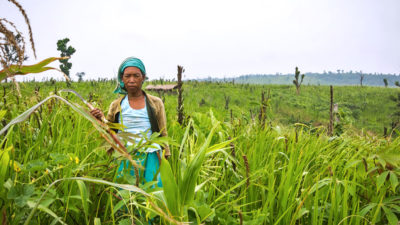
A Khasi farmer growing millet in Meghalaya, India.

A Khasi farmer growing millet in Meghalaya, India. NORTH EAST SLOW FOOD & AGROBIODIVERSITY SOCIETY

The Green Revolution helped feed a surging global population, but at the cost of impoverishing crop diversity. Now, with climate change increasingly threatening food supplies, the need for greater agricultural resilience means restoring endangered crop and food varieties.

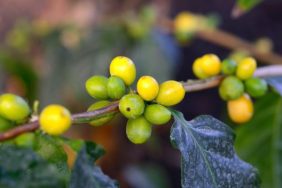
Stenophylla beans up close. RBG KEW; KLAUS STEINKAMP / ALAMY

In August 2020, inside the cupping room of a London roastery, a team of botanists and baristas gathered to taste a coffee species that most believed had been lost forever. It was an important moment. Coffee experts had spent years searching in West Africa for the few remaining trees of this species, even issuing “wanted posters” to farmers asking if they had seen it. Continue reading
Plastic, The Gift That Keeps Giving

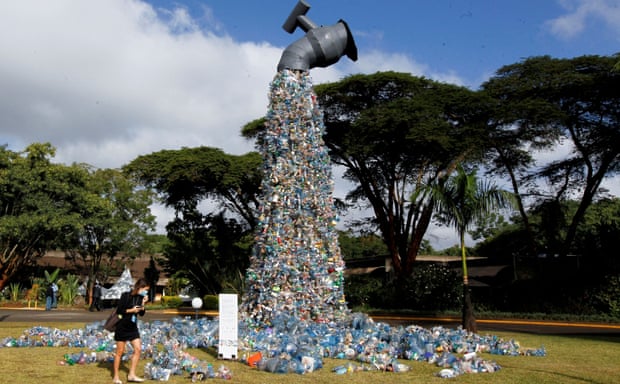
An artwork at the Nairobi summit venue by the artist Benjamin von Wong, made with rubbish from Kibera slum, urging people to ‘turn off the plastic tap’. Photograph: Monicah Mwangi/Reuters

We have endless opportunities to demonstrate leadership, thanks to plastic:

World leaders agree to draw up ‘historic’ treaty on plastic waste

UN environment assembly resolution is being hailed as biggest climate deal since 2015 Paris accord

World leaders, environment ministers and other representatives from 173 countries have agreed to develop a legally binding treaty on plastics, in what many described a truly historic moment. Continue reading

As The World Burns

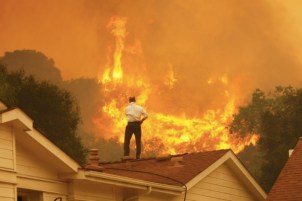
Heat waves have become hotter, droughts deeper, and wildfires more frequent, the I.P.C.C. report states, and the window of time for doing anything about it is fast closing. Photograph by David McNew / Getty

Even as a geopolitical crisis has our full attention, we cannot ignore other important information about our shared future. Click through to the magazine website where one of our favored interpreters of environmental news helps us understand how The Latest U.N. Climate Report Paints Another Grim Picture:

The Secretary-General cites a “criminal” abdication of leadership. Meanwhile, the U.S. Supreme Court is hearing a case that may hamper emissions regulations.

There were two front-page-worthy developments on Monday in the world of climate policy. Perhaps even more significant than either one was the fact that they were at cross-purposes. Continue reading
We Have Seen The Future, And It Is Youthful

Sunrise models itself on the civil-rights movement of the fifties and sixties. Photograph by Evan Jenkins for The New Yorker

In the current issue of the New Yorker, Andrew Marantz offers an inside view of The Youth Movement Trying to Revolutionize Climate Politics; we can only hope they succeed where previous generations have failed:

Sunrise has already shifted the conventional wisdom about climate change. Now it wants to create a mass movement, combining street protest with policy negotiation, while there’s still time.

On the evening of November 12, 2018, six days after being elected to Congress and six weeks before being sworn in, the socialist Democrats Rashida Tlaib and Alexandria Ocasio-Cortez walked into an Episcopal church in Washington, D.C. Inside, more than a hundred activists in their teens and twenties milled around a font of holy water, wearing nametags on their flannel and fleece, eating pizza from paper plates. Continue reading

Subsidizing Environmental Degradation Must End

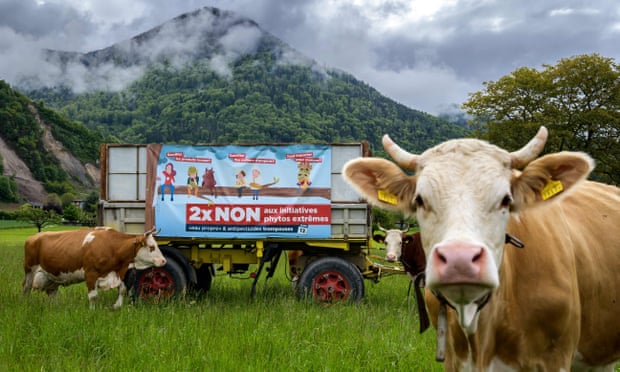
An electoral poster objecting to a proposed ban on subsidies for Swiss farms. A 2021 report found almost 90% of global farming subsidies are harmful. Photograph: Fabrice Coffrini/AFP/Getty

We missed this when it was first published a couple weeks ago, but it is still fresh and important:

World spends $1.8tn a year on subsidies that harm environment, study finds

Research prompts warnings humanity is ‘financing its own extinction’ through subsidies damaging to the climate and wildlife

The world is spending at least $1.8tn (£1.3tn) every year on subsidies driving the annihilation of wildlife and a rise in global heating, according to a new study, prompting warnings that humanity is financing its own extinction. Continue reading
What Remains, A Documentary

In this short documentary film by Paavo Hanninen, with text by David Kortava, the director says “It’s kind of a tragic story of the herculean effort that’s required just to build 1.3 miles of coastline”:

Protecting Louisiana’s Coastline with Oyster Shells in “What Remains”

Paavo Hanninen’s documentary looks at a surprisingly simple intervention with the potential to slow runaway land loss along the state’s fragile coast.

As early as the nineteen-thirties, oystermen in southern Louisiana began to notice the shoreline that they worked was creeping inland. Continue reading
Trees’ Wondrous Capabilities

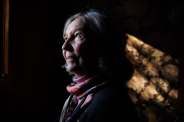
Diana Beresford-Kroeger at her home in Ontario. “If you build back the forests, you oxygenate the atmosphere more, and it buys us time,” she said. Nasuna Stuart-Ulin for The New York Times

Another round of thanks to Cara Buckley for a vividly written snapshot. Using Science and Celtic Wisdom to Save Trees (and Souls) is about one person’s multi-talented capacity to inspire us in new ways related to trees, and the patience it has required:

Diana Beresford-Kroeger, a botanist and author, has created a forest with tree species handpicked for their ability to withstand a warming planet.

MERRICKVILLE, Ontario — There aren’t many scientists raised in the ways of druids by Celtic medicine women, but there is at least one. She lives in the woods of Canada, in a forest she helped grow. From there, wielding just a pencil, she has been working to save some of the oldest life-forms on Earth by bewitching its humans. Continue reading

Airborne Wind Energy

An airborne wind turbine at the SkySails Power’s pilot site in Klixbüll, Germany. AXEL HEIMKEN / PICTURE ALLIANCE VIA GETTY IMAGES

Wind energy, as we have pictured it, was in a race between fixed and floating models. We did not know about the airborne model. Nicola Jones, writing in Yale e360, gives a clear picture of why it faltered and how it is recovering:

After a Shaky Start, Airborne Wind Energy Is Slowly Taking Off

This long-exposure nighttime photograph shows the figure-eight flight pattern of Kitepower’s airborne wind system. KITEPOWER

Numerous companies are developing technologies, such as large kites, that can harvest wind energy up to a half-mile above ground. While still in its nascent stages, airborne wind power could potentially be used in remote locations or flying from barges far offshore.

Look up over the white sand beaches of Mauritius and you may see a gigantic sail, much like the kind used by paragliders or kite surfers but the size of a three-bedroom apartment, looping figure-eights overhead. Continue reading

Migration Motivated By Climate Change, Defined

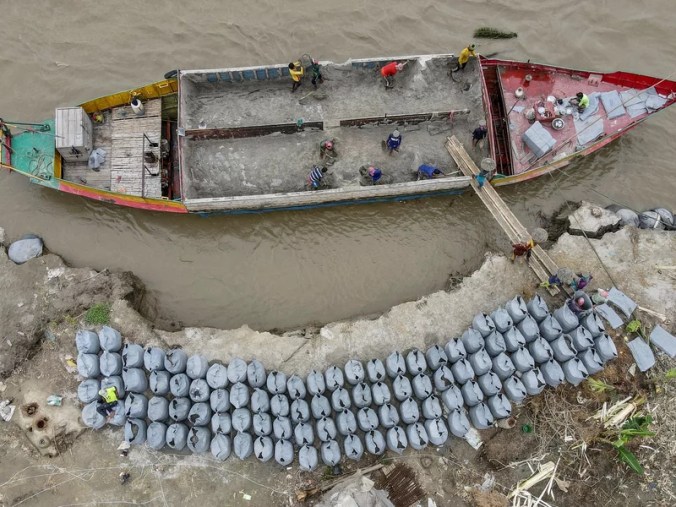
Workers place geo-textile bags to prevent river erosion on the banks of Padma River in Bangladesh last September. Munir Uz Zaman/AFP via Getty Images

Climate change has been a constant topic in our pages. Migration motivated by this crisis, not at all. Thanks to Ari Shapiro, at National Public Radio (USA) for this clarifying question and answer session:

The first step to preparing for surging climate migration? Defining it

There are calls to better define what constitutes “climate migration” amid concern that policies are not keeping up with the growing issue and countries are failing to properly help those fleeing disasters.

Anywhere from tens of millions to one billion people could become climate migrants by 2050, according to a recent report from the RAND Corporation. The number varies so widely depending on the definition used. Continue reading

Keep Peat In Place

Nanna Heitmann for The New York Times

Peat is back on our radar, with this excellent report by Matthew Thompson in the New York Times. It is part of a new series called Headway, an initiative “exploring the world’s challenges through the lens of progress,” which is exactly the founding sentiment of our platform here. So, read on:

Rural Congolese villagers are being asked to protect one of earth’s most precious ecosystems. What can other places contribute to our shared future?

Imagine someone showed up on your doorstep one day and told you that the swampy forest not far from your home contained a rare and precious soil, so powerful that the planet’s future hinges on its preservation. The world is relying on you to keep the soil undisturbed, you’re told, or sinister forces will be unleashed, large enough to doom us all. Continue reading

Wendell Berry Here & Now

Berry has found a kind of salvation—and a lifelong subject—in his stewardship of the land he farms in Kentucky. Illustration by John Broadley

When we previously mentioned him it was without as much background as he deserved. So now, a corrective titled Wendell Berry’s Advice for a Cataclysmic Age, by Dorothy Wickenden. It  comes with a set of photographs that motivate you to read on:

Sixty years after renouncing modernity, the writer is still contemplating a better way forward.

Hidden in the woods on a slope above the Kentucky River, just south of the Ohio border, is a twelve-by-sixteen-foot cabin with a long front porch. If not for the concrete pilings that raise the building high off the ground, it would seem almost a living part of the forest. Readers around the world know the “long-legged house” as the place where Wendell Berry, as a twenty-nine-year-old married man with two young children, found his voice. As he explained in his essay by that name, he built the cabin in the summer of 1963—a place where he could write, read, and contemplate the legacies of his forebears, and what inheritance he might leave behind.

When Berry moved to the country with his wife, Tanya, he gave her a privy that “never aspired so high as to have a door.” Photograph by James Baker Hall

The cabin began as a log house built by Berry’s great-great-great-grandfather Ben Perry, one of the area’s first settlers, and it lived on as a multigenerational salvage operation. Continue reading

The Standing Rock Sioux Tribe Asks For Your Help

If you have been following the pipeline news stories and you care, but not yet found a way to get involved, the Standing Rock Sioux tribe offers you a simple first step to help them end the DAPL. Click on the DAPL EIS Countdown Alert signup image below to show support, by asking to be alerted when public comments open:

The Next Step to End DAPL

The fight to stop the Dakota Access pipeline isn’t over, and you can help right now! This month, the U.S. Army Corps of Engineers will take public comment on DAPL’s fatally flawed Environmental Impact Statement (EIS). Sign up to be first in line to tell the Corps to conduct a proper environmental review — without interference from the fossil fuel industry. We’ll let you know how to make your voice heard as soon as the comment period opens! Thank you for standing with Standing Rock.

Guardian’s Week In Wildlife

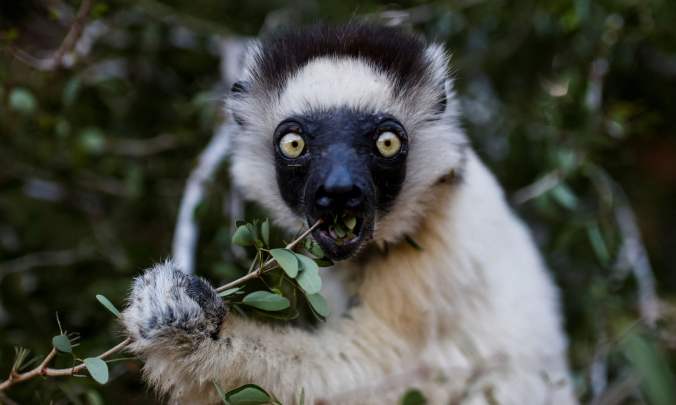
A sifaka lemur eats leaves at the Berenty Reserve in Toliara province, Madagascar. Photograph: Alkis Konstantinidis/Reuters

We source from the Guardian frequently for environmental stories, but sometimes just a few good photos from nature are a good way to end the traditional work week:

The week in wildlife – in pictures

The best of this week’s wildlife pictures, including a patient great tit, a hungry lemur, and a lucky escape for one humpback whale

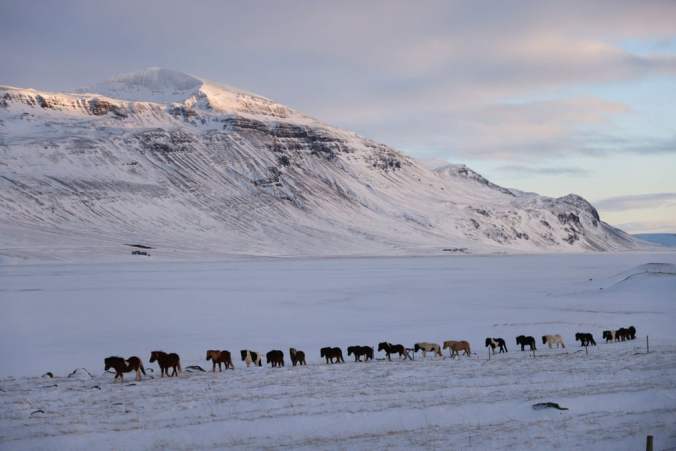
Icelandic horses walk on the snow in Hunavatnshreppur. The horses are unique in that they have five gaits, while other horses typically have three or four. Photograph: Nacho Doce/Reuters

Weekends are the busiest part of our work week; for us the photos are a motivator for that work; so thanks to Joanna Ruck for these. Click any image to go to the source.

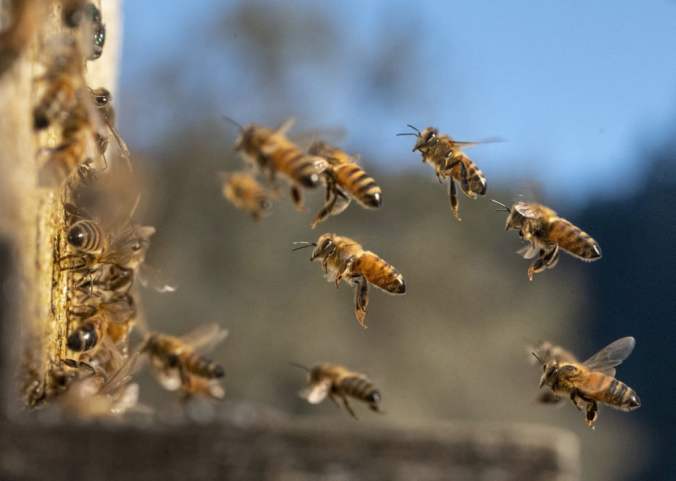
Honeybees venture out of their hive box on a warm afternoon on a farm near Elkton in western Oregon, US. Honeybees become active and start foraging at approximately 12.8C. Full foraging activity is not achieved until the temperature rises to 19C.  Photograph: Robin Loznak/Zuma Press Wire/Rex/Shutterstock

Why War On Wolves?

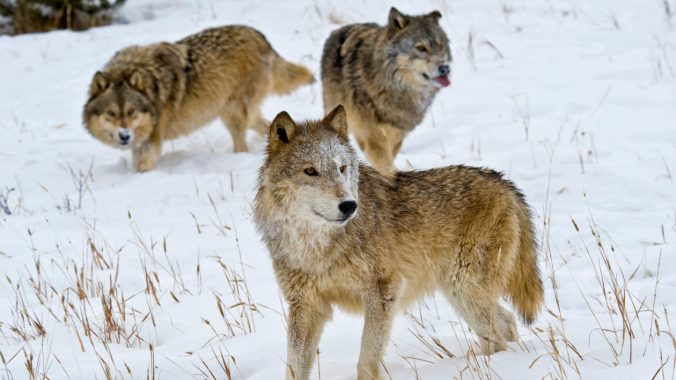
Gray wolves in Montana. DENNIS FAST / VWPICS / UNIVERSAL IMAGES GROUP VIA GETTY IMAGES

At Yale e360 this opinion by Ted Williams is an important read:

America’s New War on Wolves and Why It Must Be Stopped

Hunting of wolves is again legal in the Northern Rockies, where running them over with snowmobiles or incinerating them in their dens is now permitted. The Biden administration must stop the slaughter of these wolves and protect their recovery from the brink of extinction.

America’s tradition of persecuting wolves has resumed. And although it’s mostly happening on federal land, the Biden administration appears singularly unmoved and unconcerned. Continue reading

Invasivorism & Reasonable Questions

Grey squirrels have driven the local extinction of the native red across much of England and Wales. Photograph: Paul Broadbent/Alamy

If you do not eat animal protein, this concept may not appeal to you. But if you allow that others who eat meat may be able to do so ethically, then read on.

If you do eat any kind of meat, then it is a reasonable question whether invasive species are fair game: Rack of squirrel, anyone? The chefs putting invasive species on the menu

Roast rack of squirrel, fondant jersey royal potatoes, carrot and wild garlic served at Paul Wedgwood’s restaurant in Edinburgh, Scotland. Photograph: Wedgwood

‘Invasivorism’ is a growing ethical dining trend but is ‘eat them to beat them’ really the answer?

From oral contraceptives to proposals to edit their DNA, efforts to control the UK’s invasive grey squirrel population have become increasingly elaborate. But a growing number of chefs and conservationists have a far simpler idea, which they see as part of the trend in ethical dining: eat them. Continue reading

Big Companies, Big Noise

(Original Caption) A man sitting atop a girder over the city is shown taking photos of the unfinished municipal building.

Bill Mckibben’s newsletter is one of the most efficient ways to stay informed on issues of interest to us in our daily posts on this platform. This week’s edition, titled Needs Improvement, is as good as any other recent edition. Consider subscription options that suit your budget by clicking the button, if you appreciate what you read below:

The Economic Giants Must Do Better than Meh

No one expects small businesses to be the leaders on climate change, though of course a noble handful are. It’s the giants—who have enormous brands to protect, and large margins to cover the cost of changing—that need to be out front. The ones with big ad campaigns with lots of windmills and penguins and cheerful shots of the smiling future. The ones who have made a lot of noise about ‘net zero.’ And how are they doing? Meh. Continue reading

Fashion’s Fatal Flaw

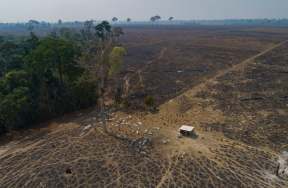
Cattle grazed on land burned by farmers in Brazil in August 2020. Andre Penner/Associated Press

In 10+ years we have occasionally mentioned the bags we use to tote things or to package things. We occasionally notice that fashion branded handbags have not received their fair share of attention (maybe because we do not use them).

Anyway, we aim to correct that, as we point to climate and other environmental issues and potential solutions. Thanks to Whitney Bauck for this article titled Did Your Handbag Help Destroy the Rainforest? It gives us good reason to pay more attention to fashion’s footprint:

A recent report examines the links between fashion brands and Amazon deforestation.

The rainforest and the runway may seem worlds apart, but deforestation in the Amazon is partly fueled by something that’s on display in every fashion capital this month: leather. Continue reading

Nuclear Fusion’s Heat Feat

The interior of the JET, where an experiment generated 59 megajoules of heat, beating the 1997 record of 21.7 megajoules. Photograph: UKAEA

We have no expertise in this specific energy-related subject, but we know that new sources of energy are an important potential contributor to the reduction of global warming. So, we read this news about a new heat record from nuclear fusion as a qualified source of hope:

Nuclear fusion heat record a ‘huge step’ in quest for new energy source

Oxfordshire scientists’ feat raises hopes of using reactions that power sun for low-carbon energy

The prospect of harnessing the power of the stars has moved a step closer to reality after scientists set a new record for the amount of energy released in a sustained fusion reaction. Continue reading

Container Ships Versus Whales & Whale-watchers

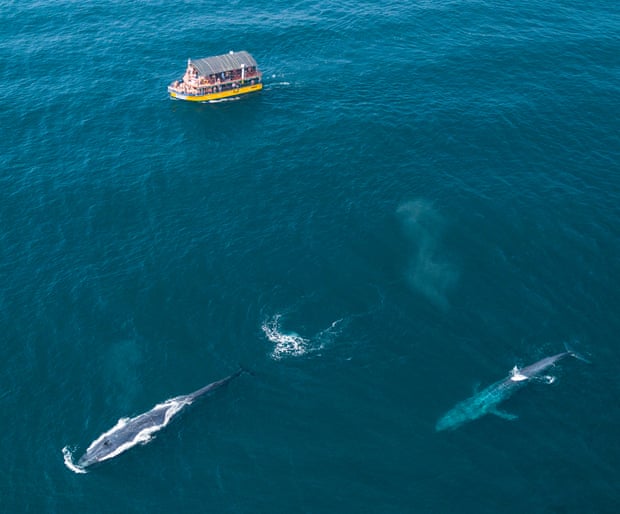
Whale-watching tourism is lucrative for Sri Lanka but even the small boats are at risk from the huge tankers and container ships that use the route. Photograph: IFAW/Christian Loader

It seems a minor request, asking the companies whose ships pass through Sri Lanka’s waters to be considerate of the whales who live in those waters:

‘Giant obstacle course’: call to reroute major shipping lanes to protect blue whales

Unique colony of blue whales increasingly at risk from tankers and container ships, say marine campaigners

Scientists and conservation groups are calling for one of the world’s busiest shipping lanes to be rerouted in an effort to protect the world’s largest animal. Continue reading

Dogs Doing Nature No Favors

Overfertilisation reduces biodiversity by allowing a few thriving plants to drive out others and the wildlife that depends on them. Photograph: John Walton/PA

Who knew? Now you do. Yes, one more thing to think about to take better care of your environment:

Deluge of dog pee and poo harming nature reserves, study suggests

Urine and faeces creating nitrogen and phosphorus levels that would be illegal on farms, scientists calculate

Dog faeces and urine are being deposited in nature reserves in such quantities that it is likely to be damaging wildlife, according to a new study. Continue reading