Private Conservation Probably Leads To Good Outcomes, But We Need To Know More

Oregon_BudeauWetlandEasement_TracyRobillardNRCS_web.jpg

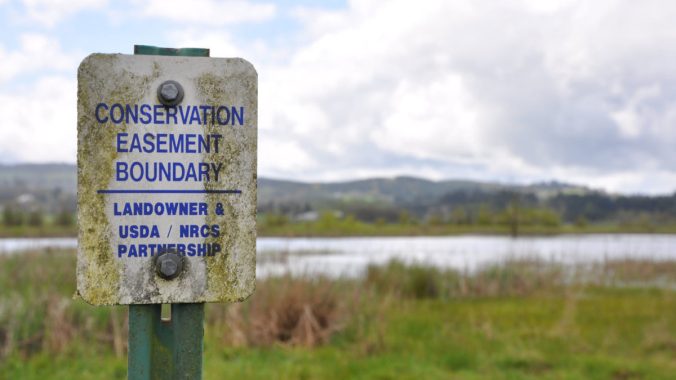
The boundary of land under conservation easement in Marion County, Oregon. TRACY ROBILLARD/NRCS

Richard Conniff does not always have the answers, but he always asks the right questions:

Why Isn’t Publicly Funded Conservation on Private Land More Accountable?

Taxpayer-funded conservation initiatives on private land cost the U.S. public hundreds of millions of dollars a year. Yet information on where these lands are and how they are being protected often is not monitored or publicly available, raising questions about the programs’ effectiveness.

NewYork_Greenwoods-Conservancy_Will-Parson-Chesapeake-Bay-Program_web.jpg

Earle Peterson walks through his 1,200-acre property in Burlington, New York, which is protected through a conservation easement. WILL PARSON/CHESAPEAKE BAY PROGRAM

A few years ago, an environmental lawyer named Jessica Owley set out to learn how well it works when the federal government allows development in the habitat of an endangered species. Under the terms of these deals, introduced in the 1980s to mollify opponents of the Endangered Species Act, the developers provide mitigation, typically with a conservation easement on some other parcel of private land.

Owley focused on four California examples, out of the almost 700 so-called Habitat Conservation Plans (or HCPs) that now exist nationwide. She had a long list of questions, from “Where are the protected parcels?” to “How do endangered species fare in the face of these deals?”

California_SantaClaraHCP_BjornEricksonUSFWS_web.jpg

Coyote Ridge, part of the Santa Clara Valley Habitat Conservation Plan in Northern California, is a vital habitat for threatened species. BJORN ERICKSON/USFWS

“I ended up being stopped at the first question,” says Owley, now a professor at the University of Buffalo Law School. “It wasn’t just that I couldn’t find the HCP sites, but the U.S. Fish and Wildlife Service didn’t know and couldn’t find them.” In one case, an HCP to protect the Mission blue butterfly outside San Francisco, nobody had even bothered to record the easement in municipal land records. Owley came away thinking that a lack of transparency is standard for conservation practices on private land — even when these practices are paid for by taxpayers and meant to serve a significant public interest. Continue reading
Pondering Extinction Rebellion’s Approach

Knight-Extinction.jpg

Gail Bradbrook, a founder of Extinction Rebellion, speaks to protesters gathered to block roads near the BBC headquarters, during a recent demonstration in London. Photograph by Brais G. Rouco / SOPA / LightRocket / Getty

This article by Sam Knight starts the new week off on a compelling note:

Letter from the U.K.

Does Extinction Rebellion Have the Solution to the Climate Crisis?

The success of Extinction Rebellion, a British campaign of civil disobedience aimed at addressing the climate crisis, has been something to behold. In April, the group, which was formally launched only last October, blocked Waterloo Bridge, which spans the Thames, for more than a week. Across London, activists glued themselves to buildings, climbed on trains, chained themselves to company headquarters, and occupied key intersections, leading to some thousand arrests and messages of support from around the world. The Metropolitan Police commissioner, Cressida Dick, said that she had never encountered a protest like it. By the end of the month, Extinction Rebellion activists were meeting with Sadiq Khan, the mayor of London, and on May 1st, in accordance with one of their demands, Members of Parliament declared a climate and environment emergency, becoming the first national legislature to do so. In June, M.P.s agreed to another Extinction Rebellion request: to convene a citizens’ assembly, made up of a representative sample of the British population, to discuss the climate crisis. Although the assembly’s recommendations will not be legally binding, as the protesters wished, Extinction Rebellion’s language and its policy agenda have moved into the mainstream at remarkable speed. Continue reading

Penitentes, An Otherworldly Wonder

merlin_157990395_7798c95e-9813-4e2c-a2da-907cc85cdfdb-jumbo.jpg

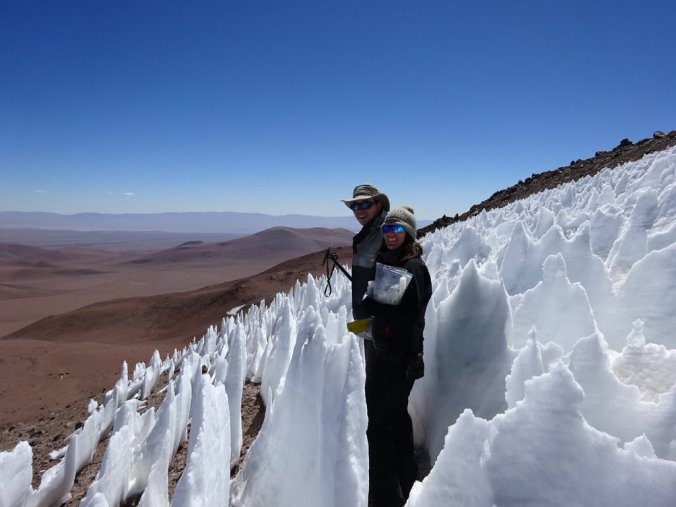
Lara Vimercati and Jack Darcy, two graduate students, at the edge of a penitente field on a Chilean volcano where researchers unexpectedly found algae. Steven K. Schmidt

Thanks to JoAnna Klein for bringing this question, and another Chilean wonder, to our attention:

If Algae Clings to Snow on This Volcano, Can It Grow on Other Desolate Worlds?

Scientists were surprised to find something living on the sterile heights of this Chilean volcano.

merlin_157990404_3a7edcc0-b2c1-4e89-9646-aa58b16dc587-jumbo.jpg

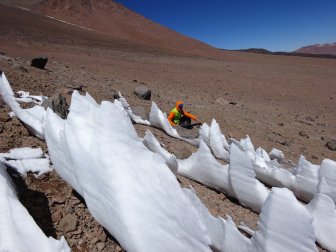
The penitentes are thought to result from an unusual mix of wind, temperature fluctuations and the sun’s ultraviolet rays. Steve Schmidt

In Chile’s Atacama Desert, Volcan Llullaillaco is Mars on Earth — or about as close to it as you can get. At 22,000 feet above sea level, it’s the second highest active volcano on Earth. Most of the mountain is a barren, red landscape of volcanic rock and dust, with thin, dry air, intense sunlight and winds that will blow your tent down the mountain.

While the ground can heat up to 90 degrees Fahrenheit, air temperatures rarely reach above freezing. When snow falls, it turns to gas just as it hits the earth. Occasionally, snow can collect in windblown banks, which then melt into icy spires up to 16 feet tall. The Spaniards called these “nieves penitentes,” penitent ones, because they look like hooded monks doing penance.

merlin_157990380_910bc355-b7cd-4ed4-8a05-969c301f8e8e-jumbo.jpg

Steve Schmidt

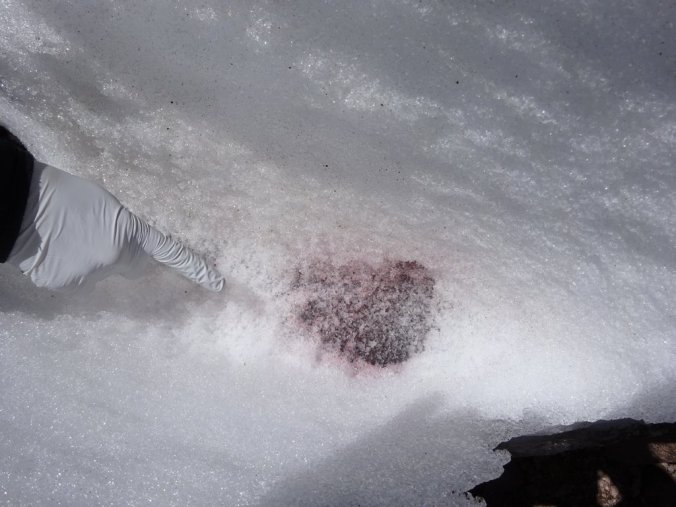
These conditions high up on the volcano made it seem about as lifeless as Mars. But a team of researchers led by Steven K. Schmidt, a microbiologist at the University of Colorado Boulder who studies extreme life, have discovered microbes living in and around the penitentes at 17,300 feet above sea level, about one thousand feet above the point at which vegetation stops on Volcan Llullaillaco. Continue reading

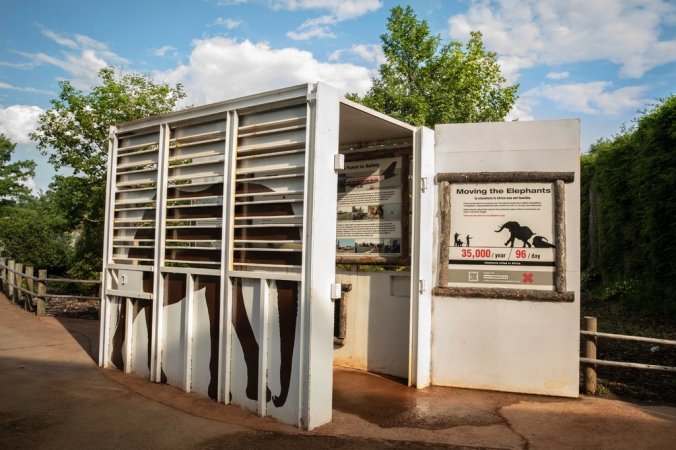
Avoiding Elephants In Zoos


3fd01892d37e4b1481015abfe9e9bb78-jumbo.jpg

Robin Schwartz for The New York Times

We have rarely written about zoos because they are simultaneously depressing and yet have had an important influence on most contributors to our pages. Thanks to the New York Times and Charles Siebert for this article raising questions about elephants in particular at the zoo:

Zoos Called It a ‘Rescue.’ But Are the Elephants Really Better Off?

Despite mounting evidence that elephants find captivity torturous, some American zoos still acquire them from Africa — aided by a tall tale about why they needed to leave home.

14mag-zoos-part2-03-superJumbo-v2

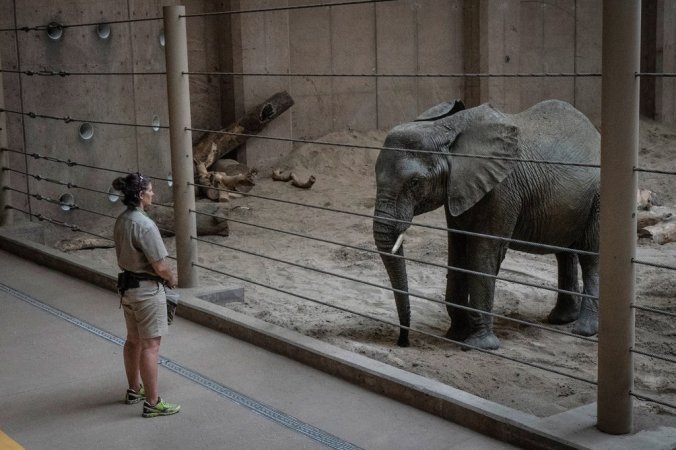
Arusi, one of the six Swaziland elephants at the Sedgwick County Zoo in Wichita, Kan.CreditCreditRobin Schwartz for The New York Times

The “Elephants of the Zambezi River Valley” enclosure at the Sedgwick County Zoo in Wichita, Kan., is a dreamscape idyll of an elephant’s natural home: five and a half sprawling acres of tree-dotted mock savanna and a 550,000-gallon pond where boated people and wading pachyderms can nearly meet on opposite sides of a discreetly submerged barrier. All eight of the zoo’s elephants were visible when I visited on Memorial Day 2018, two years after the habitat’s grand opening, including six recent arrivals from the tiny southern African kingdom eSwatini (formerly Swaziland), the lot of them moving about with the same slow, tensile synchrony of larger wild elephant herds. Only the background flicker of cars on Interstate 235 disrupted the tableau, as well as my own occasional thoughts of far less accommodated zoo and circus elephant captives over the years, right back to the very first elephant brought to the United States.

3fd01892d37e4b1481015abfe9e9bb78-5-jumbo.jpg

Robin Schwartz for The New York Times

According to historical records, it was in the early spring of 1796 that the America, a sailing vessel captained by Jacob Crowninshield, arrived in New York Harbor from Calcutta. As emphatically noted in the ship’s log kept by one of its officers, Nathaniel Hathorne (whose author son would soon add the “w” to the family name), there was an “ELEPHANT ON BOARD.” A 2-year-old female originally purchased by Crowninshield in Bengal for the bargain price of $450, she was immediately sold in New York for $10,000. Continue reading

New Zealand’s Minister of Conservation Shares Surprising Good News

When the Minister of Conservation speaks, we listen:

orange-fronted-parakeet-chick.jpg

We came to this news through the story below by National Public Radio (USA):

Rare New Zealand Parakeet Population Doubles After ‘Epic’ Breeding Season

orange-fronted-parakeet-chick-with-transmitter-doc-c9811c0f185647851facaa77fc88d87cd8614f8f-s1200-c85.jpg

The small bird was believed to have gone extinct but after a bumper crop of beech seeds this year, conservationists estimate the orange-fronted parakeet population has likely doubled.
Department of Conservation

One of the rarest birds in New Zealand is having its best breeding season in decades, potentially doubling the population.

The orange-fronted parakeet, known locally as the kākāriki karaka, is in the midst of a prolonged mating season due to a beech seed bonanza, Conservation Minister Eugenie Sage said in a statement on Wednesday.

“It is great news that this year there are more than three times the number of nests compared to previous years,” Sage said.

She added that at least 150 wild-born chicks have been born so far this season…

Read the whole story here.

The Corn Of The Future Is Valuable Patrimony From Mexico

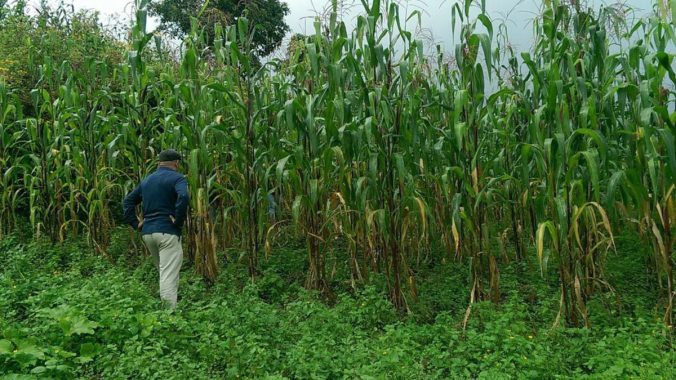
corn-field-sierra-mixe-uc-davis_web

A Mexican scientist inspects a field of olotón maize near Oaxaca, Mexico. ALLEN VAN DEYNZE/UC DAVIS

Thanks to Martha Pskowski and Yale e360 for this:

Indigenous Maize: Who Owns the Rights to Mexico’s ‘Wonder’ Plant?

A nitrogen-fixing maize grown in an indigenous region of Mexico has the ability to fertilize itself, recent research shows. Now, as a global company and U.S. scientists work to replicate this trait in other corn varieties, will the villages where the maize originated share fairly in the profits?

In a 1979 visit to Totontepec, a small town in Oaxaca, Mexico, naturalist Thomas Boone Hallberg marveled at the local maize. The plants grew nearly 20 feet high in nutrient-poor soil, even though local farmers did not apply any fertilizer.

Aerial_Roots_small_web.jpg

MARS, INCORPORATED & JEAN-MICHEL ANE/UC DAVIS

The maize had aerial roots that grew a mucous-like gel just before harvest season. It seemed impossible, but Hallberg wondered if the maize was fixing its own nitrogen: extracting it from the air and somehow making it usable for the plant. He had visited countless towns since moving to Oaxaca in the 1950s, but what he saw in Totontepec stuck with him.

aerial-roots-sierra-mixe-corn-uc-davis_0_web.jpg

The maize variety olotón has aerial roots that produce a mucous-like gel that fixes nitrogen, meaning that it can effectively fertilize itself. MARS, INCORPORATED & JEAN-MICHEL ANE/UC DAVIS

In 1992, Hallberg returned with a group of Mexican scientists. The maize, known as olotón, was almost ready for harvest and its aerial roots glistened with gel. Ronald Ferrera-Cerrato, a microbiologist, took samples back to his lab outside Mexico City to test the bacteria in the gel. His preliminary results, published in a 1996 report, showed that the maize received nitrogen from the air, through its aerial roots, meaning that it effectively had the ability to fertilize itself.

At the time, scientists around the world were puzzling over similar questions. In a 1996 paper in Plant and Soil, microbiologist Eric Triplett, then at the University of Wisconsin, described the possibility of corn plants that fix nitrogen as “the ‘holy grail’ of nitrogen fixation research” because of the potential to reduce fertilizer demand. Continue reading

Rewilding’s Latest Live Case Study

3500c.jpg

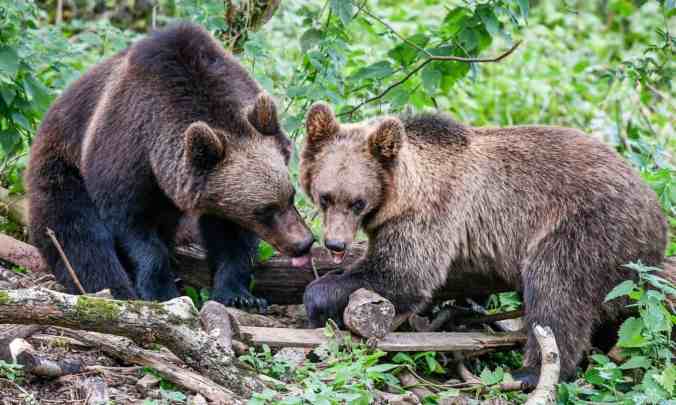
European brown bears, thought to have become extinct in the UK in the Middle Ages, will share a paddock with wolves, lynxes and wolverines. Photograph: Ben Birchall/PA

Thanks to Steven Morris (yet again) for another excellent nature story in the Guardian:

Bears and wolves to coexist in UK woods for first time in 1,000 years

Bear Wood near Bristol aims to spark debate about rewilding of ancient woodlands

For the first time in more than 1,000 years native bears and wolves are coming snout to muzzle with each other among towering oaks and ashes in a slice of British woodland.

European brown bears, thought to have become extinct in the British wilds in medieval times, and grey wolves – which roamed free until the 17th century – are to coexist in a project called Bear Wood near Bristol.

The idea of the scheme – which is part of Bristol Zoological Society’s Wild Place Project – is to give visitors a glimpse into life in the woods and forests that used to cover much of the UK.

It is also intended to initiate a debate about rewilding schemes, which could reintroduce animals such as lynxes – and perhaps wolves and bears. Continue reading

Two Sides of a Conservation Story – With Wolves in the Middle

Karin Vardaman, pictured left, walks the pastures with Breanna Owens, the owner of Cobblestone Ranch, in Los Molinos, California.Photographs by Lucas Foglia for The New Yorker

The return of apex predators to both national parks and rugged, yet unprotected areas of the United States impacts conservation and regeneration of biodiversity for both wildlife and native landscape.  Not surprisingly, it also creates challenges within the well established ranching community.

We’re grateful to all those who participate in the process of navigating a successful middle ground.

The Persuasive Power of the Wolf Lady

To bridge the divide between wolf-lovers and ranchers, the conservationist Karin Vardaman had to change many minds—including her own.

Early one morning in April, 2016, Karin Vardaman and four travelling companions woke in a motel in Siskiyou County, a rugged and remote region where rural California meets the Oregon border. They were in a town called Montague—a dot on the map that had begun, in the eighteen-eighties, as a stop on the Southern Pacific Railroad. After visiting a small market to pick up breakfast and snacks, they continued on to the old community hall, a narrow, low-slung building by the railroad tracks. Large, glass-paned windows ran the length of one side; below them, murals depicted horse-drawn wagons from the area’s pioneer days. Outside, a few dozen people were gathering. Watching them, Vardaman had an uneasy feeling. Oh, boy, she thought. Here we go.

Inside, chairs were arranged in a semicircle. Vardaman stood at the center, near a screen on which a PowerPoint slide displayed the title of her workshop, “On Wolves and Livestock.” Tall and sturdy, in her fifties, she has a flowing mane of lustrous red hair, framing slate-blue eyes and a narrow face. She introduced herself to the crowd as an advocate with the California Wolf Center. The Center, she said, was sponsoring a new, collaborative project called the Working Circle, through which it hoped to find a way for cattle and sheep to coëxist with endangered gray wolves.

Before Vardaman could continue, a man in the audience stood up, interrupting her. He wore a cowboy hat and cowboy boots. He calmly thanked her and her team: they had helped the local economy, he said, by shopping at the market. What he didn’t appreciate, he went on, was their coming into town and dictating to the community what it should and shouldn’t do about wolves. As he spoke, his voice rose in anger, and he stepped suddenly toward Vardaman; at the same moment, more than twenty other people rose to their feet. Some waved anti-wolf flyers above their heads. Others held rifle cartridges, their brass glinting in the light. They chanted, “Shoot, shovel, and shut up!”—an anti-wolf slogan. Vardaman watched as several people opened their jackets, revealing handguns.

For most of the last century, there have been no wolves in California; government-sponsored livestock-protection campaigns exterminated the state’s wolf population by 1924. But in December, 2011, a lone male gray wolf from Oregon, known as OR-7, was tracked via radio collar as he crossed into the Golden State. Slowly, over time, a few others followed. In 2014, the gray wolf gained protection under California’s Endangered Species Act; not long afterward, in Siskiyou County, two wolves were spotted by a trail camera. Today it’s thought that there are at least twelve to fifteen wild wolves in the state. This nascent comeback has opened a rancorous breach between California’s agricultural community, which fears losing livestock to wolf attacks, and its environmentalists, who have been galvanized by the idea of an iconic predator resurrected.

A version of this polarizing conflict has played out wherever wolves have reappeared, from Michigan to the Northern Rockies and Washington State. To an extent, livestock producers and wolf conservationists are divided for pragmatic reasons. If a wolf kills a heifer calf, a rancher can suffer a substantive economic hit—one or two thousand dollars, plus the loss of income from all the calves that the mature cow would’ve had over her lifetime. (Since the wolves returned to Northern California, an estimated eleven calves and cows have died in wolf attacks.) Conversely, if a rancher kills a wolf in an area where the wolf population is still recovering, it could be a significant blow to the animals’ survival.

And yet ranchers and conservationists are divided in other ways, too. Continue reading

Audubon’s 2019 Photography Awards Winners

Red-winged Blackbird. Photo: Kathrin Swoboda/Audubon Photography Awards

Thanks to the judges who chose the Grand Prize Winner (above) in this year’s contest, among an impossibly great selection. (Not to mention an extra applause to Audubon for adding the Citizen Science centric Plants for Birds category.

Birds make fascinating subjects, as the winners and honorable mentions of this year’s contest, our 10th, make clear. They’re at once beautiful and resilient, complex and comical. It’s no wonder why we love them so.

The images that won the 2019 Audubon Photography Awards, presented in association with Nature’s Best Photography, are as impressive as ever, but attentive readers might notice a few more images than usual. That’s because we’ve added two awards. The Plants for Birds category is inspired by Audubon’s Plants for Birds program, supported by Coleman and Susan Burke, which provides resources for choosing and finding plants native to zip codes in the United States. This category poses a new challenge to photographers: Don’t just capture an incredible moment—make sure it also features a bird and plant native to the location in which the photo was taken in order to highlight the critical role native habitat plays in supporting bird life. And in the spirit of Kevin Fisher, Audubon’s longtime creative director who recently retired, the Fisher Prize recognizes a creative approach to photographing birds that blends originality with technical expertise. The winning image, which Kevin himself selected from among the finalists, pushes the bounds of traditional bird photography.

We want to extend a heartfelt thank you to all 2,253 entrants, hailing from all 50 U.S. states, Washington, D.C., and 10 Canadian provinces and territories. Your dedication to appreciating, celebrating, and sharing the wonder of birds and the landscapes they inhabit inspires us now and throughout the year.

The 2019 APA Judges

Steve Freligh, publisher, Nature’s Best Photography

Melissa Groo, wildlife photographer and winner of the 2015 contest’s Grand Prize

Kenn Kaufman, bird expert and Audubon magazine field editor

Sabine Meyer, photography director, National Audubon Society

Allen Murabayashi, chairman and co-founder, PhotoShelter

John Rowden, director of community conservation, National Audubon Society

Judging criteria: technical quality, originality, artistic merit

Continue reading
Climate Change, Coffee & Solutions

GettyImages-1146667212_ColombiaCoffee_web.jpg

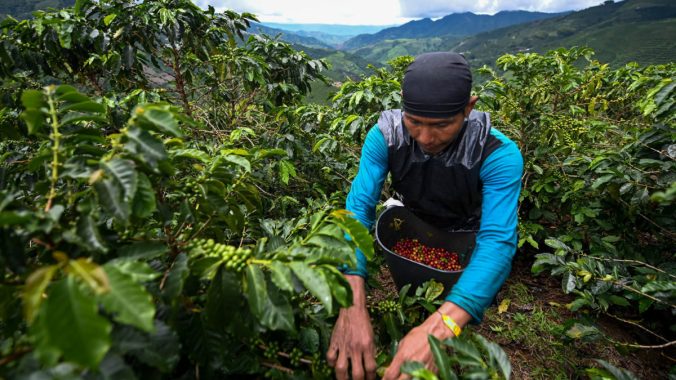
A worker harvests coffee near the town of Santuario, Risaralda department, Colombia in May. RAUL ARBOLEDA/AFP/GETTY IMAGES

In Costa Rica, where we have been paying attention to the plight of coffee farmers in the last year, there are numerous scientific and sectoral organizations dedicated to assisting with the impact of climate change.  Richard Schiffman, who last appeared in our pages nearly a year ago, has this about Colombia’s approach:

As Climate Changes, Colombia’s Small Coffee Farmers Pay the Price

Hundreds of Colombia’s small coffee growers have stopped cultivating the bean in the face of low prices and reduced harvests linked to a shifting climate. As farmers struggle, the nation’s scientists are seeking to develop new varieties that will flourish in a changing environment.

Finca-Ocaso_IMG_6054_web.jpg

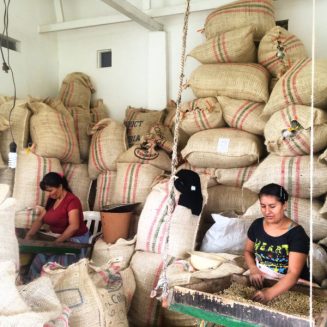
Women sort coffee beans at the 44-acre Finca El Ocaso farm, near Salento, Colombia. COURTESY OF FINCA EL OCASO

At first glance, Finca El Ocaso, located in the hills outside Salento, Colombia, could be mistaken for a natural forest: rows of squat Arabica coffee trees are interspersed with plantain, banana, and lime and shaded by towering nogal cafatero trees, whose high canopy hosts flocks of chattering parrots and other birds. The 44-acre coffee plantation has been certified by international organizations for being sustainable, climate-friendly, and fair to its workers.

But Finca El Ocaso is struggling under the weight of intensifying economic pressures.

Finca-Ocaso-Farm_Tradicion-cafetera_web1000.jpg

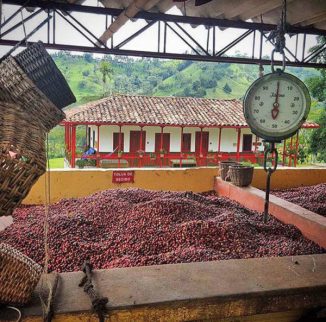
A coffee weighing station at Finca El Ocaso. Coffee prices have dropped so low that the family-run farm has started hosting tourists to make extra money. COURTESY OF FINCA EL OCASO

“Lots of smaller farms near us have gone out of business,” said farmer Gustavo Patiño. “It is no longer sustainable to have a medium-size farm that pays high taxes and expensive production costs, when in the end they may get paid less for their coffee than their expenses.”

Several years ago, in an effort to keep the plantation afloat, Patiño’s eldest daughter, Carolina, opened the farm to foreign and Colombian tourists. The plantation now attracts more than 1,000 visitors a year. “Our farm can only survive because we offer tours and sell our coffee to the tourists,” Patiño said.

GettyImages-1146667271_ColombiaCoffee_web.jpg

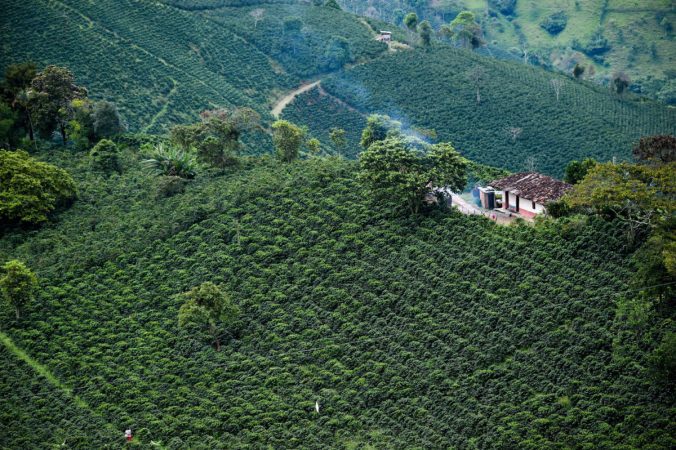
An aerial view of coffee plantations in Santuario, Colombia in May. Small farms such as these have been hit hardest by climate change and low coffee prices. RAUL ARBOLEDA/AFP/GETTY IMAGES

In the last 18 months, Colombia has lost nearly 100,000 acres of coffee plantations, more than 4 percent of the land under coffee cultivation, according to a statement issued last week by Colombia’s National Federation of Coffee Growers (Fedecafé). Continue reading
Could “Fishless Fish” Play a Part Helping Oceans Recuperate?

This salmon, by Wild Type, was grown from cells in a lab. The company is one of several developing seafood alternatives. Kelsey McClellan for The New York Times

First, there was the meatless burger. Soon we may have fishless fish.

Impossible Foods, the California company behind the meatless Impossible Whopper now available at Burger King, is joining a crowded field of food companies developing alternatives to traditional seafood with plant-based recipes or laboratory techniques that allow scientists to grow fish from cells.

merlin_156981888_af929d37-557d-47d6-bd64-73192041d358-superJumbo.jpg

Good Catch Tuna, made from plants, is available at Whole Foods. Kelsey McClellan for The New York Times

So far, much of Impossible’s work has focused on the biochemistry of fish flavor, which can be reproduced using heme, the same protein undergirding its meat formula, according to Pat Brown, the company’s chief executive. Last month, Impossible’s 124-person research and development team, which the company plans to increase to around 200 by the end of next year, produced an anchovy-flavored broth made from plants, he said.

“It was being used to make paella,” Mr. Brown said. “But you could use it to make Caesar dressing or something like that.”

merlin_156982146_fcd37e32-83cf-49fd-b629-4da7831e54de-superJumbo (2).jpg

Wild Type held a tasting of its lab-grown salmon last month in Portland, Ore. Kelsey McClellan for The New York Times

The fishless-fish project is part of Impossible’s grand ambitions to devise tasty replacements for every animal-based food on the market by 2035. Whether that aim is achievable, either scientifically or financially, remains to be seen. But for now, Mr. Brown said, he’s confident Impossible’s plant-based beef recipe can be reconfigured to simulate a new source of protein.

It’s unclear whether consumers — even those who eat meatless burgers — will embrace fish alternatives.

Those faux-beef products owe their success partly to the enthusiasm of so-called flexitarians, people who want to reduce their meat consumption without fully converting to vegetarianism, but flexitarians are not necessarily motivated by a desire to save the planet. Indeed, industry experts say, many of them are drawn to plant-based meat more for its perceived health benefits than for its role in reducing the food industry’s reliance on production techniques that release greenhouse gases. Continue reading
Pulses Improving Life In Multiple Ways

gettyimages-128069826-bbd47af959f13a4937053aa5540bc3ea6de0159e-s1200-c85

Chickpeas are often called by their Spanish name, garbanzos or garbanzo beans, in the United States. Inga Spence/Getty Images

Whitney Pipkin, appearing for the second time here, has another great story about healthy food with environmental benefits:

Your Hummus Habit Could Be Good For The Earth

Hummus is having a heyday with American consumers, and that could be as good for the soil as it is for our health.

lilses.springmenu-3-1-_custom-1980ffb38112bf111a9c8d35fd33f3def71a663e-s1200-c85.jpg

High in fiber and protein, chickpeas are playing a starring role on menus at fast-casual chains like Little Sesame in Washington, D.C., where hummus bowls abound. Chickpeas also good for soil health — and growing demand could help restore soils depleted by decades of intensive farming. Anna Meyer

Formerly relegated to the snack aisle in U.S. grocery stores, the chickpea-based dip has long starred as the smooth centerpiece of Middle Eastern meals and, increasingly, plant-based diets. Occasionally, it even doubles as dessert. Last year, Americans spent four times as much money on grocery-store hummus as they did a decade before, according to the latest consumer surveys, and a growing number of snacks and fast-casual concepts also feature the fiber- and protein-rich chickpea as their pièce de résistance.

lilses.jan.8.201914_custom-ee7e6b7155827ba95dbe58cc1dbf9ffccb1fdfd3-s1200-c85.jpg

Anna Meyer

Part of a subcategory of legumes called pulses, chickpeas — along with lentils, dry peas and several varieties of beans — have been a critical crop and foodstuff for centuries in Middle Eastern and Asian countries. The crops are so promising that the United Nations deemed 2016 the “Year of Pulses” to expand interest in these ancient foods and their potential to help solve dueling modern-day conundrums: hunger and soil depreciation. Continue reading

Taking Advantage of Assets at Hand

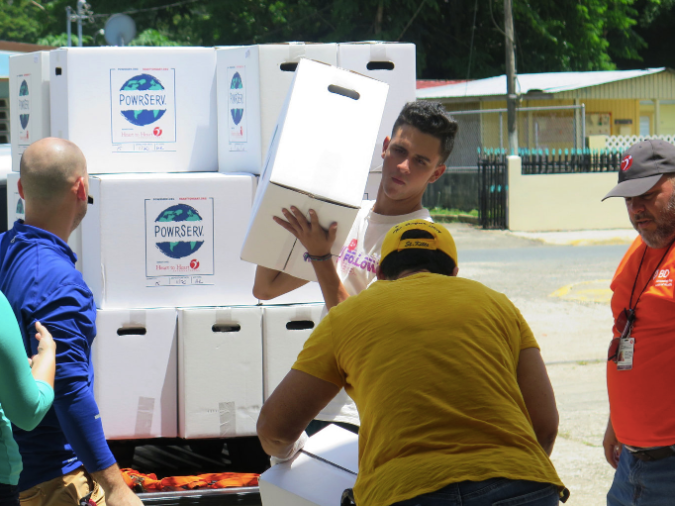
Foundations and charities are helping individuals, communities and businesses install solar panels and battery systems in Puerto Rico, with dual goals: to move the island toward renewable energy and allow small towns to be less dependent on the energy grid in case of another disaster. Greg Allen/NPR

Entrepreneurship and innovation are synonymous in many ways, starting with the ability to “think outside the box”. It’s even more inspiring when people put their creative efforts toward helping communities and the environment. Considering solar power in a Caribbean island environment may not seem like such a novel idea, but garnering private sector support for progress so the government can regroup after a natural disaster is a good example of leadership.

Puerto Rico Harnesses The Power Of The Sun For A Renewable Energy Future

Mameyes is a small community of about 1,000 people high in Puerto Rico’s central mountains. But in its own way, it is one of the leaders of Puerto Rico’s energy future.

Francisco Valentin grew up in Mameyes, where he runs a small store. Even before Maria he had big ambitions for his town. After Maria, he knew he wanted his community to run on solar power. And with the help of foundations, charities and the University of Puerto Rico — not the government — he has done that, converting the town’s school, health clinic and several other buildings.

The move to solar was important, Valentin says, because after Maria it took months before power was restored to the area. This makes Mameyes self-sufficient and able to respond to residents’ needs in future disasters. “The whole school is fully solar energy” and can serve as a shelter, he says.

With so much sunlight on tap, solar power has begun to boom in Puerto Rico since the hurricane. Across the island, individuals, communities and businesses are installing solar panels and battery systems. At the Community Foundation of Puerto Rico, Javier Rivera is working on solar systems with 50 mostly rural, underserved communities. His goal is to wire 250 communities for solar over the next few years.

Rivera says that especially after the hurricane, people realized they couldn’t depend on Puerto Rico’s Electric Power Authority. “Many people [didn’t] trust in the PREPA system before the hurricane. It’s not a secret,” he says. “People start to think about trying to find a solution, a long-term solution. And the sun is one of them.”

Continue reading

Schools as Frontline Against Food Deserts

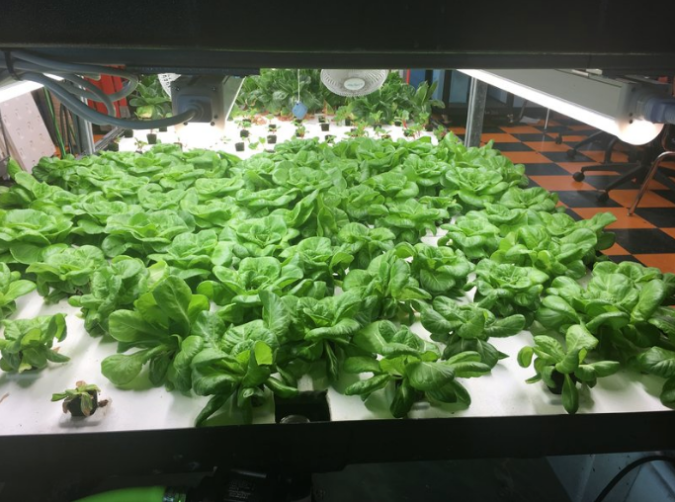
These greens are among the hydroponic crops grown by students at Brownsville Collaborative Middle School, in Brooklyn, N.Y. In June, the students started to sell discounted boxes of the fresh produce to community members. Robin Lloyd/for NPR

Thanks again to the Salt for more inspiring stories about communities cultivating more than just smart students.

How Hydroponic School Gardens Can Cultivate Food Justice, Year-Round

After a full day of school a few weeks ago, 12-year-old Rose Quigley donned gloves and quickly picked bunches of fresh lettuce, Swiss chard, kale, mint and oregano. But she didn’t have to leave her school in Brooklyn, N.Y., or even go outdoors to do it.

Quigley is one of dozens of students at Brownsville Collaborative Middle School who in the past year built a high-tech, high-yield farm inside a third-floor classroom. They decided what to grow, then planted seeds and harvested dozens of pounds of produce weekly.

The vegetables never stop coming because the crops are grown hydroponically — indoors, on floor-to-ceiling shelves that hold seedlings and plants sprouting from fiber plugs stuck in trays, each fed by nutrient-enriched water and lit by LED lamps. The students provide weekly produce for their cafeteria’s salad bar and other dishes.

Later that same day, for the first time, Quigley and several of her schoolmates also sold some of their harvest — at a discount from market rates — to community members. It’s part of a new weekly “food box” service set up in the school’s foyer. Each of 34 customers receive an allotment of fresh produce intended to feed two people for a week. Three students, paid as interns, used digital tablets to process orders, while peers handed out free samples of a pasta salad featuring produce from the farm. Continue reading
Ocean Conservationists vs. Ghost Nets

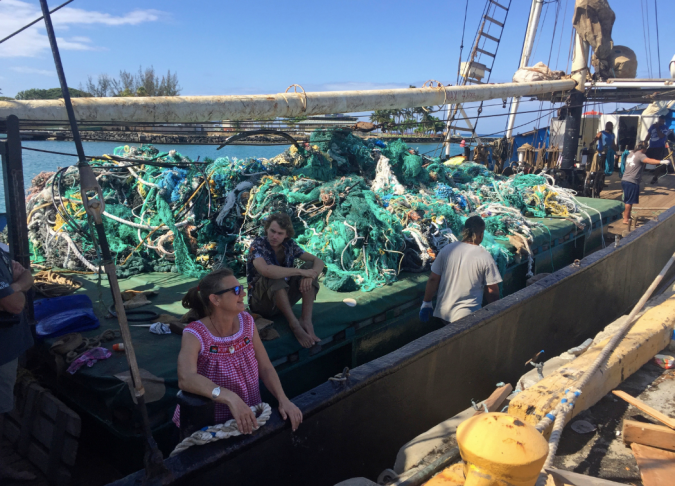
Ocean Voyages Institute’s cargo ship, the S/V KWAI, is docks in Honolulu, Hawaii as it holds fishing nets and consumer plastics collected during a recent 25-day mission in the Pacific Ocean. (Greg Yoder/Ocean Voyages Institute)

It’s an unfortunate truth that plastic is a serious problem in the world’s oceans, so every bit of progress addressing it is good news. Kudos to Mary Crowley and the volunteers at Ocean Voyages Institute for using simple technology to have such profound results.

Ocean Voyages Institute Removes 40 Tons of Plastic, including 5-Ton Ghost Net

Sausalito, CA – Ocean Voyages Institute, a nonprofit organization, announced today that it has successfully removed more than 40 tons of fishing nets and consumer plastics from the area known as the North Pacific Subtropical Convergence Zone, or more commonly known as the Pacific Gyre.

The sailing cargo ship, S/V KWAI, arrived in Honolulu today, having completed a 25-day clean up mission. In the Pacific, between California and Hawaii, four ocean currents converge to create a vortex that collects huge amounts of plastics. One sees detergent bottles, beer and soft drink crates, bleach and cleaning bottles, plastic furniture, packaging straps, buckets, children’s toys, and myriad types of plastic floating mid-ocean. This debris field covers vast expanses of ocean.

A prime target for OV Institute’s 2019 voyage was the fishing gear called “ghost nets.” Often weighing tons, these massive nets of nylon or polypropylene drift for decades, amassing plastic debris, ensnaring wildlife, and even entangling ships. An estimated 600,000 tons of this abandoned gear ends up in the oceans every year. According to the United Nations, some 380,000 marine mammals are killed every year by either ingesting or being caught in it.

“Satellite technology played a key role in our recovery effort, offering an innovative solution to finding areas of dense plastic pollution,” said Mary Crowley, Founder and Executive Director of OV Institute. “The nets and other debris are signs of the proliferating plastic pollution that poses threats to marine life, coastal environments, shipping, fisheries, wildlife and our health.” Continue reading
Why Is Vanilla So Expensive?

The Economist has not been one of our go-to sources for stories because it has an ideology that sometimes gets in the way of deeper investigation. Their stories and explanations are extremely thorough and very compelling, but we can usually guess the answer before the question is even asked.  Every now and then they surprise us, and here is a good example:

The bitter truth behind Madagascar’s roaring vanilla trade

How did hunger for the humble pod lead to greed, crime and riches? Wendell Steavenson travels to Madagascar to meet the new spice barons

In pods we trust
A quality-control chief in a co-operative in Belambo

I follow Felicité Raminisoa and her father, Romain Randiambololona, up a narrow track along the forested slopes of her family’s farm in southern Madagascar. It is lychee season and, as we walk, we break off branches of fruit and peel off the pink, spiky shells. Large yellow jackfruit grow like Chinese lanterns among loquat and clove trees, pepper vines and coffee plants. Sapphire dragonflies flash by as they chase each other over ponds of tilapia dammed into the valley. The air is muggy under the banana leaves but grows fresher as we climb. In all directions we can see vanilla vines winding around tree trunks. Each zigzag stem has been trained so that it grows no higher than Raminisoa can reach. Every so often she stops at a pale-yellow bloom and parts its waxy petals. With a spike snapped from an orange tree, she delicately scrapes away the membrane separating the anther from the stigma in order to pollinate the flower. This is a task that requires perfect timing. Each flower must be pollinated by hand on the morning it blooms or the beans won’t sprout.

Blooming marvellous
A vanilla flower is pollinated by hand

The family began to plant vanilla vines about 20 years ago mostly as “decoration”, says Randiambololona, his big grin punctuated by a missing tooth. At first the family sold fresh green vanilla pods to tourists, surprised that they would pay anything for them. But in 2014 the price of vanilla began to rise. Over the next three years it went from less than $40 per kilogram to more than $600 per kilogram. It felt like money was growing on their trees. In 2016 Raminisoa travelled to the northern region of Sava, where vanilla has been grown for generations, to learn how to cure the green pods into the commodity that was in such demand: pungent and wizened black beans. Continue reading
Blueprint For Planting Trees

3000 (7)

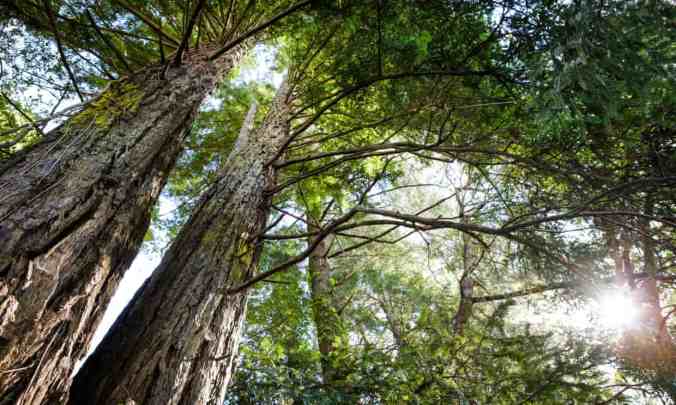
Redwood trees in Guerneville, California. Photograph: Gabrielle Lurie/The Guardian

Damian Carrington, the Guardian’s Environment editor, shares a report on the value of reforestation for carbon sequestration:

Tree planting ‘has mind-blowing potential’ to tackle climate crisis

Research shows a trillion trees could be planted to capture huge amount of carbon dioxide

MapTree1

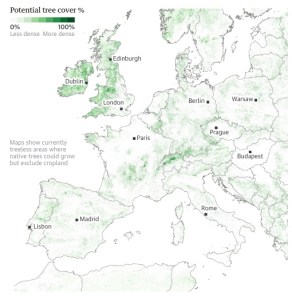
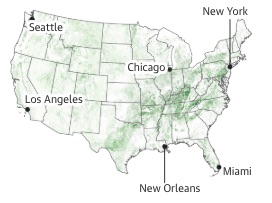
The potential for new forests that do not encroach on cropland is high in the UK, Ireland and central Europe. Guardian graphic. Source: Bastin et al, Science, 2019

Planting billions of trees across the world is by far the biggest and cheapest way to tackle the climate crisis, according to scientists, who have made the first calculation of how many more trees could be planted without encroaching on crop land or urban areas.
As trees grow, they absorb and store the carbon dioxide emissions that are driving global heating. New research estimates that a worldwide planting programme could remove two-thirds of all the emissions that have been pumped into the atmosphere by human activities, a figure the scientists describe as “mind-blowing”.

MapTree2.jpg

The potential for new forests that do not encroach on cropland is high in the UK, Ireland and central Europe

The analysis found there are 1.7bn hectares of treeless land on which 1.2tn native tree saplings would naturally grow. That area is about 11% of all land and equivalent to the size of the US and China combined. Tropical areas could have 100% tree cover, while others would be more sparsely covered, meaning that on average about half the area would be under tree canopy. Continue reading

Are Certifications Doing Enough?

gettyimages-1036297224_custom-8e4a3818628f60728b6d922749c32445dba0fe0f-s1200-c85

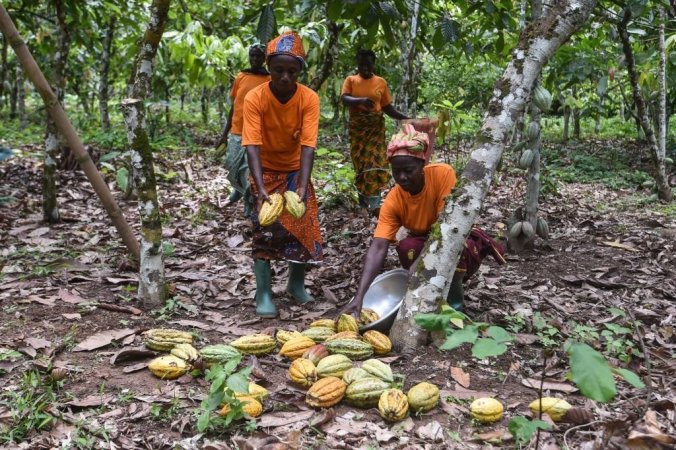
Cocoa producers of the Yakasse-Attobrou Agricultural Cooperative gather cocoa pods in a certified Fair Trade-label cocoa plantation in Adzope, Ivory Coast. Sia Kambou/AFP/Getty Images

Our friends who generally oppose regulations and other efforts to protect people and the environment, saying that these protections inhibit growth and innovation and often fail to achieve the protections they are supposed to create, may sometimes have a point. But from our perspective, they too often point in the wrong direction. Constant monitoring to evaluate the efficacy of these protections is a point we might agree on, assuming we are not ideologically driven on either side of this topic.  With every big step forward towards greater sustainability, it is important to pause and consider the impact. Among other things, we must ask whether we are doing enough:

Fair Trade Helps Farmers, But Not Their Hired Workers

It’s a disturbing question that haunts many shoppers with good intentions: What am I actually accomplishing by buying coffee or chocolate with the Fair Trade label? Does the extra money that I pay actually benefit the people who harvested those beans?

Researchers have been curious, too. They’ve found that, in fact, small farmers in Latin America and Africa do benefit from the minimum price that Fair Trade guarantees and the extra money it delivers to farmer cooperatives. Researchers have documented higher wages, greater participation in community decisions, and even greater gender equity. Continue reading

A Daily Grind Unlike Yours

33a8ae702.jpg

JOHN CUNEO

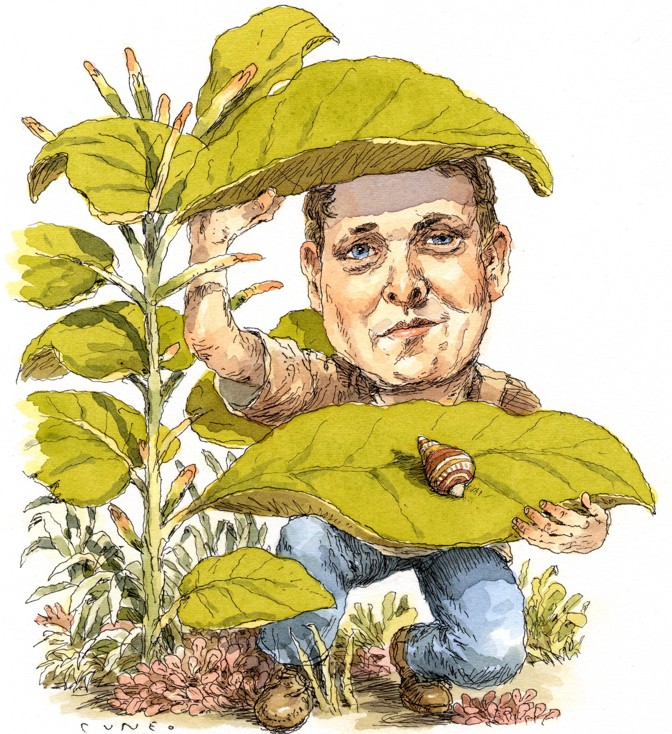
Ed Yong, one of the excellent science writers who does not shy away from troubling findings–but mostly amazes us with pure inspiration about how nature works–has a real downer of a career for us to contemplate today. It is a long read, less dark than it first sounds, and worth the read:

The Last of Its Kind

The biologist David Sischo has a tragic assignment: keeping vigil over a species’ sole survivor, then marking its extinction in real time.

Sometime on new year’s day, as the people of Hawaii recovered from a night of revelry, in a trailer on the outskirts of Kailua, Oahu, a 14-year-old snail named George died. David Sischo, who works in the trailer but was taking a rare day off, found out at 7 o’clock the next morning, when a colleague discovered George’s limp body and texted him. “I usually don’t hear from her that early, so before I even read the text, I felt that something bad had happened,” Sischo told me. Continue reading

Messages From Greenland Ice

Greenland Ice.jpg

Surface meltwater ponds in Western Greenland in May 2019. NASA/JEFFERSON BECK

For his third appearance in our pages this year, illuminating a topic we all need to understand more fully, thanks to Jon Gertner for sharing this in Yale e360:

In Greenland’s Melting Ice, A Warning on Hard Climate Choices

Greenland is melting at an unprecedented rate, causing vast quantities of ice to disappear and global sea levels to rise. The fate of the ice sheet is not sealed, but unless CO2 emissions are sharply cut, the long-term existence of Greenland’s ice is in doubt.

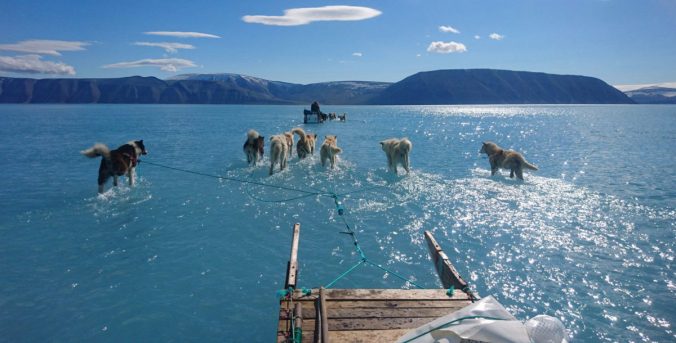
InglefieldBredning_June-13-2019_Steffen-M.-Olsen-Twitter_web2.jpg

A team from the Danish Meteorological Institute travels by dogsled across a pond of meltwater in northwest Greenland to retrieve equipment on June 13. STEFFEN M OLSEN/TWITTER

The heat wave arrived early this spring — a shroud of temperate air, sweeping in during early June, which enveloped the Northern Hemisphere’s biggest ice sheet in a stifling hug. At its peak, nearly 45 percent of Greenland’s frozen surface turned to meltwater, coloring the huge white expanse with sapphire lakes and lapis streams. During the warmest stretch, runoff from the ice sheet amounted to about 2 billion tons, which meant that at the same time Greenland was losing water, the North Atlantic was gaining it. Some areas on the island were 40 degrees Fahrenheit above normal for this time of year.

“We didn’t see anything like this prior to the late 1990s,” Thomas Mote, a University of Georgia scientist who monitors summer melting on the ice sheet, explained to CNN. “The melting is big and early,” Jason Box, a climatologist with the geological survey of Denmark and Greenland, informed the Washington Post.

Greenland’s ice sheet covers about 80 percent of the island, and measures about 660,000 square miles; in its center, it runs to a depth of about two miles. According to the most recent NASA studies, the ice sheet holds enough water to raise sea levels by about 24 feet, should it ever disappear completely. Continue reading