Niemann On Earth

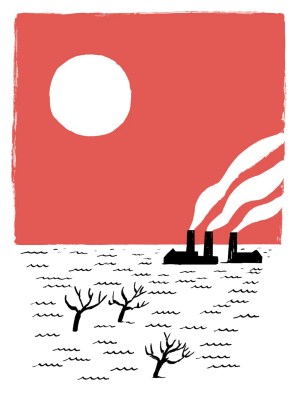
We have referenced Françoise Mouly once before, but the art of Christoph Niemann many more times. This one is not fun, more of a gut punch; but at the source scroll down and see all the other covers on the same theme:

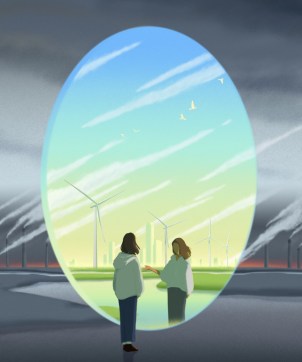
Christoph Niemann’s “Recipe for Disaster”

The artist expresses his sense of urgency about the emergency unfolding all around us.

News cycles, by nature, tend to document crises as discrete events. Suffusive emergencies—like the climate crisis—are captured mostly in the accelerating pace and frequency of such coverage. Continue reading

Starbucks Flexing Its Muscle

Jordan Baumgarten for The New York Times

In the coffee business, we look up to the big players for inspiration. Sometimes we find something else. Starbucks can be a very admirable corporate citizen. It can also be rotten, as we are reminded in this op-ed by Megan K. Stack:

Inside Starbucks’ Dirty War Against Organized Labor

NOTTINGHAM, Md. — Agnes Torregoza came to this country when she was a toddler, brought from the Philippines by her parents. Her mother found a teaching job in the Baltimore County Public School District, and the family set about cobbling together a new life. Continue reading

Climate Optimism, Part 2

Hilary Swift for The New York Times

Bill McKibben’s occasional optimism notwithstanding, he and Al Gore are the two most visible alarmists on climate change. Even in the worst of circumstances both find reason to point out our remaining options for actually doing something.

Our thanks to David Gelles and the New York Times for rounding out the doom and gloom with a bit of hope:

Al Gore on Extreme Heat and the Fight Against Fossil Fuels

The past few weeks have him even more worried than usual.

It’s been 17 years since former Vice President Al Gore raised the alarm about climate change with his documentary, “An Inconvenient Truth.” Since then, he’s been shouting from the rooftops about the risks of global warming more or less nonstop. Continue reading

Climate Optimism Part 1

Illustration by João Fazenda

Bill McKibben acknowledges in his most recent newsletter that in spite of all his efforts over the decades, he and we all are failing on climate change mitigation. But he has not given up hope:

Big Heat and Big Oil

A rapid end to burning fossil fuel would arrest the heating that has caused extreme damage in recent weeks; and that rapid end is possible.

In the list of ill-timed corporate announcements, historians may someday give pride of place to one made by Wael Sawan, the new C.E.O. of Shell, the largest energy company in Europe. In 2021, Shell said that it would reduce oil and gas production by one to two per cent a year up to 2030—a modest gesture in the direction of an energy transition. Continue reading

Graphic Comprehension Of Forest Loss

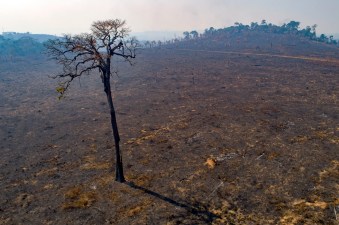
A section of forest in the Brazilian Amazon that was burned by cattle ranchers, seen on August 16, 2020. Cattle ranching is the largest driver of deforestation in the Amazon rainforest. Andre Penner/AP

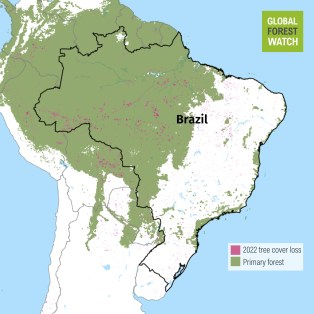
The photograph heading the story is alarming enough, but the illustrations (especially the “scroll down” graphic) accompanying the written explanations are extremely compelling. Thanks to Benji Jones for the story and to Alvin Chang for the graphics in this Vox article:

The alarming decline of Earth’s forests, in 4 charts

Deforestation raged ahead again in 2022, even after scores of countries pledged to protect their forests.

Over the last decade, dozens of companies and nearly all large countries have vowed to stop demolishing forests, a practice that destroys entire communities of wildlife and pollutes the air with enormous amounts of carbon dioxide.

A big climate conference in Glasgow, in the fall of 2021, produced the most significant pledge to date: 145 countries, including Brazil, China, and Indonesia, committed to “halt and reverse” forest loss within the decade. Never before, it seems, has the world been this dedicated to stopping deforestation. Continue reading

Youth Is Not To Be Wasted In Montana

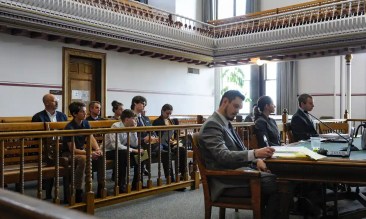
The plaintiffs look on during a status hearing for Held v Montana in the Lewis and Clark county courthouse in Helena, Montana, last month. Photograph: Thom Bridge/AP

At first it sounded like a gimmick, but listen to and read about it: there is a useful half hour podcast on this topic, and here we thank the Guardian for a bit more detailed coverage:

‘My life and my home’: young people start to testify at historic US climate trial

Some of the plaintiffs listen to arguments during the hearing in Montana. Photograph: Thom Bridge/AP

The plaintiffs note that Montana’s constitution pledges a healthy environment ‘for present and future generations’

The US’s first-ever trial in a constitutional climate lawsuit kicked off on Monday morning in a packed courtroom in Helena, Montana.

The case, Held v Montana, was brought in 2020 by 16 plaintiffs between the ages of five and 22 from around the state who allege state officials violated their constitutional right to a healthy environment by enacting pro-fossil fuel policies. Continue reading

Crop Swap LA & Other Microfarm Advances

Illustration: Julia Louise Pereira/The Guardian

Our thanks to Victoria Namkung for this reporting in the Guardian, from Los Angeles:

‘Everything is natural and tastes so good’: microfarms push back against ‘food apartheid’

Crop Swap LA founder Jamiah Hargins in the Asante microfarm in Los Angeles, California. Photograph: Valérie Macon/AFP/Getty Images

Bipoc-led local farms in unconventional spaces decentralize systems that have produced food deserts and create food equity

On a recent Sunday morning in South Los Angeles, Crop Swap LA volunteers and staffers harvested bags of freshly picked produce from the front yard of a residence. Located just steps from Leimert Park Plaza, the Asante microfarm is the first of what will be numerous microfarms created by the organization, which is dedicated to growing hyperlocal food on unused spaces “in the neighborhood, exclusively for the neighborhood”. Continue reading

Ghana Says No Thank You To Europe’s Fast Fashion

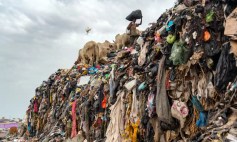
Some of the 6m items of clothing that arrive at Kantamanto Market each week. With the rise of fast fashion in the west, more is discarded as the quality drops. Photograph: Muntaka Chasant/Rex

When  the clothes cast off by the wealthy are cast on to those less wealthy, it should be done so according to the golden rule:

Stop dumping your cast-offs on us, Ghanaian clothes traders tell EU

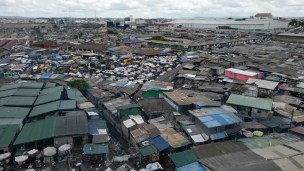
With 100 tonnes of clothing from the west discarded every day in Accra, ‘fast fashion’ brands must be forced to help pay for the choking textile waste they create, environmentalists say

An aerial view of Kantamanto market in Accra, where 100 tonnes of secondhand clothing a day are discarded. Photograph: Misper Apawu/The Guardian

A group of secondhand clothes dealers from Ghana have visited Brussels to lobby for Europe-wide legislation to compel the fashion industry to help address the “environmental catastrophe” of dumping vast amounts of textiles in the west African country. Continue reading

Out With PFAS, Considering Alternatives

PFAS are used as a coating on food packaging and are prevalent in other everyday items like personal care products and textiles.

Triple Pundit, and writer Riya Anne Polcastro, are new to us, and we appreciate their coverage of this complex topic, important both for health and environmental reasons:

Nixing PFAS is a Real Possibility: Here’s One Company That’s Doing It

Per- and polyfluorinated substances (PFAS) have been getting a lot of negative publicity. And with good reason. Classified as “forever chemicals,” they’ve been found in food, water, soil, animals and even our blood. Although the extent of their effects is not fully understood, they are known to negatively impact human health in a variety of ways. But while many are calling for an overall ban on the chemicals, pushback from the industry seeks to simply switch out the PFAS we already know are harmful with lesser-known ones that likely have the same — or possibly even worse — effects. Continue reading

Green Capitalism Explained & Criticized

We are new to the website where this interview is on offer, and appreciate its proclamation: “We cut through the noise. Of social media. And algorithmic distraction. We find the serious stuff. The stuff you miss. Every week. With human curators.” We are also new to the explainer and critic on a set of topics we often have had links to:

ADRIENNE BULLER ON GREEN CAPITALISM AND THE PITFALLS OF CLIMATE FINANCE

Adrienne Buller is Director of Research at the think tank Common Wealth, where she leads investigative projects about building a democratic economy. She previously researched the intersection of finance and the climate crisis at InfluenceMap, and has also written for The Guardian and the Financial Times, among other publications. Continue reading

Chilekwa Mumba, 2023 Goldman Environmental Prize Winner

https://youtu.be/8TG_1ILhxcU

The 2023 Goldman Prize goes to this man:

Alarmed by the pollution produced by the Konkola Copper Mines operation in the Copperbelt Province of Zambia, Chilekwa Mumba organized a lawsuit to hold the mine’s parent company, Vedanta Resources, responsible. Chilekwa’s victory in the UK Supreme Court set a legal precedent—it was the first time an English court ruled that a British company could be held liable for the environmental damage caused by subsidiary-run operations in another country. This precedent has since been applied to hold Shell Global—one of the world’s 10 largest corporations by revenue—liable for its pollution in Nigeria.

Our thanks to Jocelyn C. Zuckerman for this conversation with him:

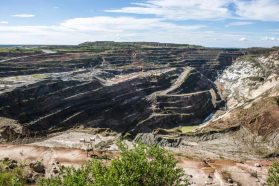
The Nchanga copper mine, operated by Konkola Copper Mines, in Chingola, Zambia. WALDO SWIEGERS / BLOOMBERG VIA GETTY IMAGES

This Zambian Took on a U.K. Mining Giant on Pollution and Won

Chilekwa Mumba led a court battle to hold a U.K.-based company responsible for the gross pollution from a copper mine it owns in Zambia. In an interview, he talks about how he and local villagers faced arrest to overcome long odds and finally win a landmark legal victory.

The southern African nation of Zambia is home to a wealth of minerals — in particular, lots of the copper and cobalt that the world will require to power a green economy. Continue reading

An Optimistic View On Climate

Illustration by Nicholas Konrad / The New Yorker; Source photographs from Getty.

We appreciate the author’s wide reach and tireless exploration for solutions to seemingly unsolvable puzzles:

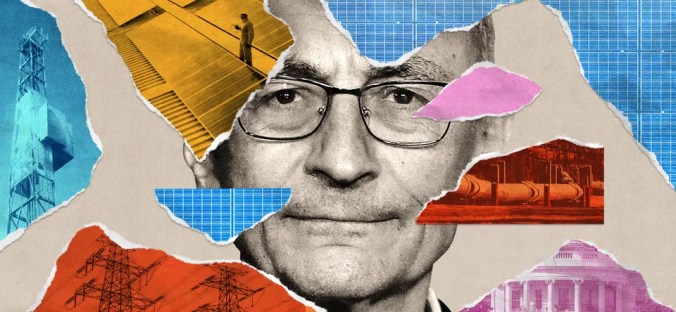
A Case for Climate Optimism, and Pragmatism, from John Podesta

The veteran political operative now has one of the nation’s top climate jobs. He speaks about the Willow oil-drilling project, the Inflation Reduction Act, and the Biden White House.

“Humanity is on thin ice, and that ice is melting fast,” António Guterres, the Secretary-General of the United Nations, recently warned, in response to a newly alarming climate report. The ice is melting, in large part, because the world keeps burning fossil fuels. To change that, the U.S. will need to join other nations in replacing machines that burn them—cars, stoves, furnaces, and eventually things like planes and factories—with machines that run on electricity. Continue reading

Lie-Liable Fossil Fuel Companies

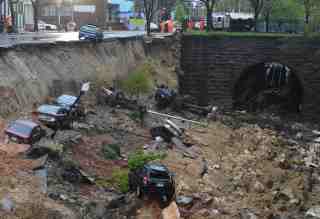
Following record rains in April of 2014, a section of Baltimore street simply collapsed. Now there’s some chance of holding the culprits accountable.

Thanks to Bill McKibben for this legal news following plenty of precursor stories on the same topic:

High court lets cities and states sue Exxon et al

…But something else happened yesterday too, with a price tag that may eventually dwarf that settlement, and with even larger potential implications for the future of the planet. The Supreme Court, also tersely, declined to grant cert in a case brought by oil companies desperately trying to hold off state court trials for their climate crimes. Continue reading

McKibben Embraces Green Building Boom

Grace J. Kim

We link to one person more than anyone else, for good reason:

ELECTRIFY EVERYTHING

Yes in Our Backyards
It’s time progressives like me learned to love the green building boom.

The United States is on the brink of its most consequential transformation since the New Deal. Read more about what it takes to decarbonize the economy, and what stands in the way, here

I’m an environmentalist, which means I’ve got some practice in saying no. It’s what we do: John Muir saying no to the destruction of Yosemite helped kick off environmentalism; Rachel Carson said no to DDT; the Sierra Club said no to the damming of the Grand Canyon. Continue reading

Brazil’s Amazon Complications, 2023 Onward

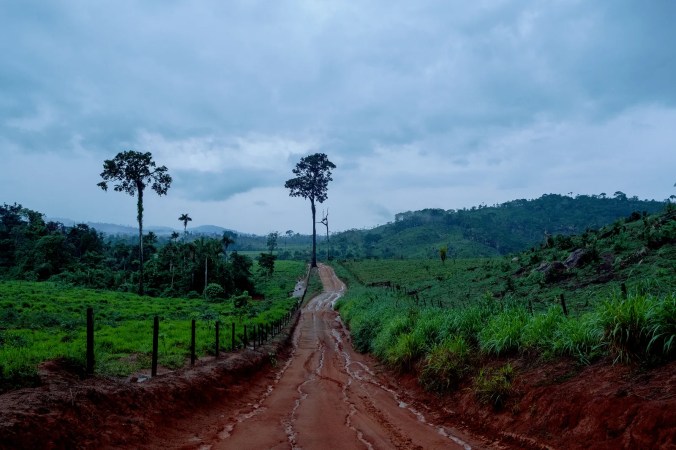
On the road from Novo Progresso to Baú Village.

We are always thankful to Jon Lee Anderson for his illuminations on complicated places, such as Brazil:

Dulce Sousa, a resident of Novo Progresso, agrees with the former President Jair Bolsonaro that local residents should be free to profit from the forest’s resources.

Who Can Save the Amazon?

Brazil’s President, Luiz Inácio Lula da Silva, promises to keep miners and loggers from destroying the rain forest. On the ground, the fight is complicated.

The Brazilian Amazon is riven by two long highways, in the shape of a cross: the BR-163, which extends more than four thousand miles from north to south, and the Trans-Amazonian, which runs twenty-four hundred miles from east to west. The roads were carved from the jungle in the nineteen-seventies, to open the wilderness to settlers and development. The effects have been calamitous. As colonists flooded in, the human population in Brazil’s Amazon has quadrupled, to nearly thirty million. Continue reading

Yosemite, John Muir & Robert Underwood Johnson

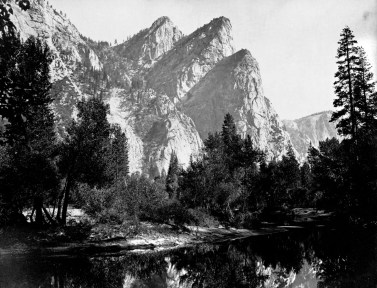
The Three Brothers, taken just east of El Capitan, by Carleton Watkins, ca. 1865. “A sharp earthquake shock at 7:30 a.m.,” Muir wrote in his journal on January 5, 1873. “Rotary motion tremored the river. . . . A boulder from the second of the Three Brothers fell today.” (Courtesy of the Library of Congress)

This book review in the LA Times will be of interest to those who find the history of conservation innovations entertaining:

The odd couple that saved Yosemite

John Muir and Robert Underwood Johnson were unlikely allies in the war to preserve Yosemite. Muir, son of a Scripture-quoting Scottish immigrant father, was raised poor on a Wisconsin farm, but he wrote and spoke with the fervor of a prophet, and his craggy visage, tough constitution and unshakable devotion to the natural world drew admirers like a magnet. The urbane and cultured Johnson was an insider with a vast network of contacts in publishing and politics. The editor of one of the country’s preeminent magazines, Johnson hosted New York literary salons, mingled with America’s elite and eventually became the U.S. ambassador to Italy.
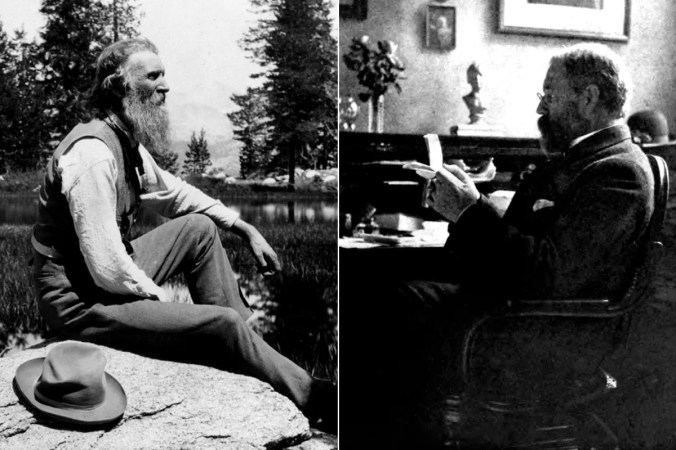
John Muir in California nature, 1902, left, and Robert Underwood Johnson, associate editor of the Century Magazine, at his office on Union Square in New York City. Their complementary skills helped carve out Yosemite National Park.(Courtesy of the Library of Congress; Courtesy of Wikimedia Commons)
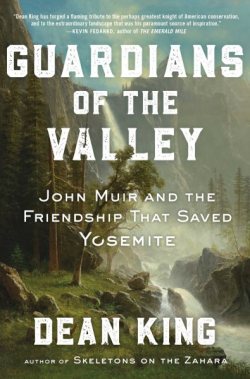
It was improbable that they even met — Muir was on the West Coast, Johnson on the East. But on one memorable journey into the California kingdom now known as Yosemite National Park, the two agreed to pull together to wage the nation’s “first great environmental war,” battling through the administrations of seven presidents to save Yosemite. It’s fair to say that the valley’s matchless terrain and fragile ecosystem would have been logged, plowed and plundered without their relentless efforts. Veteran nonfiction writer Dean King tells their story in “Guardians of the Valley: John Muir and the Friendship that Saved Yosemite.” Continue reading

DRC’s Price Paid For Our Electric Future

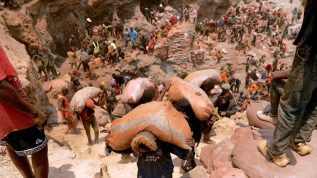
Miners haul sacks of cobalt ore at the Shabara mine near Kolwezi in the Democratic Republic of the Congo. JUNIOR KANNAH / AFP VIA GETTY IMAGES

Jocelyn C. Zuckerman leads a conversation below that puts our electric future in a very particular context:

For Your Phone and EV, a Cobalt Supply Chain to a Hell on Earth

The race for high-tech metals has sparked a cobalt boom in the Democratic Republic of the Congo that has come at a steep human cost. In an e360 interview, author Siddharth Kara talks about the horrific conditions in the mines that are putting thousands of workers at risk.

As countries around the world look to pivot quickly to clean energy, demand for the lithium-ion batteries used to charge our smartphones, laptops, and electric vehicles is booming. Continue reading

Who Is Protesting Banks That Fund Oil Companies?

When he points us to people like this, we can only celebrate it and pass it on:

Rock On

So many thanks to all who work for change

BILL MCKIBBEN
MAR 25

The white-haired woman in the picture above is one of my great heroes in the world. Her name is Heather Booth, she’s 77, and a board member at Third Act, which helped organize last Tuesday’s massive day of protest against the fossil-fueled banks, coordinating 102 demonstrations in 30 states and (see above) the District of Columbia, where the Rocking Chair Rebellion shut down four banks for the day. Continue reading

Keeping It Honest In Costa Rica

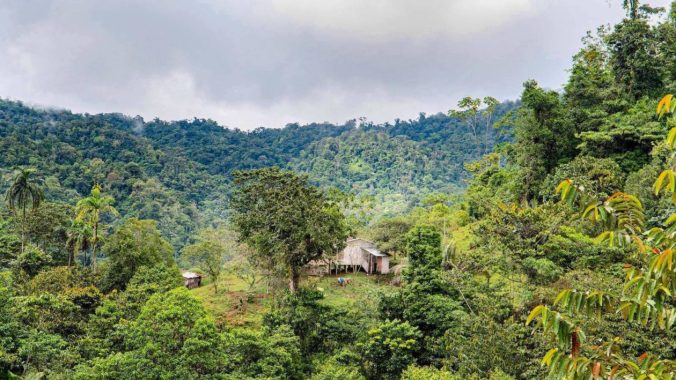
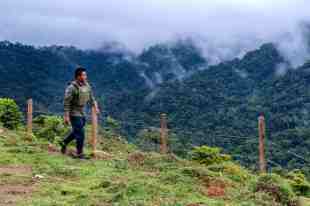
The Nairi Awari Indigenous community in Limón, Costa Rica. EZEQUIEL BECERRA / AFP VIA GETTY IMAGES

We are proud of the country we call home, and where our work us based. But even as I celebrate it from time to time, I never mistake it for perfect. There is always more work to be done. Thanks to Fred Pearce, as always, for the details we need to know:

Lauded as Green Model, Costa Rica Faces Unrest in Its Forests

Indigenous park ranger Osvaldo Martinez tours the Nairi Awari indigenous community in Limon, Costa Rica on November 9, 2021. – The indigenous people of this community are payed for caring for the environment, as part of a program awarded by the British royalty. (Photo by Ezequiel BECERRA / AFP) (Photo by EZEQUIEL BECERRA/AFP via Getty Images)

Costa Rica has won international acclaim for its initiatives to restore its forests. But those successes are now jeopardized by conflicts over the government’s failure to return traditional lands to the Indigenous people who are regarded as the best forest stewards.

Costa Rica has a green halo. In recent decades, the small Central American nation has transformed itself from a notorious hotspot for deforestation into a beacon of reforestation that is the envy of the world. Many of its more than 12,000 species of plants, 1,200 butterflies, 800 birds, and 650 mammals, reptiles, and amphibians have gone from bust to boom, and eco-tourists are savoring the spectacle. Continue reading

Small But Meaningful Legal Support Of Protest

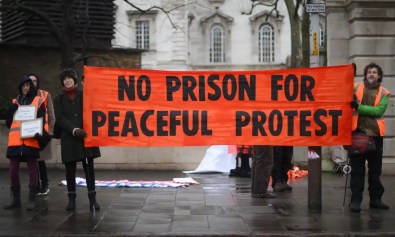
Insulate Britain supporters protesting in London this month. Photograph: Daniel Leal/AFP/Getty Images

Strange that this requires a protest, but that’s how it is. Our thanks to Damien Gayle of the Guardian for this coverage:

Top lawyers defy bar to declare they will not prosecute peaceful climate protesters

Six KCs among more than 120 mostly English lawyers to sign pledge not to act for fossil fuel interests

Leading barristers have defied bar rules by signing a declaration saying they will not prosecute peaceful climate protesters or act for companies pursuing fossil fuel projects. Continue reading