The Land Art Generator Initiative

The Clear Orb is a proposed glass desalination dome 40 meters in diameter, lined with solar cells to generate power to pump seawater. Inside the orb, the sun’s heat would distill the saltwater through evaporation and condensation. The project could generate 3,820 megawatt hours of electricity and 2.2m liters of fresh water a year. The underbelly of the orb is covered in fins that can turn wave action into electricity. Artists: Jaesik Lim, Ahyoung Lee, Jaeyeol Kim, Taegu Lim from Seoul, South Korea. Photograph: Land Art Generator Initiative

The Clear Orb is a proposed glass desalination dome 40 meters in diameter, lined with solar cells to generate power to pump seawater. Inside the orb, the sun’s heat would distill the saltwater through evaporation and condensation. The project could generate 3,820 megawatt hours of electricity and 2.2m liters of fresh water a year. The underbelly of the orb is covered in fins that can turn wave action into electricity. Artists: Jaesik Lim, Ahyoung Lee, Jaeyeol Kim, Taegu Lim from Seoul, South Korea.
Photograph: Land Art Generator Initiative

In recent months we’ve seen some interesting competitions blending technology with art and aiming to improve the world in some way, like lionfish hunting, wildlife crime controlling, and milk tea brewing. But a biennial public art contest organized by the Land Art Generator Initiative, featured last week in The Guardian, might be the most impactful in terms of scale and long-term inspiration – although the anti-poaching stuff is pretty good too. Alison Moodie writes (and make sure to follow her first link!):

These ideas illustrate the possibility of marrying aesthetics with renewable energy and water technology and educate the public about the challenges of addressing climate change and feeding a growing population.

Continue reading

Cornell University Campus Pursues Geothermal Heating

© Cornell Marketing Group

© Cornell Marketing Group

In 2009, Cornell faculty, staff, and students came together to create a Climate Action Plan that made a goal of making the Ithaca campus carbon neutral by 2035. Since then, gross emissions have already been reduced by about 30% through several measures, such as installing solar farms and ceasing the use of an old coal-powered energy plant. Now, a new initiative to keep the campus warm in winter with a geothermal project called Earth Source Heat might help reduce emissions by another 38%. Syl Kacapyr reports for the Cornell Chronicle:

Cornell is pursuing a project that has the potential to eliminate an estimated 82,000 metric tons of carbon from its annual footprint and establish one of the country’s most advanced geothermal systems to heat the 745-acre Ithaca campus – an effort that could demonstrate a new scalable model for using this sustainable energy source throughout the U.S. and almost anywhere in the world.

Continue reading

Solar Energy Benefits for All

h_bostonia_16-9939-solarpanel-116

All photos from: Boston University Bostonia

It seems obvious that investing in renewable solar energy saves money for those who install photovoltaic (PV) systems for their homes. However, what might not be so obvious is that PV systems also reduce electricity prices for all those with no solar panels, as professor Robert Kaufmann from Boston University discovered. His research revealed that the approximately 40,000  households and community groups with solar panels in Massachusetts reduce electricity prices for all of the three million electricity ratepayers in the state, including those with no solar panels.

“Until now, people have focused on how much was being saved by those who owned PV,” says Kaufmann. “What this analysis quantified was that it actually generates savings for everybody.”

Continue reading

Merdacotta from Castelbosco

Merdacotta (baked processed cow dung mixed with clay and hay) products. Credit Alex Majoli

I’ve shared some thoughts on dung in the past, and also experienced first-hand the use of methane collected as an alternative energy source at a coffee farm in Nicaragua. There, the gas was used for cooking fuel, but in the case of Castelbosco farm in Piacenza, Italy, dairy farmers who make Grana Padano cheese also generate electricity from their dung’s methane, and run a museum that showcases poop in part of a medieval castle. They also make the beautiful pots, tableware, and tiles shown in the photo above. Christine Smallwood writes for the New York Times Style Magazine:

THE DAIRY FARMER Gianantonio Locatelli climbed up the steel ladder and peered over the brim of a large corrugated vat, about the size of a very deep above-ground swimming pool. “It’s full!” he exclaimed, with warbling joy. “It’s beautiful!”

The vat was full of liquid cow dung. I handed my phone to Locatelli’s friend, the architect Luca Cipelletti, and climbed the ladder to the top, disembarking on a viewing dock. Beneath my feet the manure bubbled and gurgled, forming foamy peaks and crests. It was a topographical map, a primordial stew. A rich and beautiful shade of brown.

Continue reading

Price of Solar Continues to Decline

Precisely two months ago we shared a great function by Google for investigating the potential for installing solar power in your neighborhood (mostly if you’re in the US). Last week, one of our most successful Instagram posts was of three shades of blue at Villa del Faro (see above), where photovoltaics are key. Panels are becoming less and less expensive, so hopefully the alternative energy will keep spreading!  Continue reading

Renewable Energy = Renewed Job Market

Workers with Bella Energy install solar panels on a rooftop in Boulder on July 25, 2014. Photo © Denver Post

The energy that is generated from coal needs to keep decreasing relative to alternative energy sources if we want to reduce the release of pollutants and greenhouse gases into the atmosphere and rely on renewables instead. But for many people working in the coal industry, this change represents unemployment and poverty. In Colorado, a plan to train coal workers for solar energy jobs may be able to ameliorate the situation. Lea Terhune reports for Share America:

What does greater use of green energy mean for workers in more traditional energy sectors? A Colorado initiative may have the answer: put the workers where the jobs are. Consider the findings of Michigan Technological University professor Joshua M. Pearce and associates: There are nearly 209,000 solar workers in the United States, compared to about 150,000 remaining jobs in the coal industry. Hence Colorado’s plan: train unemployed coal workers to install solar panels.

“Our results show that there is a wide variety of employment opportunities in the solar industry, and that the annual pay is attractive at all levels of education,” Pearce writes in the Harvard Business Review.

Continue reading

Piezoelectricity Going to California

A piezoelectric pad on the Shibuya subway station in Tokyo. Image © Vimeo

We’re always on the lookout for alternative energy options, especially those that are linked with big carbon producers like transportation. But unlike many of the options we’ve shared about before, piezoelectric crystals generate power from mechanical stress, and they can be installed in roads or walkways, as they already have been elsewhere in the world. Now, California is looking to take a step in the same direction with a pilot program, Laura Goldman reports for care2.com:

Energy conservation is probably not the first thing that comes to mind when you think about freeways jammed with idling vehicles.

But in California, which has some of the most congested freeways in the country, that’s about to change. The California Energy Commission (CEC) has approved a pilot program in which piezoelectric crystals will be installed on several freeways.

Continue reading

Biolighting: A New Alternative for Light

icone_v7qrqw

Glowee.com

In the developed world, light and electricity go hand in hand. But what if there was a way to produce light without electricity? That is the question Glowee, a biolighting living system, is striving to resolve. Glowee is a biological source of light that relies on the natural properties of marine microorganisms, specifically, the genetic coding for bioluminescence. The benefit to this alternative lighting is that it emits very low light pollution and CO₂.

To understand this new development, Continue reading

Keep Up Your Sustainable Efforts

5611

Source: The Guardian

Some positive news for all sustainable development worldwide (so yes, please continue your individual efforts to reduce your energy consumption and mitigate your carbon footprint, because they are paying off):

The amount of coal, oil, gas and renewable energy used by the global economy is falling quickly, a clear sign that economic growth is having less of an impact on climate change than in the past, according to new data from the U.S. Department of Energy.

The measure of the amount of energy that is used per unit of gross domestic product is known as energy intensity, and it’s an important indicator in the progress countries are making in tackling climate change. Globally, energy intensity has fallen 30 percent since 1990 and about 2 percent between 2014 and 2015.

Continue reading

Cool Chemistry

120556_web

Source eurekalert.org

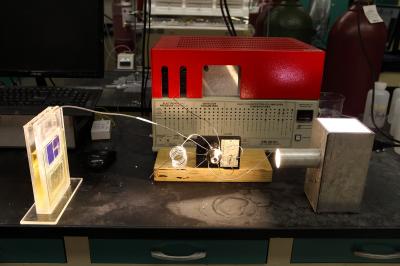
Increasing levels of CO₂ are the principle cause of the alarming climate changes that we have observed in the past several decades, so why not use the same chemical compound that is causing all our woes to generate fuel, or electricity, as we saw here a few days ago? The scientific community is well aware of the common and “conventional” renewable energies, so researchers at the University of Illinois at Chicago have engineered a solar cell that converts atmospheric carbon dioxide directly into usable hydrocarbon fuel, using only the sunlight for energy.  This new invention removes the necessity of batteries and solves two crucial problems: Continue reading

US to Build First Offshore Wind Farm off R.I.

A GE Renewable Energy offshore wind turbine off the coast of Belgium. Photo © GE via Wired.com

Wind power is a recurring subject here, and although there are thousands of turbines across the United States, none so far have been built collectively along the coast. Since so much of the US population is collected in coastal areas, having electricity produced closer to them is key to reduce loss via transportation. Brendan Cole reports for WIRED about the upcoming wind farm in Rhode Island:

BUILDING IN RHODE Island isn’t easy. Hurricanes and tropical storms barrel through its quaint coastline towns, interrupting perfect summer weekends. Freezing winters bring blizzards that can shut down the entire state. And every season features corrosive salty winds, biting at the coast as if sent by a Britain still seething at the first American colony to declare independence.

Continue reading

First Solar Plane Voyage Around the World

After a pit stop in Oman Solar Impulse 2 sets off for Ahmedabad, India on 10 March 2015 Photograph: Jean Revillard/Solar Impulse

The strange rear profile you see in the photo above is that of the Solar Impulse 2, a two-ton plane (a Boeing 747 weighs 154 tons) with solar panels on its wings that made history this week as it completed a round-the-globe voyage over the course of roughly three weeks in flight. The Solar Impulse 2 and one of its pilots, André Borschberg, broke the record for the longest nonstop solo flight ever a few weeks ago, when Borschberg flew from Japan to Hawaii. Damian Carrington reports for The Guardian:

The final leg of the feat, aimed at showcasing the potential of renewable energy, was a bumpy one, with turbulence driven by hot desert air leaving the solo pilot, Bertrand Piccard, fighting with the controls.

The plane, which has a wingspan wider than a Boeing 747 and carries more than 17,000 solar cells on its wings, began the circumnavigation in March 2015 in Abu Dhabi. It has since crossed both the Pacific and Atlantic Oceans using no fossil fuel and has spent more than 23 days in the air.

Continue reading

Hydrogen Derived from Grass, Sunlight, and Nickel

A type of fescue grass in the UK, photo by T. Voekler via WikiMedia Commons

Another research university, another new chemical conversion. Yesterday we shared an innovative prototype system from Cornell to generate electricity, and today we learned via Eurekalert.org, “the global source for science news,” that hydrogen, a source of renewable energy, can be produced by the cellulose found in fescue grass during a chemical reaction with sunlight and a metal catalyst such as nickel, according to researchers from Cardiff University and Queen’s University in the UK:

It is the first time that this method has been demonstrated and could potentially lead to a sustainable way of producing hydrogen, which has enormous potential in the renewable energy industry due to its high energy content and the fact that it does not release toxic or greenhouse gases when it is burnt.

Co-author of the study Professor Michael Bowker, from the Cardiff Catalysis Institute, said: “This really is a green source of energy.”

Continue reading

Concentrating Solar with Mirrors and Molten Salt

A tower of salt, surrounded by sunlight-sensing and -reflecting mirrors. Photo © SolarReserve

Two months ago we posted about non-photovoltaic solar power via a story from Scientific American, and this week they’re exploring the subject again, this time in the desert of Nevada with the first utility-scale “concentrating solar” plant that can provide electricity even at night. Concentrating solar involves storing heat from the sun rather than converting light into electricity, and apparently molten sodium and potassium nitrates can do this very effectively. Knvul Sheikh reports:

Deep in the Nevada desert, halfway between Las Vegas and Reno, a lone white tower stands 195 meters tall, gleaming like a beacon. It is surrounded by more than 10,000 billboard-size mirrors focusing the sun’s rays on its tip. The Crescent Dunes “concentrating solar power” plant looks like some advanced communication device for aliens. But the facility’s innovation lies in the fact that it can store electricity and make it available on demand any time—day or night.

Continue reading

Largest Lithium-ion Storage Battery for L.A.

Downtown Los Angeles and the San Gabriel Mountains via Wikimedia Commons

Our posts about solar power normally include some mention of the batteries involved, since that’s where the electricity is stored for actual domestic or commercial use. Lithium-ion batteries in particular are some of the more powerful ones on the market, but sustainable options are on our radar too. This week, we learned about the proposal for a set of over 18,000 lithium-ion batteries to be put together as a super-battery in Los Angeles to meet peak demand. John Fialka reports for Scientific American:

By 2021, electricity use in the west Los Angeles area may be in for a climate change-fighting evolution.

For many years, the tradition has been that on midsummer afternoons, engineers will turn on what they call a “peaker,” a natural gas-burning power plant In Long Beach. It is needed to help the area’s other power plants meet the day’s peak electricity consumption. Thus, as air conditioners max out and people arriving home from work turn on their televisions and other appliances, the juice will be there.

Continue reading

Biomass Reconsidered

biomass-b235a828247f79eff9f6f0d3846599d44ae6b453-s1400-c85

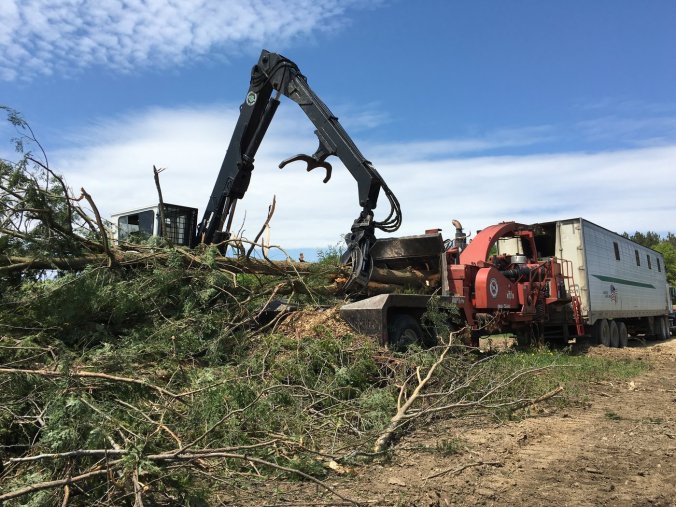
Logger Greg Hemmerich and his crew feed low-value trees into a wood chipper, before bringing the chips to ReEnergy Holdings’ biomass plant in Lyonsdale, N.Y. David Sommerstein/NCPR

Thanks to National Public Radio (USA) for this:

Is Burning Trees Still Green? Some Experts Now Question Biomass

by DAVID SOMMERSTEIN

In northern New York state, logger Greg Hemmerich and his crew are clearing out an old pasture at the edge of a forest.

“There’s a lot of balsam, lot of spruce, thorn apple trees,” Hemmerich says. “Ninety percent of this lot is low-grade wood.”

In other words, it’s no good for furniture or paper or sawmills. But he’ll make $80,000 to run the wood through a chipper and truck the chips to a nearby biomass plant.

“Everybody said that green power was supposed to be the wave of the future,” Hemmerich says. “So I went full in.” Continue reading

Increasing China’s Wind Power Production

Dabancheng wind farm in China’s Xinjiang province (Source: Bob Sacha/Corbis, via Dailytech.com)

Wind power, as we’ve written before, has great potential as an alternative energy source, although there are certain issues to take into account. China is installing the most new wind turbines per year, but has yet to produce the most wind-generated electricity given barriers by the coal industry. Prachi Patel reports for Conservation Magazine:

China is the world’s top wind energy installer. The country’s wind installations have a capacity of generating 145 Gigawatts, twice that of the United States and about a third of the world’s total wind power. Yet the country produces less wind electricity than the US. Last month, researchers from Harvard University and Tsinghua University argued in the journal Nature Energy that this underperformance is due to deliberate favoring of coal over wind by grid operators, delays in connecting new wind farms to the grid, and sub-par equipment.

Continue reading

North American Stretch Goals On Clean Energy

ap_536579746853_wide-2c65268ff1e240e81358570076bd3f5f5ad33056-s1400-c85

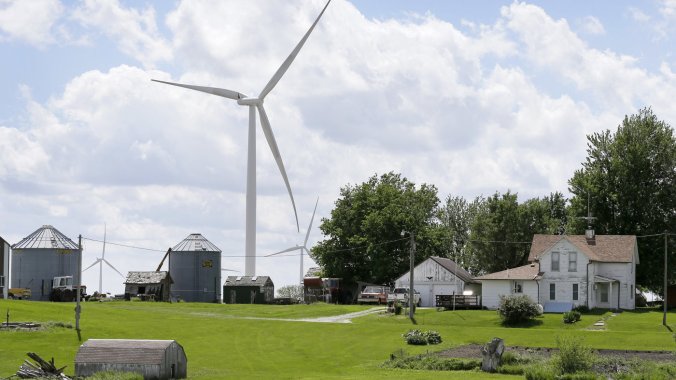
A wind turbine stands over a farmhouse in Adair, Iowa. Charlie Neibergall/AP

Thanks to National Public Radio (USA):

Obama’s New Clean Energy Goal For North America: 50 Percent By 2025

The three leaders are expected to set a target for North America to get 50 percent of its electricity from nonpolluting sources by 2025. That’s up from about 37 percent last year.

Aides acknowledge that’s a “stretch goal,” requiring commitments over and above what the three countries agreed to as part of the Paris climate agreement. Continue reading

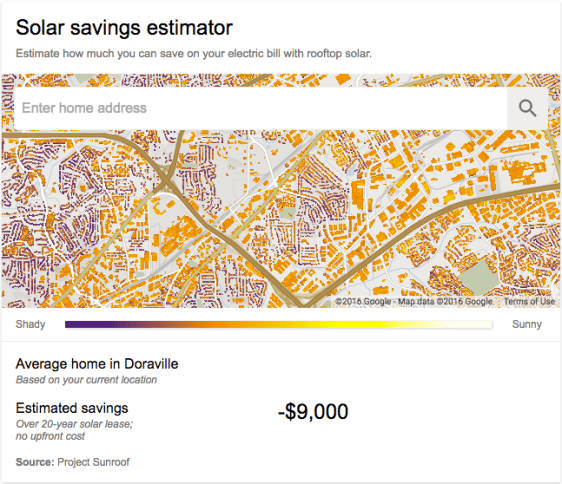
Solar for Homes, Empowered by Google

First result when searching “solar power” in Google

We posted about a solar oven yesterday, and today we heard about a less tangible but equally valuable product offered for free by Google: by visiting their Project Sunroof webpage, you can find out in seconds if your roof is suitable for panels, how many panels you’d need, and finally, what your payment options are depending on your location (at the moment it seems focused on the US and the different state and federal tax credits available). From their About page:

Why are we doing this?

As the price of installing solar has gotten less expensive, more homeowners are turning to it as a possible option for decreasing their energy bill. We want to make installing solar panels easy and understandable for anyone.

Project Sunroof puts Google’s expansive data in mapping and computing resources to use, helping calculate the best solar plan for you.

Continue reading

Creative Solar Cookers from GoSun Stove

Cooking directly with solar power is not something we’ve posted about here before, although it is a pretty important subject when you consider the vast amount of wood, electricity, or natural gas used to cook food around the world. About seven years ago we enjoyed one of our favorite articles from the New Yorker about the effort to perfect solar ovens and reduce smoke-related deaths in developing countries, and it’s clear that the quest to build a better solar oven is still going:

Continue reading