Aviation & Renewable Resource Milestone

ap_16175288680698_custom-0c6b67df90bdb4e2069afde43ff22e60a5cc62cd-s1400-c85

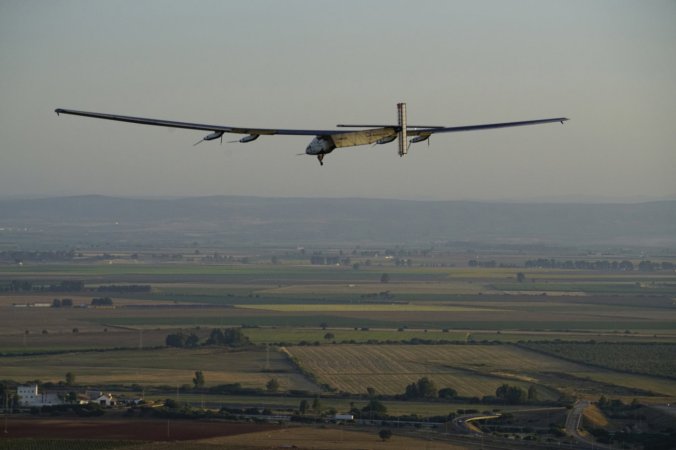
Solar Impulse 2, piloted by Swiss pilot Bertrand Piccard, prepares to land in Seville, Spain, on Thursday. Jean Revillard/AP

In case you missed it, this is awesome, and worth a quick read (thanks to NPR, USA):

‘Beautiful Flight’ Across The Atlantic Is Major Milestone For Solar Plane

After 71 hours and 8 minutes of flight time crossing the Atlantic, Solar Impulse 2 has touched down in Seville, Spain. It’s a major step toward the team’s goal of circumnavigating the globe using only the sun’s power.

The end of this leg means they’ve now completed 90 percent of that journey.

As The Two-Way has reported, the single-seater plane took off from New York’s John F. Kennedy International Airport early Monday with pilot Bertrand Piccard at the controls. Continue reading

Greener Trucks and Buses Emerge

Wrightspeed’s new range-extended electric powertrain can be installed as a retrofit to a standard diesel garbage truck, more than doubling mileage and lowering carbon dioxide emissions up to 68 percent.

We are all fans of electric vehicles and what they represent for a transition away from fossil fuel dependence in daily life, drastically reducing carbon emissions with transportation, and lower noise pollution. Cheryl Katz reports for GreenBiz.com about a shift to electric vehicles — not for consumer use, but commercial:

The clang of garbage cans still probably will wake people way too early in the morning. But in Santa Rosa, California, at least, the roaring diesel engine will be quiet, replaced by a silent, electric motor.

The electric garbage trucks scheduled to begin rolling there this summer may be less alluring than the sporty vehicles that engineer Ian Wright helped design as co-founder of Tesla Motors. But Wright, who left the high-end electric car company to start Wrightspeed, maker of electric powertrains for medium- and heavy-duty commercial vehicles, is on a campaign to force large, carbon-belching engines off the road.

Continue reading

Glen Canyon Dam to be Removed?

The Glen Canyon Dam, on the Arizona-Utah border, as seen in the documentary “DamNation.” The efficiency of the dam has dwindled. Credit Ben Knight/Patagonia via NYTimes

Dams are a recurring theme on this blog, probably due to their strong effect on their environment and on the people around them. Last week, Abraham Lustgarten, a writer on climate change, energy, and water, among other issues, wrote an op-ed in the New York Times considering the possibility of “Unplugging the Colorado River”:

WEDGED between Arizona and Utah, less than 20 miles upriver from the Grand Canyon, a soaring concrete wall nearly the height of two football fields blocks the flow of the Colorado River. There, at Glen Canyon Dam, the river is turned back on itself, drowning more than 200 miles of plasma-red gorges and replacing the Colorado’s free-spirited rapids with an immense lake of flat, still water called Lake Powell, the nation’s second-largest reserve.

Continue reading

Well Done, Portugal!

Europe’s biggest wind energy park [in 2008] in the northern region of Viana do Castelo, Portugal. Photograph: Estela Silva/EPA

Always on the look for good news in the sphere of renewable energy, we found out this week that Portugal, a country with a population of over 10 million, operated for 107 hours solely on the alternative energy sources from wind-, solar-, and hydro-powered electricity. Arthur Nelsen reports for The Guardian:

Portugal kept its lights on with renewable energy alone for four consecutive days last week in a clean energy milestone revealed by data analysis of national energy network figures.

Electricity consumption in the country was fully covered by solar, wind and hydro power in an extraordinary 107-hour run that lasted from 6.45am on Saturday 7 May until 5.45pm the following Wednesday, the analysis says.

Continue reading

Solar Thermal vs Photovoltaics

Photo © German Aerospace Center

Solar power is always on our radar, but we understand that storing the electricity from photovoltaics can be an issue. Today we are learning about a new solar technology for the first time, even though it revolves around something that we benefit from every day: the sun’s heat. Umair Irfan reports for Scientific American‘s ClimateWire section on this interesting idea being researched in Europe:

COLOGNE, Germany—At Germany’s aerospace agency, the next frontier is capturing the sun here on Earth and keeping it on tap.

In a 4-year-old glass and steel building near the Cologne-Bonn Airport, researchers at the German Aerospace Center (DLR), Germany’s equivalent of NASA, are working on new ways to produce more heat than light in order to smooth over intermittency, one of the biggest drawbacks of solar power on the grid.

Continue reading

Solar Improvements Increase Output Estimates

Update: Check out The Guardian‘s coverage of a new San Francisco law requiring solar panels on new buildings for 2017.

We’re always happy to see photovoltaics in the news, whether they’re installed in old golf courses, floating on rafts, powering an airport in Kerala, or remotely charging your phone via adaptor. So we’re not surprised to see that since 2008, US rooftop solar potential has doubled. From Conservation Magazine:

To take advantage of the sun’s energy to satisfy our ever-increasing need for electricity, Americans will have to take a fresh look at their roofs. A report by the National Renewable Energy Laboratory shows that if all suitable roof areas in the United States were plastered with solar panels, they would generate about 1,118 gigawatts of solar power. That is 40% of the power that Americans consume every year.

And that isn’t the half of it. The study only estimates the solar power potential of existing, suitable rooftops, and does not look at the immense potential of ground-mounted photovoltaics, said NREL senior energy analyst Robert Margolis in a press release. “Actual generation from PV in urban areas could exceed these estimates by installing systems on less suitable roof space, by mounting PV on canopies over open spaces such as parking lots, or by integrating PV into building facades. Further, the results are sensitive to assumptions about module performance, which are expected to continue improving over time.”

Continue reading

Winds Across the Plains

High winds have played a significant role in the history of Texas, Oklahoma and the Great Plains. At worst they accentuated the destructive “dust bowl” period, at best they’ve helped to power small homestead farms for several centuries.

As the struggle to step back from carbon based energy continues, it’s happy news that the measures are meeting with more success and fewer obstacles:

The decision also signals that the Obama administration remains committed to encouraging the spread of renewable energy, seen as a major component of reaching national goals on stemming climate change.Multiple companies are hoping to build high-voltage transmission lines to transport renewable energy produced by wind farms and hydroelectric plants to more populous regions of the country. Continue reading

My Big Fat Floating Solar Panel

QE-press-release

This recent Thames Water press release has just come to our attention and it sounds like progress, or what we count as good news:

Europe’s biggest ever floating solar panel array is being installed on London’s Queen Elizabeth II reservoir as part of Thames Water’s ambitious bid to self-generate a third of its own energy by 2020.

Continue reading

NatureNet Science Fellows

WOPA050824_D120

Giant clam in Pacific, Asia Pacific. (ALL RIGHTS GRANTED TNC)

The Nature Conservancy is, among the philanthropic conservation organizations we are aware of, uniquely entrepreneurial beyond their core competency in land conservation. Their communications outreach is among these excellent extensions of their mission.  This article, about one of the NatureNet Science Fellows, is a good case in point:

Adventures in Alternative Energy: Giant Clam Edition

When most people think about alternative energy sources, Pacific giant clams probably do not spring readily to mind. Within their iridescent tissues, however, the world’s largest clams may well hold the missing link to finally enable the efficient (read: commercially viable) large-scale production of clean biofuels from algae.

Giant clams as alternative energy powerhouses. Who knew? Continue reading

Earthships

earthships-7

Photo via ThisIsColossal

In New Mexico, a community of ecologically-conscious citizens have built homes that are almost completely made out of recycled materials, and their utilities come from the sky: solar and wind power, and rain collection gutters. We’ve featured a series on straw bale construction, a slightly similar idea, in the past, but, as you can see in the video below, these “earthships” have even more going for them.

Continue reading

National Appropriate Mitigation Action

img_5782_zpsquoflyhp

Ripe and ripening Caturra coffee at Xandari Resort, Costa Rica.

We have a strong connection with coffee here at Raxa Collective, especially given the recent developments in coffee growing at Xandari Resort in Costa Rica over the last year. With the COP21 climate change summit in Paris happening this week and the next, there’s been an announcement by Costa Rica’s Ministry of the Environment (MINAE) that 25,000 more hectares of coffee plantation in the country will be converted to carbon-efficient, National Appropriate Mitigation Action farms, funded in part by the UK and Germany. Lindsay Fendt reports for the Tico Times:

Costa Rica began its coffee NAMA pilot program in 2013 with 800 small producers. The donated money will allow Costa Rica to expand the program to more than 6,000 family-owned farms. By 2023, the country plans to have implemented the NAMA best practices in all of its coffee farms.

The pilot farms reforested unused areas of farmland, reduced their dependence on chemical fertilizers and employed other innovations on a farm-by-farm basis. The strategies already have been proven effective. Coopedota, located in the Los Santos region southeast of San José, became the world’s first carbon neutral coffee producer in 2011 by utilizing many of the NAMA recommendations. Along with improving efficiency, the coffee cooperative burns coffee bean byproducts to produce its own energy. The cooperative’s members say in addition to helping the environment, the changes have saved them more than $200,000 a year in costs.

Continue reading

Look At the Germans

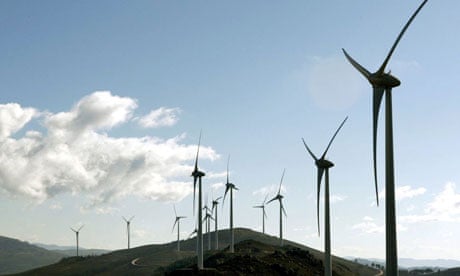
Wind turbines surround a coal-fired power plant near Garzweiler in western Germany. Renewables now generate 27 percent of the country’s electricity, up from 9 percent a decade ago. PHOTO: Nat Geo

Wind turbines surround a coal-fired power plant near Garzweiler in western Germany. Renewables now generate 27 percent of the country’s electricity, up from 9 percent a decade ago. PHOTO: Nat Geo

Germany has been one of the few countries that have successfully moved away from nuclear energy. Germany has so far successfully shut down its nine units that had the capacity of generating enough power for at least 20 million homes in Europe. In fact, the contribution of nuclear power in Germany’s electricity generation has now fallen to just 16 percent and renewables are now the preferred source of electricity generation in the country.

Germany is pioneering an epochal transformation it calls the energiewende—an energy revolution that scientists say all nations must one day complete if a climate disaster is to be averted. Last year about 27 percent of its electricity came from renewable sources such as wind and solar power, three times what it got a decade ago and more than twice what the United States gets today. The change accelerated after the 2011 meltdown at Japan’s Fukushima nuclear power plant, which led Chancellor Angela Merkel to declare that Germany would shut all 17 of its own reactors by 2022.

Continue reading

When the Sun Goes Down

About seven out of every 10 households in rural India have no access to electricity. Many of these households still use less efficient energy sources that are harmful to the environment, such as kerosene. Even in places where electricity is accessible, shortages are frequent and the supply is inconsistent. In such a scenario, solar lamps come as a blessing and are revolutionizing lives in the country and around the world.

PRASHANT MANDAL FLIPS ON A CANDY-BAR-SIZE LED LIGHT in the hut he shares with his wife and four children. Instantly hues of canary yellow and ocean blue—reflecting off the plastic tarps that serve as the family’s roof and walls—fill the cramped space where they sleep.  He shuts down the solar unit that powers the light and unplugs it piece by piece, then carries it to a tent some 20 yards away, where he works as a chai wallah, selling sweet, milky tea to travelers on the desolate road in Madhotanda, a forested town near the northern border of India.

“My life is sad, but I have my mind to help me through it,” Mandal says, tapping the fraying cloth of his orange turban. “And this solar light helps me to keep my business open at night.”

Continue reading

The Greenest Island in the World?

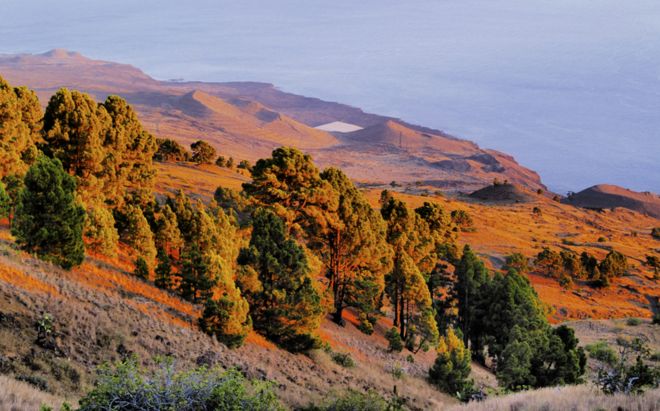
The smallest and most isolated of the Canary Islands, El Hierro, has a way of combining hydro and wind power that may allow it, one day, to get all its energy from renewable sources. PHOTO: BBC

The smallest and most isolated of the Canary Islands, El Hierro, has a way of combining hydro and wind power that may allow it, one day, to get all its energy from renewable sources. PHOTO: BBC

The question is not about who has the densest forests or flora resources showing up high estimates in green. It is one of keeping up a sustained model of efficient use of alternative and natural sources of energy. And on that front, El Hierro seems like it’s well on its way to self-sufficiency on the energy front.

For more than 30 years, El Hierro has been dreaming of becoming self-sufficient. And this year it took a big step forward. At the end of June its new hydro-wind facility, Gorona del Viento, came fully on stream and in July and August it provided roughly half of the island’s energy needs.That means the island’s 10,000 inhabitants are suddenly less reliant on supplies of diesel arriving over unpredictable seas from Tenerife, 200km away. In July, Gorona del Viento saved 300 tonnes of fossil fuels, but that is predicted to rise to 500 tonnes per month before long – the equivalent of saving 40,000 barrels of oil and 19,000 tonnes of emitted CO2 per year.

Continue reading

Giving Food a Longer Life

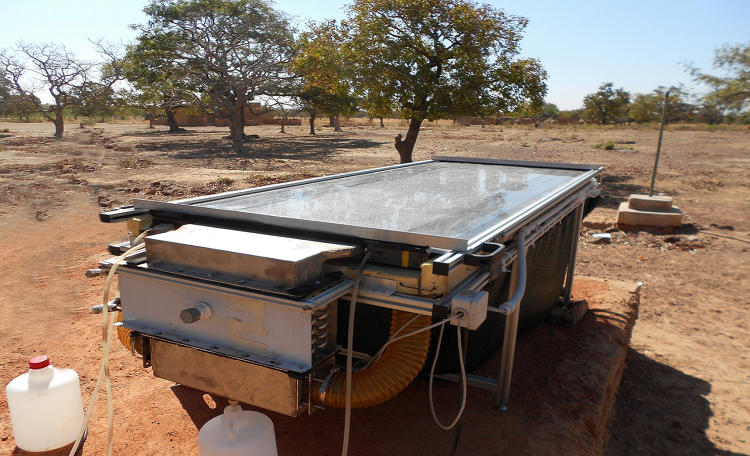
The FoodWa, which comes in two sizes, and is like a big ventilated box. The smaller "Batch" version can handle about 11 pounds at a time. PHOTO: CoExist

The FoodWa, which comes in two sizes, and is like a big ventilated box. The smaller “Batch” version can handle about 11 pounds at a time. PHOTO: CoExist

Each year, the world loses or squanders a third of the food it produces. This means that somewhere between planting seeds in fields and providing nourishment to the world’s 7 billion people, approximately 1.3 billion tonnes of food with a value of more than US$1 trillion is lost or wasted. These numbers are simply untenable in a world where, according to Food and Agriculture Organization, some 870 million people do not have enough to eat. In fact, according to the FAO-commissioned study that tallied these numbers, if just one-fourth of lost or wasted food were saved, it could end global hunger.

And drying food, to prevent it from rotting during storage, maybe a solution. A clean, green solution especially with the FoodWa system that uses solar energy to dry foods.

Continue reading

A Statement in Energy Saving

A passive house, a project from Parsons the New School for Design in 2011, is so well insulated that it needs little or no energy for heating and cooling. PHOTO: MATT MCCLAIN FOR THE WASHINGTON POST/ GETTY

A passive house, a project from Parsons the New School for Design in 2011, is so well insulated that it needs little or no energy for heating and cooling. PHOTO: MATT MCCLAIN FOR THE WASHINGTON POST/ GETTY

Energy efficiency is one of the easiest and most cost effective ways to combat climate change, clean the air we breathe, improve the competitiveness of our businesses and reduce energy costs for consumers. And Habitat for Humanity may be onto something with its new range of “passive” homes that aggressively save energy.

The passive standard is buoyed by efforts to fight climate change, because buildings account for 40 percent of total U.S. energy use and 10 percent of its greenhouse gas emissions. In September, New York City’s Mayor Bill de Blasio hailed it as one way to help the Big Apple meet its goal of slashing emissions 80 percent from 2005 levels by 2050

Continue reading

Giving Up Electricity

A wood-fired stove at Lehman's (Photo: sonja/Flickr)

A wood-fired stove at Lehman’s (Photo: sonja/Flickr)

What started as a small hardware store serving the local Amish in Kidron, Ohio, grew into something much bigger than founder Jay Lehman ever dreamed. Gathering four pre-Civil War era buildings under one soaring roof, today the store is a place to embrace the past: from old-fashioned treats and sodas to practical, non-electric goods for a simpler life.

The story of the Lehman store is one of “peddling historical technology”. A story of being old-school. And being good at it. Their top-selling products have not changed for decades. Wood stoves, gas refrigerators, oil lamps, water pumps, and water filters are always popular: if you don’t have electricity, you still need ways to store food, stay warm, light the night, and access water.

“We’ve known the term ‘off-the-grid’ for many, many years,” Ervin says. “But now it’s a thing.”

Continue reading

New York, Have a Sunny Day!

With New York packing so many buildings into a small area, the rooftops offer seemingly limitless potential to take homes off the grid. PHOTO: Business Insider

With New York packing so many buildings into a small area, the rooftops offer seemingly limitless potential to take homes off the grid. PHOTO: Business Insider

For the average homeowner, there’s more benefit to going solar than ever before. With the sun being a consistent source, of energy, those investing in photo-voltaic panels can be assured of seeing returns. There’s bound to be questions about feasibility, yes. About how much space is required, the type of structures involved, whom to contract for setup, etc.That’s where Mapdwell, a spin-off company from MIT that is creating incredibly detailed maps of the solar potential for each and every building in various cities, comes in.

“Solar energy has all this baggage, in a way. Solar panels have been out there for 30 to 40 years, but most homeowners still believe panels are “complicated, expensive, not-for-me kinds of things,” says CEO Eduardo Berlin, an architect and designer who is based in Cambridge, MA. “Solar is a real possibility for many people now, but somehow that got missed. It never got rebranded. The idea that you can put something on a roof and create energy from the sun, it’s pretty amazing.”

Continue reading

Guardian Pressure, Gates Commitments, Turning The Dial

Screen Shot 2015-06-28 at 7.55.55 AM

In case you have missed the campaign that the Guardian has been waging, click the image above, which will take you to their partnership site, 350.org, which we have been admirers of too. Brilliant and bold, better than anything the New York Times or any other media outlet has done in activist mode on environmental issues. You may say you want your journalism pure and objective, but on this issue, with the planet in the balance, we say not so.

Is it just coincidence that after campaigning for months now to get Mr. Gates to do something more, this good news arrives today?

Gates to invest $2bn in breakthrough renewable energy projects

Bill Gates plans to double investment in green energy technology and research to combat climate change, but rejects calls to divest from fossil fuels

Bill Gates has announced he will invest $2bn (£1.3bn) in renewable technologies initiatives, but rejected calls to divest from the fossil fuel companies that are burning carbon at a rate that ignores international agreements to limit global warming.

Speaking to the Financial Times, Gates said that he would double his current investments in renewables over the next five years in a bid to “bend the curve” on tackling climate change.

The Bill and Melinda Gates Foundation, lead by Gates and his wife, is the world’s largest charitable foundation. According to the charity’s most recent tax filings in 2013, it currently has $1.4bn invested in fossil fuel companies, including BP, responsible for the Deepwater Horizon oil spill in the Gulf of Mexico.

In March, the Guardian launched a campaign calling on the Gates’ Foundation and the Wellcome Trust to divest from coal, oil and gas companies. More than 223,000 people have since signed up to the campaign.

Continue reading

The Food Cart Just Turned Green

One hundred of the first carts will be funded by MOVE and reserved for disabled veterans, and the remaining 400 will go to vendors who sign up—at no cost to them, because the pilot program will be sponsored. PHOTO:  Today's the Day I

One hundred of the first carts will be funded by MOVE and reserved for disabled veterans, and the remaining 400 will go to vendors who sign up—at no cost to them, because the pilot program will be sponsored. PHOTO: Today’s the Day I

Food carts are an iconic part of New York City’s street life. NYC has over 5,000 licensed trucks and carts, and an estimated 3,000 unlicensed ones on the streets. Cart operators, representing diverse ethnicities and cuisines, serve approximately 1.2 million customers every day. A food cart can be started with little capital and improved with sweat equity. However, until now, this industry has had no choice but to rely on smoke-spewing carts and their antiquated technologies that are dirty and unsafe. But hold on, the MRV100 is here.

Most food carts run off a diesel generator that’s designed to run only a few hours. Vendors run them for stretches of up to 14 hours, leading to a high output of greenhouse-gas emissions such as carbon monoxide, nitrous oxide, and particulate matter. You can see the smoke with the naked eye, but the hard facts are even more frightening: The research and consulting firm Energy Vision found that each cart produces the same amount of nitrous oxide as 186 cars on the road.

Continue reading