The Mysterious Saola

28560535993_0fd7776ce4_o-1260x708

Saola. Photo © Bill Robichaud

Still so much to learn, and sometimes it seems like there is so little time to do so:

The Largest Mammal That No Scientist Has Ever Seen in the Wild

BY

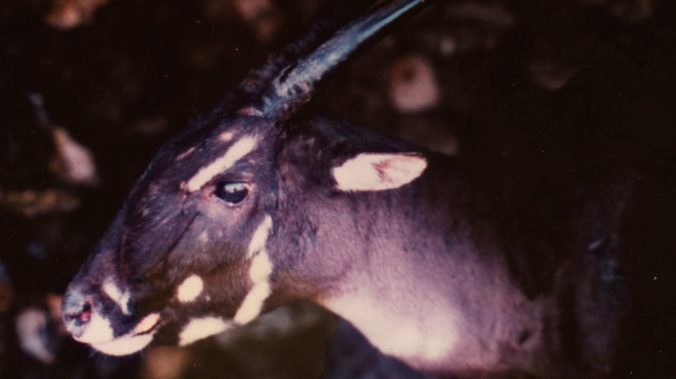
The saola is the largest terrestrial mammal never seen alive in the wild by a biologist. This is not a Bigfoot story. The saola undeniably exists. It roams only in the Annamite Mountains of Laos and Vietnam. Continue reading

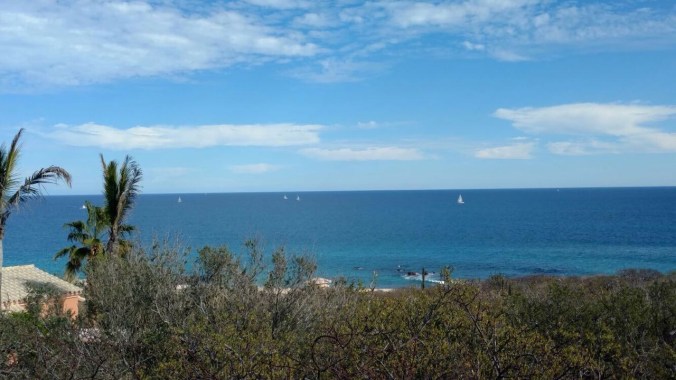
The Gulf Of California In Front Of Villa Del Faro

vdfregatta

Seth sent a snapshot he quickly took on his phone yesterday late morning at Villa del Faro. He had already told me the day before that they were seeing whales in the same vicinity of where the boats are in this photo, but he had not had his phone handy to snap a picture. So this would have to do. It looked as though a regatta was passing by. Continue reading

Villa Del Faro Morning Walk

vdfwalk1This post from yesterday reminds me of an early morning walk I took a few days ago with Seth and Jocelyn, when these two donkeys came wandering down the road. One seemed determined to get his head and shoulders portrait in the best possible light.

So I indulged him, and both seemed happy with a bit of nose-petting. No carrots, but never mind. When we continued our walk they started to follow, but then, nope. They wandered off in the opposite direction.

vdfwalk2Donkeys do that. A walk at dawn is the best way to know a place–at its quietest, and as per donkey logic, in the best possible light. I had arrived at Villa del Faro after a visit at Chan Chich Lodge, where dawn greets you with howler monkeys howling, and on a walk you will definitely hear a symphony of birdsong. At Villa del Faro you will hear birdsong, but different; at most it will be chamber music, more likely solos and duets. Continue reading

Empowered Tribal Communities Innovate

16tribal4-master675

Bolin Bay in the Great Bear rain forest near Klemtu, on the central coast of British Columbia. CreditRuth Fremson/The New York Times

There is an excellent article about old treaties and new alliances empowering indigenous people in North America, which this excerpt captures well:

…In Idaho last summer, tribal representatives from 19 states met for what organizers said was the biggest Native American workshop on climate change, and they concluded that global environmental changes transcended national boundaries.

“This is how land resource decisions are going to be made in the future — through co-management with people who have been on the land forever,” said Hadley Archer, the executive director of the Nature Conservancy Canada, which helped put together the Great Bear forest agreement. To that end, the University of Victoria law school in British Columbia will begin enrolling students next year in a degree program that will combine the traditional study of court precedents and legislation with the study of tribal law. Continue reading

Camera Traps Capturing Big, Odd Charisma

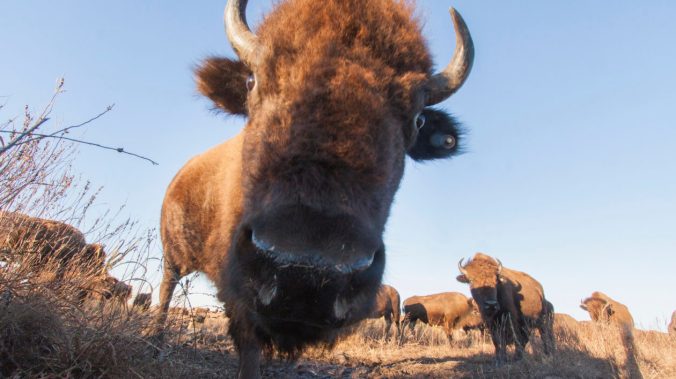
Bison trigger a camera trap set up on the prairie at The Nature Conservancy's Tallgrass Prairie Preserve in Pawhuska, Oklahoma. These behemoths are known as key grassland ecosystem engineers. Their grazing patterns play a key role in growing plant diversi

Bison trigger a camera trap set up on the prairie at The Nature Conservancy’s Tallgrass Prairie Preserve in Pawhuska, Oklahoma.

We have posted on this topic a few times, and can predict there will be more:

9 Animal Cams You Need in Your Life

Golden Eagle Population On The Mend

3500 (1).jpg

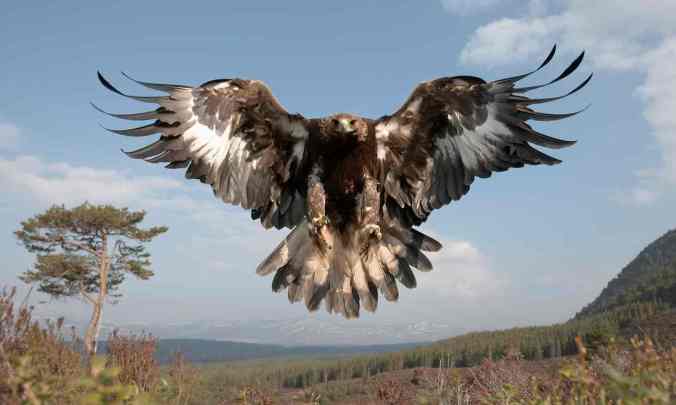
There are now more than 500 breeding pairs of golden eagles in the UK, all in Scotland. Photograph: Peter Cairns/RSPB

Scotland, a hospitable environment for one of the majestic birds, deserves credit for this comeback:

UK golden eagle population soars to new heights

Numbers pass the level deemed viable for the raptor’s long-term survival but it remains missing from a third of its traditional territories

Britain’s golden eagle population has soared to new heights, according to a new survey released on Wednesday.

There are now more than 500 breeding pairs in the UK, up 15% and passing the threshold at which bird’s long-term future is thought viable. Continue reading

Master Naturalist Perspective

tnc_78205670_preview_cropped-1260x708.jpg

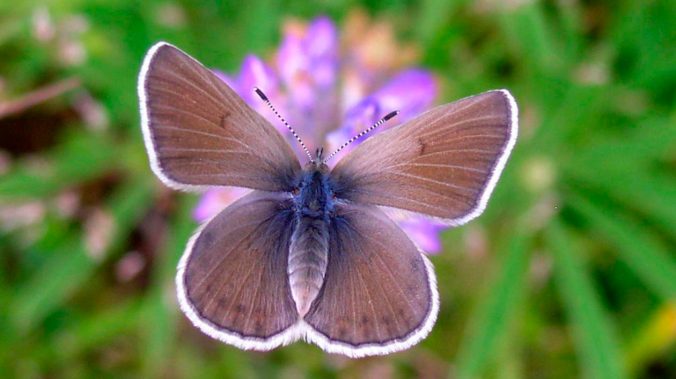
Fender’s Blue (Icaricia icarioides fenderi) is an endangered subspecies of butterfly found only in the Willamette Valley of northwestern Oregon. Fender’s Blue butterflies are completely dependent upon the threatened plant species, Kincaid’s lupine (Lupinus sulphureus kincaidii). Photo © Matthew Benotsch/TNC

Feed your inner biophilia with education to sharpen your senses:

Unlock a New Way of Seeing the World as a Master Naturalist

BY LISA FELDKAMP

Becoming a Master Naturalist is easier than you think. You don’t have to enroll in years of coursework or explore the world a la Darwin. In fact, there may well be a comprehensive naturalist class near you. Continue reading

Elusive Mammals

jaguar-1-e1468985536787.jpg

Jaguar, the indomitable beast. Photo © The Nature Conservancy (Matt Miller)

The photo above is one of the highlights of this story at Cool Green Science. We have been to the location where this photo was taken and agree it is an awesome spot in terms of probabilities. But not as good as the probabilities in the wilderness surrounding Chan Chich Lodge:

Where to See 10 Impossibly Elusive Mammals

BY MATT MILLER

I grew up dreaming about seeing the world’s rarest and most elusive animals. I knew that some would be extremely unlikely if not impossible. See a snow leopard? Biologists spent months, years, seeking snow leopards and never caught so much as a glimpse.

In reality, you can now see many of these cryptic creatures, if you know where to travel and search. Continue reading

From Recent Chan Chich Lodge Guests

cclmonkey1

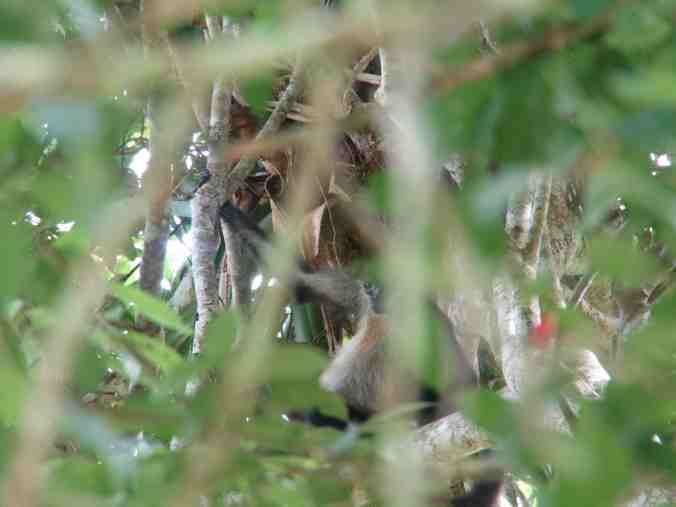
When this family told me about their encounter with a troupe of monkeys I had not yet seen these photographs, which they shared as they were preparing to depart Chan Chich Lodge. Looking at the photos now I understand why they were so thrilled by the wilderness setting. The first one I saw, above, was just a blur so I skipped it, but when I came back to it I realized this was what the son in the family had most loved–the exploration, the search to see his first animal in the wild. Continue reading

Changing Values For Anglers

AZGFD-GeorgeAndrejko-Humpback8-e1476823079410-1260x708.jpg

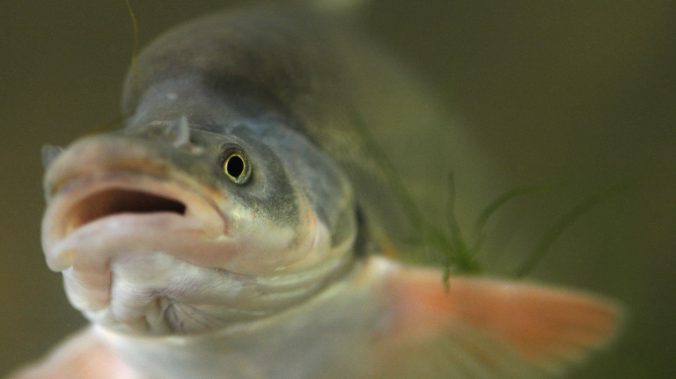
Humpback chub. Photo © George Andrejko, Arizona Game and Fish Department

We appreciate the perspective Mr. Williams brings to the story:

Recovery: Humpback Chubs, New Values and New Hope for Endangered Native Fish

BY TED WILLIAMS

There are “undesirable fish,” “rough fish,” and “trash fish.” Humpback chubs, native to the turbulent, turbid water of the Colorado River system, are all three. They compete with nonnative gamefish like brown trout from Europe and rainbow trout for the Pacific Northwest. If you catch a humpback chub, you should squeeze it and toss it into the bushesSuch was the counsel I and my fellow anglers received from our elders and the fisheries management establishment until the 1970s. Continue reading

Puma, Chan Chich Lodge, & Me (Or You)

puma

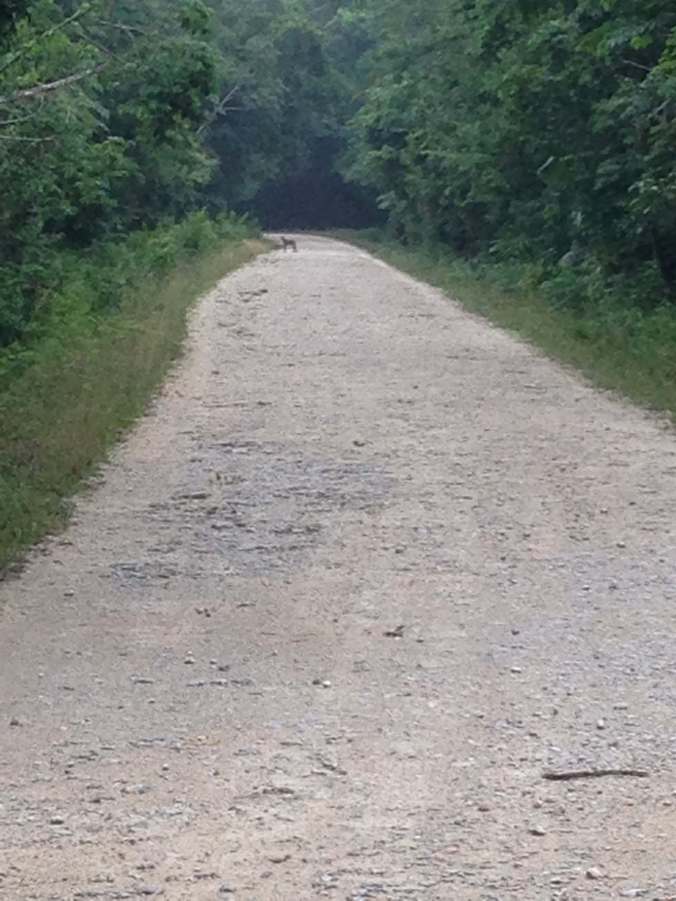
Trekking in a protected area, my hopes and expectations balance each other to create a happy medium: if I can see evidence of the ecosystem’s health, and can believe that it supports the entire food chain, I get that biophilia sensation. I do not need to see the top of the food chain, which frequently is a big cat (tigers and leopards in India, jaguars and pumas in Latin America, lions and cheetahs throughout Africa) as much as I would want to. Or as much as I am elated, on days like today and yesterday, when I do see a healthy mature cat. Continue reading

Bolivia & Chinese Oil Exploration

5040

Thanks as always to the Guardian for its coverage of important environmental issues:

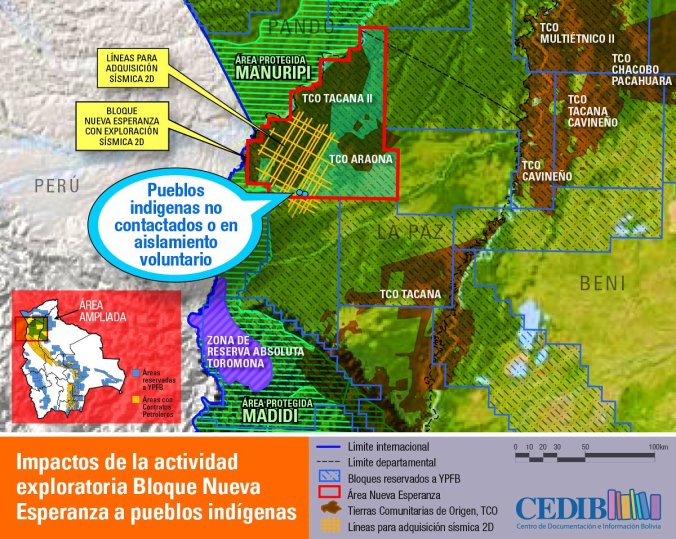
Fears for isolated Bolivian tribe met by Chinese oil firm in Amazon

Company operating near the border with Peru has reportedly had near encounters with indigenous people living in “isolation

David Hill

Teams from a Chinese oil and gas company exploring in the remote Bolivian Amazon have reportedly had near encounters with a group of indigenous people living in what the United Nations calls “isolation”, raising major concern for the group’s welfare. Continue reading

Iridescence & Pretty, Shiny Natural Things

lead_960-5

Matthew Jacobs

The Atlantic’s science writers are back in the saddle, leading the way with the best stories recently:

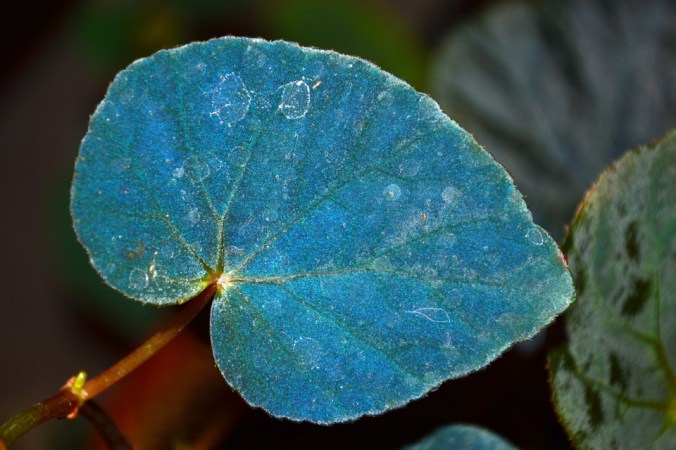
Why Do These Plants Have Metallic Blue Leaves?

Ooh, shiny

ED YONG

Roses are red but violets aren’t blue. They’re mostly violet. The peacock begonia, however, is blue—and not just a boring matte shade, but a shiny metallic one. Its leaves are typically dark green in color, but if you look at them from the right angle, they take on a metallic blue sheen. “It’s like green silk, shot through with a deep royal blue,” says Heather Whitney from the University of Bristol.

And she thinks she knows why. Continue reading

Rewilding, North America Edition

636129948116675648-elk-in-pickens-county-by-caleb-cassell

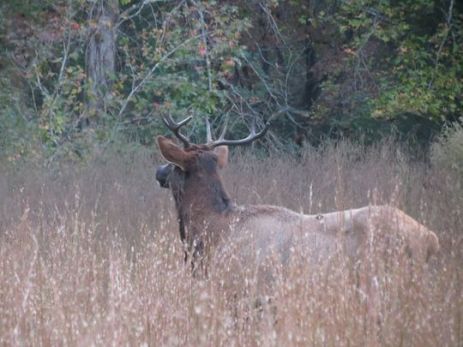
An elk, the first seen in South Carolina in centuries, gazes across a field in northern Pickens County. (Photo: provided/Caleb Cassell)

We would much rather that original nature was protected in its original state, but that does not keep us from celebrating the various efforts we see to reintroduce species, especially when they show signs of success as in this case from South Carolina, USA:

In Pickens County, first elk sighting in state for centuries

Ron Barnett

For the first time since the Upstate was Cherokee territory, a wild elk has been seen roaming the woodlands of South Carolina. Continue reading

More Before The Flood

Flood.jpg

We have been there, we have seen it, we have breathed it, we have witnessed enough. We are grateful to the film makers for bearing witness to a wider audience. Click above to go to the preview of the film:

Exclusive Clip: DiCaprio’s Climate Doc Exposes Destruction of Rainforest for Palm Oil as Huge Driver of Global Carbon Emissions

Rainforest Action Network

A new documentary produced and starring actor and activist Leonardo DiCaprio premieres in Los Angeles today and will be broadcast globally in 45 languages in 171 countries on the National Geographic Channel starting Oct. 30, timed to air in advance of the November elections. Continue reading

Returning Rivers To Their Natural State

25dam2-superjumbo

A view of the Milford Dam. After the removal of two large dams downriver, the Milford Dam is now the first barrier fish face when ascending the Penobscot River. Credit Murray Carpenter

We are thrilled to read about the rivers getting their groove back:

Taking Down Dams and Letting the Fish Flow

By

BANGOR, Me. — Joseph Zydlewski, a research biologist with the Maine Cooperative Fish and Wildlife Research Unit of the United States Geological Survey, drifted in a boat on the Penobscot River, listening to a crackling radio receiver. The staccato clicks told him that one of the shad that his team had outfitted with a transmitter was swimming somewhere below.

Shad, alewives, blueback herring and other migratory fish once were plentiful on the Penobscot. “Seven thousand shad and one hundred barrels of alewives were taken at one haul of the seine,” in May 1827, according to one historian. Continue reading

Sani Choice, Yasuni Future

5760

Wildlife watch … the author’s guide, Victor, explores an area of flooded forest in the Yasuni national park, Ecuador. Photograph: The Guardian

The Guardian keeps attention on this difficult balancing act, requiring Solomonic wisdom, that we have linked to on more than one occasion:

Ecuador’s Yasuni park: where oil vies with tourism for the rainforest

The Sani people face a choice between encouraging ecotourism to their rainforest – one of the world’s most biodiverse – and allowing in the oil companies

Kevin Rushby

Fernando was sitting on his veranda listening to the whoops and whistles of the jungle. Our visit was a surprise, but the old man was soon answering my questions, keen to talk.

“I arrived here in about 1960,” he told me. “A group of us came to start a new life. Hunting was easy. The animals were almost tame. We just used a blowpipe, no guns.” Continue reading

FishFace

tnc_17243496_preview_cropped-1260x708.jpg

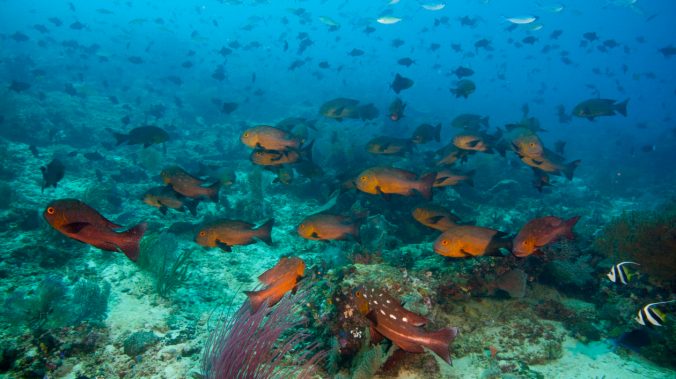
Midnight Snappers, Fusiliers, and Triggers school in deep water, photographed in the waters off Kofiau. Photo © Jeff Yonover

Nature Conservancy’s blog,

We Can Have Oceans Teeming with Fish with FishFace Technology

By Lisa Feldkamp

Traditional methods of gathering fisheries data can take as long as one or two years, costing time and money that many imperiled global fisheries don’t have.Enter FishFace, a new application under development by The Nature Conservancy in partnership with Refind Technologies. Similar to facial recognition software used to identify people, FishFace uses artificial intelligence to learn to recognize fish species in photographs. Continue reading

Adorable, Luminous, and Rare

The rare patch of black feathers is evidence that the bird is leucistic, not albino. Photo: Brad R. Lewis

Hummingbirds are frequent visitors to this site, including the Anna’s hummingbird. All hummingbirds are known as tiny winged gems flitting from flower to flower or feeder to feeder, so the individual pictured above is especially startling. The term “leucistic” is new to us, and we thank Audubon.org for bringing this to our attention.

Rare White Hummingbird Steals the Spotlight at California Garden

In the Australian Gardens at the University of California, Santa Cruz Arboretum, a dozen Anna’s Hummingbirds dart between golden banksia flowers and various pink and white blooming shrubs. Their feathers are bright, iridescent shades of emerald, pink and gray. The grove is awash with color.

Except for one strange bird that’s sitting in a cypress tree, watching the flurry of feeding and fluttering. It’s an Anna’s Hummingbird—and it’s almost entirely white. Continue reading

Sharks & Jets

shark

Thursday morning someone among us posted this. I read it and cheered. Getting on a jet plane to escape to nature, which is problematic to begin with, is made ultra-problematic by landing in the vicinity of a biodiversity hotspot and swimming with trapped animals. We are opposed to it, putting it mildly. Get on a jet, immerse in nature, but let sharks be sharks.

Thursday evening Amie and I were dining with friends who we met in Costa Rica when they were on vacation. They have not been to Baja California Sur, and we were encouraging them to go to Villa del Faro with their kids, who love nature. The mom in the family said, half jokingly, that she had been thinking about going to get into one of those shark cages. We all said, polite-laughingly, that we would be there to support her from the shore. We did not feel the need to get serious and educate about why we would not really support her doing this. 12 hours later this video showed up in the Guardian, and I sent the clip to them, adding to the viral status it now has, to point out the coincidental extra humor. Two days later, not so funny:
Shark conservationists fear backlash after viral cage-smashing video

Experts emphasize that the incident, in which a great white broke through a cage holding a diver, was a ‘one in a million occurrence’

in New York

Shark enthusiasts are concerned about the impact of a viral video that showed a great white shark breaking into a cage occupied by a diver in Mexico.

The diver survived, but the harrowing video shed light on a decades-old tourism industry that allows people to be within an arm’s length of great white sharks, separated only by the sea and some metal bars. Continue reading