Heat Pumps Questioned

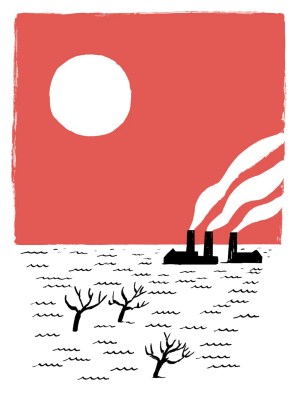
image: michael haddad

The technology of heat pumps was made understandable in an earlier article. While remarkable, questions have arisen. Read the following in full at The Economist to hear about it in more detail:

Heat pumps show how hard decarbonisation will be

The row over them portends more backlashes against greenery

They hang from the walls of utility rooms, nestle inside kitchen cupboards and hunker down in cellars. Continue reading

Insect Respect

Agronomist Caterina Luppa watches black soldier flies reproduce at Bugslife, a firm in Perugia, Italy, that is turning fly larvae into animal feed. LUIGI AVANTAGGIATO

We have featured this subject a few times over the years, especially once we started showcasing one such product. I acknowledge I am still not a total convert to an insect-centric diet, but every story like this draws me in, however slowly:

Edible Insects: In Europe, a Growing Push for Bug-Based Food

Marco Meneguz, an entomologist with BEF Biosystems in Casalnoceto, monitors black soldier flies as they mate. During mating, “the males gather in a courtship ritual characterized by fights and competitive displays,” he says. The blue light helps the flies see each other better. LUIGI AVANTAGGIATO

To rein in emissions, the E.U. is looking to insects as an alternate source of protein for livestock and people and is easing regulations and subsidizing makers of insect-derived food. In a photo essay, Luigi Avantaggiato explores the emerging bug food industry in northern Italy.

The European Union recognizes it has a meat problem. The bloc has no easy way to curb the climate impact of its livestock, which eat soybeans grown on deforested lands and belch heat-trapping gas. According to one estimate, Europe’s farm animals have a bigger carbon footprint than its cars.

Trent Barber, a technician at BEF Biosystems, vacuums up 200 pounds of fly larvae that are plump after two weeks of feeding on food scraps. The remaining food waste, now rich in excrement, will be sold as compost to farms. LUIGI AVANTAGGIATO

In this photo essay, Luigi Avantaggiato explores an unusual solution to this dilemma that is now gaining traction — feeding insects to livestock and, potentially, people. The European Commission says that insects could replace soy-based animal feed, helping to slow deforestation, or even supply an alternate source of protein for humans. Studies show that insects can furnish the same amount of protein as livestock while using as little as 10 percent of the land and producing as little as 1 percent of the emissions. Continue reading

Credibility & Carbon Credits

Sapo National Park in Liberia. Under a deal now being negotiated, Blue Carbon would sell carbon credits from the park. EVAN BOWEN-JONES / ALAMY STOCK PHOTO

For the decade during which the market for carbon credits has been on our radar, concerns about credibility have been lurking. Now this:

In New Scramble for Africa, an Arab Sheikh Is Taking the Lead

A company established by a Dubai sheikh is finalizing agreements with African nations to manage vast tracts of their forests and sell the carbon credits. Critics are concerned the deals will not benefit Africans and will just help foreign governments perpetuate high emissions.

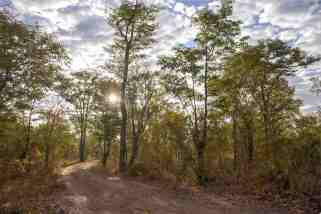
A forest in Mbire, Zimbabwe that is generating carbon credits. Blue Carbon has signed a memorandum of understanding with Zimbabwe to sell carbon credits from its woodlands. CYNTHIA R. MATONHODZE / BLOOMBERG VIA GETTY IMAGES

A prominent sheikh in the oil-rich Gulf state hosting this year’s UN climate negotiations, COP28, is heading a new rush to capture and sell carbon credits by managing tens of millions of acres of forests across Africa. Sheikh Ahmed Dalmook Al Maktoum, a member of the royal family of Dubai, which is part of the United Arab Emirates (UAE), wants to sell those credits to rich governments in the Gulf and elsewhere, so they can offset their carbon emissions to help them meet their carbon pledges under the 2015 Paris Agreement. Continue reading

Planting Trees In New Haven

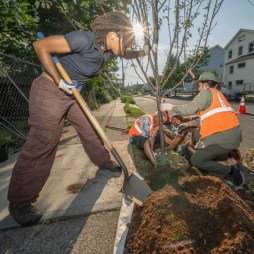
From left, Jess Jones, Ed Rodriguez, Zach Herring and Joshua De-Anda, planting a crab apple tree at 10 Wolcott Street in the Fair Haven neighborhood of New Haven, Conn. Tony Cenicola/The New York Times

Ed Rodriguez has a few years on me, but we have comparable tree counts. The caption of the second photo below captures my my own preference of activity on any given day. Having grown up in Connecticut and moved to Costa Rica decades ago, I note our reverse patterns of migration.

Colbi Edmonds, a member of the 2023-24 New York Times Fellowship class, reports from Seth’s previous hometown New Haven on an initiative I love reading about as much as I enjoy my own versions of the same kind of activity:

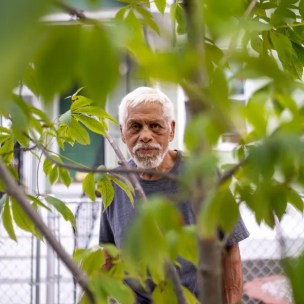
“I love to dig and mess around in the soil,” said Ed Rodriguez, who grew up in Puerto Rico but moved to Connecticut in the 1960s. Christopher Capozziello for The New York Times

One Neighborhood, 90 Trees and an 82-Year-Old Crusader

Ed Rodriguez is on a mission to convince his neighbors that they need trees to help combat summer heat — and to make the world a better place. It’s not always so easy.

Maria Gonzalez, who lives in New Haven, Conn., was envious of the other side of her street. It was lined with trees, offering some beauty as well as a shield from this summer’s unusual heat. But the sidewalk directly in front of her residence was bare, with trash littering patches of grass. Continue reading

We Are Stardust, Spreading Rock Dust

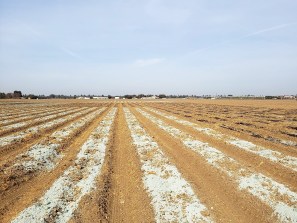
Rock dust applied to farmland in California. IRIS HOLZER

It is a concept we have heard about a couple of times previously and the science is catching up. Our thanks to Yale e360 for sharing news of it:

Spreading Rock Dust on Farmland Has Potential to Draw Down Huge Sums of Carbon Dioxide

Adding volcanic rock dust to cropland could help the world reach a key carbon removal goal, a new study finds. Continue reading

Among The Reasons To Regenerate Soil

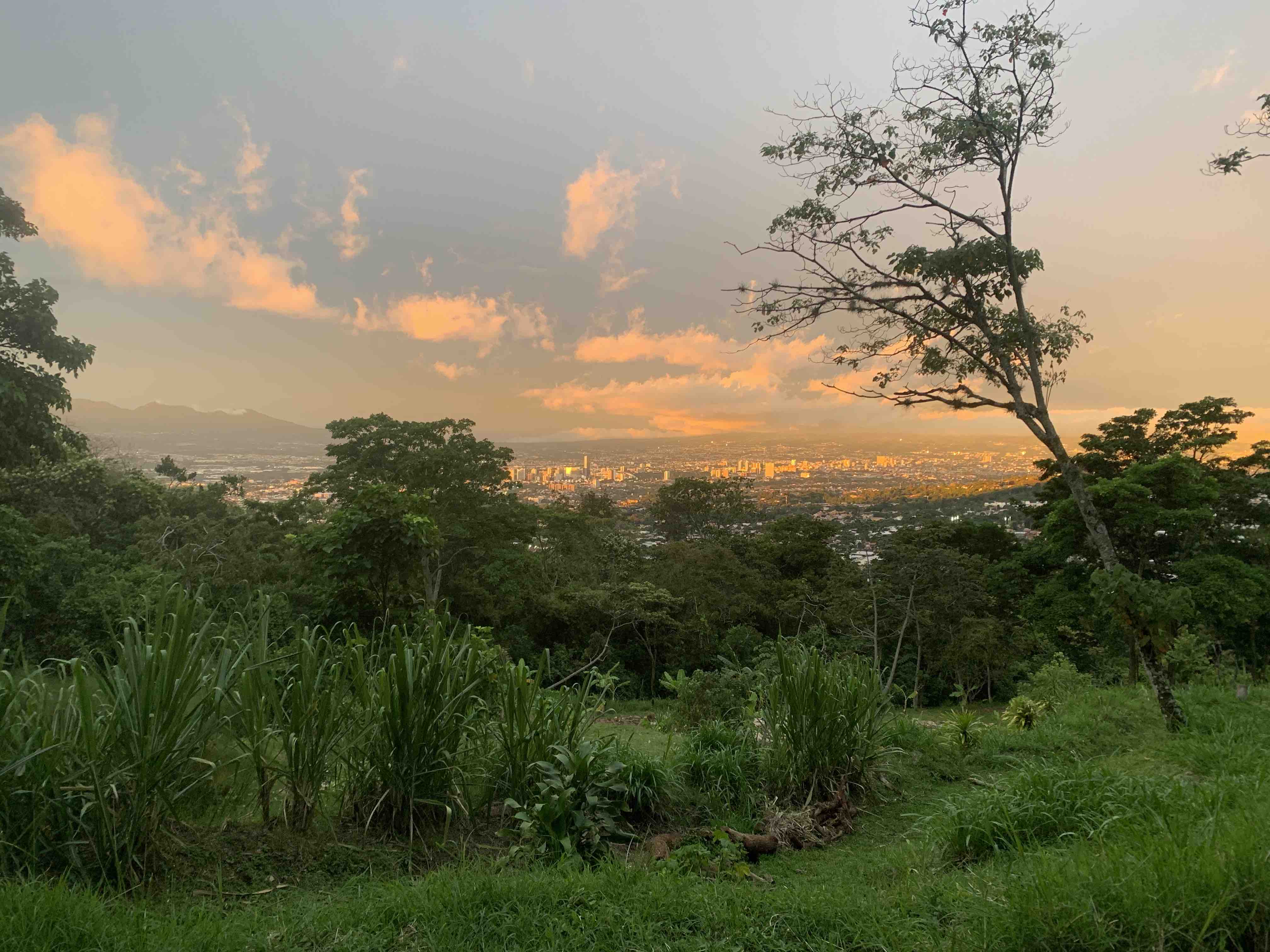
Organikos soil regeneration view from above, early Tuesday morning

When we started the berm where the sugarcane grows now, we knew we had a multi-year project ahead of us. This morning, before the sun had risen enough to shine on the land, I snapped the photo above, looking down on the acreage where we have planted more than 100 trees to provide shade for coffee we will plant in the near future. Besides all that, plenty of good ideas for how and why to regenerate the quality of the soil on that land; here’s some more:

A springtail crawls over snail eggs. ANDY MURRAY

Nearly Two-Thirds of All Species Live in the Ground, Scientists Estimate

Soils are more rich in life than coral reefs or rainforest canopies, providing a home to nearly two-thirds of all species, according to a sprawling new analysis. Continue reading

A Further Note On Recent “Good News”

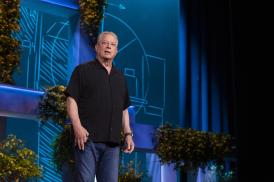
L GORE SPEAKS AT TED COUNTDOWN SUMMIT. JULY 11-14, 2023, DETROIT, MI. PHOTO: GILBERTO TADDAY / TED

Air quotes, sometimes called scare quotes, are embracing two words in the title of this post because we remain ambivalent about optimism related to climate change. But this article, which we missed last month, points to a video that gives more context:

Uplifting Climate Change Good News — According To Al Gore

Former U.S. Vice President Al Gore has been a huge player in the fight against climate change for as long as most of us can remember. As the founder and current chair of the Climate Reality Project, he has dedicated his life to climate action. Continue reading

Birds Tell It As They See It

A moment of truth as absurd comedy:

Our cartoonist on capturing the environmental crisis

How to illustrate mankind’s environmental folly

Under the pen name KAL, Kevin Kallaugher has been drawing for The Economist for 45 years. Here, our cameras capture how his cartoons have become ever more strident in trying to illustrate the global environmental crisis that humanity faces…

New Roots Garden, Urban Oasis

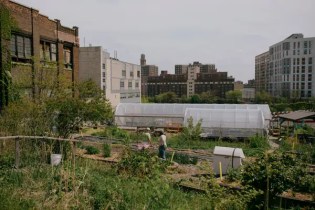
Sheryll Durrant has managed the New Roots Garden, which sits between the Grand Concourse and the Metro North railroad tracks in the Bronx, with volunteers for eight years.

We have linked out to stories about urban farming plenty of times; it never gets old:

Vital Places of Refuge in the Bronx, Community Gardens Gain Recognition

Lawmakers in Albany voted to designate community gardens statewide as crucial to the urban environment, especially in the fight against climate change. The bill awaits the governor’s signature but the role of these gardens stretches back decades.

The Morning Glory garden in the West Farms section of the Bronx is among more than 500 community gardens in New York City.

Sheryll Durrant left her family farm in Jamaica in 1989 and embarked on a career in corporate marketing. But after the 2008 financial meltdown, she reconsidered her life.

She returned to her roots.

Now she runs a thriving urban farm wedged into a triangular plot in the Bronx, between the Grand Concourse and the Metro North railroad tracks. At her farm, New Roots Garden, membership consists of refugees and migrants, resettled by the International Rescue Committee, whose herbs and vegetables sustain their memories of home.

“Just putting your hands in soil is a form of healing,” Ms. Durrant, 63, said. Continue reading

Niemann On Earth

We have referenced Françoise Mouly once before, but the art of Christoph Niemann many more times. This one is not fun, more of a gut punch; but at the source scroll down and see all the other covers on the same theme:

Christoph Niemann’s “Recipe for Disaster”

The artist expresses his sense of urgency about the emergency unfolding all around us.

News cycles, by nature, tend to document crises as discrete events. Suffusive emergencies—like the climate crisis—are captured mostly in the accelerating pace and frequency of such coverage. Continue reading

Climate Optimism, Part 2

Hilary Swift for The New York Times

Bill McKibben’s occasional optimism notwithstanding, he and Al Gore are the two most visible alarmists on climate change. Even in the worst of circumstances both find reason to point out our remaining options for actually doing something.

Our thanks to David Gelles and the New York Times for rounding out the doom and gloom with a bit of hope:

Al Gore on Extreme Heat and the Fight Against Fossil Fuels

The past few weeks have him even more worried than usual.

It’s been 17 years since former Vice President Al Gore raised the alarm about climate change with his documentary, “An Inconvenient Truth.” Since then, he’s been shouting from the rooftops about the risks of global warming more or less nonstop. Continue reading

Climate Optimism Part 1

Illustration by João Fazenda

Bill McKibben acknowledges in his most recent newsletter that in spite of all his efforts over the decades, he and we all are failing on climate change mitigation. But he has not given up hope:

Big Heat and Big Oil

A rapid end to burning fossil fuel would arrest the heating that has caused extreme damage in recent weeks; and that rapid end is possible.

In the list of ill-timed corporate announcements, historians may someday give pride of place to one made by Wael Sawan, the new C.E.O. of Shell, the largest energy company in Europe. In 2021, Shell said that it would reduce oil and gas production by one to two per cent a year up to 2030—a modest gesture in the direction of an energy transition. Continue reading

Anthropocene Representative Location

A wide view of a lake with trees surrounding it and blue sky with clouds in distance. We now have a place to match to the name for our epoch:

The Human Age Has a New Symbol. It’s a Record of Bomb Tests and Fossil Fuels.

A scientific panel has picked Crawford Lake, Ontario, to represent the Anthropocene, a proposed, and hotly contested, new chapter in geologic time.

For almost 15 years, a panel of scholars has been chewing over a big question: Has our species transformed the planet so much that we have plunged it into a new interval of geologic time? Continue reading

The Scale Of Conservation Needed To Mitigate The USA’s Carbon Footprint

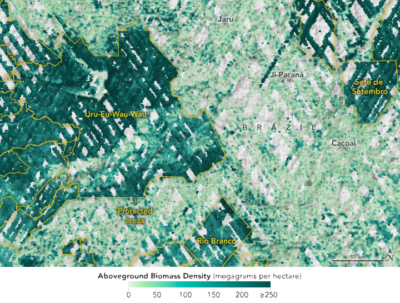
Protected areas, outlined in yellow, in a swath of the Brazilian Amazon are richer in trees than are other areas.

Protected areas, outlined in yellow, in a swath of the Brazilian Amazon are richer in trees than are other areas. NASA

Thanks to Yale e360, a very simple way to put scale on the value of protected areas, and at the same time consider the carbon footprint of the country that emits the most:

World’s Protected Lands Are Safeguarding More Carbon Than the U.S. Emits in a Year

If left unguarded, many of the world’s protected lands would have likely been burned, logged, or otherwise degraded, unleashing huge sums of heat-trapping gas. Continue reading

Rewilding On The Beara Peninsula

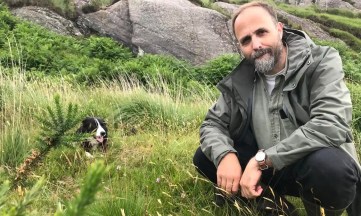
Eoghan Daltun with his dog on his farm, where native trees such as sessile oak, rowan and downy birch have self-seeded. Photograph: Rory Carroll/The Guardian

Rewilding remains one of our favorite topics to read about, and we share accordingly. Thanks to Rory Carroll for this article in the Guardian:

‘The result was amazing’: one man’s mission to reforest a barren Irish hillside

Eoghan Daltun has spent 14 years rewilding part of Beara peninsula into a showcase of diversity

Eoghan Daltun stood on a slope and pointed to a distant vista of verdant fields, craggy hills and conifer trees across the Beara peninsula in west Cork. Continue reading

Celebrating Energy Independence

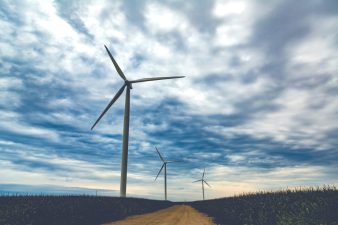
he Pioneer Prairie Wind Farm along the Iowa-Minnesota state line. TONY WEBSTER VIA WIKIPEDIA

If you are in the USA and are looking for more reasons to celebrate independence, consider renewables (thanks to Yale e360):

U.S. Wind and Solar Overtake Coal for the First Time

In a first for the U.S. power sector, wind and solar have generated more electricity than coal so far this year. Continue reading

Graphic Comprehension Of Forest Loss

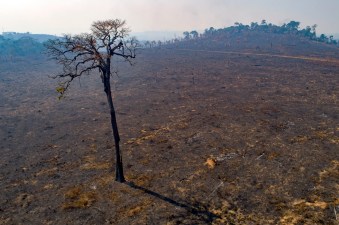
A section of forest in the Brazilian Amazon that was burned by cattle ranchers, seen on August 16, 2020. Cattle ranching is the largest driver of deforestation in the Amazon rainforest. Andre Penner/AP

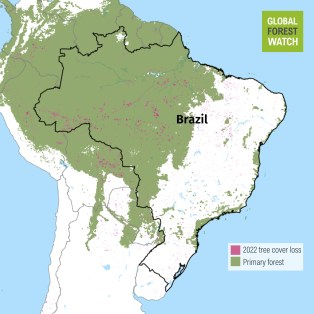
The photograph heading the story is alarming enough, but the illustrations (especially the “scroll down” graphic) accompanying the written explanations are extremely compelling. Thanks to Benji Jones for the story and to Alvin Chang for the graphics in this Vox article:

The alarming decline of Earth’s forests, in 4 charts

Deforestation raged ahead again in 2022, even after scores of countries pledged to protect their forests.

Over the last decade, dozens of companies and nearly all large countries have vowed to stop demolishing forests, a practice that destroys entire communities of wildlife and pollutes the air with enormous amounts of carbon dioxide.

A big climate conference in Glasgow, in the fall of 2021, produced the most significant pledge to date: 145 countries, including Brazil, China, and Indonesia, committed to “halt and reverse” forest loss within the decade. Never before, it seems, has the world been this dedicated to stopping deforestation. Continue reading

Useful Summary Of Carbon Credit Schemes

©Anthropocene Magazine

Anthropocene Magazine has a useful summary, created by Mark Harris, of the strength’s, weaknesses, opportunities and threats of various carbon credit schemes. In a short read it helps clarify some, if not all, questions that can generate from conflicting headlines on the topic:

What Counts As A Carbon Credit?

A new UN draft report threatens to sideline billions of tons of future carbon removal

Back in 2015, the Paris Agreement called for the creation of an international program through which countries could trade emissions to meet their climate commitments. For that to happen, the world has to agree on what qualifies for a carbon credit. Continue reading

Thank You, Church Of England

‘The climate crisis threatens the planet we live on, and people around the world who Jesus Christ calls us to love as our neighbours,’ says Justin Welby, the archbishop of Canterbury. Photograph: Gareth Fuller/PA

This is likely the first, and maybe the only time we ever thank a church in our pages (religion has shown up only a few times, whereas divestment is quite common in our pages), but it is certainly warranted in this case:

C of E divests of fossil fuels as oil and gas firms ditch climate pledges

Church pension and endowment funds shed holdings after U-turns by BP and Shell

The Church of England is divesting from fossil fuels in its multibillion pound endowment and pension funds over climate concerns and what the church claims are recent U-turns by oil and gas companies. Continue reading

Youth Is Not To Be Wasted In Montana

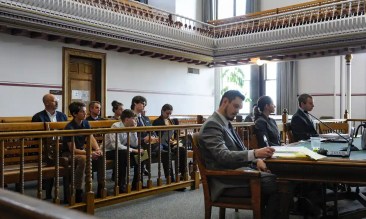
The plaintiffs look on during a status hearing for Held v Montana in the Lewis and Clark county courthouse in Helena, Montana, last month. Photograph: Thom Bridge/AP

At first it sounded like a gimmick, but listen to and read about it: there is a useful half hour podcast on this topic, and here we thank the Guardian for a bit more detailed coverage:

‘My life and my home’: young people start to testify at historic US climate trial

Some of the plaintiffs listen to arguments during the hearing in Montana. Photograph: Thom Bridge/AP

The plaintiffs note that Montana’s constitution pledges a healthy environment ‘for present and future generations’

The US’s first-ever trial in a constitutional climate lawsuit kicked off on Monday morning in a packed courtroom in Helena, Montana.

The case, Held v Montana, was brought in 2020 by 16 plaintiffs between the ages of five and 22 from around the state who allege state officials violated their constitutional right to a healthy environment by enacting pro-fossil fuel policies. Continue reading