Taking Inspiration From Smallhold Farms In Africa

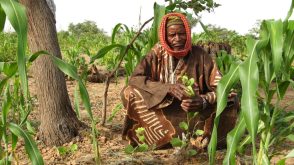
A farmer in Niger tends to a tree sprout growing among his millet crop. TONY RINAUDO / WORLD VISION AUSTRALIA

I am nearing the point where I can offer an update on the trees we have planted in advance of 1,000+ coffee plants going into the ground in their shade. Thanks to Fred Pearce, reporting in Yale E360, I have some inspiration coming from across the Atlantic on the broader value of those trees:

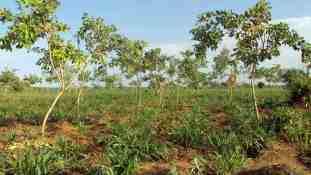
Dooki (Combretum glutinosum) trees grow on a millet field in Niger. P. SAVADOGO / ICRAF

As Africa Loses Forest, Its Small Farmers Are Bringing Back Trees

The loss of forests across Africa has long been documented. But recent studies show that small farmers from Senegal to Ethiopia to Malawi are allowing trees to regenerate on their lands, resulting in improved crop yields, productive fruit harvests, and a boost for carbon storage.

For decades, there have been reports of the deforestation of Africa. And they are true — the continent’s forests are disappearing, lost mainly to expanding agriculture, logging, and charcoal-making. But the trees? Continue reading
Food Waste Best Practice, South Korea Edition

Unloading the food waste at a disposal facility in Seoul. Chang W. Lee/The New York Times

One of the most covered topics in our pages during the decade since we started paying attention to it, still going strong for all the wrong reasons; so, our thanks to the New York Times for assigning John Yoon (reporting, writing) and Chang W. Lee (for photographs and video) to go to South Korea:

Food waste being separated from plastic bags at the Goyang facility.

When wasted food rots in landfills, it pollutes soil and water — and warms the planet. Here’s how one country keeps that from happening.

Around the world, most of the 1.4 billion tons of food thrown away each year goes to landfills. As it rots, it pollutes water and soil and releases huge amounts of methane, one of the most potent greenhouse gases. Continue reading
Taking Better Care With Help From Kate Raworth

What? We never posted on this book or its economist author before? We correct that now with Hettie O’Brien’s article in the Guardian :

The planet’s economist: has Kate Raworth found a model for sustainable living?

Her hit book Doughnut Economics laid out a path to a greener, more equal society. But can she turn her ideas into meaningful change?

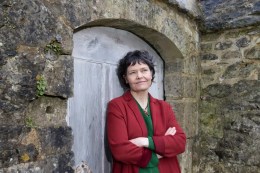
Raworth in Oxford. Photograph: Graeme Robertson/The Guardian

Consider the electric car. Sleek and nearly silent, it is a good example of how far the world has progressed in fighting the climate crisis. Its carbon footprint is around three times smaller than its petrol equivalent, and unlike a regular car, it emits none of the greenhouse gases that warm the planet or noxious fumes that pollute the air. That’s the good news. Then consider that the battery of an electric car uses 8kg of lithium, likely extracted from briny pools on South America’s salt flats, a process that has been blamed for shrinking pasturelands and causing desertification.

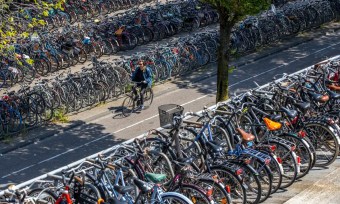
A bike park in Amsterdam which offers free parking for more than 2,500 bicycles. Photograph: Jochen Tack/Alamy

The 14kg of cobalt that prevent the car’s battery from overheating have probably come from the Democratic Republic of the Congo, where cobalt mines have contaminated water supplies and soil. As the demand for electric vehicles grows, the mining and refining of their components will intensify, further damaging natural ecosystems. By 2040, according to the International Energy Agency, the global demand for lithium will have increased more than fortyfold. Continue reading
Seaweed Farming Further Considered

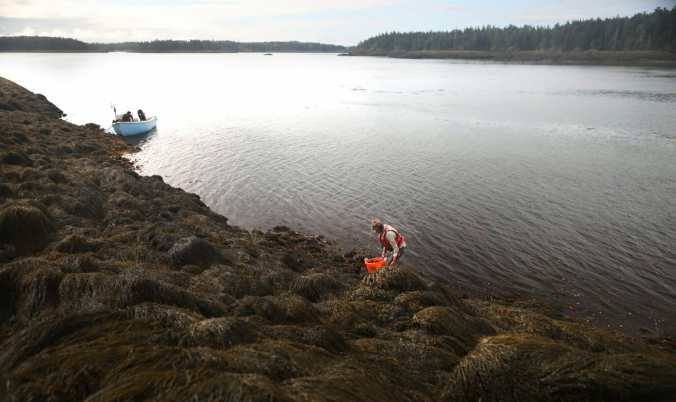
Severine von Tscharner Welcome forages for seaweed in Cobscook Bay, Maine.

Our thanks as always to Food & Environment Reporting Network. In this article by Bridget Huber, with photography by Lauren Owens Lambert, some of our earlier links to stories about farming in the sea are called into question.

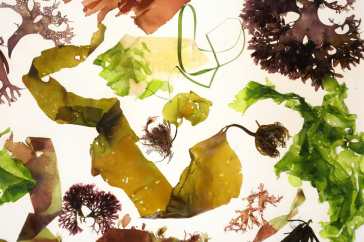
A variety of seaweed harvested from the Gulf of Maine, including sugar kelp, sea lettuce, dulse, bladderwrack, and Irish moss.

Climate savior or ‘Monsanto of the sea’

Seaweed farming is being hyped as a major weapon in the fight against climate change. But skeptics say the rush to build industrial-scale operations risks unintended consequences.

Early on a cool spring morning, in far Downeast Maine, Severine von Tscharner Welcome and her husband, Terran, scrambled along a point jutting into Cobscook Bay. The Passamaquoddy people named the bay Kapskuk after the immense tides and wild currents that make the water seem to boil. Continue reading
Greenland’s Rock Flour

Guardian graphic. Source: Guardian research

Damian Carrington, Environment editor at the Guardian, shares these findings:

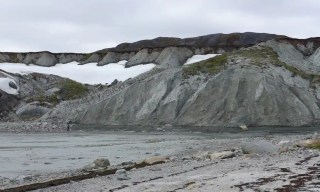
Eight-thousand-year-old marine deposits, exposed by the slow rise of Greenland after the last ice age. The cliffs are about 15 metres high. Photograph: Minik Rosing

Rock ‘flour’ from Greenland can capture significant CO2, study shows

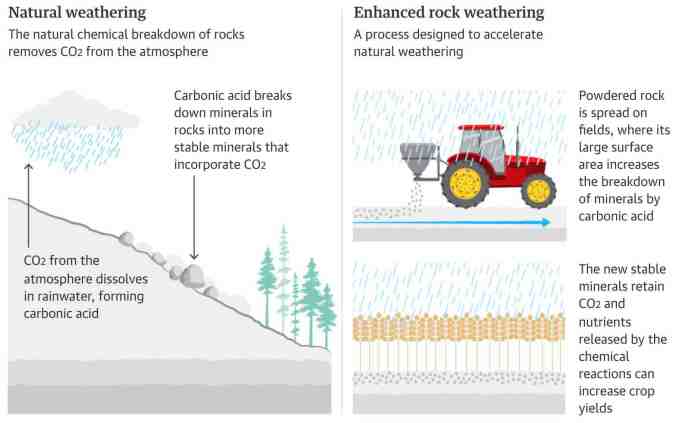
Powder produced by ice sheets could be used to help tackle climate crisis when spread on farm fields

Rock “flour” produced by the grinding under Greenland’s glaciers can trap climate-heating carbon dioxide when spread on farm fields, research has shown for the first time.

Natural chemical reactions break down the rock powder and lead to CO2 from the air being fixed in new carbonate minerals. Continue reading
Trees Are Always Welcome In Our Pages

The notion that clear-cutting can be counteracted by the planting of trees is a political product of the timber industry.Photograph © Robert Adams / Fraenkel Gallery

Jill Lepore gives us a 30-minute read on a topic we have linked to more times than any topic other than birds:

What We Owe Our Trees

Forests fed us, housed us, and made our way of life possible. But they can’t save us if we can’t save them.

The woods I know best, love best, are made of Northern hardwoods, sugar maple and white ash, timber-tall; black and yellow birch, tiger-skinned; seedlings and saplings of blighted beech and striped maple creeping up, knock-kneed, from a forest floor of princess pine and Christmas fern, shag-rugged. White-tailed deer dart through softwood stands of pine and hemlock, bucks and does, the last leaping fawn, leaving tracks that look like tiny human lungs, trails that people can only ever see in the snow, even though, long after snowmelt, dogs can smell them, tracking, snuffling, shuddering with the thrill of the hunt and noshing on deer scat for dog treats. Continue reading

Green Capitalism Explained & Criticized

We are new to the website where this interview is on offer, and appreciate its proclamation: “We cut through the noise. Of social media. And algorithmic distraction. We find the serious stuff. The stuff you miss. Every week. With human curators.” We are also new to the explainer and critic on a set of topics we often have had links to:

ADRIENNE BULLER ON GREEN CAPITALISM AND THE PITFALLS OF CLIMATE FINANCE

Adrienne Buller is Director of Research at the think tank Common Wealth, where she leads investigative projects about building a democratic economy. She previously researched the intersection of finance and the climate crisis at InfluenceMap, and has also written for The Guardian and the Financial Times, among other publications. Continue reading

India’s Progress With Solar Power Generation

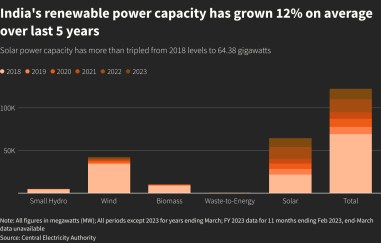
Reuters Graphics

Progress on solar power generation in India is a big deal. The country’s reduction in poverty, remarkable as it has been, is counterbalanced by its environmental impoverishment. Thanks to Reuters for this article by Sarita Chaganti Singh and Sudarshan Varadhan:

Exclusive: India amends power policy draft to halt new coal-fired capacity

NEW DELHI/SINGAPORE, May 4 (Reuters) – India plans to stop building new coal-fired power plants, apart from those already in the pipeline, by removing a key clause from the final draft of its National Electricity Policy (NEP), in a major boost to fight climate change, sources said. Continue reading

Norway’s Combustion Transition

About 80 percent of new-car sales in Norway were electric last year, putting the country at the vanguard of the shift to emissions-free vehicles. David B. Torch for The New York Times

A major fossil fuel producing country has figured out how to transition away from combustion engines:

About 80 percent of new cars sold in Norway are battery-powered. As a result, the air is cleaner, the streets are quieter and the grid hasn’t collapsed. But problems with unreliable chargers persist.

BAMBLE, Norway — About 110 miles south of Oslo, along a highway lined with pine and birch trees, a shiny fueling station offers a glimpse of a future where electric vehicles rule. Continue reading

Viewed From Above, Our Most Important Leaks

Illustration by Ard Su

David W. Brown offers this updated look at the use of satellite technology for a key metric:

A Security Camera for the Planet

A new satellite, funded by a nonprofit, aims to pinpoint emissions of methane—a gas that plays a major role in global warming.

When his phone rang, Berrien Moore III, the dean of the College of Atmospheric and Geographic Sciences at the University of Oklahoma, was fumbling with his bow tie, preparing for a formal ceremony honoring a colleague. He glanced down at the number and recognized it as nasa headquarters. This was a bad sign, he thought. In Moore’s experience, bureaucrats never called after hours with good news.

It can see large methane concentrations along its orbital path, but can’t pinpoint emissions sources. Illustration by Ard Su

For roughly six years, Moore and his colleagues had been working on a space-based scientific instrument called the Geostationary Carbon Cycle Observatory, or GeoCarb. nasa had approved their proposal in 2016; it was now 2022, and GeoCarb was being built by Lockheed Martin, in Palo Alto, California. Once it was in space and mounted to a communications satellite, GeoCarb would scan land in the Western Hemisphere continuously in strips, taking meticulous measurements of three carbon-based gases: carbon dioxide, carbon monoxide, and methane. It would give scientists a detailed view of the carbon cycle—the process by which carbon circulates through the Earth’s forests, lakes, trees, oceans, ice, and other natural features. Continue reading

An Optimistic View On Climate

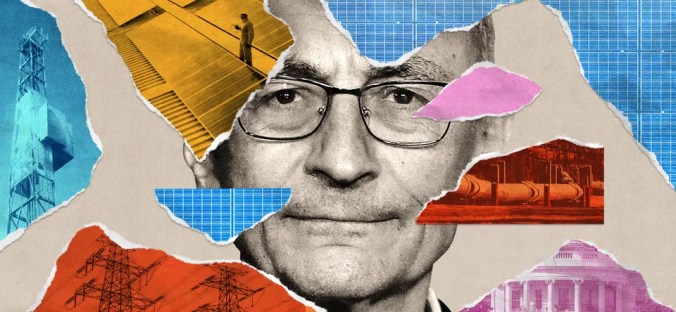
Illustration by Nicholas Konrad / The New Yorker; Source photographs from Getty.

We appreciate the author’s wide reach and tireless exploration for solutions to seemingly unsolvable puzzles:

A Case for Climate Optimism, and Pragmatism, from John Podesta

The veteran political operative now has one of the nation’s top climate jobs. He speaks about the Willow oil-drilling project, the Inflation Reduction Act, and the Biden White House.

“Humanity is on thin ice, and that ice is melting fast,” António Guterres, the Secretary-General of the United Nations, recently warned, in response to a newly alarming climate report. The ice is melting, in large part, because the world keeps burning fossil fuels. To change that, the U.S. will need to join other nations in replacing machines that burn them—cars, stoves, furnaces, and eventually things like planes and factories—with machines that run on electricity. Continue reading

Lie-Liable Fossil Fuel Companies

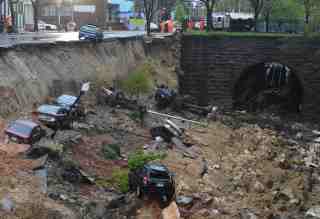
Following record rains in April of 2014, a section of Baltimore street simply collapsed. Now there’s some chance of holding the culprits accountable.

Thanks to Bill McKibben for this legal news following plenty of precursor stories on the same topic:

High court lets cities and states sue Exxon et al

…But something else happened yesterday too, with a price tag that may eventually dwarf that settlement, and with even larger potential implications for the future of the planet. The Supreme Court, also tersely, declined to grant cert in a case brought by oil companies desperately trying to hold off state court trials for their climate crimes. Continue reading

Not So Happy Earth Day

Over the past three decades, the rate of ice loss from Greenland has increased sevenfold. Photograph by Kerem Yücel / AFP / Getty

On yet another Earth Day, whatever those two words mean together in tandem these days, a message from a reliable source:

It’s Earth Day—and the News Isn’t Good

New reports show that ice sheets in Greenland and Antarctica are melting faster than anticipated, and other disasters loom.

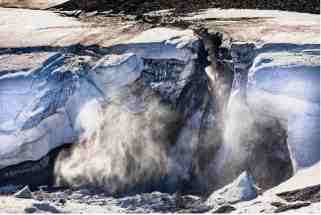
The Greenland ice sheet is, quite literally, a relic of the last ice age. It consists of snow that fell year after year, century after century, and never melted; at the very bottom, there are flakes that fell more than a hundred thousand years ago. Continue reading

McKibben Embraces Green Building Boom

Grace J. Kim

We link to one person more than anyone else, for good reason:

ELECTRIFY EVERYTHING

Yes in Our Backyards
It’s time progressives like me learned to love the green building boom.

The United States is on the brink of its most consequential transformation since the New Deal. Read more about what it takes to decarbonize the economy, and what stands in the way, here

I’m an environmentalist, which means I’ve got some practice in saying no. It’s what we do: John Muir saying no to the destruction of Yosemite helped kick off environmentalism; Rachel Carson said no to DDT; the Sierra Club said no to the damming of the Grand Canyon. Continue reading

Fort Lauderdale Weather In Context

Police evacuate residents from this week’s epic Ft. Lauderdale floods

You probably did not need Bill McKibben’s newsletter to tell you about this weather event, but putting it in context is what he is particularly good at:

We’re in for a stretch of heavy climate

Ominous signs that the next step phase of global warming is starting;

This week’s Fort Lauderdale rainstorm was, on the one hand, an utter freak of nature (storms ‘trained’ on the same small geography for hours on end, dropping 25 inches of rain in seven hours; the previous record for all of April was 19 inches) and on the other hand utterly predictable. Continue reading

Anthropocene’s Marker

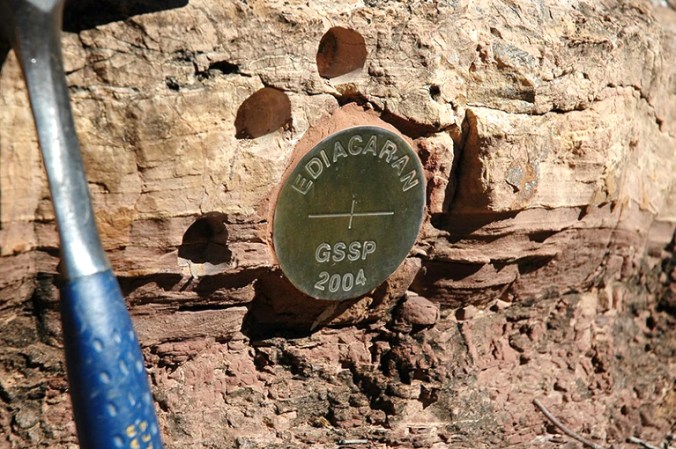
The Ediacaran Period, which ended some 540 million years ago, is marked by a gold spike in the Flinders Ranges of South Australia. JAMES ST. JOHN

We do not love the word Anthropocene, but we appreciate the marker it represents. And until now we did not know there would be a physical counterpart, a marker that will be placed in a representative location:

A Golden Spike Would Mark the Earth’s Next Epoch: But Where?

Before the Anthropocene can be officially proclaimed, a scientific working group must select a single site that permanently captures the new human-influenced epoch. Nine candidate sites — from California to China to Antarctica — are under consideration, with a decision expected soon.

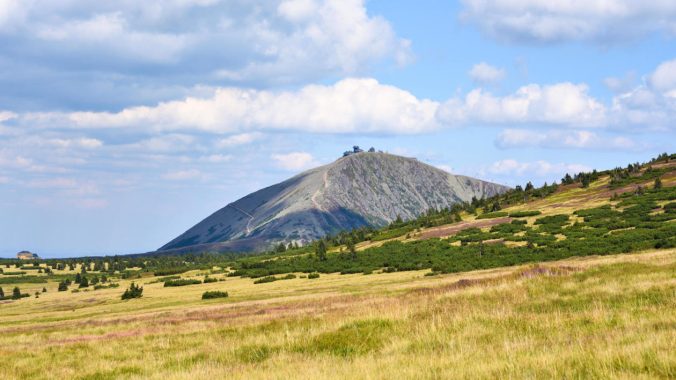
The peatland below Poland’s Mount Śnieżka contains contaminants from burning fossil fuels, nuclear testing, and other human activities. MYSTICWALKER / ALAMY STOCK PHOTO

At first glance, these nine sites scattered across the globe seem unremarkable. Continue reading

Thaw Gas Measurement

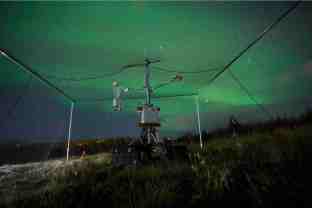
Covered in netting to deflect stray balls, these instruments gather methane data on the seventh hole of Midnight Sun Golf Course. Permafrost is rapidly thawing across the far north, deforming fairways here and releasing the highly potent greenhouse gas, which leads to more warming. PHOTOGRAPH: FRANKIE CARINO

Thaw problems are coming. Permafrost is losing its permanence. Measuring the speed and impact of the thaw is a new form of sleuthing:

The Arctic’s Permafrost-Obsessed Methane Detectives

The Far North is thawing, unleashing clouds of planet-heating gas. Scientists rely on an arsenal of tech to sniff out just how nasty the problem is.

AT THE MIDNIGHT Sun Golf Course in Fairbanks, Alaska, they say you never get the same shot twice. Continue reading

Valuation Of Biodiversity

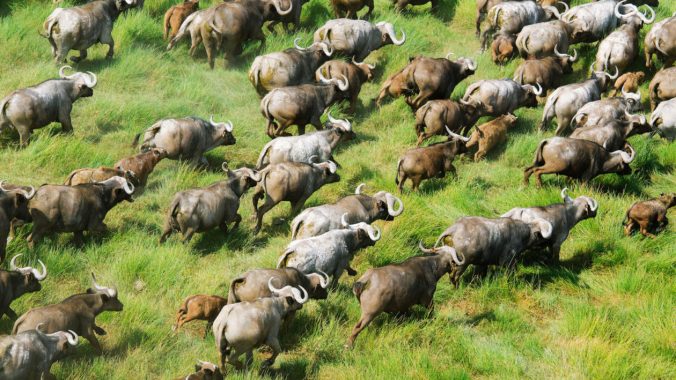
Cape Buffalo in Kenya. MARTIN HARVEY / ALAMY

Biodiversity valuation is a topic we link to from time to time, so we thank Zach St. George for this article’s contribution to our understanding:

Pricing Nature: Can ‘Biodiversity Credits’ Propel Global Conservation?

Backed by the UN, an alliance of conservationists and policymakers is devising new ways to finance the preservation of biodiversity by placing economic values on ecosystems. Some analysts say such schemes have the potential to boost conservation, but others are skeptical.

In 2009, as global financial markets shuddered, David Dorr became interested in the possibility of putting a price on nature. Dorr is a Cayman Islands-based global macro trader, attuned to what he calls the “butterfly effect” of geopolitics and other international forces on financial markets. Continue reading

Small But Meaningful Legal Support Of Protest

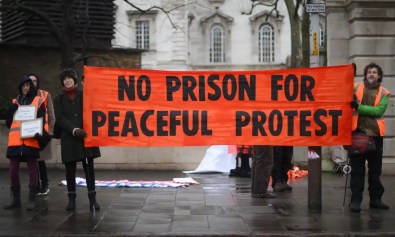
Insulate Britain supporters protesting in London this month. Photograph: Daniel Leal/AFP/Getty Images

Strange that this requires a protest, but that’s how it is. Our thanks to Damien Gayle of the Guardian for this coverage:

Top lawyers defy bar to declare they will not prosecute peaceful climate protesters

Six KCs among more than 120 mostly English lawyers to sign pledge not to act for fossil fuel interests

Leading barristers have defied bar rules by signing a declaration saying they will not prosecute peaceful climate protesters or act for companies pursuing fossil fuel projects. Continue reading

Sailing Cargo Ships, Again

An illustration shows a wind-powered car and truck carrier ship that a Swedish consortium is developing and aiming to launch late 2024. Photograph: Wallenius Marine/Reuters

Old school (sailing cargo ships) becoming the new trend is as good as news gets these days:

Cargo ships powered by wind could help tackle climate crisis

Shipping produces much of the world’s greenhouse gases but new technology offers solutions to cut fuel use

Cars, trucks and planes get plenty of blame for helping drive the climate crisis, but shipping produces a large portion of the world’s greenhouse gases, as well as nitrogen oxides and sulphur pollution because ships largely use cheap heavy fuel oil. Continue reading