Corrupted Cop & Better News

Cylindrical battery cells undergoing tests in the UK. Photographer: Jason Alden/Bloomberg

Thanks to Bill McKibben, in his newsletter–“A Corrupted COP New revelations show just how bad the oil countries really are“–for more details on this bad news but also for pointing us to better news that has implications for so much of the decarbonization opportunity set:

Battery Prices Are Falling Again as Raw Material Costs Drop

BloombergNEF breaks down the biggest annual drop in its lithium-ion battery price survey since 2018.

As the auto industry grapples with how to make affordable EVs, the task may get easier by one key metric. Battery prices are resuming a long-term trend of decline, following an unprecedented increase last year.

According to BloombergNEF’s annual lithium-ion battery price survey, average pack prices fell to $139 per kilowatt hour this year, a 14% drop from $161/kWh in 2022.1

New York Wind Power

The giant parts for wind turbines await pickup at a pier in New London, Conn. Joe Buglewicz for The New York Times

Wind has always been there for the taking in so many places, the challenges of nimbyism notwithstanding. Now the turbines are arriving to harness it for the New York metropolitan area. Our thanks to Patrick McGeehan and the New York Times for sharing the story:

Huge Turbines Will Soon Bring First Offshore Wind Power to New Yorkers

Parts of what will eventually be the towers of wind turbines out in the ocean. Joe Buglewicz for The New York Times

New York’s best bet for entering the era of offshore wind power is stacked up at the water’s edge in Connecticut.

The pier on the Connecticut coast is filled with so many massive oddities that it could be mistaken for the set of a sci-fi movie. Sword-shaped blades as long as a football field lie stacked along one edge, while towering yellow and green cranes hoist giant steel cylinders to stand like rockets on a launchpad.

It is a launching point, not for spacecraft, but for the first wind turbines being built to turn ocean wind into electricity for New Yorkers. Crews of union workers in New London, Conn., are preparing parts of 12 of the gargantuan fans before shipping them out for final assembly 15 miles offshore. Continue reading

Corrupt Cop

Illustration by Isabel Seliger

Ever wondered what the Cop in Cop1-28 means? The answer is not nearly as interesting as how it came to be that a country whose lifeblood is oil is hosting Cop28. Petrostates have been biding their time, gaining momentum, and now have corrupted the Cop system from within. Weekend reading, Thanksgiving edition, from Elizabeth Kolbert, explains the stakes:

The Road to Dubai

The latest round of international climate negotiations is being held in a petrostate. What could go wrong?

Cop1 was held in 1995 in Berlin’s International Congress Center, a massive, metal-clad complex that looks like the set for a dystopian movie. Around nine hundred government delegates attended the weeklong negotiating session, along with about a thousand observers from non-governmental organizations. Daimler-Benz brought some electric cars to show off, while young activists brought a steamroller, to convey their opposition to cars. Delegates were invited to take a trip along the River Spree in a solar-powered boat. Continue reading

Carlos Manuel Rodriguez, Leading The Conversation, Again

We are grateful to the GEF for sharing this, and to Carlos Manuel Rodriguez for leading the conversation, as he has always done:

Creating space for young people to affect climate policy

In a recent conversation at his home, GEF CEO and Chairperson Carlos Manuel Rodríguez heard from members of the Youth and Climate Change Network of Costa Rica about how the climate emergency is impacting young people. Continue reading

Heat Pumps Catching On In Norway

The Tromsø sorting office of the Norwegian postal service Posten Bring is heated by heat pumps. The city is located almost 140 miles north of the Arctic Circle. Photograph: NurPhoto/Getty

Previous stories we have linked to about heat pumps have raised our expectations and hopes, but also raised the question of whether they will catch on. Here is the start to an answer:

You can walk around in a T-shirt’: how Norway brought heat pumps in from the cold

Device installed in two-thirds of households of country whose experience suggests switching to greener heating can be done

When Glen Peters bought a heat pump for his home in Oslo he wasn’t thinking about the carbon it would avoid. Continue reading

Green Mountain Power, Sunrun, FranklinWH & Innovative Electricity Options

Photograph by Ian Thomas Jansen-Lonnquist / Bloomberg / Getty

We need more energy, and here are some possibilities:

The Next Power Plant Is on the Roof and in the Basement

A Department of Energy report promotes a new system that could remake the energy grid.

On any given Monday in Vermont, Josh Castonguay, the vice-president of innovation at that state’s Green Mountain Power utility, told me, he studies the forecast for the days ahead, asking questions like “What’s it looking like from a temperature standpoint, a potential-of-load standpoint? Is there an extremely hot, humid stretch of a few days coming? A really cold February night?” If there is trouble ahead, Castonguay prepares, among other things, Vermont’s single largest power plant, which isn’t exactly a power plant at all—or, at least, not as we normally think of one. Continue reading

The Great Carbon Divide

While the wealthiest 1% tend to live climate-insulated lives, their emissions are responsible for immense suffering. Illustration: Guardian Design

Jonathan Watts, whose work we have been linking to for some years now, is the global environment editor for the Guardian, and this may be his most revealing story yet.

Even if you are not in the 1%, if you are not in the bottom 66% the implications for all of us on the wealthier side of the divide are challenging:

Richest 1% account for more carbon emissions than poorest 66%, report says

‘Polluter elite’ are plundering the planet to point of destruction, says Oxfam after comprehensive study of climate inequality

The richest 1% of humanity is responsible for more carbon emissions than the poorest 66%, with dire consequences for vulnerable communities and global efforts to tackle the climate emergency, a report says. Continue reading

Prioritizing Carbon Capture Versus Emissions Reduction

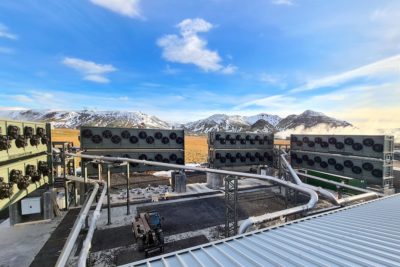
A carbon capture plant near Reykjavik, Iceland.

A carbon capture plant near Reykjavik, Iceland. CLIMEWORKS

Since we first heard of it we have been enthusiastic about the upside potential of this technology, but until now had not considered the tradeoffs:

Climate Plans That Rely Too Much on Carbon Removal Could Breach International Law

Countries that rely too heavily on carbon removal in their climate plans could violate international law, warns a new paper. Continue reading

Letters To The Secretary

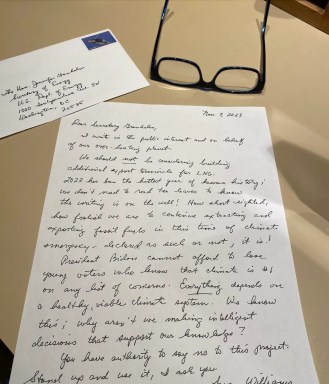
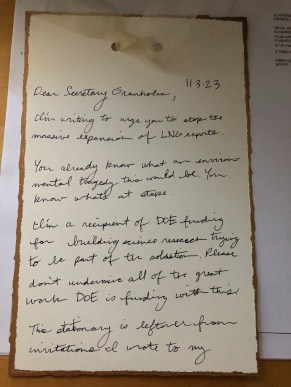
We have appreciated this newsletter since it started, and every issue since. This week it brings these handwritten letters to our attention:

…Oh, and who’s the other group of climate voters the president needs to worry about? That would be older people, like those of us at Third Act—we codgers have been organizing mass protests all year. And while we may not be TikTok savvy, we have another weapon: pen and stationery. In the last week Third Actors have unleashed thousands of letters on DOE headquarters—which may not sound quite as sexy as petitions from the Internet, but they have their own impact, since officials know that if you’re willing to do more than click you’re probably an effective and motivated adversary.

So consider [image above left]

Or [image to the right]

What I’m trying to say is, the Department of Energy has a real problem—an increasingly aware and activated posse of youngsters and oldsters. And a solution: announce CP2 is going nowhere, and that no other project will be approved, or even considered, until there’s been an exhaustive rewrite of the criteria taking into account the latest science and economics. It’s not hard. Continue reading

Climate Scientist Wields Words Well

Carl Recine/Reuters

Kate Marvel is a climate scientist at the environmental nonprofit Project Drawdown, and was a lead author on the Fifth National Climate Assessment. She has well-informed opinions and as we have noted before, she knows how to express them clearly:

I’m a Climate Scientist. I’m Not Screaming Into the Void Anymore.

Two and a half years ago, when I was asked to help write the most authoritative report on climate change in the United States, I hesitated. Did we really need another warning of the dire consequences of climate change in this country? Continue reading

Newly Revised For Planting Plans

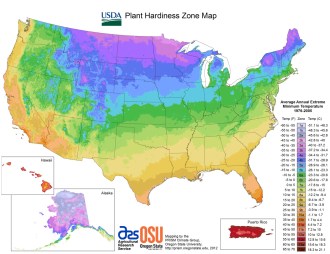
Source: U.S. Department of Agriculture

The topics of what to plant, when to plant, where to plant are constantly with us in Costa Rica.  Thanks to Julia Simon at National Public Radio (USA) for this note on gardeners in the USA using an online resource to rethink their planting plans:

‘It feels like I’m not crazy.’ Gardeners aren’t surprised as USDA updates key map

A newly updated government map has many of the nation’s gardeners rushing online, Googling what new plants they can grow in their mostly warming regions. Continue reading

Photosynthesis Mimicry Out Of Cambridge

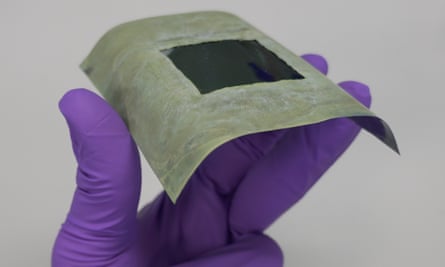
Researchers from the University of Cambridge designed ultra-thin, flexible devices, which take their inspiration from photosynthesis – the process by which plants convert sunlight into food.

Researchers from the University of Cambridge designed ultra-thin, flexible devices, which take their inspiration from photosynthesis – the process by which plants convert sunlight and CO2 into food. Photograph: Virgil Andrei

Photsynthesis comes in handy on this planet. This invention leverages the natural process into a technology to tackle a large scale challenge. We can only hope that it is not too little, too late:

Floating factories of artificial leaves could make green fuel for jets and ships

Cambridge University scientists develop a device to ‘defossilise’ the economy using sunlight, water and carbon dioxide

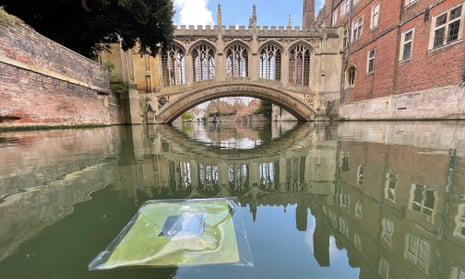
The artificial leaves were tested on the River Cam in and around Cambridge including sites such as the Bridge of Sighs.

The artificial leaves were tested on the River Cam in and around Cambridge including sites such as the Bridge of Sighs. Photograph: Virgil Andrei

Automated floating factories that manufacture green versions of petrol or diesel could soon be in operation thanks to pioneering work at the University of Cambridge. The revolutionary system would produce a net-zero fuel that would burn without creating fossil-derived emissions of carbon dioxide, say researchers. Continue reading

Dominica’s Whale Sanctuary

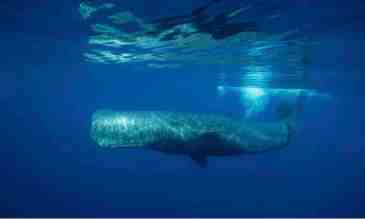
Fewer than 500 sperm whales are estimated to live in the waters surrounding Dominica. Photograph: By Wildestanimal/Getty Images

This island is already known for sperm whales. Protecting their habitat strengthens Dominica’s reputation as the conservation leader in the region:

Dominica creates world’s first marine protected area for sperm whales

Nearly 300 sq miles of water on west of Caribbean island to be designated as a reserve for endangered animals

The tiny Caribbean island of Dominica is creating the world’s first marine protected area for one of Earth’s largest animals: the endangered sperm whale. Continue reading

More Energy Use Annually Dwarfs Gains From Renewables

Ty Wright / Bloomberg / Getty

The facts about our progress combatting environmental crises are complex. Sometimes we sense hope and other times not so much. Zoë Schlanger, writing in the Atlantic, runs some numbers on mitigation from renewables:

One Huge Contradiction Is Undoing Our Best Climate Efforts

The math isn’t adding up.

You’d be forgiven for thinking that the fight against climate change is finally going well. Continue reading

Understanding Seawalls, Their Promise & Their Limits

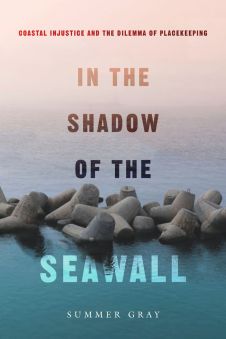
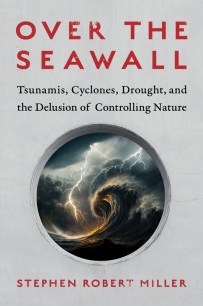
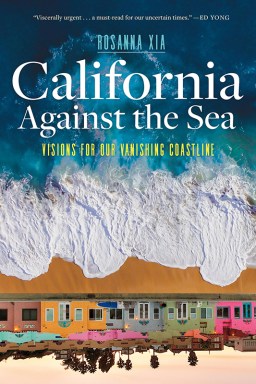
Daniel A. Gross does some heavy lifting on behalf of all of us, especially those in coastal areas. This technology is foreign to most of us, except the Dutch. We can hope all we want, but now might be a good time to start thinking more seriously about whether this technology is fit for the task:

Can Seawalls Save Us?

Huge coastal barriers could protect the world’s cities. But they’ll have unexpected costs.

Pacifica, California, just south of San Francisco, is the kind of beachfront community that longtime residents compare to Heaven. One of its streets is called Paradise Drive; local fishermen brag that Pacifica Pier is among the state’s best places to catch salmon, striped bass, and crab. Every few years, a superbloom blankets the coast with golden wildflowers. When the sun cuts through the region’s famous fog, the sky sometimes glows, as in a Turner painting.

Some of Pacifica’s most dramatic views could be found on Esplanade Drive, where mid-century developers built bungalows on top of a cliff. For almost fifty years, residents gazed out from their back yards to see whales splashing in the Pacific. Then, in 1998, a group of homeowners gathered to say goodbye. “I cannot express how spectacular it has been living here,” one of them, Joe Parker, said at the time. “I’ve seen dolphins out there. I recognize all the seabirds.” Beverly Axelrod, who had spent fourteen years on Esplanade Drive, recalled how her ocean view had “healed everything.” Continue reading

Frightening Future Facts For All Hallows’ Eve

Faced with climate change on the one hand and the material demands of new energy infrastructure on the other, humanity had better figure out how to reuse the resources it has already dug up. Illustration by Laura Edelbacher

Not to rain on the parade of the candy and costumes fun of October 31, but to heighten the mood of the day with some sobering truths facing all of us, our thanks as always to Elizabeth Kolbert for getting our attention pointed where it needs to go:

The Real Cost of Plundering the Planet’s Resources

Our accelerating rates of extraction come with immense ecological and social consequences.

The town of Spruce Pine, North Carolina, doesn’t have a lot to say for itself. Its Web site, which features a photo of a flowering tree next to a rusty bridge, notes that the town is “conveniently located between Asheville and Boone.” According to the latest census data, it has 2,332 residents and a population density of 498.1 per square mile. A recent story in the local newspaper concerned the closing of the Hardee’s on Highway 19E; this followed an incident, back in May, when a fourteen-year-old boy who’d eaten a biscuit at the restaurant began to hallucinate and had to be taken to the hospital. Without Spruce Pine, though, the global economy might well unravel. Continue reading

Removing Environmental Protections Will Not Seem So Clever In Hindsight

Sunset in the trees at Manatee Springs, Florida. Photograph: Michael Warren/Getty Images/iStockphoto

Oliver Milman, again, brings our attention to an environmental activism that deserves attention, this time for all the wrong reasons:

Experts fear half of the 290m wetland acres have lost federal protection and could be at risk from developers

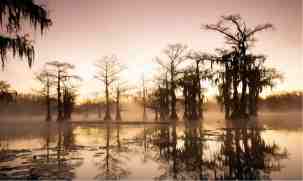
Lake Caddo, on the border between Louisiana and Texas, is a beautiful cypress swamp. Photograph: wanderluster/Getty Images

Often dismissed as dismal wet bogs and rampantly cleared since European arrival in the US, the underappreciated importance of wetlands has been placed into sharp relief by a supreme court ruling that has plunged many of these ecosystems into new peril.

The extent of wetlands, areas covered or saturated by water that encompass marshes, swamps and carbon-rich peatlands, has shrunk by 40% over the past 300 years as the US drained and filled them in for housing, highways, parking lots, golf courses and other uses. Globally, wetlands are disappearing three times faster than forests are. Continue reading

Frogs, Western Ghats & Science

Sathyabhama Das Biju (from left), James Hanken, Harvard’s Alexander Agassiz Professor of Zoology, and Sonali Garg during a June 2023 field trip to study amphibians in the Western Ghats, a biodiversity hotspot in India. Photo by A.J. Joji

During our seven years living and working in the Western Ghats we came to appreciate frogs through the eyes of our family, those of our staff, as well as travelers and occasional scientific references (the man on the left in the photo to the left having shown up in our pages one of those times). Good to know that the science is being shared for good cause, thanks to Anne J. Manning in this article for the Harvard Gazette:

The Indian Purple Frog, first described by Sathyabhama Das Biju in 2003.

Who will fight for the frogs?

Indian herpetologists bring their life’s work to Harvard just as study shows a world increasingly hostile to the fate of amphibians

Having pulled themselves from the water 360 million years ago, amphibians are our ancient forebears, the first vertebrates to inhabit land.

After 136 years from its original description, Günther’s shrub frog was recently rediscovered in the wild. Credit: S.D. Biju and Sonali Garg

Now, this diverse group of animals faces existential threats from climate change, habitat destruction, and disease. Two Harvard-affiliated scientists from India are drawing on decades of study — and an enduring love for the natural world — to sound a call to action to protect amphibians, and in particular, frogs.

Sathyabhama Das Biju, the Hrdy Fellow at Harvard Radcliffe Institute and a professor at the University of Delhi, and his former student Sonali Garg, now a biodiversity postdoctoral fellow at Harvard’s Museum of Comparative Zoology, are co-authors of a sobering new study in Nature, featured on the journal’s print cover, that assesses the global status of amphibians. It is a follow-up to a 2004 study about amphibian declines.

Franky’s narrow-mouthed frog is among the threatened species. Credit: S.D. Biju and Sonali Garg

Biju and Garg are experts in frog biology who specialize in the discovery and description of new species. Through laborious fieldwork, they have documented more than 100 new frog species across India, Sri Lanka, and other parts of the subcontinent.

According to the Nature study, which evaluated more than 8,000 amphibian species worldwide, two out of every five amphibians are now threatened with extinction. Climate change is one of the main drivers. Continue reading

Hurricane Otis & A Gut Punch


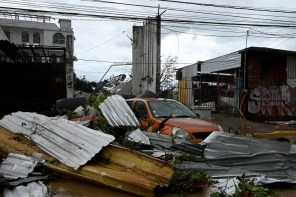
Acapulco shows signs of Hurricane Otis’s devastation on Wednesday.Photograph by Francisco Robles / AFP / Getty

While Acapulco got pummeled, a climate denier was elected to lead the majority party in the US House of Representatives, a different kind of gut punch. Thanks to Elizabeth Kolbert for this juxtaposition of facts:

Hurricane Otis and the World We Live in Now

The unexpected Category 5 storm is just the latest in a series of unprecedented climate disasters this year.

In the wee hours of Wednesday morning, Hurricane Otis crashed into the western coast of Mexico, just north of the resort city of Acapulco. Continue reading

Civil Disobedience & Civil Response

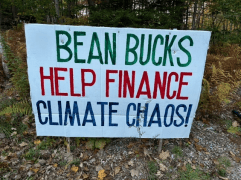
A sign made by William Rixon, who has been protesting L.L. Bean’s partnership with Citibank to offer the Bean Bucks credit card. Courtesy photo

Thanks to Bill McKibben for bringing this to our attention. And kudos to L.L. Bean’s CEO for having the decency to respond to this activist’s efforts to raise awareness of the company’s climate-unfriendly banking choice. Iconic companies messaging their environmental responsibilities need to be held to the same standard as the lousiest companies.

Climate demonstrator outside L.L. Bean gets surprise visit from CEO

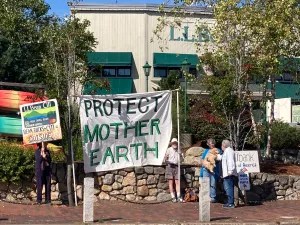
Bill Rixon outside the L.L. Bean retail store earlier this month. He was joined by Molly Schen, a member of Third Act Maine. Luna Soley / The Times Record

Freeport resident and retired schoolteacher William Rixon has been demonstrating outside L.L. Bean since the beginning of September. This week, he got a response.

“PROTECT MOTHER EARTH,” William Rixon’s homemade climate banner reads. Assembled with drop cloth and PVC piping, it stands at 10 feet, dwarfing Rixon.

Since September, Rixon and a group of fellow retirees have been standing with signs outside L.L. Bean’s sprawling downtown Freeport campus as well as its corporate headquarters just down the road. Continue reading