Keeping Shakespeare in Mind

Illustration by Mathew McFarren

Illustration by Mathew McFarren

Quite a few of our team can attest to the power of a liberal arts education, especially when put in such a joyful context.

Scott L. Newstok’s convocation speech to the Rhodes College class of 2020 embraces this joy, adding the cheeky tweak of asking the incoming class to approach their college experience in the “spirit of the 16th century”.

Building a bridge to the 16th century must seem like a perverse prescription for today’s ills. I’m the first to admit that English Renaissance pedagogy was rigid and rightly mocked for its domineering pedants. Few of you would be eager to wake up before 6 a.m. to say mandatory prayers, or to be lashed for tardiness, much less translate Latin for hours on end every day of the week. Could there be a system more antithetical to our own contemporary ideals of student-centered, present-focused, and career-oriented education?

Yet this system somehow managed to nurture world-shifting thinkers, including those who launched the Scientific Revolution. This education fostered some of the very habits of mind endorsed by both the National Education Association and the Partnership for 21st Century Learning: critical thinking; clear communication; collaboration; and creativity. (To these “4Cs,” I would add “curiosity.”) Given that your own education has fallen far short of those laudable goals, I urge you to reconsider Shakespeare’s intellectual formation: that is, not what he purportedly thought — about law or love or leadership — but how he thought. An apparently rigid educational system could, paradoxically, induce liberated thinking.

“Take advantage of the autonomy and opportunities that college permits by approaching it in the spirit of the 16th century. You’ll become capable of a level of precision, inventiveness, and empathy worthy to be called Shakespearean.”
So how can you think like Shakespeare?

Continue reading

eBird Workshops in Guatemala

First of all I would like to give to you a brief introduction of myself since it’s the very first time I have the great opportunity to write a post here – by the way thanks Amie, Crist and Seth Inman for the invitation.

I am a 20 year old birder from Guatemala and I have been in touch with nature and birds since I was a little kid. I remember being carried by my dad on his back and going out to the field to go birding. He needed to take care of me but he didn’t want to just stay at home wasting valuable hawk migration time, so he took me with him no matter what. I remember I enjoyed it A LOT, not only because I liked being carried, but the memories of the field guide open in my dad’s hands and his binoculars hanging by his neck and his trying to point out the bird and later showing it to me in the book are things I will never forget. Of course I was too young to actually spot the bird and appreciate it in the field but I do remember looking at the birds carefully in the field guide. A few years later I was so excited when he gave to me my first pair of binoculars as a Christmas present! I felt like a pro ornithologist (although I didn’t know that word yet). That same year he bought his first spotting scope so when I wasn’t able to see the bird and observe it through my binoculars myself he would find it on the scope so I could enjoy the beauty, behavior, different plumages – everything of the birds. I immediately fell in love with birding and all of what biding had to offer to me. Continue reading

World Orangutan Day

tnc_56625009_preview_cropped

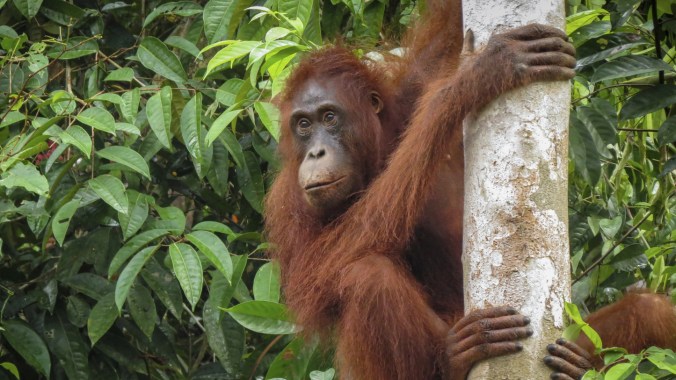
An orangutan in Tanjung Puting National Park in Borneo, Indonesia. All photos from: The Nature Conservancy

About a week ago we celebrated World Lion Day. Today we celebrate a different, long-limbed animal that likes to climb trees, the Orangutan. There are two species of this magnificent arboreal ape, both of which are facing potential extinction due to deforestation, poaching, the illegal pet trade and forest fires. As of last month, the status of the Bornean orangutan was classified as “critically endangered,” but conservationists are not giving up and are taking significant measures to improve forest management by working together with local communities and developing public-private partnerships.

The harmony between humans and apes began to unravel with the arrival of European explorers, who hunted them extensively during the 19thcentury. But it was not until the mid-20th century that human activities began to imperil orangutans’ existence. Extensive deforestation not only directly threatened orangutan habitat, it made the forest more easily accessible to humans. This led to both conflicts with orangutans, as the apes will eat crops, and made it easier for poachers to hunt the animals.

Continue reading

Preserving Darkness

13darksky-web01-superjumbo

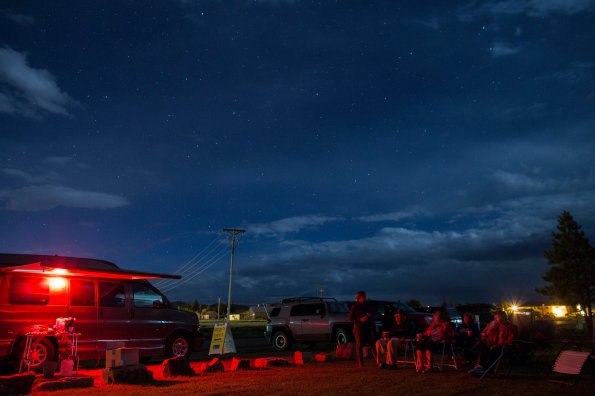
Members of Dark Skies Inc. look for meteors in Westcliffe, Colorado. Source: New York Times

A few days back we wrote about the Perseid meteor outburst taking place between August 11th and 12th and I sincerely hope you had the opportunity to find a remote location with low night pollution to see it because it was truly a cosmic phenomenon (we lay some futon cushions on the back of a pick-up truck, drove out to an area of Gallon Jug fields at three in the morning, and laid back to gaze at the meteor shower).

A couple thousand miles away, residents of towns in the Wet Mountain Valley of southern Colorado, Silver Cliff and Westcliffe, were able to enjoy the display early Friday morning because even from the town’s limits they can see the Milky Way. It is rare to find a town with such low light contamination, but it isn’t a coincidence. Locals have sustained efforts for more than a decade to dial down on the outdoor lighting by not only dimming the light potency but also requiring lights to face downward. These communities are preserving the beauty of gazing out into a star-filled night sky and have benefited from the visitors who started to visit for the purpose of stargazing. Here’s the story as reported by the New York Times:

WESTCLIFFE, Colo. — As people around the world stepped into their backyards or onto rooftops to peer up at the annual spectacle of the Perseid meteor shower early on Friday morning, few of them had a view like Wilson Jarvis and Steve Linderer.

Continue reading

A DIY Desalination Machine

fayez-al-hindi-solar-desalination-3-889x514

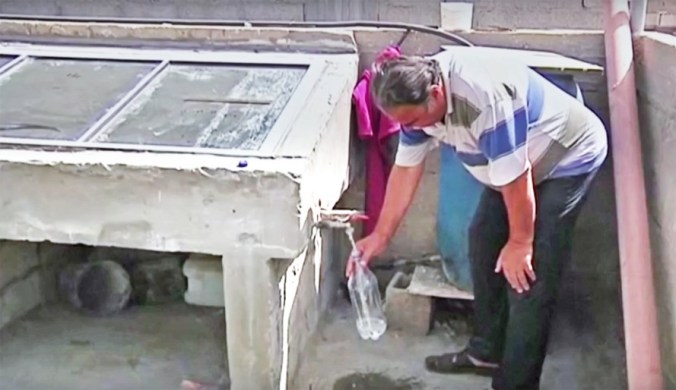
Fayez al-Hindi gathering drinking water from his solar-powered desalination machine Source: Inhabitat.com

We love DIY (Do-It-Yourself) projects, especially when they involve creating a  sustainable mechanism that solves a critical problem. Fayez al-Hindi, a resident of the Gaza region, created a homemade solar-powered desalination machine that can produce 2.6 gallons of fresh water every day. His creation is of particular importance considering that 90 percent of the region’s water supply is unfit for human consumption. Al-Hindi’s distilled water was proven to be safe drinking water by the Coastal Municipalities Water Utility. The most promising part of the story is that he plans to help other local residents build their own distillation systems, making potable water accessible to a greater number of people.

Watch the video on his invention below! Continue reading

Honoring World Lion Day

01-asiatic-lion-ngsversion-1470838592918-adapt-885-1

A male Asiatic Lion. Source: National Geographic

In celebration of World Lion Day (August 10th), here’s a motivational and uplifting conservation story of Asiatic Lions in west India’s Gir National Park:

The Asiatic lion once roamed vast swaths of the Middle East and Asia, but indiscriminate hunting and killing to protect livestock led to their mass slaughter. By the late 1800s, as few as 10 of the animals remained on Earth.

Their last refuge became western India’s Gir National Park, a protected area where these endangered animals are now on an upward trend. According to a 2015 census, a little more than 500 lions—the world’s total wild population—live in Gir, up from 411 in 2010. In comparison, about 20,000 African lions remain in the wild. (See a map of the lion’s decline worldwide.)

Continue reading

10,000 Suns

We have a long fascination with Land Art Installations and urban land reclamation going back to the earliest days of this site.  Learning about landscape architect Adam E. Anderson’s public art project in Providence, Rhode Island was exciting news.

This summer long “botanical performance” takes land that until recently was covered by an elevated highway system and cultivating it with volunteers into a different sort of public space.

Rather than using high maintenance and energy intensive large swaths of turf grass, the installation uses the bio-accumulating (removes toxins) and habitat creating properties of Helioanthus (aka, Sunflower) planted in rows in a series of large circles, leaving paths in-between for intimate exploration. Continue reading

Big Numbers for eBird this Summer

Starting in May, eBird hit a big milestone: 11.8 million bird sightings in that month alone – the same amount of sightings the citizen science database collected in the first five years it existed. Participation in recent years had shot up enough to make that sort of number, and these sorts of maps, possible. Then, on June 17th, the 333,333,333th checklist was submitted to eBird from a participant in Illinois. A third of a billion records submitted by just over three-hundred thousand different people around the world since the Cornell Lab of Ornithology and Audubon partnered to make it possible for people to easily digitize their bird sighting checklists – that amounts to an average of a thousand-and-fifty checklists per eBirder!

At the end of last month, eBird saw another big number, with a million bird photos archived in the Cornell Lab’s Macaulay Library through the new tool allowing users to attach images to their checklists. And this week, the app Merlin got downloaded by its millionth user since it was launched for iPhones in January 2014 (and a bit later on Android phones). But eBird, Merlin, and the Macaulay Library aren’t the only ones reaching milestones this summer. Continue reading

Blue Ventures, Belize

Screen Shot 2016-08-04 at 6.41.54 PM.jpg

We have been introduced to Blue Ventures by Phil Karp, and want to share their website far and wide:

We rebuild tropical fisheries with coastal communities

Blue Ventures develops transformative approaches for catalysing and sustaining locally led marine conservation. We work in places where the ocean is vital to local cultures and economies, and are committed to protecting marine biodiversity in ways that benefit coastal people. Continue reading

Reflections On Collecting Things

Museum.jpg

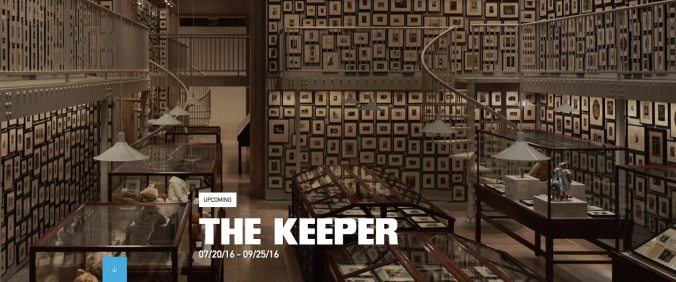
This exhibition, brought to our attention by a lengthy respectful review here, is the first time we have heard of this museum, but now that it is on our radar we stay tuned. This looks like our kind of show:

Object Lessons: The New Museum
Explores Why We Keep Things

Curators at the New Museum have created an exhibit with over 4,000 objects that examines the various ways we collect and own items.

By

We live in a sharing economy of collaborative consumption — services, not stuff. Crowdsourcing, peer-to-peer rentals like Airbnb: An interest, exemplified by millennials, in a temporary ownership of goods.

Apps, not objects. Continue reading

Amazon’s Architectural Adventure

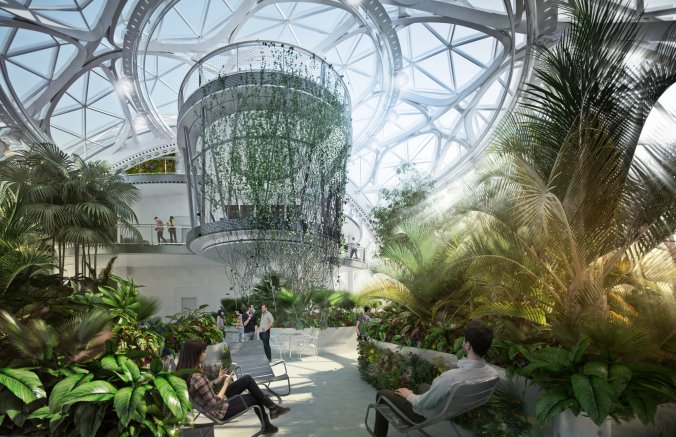
11AMAZON5-superJumbo

Renderings of the spheres at Amazon that show what the interiors are expected to look like. When they open in early 2018, the spheres will be packed with a plant collection worthy of top-notch conservatories. CreditNBBJ

An article in the New York Times helps to illuminate the logic of a company with billions of dollars to spend on its office infrastructure, a company that occupies”creative” space in the global economy, when they design the HQ of the future:

…“The whole idea was to get people to think more creatively, maybe come up with a new idea they wouldn’t have if they were just in their office,” said Dale Alberda, the lead architect on the project at NBBJ, a firm that has also worked on building projects for Samsung, Google and the Chinese internet company Tencent.

Tech companies have been eager to test ways to make workplaces more conducive to creativity. Some turn their offices into grown-up playgrounds, with beanbag chairs, ball pits and Ping-Pong tables…

Creative1.jpg

In New York City’s Chelsea neighborhood, the tech-centric creative company Barbarian Group created a fluid Superdesk to gather their employees at one endless table. Photo from The Creative Workplace

This comes not long after Apple’s own utopian creativity nest, among others in the cash-aplenty sector. A few months ago a book titled The Creative Workplace came to our attention.

We were already primed to think about office space again when we saw the book. A portion of our team was going to be transferring over to the client side at Xandari, starting July. This would give us some space to be creative with. And so we have done. Already we have welcomed the Rainforest “client-side” team into our office.  SCreative2hared office space, akin to what we saw in one of the WeWork spaces in San Francisco recently, suits our office space well.

So the images from this book have been perfectly timed to stimulate our thinking. In our first round of office creativity thinking in 2011 we had a shell that dictated constraints. One of those was economic, aka rational business logic. We needed a certain “feel” to reflect our aesthetic, and to accommodate our workflow, but did not want to go over the top because that is not how we do things.

But we like pretty shiny things as much as the next person, so Continue reading

Connecting the Dots

In our business we often use words like synchronicity and synergy to illustrate the amazing frequency of “right time-right place” meetings and connections. In the summer of 2011 one of the original interns (and creators of this site) came to work with us in Kerala. In search of a project, we introduced him to Diwia Thomas to brainstorm a social entrepreneurship collaboration. That process led to an amazing joint venture paperbag making workshop with the Kerala Forestry Department.

The very first post I wrote on this site was about Diwia Thomas and her company Papertrails. It just so happens it was published exactly 5 years ago. It also just so happened that this morning my Facebook feed included the news that Diwia had been honored with the Unique Times’ Young Women Business Excellence Award 2016. Continue reading

Continue Protecting The Boundary Waters Canoe Area Wilderness

02MONDALE-web-master768

Canoeing in the Boundary Waters Canoe Area Wilderness near Ely, Minn.CreditBre McGee/The St. Cloud Times, via Associated Press

None in our immediate circle has been there, but it looks like our kind of place. We hope to see it, to canoe it, to breathe in that clean air. This editorial makes it clear what’s at stake, and what needs to be done. It’s not the messengers, it’s the message (but wow on the messenger front too):

Protect Minnesota’s Boundary Water

MINNESOTA’S Boundary Waters Canoe Area Wilderness is one of America’s most popular wild destinations. Water is its lifeblood. Over 1,200 miles of streams wend their way through 1.1 million acres thick with fir, pine and spruce and stippled by lakes left behind by glaciers. Moose, bears, wolves, loons, ospreys, eagles and northern pike make their home there and in the surrounding Superior National Forest. Continue reading

#12 Of One Dozen Love Letters About Xandari

IMG_0040

After our visit to Cardamom County last weekend to bid farewell to our colleagues there, Amie suggested that I amend my dozen Xandari love letters writing engagement to a baker’s dozen: Cardamom County has been so integral to our time in Kerala that it would not be proper to reflect only on Xandari in this manner. Continue reading

#11 Of One Dozen Love Letters About Xandari

XWebsite.jpg

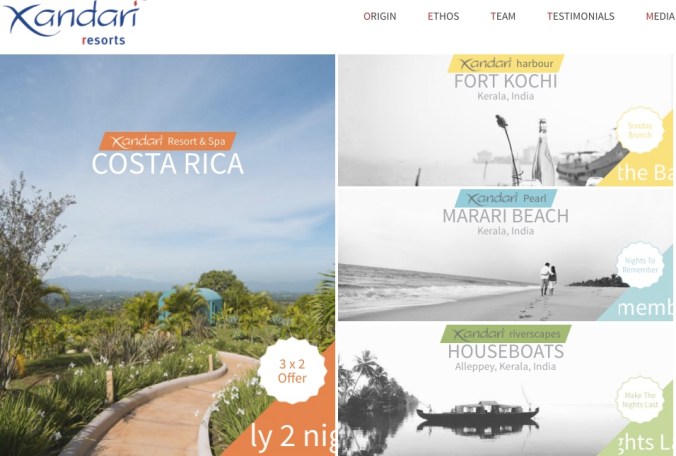
It is that time of year. Monsoon in Kerala, and what we like to call green season in Costa Rica. The rains are delicious, and give the sense of abundance and replenishment, refreshment. It is the ideal time for ayurveda in Kerala. Or just pure relaxation with a book, escaping the news and other distractions–digital detox–and any of the four properties shown above can help you achieve that bliss.

For one more day La Paz Group will be responsible for ensuring that Xandari delivers that bliss. July 1 onward George M George and his team will be in that role. In making the rounds to all the properties this week we have been experiencing a sensation that maps on almost perfectly to the sensation that has come with two decades of nomadic life. Continue reading

#10 Of One Dozen Love Letters About Xandari

ADXHArchitectural Digest is not the reason we do what we do. But when they take note, in any manner, we feel the love. Xandari Harbour soft-opened, and within a very short time got an inordinate amount of good press even before the formal opening. Yet the AD mention, which was neither a cover story nor even a particularly huge feature, had a different level of impact on those of us on the team that developed it.
George M George, the visionary who saw the potential in the run down property and particularly the crumbling godown (waterfront warehouse) featured on the left above post-restoration, was that team’s source of energy, inspiration, encouragement–this would not have happened without his excellent leadership. Continue reading

#9 Of One Dozen Love Letters About Xandari

XCRMSN1

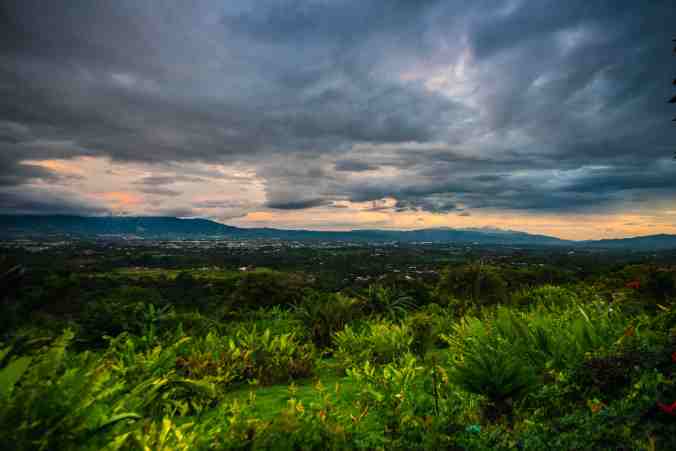
Two years ago I had the pleasure of meeting a family at Xandari in Costa Rica who were on their first vacation in Costa Rica and at Xandari. The father in the family was a photographer by avocation and he shared various photographs with me that he had taken on that visit. He captured views from the property that I consider to be classic favorites of the guests who know Xandari the best. I asked permission to use his photographs, which he granted, but this is the first chance (oops) I have had to share them.

Then one year ago I had the good fortune to meet them again on their second vacation at Xandari–good fortune in the sense that I do not spend alot of time at the Costa Rica property, and so meeting them again was just funny good luck. Ray showed me more photographs. I noticed his scope and scale had changed this time around. Continue reading

#7 Of One Dozen Love Letters About Xandari

XP

Dear Xandari Pearl circa 2026,

I hope the day this photo was taken (yesterday as I type this) will be remembered. Amie wept. Saji shared some wisdom–and we all embraced in the hopeful spirit of looking forward to this lovely property’s prosperity. I shared recollections of my first visit to this property  years before moving to India, and wanted each of the team members to know why this property is the most important work so far in my lifetime. It had to do with this location’s personal meaning to George M George, and how that meaning influenced the design process. Xandari Costa Rica was a big part of that process as well, and the Xandari community should be aware of that special link. Continue reading

#5 Of One Dozen Love Letters About Xandari

Photo credit: Milo Inman

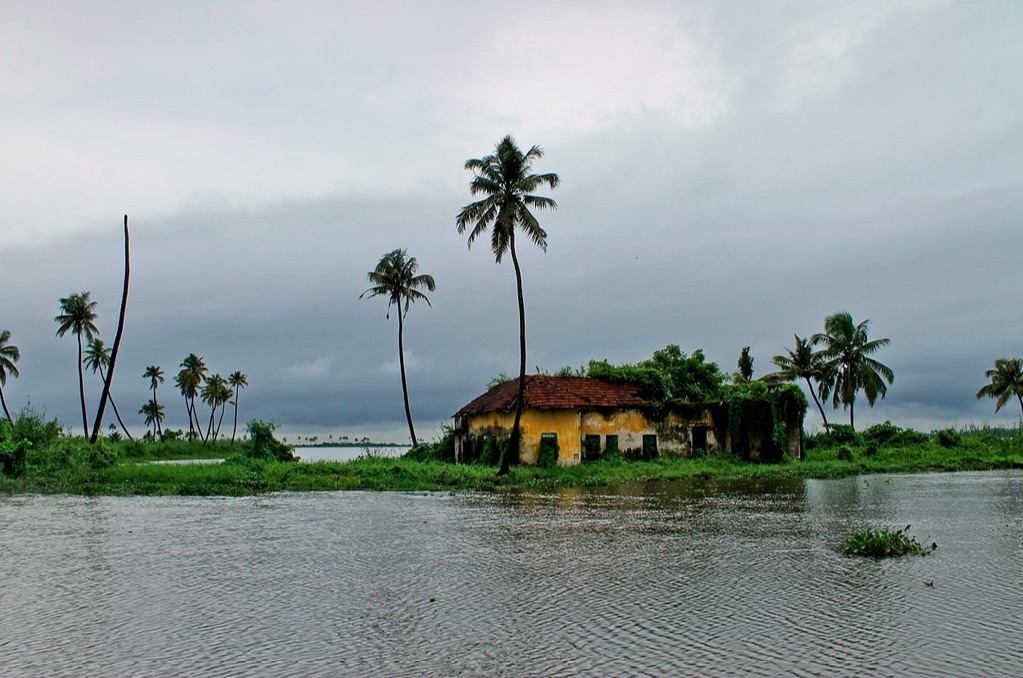
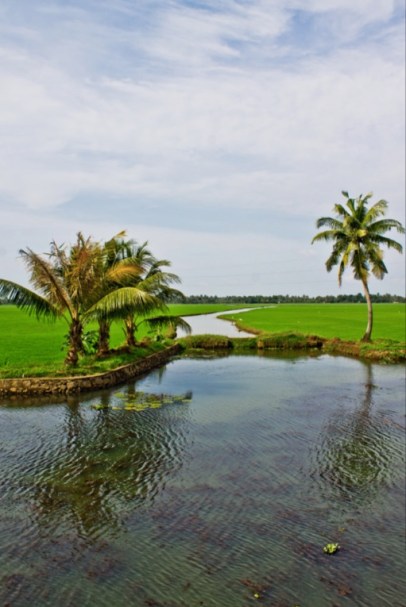
When the conversation about bringing the Xandari concept to India was in the early stages, Milo was in the early stages of mastering the camera. We spent a large percentage of our time in the backwaters in those days, working with our team at River Escapes, and this gave Milo time with his craft in an astounding setting. My father was a photographer, and his father painted landscapes, but for some reason their visual acuity skipped a generation and Milo got it. He saw in composition and captured with camera what escaped me. A  collection of these photographs has adorned our office walls since they were taken in 2011.  And they have influenced our thinking about what is now called Xandari Riverscapes.

XR2

Photo credit: Milo Inman

The houseboat operation has been written about many times in these pages over the years, but in the archival diving of the last week I discovered some fascinating correspondence related to my first visit to Kerala.

George M George had taken me to the backwaters and showed me the first houseboat under construction. The craftsmen were doing something I had no idea was possible, stitching together a hull with no nails; and then afterwards the artistry of the upper deck, and all that we have written about elsewhere.

I have just reread a letter I wrote to Sherrill Broudy after that first visit to Kerala a dozen years ago, and had shared my snapshots with him, saying that what I saw reminded me of Xandari with the curvaceous, organic feel.

Continue reading