Bubbles On Ice

Illustration by Arina Kokoreva

A bit late considering the special issue was published one month ago, but here is another article in a recent series featuring unusual ideas about how to address climate change:

A Heat Shield for the Most Important Ice on Earth

Engineers might be able to protect Arctic ice by coating it with tiny glass bubbles. Should they?

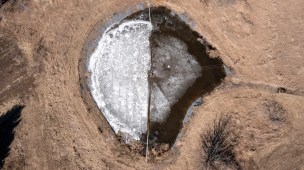
An aerial view of the glass-bubble-covered ice, at left, and the bare ice. Photograph by Doug Johnson

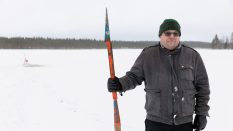
On a clear morning in late March, in rural Lake Elmo, Minnesota, I followed two materials scientists, Tony Manzara and Doug Johnson, as they tromped down a wintry hill behind Manzara’s house. The temperature was in the high thirties; a foot of snow covered the ground and sparkled almost unbearably in the sunlight. Both men wore dark shades. “You don’t need a parka,” Johnson told me. “But you need sunglasses—snow blindness, you know?” At the bottom of the hill, after passing some turkey tracks, we reached a round, frozen pond, about a hundred feet across. Manzara, a gregarious man with bushy eyebrows, and Johnson, a wiry cross-country skier with a quiet voice, stepped confidently onto the ice. Continue reading

About The Food Waste Known As Diversion

Photograph by Grant Cornett

As still life compositions go, the photo to the right is classic in style and weirdly perfect for the essay it accompanies.  Helen Rosner frequently writes about food, including a review that convinced me to watch The Bear, and this is the best of her work that I have read:

The Promises of the Home “Composting” Machine

A new crop of techy appliances wants to help fight the food-waste crisis. How virtuous should we feel using them?

In the course of a week, my kitchen produces a shocking quantity of what we might think of as edible trash: apple peels, garlic nubs, a bit of gristle from a steak, Dorito dust, tea bags, the iron-hard heel of a loaf of bread that’s been sitting out overnight. The meat scraps I feed to my dog. The bones and vegetable scraps I store in the freezer in gallon-size ziplock bags and periodically bung into a pot and simmer into stock. But even then, once the stock is made, and the chicken bones or onion ends are leached of all their flavor, I’m left again with edible trash—only now it’s soggy. And then there are the times when the strawberries aren’t sealed right and become fuzzy with mold, or the delivery sandwich turns out to be gross, or the refrigerator’s compressor breaks and somehow we don’t notice, or I’m just exhausted and overwhelmed and want everything gone. Continue reading

Another Year, Another Invasive Python Initiative: Inversa Leathers

The invasive Burmese python has become the apex predator in the Florida Everglades, displacing the native American alligator. Photograph: Dorling Kindersley ltd/Alamy

We have been paying attention to this problem for more than a decade, and seen ideas like this before; until the problem is mitigated, we will continue sharing:

Could handbags be the haute couture solution to Florida’s python problem?

Invasive Burmese pythons are devastating wildlife but one firm believes turning snake leather into accessories could be a win-win

The fight to eradicate Burmese pythons from the Florida Everglades has intertwined with New York’s haute fashion scene in a project launched by a group of environmental activists who have already experienced success working with the skins of other invasive species. Continue reading
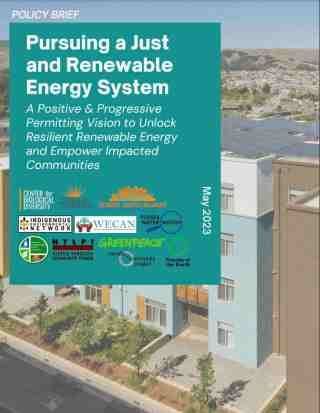
What Does Positive & Progressive Permitting Look Like?

We have seen the Center for Biological Diversity mentioned in his newsletters before, but this week Bill McKibben links to this recently released document. The Center offers a positive and progressive consideration of priorities we should give to permitting renewable energy, contrasting efforts to gut regulatory protections related to fossil fuel permitting highlighted in his current newsletter:

Introduction

It is indisputable that the climate emergency requires the United States to rapidly transform its majority fossil energy system to 100% clean and renewable energy.

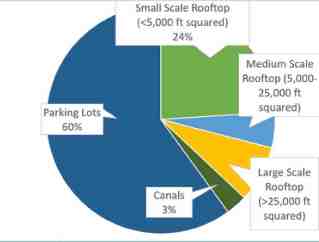
Distributed solar on rooftops alone can generate a significant portion of our energy demands while also bringing key benefits like resilience, local job generation, and avoided wildlife impacts. Once distributed energy is maximized, building renewables on top of parking lots and canals as additional built surfaces can fill the remaining gap in our current energy demand. Prioritizing these sites for renewable energy can avoid the community impacts and bottlenecks associated large-scale transmission construction.

The United Nations Intergovernmental Panel on Climate Change’s recent sixth synthesis report makes absolutely clear that an unprecedented bold transition to renewable energy with an equally aggressive effort to halt new fossil fuel development and phase out existing fossil fuel usage is absolutely vital to avoiding the most catastrophic consequences of climate change (1). This necessary transformation presents a tremendous opportunity to pursue a far more just path forward—one that ends the status quo entrenchment of the fossil fuel industry; empowers federal agencies to use their authorities to accelerate the transitions to a justly sourced, justly implemented, resilient, and equitable power system; actualizes the principles of environmental justice; and preserves our core environmental laws. Continue reading
The Lab Of Peter Girguis

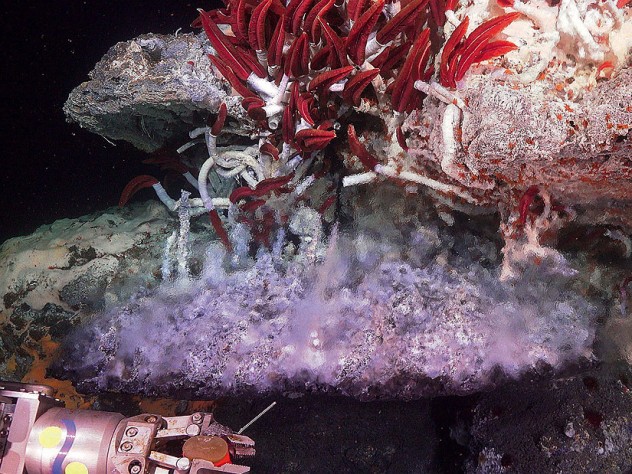
Giant tubeworms take up chemicals from a hydrothermal vent 6,200 feet deep in the Gulf of California (the Girguis lab is world-renowned for research on these worms). Photograph courtesy of the Schmidt Ocean Institute

Our thanks to Veronique Greenwood (after a few years’ absence from our notice) for her most recent article in Harvard Magazine:

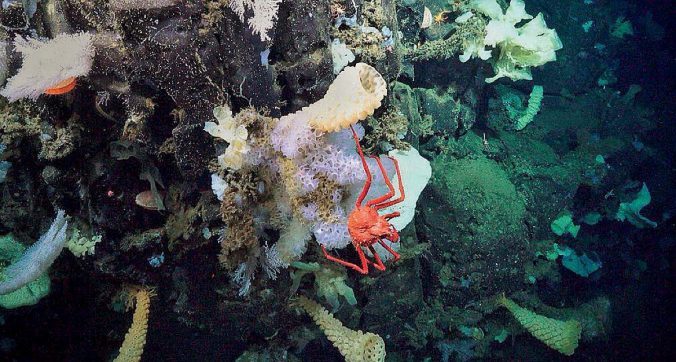
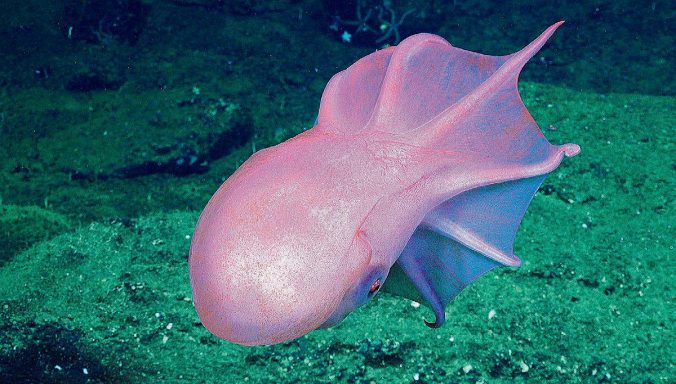
Top: a remote dive at Emery Knoll, a deepwater reef off Southern California, reveals crabs, sponges, and corals. Bottom: a rare sighting of the massive seven-arm octopus, Haliphron atlanticus. Photographs courtesy of the Schmidt Ocean Institute

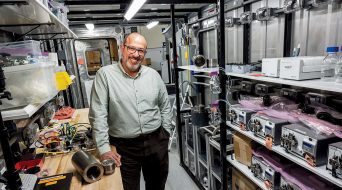
Peter Girguis on terra firma in the lab. Photograph by Jim Harrison

Plumbing the Deep Sea

Peter Girguis probes life on the ocean floor

In a cavernous underground space behind Harvard’s Biological Laboratories, biochemist Peter Girguis frowns at the pressure vessel in his hand. The machined titanium cylinder, about the size of a French press, gleams as he works to release the cap, and he chuckles at his own stubbornness. He could probably find a tool to loosen it, he remarks. Continue reading

Chilekwa Mumba, 2023 Goldman Environmental Prize Winner

The 2023 Goldman Prize goes to this man:

Alarmed by the pollution produced by the Konkola Copper Mines operation in the Copperbelt Province of Zambia, Chilekwa Mumba organized a lawsuit to hold the mine’s parent company, Vedanta Resources, responsible. Chilekwa’s victory in the UK Supreme Court set a legal precedent—it was the first time an English court ruled that a British company could be held liable for the environmental damage caused by subsidiary-run operations in another country. This precedent has since been applied to hold Shell Global—one of the world’s 10 largest corporations by revenue—liable for its pollution in Nigeria.

Our thanks to Jocelyn C. Zuckerman for this conversation with him:

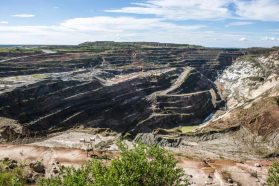
The Nchanga copper mine, operated by Konkola Copper Mines, in Chingola, Zambia. WALDO SWIEGERS / BLOOMBERG VIA GETTY IMAGES

This Zambian Took on a U.K. Mining Giant on Pollution and Won

Chilekwa Mumba led a court battle to hold a U.K.-based company responsible for the gross pollution from a copper mine it owns in Zambia. In an interview, he talks about how he and local villagers faced arrest to overcome long odds and finally win a landmark legal victory.

The southern African nation of Zambia is home to a wealth of minerals — in particular, lots of the copper and cobalt that the world will require to power a green economy. Continue reading

Norway’s Combustion Transition

About 80 percent of new-car sales in Norway were electric last year, putting the country at the vanguard of the shift to emissions-free vehicles. David B. Torch for The New York Times

A major fossil fuel producing country has figured out how to transition away from combustion engines:

About 80 percent of new cars sold in Norway are battery-powered. As a result, the air is cleaner, the streets are quieter and the grid hasn’t collapsed. But problems with unreliable chargers persist.

BAMBLE, Norway — About 110 miles south of Oslo, along a highway lined with pine and birch trees, a shiny fueling station offers a glimpse of a future where electric vehicles rule. Continue reading

Bringing Back Peat

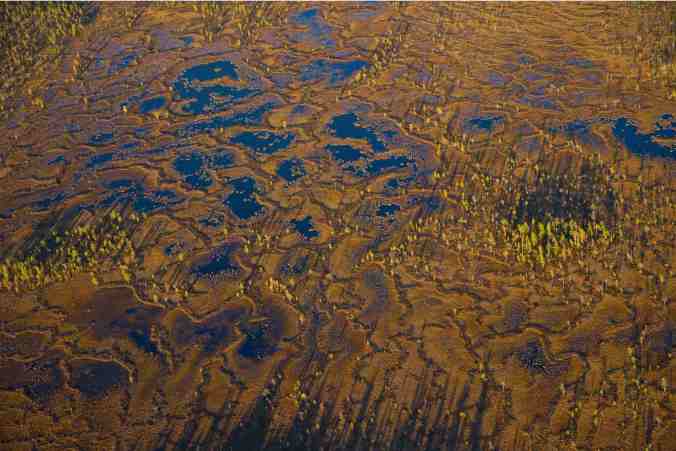
Peatland and taiga forest in northern Finland. NATURE PICTURE LIBRARY / ALAMY STOCK PHOTO

It has been a year since we linked to a peat-in-place story, of which there cannot be too many (so thank you, Yale e360):

Tero Mustonen. GOLDMAN ENVIRONMENTAL PRIZE

Finland Drained Its Peatlands. He’s Helping Bring Them Back

Tero Mustonen has led a successful effort to restore roughly 80 areas of ecologically critical peatlands across his native Finland. In an interview, he talks about the importance of bringing Indigenous knowledge to rewilding initiatives in far northern regions and beyond.

Until a century ago, almost a third of Finland was covered in pristine peatlands, which comprise one of the Earth’s largest and most important carbon sinks. Since then, however, half of Finnish peatlands have been strip-mined for fuel or drained to make room for forest plantations. Continue reading

Viewed From Above, Our Most Important Leaks

Illustration by Ard Su

David W. Brown offers this updated look at the use of satellite technology for a key metric:

A Security Camera for the Planet

A new satellite, funded by a nonprofit, aims to pinpoint emissions of methane—a gas that plays a major role in global warming.

When his phone rang, Berrien Moore III, the dean of the College of Atmospheric and Geographic Sciences at the University of Oklahoma, was fumbling with his bow tie, preparing for a formal ceremony honoring a colleague. He glanced down at the number and recognized it as nasa headquarters. This was a bad sign, he thought. In Moore’s experience, bureaucrats never called after hours with good news.

It can see large methane concentrations along its orbital path, but can’t pinpoint emissions sources. Illustration by Ard Su

For roughly six years, Moore and his colleagues had been working on a space-based scientific instrument called the Geostationary Carbon Cycle Observatory, or GeoCarb. nasa had approved their proposal in 2016; it was now 2022, and GeoCarb was being built by Lockheed Martin, in Palo Alto, California. Once it was in space and mounted to a communications satellite, GeoCarb would scan land in the Western Hemisphere continuously in strips, taking meticulous measurements of three carbon-based gases: carbon dioxide, carbon monoxide, and methane. It would give scientists a detailed view of the carbon cycle—the process by which carbon circulates through the Earth’s forests, lakes, trees, oceans, ice, and other natural features. Continue reading
Andy Hunter Scales Up Without Selling Out

Andy Hunter, the founder of Bookshop.org (pictured here at Spoonbill & Sugartown Books in Brooklyn) developed his love for books early. “I became a reader, in the beginning, because it provided me solace,” he says. PHOTOGRAPH: YAEL MALKA

Who could resist a story about scaling up without selling out–especially when it involves an online book shop?

Our thanks to Kate Knibbs, a senior writer at WIRED, for this profile of someone who has indirectly featured in our pages without being named before.

Not to mention the photographs by Yael Malka accompanying the story:

How Bookshop.org Survives—and Thrives—in Amazon’s World

Andy Hunter’s ecommerce platform was a pandemic hit. Now he’s on a mission to prove that small businesses can scale up without selling out.

“DO YOU REMEMBER what kind of beer it was?”

PHOTOGRAPH: YAEL MALKA

Andy Hunter pauses for so long before answering my question, it’s awkward. He’s racking his brain. I’ve asked him to tell me about the night he came up with the idea that led to his improbably successful bookselling startup, Bookshop.org. As a former magazine editor, he wants to get the details right.

He remembers the easy stuff: It was 2018. He was on the road for work. At the time, Hunter ran the midsize literary publishing house Catapult, a job that required schmoozing at industry events. The night of his big brainstorm, he was away from his two young daughters and his usual evening obligations—dishes, bedtime rituals—and had a rare moment to think, and drink a beer. Continue reading
#CargoUnderSail #RethinkShipping

Illustration by Owen D. Pomery

The Climate Crisis Gives Sailing Ships a Second Wind

Cargo vessels are some of the dirtiest vehicles in existence. Can a centuries-old technology help to clean them up?

In February, 1912, Londoners packed a dock on the River Thames to gawk at the Selandia, a ship that could race through the water without any sails or smokestacks. Winston Churchill, then the minister in charge of the British Royal Navy, declared it “the most perfect maritime masterpiece of the twentieth century.” But, as the Selandia continued its journey around the world, some onlookers were so spooked that they called it the Devil Ship…

The history is a fun read, so continue to the whole story here. But then, take a closer look at the company featured in the article:

Our Story

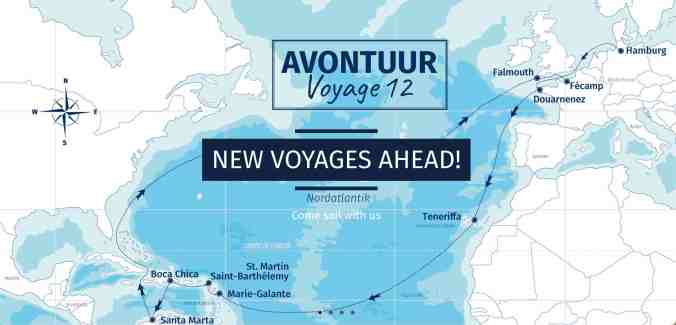
Over the course of 20 years working in the maritime industry Cornelius Bockermann witnessed first hand how humans adversely affect our environment. He knew something had to change. In 2013, he moved with his family to Cairns and shipped all their possessions from Germany to their new home in Australia. Through the process of shipping his own goods he experienced the disconnect between commerce and environmental preservation. Upon learning of plans to expand fossil fuel based shipping along the Queensland coast and amongst the Great Barrier Reef he knew he had to act. The question became how do you offer businesses and consumers a sustainable option in shipping?

Cargo Under Sail is the answer and the Dutch schooner named the AVONTUUR is the vessel to start it.

We are a passionate collective of individuals working to create a supply chain that merges the relationship between commerce and preservation. We are restless and can no longer wait for others to make a change.

Our Mission Zero

To eliminate pollution caused by shipping cargo.

We have a five-stage approach:

1. Raise Awareness about the environmental destruction caused by the shipping industry

2. Model a clean shipping future with our AVONTUUR

3. Sell premium AVONTUUR products to support the ongoing operation of the project.

4.  Establish a demand for products shipped by sail

5. Build a modern sail cargo fleet

An Optimistic View On Climate

Illustration by Nicholas Konrad / The New Yorker; Source photographs from Getty.

We appreciate the author’s wide reach and tireless exploration for solutions to seemingly unsolvable puzzles:

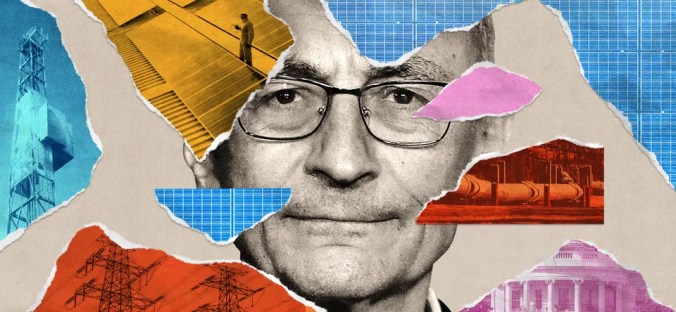
A Case for Climate Optimism, and Pragmatism, from John Podesta

The veteran political operative now has one of the nation’s top climate jobs. He speaks about the Willow oil-drilling project, the Inflation Reduction Act, and the Biden White House.

“Humanity is on thin ice, and that ice is melting fast,” António Guterres, the Secretary-General of the United Nations, recently warned, in response to a newly alarming climate report. The ice is melting, in large part, because the world keeps burning fossil fuels. To change that, the U.S. will need to join other nations in replacing machines that burn them—cars, stoves, furnaces, and eventually things like planes and factories—with machines that run on electricity. Continue reading
Natural History Anew

An image from 1957, when the cross and square design was still legible. American Museum of Natural History

We have featured so many natural history museums in our pages over the years that one more might have been redundant; but no:

A new aerial photo shows the museum today, as a crazy quilt of buildings from many eras, with Gilder on the right. Iwan Baan

The article below, by Michael Kimmelman with photographs and video by Peter Fisher, allows us to imagine the experience of a new view on natural history in New York City.

The view at the entrance toward the monumental staircase with bleacher seats.

We are ready to be awed:

The stunning $465 million Richard Gilder Center for Science, designed like a canyon, is destined to become a colossal attraction.

When plans for it first surfaced, I wondered if the new Gilder Center at the Natural History museum might end up looking overcooked.

From the outside it’s a white-pink granite cliff with yawning windows shaped a little like the openings to caves, nestling the museum’s wonderful Romanesque Revival addition from the turn of the last century. Past the front doors, that cliff face morphs. It becomes an atrium in the guise of a towering canyon, a city block deep.

Skylights and balconies in the atrium of the new Richard Gilder Center for Science, Education and Innovation.

For its architects, Jeanne Gang and her team, Gilder was clearly a gamble and leap of faith, bucking today’s innocuous norms, almost begging for charges of starchitectural self-indulgence.

Now that it’s built, I love it.

I wouldn’t go so far as to equate it with the curvaceous genius of Gaudi or with Saarinen’s groovy TWA Terminal, but it’s in the family. Like them, Gilder is spectacular: a poetic, joyful, theatrical work of public architecture and a highly sophisticated flight of sculptural fantasy. New Yorkers live to grouse about new buildings. This one seems destined to be an instant heartthrob and colossal attraction. Continue reading
Lie-Liable Fossil Fuel Companies

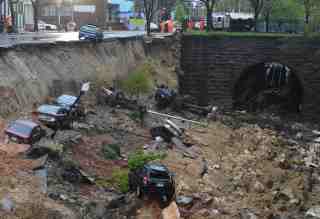
Following record rains in April of 2014, a section of Baltimore street simply collapsed. Now there’s some chance of holding the culprits accountable.

Thanks to Bill McKibben for this legal news following plenty of precursor stories on the same topic:

High court lets cities and states sue Exxon et al

…But something else happened yesterday too, with a price tag that may eventually dwarf that settlement, and with even larger potential implications for the future of the planet. The Supreme Court, also tersely, declined to grant cert in a case brought by oil companies desperately trying to hold off state court trials for their climate crimes. Continue reading
Galápagos Reef Discovery, Deep

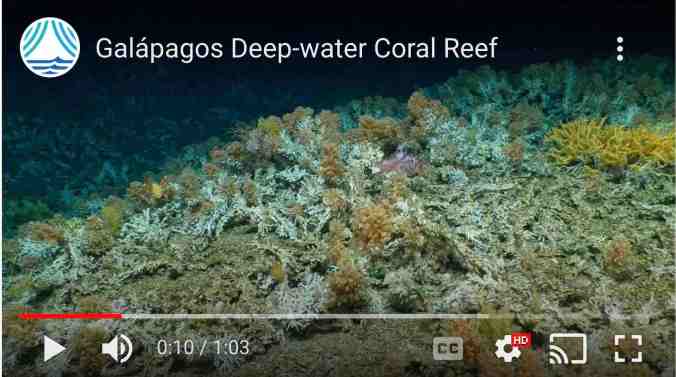
The video is worth a minute of your time, and the short article that follows is as close as we get to nature-related good news these days. Our thanks, as always, to Yale e360:

Pristine Deep-Sea Reef Discovered in the Galápagos

The newly discovered deep-sea reef in the Galápagos Marine Reserve. WOODS HOLE OCEANOGRAPHIC INSTITUTION

In Ecuador’s Galápagos Islands, where ocean warming has decimated shallow-water reefs, scientists have discovered a healthy, sprawling coral reef hidden deep under the sea.

“This newly discovered reef is potentially an area of global significance,” Michelle Taylor of the University of Essex, co-lead of the expedition, said in a statement. It is “a site we can monitor over time to see how a pristine habitat evolves with our current climate crisis.” Continue reading
The Forest Gives Much

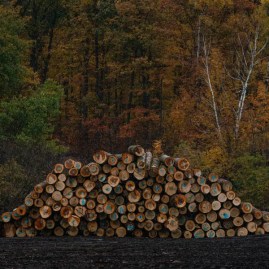
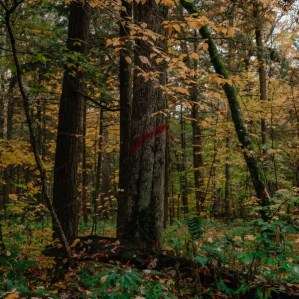
Freshly harvested logs from the Menominee Forest in Keshena, Wis., marked with color to indicate each log’s grade.

Sustainable forestry is a long-running topic in these pages over the years. The previous times we have linked to Cara Buckley stories we have been enriched by the humanity in environmental stories, so here we combine her unique talent to the topic of forestry:

The Giving Forest

The Menominee tribe has sustainably logged its forest in Wisconsin for 160 years. But that careful balance faces a crisis: too many trees and too few loggers.

A tree marked for cutting. The Menominee harvest only trees that are sick and dying or those that have fallen naturally

MENOMINEE COUNTY, Wis. — Amid the sprawling farmlands of northeast Wisconsin, the Menominee forest feels like an elixir, and a marvel. Its trees press in, towering and close, softening the air, a dense emerald wilderness that’s home to wolves, bears, otters, warblers and hawks, and that shows little hint of human hands.

Yet over the last 160 years, much of this forest has been chopped down and regrown nearly three times. The Menominee Tribe of Wisconsin, its stewards, have pulled nearly two hundred million cubic feet of timber from this land since 1854 — white pine cut into museum displays and hard maple made into basketball courts for the Olympics. Continue reading
McKibben Embraces Green Building Boom

Grace J. Kim

We link to one person more than anyone else, for good reason:

ELECTRIFY EVERYTHING

Yes in Our Backyards
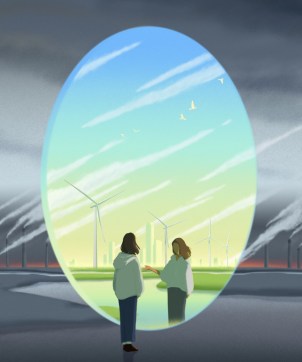
It’s time progressives like me learned to love the green building boom.

The United States is on the brink of its most consequential transformation since the New Deal. Read more about what it takes to decarbonize the economy, and what stands in the way, here

I’m an environmentalist, which means I’ve got some practice in saying no. It’s what we do: John Muir saying no to the destruction of Yosemite helped kick off environmentalism; Rachel Carson said no to DDT; the Sierra Club said no to the damming of the Grand Canyon. Continue reading
Tagging Large Land Animals

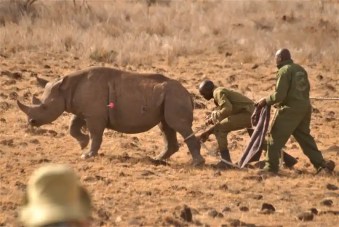
The team secure a darted rhino with nylon rope, then take its temperature and use a pulsemeter to monitor its heart rate and blood oxygenation

We have previous links to articles on tagging animals, but few land animals this big:

How to tag a rhino? Use tech, tact … and plenty of caution – a photo essay

Fewer than 2,000 rhino remain in Kenya, and the country’s wildlife service needs to keep tabs on them to make sure they thrive. It’s a major undertaking, involving a helicopter, 4x4s and a lot of rangers

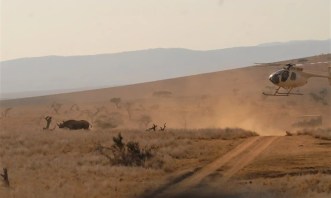
Here comes a chopper … a helicopter is used to dart the highly aggressive black rhino

Kenya has the world’s third largest rhinoceros population: a total of 1,890 including 966 black rhinos, 922 southern white and two northern white. But how to keep track of them and ensure the species are thriving? Every two or three years, Kenya Wildlife Service (KWS) carries out an ear-notching exercise in all rhino sanctuaries in the country to ensure that at least 60% of the animals are uniquely identifiable. Continue reading
A Proposal For The Colorado River States

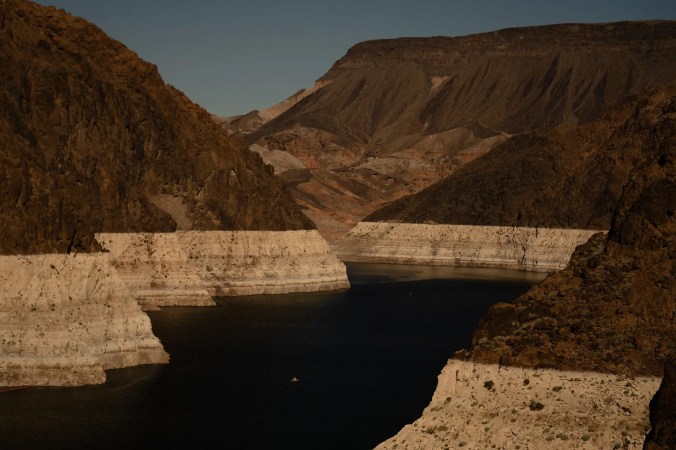
The Lake Mead reservoir in Nevada is showing a “bathtub ring” because of drought. Erin Schaff/The New York Times

We have featured the river plenty in recent years. No easy solutions. Bruce Babbitt, who was secretary of the Interior Department in the Clinton administration, and before that a governor of Arizona, has this to say:

Before Western States Suck the Colorado River Dry, We Have One Last Chance to Act

The Interior Department last summer dropped a bomb on the seven states that depend upon the Colorado River for water. Continue reading

Thaw Gas Measurement

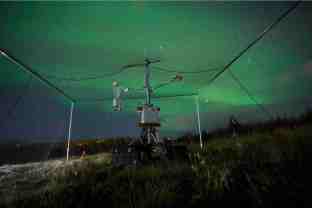
Covered in netting to deflect stray balls, these instruments gather methane data on the seventh hole of Midnight Sun Golf Course. Permafrost is rapidly thawing across the far north, deforming fairways here and releasing the highly potent greenhouse gas, which leads to more warming. PHOTOGRAPH: FRANKIE CARINO

Thaw problems are coming. Permafrost is losing its permanence. Measuring the speed and impact of the thaw is a new form of sleuthing:

The Arctic’s Permafrost-Obsessed Methane Detectives

The Far North is thawing, unleashing clouds of planet-heating gas. Scientists rely on an arsenal of tech to sniff out just how nasty the problem is.

AT THE MIDNIGHT Sun Golf Course in Fairbanks, Alaska, they say you never get the same shot twice. Continue reading