Japan, Paper & Tradition

16tmag-tel-slide-3FR1-superJumbo.jpg

Washi paper at the store Ozu Washi in Tokyo. Credit Courtesy of Ozu Washi

Thanks to Nikil Saval for asking, and to the New York Times for publishing his answer to this question:

Why Is Japan Still So Attached to Paper?

Washi is to the Japanese something like what wine is to the French — a national obsession and point of pride.

16tmag-tel-slide-PRKU-superJumbo.jpg

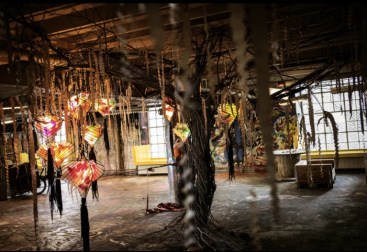
The architect Shigeru Ban’s emergency shelters are made mostly of paper.CreditBrent Boardman/courtesy of the Sherman Contemporary Art Foundation (SCAF)

ONE OF THE CLICHÉS of modernity — but a cliché we nonetheless have to live through — is that new forms of technology make us nostalgic for prior ones and the eras they connote. When smartphones emerged, they brought the internet into spaces that were once free of them, so that a poorly functioning flip phone now inspires a hint of wistfulness. The pileup of digitized music since the emergence of the MP3 has prompted a retreat, however niche and ultimately minor, into the world of vinyl records and even tapes. The ransacking of the physical texture of the world — books, newspapers, retail stores, maps — has been so enormous and sudden that it becomes possible to see what we are losing and no longer regard the onrushing future as progress.

tktmag-paper-slide-SQBO-jumbo.jpg

Japan’s centuries-long fascination with traditional papermaking means there’s still a robust analog culture in a country known for its embrace of the modern. Credit Photograph by Kyoko Hamada. Set Design by Arielle Casale and Maxwell Sorensen. Altered images: Daj/Getty Images; Bernard Allum/Getty Images. Origami: Beth Johnson. Photographer’s assistant: Jonah Rosenberg

Because of the sheer accumulated weight of its past, and the velocity of its rush into the future, Japan offers these contradictions and anxieties of modernity in particular abundance. Japan was geographically isolated for centuries, so the time between the country’s opening — thanks to the gunboat diplomacy of American warships’ arrival in 1853 — and the postwar miracle of reconstruction produced a linear and especially propulsive narrative of an agrarian society becoming one defined by urban futurism. The contrast (and conflict) between ancient and modern is the primary tension in Japan’s modern literary and filmic traditions: rural families experiencing the shock of the city in Yasujiro Ozu’s films of the ’40s and ’50s, or Noh drama in the novels of the Showa-era writer Fumiko Enchi. Everything, from the perfervidness of the country’s electronic manufacturing, the proliferation of its pop culture, the aggressiveness of its building booms — even as a three-decade-long economic decline strips these characteristics of their sheen — seems to serve as a reminder that throughout the postwar era, Japan was a byword for the future. Continue reading

Time As An Ingredient

MistMaize.jpg

Climate change has reared its big ugly head enough that I no longer count on seasonal consistency, but for now nine days in a row it has felt familiar, the greenest month of the green season in Costa Rica. And today, as of dawn, it looks like more of the same. “Some things never change” would be a real head in the sand cliché when thinking of seasons, but at least this October, so far, mornings have been sunny and by early afternoon the clouds roll in and the afternoons remind me of our 2010 to 2017 Kerala life, until dinner time. The photo above was from our second monsoon season there. Just up the hill from where I am writing at this moment, in Tarrazu–the Costa Rica equivalent of Munnar’s tea region–you might see something comparable, like this:

DCIM/100MEDIA/DJI_0482.JPG A few years ago Seth and James worked to restore a coffee plantation across the valley from the home where Seth grew up. The coffee they restored had been removed two decades earlier, a moment in time when coffee prices had crashed, even for the premium arabica that grows in Costa Rica. As it happens the same is true of the property where I am writing from, which had been a coffee plantation for most of the last century. In 2019 a restoration project will bring coffee back to this land, with tree shade for both the coffee and for the sake of restored bird habitat, and I look forward to sharing that progress here. And it is with this in mind that time, as an ingredient, is a theme for today. Work that Seth and James did demonstrated, with the passage of time, the fruitfulness of restoration and conservation. Now a replica project is ready to roll.

Time as an ingredient during green season is also a theme. Reading and cooking pass the time pleasantly during such afternoons, at least when the weekend schedule permits. Time for reading was on my mind a couple days ago, and the author featured in this podcast gets me thinking about time as an ingredient in the cooking I have been doing recently–almost all vegetarian and with the conscious effort to cook as minimally as possible to retain nutrients and flavor. As a bonus, this episode of a podcast we have been listening and linking to for two years shares the story behind espresso, so worth a listen:

EspWhiskey.jpg

One Week to Whiskey

A Los Angeles distillery aims to speed up a 10-year aging process to a matter of days.

9781468316384.jpgWhy does fish cook so fast? What’s the “wasabi window”? And can you really make 20-year-old aged whiskey in six days? This episode, we’re looking at the role of time in food and flavor: what it does and how we’ve tried—and sometimes succeeded—to manipulate that. To explore these questions, we visit a whiskey time machine tucked away in a low-slung warehouse in downtown Los Angeles and meet its inventor, Bryan Davis. And we speak with Jenny Linford, a food writer and author of a new book, The Missing Ingredient, all about time and food. Listen in now—this one’s well worth your time! Continue reading

The Visual Shero of Afrofuturism

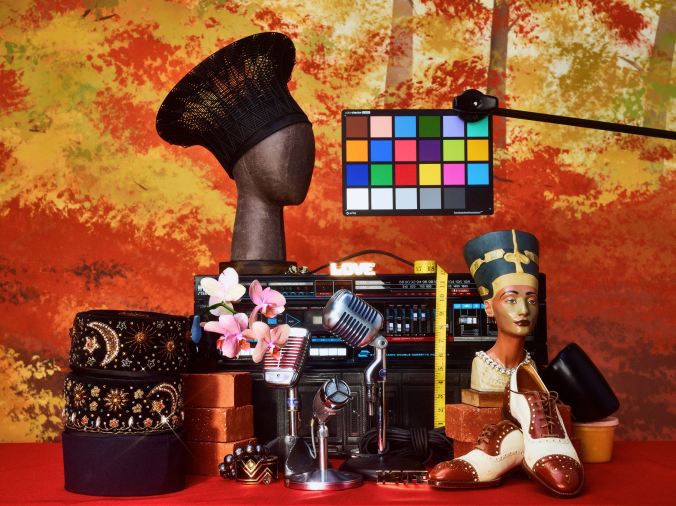
A still-life of accessories from various films that Carter has worked on: the headpiece of Queen Ramonda, in “Black Panther”; cufflinks for Martin Luther King, Jr., in “Selma”; and the dancing shoes worn by Shorty, a character in “Malcolm X,” who was played by Spike Lee. Photographs by Awol Erizku

In film and theatre, costume design is often as important as a setting and script to craft the sense of both character and story. It’s debatable whether non-fiction or fiction is more challenging, but Ruth E. Carter’s work carries the story for either one, with an attention to detail that brings the viewer back into history or forward into new worlds.

Be sure to click through the article for more of Awol Erizku’s dynamic photos, as well as watch the video below for more images and Carter’s own explanation of her work.

RUTH E. CARTER’S THREADS OF HISTORY

Throughout her career, the costume designer for “Black Panther” has created visions of black identity, past and future.

Ryan Coogler’s “Black Panther” is a rare thing: a big-budget superhero movie that is unabashedly serious about great clothes. The film’s costume designer, Ruth E. Carter, evoked the fictional African kingdom of Wakanda by melding sci-fi with global fashion history, drawing influence from sources including the color symbolism of the Maasai people, samurai armor, and the jewelry of Ndebele women. She realized her vision with the help of an international team of researchers, buyers, tailors, beaders, and engineers, and by exploring the possibilities of 3-D-printing technology. For her efforts, she has been lauded as one of the essential visual storytellers of Afrofuturism. Continue reading

Crafting History With Wood

merlin_135052758_3da0e0c4-0d11-4265-9719-2503b4e68d7d-blog427

The elaborately detailed Bingham secretary enjoyed pride of place at the Wadsworth Atheneum in Hartford until it was determined to be a forgery. Credit John Banks

The principle of the matter, depending on how you look at it, makes this story interesting. The idea that a person can craft new wood into historical storylines so compellingly that experts cannot detect the recency of the crafting? Wow. Fooling a buyer into paying a premium for the historical significance? Uh, no. Thanks to John Banks for this sleuth story:

The Civil War memorial secretary was widely embraced as a folk art treasure. Fashioned from walnut, maple and oak, it was said to have been created circa 1876 to honor John Bingham, a Union infantryman who had fallen at Antietam.

merlin_135052761_3c9565a7-df1d-4773-ade7-6794ef8b279f-master675.jpg

A detail of the secretary, with the barnyard-bone lettering. CreditJohn Banks

Profusely adorned, it featured a music box that played “Yankee Doodle” and it was accompanied by a letter from a Bingham descendant, describing the significance of the piece to the family.“I was astonished by it,” said Wes Cowan, an auctioneer and dealer who examined the secretary at the Winter Antiques Show in New York in 2015.

The owner, Allan Katz, had bought it months earlier from a Massachusetts dealer for an undisclosed price, and was now trying to sell it for $375,000.

merlin_135244140_6fe1dd00-dc24-404e-a024-c2b695bf6284-master675.jpg

John Bingham, left, and his brother Wells, Union soldiers from East Haddam, Conn. Credit via, Military and Historical Image Bank

“Clearly,” Mr. Katz, a Connecticut antiques dealer, said in a video filmed at the show, “we are hoping that it might go to an institution, because it really would be wonderful to share this with the public on a day-to-day basis.”

So it was gratifying, Mr. Katz said in an interview, when the Wadsworth Atheneum in Hartford purchased the work and gave it prominent display. Continue reading

Tradition and Memory, Handed Down Stitch by Stitch

If you happen to be anywhere near the Philadelphia Museum of Art, you have a few more days to visit this extraordinary exhibit of Phulkari: The Embroidered Textiles of Punjab.

Thanks to Architectural Digest contributor Medhavi Gandhi for this informative and culturally sensitive article.

Philadelphia Museum of Art showcases the history of Punjab’s rich embroidery craft through ‘Phulkari’

Phulkaris, which literally translates into ‘flower work’, is a unique style or technique of embroidery peculiar to Punjab, and today constitute the lavishly embroidered head scarves and shawls crafted in the region. ‘Phulkari: The Embroidered Textiles of Punjab’ presents phulkaris from the collection of Jill and Sheldon Bonovitz alongside the Philadelphia Museum of Art’s permanent collection, focusing mostly on embroideries from a pre-partitioned Punjab.

The threads of phulkari have since endured much: partition, industrial reforms, changing economic and fashion trends, and the exhibition aptly helps you develop a perspective around all these.

GEOGRAPHICAL INDEXING
Curators Dr. Cristin McKnight Sethi and Dr. Darielle Mason position the craft as art, presenting phulkaris through the historical and cultural lens, thus offering a renewed contact with the old way of life; ceasing to be a commodity of high commercial value but more as a window into the lives of people.

In a brief issued by the Museum, Timothy Rub, The George D. Widener Director and CEO of the Philadelphia Museum of Art, said: “This exhibition, which examines the artistic, cultural, and political significance of phulkari, is long overdue and will certainly delight visitors who may be unfamiliar with this remarkable art form”. I couldn’t agree more, and here’s why: Continue reading

Shout Out To Friends In India

Good chocolate was impossible to come by in our early years in Kerala. So when we see this video we think wistfully about the progress on that front. The same film maker who worked with Amie on the series of shorts we wanted for the various Xandari properties–who we adored working with and whose final product was as good or better than what we had expected–has shared a link with us. It is a client in Kerala who, in a few minutes, has the chance to tell their story visually as well as verbally. We look forward to meeting the folks at Liso next time we are in Kochi.

Urban Renewal We Can Relate To

copenhgn2

We like the sound of it:

In Denmark, Brewery’s Departure Offers a Chance to Go Green

By

Copenhgn3.jpgCOPENHAGEN — Perched in his centrally located office, Laust Joen Jakobsen looks out onto a small plaza, a rooftop basketball court and a grass bed that will be lush with flowers by the summer.

Just months ago, Mr. Jakobsen, the rector of University College Copenhagen, was sitting in a suburban campus between parking lots and a residential neighborhood. “We are happier here when we look out the windows,” he said. Continue reading

If You Happen To Be In London

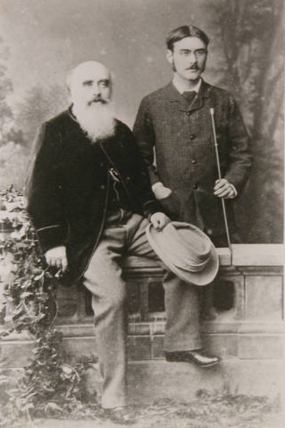
John Lockwood Kipling with his son Rudyard Kipling, 1882. © National Trust/Charles Thomas

John Lockwood Kipling with his son Rudyard Kipling, 1882. © National Trust/Charles Thomas

Kipling is almost a household name for many in our group, but primarily in the context of Rudyard Kipling, the writer of the well-known stories and fables about India. When researching the author a few years back I was surprised to learn about his talented father, whose beautiful illustrations graced the early editions of several of his son’s books.

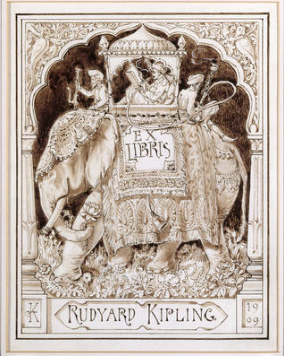
Rudyard Kipling’s bookplate ‘Ex Libris', Lockwood Kipling, 1909. © National Trust Images/John Hammond

Rudyard Kipling’s bookplate ‘Ex Libris’, Lockwood Kipling, 1909. © National Trust Images/John Hammond

Those lucky enough to be in London this month can visit the Victoria & Albert Museum for the exhibition Lockwood Kipling: Arts and Crafts in the Punjab and London.

More of note, not only was the senior Kipling an artist, writer, museum director, teacher, and influential figure in the Arts and Crafts movement – he was also a conservationist, distinguished for promoting the traditional textile crafts of India and what is now Pakistan.

The exhibit coincides with Conferences and Symposia related to the 3-year international research project on Kipling’s legacy.

The 19th century Arts and Crafts revival in British India is a fascinating chapter in the international history of art and design. However, John Lockwood Kipling’s career as designer and architectural sculptor, curator and educator, illustrator and journalist, has received little attention. Continue reading

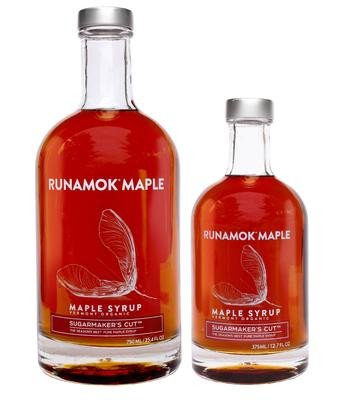
Maple Was Always Good, Got Better, And Finally Runamok

runamok

sgmkr_comp_front_345x_e71869c9-7dac-4854-9ef9-e38dde839f5e_1024x1024When we saw this the other day, it had us thinking that 2017 was already off to a crafty-bottled-flavor start. Now another non-alcoholic liquid we adore, crafted and packaged with flair.

Several among the contributors to this site have connections to maple syrup consumption going back decades, most notably Harrington’s of Vermont circa 1970s. So, combining nostalgia with artisanal and organic, Runamok had us at maple:

Sugarmaker’s Cut™ The Season’s Best Maple Syrup Continue reading

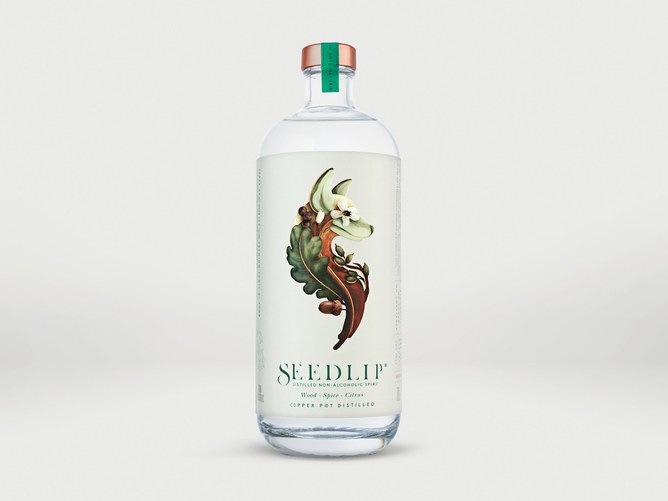
Beverage Innovations, Vegan Spirit Edition

seedlip.jpg

We do not need to repeat our distaste for the word mocktail, nor are we on a dry spell; nonetheless we are happy to see attention to beverages like this (pricey!) one:

SPIRITED AWAY: SEEDLIP SPICE 94 ($39, 700 ML) Continue reading

Spain, Hops & Craft Beer

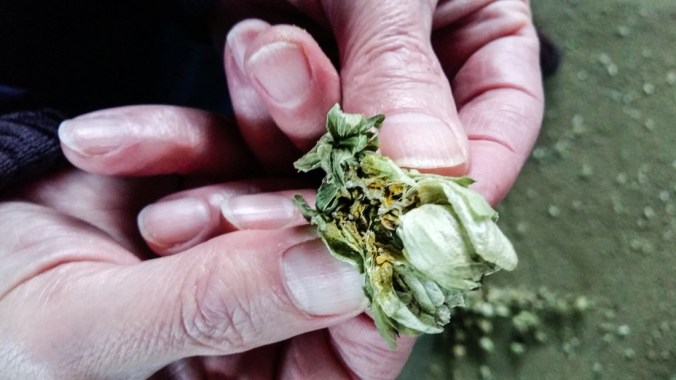
hops_wide-d79a830a1be1de6c8b818c90c577a0ca779d620f-s1100-c85

Ignacio Nicolas Campillo, director of a hops production facility in northern Spain, peels apart the flower of the hops plant, to reveal yellow powder inside. The powder is used to make beer. Lauren Frayer/NPR

This story from the salt over at National Public Radio (USA) adds to our hops coverage from time  to time:

Only the oldest residents of Villanueva del Carrizo, a town on the fertile banks of the Órbigo River in northern Spain, remember that day just after World War II, when all the area farmers were called to a meeting in the center of town.

Spain’s tiny beer industry was in a bind: It could no longer import hops – a key ingredient in beer – from war-devastated Germany. But brewers had spotted wild hops along the Órbigo River, and they had a hunch it could grow on farms too. Continue reading

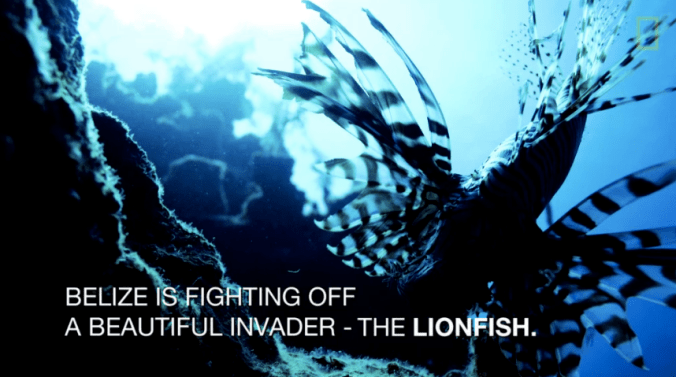
Lionfish Tales

This is issue has been on our radar for some time, in most part due to contributor Phil Karp‘s posts on his work with groups in Belize and other parts of the Caribbean focused on this goal. The concept of “If You Can’t Beat ’em, Wear ’em” carries a powerful message of innovative practices to manage the invasive species that’s causing havoc in the southern Atlantic and Caribbean waters. Continue reading

Kakaw Designs

kakaw_zpsromz8y4q

Image from Vimeo

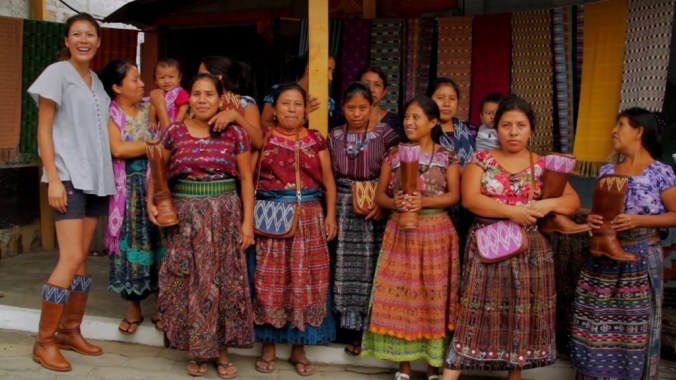
Recently I was introduced to a small online business that sells handmade women’s boots and bags called Kakaw Designs. Seth met the company’s founder, Mari, before his work at the school they both taught at in the Galapagos four years ago and mentioned the ethical concept of her business.

Continue reading

I Love IPA, And I Know Why

HopsOne of the ironies of living in India for six years, as a devotee of IPA, is that IPA is not to be found in India. So, I have it only when I travel, and mostly in the USA where the craft of brewing in small batches has grown radically in recent years.

The book to the right is a tiny drop in a big bucket of evidence of how the craft of brewing has reached far and wide, and it came to my attention when I visited a website associated with its authors:

IPAWhich came to my attention in this post by Russell Shorto, which must be read in its entirety (it takes only a few minutes) if you care about IPA, hops, ethnobotany or just excellent non-fiction writing, and includes these two paragraphs:

…while an emphasis on hops has likewise boosted the business of small-scale brewers, I.P.A. aficionados are known to be among the most fickle of beer consumers, flitting from one label to another in their endless search for new flavor elements. That puts pressure on brewers to come up with new beers, which, in turn, leads to a hunt for new hops varieties.

Enter Paul Matthews, who is to hops what John James Audubon was to birds. He has been involved in the search for wild hops strains from Colorado to the Caspian Sea; from these he teases out flavor components. Spicy, floral, grassy, citrus, herbal, evergreen: the horizon keeps expanding, and still the crowd wants more…

Ha! Top that. Actually, he does. Keep reading it. Continue reading

I’ll Just Take The Banjo

RStanley

We have not mentioned the banjo much around here. Shame on that! I am fond of the instrument for some of the same reasons I am fond of, say, an arboretum. The banjo is an instrument akin to other instruments of entrepreneurial conservation: the more it gets played well, the more it keeps alive a tradition, and even can improve on the tradition. An arboretum, well conceived, well kept, helps species survive in isolation that might otherwise have been lost from the planet entirely.

I see a reference here and there, for example mention of the Seeger family, who I have loved for many reasons my whole life. And Bela Fleck is Exhibit A in the case to be made for the banjo entrepreneurship; Steve Martin and Edie Brickell could be said to support that case as well. They all would acknowledge Dr. Ralph Stanley as essential to their craft’s survival and thriving, so it is with that in mind that I highly recommend you listen to or read this brief interview with him:

…GROSS: How did you get your first banjo?

STANLEY: My first banjo? My mother’s sister, my aunt, lived about a mile from where we did, and she raised some hogs. And she had – her – the hog – the mother – they called the mother a sow – of a hog. And she had some pigs. Well, the pigs were real pretty, and I was going to high school and I was taking agriculture in school. And I sort of got a notion that I’d like to do that, raise some hogs. And so my aunt had this old banjo, and my mother told me, said, which do you want, the pig or a banjo? And each one of them’s $5 each. I said, I’ll just take the banjo…

Continue reading

Belize Lionfish Jewelry – Update


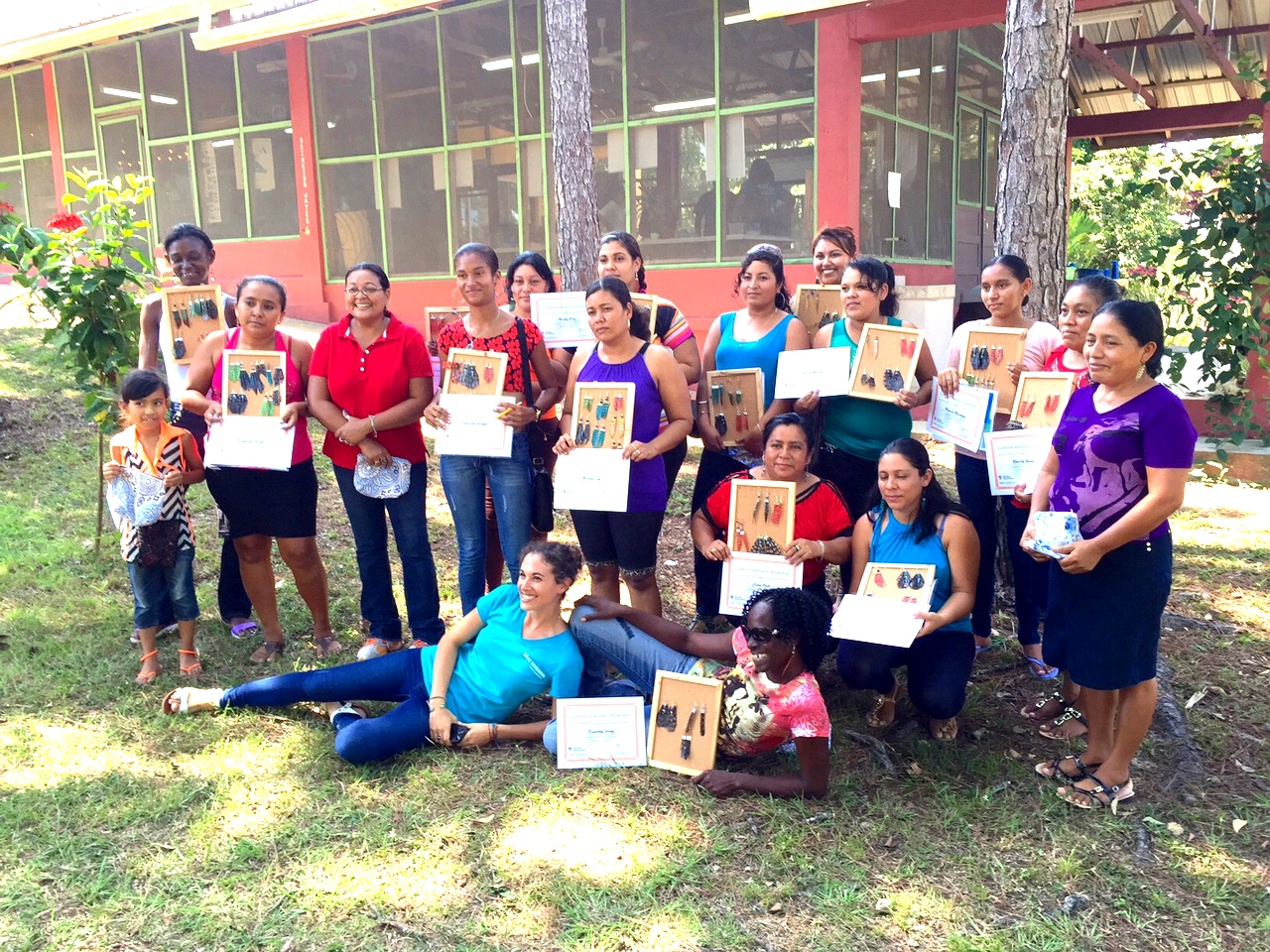
Belize Lionfish Workshop participants with their certificates

Belize Lionfish Workshop participants with their certificates

I’ve posted previously about the emergence of lionfish jewelry as one of several market-based approaches to controlling the invasion of this non-native species which poses an unprecedented threat to marine ecosystems in the Western Atlantic.

Last month, for the third year in a row, I spent two weeks in Belize where I had a chance to get an update on how the market is developing.  I started my visit in Placencia, which is home to Kaj Assales, the most successful of the lionfish jewelry artists in the country, with her own jewelry line which she sells through her boutique as well as online.  It was my first chance to visit her shop and to see some of her new designs.

Next I spent a week in the Sapodilla Cayes with ReefCI, the NPO that I first collaborated with to help jump-start the lionfish jewelry market in the country.  This gave me a chance to practice my lionfish spearing skills, as the ReefCI team and visiting volunteers continue to remove several hundred lionfish per week dissecting a sample of 30-40 of these for stomach content. Data on size, sex, and stomach content is provided to the Belize Fisheries Department and has been a valuable input to its national lionfish control strategy.  Coincidently, ReefCI’s lionfish control program was profiled in the August issue of United Airlines magazine; not only a nice recognition of the group’s efforts, but also a great boost for raising awareness about the lionfish invasion. Continue reading

Revamped Xandari Pysanky

Last time I posted about pysanky at Xandari was about six months ago, when I showcased some new designs revolving around simple geometric patterns and Costa Rican soccer teams. A few months before that I made a video that displayed the process of making an egg sped up quite a bit. Now, as you can see from the egg photos above with before-and-after wax shots, I’m working Continue reading

If You Happen To Be In New York City

“The Grand Robe” (circa 1800-30), made by an artist from a Central Plains tribe. CREDIT COURTESY PATRICK GRIES AND VALÉRIE TORRE / MUSÉE DU QUAI BRANLY

“The Grand Robe” (circa 1800-30), made by an artist from a Central Plains tribe. CREDIT COURTESY PATRICK GRIES AND VALÉRIE TORRE / MUSÉE DU QUAI BRANLY

Talk about an epic show. Let’s go:

Moving Pictures

Plains Indian Art at the Metropolitan Museum.

By 

It began with horses and ended in massacre. The zenith of the cultures that are celebrated in “The Plains Indians: Artists of Earth and Sky,” a wondrous show at the Metropolitan Museum, lasted barely two hundred years. It started in 1680, when Pueblo Indians seized the steeds of Spanish settlers whom they had driven out of what is now New Mexico. The horse turned the scores of Plains tribes—river-valley farmers and hunter-gatherers who had used dogs as their beasts of burden—into a vast aggregate of mounted nomads, who ranged from the Mississippi River to the Rocky Mountains, and from the Rio Grande into Canada, hunting buffalo, trading, and warring with one another. The era ended with the killing of more than two hundred Lakota men, women, and children by federal troops at Wounded Knee, South Dakota, in 1890. Meanwhile, epidemic smallpox and other alien diseases took a toll far beyond that of military violence. The official census of 1900 found only a quarter of a million Native Americans in the entire United States. What ensued is a story of reservations—including the immaterial sort, which trouble the mind. But there’s an ameliorating epilogue of revivals and transformations of Plains heritage.

Continue reading

A River Runs Through It, In Ethiopia

One of Ethiopia's many excellent national parks

One of Ethiopia’s many excellent national parks

This is not the post promised. It is a taste of why I must post, as promised. This canyon, this river, this view came early in our expedition and is among the strongest in my visual memory. It seemed fortunate, at the time, to catch this view at sunset but the more I think about it the more I am convinced that the place is worthy of a snapshot any time of the day. And it is worth making future visits, so next time I intend to navigate downriver (from the right in this photo), arriving at the place where I snapped this photo after hiking up the canyon. Continue reading

Menacing Weed or Wonder Plant?

©Peter Chadwick/DK Images

©Peter Chadwick/DK Images

We’ve written about the invasive species water hyacinth on these pages before, discussing its environmental impact as well as its material value for eco-development projects. But we haven’t seen stories such as this one from Conservation Magazine where there’s a positive side to what many people call the “weed from hell.”

The scene at Florida’s Crystal River National Wildlife Refuge in Kings Bay last October would have been familiar to anyone who has ever engaged in the battle to control the spread of invasive plants. Eager volunteers scurried about the shoreline of this manatee wintering ground, carting large plastic bins stuffed with water hyacinth, a notorious aquatic weed that’s caused headaches on five continents. Closer inspection, however, would have revealed the activity to be anything but business as usual: instead of hauling water hyacinth out of the bay, the conservationists were putting it back in—almost 4,300 gallons’ worth by day’s end.

Those volunteers were taking part in a bold pilot project that is the latest chapter in a half-century-long ecological story that reads like a fable. It starts with a well-intentioned campaign to rid Kings Bay of the water hyacinth, an aggressive nonnative species. Next come decades of additional control measures and a tragic downward spiral that transformed these crystal-clear waters into an unpleasant soup of slimy green algae. Then the story takes an unexpected turn, back to its original antagonist. Only this time, Bob Knight, the wetlands restoration ecologist leading this pioneering project, has recast water hyacinth as the unlikely hero. He believes this South American native, if controlled, could help solve the algae problem and return the bay’s ecosystem to a more desirable state. The irony in this approach is not lost on anyone involved. Continue reading