Resilience At Sycamore Gap

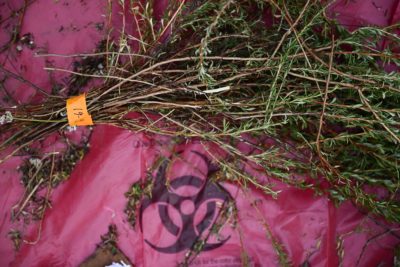
The shoots growing from the stump of the Sycamore Gap tree.

The Sycamore Gap tree, a beloved way marker, had grown for centuries along Hadrian’s Wall in England before vandals cut it down last year. Now little shoots have been discovered growing at its stump. Jason Lock/National Trust

When this act of vandalism was in the news last year, it felt terrible but had no meaning. But if the felled tree is giving new life, we must celebrate that:

A man kneels beside a tree stump with a tape measure in his hands.

Gary Pickles, a ranger at Hadrian’s Wall Path National Trail, inspecting the Sycamore Gap tree shoots that recently appeared. Jason Lock/National Trust

Vandals last year chopped down the famed tree, which had stood on Hadrian’s Wall in England for nearly 200 years.

On a fine, bright morning last Friday, just like so many other fine, bright mornings, Gary Pickles took a walk.

Two people in a fenced-in area in a field by a stone wall.

Mr. Pickles and a colleague at the site where the tree once stood. Jason Lock/National Trust

Mr. Pickles, a ranger who works at Northumberland National Park in England, just south of the Scottish border, was inspecting a route that wends past Hadrian’s Wall, constructed by the Roman Army in the second century A.D. He walked past the cleft where the Sycamore Gap tree had famously jutted out into the landscape before it was illegally cut down last year, and he bent down to its stump. Continue reading

International Seabed Authority

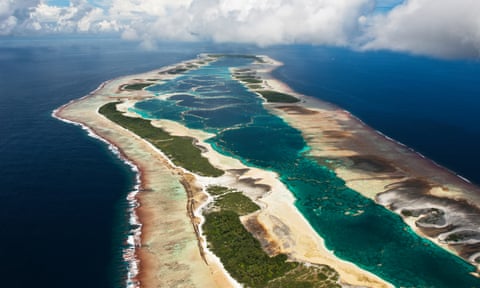
A long thin atoll around a lagoon

The Millennium Atoll in Kiribati, the Pacific state that is sponsoring Michael Lodge for re-election as ISA leader. Photograph: Mauricio Handler/Getty

Before we leave the subject of oceans, back to the question of how their protection is managed, and by whom.

We are learning today that some of the planet’s smaller nation states have a potentially significant, and clearly long overdue influence on how the oceans surrounding them will be protected:

The rare dumbo octopus (Cirrothauma murrayi)

The rare dumbo octopus (Cirrothauma murrayi) is one of many creatures potentially at risk from deep-sea mining. Photograph: NOAA

Inside the battle for top job that will decide the future of deep-sea mining

Marking a pivotal moment for the fate of the barely known ecosystems on the ocean floor, 168 nations will decide this week who will head the International Seabed Authority

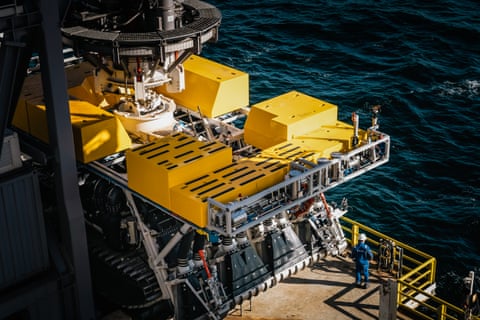
Deep-sea mining exploration machinery in the Pacific Ocean

Deep-sea mining exploration trials under way in the Clarion-Clipperton Zone of the Pacific Ocean between Hawaii and Mexico. Photograph: Richard Baron/The Metals Company

Leticia Carvalho is clear what the problem is with the body she hopes to be elected to run: “Trust is broken and leadership is missing.” Later this week, at the headquarters of the International Seabed Authority (ISA) in Kingston, Jamaica, nations negotiating rules governing deep-sea mining face a critical vote that could impact the nascent industry for years: who should be the next leader of the regulatory body? Continue reading

Really, SpaceX?

A rocket stands with water in the foreground.

Starship, the upper stage of SpaceX’s new rocket, at its launchpad in Boca Chica, Texas. Conservationists are concerned with the environmental impact space operations have on the area.

After assurances about protecting the environment, damage was done. They declined responsibility (the words they used included “…it’s cool”). Not cool:

Wildlife Protections Take a Back Seat to SpaceX’s Ambitions

A New York Times investigation found that Elon Musk exploited federal agencies’ competing missions to achieve his goals for space travel.

As Elon Musk’s Starship — the largest rocket ever manufactured — successfully blasted toward the sky last month, the launch was hailed as a giant leap for SpaceX and the United States’ civilian space program.

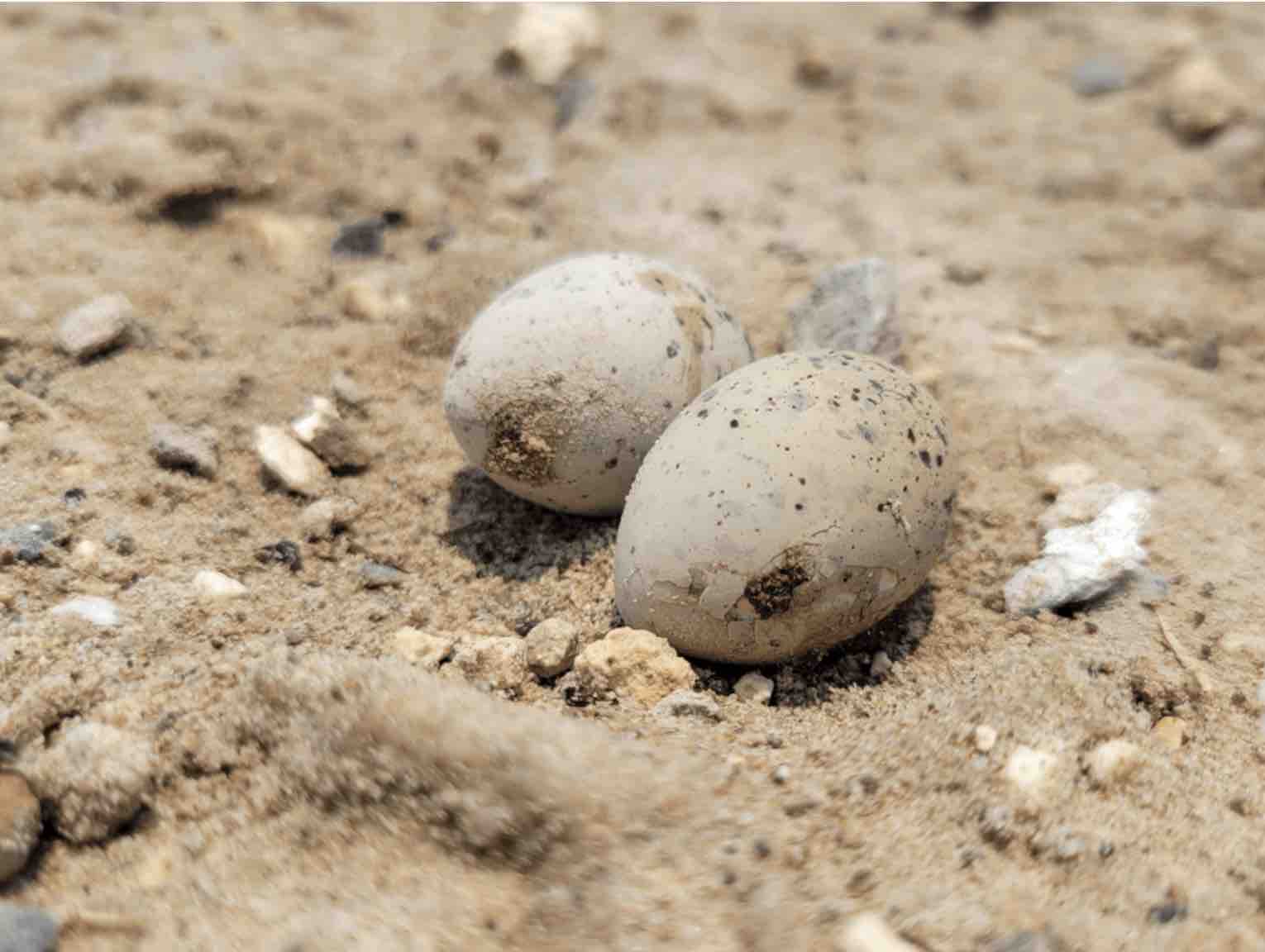
Figure 9. LETE 1 showing both eggs with large holes/cracks and dried egg contents emerging on June 6, 2024.

Two hours later, once conditions were deemed safe, a team from SpaceX, the U.S. Fish and Wildlife Service and a conservation group began canvassing the fragile migratory bird habitat surrounding the launch site.

The impact was obvious.

The launch had unleashed an enormous burst of mud, stones and fiery debris across the public lands encircling Mr. Musk’s $3 billion space compound. Chunks of sheet metal and insulation were strewn across the sand flats on one side of a state park. Elsewhere, a small fire had ignited, leaving a charred patch of park grasslands — remnants from the blastoff that burned 7.5 million pounds of fuel.

Most disturbing to one member of the entourage was the yellow smear on the soil in the same spot that a bird’s nest lay the day before. None of the nine nests recorded by the nonprofit Coastal Bend Bays & Estuaries Program before the launch had survived intact.

Egg yolk now stained the ground. Continue reading

Fungi & Brownfield Remediation

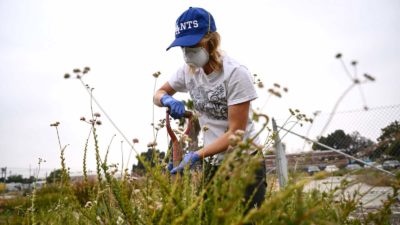
Researcher Danielle Stevenson digs up California buckwheat grown at a brownfield site in Los Angeles.

Researcher Danielle Stevenson digs up California buckwheat grown at a brownfield site in Los Angeles. PATRICK T. FALLON / AFP VIA GETTY IMAGES

Corporate irresponsibility abounds, so brownfield sites are abundant. And fungi sometimes offer relevant remediation options. Thanks to Richard Schiffman and Yale e360 for this interview on a topic we have cared about since launching this platform, and which we believe will be of increasing importance in our future:

Turning Brownfields to Blooming Meadows, With the Help of Fungi

California buckwheat that has absorbed lead at a contaminated site in Los Angeles.

California buckwheat that has absorbed lead at a contaminated site in Los Angeles. PATRICK T. FALLON / AFP VIA GETTY IMAGES

Toxicologist Danielle Stevenson cleans up carbon-based pollutants and heavy metals from contaminated sites using fungi and plants. She’s also training environmental justice and tribal communities in using these methods so they can remediate toxic sites on their own.

The United States is dotted with up to a million brownfields — industrial and commercial properties polluted with hazardous substances. Continue reading

More Youth Demanding Liveable Futures

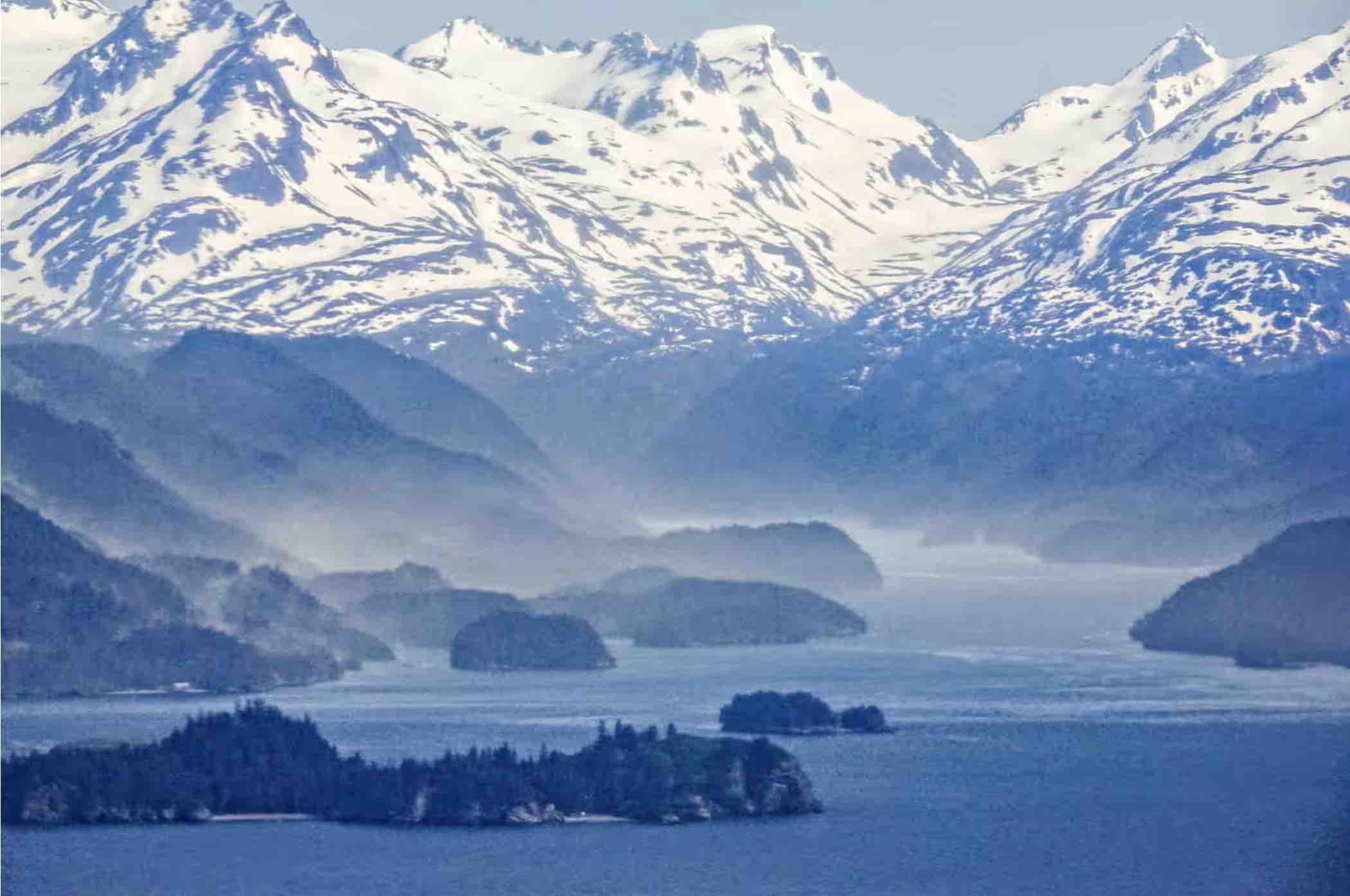
portion of the Kenai Peninsula in Alaska in 2023. The project would involve construction of a liquefaction plant to prepare the gas for export to Asia. Photograph: Richard Ellis/Alamy

Our appreciation to Dharna Noor for writing a clear story about this new legal initiative, and to the Guardian for publishing it. What started in Montana, a naturally well-endowed state with a mixed environmental record, now continues in Alaska, the biggest frontier of the American West. Our thanks to the younger generation for taking up the fight creatively:

Young Alaskans sue state over fossil fuel project they claim violates their rights

Plaintiffs claim $38.7bn gas export project, which would triple state’s greenhouse gas emissions, infringes constitutional rights

Eight young people are suing the government of Alaska – the nation’s fastest-warming state – claiming a major new fossil fuel project violates their state constitutional rights. Continue reading
Really, 3M?

Image may contain Cosmetics Medication and Pill

In April, the Environmental Protection Agency finalized two historic regulations of forever chemicals, which are found in countless everyday products. Photo illustration by Philotheus Nisch for The New Yorker

There is nothing to enjoy in this article, but we appreciate the work of the journalist Sharon Lerner and her colleagues at the New Yorker and Pro Publica involved in bringing it to us:

How 3M Discovered, Then Concealed, the Dangers of Forever Chemicals

The company found its own toxic compounds in human blood—and kept selling them.

Kris Hansen had worked as a chemist at the 3M Corporation for about a year when her boss, an affable senior scientist named Jim Johnson, gave her a strange assignment. Continue reading
If You Eat Beef, Track Its Origins

A JBS facility in Tucuma, Brazil. JONNE RORIZ / BLOOMBERG VIA GETTY IMAGES

Reducing meat in our diet was easier living in India, and we committed specifically to cutting beef consumption. This effort has been assisted by awareness of this issue. Thanks to Yale e360 for bringing the work of this team to our attention:

Marcel Gomes (center) with colleagues at Repórter Brasil’s offices in São Paulo. GOLDMAN ENVIRONMENTAL PRIZE

Tracking Illicit Brazilian Beef from the Amazon to Your Burger

Journalist Marcel Gomes has traced beef in supermarkets and fast food restaurants in the U.S. and Europe to Brazilian ranches on illegally cleared land. In an e360 interview, he talks about the challenges of documenting the supply chains and getting companies to clean them up.

Investigative journalism can be a very deep dive. By the end of his probe into the supply chain of JBS, the world’s largest meat processing and packing company, Marcel Gomes reckons he and his team at the São Paulo-based nonprofit Repórter Brasil knew more about the origins of the beef it supplies from the Amazon to the world’s hamburger chains and supermarkets than the company itself. Continue reading
Marshes Matter, And This One More Than Many

The outer edge of the Nartë lagoon in Vlorë, Albania. YURIY BRYKAYLO / ALAMY STOCK PHOTO

I have worked in some of Albania’s most important coastal and inland bird habitats, though not this one. My time working there is not my only reason for caring about this particular location. Read on–thanks as always to Fred Pearce–to understand why it matters so much. No offense intended to Jared Kushner, but this is not one of his better ideas. The destruction is not worth whatever it is he is hoping to accomplish:

Jared Kushner Has Big Plans for Delta of Europe’s Last Wild River

Albania’s Vjosë River is known as Europe’s last wild river, and its pristine delta is a haven for migratory birds. As plans for luxury developments there — spearheaded by Donald Trump’s son-in-law Jared Kushner — move ahead, conservationists are sounding the alarm.

It is the jewel of the Adriatic. Its shimmering waters feed a rare colony of Dalmatian pelicans, the world’s largest freshwater birds, sustain the endangered Albanian water frog, and host loggerhead turtles on its encircling dunes. Continue reading
Marsh Matters

Coastal marshlands exist in a precarious state: they need enough sediment to stay above water but not so much they get buried. In San Francisco Bay, the US Army Corps of Engineers and others are working to develop a less destructive way of giving marshes the mud they need. Photo by Aerial Archives/Alamy Stock Photo

For the record, marshes matter, so our thanks to Erica Gies, writing for Hakai:

Making a Marsh out of a Mud Pile

In San Francisco Bay, scientists are looking for a better way to rebuild flagging marshland.

The water in California’s San Francisco Bay could rise more than two meters by the year 2100. For the region’s tidal marshes and their inhabitants, such as the endangered Ridgway’s rail and the salt marsh harvest mouse, it’s a potential death sentence. Continue reading
Illegal Miners Face The Fire

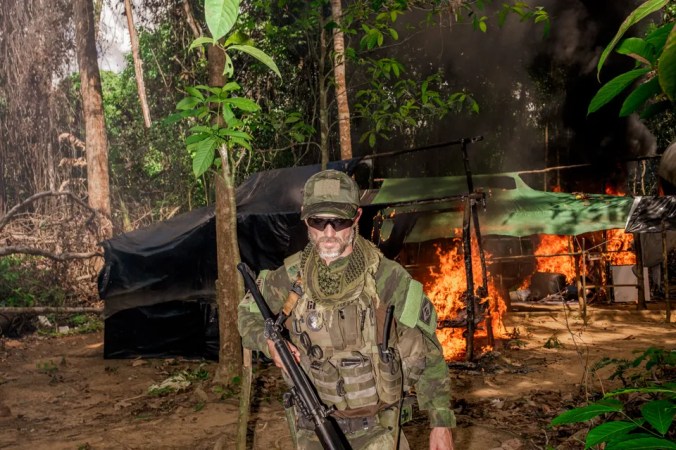
The G.E.F. burns mining camps as part of a long-running counteroffensive against environmental depredation. “Wherever they go, the miners destroy everything,” Felipe Finger, the unit’s leader, says. Photographs by Tommaso Protti for The New Yorker

Thanks to Jon Lee Anderson, as always, for his reporting from the danger zone that Brazil’s Amazon forest too often is:

The Brazilian Special-Forces Unit Fighting to Save the Amazon

As miners ravage Yanomami lands, combat-trained environmentalists work to root them out.

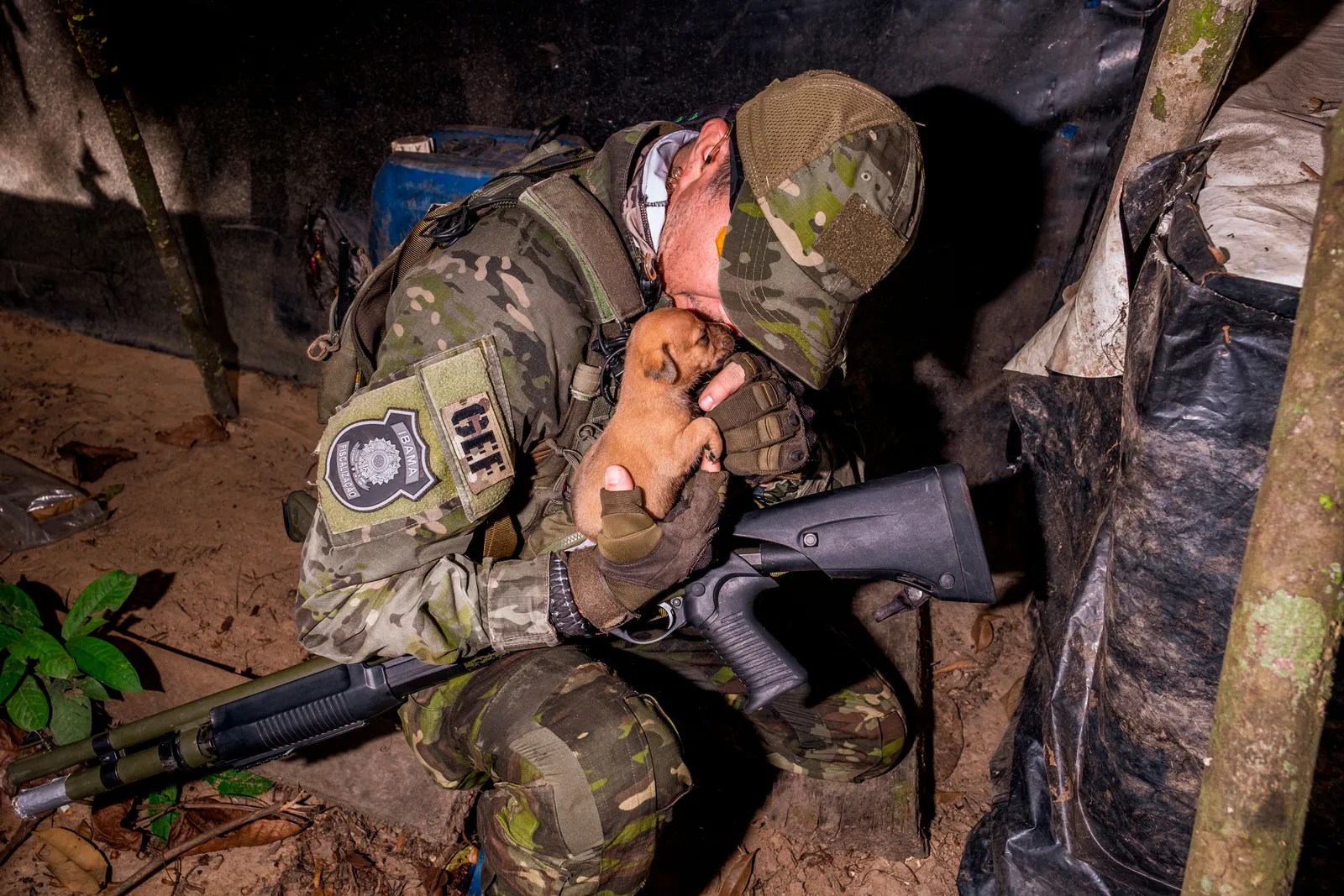
Roberto Cabral, a founder of the G.E.F., attends to a puppy discovered in a camp after miners fled.

In a clearing in the Brazilian Amazon, I stood with a group of armed men, discussing a viral TikTok video. The video, shot from a helicopter full of illegal miners, showed a vast stretch of rain forest, with dense foliage extending in all directions. The only sign of human habitation was below: a dirt circle surrounded by fanlike lean-tos made of wooden poles and palm fronds. It was a maloca, a traditional compound of the Yanomami, an Indigenous group that inhabits a remote territory in the rain forest of northern Brazil. Continue reading
Cruise Ships Getting Messier & Messier

The Royal Caribbean Icon of the Seas cruise ship docked in Miami on Jan. 11. Photographer: Eva Marie Uzcategui/Bloomberg

The “floating hotel” that many people consider the best way to vacation–cruise shipsare not the best environmentally.

We knew that. Now we know this in addition, thanks to Kendra Pierre-Louis at Bloomberg:

The World’s Largest Cruise Ship Is a Climate Liability

Water slides at the Thrill Island waterpark onboard the Icon of the Seas.Photographer: Eva Marie Uzcategui/Bloomberg

As massive ships like Royal Caribbean’s Icon of the Seas tack on more energy-intensive amenities, emissions from the cruise industry are climbing.

When Royal Caribbean’s Icon of the Seas embarks on its first official voyage on Jan. 27, the journey is sure to make waves. The world’s largest cruise ship, the Icon is over 1,000 feet long (360 meters) and weighs in around 250,000 gross registered tons. It boasts 20 different decks; 40 restaurants, bars and lounges; seven pools; six waterslides and a 55-foot waterfall. Royal Caribbean says its boat will usher in “a new era of vacations.” Continue reading
Bitcoin Keeps Getting Dirtier & Cheerleaders Keep On Cheering

Chart: Matthew SparkesSource: Cambridge Centre for Alternative Finance Created with Datawrapper

We already knew it was dirty. But it keeps getting dirtier and the guys who cheerlead unfettered “innovation” come across as celebrating the dirty as the unavoidable cost of progress. Something’s gotta give:

Skull of Satoshi, a sculpture by Benjamin Von Wong highlighting the environmental impact of bitcoin. VonWong/Skull Of Satoshi/Greenpeace blog.vonwong.com/skull/

Should nations try to ban bitcoin because of its environmental impact?

Bitcoin miners seem unwilling to take action to curb the cryptocurrency’s energy and water use – so some campaigners argue that it is time for governments to intervene

The amount of electricity used to mine and trade bitcoin climbed to 121 terawatt-hours in 2023, 27 per cent more than the previous year. Continue reading
Rubber-Induced Destruction

Satellite images of Cambodian forest in 2000 (left) and, after being cleared, in 2015 (right). Forests were replaced by a grid of rubber plantations, as well as croplands. Source: NASA

If you have never seen ecosystem destruction firsthand, count yourself lucky. I witnessed, during visits over several years, as 1,000 acres of primary forest ecosystem was destroyed to make way for a rubber plantation. It was horrifying. And I am further horrified to read how what I witnessed was only a small part of a much bigger rubber-induced destruction (thanks as always to Fred Pearce):

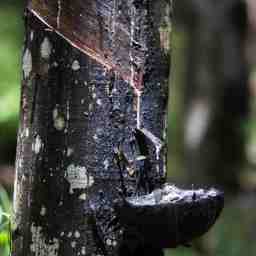
Rubber resin collected from a tree near Lubuk Beringin, Indonesia. TRI SAPUTRO / CIFOR

How Mounting Demand for Rubber Is Driving Tropical Forest Loss

The growing market for rubber is a major, but largely overlooked, cause of tropical deforestation, new analysis shows. Most of the rubber goes to produce tires, more than 2 billion a year, and experts warn the transition to electric vehicles could accelerate rubber use.

The elephants are gone. The trees are logged out. The Beng Per Wildlife Sanctuary in central Cambodia is largely destroyed, after being handed over by the government to a politically well-connected local plantation company to grow rubber. Continue reading

Cruise Ships Constantly Careless

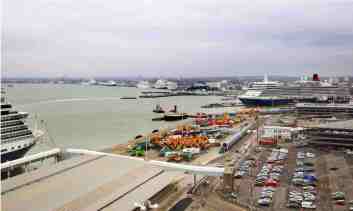
Cruise ships docked in Southampton, where an analysis of ship schedules found most did not make use of onshore power facilities. Photograph: Chris Ison/PA

We have pointed in this direction plenty of times over the years, so by now you might say it is caveat emptor:

Cruise ships polluting UK coast as they ignore greener power options

Most liners rely on marine gas oil when docked, despite claims they reduce emissions by plugging into low-carbon electricity

Cruise ships visiting Britain are frequently failing to plug into “zero emission” onshore power and instead running their engines and polluting the local environment with fumes. Continue reading
Frightening Future Facts For All Hallows’ Eve

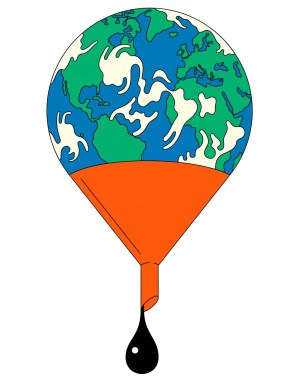
Faced with climate change on the one hand and the material demands of new energy infrastructure on the other, humanity had better figure out how to reuse the resources it has already dug up. Illustration by Laura Edelbacher

Not to rain on the parade of the candy and costumes fun of October 31, but to heighten the mood of the day with some sobering truths facing all of us, our thanks as always to Elizabeth Kolbert for getting our attention pointed where it needs to go:

The Real Cost of Plundering the Planet’s Resources

Our accelerating rates of extraction come with immense ecological and social consequences.

The town of Spruce Pine, North Carolina, doesn’t have a lot to say for itself. Its Web site, which features a photo of a flowering tree next to a rusty bridge, notes that the town is “conveniently located between Asheville and Boone.” According to the latest census data, it has 2,332 residents and a population density of 498.1 per square mile. A recent story in the local newspaper concerned the closing of the Hardee’s on Highway 19E; this followed an incident, back in May, when a fourteen-year-old boy who’d eaten a biscuit at the restaurant began to hallucinate and had to be taken to the hospital. Without Spruce Pine, though, the global economy might well unravel. Continue reading
Removing Environmental Protections Will Not Seem So Clever In Hindsight

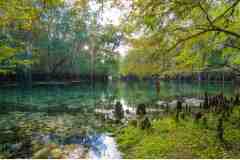
Sunset in the trees at Manatee Springs, Florida. Photograph: Michael Warren/Getty Images/iStockphoto

Oliver Milman, again, brings our attention to an environmental activism that deserves attention, this time for all the wrong reasons:

Experts fear half of the 290m wetland acres have lost federal protection and could be at risk from developers

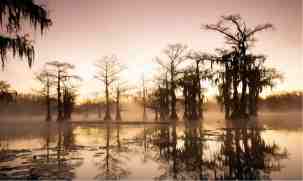
Lake Caddo, on the border between Louisiana and Texas, is a beautiful cypress swamp. Photograph: wanderluster/Getty Images

Often dismissed as dismal wet bogs and rampantly cleared since European arrival in the US, the underappreciated importance of wetlands has been placed into sharp relief by a supreme court ruling that has plunged many of these ecosystems into new peril.

The extent of wetlands, areas covered or saturated by water that encompass marshes, swamps and carbon-rich peatlands, has shrunk by 40% over the past 300 years as the US drained and filled them in for housing, highways, parking lots, golf courses and other uses. Globally, wetlands are disappearing three times faster than forests are. Continue reading
Really, Poland Spring?

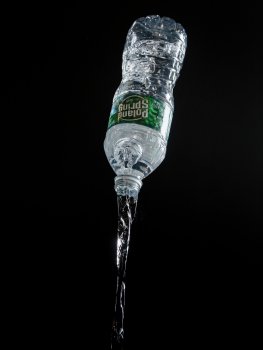
Tristan Spinski

We all need drinking water. Those of us lucky enough to have good quality water from a public source can avoid bottled water, but still too many need or want what Poland Spring sells.

The New York Times deserves high praise for this series on water abuses, especially Hiroko Tabuchi‘s reporting on Poland Springs and its parent company’s practices:

Inside Poland Spring’s Hidden Attack on Water Rules It Didn’t Like

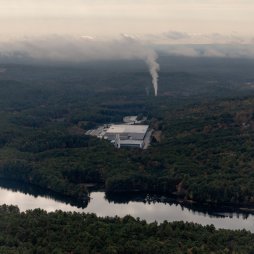
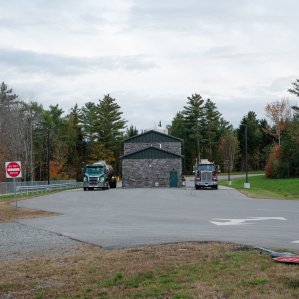
The BlueTriton bottling plant in Poland Spring, Maine, this month.

When Maine lawmakers tried to tighten regulations on large-scale access to water, the brand’s little-known parent company set out to rewrite the rules.

When Maine lawmakers tried to rein in large-scale access to the state’s freshwater this year, the effort initially gained momentum. The state had just emerged from drought, and many Mainers were sympathetic to protecting their snow-fed lakes and streams.

Water trucks filling up at a Poland Spring facility in Lincoln, Maine.

Then a Wall Street-backed giant called BlueTriton stepped in.

BlueTriton isn’t a household name, but its products are. Americans today buy more bottled water than any other packaged drink, and BlueTriton owns many of the nation’s biggest brands, including Poland Spring, which is named after a natural spring in Maine that ran dry decades ago.

Maine’s bill threatened BlueTriton’s access to the groundwater it bottles and sells. The legislation had already gotten a majority vote on the committee and was headed toward the full Legislature, when a lobbyist for BlueTriton proposed an amendment that would gut the entire bill. Continue reading

US Supreme Court’s Extreme Tilt

Relentless and Loper Bright have been brought before the Supreme Court with the same all-but-explicit goal: to make it more difficult for the federal government to protect the public. Photograph by Jemal Countess / UPI /Shutterstock

Courts with politically appointed jurists can tilt to an extreme, as we see now at the highest level in the USA’s judicial system. Even as the environment needs more protection, the infrastructure for providing it is being dismantled (thanks as always to Elizabeth Kolbert):

The Supreme Court Looks Set to Deliver Another Blow to the Environment

Two upcoming cases take aim at the government’s power to regulate.

Last week, the United States Supreme Court agreed to hear a case that’s nominally about herring. Arguments will be heard this winter, in tandem with a case that the Court had agreed to hear earlier, that one also ostensibly about herring. In both cases, though, the Justices have much bigger fish to fry: what’s really at issue is the fate of federal regulation. The stakes are enormously high, and, given the Court’s predilections, the outcome seems likely to undermine still further the government’s ability to function. Continue reading

Water Rights, Heritage & Responsibility

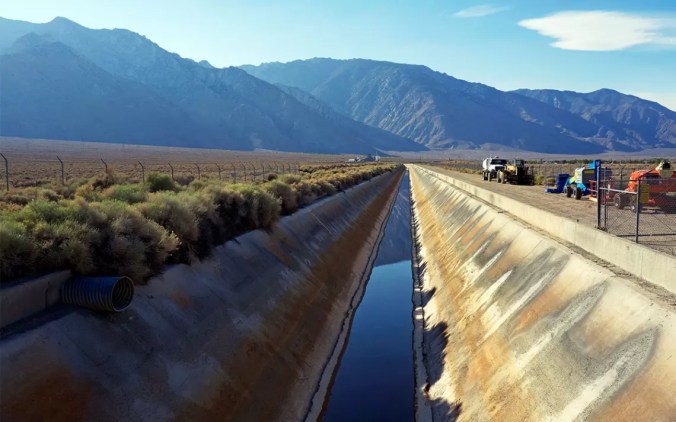
The Los Angeles Aqueduct. | Photo by Brian Melley/AP

California water has been covered in earlier posts, and it keeps getting more important. Once again, with abundance comes responsibility:

Dear Los Angeles: You’re Drinking Indigenous Water

How LA can localize its water supply and finally do right by the Owens Valley Paiute tribes

In August 2023, a tropical storm bore down upon Southern California for the first time in 84 years. As Hilary’s northward-rolling blanket of rain touched off mudslides from Hollywood to the San Bernardino Mountains, thigh-deep water floated vehicles in the streets of Cathedral City. To the east, 120 miles of Highway 395 were closed due to flooding and rock slides, pinching off the route between the city of Los Angeles and the once-green valley 300 miles away from which it has, for over a century, sourced fresh water. Continue reading

Really, Cargill?

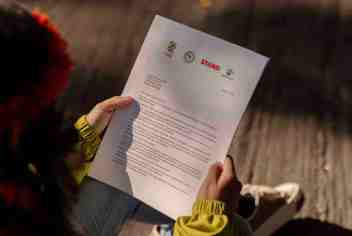
Beka will hand-deliver a letter to the Cargill-MacMillian dynasty in Minneapolis on Thursday, calling on the billionaire owners of America’s biggest private company to stop destroying the Amazon rainforest and its people. Photograph: Thalia Juarez/The Guardian

Cargill has appeared a few times in our pages over the years, not always showing poor stewardship. But today, we have to ask whether they really are trying as diligently as possible to do the right thing. We applaud Beka and her community for this letter, and hope the recipients respond with the sense of responsibility that comes with their wealth:

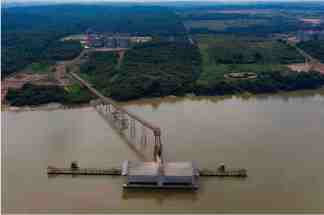
A Cargill transshipment port for soy and corn projects on the Tapajos River in Itaituba, Para state, Brazil, in 2019. Photograph: Léo Corrêa/AP

‘Our world hangs by a thread’: Indigenous activist asks US agri giant to stop destroying Amazon rainforest

Beka Saw Munduruku , 21, traveled 4,000 miles to deliver letter and confront family behind Cargill empire over what she says amounts to a litany of broken promises

A 21-year-old Indigenous activist from a remote Amazonian village will hand deliver a letter to the Cargill-MacMillan dynasty in Minneapolis on Thursday, calling on the billionaire owners of the US’s biggest private company to stop destroying the Amazon rainforest and its people. Continue reading