Upgrading Electrical Power Lines

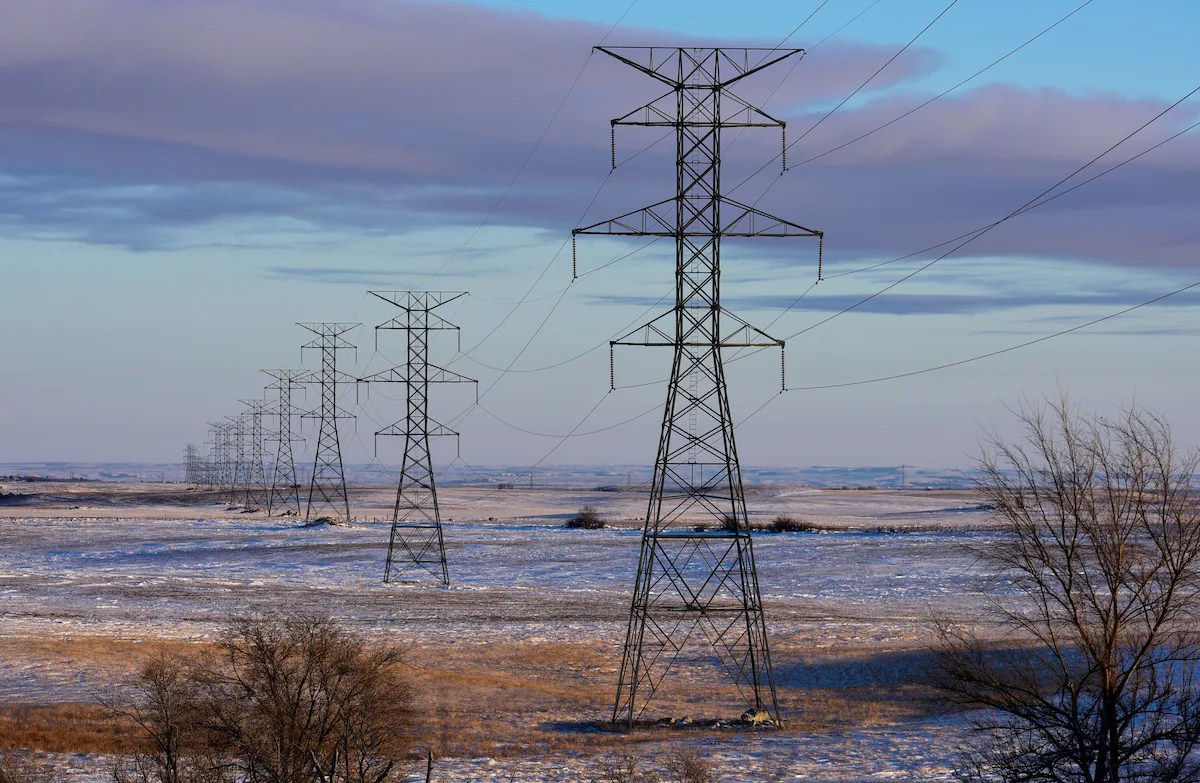
High voltage power transmission lines near Underwood, N.D. Installing new wires on the high-voltage lines that already carry power hundreds of miles across America could double the amount of power those lines carry. (Dan Koeck for The Washington Post)

Shannon Osaka, writing in The Washington Post, offers an unglamorous but effective-sounding story about the role that electrical transmission lines may play in upgrading our energy infrastructure:

How a simple fix could double the size of the U.S. electricity grid

Rewiring miles of power lines could make space for data centers, AI and a boom in renewables.
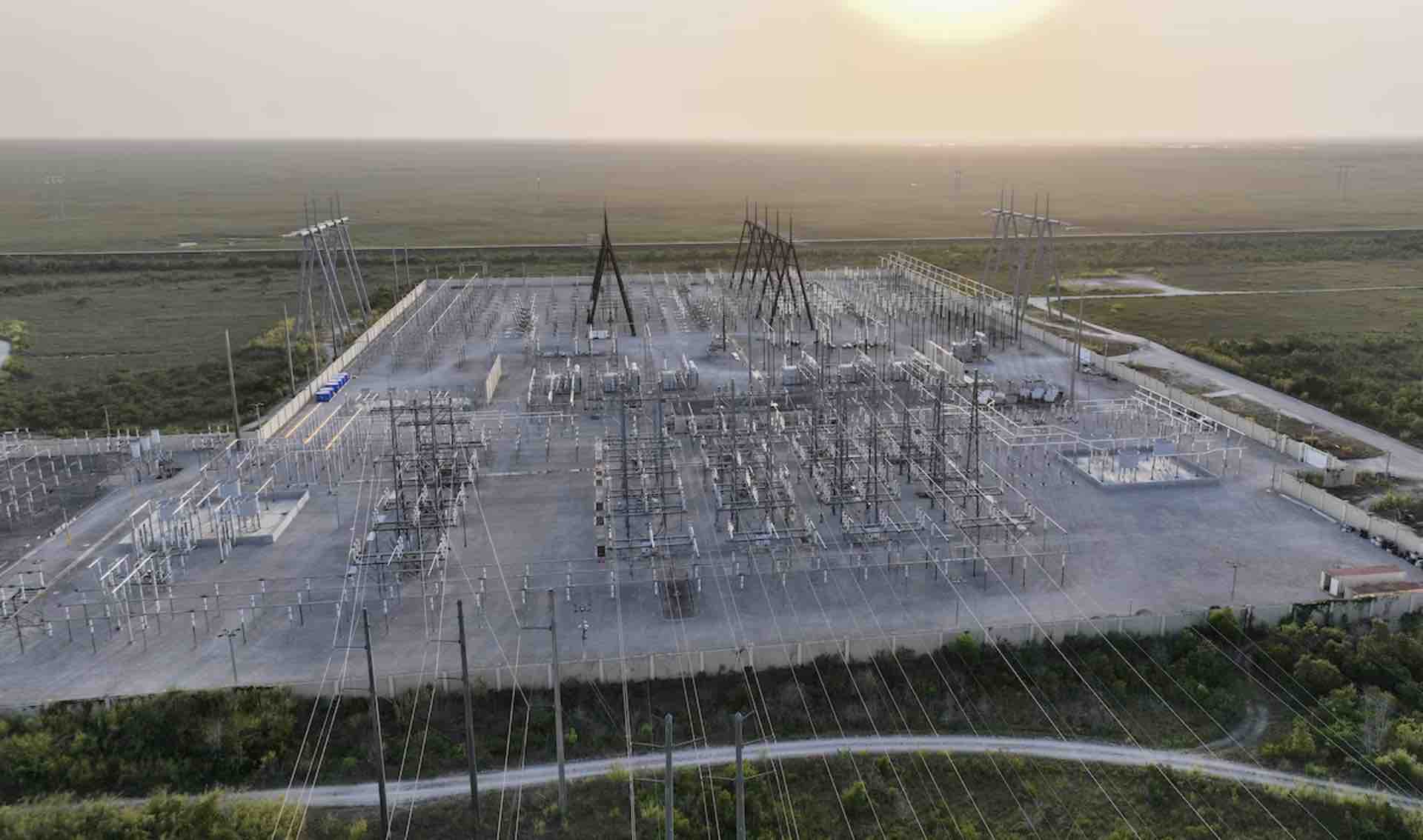
High voltage power lines run through a substation along the electrical power grid in Pembroke Pines, Florida. The grid is strained by increasing demand from electricity-hungry data centers and electric vehicles, as well as extreme weather events. (Joe Raedle/Getty Images)

There is one big thing holding the United States back from a pollution-free electricity grid running on wind, solar and battery power: not enough power lines.

As developers rush to install wind farms and solar plants to power data centers, artificial intelligence systems and electric vehicles, the nation’s sagging, out-of-date power lines are being overwhelmed — slowing the transition to clean energy and the fight against climate change. Continue reading

Solar’s Impressive Portion Of USA Energy Supply Increase

Robert Nickelsberg/Getty Images

Thanks to Tik Root, Senior Staff Writer at Grist:

Solar hits a renewable energy milestone not seen since WWII

With supply chains finally open, solar provided most of the nation’s new electricity capacity last year.

Solar accounted for most of the capacity the nation added to its electric grids last year. That feat marks the first time since World War II, when hydropower was booming, that a renewable power source has comprised more than half of the nation’s energy additions.  Continue reading

Bitcoin Keeps Getting Dirtier & Cheerleaders Keep On Cheering

Chart: Matthew SparkesSource: Cambridge Centre for Alternative Finance Created with Datawrapper

We already knew it was dirty. But it keeps getting dirtier and the guys who cheerlead unfettered “innovation” come across as celebrating the dirty as the unavoidable cost of progress. Something’s gotta give:

Skull of Satoshi, a sculpture by Benjamin Von Wong highlighting the environmental impact of bitcoin. VonWong/Skull Of Satoshi/Greenpeace blog.vonwong.com/skull/

Should nations try to ban bitcoin because of its environmental impact?

Bitcoin miners seem unwilling to take action to curb the cryptocurrency’s energy and water use – so some campaigners argue that it is time for governments to intervene

The amount of electricity used to mine and trade bitcoin climbed to 121 terawatt-hours in 2023, 27 per cent more than the previous year. Continue reading

Superbattery Explainer

The Economist’s explanation (subscription required) is clear:

Superbatteries will transform the performance of EVs

Provided manufacturers can find enough raw materials to make them

Asked what they most want from an electric car, many motorists would list three things: a long driving range, a short charging time and a price competitive with a similarly equipped vehicle that has an internal-combustion engine. Continue reading

Fusion Hoopla

A reason that the breakthrough is causing such hoopla is that it implicitly promises that we could use fusion to run the world in almost its current form. Photograph courtesy Lawrence Livermore National Laboratory

Without the expertise to fully appreciate the science, the hoopla can be overlooked too easily. McKibben’s comment helps clarify:

The Fusion Breakthrough Suggests That Maybe Someday We’ll Have a Second Sun

In the meantime, we need to use the sun we’ve already got.

On Tuesday, the Department of Energy is expected to announce a breakthrough in fusion energy: according to early reports, scientists at the government’s Lawrence Livermore National Laboratory, in California, have succeeded for the first time in making their complex and expensive machinery produce more power than it uses, if only for an instant. Continue reading

Imposing On Pastoral Beauty To Capture Wind’s Power

Pinnacle turbines dot the skyline in Keyser, West Virginia, where, according to Andrew Cosner, a twenty-one-year-old technician, some residents remain hostile to the new wind farm: “They say it ruins the landscape and it’s ugly.”

It is to each of us whether we find the view attractive or not, and there was a time when I found large man-made structures an imposition on pastoral beauty.

Smith stands in the nacelle of one of the turbines just before daybreak.

As time passes I find myself drawn more to such a view as that in the photo above as a signal of progress.  It is not because the view is in a place far away from me– on the mountain ridge above where I live there is a row of such turbines and I am constantly gazing at that horizon. Published in the print edition of the November 28, 2022, issue of the New Yorker, with the headline “Blade Runners,” D.T. Max provides some context, but the photos do the heavy lifting:

THE BLADE RUNNERS POWERING A WIND FARM

In West Virginia, a crew of five watches over twenty-three giant turbines.

The Pinnacle wind-power plant extends for roughly four miles in the northeastern corner of West Virginia. Continue reading

Canada’s Best Tide Forward

As Brazil turns the tide to its better environmental self, the New York Times reporter Ian Austen explains how Canada harnesses its best tide for an environmental feat long dreamed of:

The Bay of Fundy’s funnel shape is part of the reason for its exceptional tides. Along its 96 or so miles of length, the bay dramatically narrows and its depth drops, from 765 feet to 147 feet. David Goldman for The New York Times

Who Will Win the Race to Generate Electricity From Ocean Tides?

The Bay of Fundy, between Nova Scotia and New Brunswick, has one of the world’s most powerful tides. Now, engineers and scientists hope to finally turn it into a clean energy source.

ABOARD THE PLAT-I 6.40 GENERATING PLATFORM, Nova Scotia — The Bay of Fundy, off the Canadian provinces of Nova Scotia and New Brunswick, has long tantalized and frustrated engineers hoping to harness its record-setting 50-foot high tide to generate electricity. Continue reading

Ever-Improving Solar Technologies & Techniques

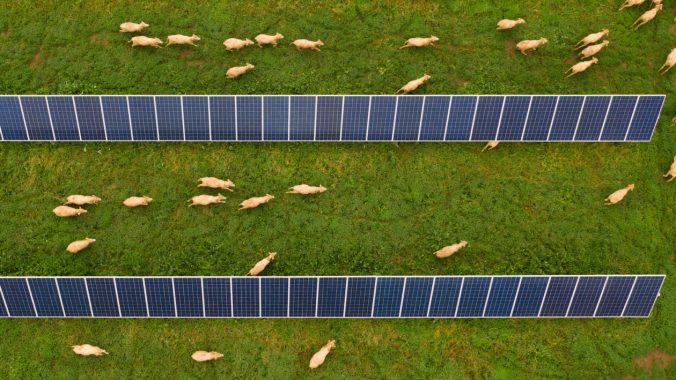
Sheep graze alongside a solar array in Dubbo, Australia. JANIE BARRETT / THE SYDNEY MORNING HERALD VIA GETTY IMAGES

Solar power, one of the renewables with the greatest promise, continues to improve:

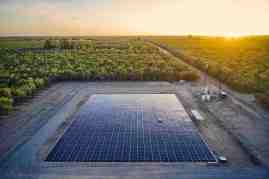
A solar array in Madera County, California, with panels placed side-by-side on the ground. ERTHOS

More Energy on Less Land: The Drive to Shrink Solar’s Footprint

With the push for renewables leading to land-use conflicts, building highly efficient utility-scale solar farms on ever-smaller tracts of land has become a top priority. New approaches range from installing PV arrays that take up less space to growing crops between rows of panels.

Farmers grow hay between solar fences in Donaueschingen, Germany. NEXT2SUN

From the ground, the new solar farm shimmers like a mirage oasis on a hot summer day. Instead of row after slanting row of shiny panels stretching taller than corn, this array, mounted directly on the earth, lies flat as water. Continue reading

First Drafts Of History

First reading of the day was this essay by a historian linked to once and referred to one time previously. And next up, the conscience of our generation compounds the idea, or rather pounds the idea home about who is writing the first draft of what will become our history, by defining reality as we see it today. I have listened to conversations with Daniel Yergin twice recently, and acknowledge being sucked into his expert definition of how to understand the fossil fuel world. I appreciate McKibben’s cold water on my face:

Who gets to define reality?

A search for the climate high ground

“Realism” is the high ground in politics—a high ground from which to rain down artillery fire on new ideas.

To wit, this week the New York Times profiled Canadian energy analyst Vaclav Smil, who—alongside others like Daniel Yergin—has long insisted that the transformation from fossil fuels to hydrocarbons must take a long time. Smil is a good writer and a smart historian; he’s documented the many-decades-long transitions from, say, wood to coal, and coal to oil as dominant energy sources. Continue reading

Airborne Wind Energy

An airborne wind turbine at the SkySails Power’s pilot site in Klixbüll, Germany. AXEL HEIMKEN / PICTURE ALLIANCE VIA GETTY IMAGES

Wind energy, as we have pictured it, was in a race between fixed and floating models. We did not know about the airborne model. Nicola Jones, writing in Yale e360, gives a clear picture of why it faltered and how it is recovering:

After a Shaky Start, Airborne Wind Energy Is Slowly Taking Off

This long-exposure nighttime photograph shows the figure-eight flight pattern of Kitepower’s airborne wind system. KITEPOWER

Numerous companies are developing technologies, such as large kites, that can harvest wind energy up to a half-mile above ground. While still in its nascent stages, airborne wind power could potentially be used in remote locations or flying from barges far offshore.

Look up over the white sand beaches of Mauritius and you may see a gigantic sail, much like the kind used by paragliders or kite surfers but the size of a three-bedroom apartment, looping figure-eights overhead. Continue reading

Biomass & Social Justice

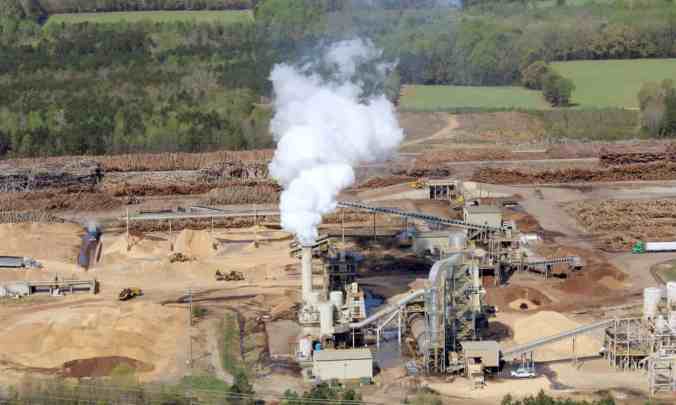
The Enviva plant in Northampton county, North Carolina. Photograph: SELC

Questions about biomass are not new, but increasingly urgent as a social justice issue as well as an ecological one:

Biomass is promoted as a carbon neutral fuel. But is burning wood a step in the wrong direction?

Many scientists and environmental campaigners question the industry’s claims to offer a clean, renewable energy source that the planet desperately needs

Thick dust has been filling the air and settling on homes in Debra David’s neighborhood of Hamlet, North Carolina, ever since a wood pellet plant started operating nearby in 2019. Continue reading

The New Race In Wind Energy, Between Fixed And Floating Turbines

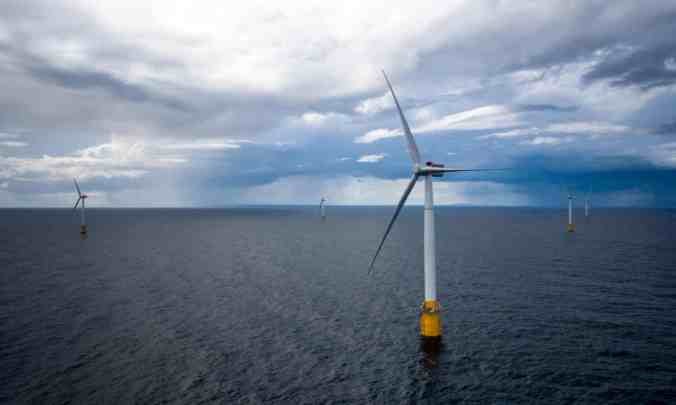
The world’s first floating wind farm 15 miles offshore of Aberdeenshire, in Scotland. The 30 megawatt installation can power approximately 20,000 households Photograph: Xinhua/Alamy

Wind, of all the alternative energy sources we pay attention to, requires vast areas for generation. So water has become the go-to place to place the turbines. It looks like the new race is whether to have the turbines fixed or floating:

Floating wind turbines could open up vast ocean tracts for renewable power

Technology could help power a clean energy transition if it can overcome hurdles of cost, design and opposition from fishing

In the stormy waters of the North Sea, 15 miles off the coast of Aberdeenshire, in Scotland, five floating offshore wind turbines stretch 574 feet (175 metres) above the water. The world’s first floating windfarm, a 30 megawatt facility run by the Norwegian company Equinor, has only been in operation since 2017 but has already broken UK records for energy output. Continue reading

Power Plants Signal Intent

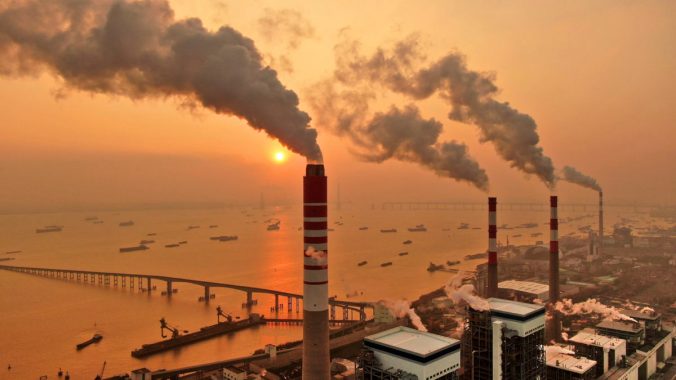
A coal-fired power plant in China’s Jiangsu province. XU CONGJUN – IMAGINECHINA

What is the real intent on addressing climate change, we must wonder:

Despite Pledges to Cut Emissions, China Goes on a Coal Spree

China is building large numbers of coal-fired power plants to drive its post-pandemic economy. The government has promised a CO2 emissions peak by 2030, but the new coal binge jeopardizes both China’s decarbonization plans and global efforts to tackle climate change.

China’s National People’s Congress meetings, which ended earlier this month, were shrouded in both a real and figurative haze about how strong its climate ambitions really are and how quickly the country can wean itself from its main source of energy — coal. Continue reading

Off Halogen, On With LED

Switching to LEDs has been estimated to save consumers up to £112 a year. Photograph: imageBroker/Rex/Shutterstock

Arthur Neslen at the Guardian shares the news, in Europe to ban halogen lightbulbs, that we have been waiting to hear for years:

After nearly 60 years of lighting homes halogens will be replaced with more energy efficient LEDs

After nearly 60 years of brightening our homes and streets, halogen lightbulbs will finally be banned across Europe on 1 September.

The lights will dim gradually for halogen. Remaining stocks may still be sold, and capsules, linear and low voltage incandescents used in oven lights will be exempted. But a continent-wide switchover to light-emitting diodes (LEDs) is underway that will slash emissions and energy bills, according to industry, campaigners and experts.

LEDs consume five times less energy than halogen bulbs and their phase-out will prevent more than 15m tonnes of carbon emissions a year, an amount equal to Portugal’s annual electricity usage. Continue reading

Geothermal Cooking, Just Because

merlin_125685548_c436b8e6-ebb0-4c57-8c2a-b2fcbf46e20b-master768.jpg

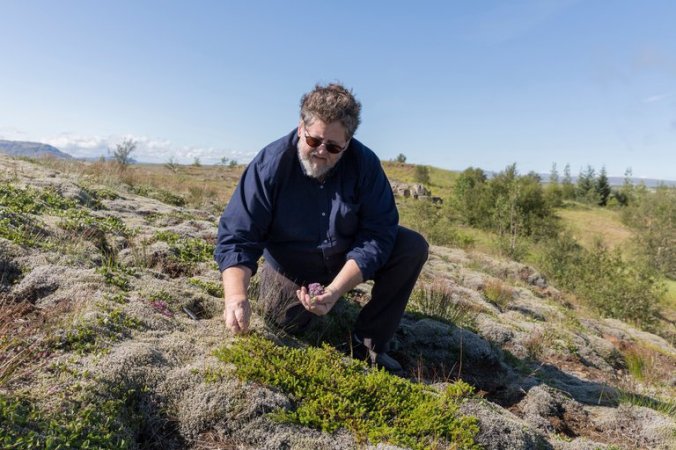
Jon Sigfusson, the chef at Fridheimar, a restaurant in Reykholt, Iceland, picking herbs for cooking lamb. Credit Bara Kristinsdottir for The New York Times

Thanks to Peter Kaminsky, who helps answer the question Why Cook Over an Icelandic Geyser? and does so with gusto:

REYKHOLT, Iceland — Standing in the mud of the Myvatn geyser field in northern Iceland, Kolla Ivarsdottir lifted the lid of her makeshift bread oven. It had been fashioned from the drum of an old washing machine and buried in the geothermally heated earth. All around us mudpots burbled and columns of steam shot skyward, powered by the heat of nascent volcanoes.

merlin_125685812_85ded439-31d9-4c03-b718-389cf79b405a-master675.jpg

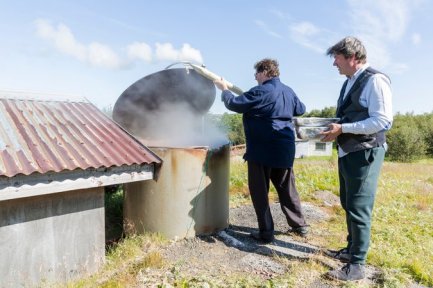
Mr. Sigfusson, left, and Kjartan Olafsson, a restaurant critic and fish exporter, putting food into the communal geothermal oven. Credit Bara Kristinsdottir for The New York Times

Ms. Ivarsdottir, a mother of three who sells her bread in a local crafts market, reached into the oven and retrieved a milk carton full of just-baked lava bread, a sweet, dense rye bread that has been made in the hot earth here for centuries. She cut the still-hot loaf into thick slices. It is best eaten, she said, “completely covered by a slab of cold butter as thick as your hand, and a slice of smoked salmon, just as thick.” We settled for bread and butter — still a supernal combination. Continue reading

New Vehicle Technology Makes Good Business Sense

Free parking and charging stations for electric cars in Oslo. Norway offers generous incentives that make the vehicles cheaper to buy, and other benefits once they are on the road. Credit Thomas Haugersveen for The New York Times

Norway’s public policy that puts environmentalism front and center stands in stark contrast to the obvious deconstruction of protections in this country.

In Norway, Electric and Hybrid Cars Outsell Conventional Models

Sales of electric and hybrid cars in Norway outpaced those running on fossil fuels last year, cementing the country’s position as a global leader in the push to restrict vehicle emissions.

Norway, a major oil exporter, would seem an unlikely champion of newer, cleaner-running vehicles. But the country offers generous incentives that make electric cars cheaper to buy, and provides additional benefits once the vehicles are on the road.

Countries around the world have ramped up their promotion of hybrid and electric cars. As China tries to improve air quality and dominate new vehicle technology, the government there wants one in five cars sold to run on alternative fuels by 2025France and Britain plan to end the sale of gasoline- and diesel-powered cars by 2040.

Norway is ahead of the rest of the world. Continue reading

Clean Energy, Nordic Style

norway-dam

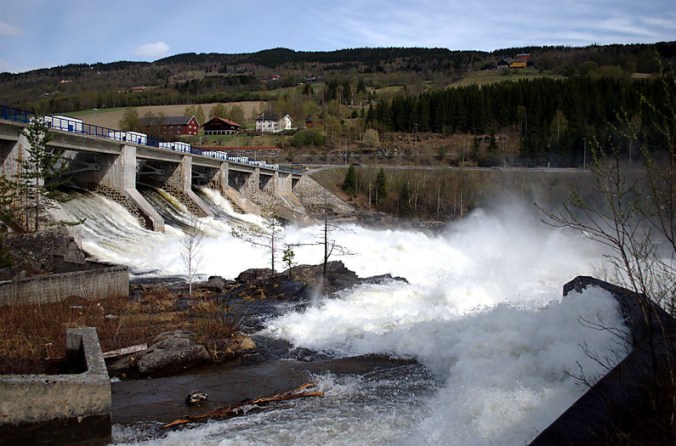
Hunderfossen Dam, Norway via Sigurd Rage/Flickr

Thanks to Anthropocene:

Nordic countries offer important lessons for clean-energy transition

Continue reading

Urban Shape & Ecoefficiency

mini-sao-paulo.jpg

Thanks to Anthropocene for this summary of a counterintuitive finding:

To save energy on heating and cooling, look at the shape of cities, not just their buildings

A Question of Light

Selling “light,” not light bulbs, is one way that companies producing long-lasting L.E.D. bulbs hope to stay in business, even after “socket saturation” sets in. PHOTOGRAPH BY TONY CENICOLA / THE NEW YORK TIMES / REDUX

Selling “light,” not light bulbs, is one way that companies producing long-lasting L.E.D. bulbs hope to stay in business, even after “socket saturation” sets in.
PHOTOGRAPH BY TONY CENICOLA / THE NEW YORK TIMES / REDUX

In a business world of planned obsolesce and consumer world “throw away behavior”,  it’s enlightening to see how companies are handling “doing good by doing well” for the both the environment and the consumer’s pockbook.

TRYING TO SOLVE THE L.E.D. QUANDARY

Continue reading

Measuring Natural Gas Emissions

7686687614_9cb11eafc2_z

A natural gas well in Hamilton, Pennsylvania. Source: triplepundit.com

Last spring the U.S. Energy Information Agency (EIA) predicted that natural gas would generate more power in 2016 than coal, and now that natural gas has taken that lead, it is under close scrutiny as a “cleaner” alternative to coal. From the EIA’s latest Short-Term Energy Outlook, natural gas also beat out coal for carbon dioxide emissions from power generation.

“Energy-associated carbon dioxide (CO2) emissions from natural gas are expected to surpass those from coal for the first time since 1972. Even though natural gas is less carbon-intensive than coal, increases in natural gas consumption and decreases in coal consumption in the past decade have resulted in natural gas-related CO2 emissions surpassing those from coal.”

And the agency isn’t talking in fractions of a percentage point, either. EIA puts the emissions figure for natural gas at 10 percent greater than coal for 2016.

Continue reading