Recently, I happened upon the pitch above and was at first thrilled to see yet one more alternative approach to raising awareness and appreciation for nature: good production values and the style is quirky and fun. The Kickstarter pitch came midway through and then my thoughts started wandering. Continue reading →
In 2003 the Metropolitan Museum acquired a significant group of paintings spanning a key period in European history, beginning with the advent of the French Revolution and concluding with the reign of Louis Philippe. Assembled by the New York connoisseur Wheelock Whitney between 1972 and 2000, this collection reveals a rich tradition of painting out of doors nearly a century before Impressionism, thus amplifying the role of the natural world as a source of inspiration Continue reading →
Mud puddling is a social insect activity usually involving newly hatched males where several butterflies of one or more species gather on moist banks of sand or mud. Mud puddling butterflies often spend a long time on these damp patches, where they suck salts along with water to obtain nutrients. Continue reading →
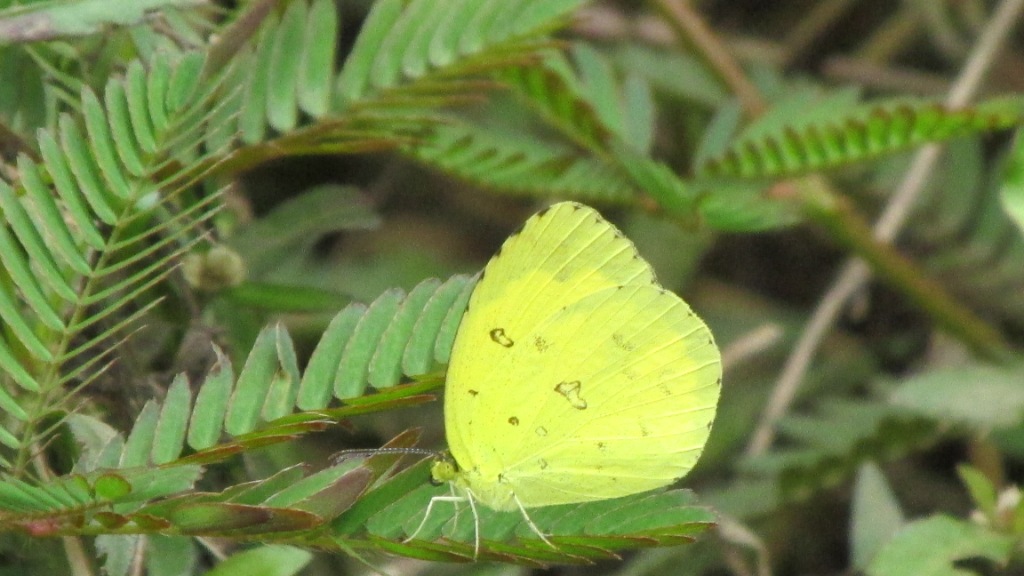
The Common Grass Yellow butterfly is one of the most common and abundant butterflies in India recognizable by its bright lemon yellow wings with black bordering on the upper side and brown markings on the lower side. The females are larger than males. These butterflies are found flying close to the ground along grassy patches.Cassia fistula, Cassia lora, Albizzia, Cassia alata, Cassia sothera and Cassia mimosoides are the favorite food plants for this species.
Entomologist, author and photographer Piotr Naskrecki, based at Harvard University’s Museum of Comparative Zoology, has published a book whose photos we first saw here, and whose attention to cycads we first took note of here. His book is available here. For an ever-expanding catalogue of his amazing nature images with accompanying entomological (and other) interpretive guidance, see his blog here.
David Attenborough photographed at home in Richmond. Photograph: Suki Dhanda
We are reminded that David Attenborough will be sharing another round of greatness in the coming weeks (click the image to the left for the story):
Other stars to receive homage in 60 Years in the Wild include Jane Goodall and Dian Fossey for their ape-observation work, Francis Crick and Jim Watson Continue reading →
The common garden lizard is a medium- sized, arboreal lizard with an oval head and laterally compressed body. In the male, the cheeks are muscular and swollen. Females are considerably smaller. Continue reading →
This is the second in a series of posts on a summer trip; see the first here.
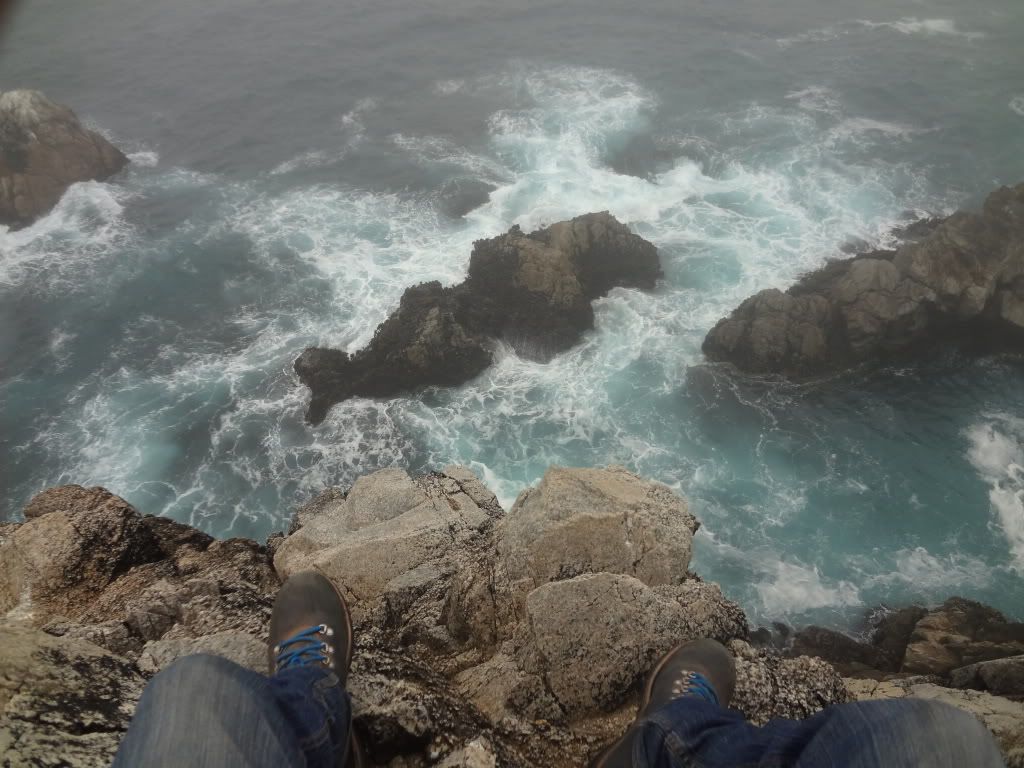
In the afternoon we were off, driving up the west coast without any real plans; we knew we wanted to be in Seattle in four or five days, but that intervening time period was ours to spend as we wished. From a quick glance at the map, we thought that Point Reyes, a national coastline a few hours north of the bay area, Continue reading →
Standing for millenia: Reenadinna, an ancient yew woodland in Ireland’s Killarney National Park. Photo by Universal images/Getty
Click the image above to go to the story in Aeon (read the second half for perspective on nature in the Western Ghats):
It is Reenadinna, one of the planet’s few remaining yew woods, a virtual monoculture of coniferous yew trees (Taxus baccata). They grow here on thin mossy soil, though in some places they drape directly over bare limestone bedrock. The light is green-soaked and dim beneath the crowded canopy: it looked no different this summer than it did 30 years before. Of course, three decades is a short time in the life of a yew wood, where an individual tree can live thousands of years. But it looked no different this summer than it would have done in September 1776, when Arthur Young, the great English writer on rural affairs, visited the region and exuberated on the wooded Muckross peninsula. And by the calculation of Fraser Mitchell, a botanist in Dublin’s Trinity College, it has looked that way for millennia. Continue reading →
Kolukkamali is located near Munnar at the upper reaches of the Tamil Nadu and Kerala border at an elevation of 7900 feet above sea level. The drive to the top past sprawling tea plantations and through a narrow track is an adventure in itself. Continue reading →
Long before Carson and Attenborough, as noted in a post by Meg last year, there were Vedic, Buddhist and Hindu texts; Old Testament scribes, New Testament scribes, great Islamic scholars; but also there were Greek philosophers, Roman thoughts nearly lost; on and on, closer to the present with Thoreau; etc.
All providing us with a sense of reverence for, and a way to understand, the mysteries we will refer to here as Nature. But what is next? And who will be our interpreters and scribes? Anyone following this site will know we are partial to Jad‘s sonically luscious and always surprising approach to making sure we understand and appreciate the world we live in; ditto for Krulwich (whom we have pointed to plenty of times but if you can only focus on one, make it this one). Thanks to the the latter, we came upon the clip above, and with one viewing we see a possible answer.
Click the image above to go to the website for this unusual linking mechanism and here in particular for the history of the program:
We connect prisons with nature.
Our mission is to bring science and nature into prisons. We conduct ecological research and conserve biodiversity by forging collaborations with scientists, inmates, prison staff, students, and community partners. Equally important, we help reduce the environmental, economic, and human costs of prisons by inspiring and informing sustainable practices.
Last weekend I ventured for the first time into Ithaca’s Sapsucker Woods – a forested area adjacent to Cornell’s Lab of Ornithology, which among many other projects, strongly influences ornithological citizen science far and wide. Sapsucker Woods, however, is not merely a place where birds nest and feed. It is a living, breathing organism – an ecosystem that is more than the sum of the parts of the intricate denizens, both biotic and abiotic, within it. The complexity of a forest is fractal – from the way sunlight is distributed to the canopy, to the well-known food chain, to the molecular structure of the enzymes saprophobic fungi use to break down the hydrocarbon bonds in the wood they devour. Through a magnifying glass, or a microscope, or out of an airplane’s window – a forest is beautiful. Continue reading →
Photo by Lauren E. Oakes: Basil, tomatoes, and glass floats from the outer coast at a home in Gustavus, Alaska
An excellent recent post in Green Blog (click the image above to go to the source) begins:
Basking in a surprise dose of early morning sun, we sat together on a bench made from yellow-cedar at the Gustavus Forelands Preserve, a landscape of spruce and cottonwood forests and beaches overlooking the Icy Strait waters. We were staring at a diagram on a piece of paper I had handed to Hank Lentfer, a lifelong Alaskan and longtime resident of the tiny town of Gustavus. Continue reading →
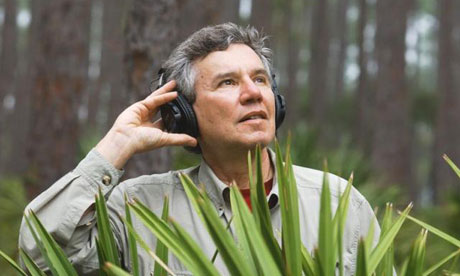
Musician and naturalist Bernie Krause has spent 40 years recording over 15,000 species in many of the world’s pristine habitats. Photograph: Courtesy of Hachette Book Group
Click his photo for the story. Never heard of him. But we have certainly heard his sounds:
Krause, whose electronic music with Paul Beaver was used on classic films like Rosemary’s Baby and Apocalypse Now, and who worked regularly with Bob Dylan, George Harrison and The Byrds, has spent 40 years recording over 15,000 species, collecting 4,500 hours of sound from many of the world’s pristine habitats.
But such is the rate of species extinction and the deterioration of pristine habitat that he estimates half these recordings are now archives, impossible to repeat because the habitats no longer exist or because they have been so compromised by human noise. His tapes are possibly the only record of the original diversity of life in these places.
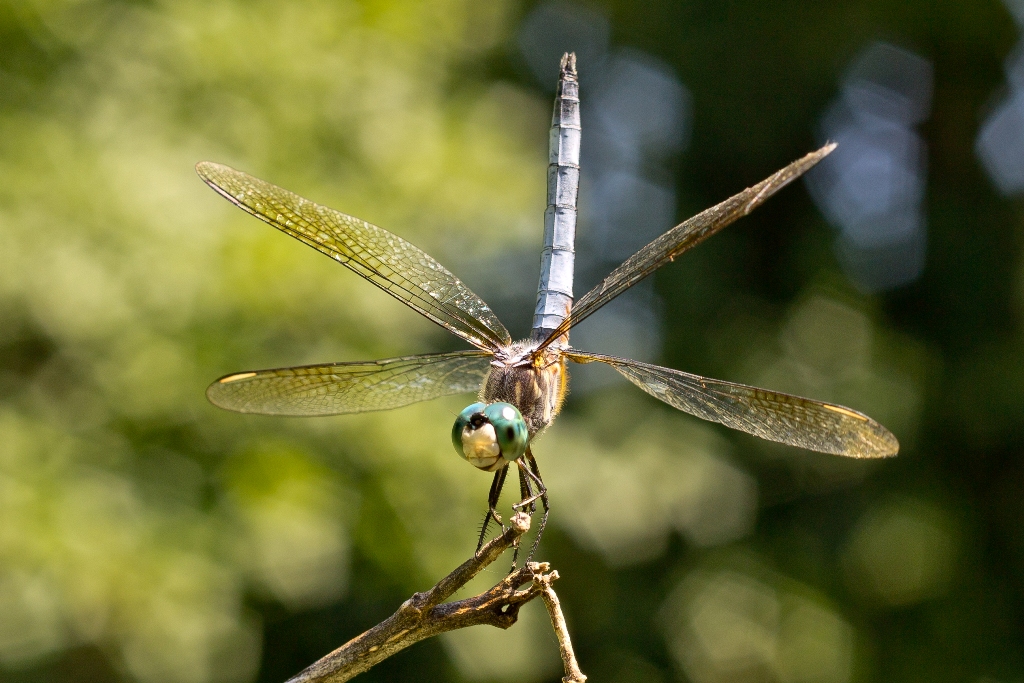
I shall resist the underwhelming urge to throw in a bit of canonical wordplay concerning St. George, and merely say that this is my first insect photograph with my new 50mm F1.8 lens. The dappled sunlight behind the dragonfly is a testament to the glory of shooting with this enormously apertured lens – the bokeh is a pleasure to both create and to view. I was only in Georgia for ten days in between Kerala and New York, but it was a pleasure to step out of my grandmother’s (an avid odonatophile) back door to find this dragonfly patiently waiting for me. Continue reading →
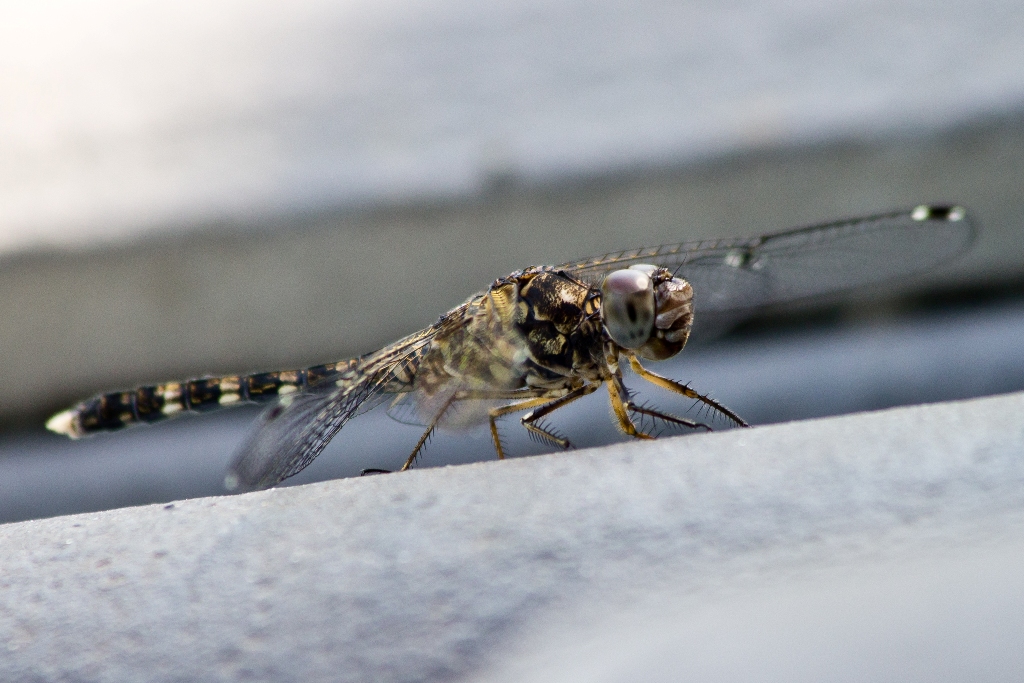
As the monsoons blow through Kerala, the native dragonfly and damselfly populations in the area appear to wax and wane along with the water levels. A sunny day by any water body guarantees sighting at least one species, but as is only so common during the season, overcast days dominate the calendar. Nevertheless, Kerala’s entomological biodiversity remains as strong as the summers, during which dozens of Odonate species whizz back and forth teritorially over their little stretch of pond-shore or riverbank. The main reason that these insects are not out in force as frequently as the rest of the year is that they are most active in hot and dry climates, particularly in direct sunlight. Contrarily, monsoons traditionally offer respite to natives, being wet and (slightly) cooling. When they’re not visibly hunting or mating, dragonfly and damselfly populations are probably strongest in the larval stage – extraordinarily aggressive aquatic predators. I got lucky a few days ago on a sunny day on the backwaters when I saw a Granite Ghost – in my books a rarer species of dragonfly that I’ve only sighted once in Goa.
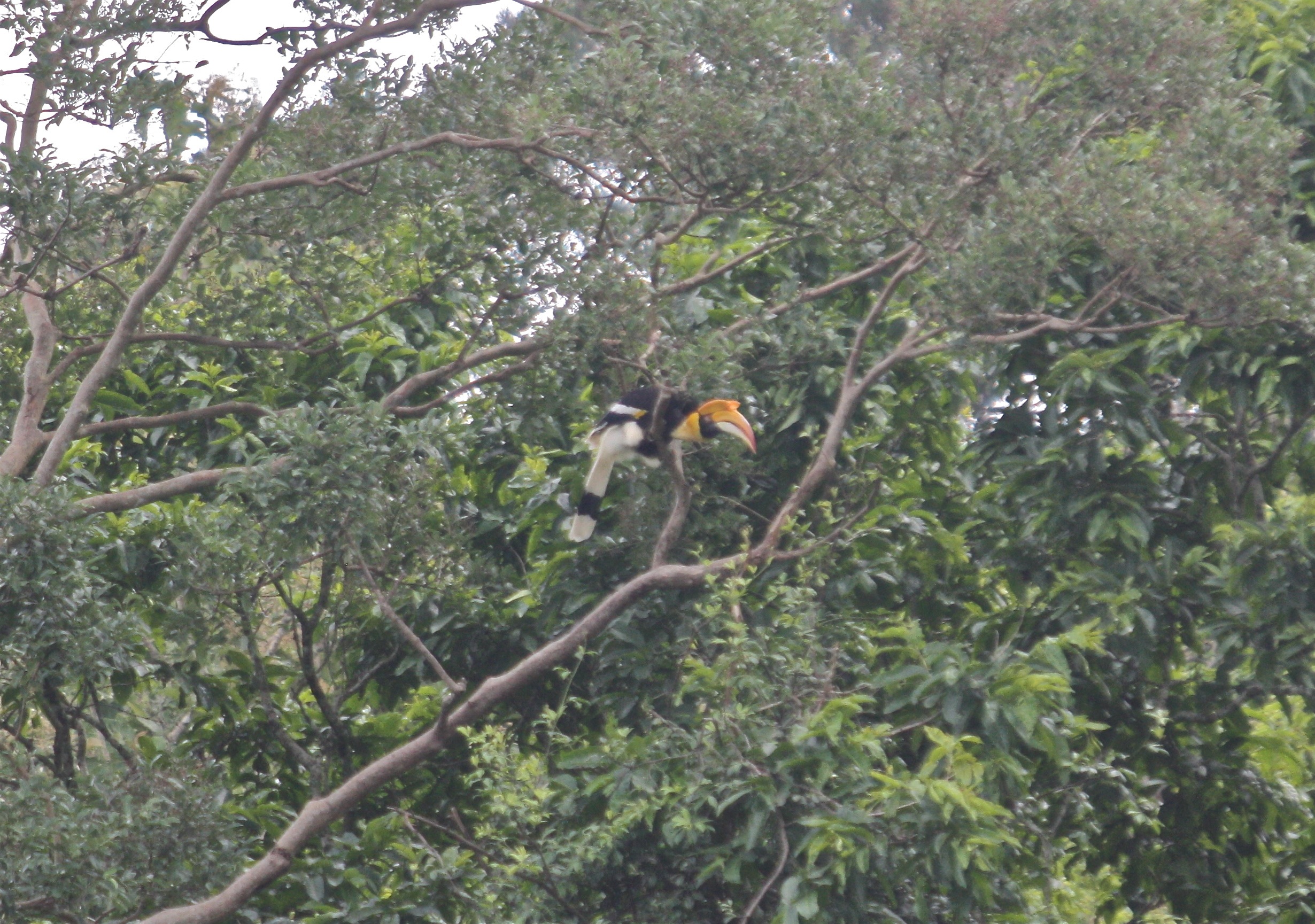
It is amazing how fast ten weeks can go by. I remember sitting in the library at Cardamom County writing about my first day of birding here; I remember how excited I was to see barbets, minivets, and leafbirds from the parking lot. Now, ten weeks later with about a dozen activities completed and many birding expeditions into the Periyar Tiger Reserve under my belt, I’m suddenly looking back on fond memories. My first excursion into Periyar was a Bamboo Rafting trip along Periyar Lake. To be honest, I was a little overwhelmed in this strange new place with its checklist of over 300 unfamiliar birds. As is always the case with Periyar, the excursion was a blast, and that trend continued with the Border Hike, the Nature Walk, the Tiger Trail, the Green Walk, and indeed with every trip into the Reserve.
Last week, I had my first, second, third, and fourth dives since I got my CMAS diving certification in 2007 in Croatia. I saw two of the weirdest organisms I’ve ever encountered in the flesh (to be named in the next post), and was also able to fulfill one of my longtime wishes: to be underwater with any aquatic mammal!
I leave for a camping trip on the island of Isabela today, so for now my two brief and scheduled posts will be limited to a couple photos and the video that will be in each! All images and videos were taken by Quike Morán, my Scuba Iguana guide.






 Organikos