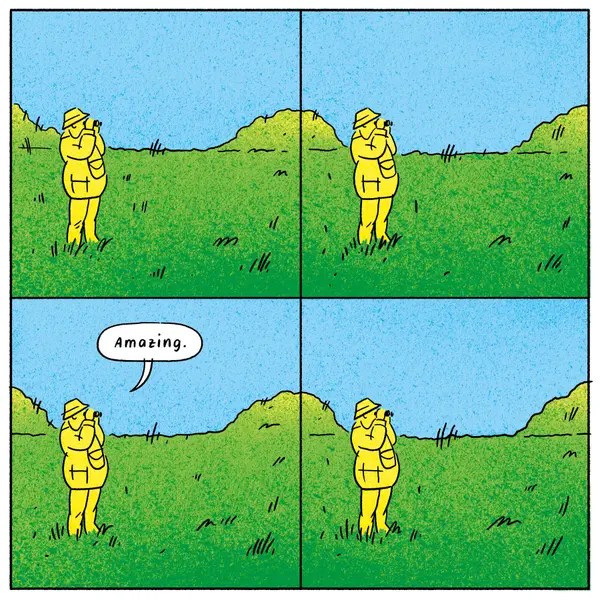
Ed Yong With Binoculars

Ed Yong has graced our pages for a decade and still finds new ways to communicate the wonders of nature:

When I Became a Birder, Almost Everything Else Fell Into Place

Last September, I drove to a protected wetland near my home in Oakland, Calif., walked to the end of a pier and started looking at birds. Throughout the summer, I had been breaking in my first pair of binoculars, a Sibley field guide and the Merlin song-identification app, but always while hiking or walking the dog. On that pier, for the first time, I had gone somewhere solely to watch birds. Continue reading

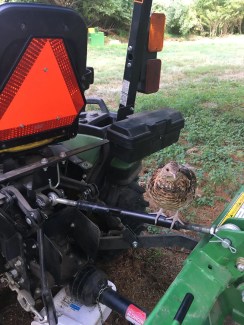
Holiday Cheer From Mr. Grouse

Bill Hartline and Mister Grouse. “He can be a pain, too,” Mr. Hartline said. Bill Hartline

Apart from bird-feeders, habituating wild animals among humans is troublesome. The Cornell Lab of Ornithology promotes birdfeeders so we trust that there is science supporting the practice. The science behind this grouse’s behavior represents another good exception:

Ruffed grouse are elusive and stealthy, but scientists are seeking a genetic explanation for why some of the birds become best buddies with people.

Mister Grouse helping with chores around the property. Bill Hartline

When Bill Hartline bought 50 acres of forested land outside Muncy, Pa., he was looking for a bit of solitude and a place to eventually build a new home in retirement. But during a camping trip there in early 2020, he discovered the wooded plot wasn’t as lonely as he thought. That evening, a ruffed grouse — a crow-size bird with a tiny mohawk and mottled feathers — appeared at his feet.

“I crouched down and said, ‘Hello.’ He cooed back and started following me around,” Mr. Hartline, 66, said. “Three years later, he’s still following me around.” Continue reading

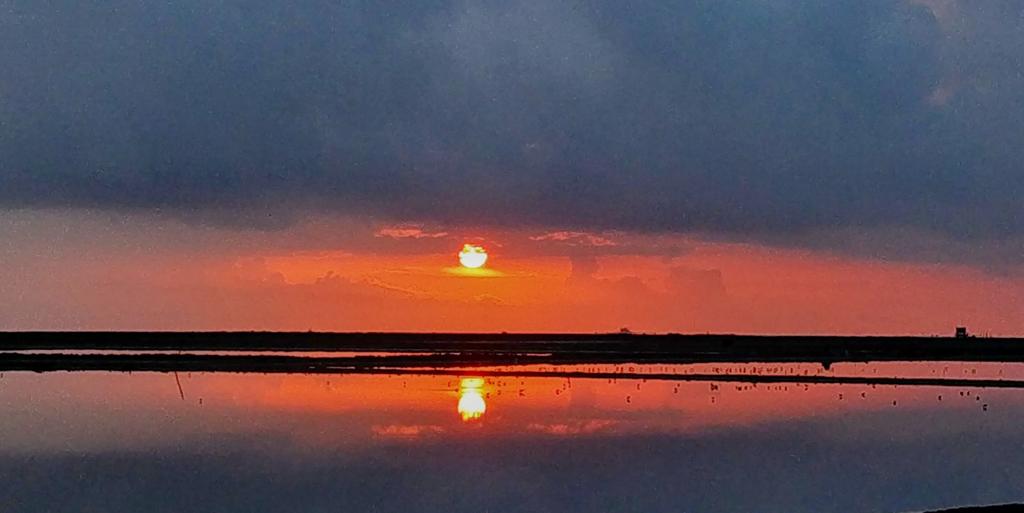
Stories from the Field: Spoon-billed Sandpiper

In my previous post I’d written about birding with Clement Francis and how educational he was in so many ways – sparking my interest in birding, my abilities as a bird photographer, and not least, my understanding of the challenges that birds and other wildlife suffer in the face of climate change and human related habit destruction. The story of the Spoon-billed Sandpiper impacted me in a huge way.

This tiny bird travels between the Arctic Tundra and the South Asiatic regions. While they breed in the tundra, they migrate southwards during winters in a migratory route of 8000 kilometres. Just 200 pairs of this birds existed back then. Now due to human intervention and the implementation of captive breeding programmes, the population are reaching to a decent number.

The International Union for Conservation of Nature (IUCN)  has listed the Spoon-billed Sandpiper under the “critically endangered” species. During one of our trips Clement showed me the picture of the bird in its breeding plumage that was shot in Siberia. From that moment on my mind was set on seeing the bird. It may appear like an exaggeration, but the bird appeared in my dreams quite often and the desire to see it for myself grew stronger every day. At the time of our trip the bird was in migration to a small patch in the Sunderbans of Bangladesh,  but the numbers there were decreasing, and their path seemed to be shifting toward stopovers in Thailand instead. 

Continue reading

Migratory Birds Across The Americas

I rarely read comments from other readers on articles, but for some reason I did on this one; they are almost as interesting as the article itself:

For Migrating Birds, It’s the Flight of Their Lives

America’s birds are in trouble. Since 1970, nearly 3 billion birds have vanished from the skies over North America. Continue reading

Bring Birds Back Podcast

A new (to us) podcast to get your bird nerd fix:

Let’s All Go to Gullah Geechee Sea Islands with Isaiah Scott

Bring Birds Back Season 4: Episode 4

This episode’s guest may be too young to remember the 90’s children’s show, Gullah Gullah Island, but he’s certainly influencing the next generation the same! Isaiah Scott, a rising Gen-Z bird-influencer and ornithologist, reconnects with Tenijah to dish all about his journey into birding while young, Black and curious. He also shares how his Gullah Geechee heritage continues to inspire his work, including a forthcoming field guide that seeks to preserve his ancestral connection to birds. There’s definitely “lots to see and to do there”– press play and take the journey with us!


Birds, Citizen Science & You

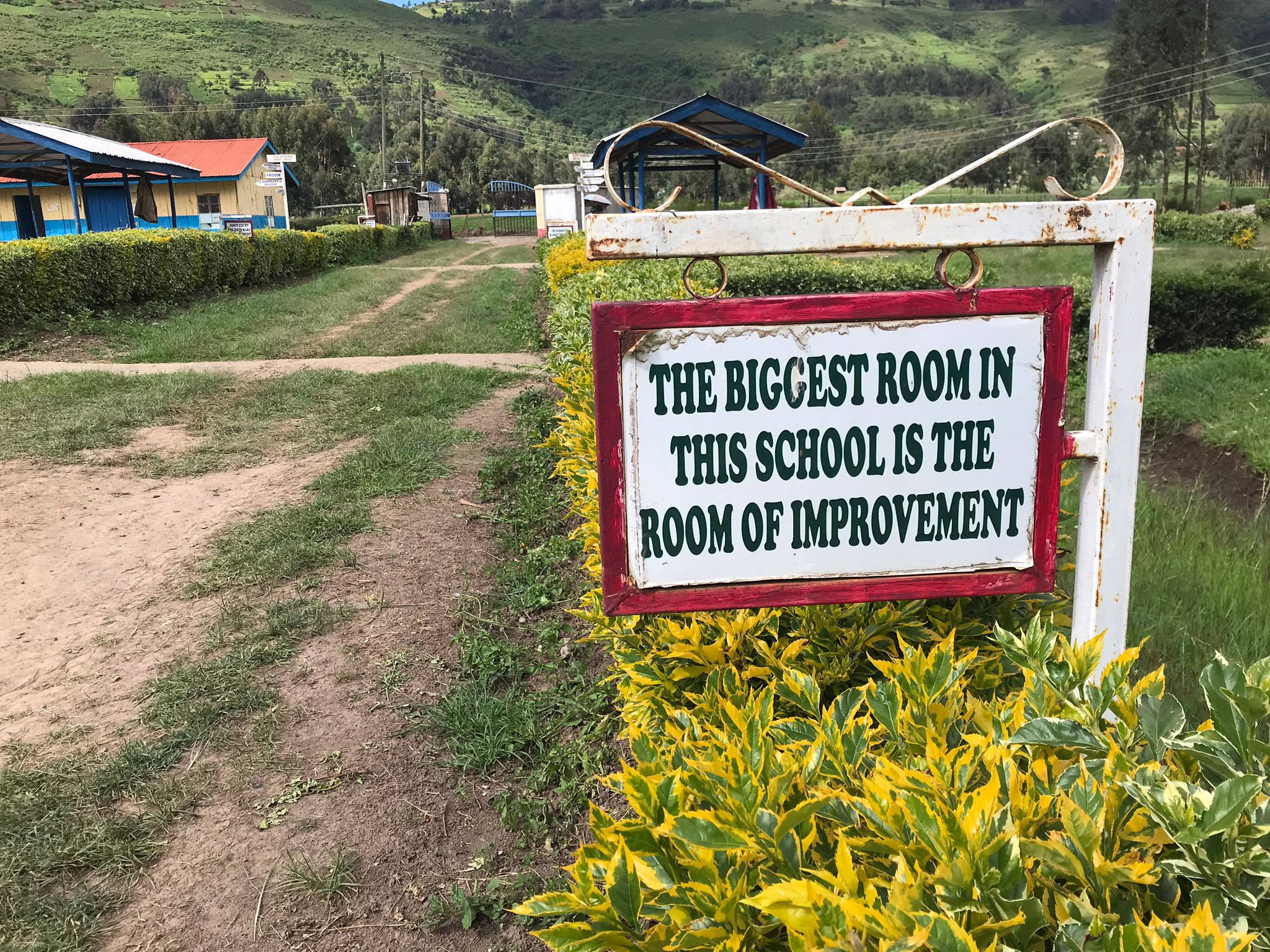
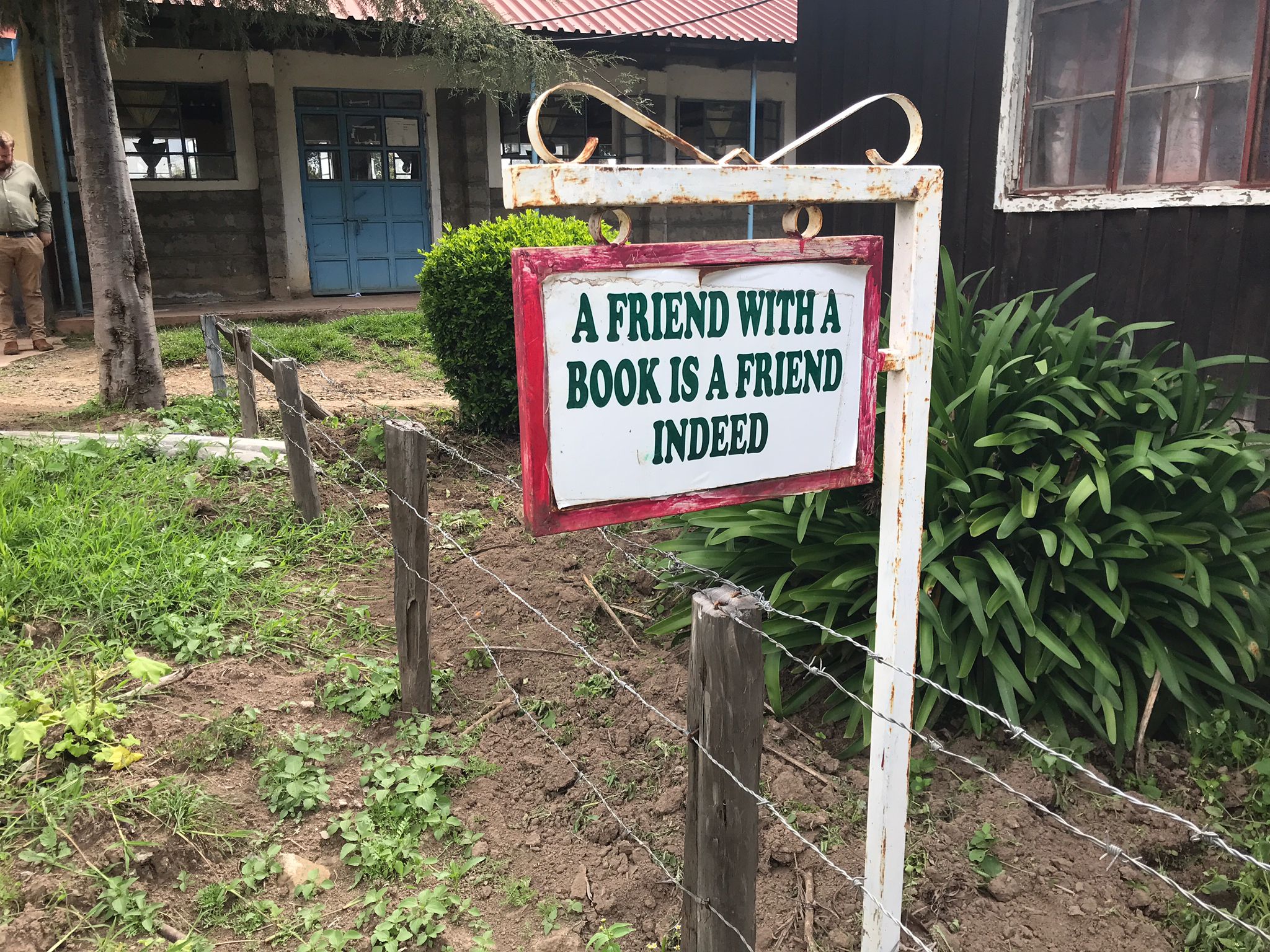
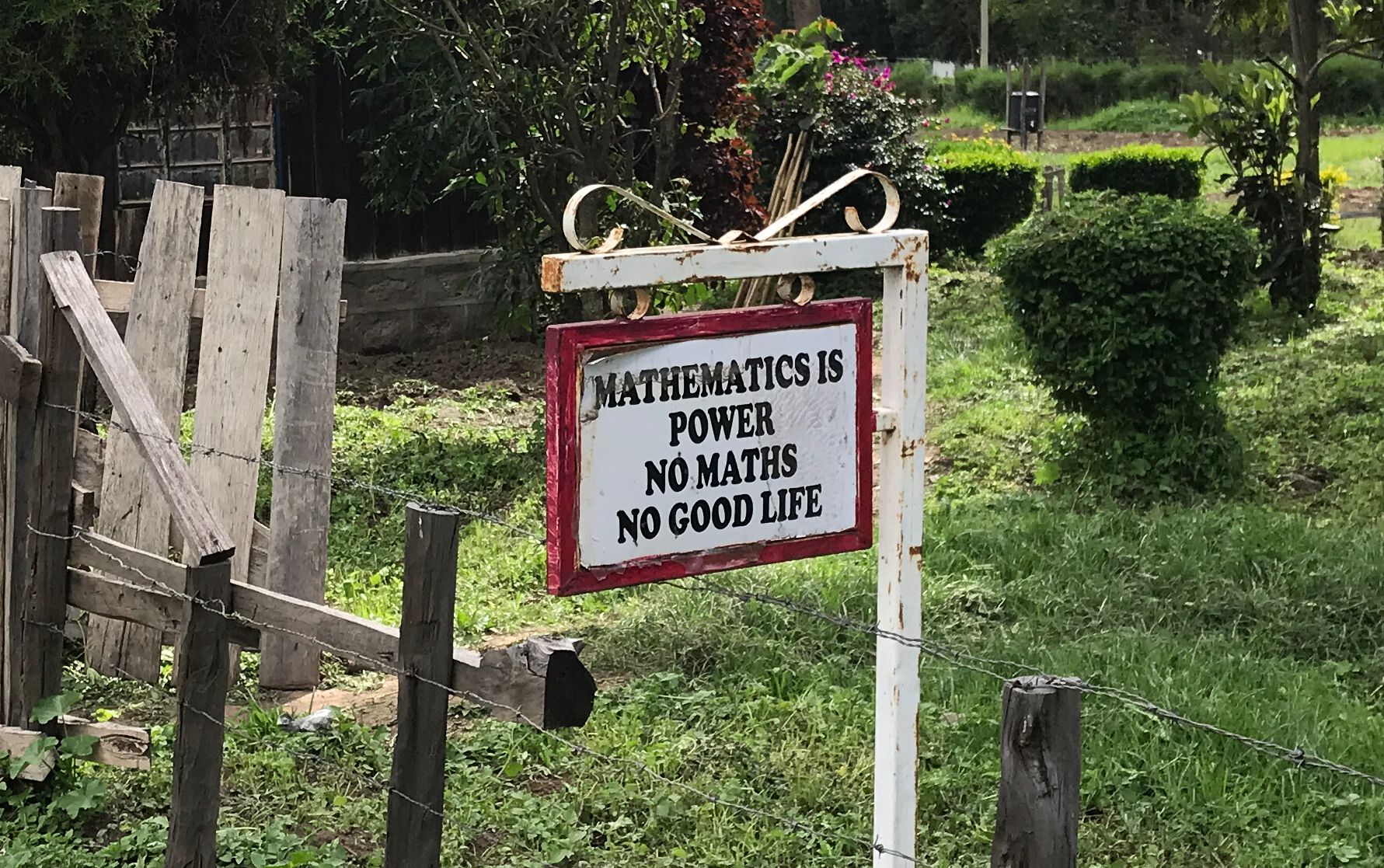
Seth has been working in various African countries recently, and is somewhere in Kenya at this moment, for work. There is a school in the vicinity, with these signs. We have not yet had the chance to hear any details about the school, but these signs anyway say most of what we might want to know.

His work, related to forest management, clearly intersects with his longstanding interest in birds, strengthened by his three years working at the Cornell Lab of Ornithology. That period coincides with our learning about citizen science and in the years since we have shared many stories from the field.

The pictures arrived from Kenya just as this initiative between the Cornell Lab of Ornithology and the New York Times comes to my attention, which you might find interesting:

Mike McQuade

Go Birding With The Times

Our understanding of birds has been profoundly shaped by the work of everyday people. After all, anyone can step outside and pay attention to an untamed world swooping above. Continue reading

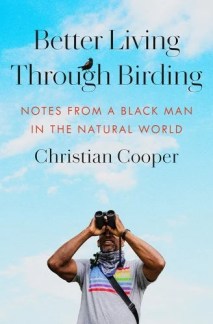
Better Living Through Birding, Christian Cooper’s Forthcoming Book

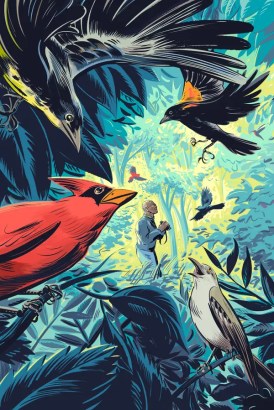
Wesley Allsbrook

Christian Cooper, an American science writer, is author of the forthcoming book (below left) from which the following essay in the New York Times is adapted:

Three Years After a Fateful Day in Central Park, Birding Continues to Change My Life

Early in the morning of May 25, 2020, I biked from my apartment on Manhattan’s Lower East Side to Central Park to go birding in the Ramble. Despite the uncertainties of the time — New Yorkers were living in a hot spot of the raging Covid pandemic, with no vaccine in sight — I strove to start this warm, sunlit Memorial Day on a happy note by wandering my favorite urban woodlands in search of migrating songbirds.

I was focused on the end-of-season hunt for a mourning warbler, a small yellow and gray skulking bird that’s difficult to spot and relatively rare. I hadn’t yet seen one that year.

Visiting the park in the morning to look for birds has long been a springtime routine for me. I wake before sunrise and grab my Swarovski binoculars — a 50th-birthday present from my father — and head out the door. Continue reading

Beasts That Bluff

Whether to ward off predators or to exploit their victims, creatures can gain advantage by posing as different creatures. Illustration by Lou Benesch

When Elizabeth Kolbert reviews a book we know that at least the review is a must-read:

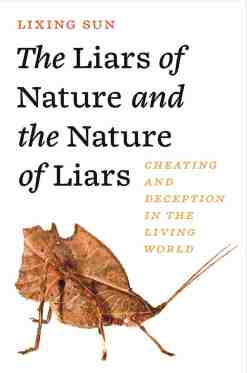
Why the Animal Kingdom Is Full of Con Artists

Some crows “cry wolf” to snatch food from their neighbors; some caterpillars trick ants into treating them like queens. What can we learn from beasts that bluff?

On April 20, 1848, Alfred Russel Wallace and Henry Walter Bates set off for the Amazon on a boat named Mischief. The two young men—Bates was twenty-three, Wallace twenty-five—had met a few years earlier, probably at a library in Leicester, in England’s East Midlands. Both were passionate naturalists, and both were strapped for cash. (Neither had been able to afford university.) To finance their adventures, they planned to ship specimens back to London, where they could be sold to wealthy collectors.
For reasons that no one has ever been able to explain—but that many have speculated about—Wallace and Bates separated soon after they reached Brazil. In the decade that followed, Wallace amassed an immense trove of new species; lost most of them in a ship fire; set off again, for Southeast Asia; and, with Charles Darwin, discovered natural selection.

Bates, meanwhile, remained in Brazil. He sailed up the Tapajós, an Amazon tributary, and then up the Cupari, a tributary of the Tapajós. Travel in the region was often agonizingly slow; to get from the town of Óbidos to Manaus, a journey of less than four hundred miles, took him nine weeks. (At some point during the trip, he was robbed of most of the money he was carrying.) Bates would find a congenial town and spend months, even years, there, making daily forays into the surrounding rain forest. He tromped around in a checked shirt and denim pants, an outfit considered outré by the British merchants he encountered in Brazil, who wore their top hats rain or shine. Continue reading

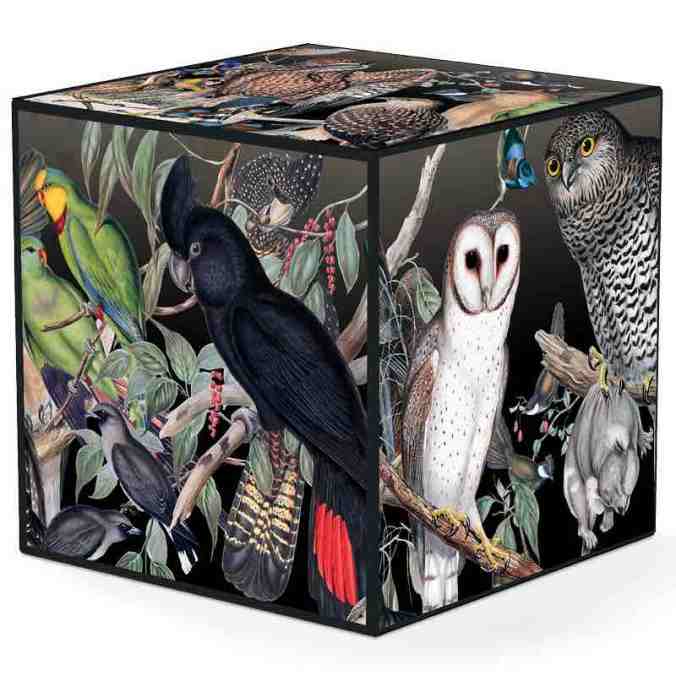
The Birds Of Australia, Interactive Exhibition Of John & Elizabeth Gould’s Illustrations

A new exhibition showcasing the incredible world of Australia’s birdlife will launch in Newcastle. Presented on STORYBOX, an interactive storytelling cube, The Birds of Australia, brings to life the iconic bird illustrations of John and Elizabeth Gould together with First Nations storytelling and knowledges.

We have linked to stories about both John Gould and his wife Elizabeth, and now there is a museum exhibition honoring both together, so if you happen to be in Australia:

Touring exhibition: The Birds of Australia

Trace the journey of English ornithologist John Gould and his wife Elizabeth, as they travelled across New South Wales in the 1800s on one of the most significant birding expeditions in history, helping inform contemporary knowledge and conservation of Australian birds. The Goulds described and illustrated over 300 birds that were completely new to science, including the Pied Butcherbird (Cracticus nigrogularis) and the now extinct Paradise Parrot (Psephotellus pulcherrimus). It was an astonishing record of observation and sustained hard work. Continue reading

Tagging Technology Gives Godwit Game

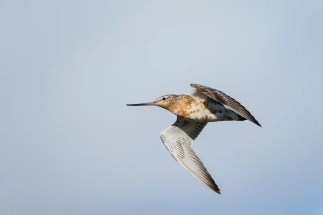
A juvenile bar-tailed godwit has flown from Alaska in the US to Tasmania in Australia, covering a record 13,560kms without stopping. Photograph: Johnny Madsen/Alamy

Who’s got game in the bird world is not, strictly speaking, a phrase associated with ornithologists or what they do for a living. But sometimes, their news features what looks like competitive sport to the lay public. We have shared news of long-journey bird species on several occasions, and one that has the right stuff now stands out from the rest by virtue of tagging technology:

Bar-tailed godwit sets world record with 13,560km continuous flight from Alaska to southern Australia

Satellite tag data suggests five-month-old migratory bird did not stop during voyage which took 11 days and one hour to reach Tasmania

A juvenile bar-tailed godwit – known only by its satellite tag number 234684 – has flown 13,560 kilometres from Alaska to the Australian state of Tasmania without stopping, appearing to set a new world record for marathon bird flights. Continue reading

Good Journalism, Excellent Environmental Coverage

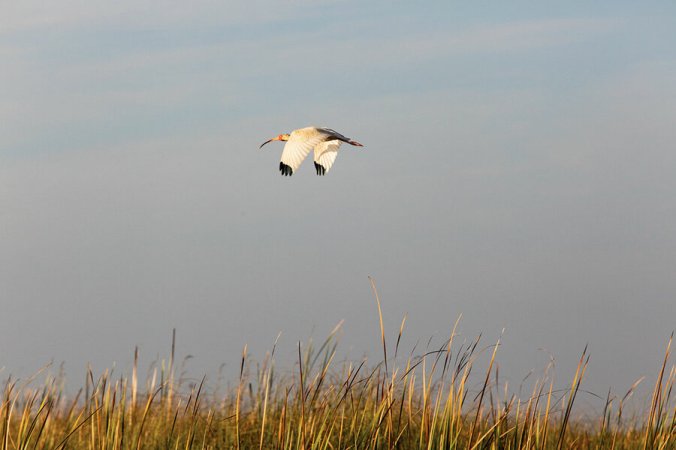
Melanie Stetson Freeman/Staff. A white ibis flies over the Everglades, where many bird species nest each year. Restoration efforts in Florida’s “river of grass” have begun to show signs of progress.

The CS Monitor was the newspaper delivered to our home when I was growing up. Lucky me. These days it still offers good journalism, but is no longer a paper. They made the switch to digital-only in 2008. In earlier years of my monitoring dozens of news sources for this platform it was the source of numerous stories of environmental interest in our pages. But in the last few years, for no particular reason, I failed to monitor their website for stories. And then today, this:

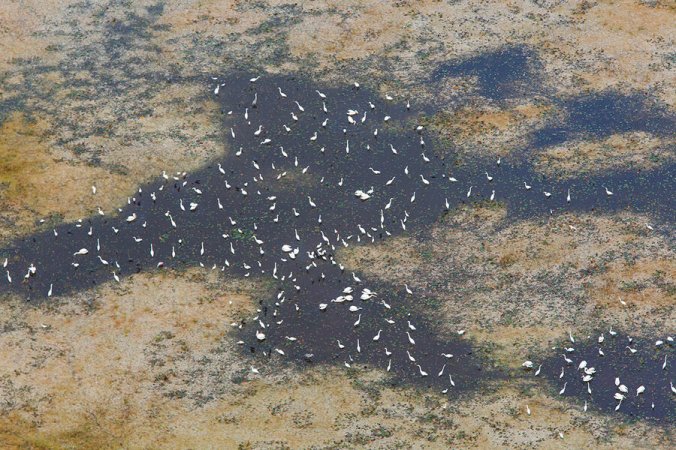
Melanie Stetson Freeman/Staff. Birds look like white flecks from the air.

‘River of Grass’: Inside the quest to restore the Everglades

Richard Mertens Special contributor

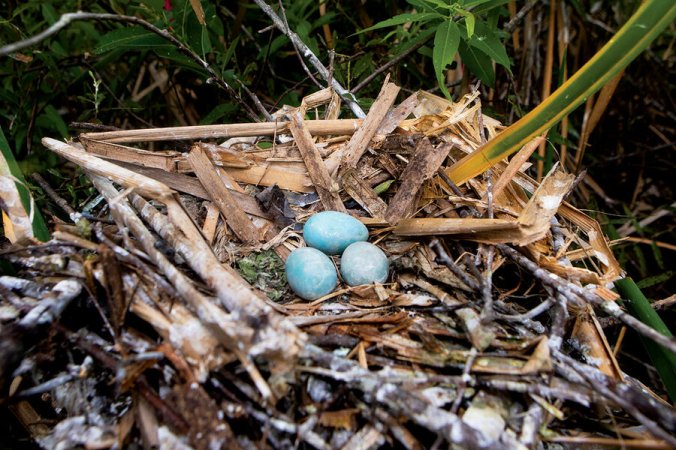
Melanie Stetson Freeman/Staff. Three eggs sit in a nest in the Everglades.

Eight hundred feet up, the helicopter banks hard to the left. The horizon disappears. Mark Cook, an avian biologist, peers out his side window at a small irregular patch of water below. It’s hardly distinguishable from innumerable other patches that lie in every direction, dark and shining amid a ragged expanse of brown marsh grass and green tree islands. Continue reading

Understanding That Recent Bird Crash

When news reports about this unusual event reached us, time was short. We did not have time to read any details, and now it is clear that waiting for science to comment was a useful delay.

Thanks to Juan Siliezar for the explanation:

iStock

Those birds that crashed and died? It wasn’t fumes

After internet theorists react to viral video, Harvard researchers answer with science

You’ve probably seen the video — or at least heard some chirpings about it.

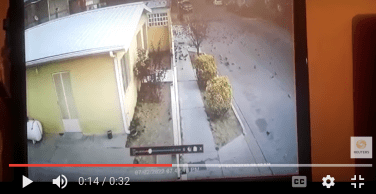
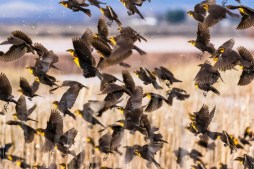
Footage from a security camera in Cuauhtémoc, a city in Chihuahua, Mexico, shows a massive flock of migratory birds swooping down like a cloud of black smoke and crashing onto pavement and the roof of a house. Continue reading

Richard Prum In Conversation With Tyler Cowen

We linked to one of Richard Prum’s books more than four years ago, then he was mentioned in a couple posts, each with small quotes based on his expertise. Here he is in conversation with someone who clearly appreciates his work and who knows how to ask good questions:

Richard Prum really cares about birds. Growing up in rural Vermont, he didn’t know anyone else interested in birding his own age. The experience taught him to rely on his own sense of curiosity and importance when deciding what questions and interests are worth studying. As a result, he has pursued many different paths of research in avian biology — such as behavioral evolution, where feathers come from, sexual selection and mate choice — many of which have led to deep implications in the field. In 2017, Tyler agreed with several prominent outlets that Prum’s book The Evolution of Beauty was one of the best books of the year, writing that it “offers an excellent and clearly written treatment of the particulars of avian evolution, signaling theory, and aesthetics, bringing together some disparate areas very effectively.” Continue reading

How To Define Species

During the most recent ice age, glaciers divided an ancestral population of crows; one group became all-black carrion crows, the other hooded crows with gray breasts and bodies. Illustrations by François-Nicolas Martinet / Alamy

Protecting species from extinction has been a running theme in our pages over the years. Underlying these many stories was an assumption, at least on our part, that defining boundaries between species is settled science. We will no longer take that for granted:

Where Do Species Come From?

By studying crows, a German biologist has helped to solve a centuries-old mystery.

The evolutionary biologist Jochen Wolf was working from home when we first spoke, in April, 2020. Germany was under lockdown, and his lab, at Ludwig Maximilian University, in Munich, had been closed for weeks. Still, a reminder of his research had followed him from the office. “I have a crow nest right in front of me,” Wolf said, from his rooftop terrace. The nest was well hidden at the top of a tall spruce tree. Through the branches, Wolf could see a female crow sitting on her eggs. Continue reading

One Of The Most Mind-blowing Discoveries In The History Of 20th- And 21st-Century Ornithology

Whimbrel returning to Deveaux Bank for their night roost. Photo: Damon Winter/The New York Times

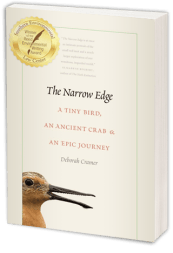
We have not featured Deborah Cramer in our pages previously, but this seems like a fine time to start. She is a visiting scholar at M.I.T.’s Environmental Solutions Initiative and the author of the book to the right.  Accompanied by excellent photographs from Damon Winter as well as exceptionally lucid infographics, her interactive essay in the New York Times is a forceful plea for conservation of a sensitive bird habitat:

An Oystercatcher on the bank. Photo: Damon Winter/The New York Times

Leave This Wondrous Island to the Birds

An ever-changing spit of sand on the Carolina coast is a haven for multitudes of shorebirds. But nature and humans threaten it.

ABOUT 20 MILES south of Charleston, S.C., at the mouth of the North Edisto River, a small, horseshoe-shaped sandbar rises above the water. The claim of land is tenuous on Deveaux Bank, about a half-mile offshore. At high tide, it’s three-quarters submerged. Deveaux’s sand is continually shifting as swirling currents build it up and wash it away. In some years, the island disappears altogether. Continue reading

Elizabeth Gould, Illustrator Of Note

Gouldian Finches, named for Elizabeth Gould, from The Birds of Australia. Illustration: Elizabeth Gould/Public Domain

When we think of birds and illustrations, most frequently the work of John James Audubon comes to mind. But there were others:

Meet Elizabeth Gould, the Gifted Artist Behind Her Husband’s Famous Bird Books

John Gould’s ornithology books were hugely popular and cemented his name in history. But his wife’s illustrations were a big reason why.

In 1830, when English taxidermist John Gould was keen to publish his first volume of bird species, his wife Elizabeth asked him who would create the illustrations. She knew her unartistic husband wouldn’t be up to the task. Continue reading

Birding Manners Matter

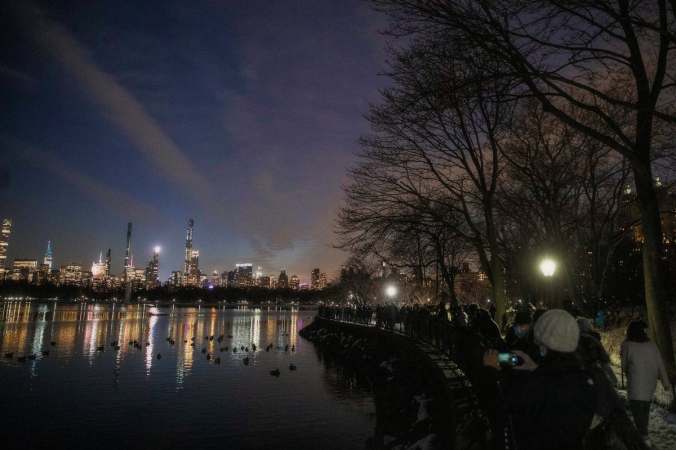
A crowd hoping to see a snowy owl gathered at the reservoir in Central Park. Some birders complain that large groups can disturb rare species. Dave Sanders for The New York Times

You do not need to be a bird nerd to appreciate that an avocation like this one needs some rules of the game, especially at moments like these, which seem to come around every few years:

Twitter Is Turning Birds Into Celebrities and Birders Against One Another

A Twitter account helped spread the word about rare birds in New York City, but publicizing their locations exposed a rift among birders.

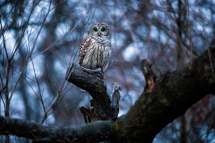
A barred owl, whose visit to Central Park has been promoted by some birders, including one who maintains the popular Twitter account Manhattan Bird Alert. Dave Sanders for The New York Times

In 2018 it was the Mandarin duck. Last October it was the barred owl. Just weeks ago it was the snowy owl.

All three avian species catapulted to celebrity status after they landed in Central Park, becoming the subject of news reports from Manhattan to India and attracting gaggles of groupies, snapping away on their smartphones.

These rare glimpses of nature in the heart of New York elicit a dose of joy in the best of times. Continue reading

Migration Corridors & Conservation Priorities

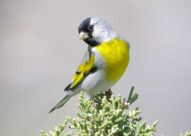
Approximately 80 percent of all Lawrence’s goldfinches migrate through California’s Central Valley every spring. ALAN SCHMIERER/FLICKR

Thanks to Yale e360 for this note:

Tens of Millions of Birds Pass Through Just Two Western U.S. Corridors

California’s Central Valley and the Colorado River Delta host more than 82 million birds every year during the spring migration, according to a new study published in the journal Ornithological Applications. Continue reading

Advances In Animal Migration Studies

Illustration by Shyama Golden

Sonia Shah, a science journalist and author of “The Next Great Migration: The Beauty and Terror of Life on the Move,” has provided a great summary of recent developments on the study of animal migration:

Animal Planet

An ambitious new system will track scores of species from space — shedding light, scientists hope, on the lingering mysteries of animal movement.

‘‘I’m going to do a set of coos,” Calandra Stanley whispered into the radio. The Georgetown ornithologist and her team had been hunting cuckoos, in an oak-and-hickory forest on the edge of a Southern Illinois cornfield, for weeks. Droplets of yesterday’s rain slid off the leaves above to those below in a steady drip. In the distance, bullfrogs croaked from a shallow lake, where locals go ice fishing in winter. Continue reading

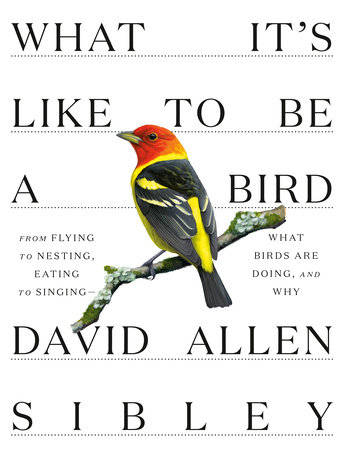
What It’s Like To Be A Bird–Book, Author Interview & Master Class

We missed this book when it was published earlier this year, until now–an interview with its author about best birding practices caught our attention. The publisher has this to say about the book:

The bird book for birders and nonbirders alike that will excite and inspire by providing a new and deeper understanding of what common, mostly backyard, birds are doing–and why

“Can birds smell?” “Is this the same cardinal that was at my feeder last year?” “Do robins ‘hear’ worms?” In What It’s Like to Be a Bird, David Sibley answers the most frequently asked questions about the birds we see most often…

David Allen Sibley is also offering this online course in conjunction with 92Y:

Have you ever wondered what it’s like to be a bird? Can birds smell? Is that the same cardinal that was at your feeder last year? What are backyard birds doing and why? Continue reading