Maps, Walking & Health

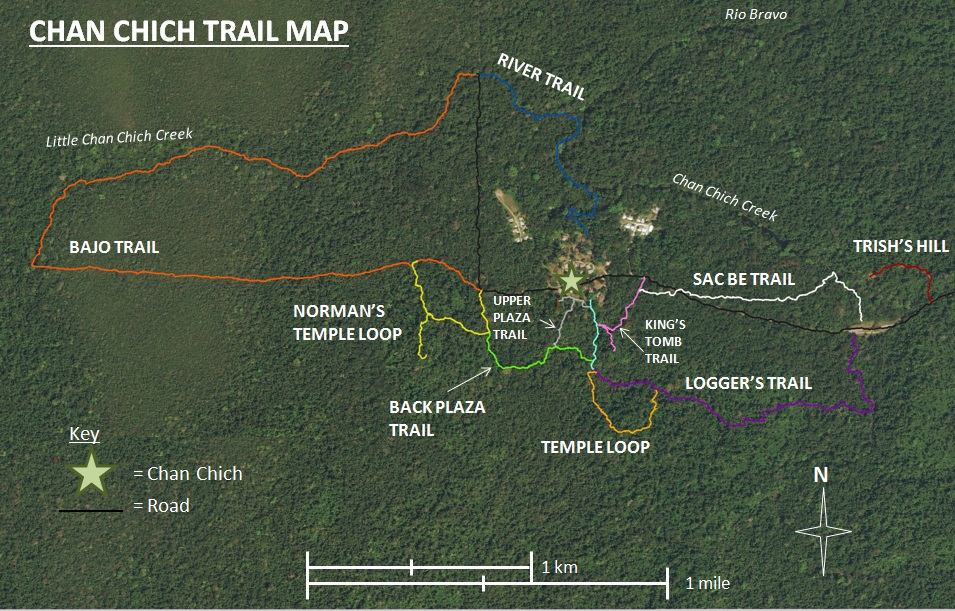
Emily has been reworking the maps for nine miles of walking trails surrounding Chan Chich Lodge. On a typical day I walk 45 minutes at dawn, and 45 minutes at dusk and I have tended to stay on the same trail for the last year. Now I am looking forward to the various loops I had not yet wandered onto, and checking the maps. I tend to believe in the link between nature and health, and especially when walking is involved the benefits are a broader form of wellbeing. Gretchen Reynolds, writing the Phys Ed column for the New York Times has this to say:

For Exercise, Nothing Like the Great Outdoors

Long walks can improve moods and reduce anxiety, but the benefits may be greatest if the walks take place outdoors rather than in a gym, according to a new study by researchers in Austria. And while the Alps may be a particularly fine place to hike, a vigorous walk in the woods or paths near home may provide the mental boost we need to keep us moving.

We all know, by now, that for optimal health, we need to move. Continue reading

Adapting to Change

The jungle is constantly changing. Large mammals break through low growing plants, fungi break down fallen material, and birds, insects, and monkeys are constantly roaming about the canopy.

The most recent edition of the Chan Chich trail map was produced in 2006. However, since then, the wildlife has continued to go about its business making small modifications to the landscape over the past eleven years. Not to mention, the occasional tree fall from storm interrupting the balance. As a result, because of the organic, unpredictable movement of nature, this map isn’t as accurate as it was a decade ago. Now, Alana and I undertaking the task of updating the maps to reflect how the trails look now.

Continue reading

Deleting Uber

Uber.jpgShame on me for waiting until today to finally do it. I started hearing one year ago from friends and family about why they had decided to stop using Uber. But Uber was just then ramping up in Kerala, India and I found it compelling enough to abandon car ownership. When I saw the details recently on what a creep Uber’s founder and largest shareholder is, that should have been enough. But, it was this article that finally compelled me. Thanks to the New York Times reporter Kevin Roose for the perspective:
As Uber Stumbles, Lyft Sees an Opening, and Bites Its Tongue

It has been a rough, scandal-filled year for Uber. But don’t expect John Zimmer, Lyft’s president, to gloat about his competitor’s misfortunes. Continue reading

Archaeology Lab 101

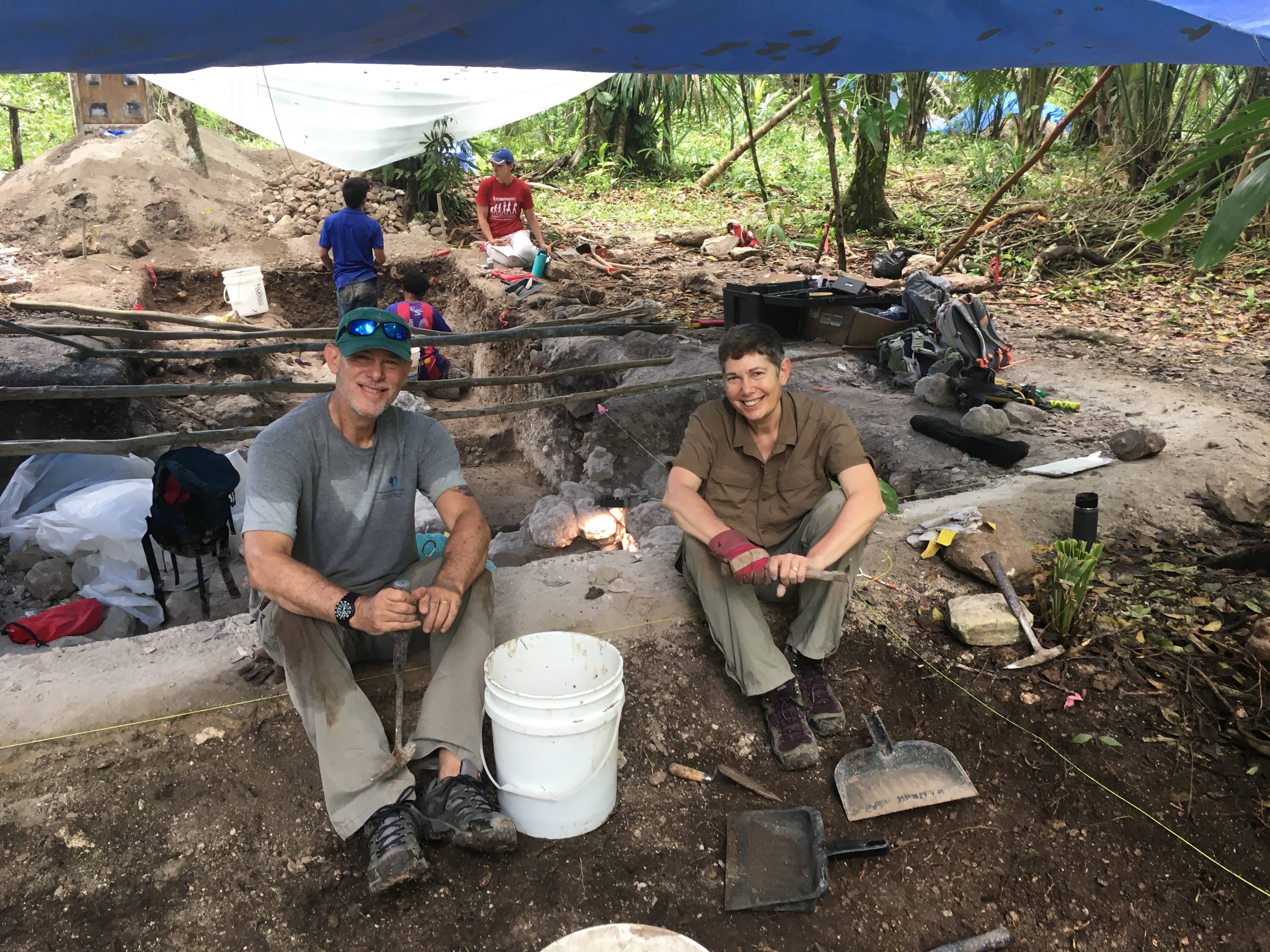
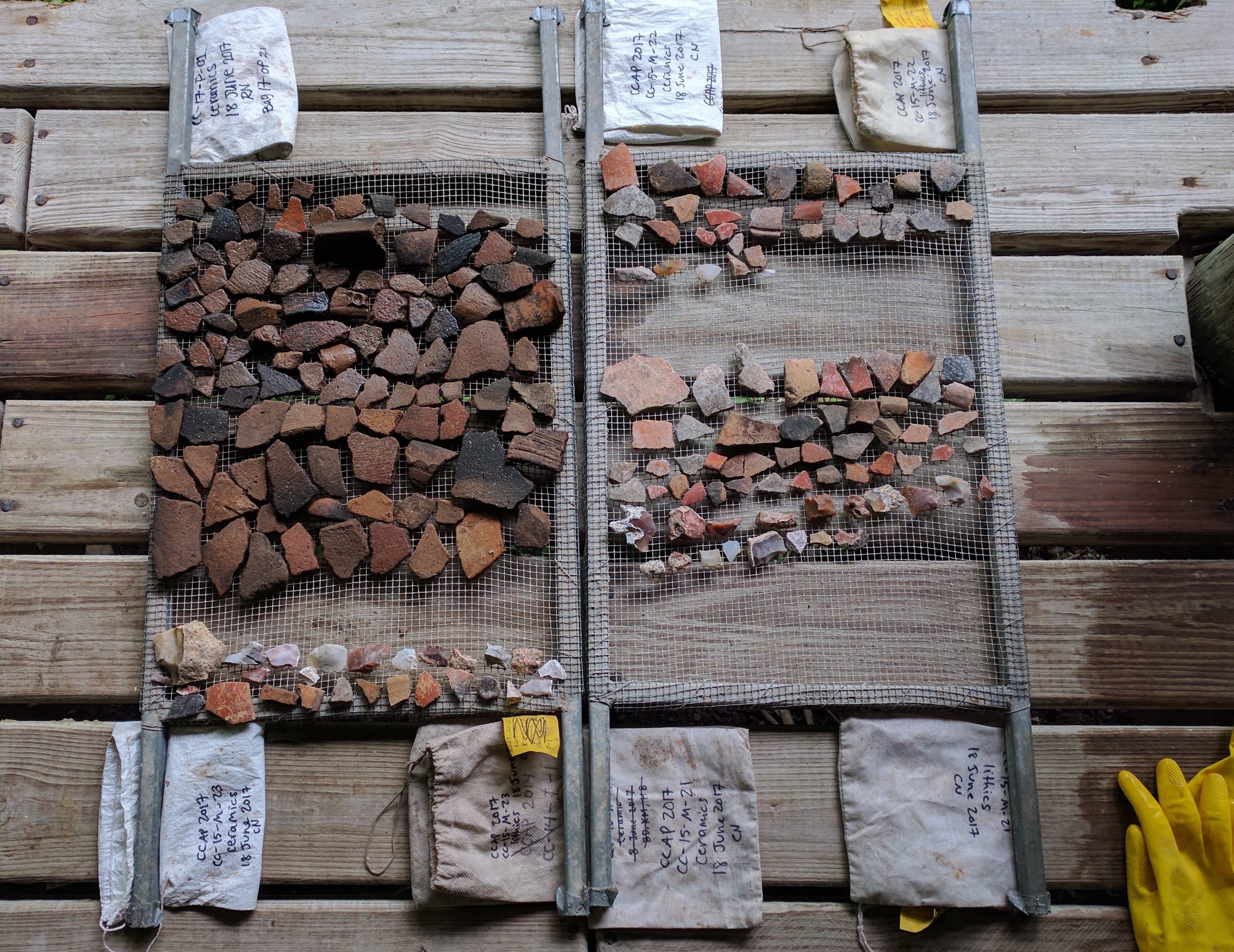
Much of the scientific rigor involved in archaeology is related to the careful documentation of what often appears to be a proverbial needle in a haystack: tiny flakes of chert stone, potsherds, or obsidian can be found in the layers (or lots) of a dig unit.

In this tropical environment we’re dealing with wet, loamy earth, so those stone or pottery fragments are frequently covered in mud, and who better to clean much of these items than interested novices. Continue reading

Recipe For Reconciliation

00CANADAUNIVERSITY-06-master675

Anthony Blair Dreaver Johnston, a Mistawasis Nehiyawak elder, works closely with the university to advise on indigenous matters. Credit Cole Burston for The New York Times

The New World, as the Americas are often called, was new to the Europeans–aka explorers, pilgrims, pioneers, settlers, colonialists, conquistadors–but of course was the long time homeland to a diverse mix of indigenous people from the very north of the hemisphere all the way down to Tierra del Fuego. Continue reading

Getting Your Archaeological Feet Wet

Day #2 at CCAP began with the same sense of camaraderie as Day #1 as we continued the process of clearing out topsoil, clipping roots, hauling soil and stone, and yes, working on walls. Each conversation with the team was informative, as we discussed the upcoming step of closing out the “lot” we’d started and opening the next one of the unit – basically as we approached the change-over of levels for the precise documentation required at an archaeological dig.

We were quite close to that point when we stopped work for lunch, returning with high energy to move on to the next stage. But it’s green season in Belize, and Mother Nature had other plans for the day. Continue reading

Protect Pleasant Planets

Burdick_Summer-Solstice.jpg

On the solstice, every point north of the Arctic Circle sees at least twenty-four hours of continuous sunlight. In Deadhorse, Alaska, the sun rose on May 15th and won’t set again until July 28th. Photograph by Alamy

A dozen years ago I had a work assignment that took me into the Arctic Circle for an extended period this time of year. I recall going a bit crazy, but a good crazy, with lovely bright sunshine at 2am each day, which impacted my ability to sleep. I was on a boat headed north from Yakutsk, traveling in waters that looked like those in the photo above. The captain and his crew spoke no English, and I spoke no Yakut or Russian, so I was on my own for making sense of what I saw. My takeaway was simple: it is mostly a nice place to live, this planet we call home. And as Alan Burdick points out in this short essay, it sure beats the alternatives:

On This Summer Solstice, Be Glad You Live on Earth

Today is the longest day of the year—in the Northern Hemisphere, anyway. Fifteen hours and forty minutes of daylight in New York. Seventeen and a half in Copenhagen and Moscow. Twenty-one and change in Reykjavík. Twelve hours, eight minutes, and twenty-four seconds in Kampala, just north of the equator. (The day will be one second shorter there starting next week.) The solstice is the one day when every point north of the Arctic Circle sees at least twenty-four hours of continuous sunlight, Continue reading

Investing In Cultural Heritage

170427klukwan_nadworny0252_slide-169e39b0465578c5ad3fac34dc804d2779806ab6-s1300-c85.jpg

The Cultural Heritage Center is an $8 million investment in the community. Elissa Nadworny/NPR

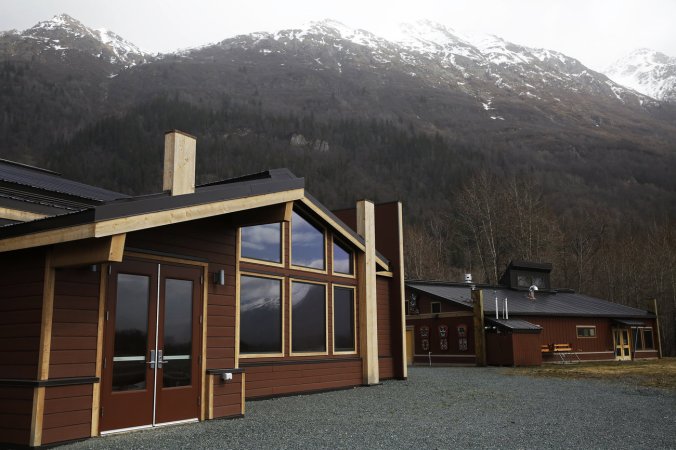
It is not a question I have had to ponder (the opening line of the story below) for myself, but I get it. Losing the land, through battle, through treaties that are not honored, or otherwise, is an obvious existential threat for any community, and has been since the dawn of civilization. Invisible assets such as language, like any cultural heritage, also called intangible patrimony, are less obviously existentially important. But anyone who ponders it realizes that the loss of a language or another intangible component of cultural heritage matters to all of us, not only those who are at immediate and direct risk of its extinction. In the same way biodiversity matters, so does this.

And it is an underlying logic and motivator of our initiative with Ramon tree and its role in Mayan foodways. In earlier posts on the subject that I emphasized the environmental wonder of Ramon, but it is really a cultural heritage story, still to be told at Chan Chich Lodge. Meanwhile thanks to Melissa Block at National Public Radio (USA) for this story about one communities efforts along a related path:

A Native Village In Alaska Where The Past Is Key To The Future

What does it mean to lose your land, your language, and your heritage?

For Alaska Natives, these are existential threats.

On a trip to Southeast Alaska, I traveled to one village that is finding new ways to survive: Klukwan, ancestral home of the Tlingit tribe. Continue reading

Coffee, Ethiopia & Change

processing-of-washed-coffee-south-west-ethiopia---credit---emily-garthwaite-and-union-hand-roasted-coffee-_custom-2fda5cc5dec2fdd97721682ac722920d3b194eb1-s1300-c85.jpg

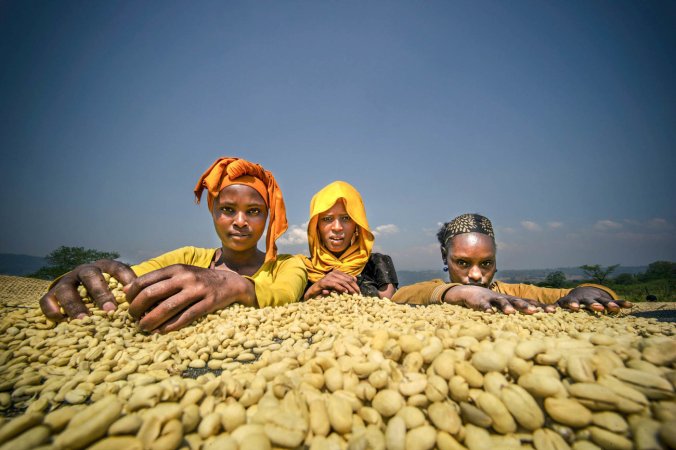
Growing coffee provides income for about 15 percent of Ethiopia’s population and is the country’s top export. Climate change is likely to shrink the land suitable for coffee, thereby also hurting the livelihoods of many people.
Courtesy of Emily Garthwaite

Change is almost never easy. Then there is climate change. Daunting, but we cannot stop considering the implications and the options. The planet may recover in geological time, the underlying logic of those who promote denial of the urgency, but plenty of people are at risk in real time, so no option but to keep focus.

Thanks to the salt, at National Public Radio (USA) for a reminder of coffee‘s relationship with conservation, a reminder of Ethiopia in general, which is always welcome, and especially Ethiopia’s relationship with one of our favorite beverages:

Ethiopia’s Coffee Farmers Are ‘On The Front Lines Of Climate Change’

by Courtney Columbus

Ethiopia gave the world Coffea arabica, the species that produces most of the coffee we drink these days. Today, the country is the largest African producer of Arabica coffee. The crop is the backbone of the country’s economy – some 15 million Ethiopians depend on it for a living. Continue reading

A Day In the Life of the Chan Chich Archaeological Project

When Crist wrote about the Chan Chich Archaeological Project in April it was in anticipation of the group’s arrival. Now that we’re several weeks in I’ve had the opportunity to assist them first hand, in part as a “guinea pig” for guest involvement as citizen science participants. Fellow contributor Phil Karp (a veteran of many citizen science programs) was enthusiastically up  for the experience as well.

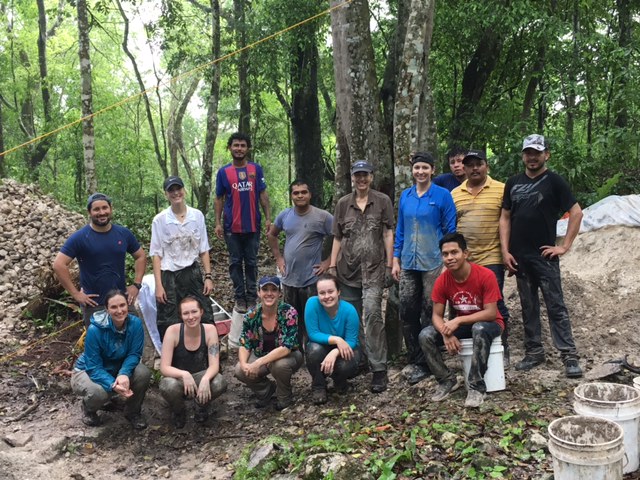
The team of archaeologists and field school students, led by Texas Tech University associate professor Dr. Brett Houk, is studying the ancient Maya at Chan Chich and surrounding sites. Several weeks into their dig they’ve made significant progress, and they gamely accepted the challenge of taking novices into their ranks.

We began at the beginning, well known to be the very best place to start, with a new “lot” located next to a well-established excavated area. Continue reading

Night Vision

IMG_5769

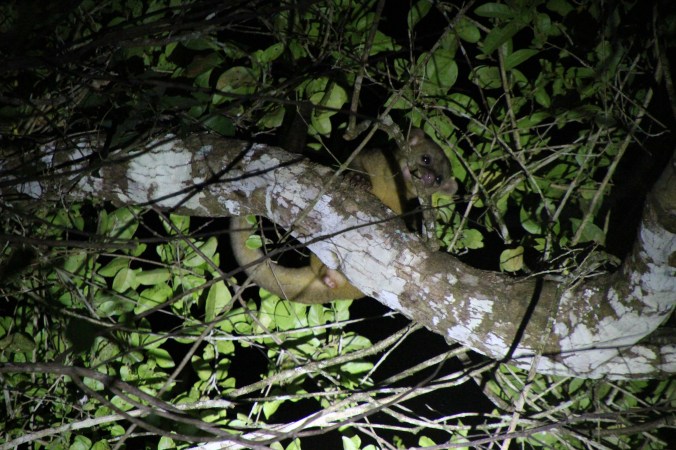
After my first few nights at Chan Chich, I quickly learned that the jungle activity changes a bit in the night time. Bats swoop through the air, the sounds of howler monkeys reverberate off of the trees, and cane toads hop across my path.

So of course, when the opportunity arose to go on a night ride I was eager to see what would be in store for me. While I knew it would be foolish to hope for a jaguar sighting, I set out taking comfort in the fact that at least my chances would be higher than if I had stayed in for the night. What I didn’t count on, however, was my inherently poor ability to spot wildlife in the darkness.

Continue reading

Some Science On Ramon

RamSci1Ramón and Maya Ruins: An Ecological, not an Economic, Relation

 J. D. H. Lambert and J. T. Arnason
Science

New Series, Vol. 216, No. 4543 (Apr. 16, 1982), pp. 298-299

RamSci2Observations on Maya Subsistence and the Ecology of a Tropical Tree
Charles M. Peters
American Antiquity
Vol. 48, No. 3 (Jul., 1983), pp. 610-615
We have a sizable team, including our staff members of Maya heritage as well as those who know the forest ecology as part of their work, plus two summer interns, a chef, and a design director among others–all looking into this tree and its fruit. These journal articles, less dry than some academia and fresher than their age would suggest were brought to my attention by Nicoletta Maestri who I thank for the article below. For my team mates and me this is food for thought on our path to determining how this tree, introduced millennia ago by Mayans, plays into the future of Chan Chich Lodge:

Brosimum Alicastrum, The Ancient Maya Breadnut Tree

Did the Maya Build Forests of Breadnut Trees?

The breadnut tree (Brosimum alicastrum) is an important species of tree that grows in the wet and dry tropical forests of Mexico and Central America, as well as in the Caribbean Islands. Also known as the ramón tree, asli or Cha Kook in the Mayan language, the breadnut tree usually grows in regions that are between 300 and 2,000 meters (1,000-6,500 feet) above sea level. The fruits have a small, elongated shape, similar to apricots, although they are not particularly sweet. Continue reading

Sustainable Village Highlight: San Juan la Laguna, Guatemala

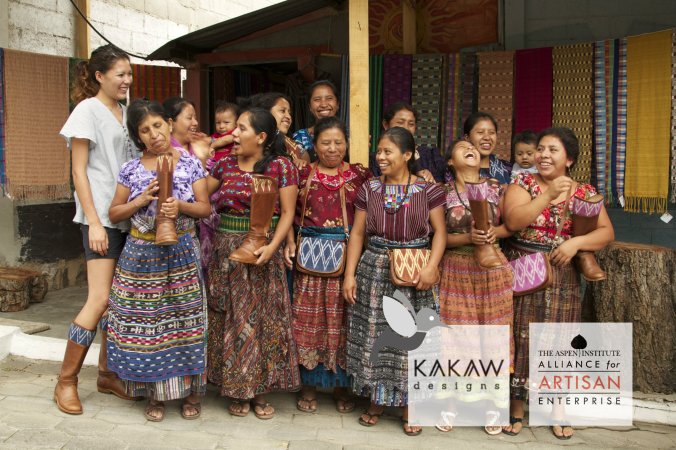
Hi, there! I’m Mari Gray, founder of artisan-made brand Kakaw Designs, based in Guatemala. After studying International Relations and Spanish at UC Davis and then working for several non-profits in Latin America, I became disillusioned and decided to focus on sustainable development through a social enterprise, partnering with talented artisan communities in Guatemala.

I feel incredibly fortunate to work with different artisan groups in Guatemala through Kakaw Designs (pronounced <kekao> like the cacao tree), an artisan-made brand I started about four years ago.  We currently work with several different artisan groups: two weaving, one embroidery, two teams of leathersmiths, and one silversmith; all to make our designs come to life.  But it was for a good reason that we started with the weaving cooperative Corazón del Lago in San Juan la Laguna, at Lake Atitlán.

Kakaw Designs Alliance logo

We would never have been able to launch Kakaw Designs without this group of forward-thinking, professional weavers from this small Maya village.  The community itself is exceptional, with sustainability clearly a focus through:

  • Use of natural dyes in textile production, also using local traditional techniques such as backstrap weaving and ikat designs  <<Learn more by watching our video>>
  • Organization of weavers in cooperatives or associations, where women work together and can therefore take larger orders and offer quality control
  • Up-and-coming development of community ecotourism, especially birding

Continue reading

Graduation Day in Sylvester Village

IMG_0767

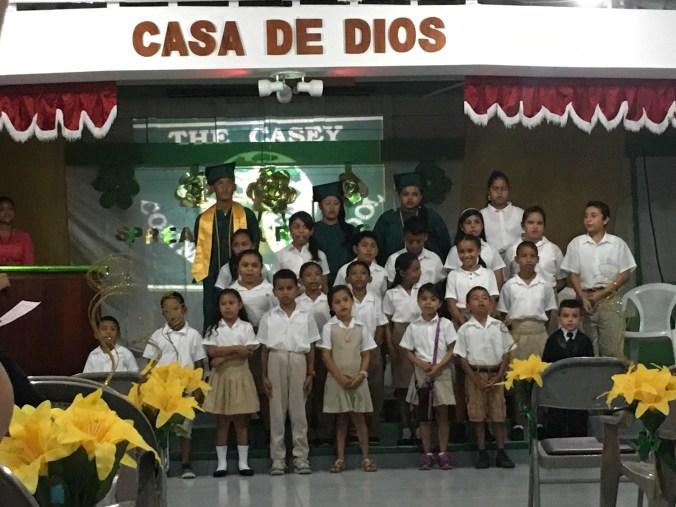
Earlier this week I did something that I couldn’t possibly have anticipated would be part of my Chan Chich experience: I attended a primary school graduation.

Sylvester Village is a community where employees of Chan Chich and Gallon Jug Farm live with their families. The Casey Community School is where many of the village’s children go for their first years of education. As one might imagine, the school is not very big. In fact, this year the school only had one kindergartner. Growing up in suburban America, this was very different from my early education which had about 24 kids in a first grade class with multiple classes per grade. However, perhaps the biggest difference from my experience was the school’s emphasis on community.

Continue reading

Stephen Greenblatt & Old School Text, Messaging About Our Future

170619_r30116-800.jpg

Poring over the story of Adam and Eve, Augustine came up with original sin. Illustration by Malika Favre

I recall the odd thrill of almost missing The Swerve and then realizing that in my remote location in the East, the classical canon of the West was more important than ever. And this scholar has a way with words, which now more than ever is much-needed balm. So, I am looking forward to this new installment of his work:

…Hardly a world-historical event, but the boy was named Augustine, and he went on to shape Christian theology for both Roman Catholics and Protestants, to explore the hidden recesses of the inner life, and to bequeath to all of us the conviction that there is something fundamentally damaged about the entire human species. There has probably been no more important Western thinker in the past fifteen hundred years. Continue reading

El Capitan Never Disappoints

Mackinnon-Alex-Honnold-Perfect-Climb-Featured-1200

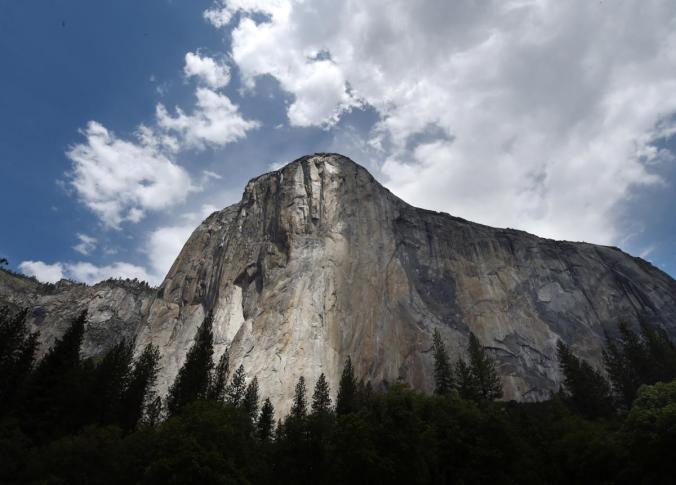
El Capitan, the towering stone heart of Yosemite National Park and a sweep of golden granite reaching twenty-seven hundred feet into the sky. PHOTOGRAPH BY MARK RALSTON / AFP / GETTY

I am not a climber and I do not generally favor extreme sports where someone else has to come in and clean up after an adventurer’s misfortune. I am in awe in this case, and so make an exception. It never bores me to look again at the image above. But it electrifies me more than usual when it accompanies a story like this one:

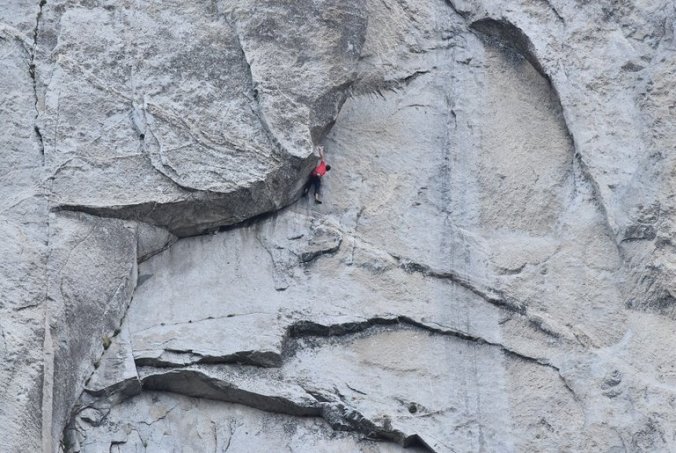
…Four hours later, that lone figure, the thirty-one-year-old professional climber Alex Honnold, had completed the first ascent of El Cap in the free-solo style. In other words, he had climbed the cliff alone and without a rope or protective equipment of any kind. Had he fallen, he would have died.

The achievement had long been predicted but never quite accepted as possible. The iconic face of El Capitan—photographed by Ansel Adams, praised by John Muir as “the most sublime feature of the Valley”—has long been the proving ground for American rock climbing. It has been climbed at incredible speeds and via routes of extraordinary difficulty; a ropeless ascent was the last “big psychological breakthrough” that remained, as Peter Croft, who completed groundbreaking free solos in the nineteen-eighties and nineties, put it. There was no real competition to be the first to meet the challenge. Either Honnold would do it, or he would leave it to future generations. Or he would try, fail, and fall…

A sports writer for the New York Times titles it perfectly:

10duaneWeb-master768.jpg

Alex Honnold at the 1,000-foot level of his free-solo climb of El Capitan. CreditTom Evans

El Capitan, My El Capitan

Alex Honnold woke up in his Dodge van last Saturday morning, drove into Yosemite Valley ahead of the soul-destroying traffic and walked up to the sheer, smooth and stupendously massive 3,000-foot golden escarpment known as El Capitan, the most important cliff on earth for rock climbers…

Atlas Obscura, Miscellanea

AtlasObsc.jpg

Bumblebees pollinating flowers during the study. NICOLE MILLER-STRUTTMANN

The story connected to the photo above is worth the few minutes, just as the dozens of other bee stories you will find in these pages have been. After reading it I started exploring the site where I found it. Finally. I see that Amie linked to and commented on this story reported in Atlas Obscura last year. I remember reading her post and then going to the source, as I did each of several other times when we have featured their work in these pages.

For well over two years we linked to their stories without any of our individual names attributed to the commentary on the story being linked to. When a post on our site has no name other than La Paz Group it just means here is our kind of story, enjoy. When a post has one of our names on it, it means the same thing only with more attention to detail. Today I finally had reason to explore Atlas Obscura, and realize that as much as I am committed to what we do and our communication about that work and related miscellanea, I might be just as happy doing what they are doing:

Atlas Obscura is the definitive guide to the world’s wondrous and curious places

In an age where everything seems to have been explored and there is nothing new to be found, we celebrate a different way of looking at the world. If you’re searching for miniature cities, glass flowers, books bound in human skin, gigantic flaming holes in the ground, bone churches, balancing pagodas, or homes built entirely out of paper, the Atlas Obscura is where you’ll find them.

Atlas Obscura is a collaborative project. We depend on our far-flung community of explorers (like you!) to help us discover amazing, hidden spots, and share them with the world. If you know of a curious place that’s not already in the Atlas, let us know.

There is plenty out there to discover, so let’s start looking!

Organic, Bird-Friendly Cold Brew Coffee At Chan Chich Lodge

07COLDBREW1-master1050-v2

At All Day, a coffee shop in Miami that’s on the must-visit list of coffee fanatics, cold brew is the foundation of the menu. Credit John Van Beekum for The New York Times

Apparently it is iced coffee season up north. It is intern season here at Chan Chich Lodge. Maybe an intersection? Emily, from an agriculture and environmental engineering background, and Alana who is an aspiring sustainable hospitality developer are off to the races, as they say. They were out in the forest yesterday with GPS tools, a GIS mapping app and the assistance of Migde and Hector on the trails, developing a more scientific way of estimating the incidence of Ramon trees in our 30,000 acres.

More on that from them. But more on coffee from me. We have been cultivating an estate coffee unique to Belize, organic and as bird-friendly as you will find. Let’s add cold brew to your list of summer experimentation? Migde and Hector, aka bartender and waiter and therefore defacto coffee baristas, will be setting up the instrumentation in the kitchen.

How Cold Brew Changed the Coffee Business

Continue reading

First Day at Chan Chich

Hi! My name is Emily, and I am one of the La Paz interns for summer 2017. As an environmental science and engineering student, I have never had an internship at a hotel, let alone one in a remote location in a foreign country. However, the College of Agriculture and Life Sciences at Cornell University has prepared me for work in another large aspect of the Chan Chich property: sustainable agriculture. Ultimately, this is where my work will lead me, but until then I am becoming integrated with the lodge as a whole.

My first surprise during my experience so far was the actual lodge itself. On the drive to Chan Chich, we passed a great deal of farmland, with each area becoming less and less populated as we went on. However, as we turned down a road marked Chan Chich, the landscape instantly changed from cleared pastureland to a road densely surrounded by large trees draping over us as we drove. Soon, a sprinkling of lights entered our view, dotting the driveway and welcoming us to Chan Chich. Suffice it to say that my time searching Chan Chich on Google and Instagram did not do it justice. The greens of the grass and trees blended with the variety of flowers abundant across the property. The lodge and cottages were far more magnificent in real life making them feel humble and authentic while also luxurious all at once.

Continue reading

Foraging Forays

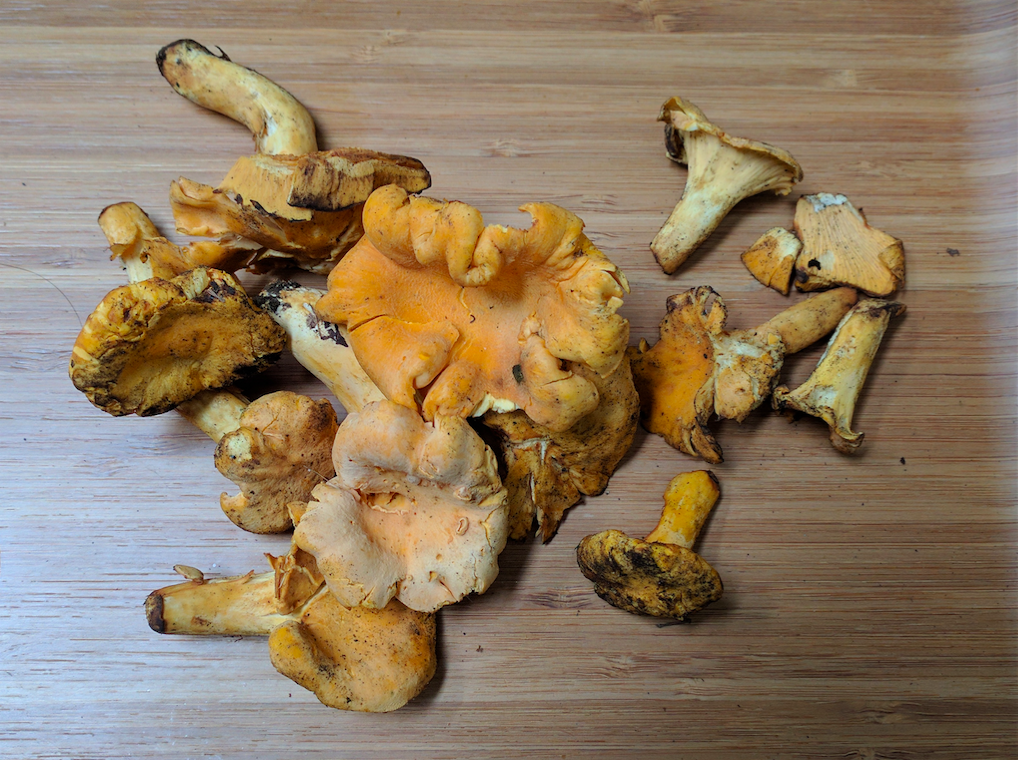
Taking a break from packing for my upcoming return to Belize, I joined a group of old friends from the Georgia Mushroom Club in a foray near the Georgia/South Carolina border. Fresh air, a walk in the woods, good company, and foraging for mushrooms – what better way to spend a morning?

The weather has been warm and wet, great conditions for mushrooms and we were happy to find patches of chanterelles. As we searched we talked about Chan Chich Lodge and Belize, and that we’re in the midst of brainstorming collaborations with the staff and local community who carry the ancestral knowledge of the old Mayan and Belizean foodways, and chefs who focus on foraging in the creation of their menus. We’ve recently discovered a variety of foods that are plentifully available from the Chan Chich forests, and are excited to incorporate them into our culinary story.  Continue reading