Taking Better Care With Help From Kate Raworth

What? We never posted on this book or its economist author before? We correct that now with Hettie O’Brien’s article in the Guardian :

The planet’s economist: has Kate Raworth found a model for sustainable living?

Her hit book Doughnut Economics laid out a path to a greener, more equal society. But can she turn her ideas into meaningful change?

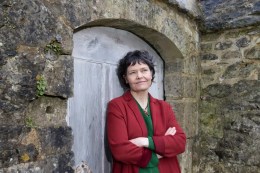
Raworth in Oxford. Photograph: Graeme Robertson/The Guardian

Consider the electric car. Sleek and nearly silent, it is a good example of how far the world has progressed in fighting the climate crisis. Its carbon footprint is around three times smaller than its petrol equivalent, and unlike a regular car, it emits none of the greenhouse gases that warm the planet or noxious fumes that pollute the air. That’s the good news. Then consider that the battery of an electric car uses 8kg of lithium, likely extracted from briny pools on South America’s salt flats, a process that has been blamed for shrinking pasturelands and causing desertification.

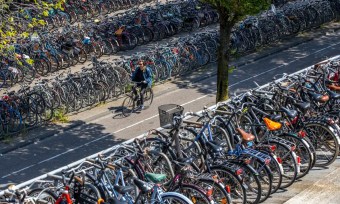
A bike park in Amsterdam which offers free parking for more than 2,500 bicycles. Photograph: Jochen Tack/Alamy

The 14kg of cobalt that prevent the car’s battery from overheating have probably come from the Democratic Republic of the Congo, where cobalt mines have contaminated water supplies and soil. As the demand for electric vehicles grows, the mining and refining of their components will intensify, further damaging natural ecosystems. By 2040, according to the International Energy Agency, the global demand for lithium will have increased more than fortyfold. Continue reading
About That Rocking Chair

There’s been no enormous hurry in Washington to do much about the greatest threat that humans have ever faced. Photograph by Kevin Dietsch / Getty

Thanks, as always, to Bill McKibben for a perspective on otherwise difficult-to-make-sense-of events:

Looking at the White House Through Wildfire Smoke

This week, elected officials can see for themselves why they must get serious about climate change.

I’m sitting on a rocking chair just outside the White House fence on Thursday afternoon, and I can more or less make out the seat of American executive power through the haze. In the morning, the local government announced that the air-quality index for the District of Columbia had reached Code Purple (“very unhealthy”), because of the level of particulate pollution, which has never happened before. Continue reading

Ghana Says No Thank You To Europe’s Fast Fashion

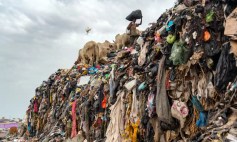
Some of the 6m items of clothing that arrive at Kantamanto Market each week. With the rise of fast fashion in the west, more is discarded as the quality drops. Photograph: Muntaka Chasant/Rex

When  the clothes cast off by the wealthy are cast on to those less wealthy, it should be done so according to the golden rule:

Stop dumping your cast-offs on us, Ghanaian clothes traders tell EU

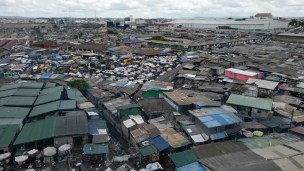
With 100 tonnes of clothing from the west discarded every day in Accra, ‘fast fashion’ brands must be forced to help pay for the choking textile waste they create, environmentalists say

An aerial view of Kantamanto market in Accra, where 100 tonnes of secondhand clothing a day are discarded. Photograph: Misper Apawu/The Guardian

A group of secondhand clothes dealers from Ghana have visited Brussels to lobby for Europe-wide legislation to compel the fashion industry to help address the “environmental catastrophe” of dumping vast amounts of textiles in the west African country. Continue reading

What Does Positive & Progressive Permitting Look Like?

We have seen the Center for Biological Diversity mentioned in his newsletters before, but this week Bill McKibben links to this recently released document. The Center offers a positive and progressive consideration of priorities we should give to permitting renewable energy, contrasting efforts to gut regulatory protections related to fossil fuel permitting highlighted in his current newsletter:

Introduction

It is indisputable that the climate emergency requires the United States to rapidly transform its majority fossil energy system to 100% clean and renewable energy.

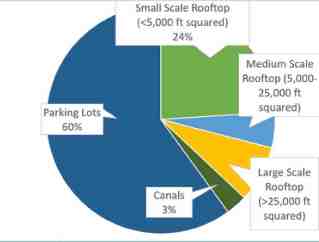
Distributed solar on rooftops alone can generate a significant portion of our energy demands while also bringing key benefits like resilience, local job generation, and avoided wildlife impacts. Once distributed energy is maximized, building renewables on top of parking lots and canals as additional built surfaces can fill the remaining gap in our current energy demand. Prioritizing these sites for renewable energy can avoid the community impacts and bottlenecks associated large-scale transmission construction.

The United Nations Intergovernmental Panel on Climate Change’s recent sixth synthesis report makes absolutely clear that an unprecedented bold transition to renewable energy with an equally aggressive effort to halt new fossil fuel development and phase out existing fossil fuel usage is absolutely vital to avoiding the most catastrophic consequences of climate change (1). This necessary transformation presents a tremendous opportunity to pursue a far more just path forward—one that ends the status quo entrenchment of the fossil fuel industry; empowers federal agencies to use their authorities to accelerate the transitions to a justly sourced, justly implemented, resilient, and equitable power system; actualizes the principles of environmental justice; and preserves our core environmental laws. Continue reading

Reversal Of Absurd Destruction Counts As Progress in Brazil’s Amazon

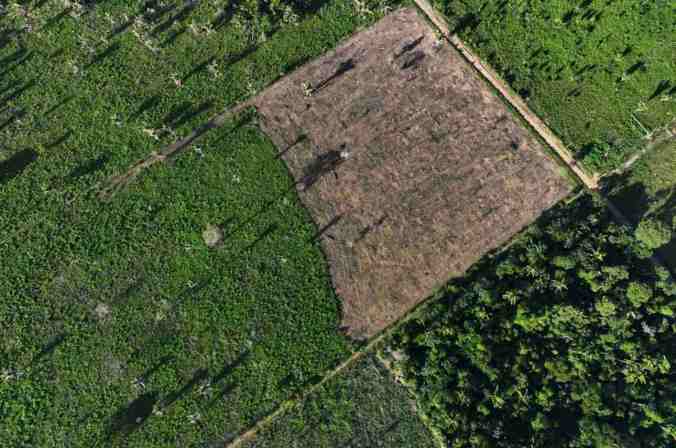
An aerial view shows a deforested area during an operation to combat deforestation at the Cachoeira Seca indigenous reserve, in Uruara, Para State, Brazil January 19, 2023. REUTERS/Ueslei Marcelino

What counts as good news now in one part of the world is simply a reversal of absurd destruction trends of recent years. Without minimizing its importance we can acknowledge that a positive reversal is a low bar for what needs to be accomplished:

Deforestation in Brazil’s Amazon falls 68% in April, first major drop under Lula

SAO PAULO, May 12 (Reuters) – Deforestation in Brazil’s Amazon rainforest fell 68% in April from the previous year, preliminary government data showed on Friday, a positive reading for President Luiz Inacio Lula da Silva as it represents the first major drop under his watch. Continue reading

Chilekwa Mumba, 2023 Goldman Environmental Prize Winner

The 2023 Goldman Prize goes to this man:

Alarmed by the pollution produced by the Konkola Copper Mines operation in the Copperbelt Province of Zambia, Chilekwa Mumba organized a lawsuit to hold the mine’s parent company, Vedanta Resources, responsible. Chilekwa’s victory in the UK Supreme Court set a legal precedent—it was the first time an English court ruled that a British company could be held liable for the environmental damage caused by subsidiary-run operations in another country. This precedent has since been applied to hold Shell Global—one of the world’s 10 largest corporations by revenue—liable for its pollution in Nigeria.

Our thanks to Jocelyn C. Zuckerman for this conversation with him:

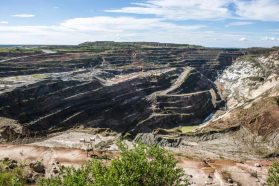
The Nchanga copper mine, operated by Konkola Copper Mines, in Chingola, Zambia. WALDO SWIEGERS / BLOOMBERG VIA GETTY IMAGES

This Zambian Took on a U.K. Mining Giant on Pollution and Won

Chilekwa Mumba led a court battle to hold a U.K.-based company responsible for the gross pollution from a copper mine it owns in Zambia. In an interview, he talks about how he and local villagers faced arrest to overcome long odds and finally win a landmark legal victory.

The southern African nation of Zambia is home to a wealth of minerals — in particular, lots of the copper and cobalt that the world will require to power a green economy. Continue reading

India’s Progress With Solar Power Generation

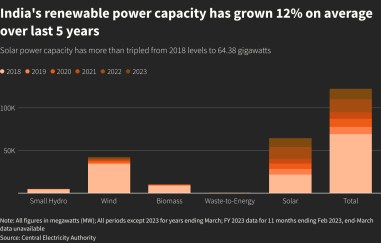
Reuters Graphics

Progress on solar power generation in India is a big deal. The country’s reduction in poverty, remarkable as it has been, is counterbalanced by its environmental impoverishment. Thanks to Reuters for this article by Sarita Chaganti Singh and Sudarshan Varadhan:

Exclusive: India amends power policy draft to halt new coal-fired capacity

NEW DELHI/SINGAPORE, May 4 (Reuters) – India plans to stop building new coal-fired power plants, apart from those already in the pipeline, by removing a key clause from the final draft of its National Electricity Policy (NEP), in a major boost to fight climate change, sources said. Continue reading
Norway’s Combustion Transition

About 80 percent of new-car sales in Norway were electric last year, putting the country at the vanguard of the shift to emissions-free vehicles. David B. Torch for The New York Times

A major fossil fuel producing country has figured out how to transition away from combustion engines:

About 80 percent of new cars sold in Norway are battery-powered. As a result, the air is cleaner, the streets are quieter and the grid hasn’t collapsed. But problems with unreliable chargers persist.

BAMBLE, Norway — About 110 miles south of Oslo, along a highway lined with pine and birch trees, a shiny fueling station offers a glimpse of a future where electric vehicles rule. Continue reading
Alcohol 2.0

click this image to go to the video and accompanying text

Alcohol rarely features in our pages, but in the spirit of public service announcement this pair seems worth sharing:

The Opinion Video above is about a drug problem — but not the one you may think. While the United States struggles to deal with the opioid crisis, there’s a quieter drug epidemic that has been unfolding for a lot longer. It involves a substance that was normalized long ago but that, by some measures, plays a role in more than 140,000 deaths a year.

It’s alcohol.

But don’t worry. We here at Opinion Video are not a bunch of temperance reformers coming to take away your six-packs and single malts. We just think there’s a lot more that American lawmakers could be doing to lessen the harm that alcohol causes…

The Economist podcast episode below, from a couple months back, is a useful bookend to the op-ed above. It illuminates the mysteries of the hangover and the chemistry of new alcohol-free, healthy and buzz-inducing alternatives:

How alternatives to alcohol could save lives

Our podcast on science and technology. This week, we explore how innovators are dreaming up ways to enjoy the effects of alcohol, without the costs

ALCOHOL IS the most widely used drug in the world, but it is also the cause of three million deaths each year and has been linked to many other long-term illnesses. Continue reading
Viewed From Above, Our Most Important Leaks

Illustration by Ard Su

David W. Brown offers this updated look at the use of satellite technology for a key metric:

A Security Camera for the Planet

A new satellite, funded by a nonprofit, aims to pinpoint emissions of methane—a gas that plays a major role in global warming.

When his phone rang, Berrien Moore III, the dean of the College of Atmospheric and Geographic Sciences at the University of Oklahoma, was fumbling with his bow tie, preparing for a formal ceremony honoring a colleague. He glanced down at the number and recognized it as nasa headquarters. This was a bad sign, he thought. In Moore’s experience, bureaucrats never called after hours with good news.

It can see large methane concentrations along its orbital path, but can’t pinpoint emissions sources. Illustration by Ard Su

For roughly six years, Moore and his colleagues had been working on a space-based scientific instrument called the Geostationary Carbon Cycle Observatory, or GeoCarb. nasa had approved their proposal in 2016; it was now 2022, and GeoCarb was being built by Lockheed Martin, in Palo Alto, California. Once it was in space and mounted to a communications satellite, GeoCarb would scan land in the Western Hemisphere continuously in strips, taking meticulous measurements of three carbon-based gases: carbon dioxide, carbon monoxide, and methane. It would give scientists a detailed view of the carbon cycle—the process by which carbon circulates through the Earth’s forests, lakes, trees, oceans, ice, and other natural features. Continue reading

McKibben Embraces Green Building Boom

Grace J. Kim

We link to one person more than anyone else, for good reason:

ELECTRIFY EVERYTHING

Yes in Our Backyards
It’s time progressives like me learned to love the green building boom.

The United States is on the brink of its most consequential transformation since the New Deal. Read more about what it takes to decarbonize the economy, and what stands in the way, here

I’m an environmentalist, which means I’ve got some practice in saying no. It’s what we do: John Muir saying no to the destruction of Yosemite helped kick off environmentalism; Rachel Carson said no to DDT; the Sierra Club said no to the damming of the Grand Canyon. Continue reading
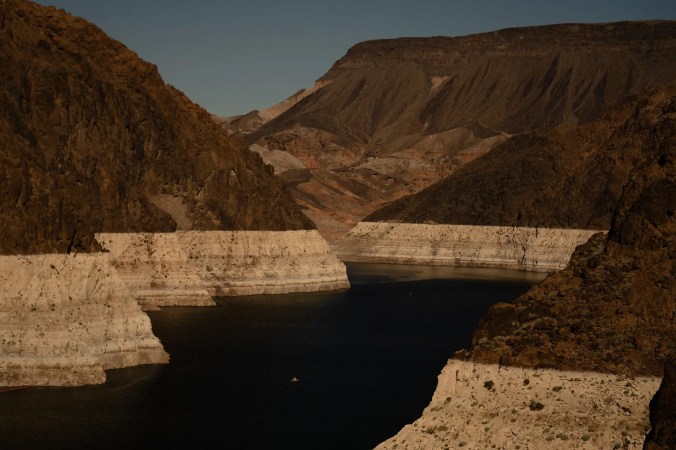
A Proposal For The Colorado River States

The Lake Mead reservoir in Nevada is showing a “bathtub ring” because of drought. Erin Schaff/The New York Times

We have featured the river plenty in recent years. No easy solutions. Bruce Babbitt, who was secretary of the Interior Department in the Clinton administration, and before that a governor of Arizona, has this to say:

Before Western States Suck the Colorado River Dry, We Have One Last Chance to Act

The Interior Department last summer dropped a bomb on the seven states that depend upon the Colorado River for water. Continue reading

Developing Clean Energy At Ambitious Scale

It is not every day that your country is given good odds on an important project of such an ambitious scale.

The Economist’s WOODBINE column has this to say about it:

America’s chance to become a clean-energy superpower

Getting the most ambitious energy and climate laws in American history through Congress was not easy. Now comes the hard part

The future catches you in unexpected places. Drive down Interstate 95, the highway running along America’s Atlantic coast, into south-eastern Georgia and you will find signs and rest stops named after pecans and peaches. Continue reading
Valuation Of Biodiversity

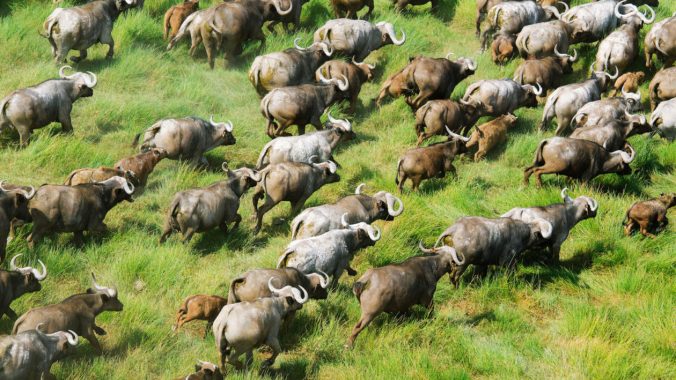
Cape Buffalo in Kenya. MARTIN HARVEY / ALAMY

Biodiversity valuation is a topic we link to from time to time, so we thank Zach St. George for this article’s contribution to our understanding:

Pricing Nature: Can ‘Biodiversity Credits’ Propel Global Conservation?

Backed by the UN, an alliance of conservationists and policymakers is devising new ways to finance the preservation of biodiversity by placing economic values on ecosystems. Some analysts say such schemes have the potential to boost conservation, but others are skeptical.

In 2009, as global financial markets shuddered, David Dorr became interested in the possibility of putting a price on nature. Dorr is a Cayman Islands-based global macro trader, attuned to what he calls the “butterfly effect” of geopolitics and other international forces on financial markets. Continue reading
Brazil’s Amazon Complications, 2023 Onward

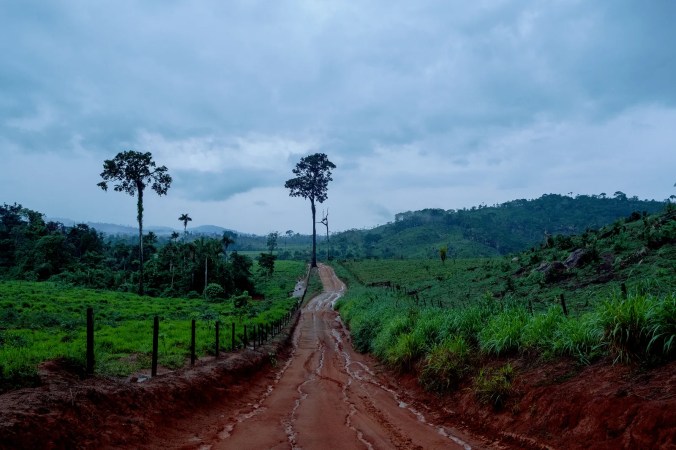
On the road from Novo Progresso to Baú Village.

We are always thankful to Jon Lee Anderson for his illuminations on complicated places, such as Brazil:

Dulce Sousa, a resident of Novo Progresso, agrees with the former President Jair Bolsonaro that local residents should be free to profit from the forest’s resources.

Who Can Save the Amazon?

Brazil’s President, Luiz Inácio Lula da Silva, promises to keep miners and loggers from destroying the rain forest. On the ground, the fight is complicated.

The Brazilian Amazon is riven by two long highways, in the shape of a cross: the BR-163, which extends more than four thousand miles from north to south, and the Trans-Amazonian, which runs twenty-four hundred miles from east to west. The roads were carved from the jungle in the nineteen-seventies, to open the wilderness to settlers and development. The effects have been calamitous. As colonists flooded in, the human population in Brazil’s Amazon has quadrupled, to nearly thirty million. Continue reading

Keeping It Honest In Costa Rica

The Nairi Awari Indigenous community in Limón, Costa Rica. EZEQUIEL BECERRA / AFP VIA GETTY IMAGES

We are proud of the country we call home, and where our work us based. But even as I celebrate it from time to time, I never mistake it for perfect. There is always more work to be done. Thanks to Fred Pearce, as always, for the details we need to know:

Lauded as Green Model, Costa Rica Faces Unrest in Its Forests

Indigenous park ranger Osvaldo Martinez tours the Nairi Awari indigenous community in Limon, Costa Rica on November 9, 2021. – The indigenous people of this community are payed for caring for the environment, as part of a program awarded by the British royalty. (Photo by Ezequiel BECERRA / AFP) (Photo by EZEQUIEL BECERRA/AFP via Getty Images)

Costa Rica has won international acclaim for its initiatives to restore its forests. But those successes are now jeopardized by conflicts over the government’s failure to return traditional lands to the Indigenous people who are regarded as the best forest stewards.

Costa Rica has a green halo. In recent decades, the small Central American nation has transformed itself from a notorious hotspot for deforestation into a beacon of reforestation that is the envy of the world. Many of its more than 12,000 species of plants, 1,200 butterflies, 800 birds, and 650 mammals, reptiles, and amphibians have gone from bust to boom, and eco-tourists are savoring the spectacle. Continue reading

An Insider’s View On Ocean

The treaty is meant to serve as a scaffold for future initiatives, and has the power to protect much of the ocean. Photograph by Philip Thurston / Getty

We thank Jeffrey J. Marlow, Assistant Professor of Biology at Boston University, once again; this time for an essay he just posted on the New Yorker’s website. The news in it is not new, but his take on it is:

The Inside Story of the U.N. High Seas Treaty

A new global agreement protects marine life in parts of the ocean that laws have been unable to reach.

The open ocean, which is home to millions of species and generates much of the oxygen we breathe, is a mostly lawless place. Nations have jurisdiction over waters near their coasts, but the high seas, which begin two hundred and thirty miles from shore, are a first-come, first-served domain: there’s little to stop someone from exploiting marine resources, whether plants and animals in the water or fossil fuels beneath the seafloor. Forty-three per cent of the planet’s surface is vulnerable to unregulated deep-sea drilling, overfishing, and bioprospecting. Continue reading

Economic Zones On Oceanic Commons

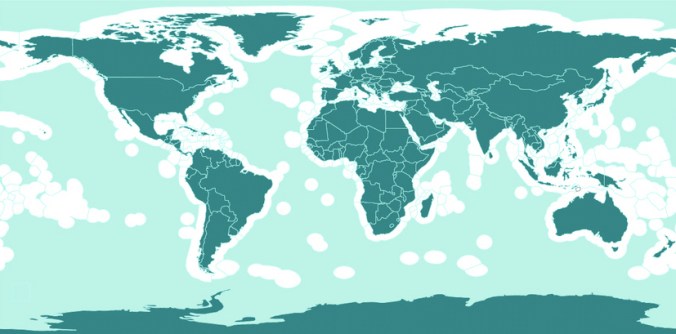
On this map, exclusive economic zones are shown in white and high seas, or areas beyond national jurisdiction, are shown in light green.

For some historical context it helps to think of the many challenges that commons represent. But here and now, this deal is as important as it gets:

Countries Reach Deal to Protect Marine Life in International Waters

UN member states have forged a landmark deal to guard ocean life, charting a path to create new protected areas in international waters. Continue reading

The Big Myth

If you are in the mood for some basic questioning of the status quo, this book may be for you, according to Kirkus Review:

A thoughtful denunciation of the economic dogma that the market knows best.

“How did so many Americans come to have so much faith in markets and so little faith in government?” So ask Oreskes and Conway, continuing the line of research they began in their seminal 2010 book, Merchants of Doubt. Where that book focused on the co-optation of scientists to dispute the realities of climate change and the linkage of tobacco to cancer, this joins that co-optation to carefully planted “free market” fundamentalism that holds that any attempt to regulate business is a form of tyranny…

Brilliance Up North

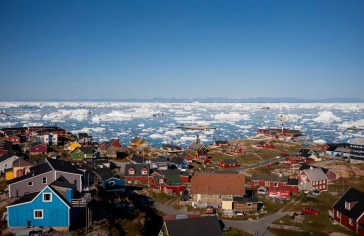
Ilulissat’s icy fjord, a UNESCO World Heritage site, is one of Greenland’s main tourist destinations even though its airport is currently too small to accommodate large jets. Carsten Snejbjerg for The New York Times

Setting limits at the outset, what a brilliant idea:

The Arctic island, renowned for its glaciers and fjords, is expanding airports and hotels to energize its economy, even as it tries to avoid the pitfalls of overtourism.

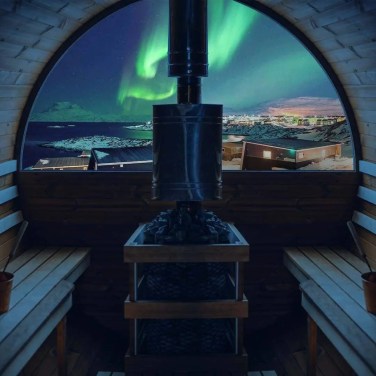
A sauna with a view of Nuuk and, at left, in the distance, the nearly 4,000-foot mountain Sermitsiaq. Inuk Travel

“The weather decides”: It could almost be the motto of Greenland. Visitors drawn to this North Atlantic island to see its powder blue glaciers, iceberg-clogged fjords and breathtakingly stark landscapes quickly learn to respect the elements, and they’re sometimes rewarded for it.

One cold December day, I was waiting for a delayed flight in Kangerlussuaq, a former U.S. military base just above the Arctic Circle, when a friendly Air Greenland pilot named Stale asked if I’d like to join him on a drive to the harbor to “pick up some musk ox heads.” The offer seemed very Greenlandic, so how could I refuse? Continue reading