When Kitten Videos Represent Important Environmental News

Screenshot

Cute kitten videos are everywhere, and we avoid posting them here. But due to the Cairngorms rewilding efforts in Scotland this type of video is different, so our thanks as always to the Guardian:

Wildcat kittens born outside captivity in Cairngorms a ‘major milestone’

Adult cats were released into national park last year after British population had come close to extinction

The birth of wildcat kittens in the Cairngorms national park has been hailed as a “major milestone” in efforts to rescue the secretive mammals from extinction in the UK. Continue reading

Forest Adaptation Via Scientific Methodology

Scientists in northern Minnesota are exploring how to adapt forests for climate change, transitioning them to a warmer future by planting new mixes of southern seedlings. In this “transition test” in the Cutfoot Experimental Forest, forest ecologists thinned trees and planted seedlings of eight species, grown from seeds collected up to hundreds of miles to the south. CREDIT: BRIAN PALIK / USDA FOREST SERVICE

Thanks to John Tibbets and Knowable Magazine

This 8-year-old bitternut hickory, native to a milder climate to the south, is flourishing in northern Minnesota, notorious for long, intensely cold winters. CREDIT: BRIAN PALIK / USDA FOREST SERVICE

On a brisk September morning, Brian Palik’s footfalls land quietly on a path in flickering light, beneath a red pine canopy in Minnesota’s iconic Northwoods. A mature red pine, also called Norway pine, is a tall, straight overstory tree that thrives in cold winters and cool summers. It’s the official Minnesota state tree and a valued target of its timber industry.

But red pine’s days of dominance here could fade. In coming decades, climate change will make red pine and other Northwoods trees increasingly vulnerable to destructive combinations of longer, warmer summers and less extremely cold winters, as well as droughts, windstorms, wildfires and insect infestations. Climate change is altering ecological conditions in cold regions faster than trees can adapt or migrate. Continue reading

A Century’s Evidence On The Benefits Of Planting Trees

People work to reforest Allegheny National Forest in Pennsylvania circa 1934.
Photograph: Universal History Archive/Universal Images Group via Getty Images

Planting trees, we have noted, is smart policy.  Some campaigns may have stretched beyond scientific evidence, but science has given us plenty to go on:

Very cool: trees stalling effects of global heating in eastern US, study finds

Vast reforestation a major reason for ‘warming hole’ across parts of US where temperatures have flatlined or cooled

Civilian Conservation Corps workers plant 15,000,000 trees across the wastelands of southern Mississippi on 11 April 1940. They are part of the United Forest Service which will re-establish forests destroyed by logging and lumbering operations decades ago. Photograph: AP

Trees provide innumerable benefits to the world, from food to shelter to oxygen, but researchers have now found their dramatic rebound in the eastern US has delivered a further, stunning feat – the curtailing of the soaring temperatures caused by the climate crisis.

While the US, like the rest of the world, has heated up since industrial times due to the burning of fossil fuels, scientists have long been puzzled by a so-called “warming hole” over parts of the US south-east where temperatures have flatlined, or even cooled, despite the unmistakable broader warming trend. Continue reading

Insects Love Solar Farms

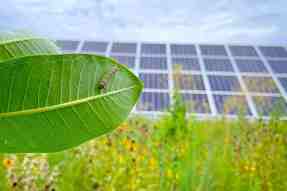
A monarch caterpillar on a common milkweed leaf at a solar farm in Minnesota. LEE WALSTON / ARGONNE NATIONAL LABORATORY

We have already linked a couple of times to the multidimensional benefits of solar, and here is another dimension:

At Solar Farms Planted with Native Vegetation, Insects Flourish

To reach its climate goals, the U.S. will need to build solar arrays on some 15,000 square miles of land, an area larger than Maryland. Continue reading

Channeling Water Nature’s Way

Just as much as we want packaging of our drinking water to be carefully thought out, we also want the channeling of water to make sense:

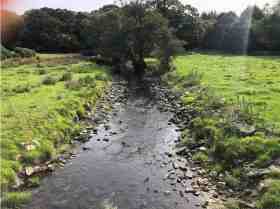
How the beck at James Robinson’s farm looked before the introduction of natural flood management techniques. Photograph: James Robinson

‘The wildlife that has come is phenomenal’: the UK farmers holding off floods the natural way

Planting trees, creating floodplains and rewilding rivers are among the new techniques being used to adapt to a heating climate

The streams, or becks, that run through James Robinson’s Lake District farm used to be cleaned out regularly – with vegetation yanked out and riverbeds dredged, or even completely filled in. Continue reading

Planting Trees In New Haven

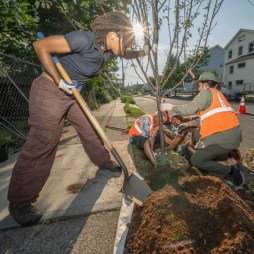
From left, Jess Jones, Ed Rodriguez, Zach Herring and Joshua De-Anda, planting a crab apple tree at 10 Wolcott Street in the Fair Haven neighborhood of New Haven, Conn. Tony Cenicola/The New York Times

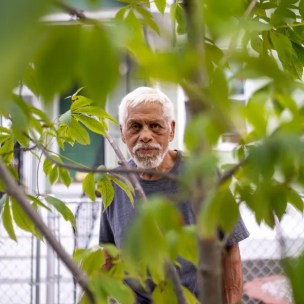
Ed Rodriguez has a few years on me, but we have comparable tree counts. The caption of the second photo below captures my my own preference of activity on any given day. Having grown up in Connecticut and moved to Costa Rica decades ago, I note our reverse patterns of migration.

Colbi Edmonds, a member of the 2023-24 New York Times Fellowship class, reports from Seth’s previous hometown New Haven on an initiative I love reading about as much as I enjoy my own versions of the same kind of activity:

“I love to dig and mess around in the soil,” said Ed Rodriguez, who grew up in Puerto Rico but moved to Connecticut in the 1960s. Christopher Capozziello for The New York Times

One Neighborhood, 90 Trees and an 82-Year-Old Crusader

Ed Rodriguez is on a mission to convince his neighbors that they need trees to help combat summer heat — and to make the world a better place. It’s not always so easy.

Maria Gonzalez, who lives in New Haven, Conn., was envious of the other side of her street. It was lined with trees, offering some beauty as well as a shield from this summer’s unusual heat. But the sidewalk directly in front of her residence was bare, with trash littering patches of grass. Continue reading

UK Regenerative Agriculture Festival, Groundswell 2023

Last year’s highlights in the video above, and a review of this year’s festival in the link below to an online magazine:

Lannock Manor Farm, Hertfordshire, SG4 7EE, UK

The Groundswell Festival provides a forum for farmers, growers, or anyone interested in food production and the environment to learn about the theory and practical applications of regenerative farming systems.

The next Groundswell Festival takes place on the 26th & 27th of June 2024. View the Event Guide from 2023 here.

Among The Reasons To Regenerate Soil

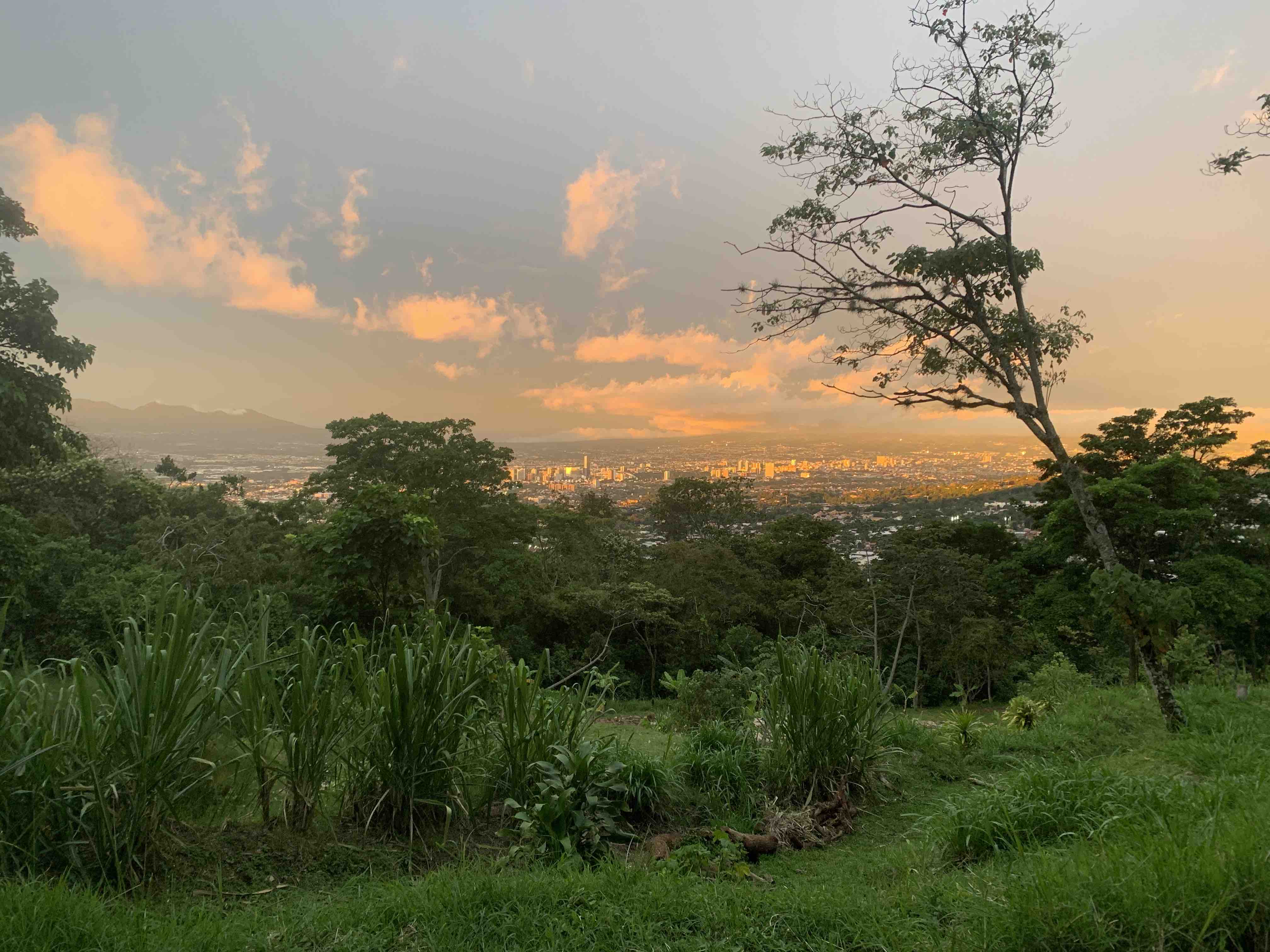
Organikos soil regeneration view from above, early Tuesday morning

When we started the berm where the sugarcane grows now, we knew we had a multi-year project ahead of us. This morning, before the sun had risen enough to shine on the land, I snapped the photo above, looking down on the acreage where we have planted more than 100 trees to provide shade for coffee we will plant in the near future. Besides all that, plenty of good ideas for how and why to regenerate the quality of the soil on that land; here’s some more:

A springtail crawls over snail eggs. ANDY MURRAY

Nearly Two-Thirds of All Species Live in the Ground, Scientists Estimate

Soils are more rich in life than coral reefs or rainforest canopies, providing a home to nearly two-thirds of all species, according to a sprawling new analysis. Continue reading

Taking Inspiration From Smallhold Farms In Africa

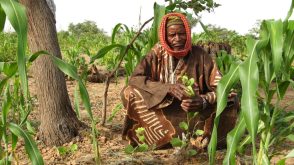
A farmer in Niger tends to a tree sprout growing among his millet crop. TONY RINAUDO / WORLD VISION AUSTRALIA

I am nearing the point where I can offer an update on the trees we have planted in advance of 1,000+ coffee plants going into the ground in their shade. Thanks to Fred Pearce, reporting in Yale E360, I have some inspiration coming from across the Atlantic on the broader value of those trees:

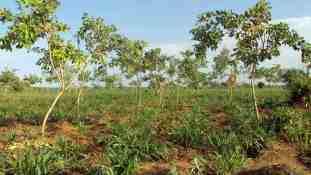
Dooki (Combretum glutinosum) trees grow on a millet field in Niger. P. SAVADOGO / ICRAF

As Africa Loses Forest, Its Small Farmers Are Bringing Back Trees

The loss of forests across Africa has long been documented. But recent studies show that small farmers from Senegal to Ethiopia to Malawi are allowing trees to regenerate on their lands, resulting in improved crop yields, productive fruit harvests, and a boost for carbon storage.

For decades, there have been reports of the deforestation of Africa. And they are true — the continent’s forests are disappearing, lost mainly to expanding agriculture, logging, and charcoal-making. But the trees? Continue reading

Gerald Durrell, The Stationary Ark, And A 2021 Maverick

Gerald Durrell, somehow, has escaped mention in 11,281 previous posts over the last decade+ on this platform. Today is the day to begin correcting that oversight. His novelist brother Lawrence is worthy of his own post here another day. And the family name was recently popularized on television. While Gerald’s own legacy is not easy to categorize, a good starting point is to look at Durrell Wildlife Conservation Trust and his related conservation work. Books are a big part of the legacy and the one to the right has had a tangible influence:

An Ark for Vanished Wildlife

Derek Gow’s maverick efforts to breed and reintroduce rare animals to Britain’s countryside.

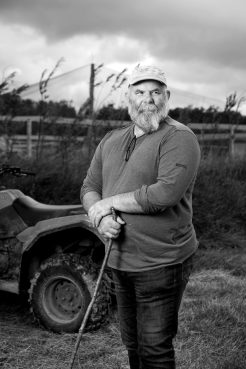
Derek Gow wants his farm to be a breeding colony, a seedbed for a denuded island. Photograph by Jonny Weeks / eyevine / Redux

Derek Gow decided to abandon conventional farming about ten years ago, not long after the curlews left. At the time, Gow, who is thickset and white of beard, had a flock of fifteen hundred breeding ewes and a hundred and twenty cows, which he kept on a three-hundred-acre farm of heavy clay close to the border between Devon and Cornwall, in southwest England. He was renting an extra field from a neighbor, and a pair of curlews had come to forage for a few days. A farm worker spotted the distinctive brown birds; they have long beaks that slope downward, like violin bows. “He didn’t even recognize what they were,” Gow told me.

Curlews are Europe’s largest wading bird. Continue reading

Romania’s Carpathian Mountains, Forever

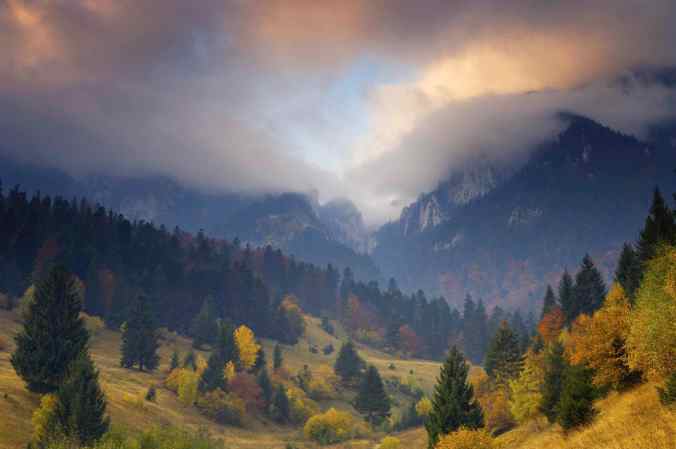
Rock of the King, NP Piatra Craiului, Transylvania, Southern Carpathian, Romania

The word Carpathian appears, to my surprise, only once in a post before today. Likewise Romania is underrepresented except in passing, and was the focus of just one post, five years ago in our pages. Today I will correct the oversight.

FOUNDATION CONSERVATION CARPATHIA
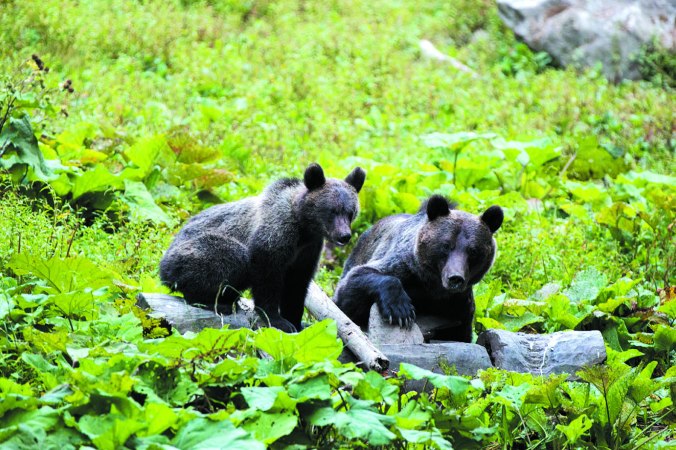
Bears in the Southern Carpathian Mountains, Romania.

It is surprising because after I was exposed to the idea of rewilding, I started receiving The European Nature Trust’s newsletter. Frequently the newsletter highlights one of the projects they support, in Romania’s Carpathian Mountains. I have been admiring the photographs for years now, and silently supporting TENT’s joint mission with the FCC. Silent no more. Let’s all actively support the Carpathian Mountains of Romania being there forever, intact:

DANIEL ROSENGREN
A frosty morning in the Piatra Craiului National Park, Romania.

TENT is committed to the protecting and restoration of Romania’s natural resources through supporting Foundation Conservation Carpathia.

Romania has 250,000 hectares of virgin forest, mostly in the Southern Carpathians, which constitutes the largest unfragmented forest area in Europe. They contain an extraordinarily high number of indigenous species, one third of all European plant species and are home to the largest European populations of large carnivores. Continue reading

Rewilding Britain With Natural Regeneration

Rewilding Britatin has published a report on the value of allowing trees to naturally disperse seeds as a mechanism for rewilding:

13%OF BRITAIN HAS TREE COVER

compared to 40% of the EU area and 46% of Europe as a whole

When we talk about expanding woodland and tree cover, sometimes we jump on tree planting as the solution. It certainly has a role to play, but nature is an old hand at planting trees and usually does it better.

Letting nature expand woodlands naturally: Continue reading

Regeneration, Cecropia & Sugarcane

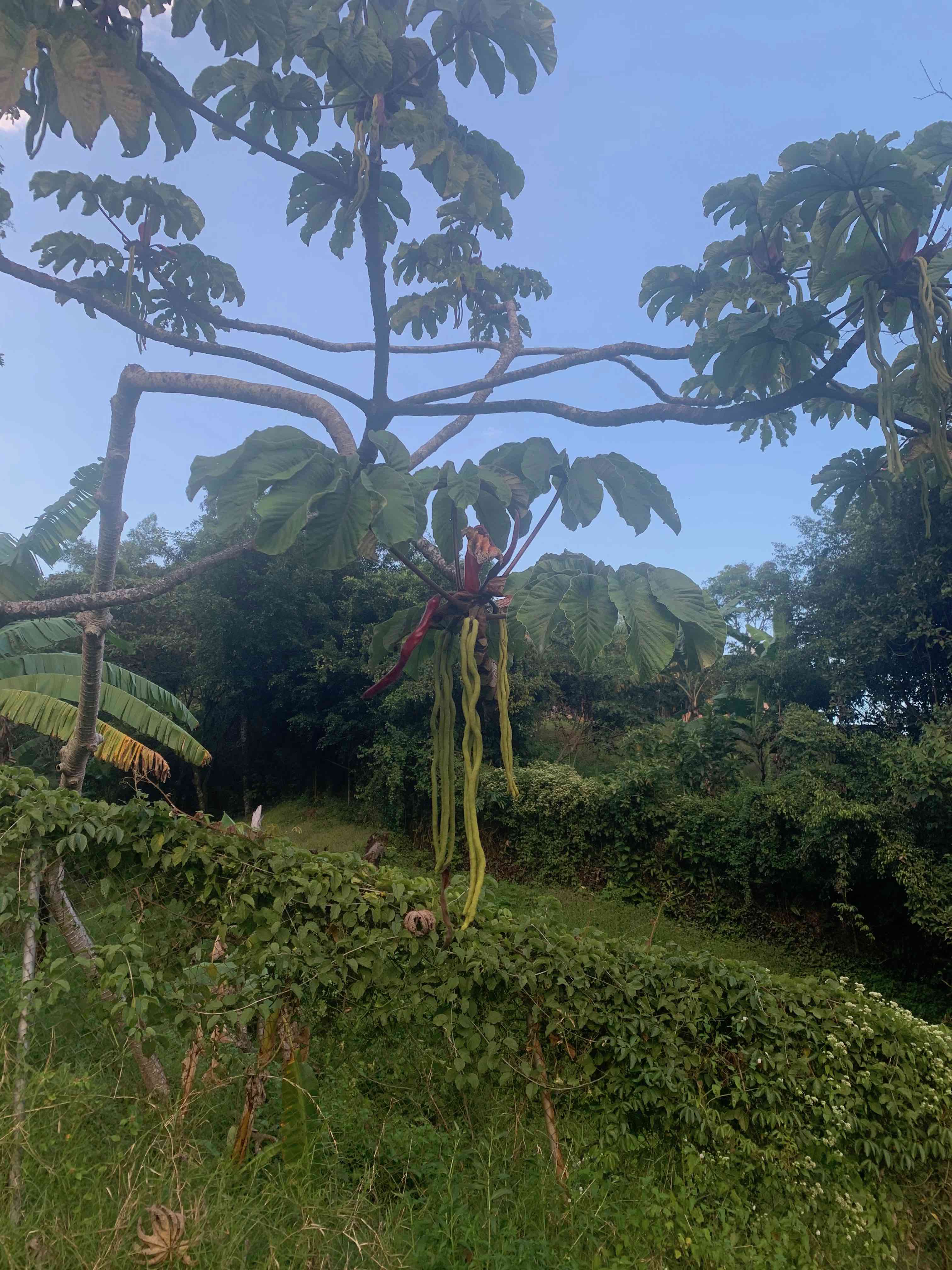
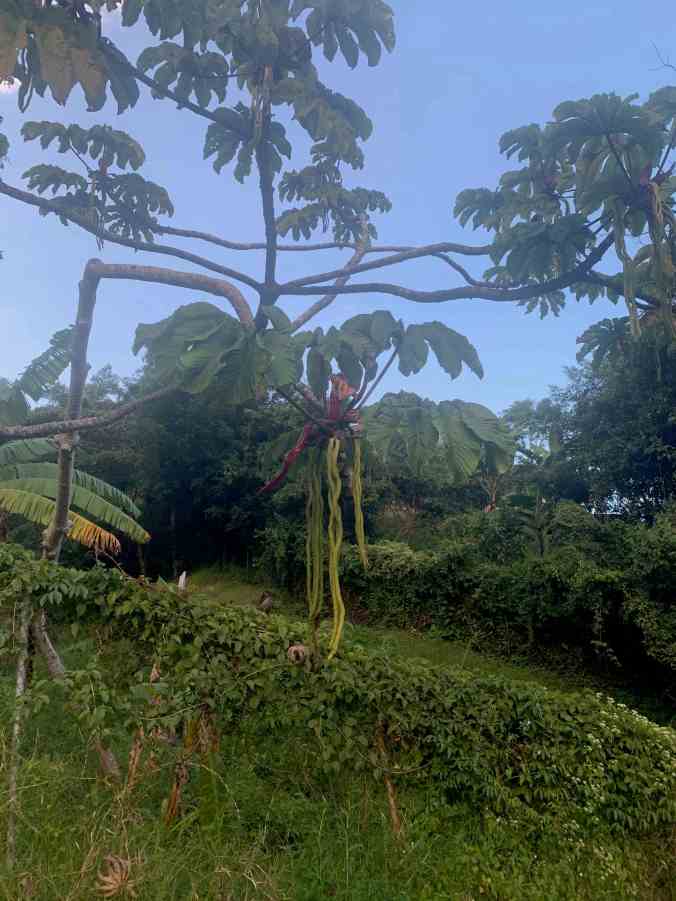
Yesterday, while working on the land we are preparing to plant coffee a few months from now, I noticed that the cecropia trees suddenly have abundant fruit.  I knew that sloths love these trees, but while looking for more information to understand this fruit I learned that bats and birds and other animals also appreciate them for food and nesting material; plus, the leaves and roots of the trees have many uses among indigenous communities in the American tropics.
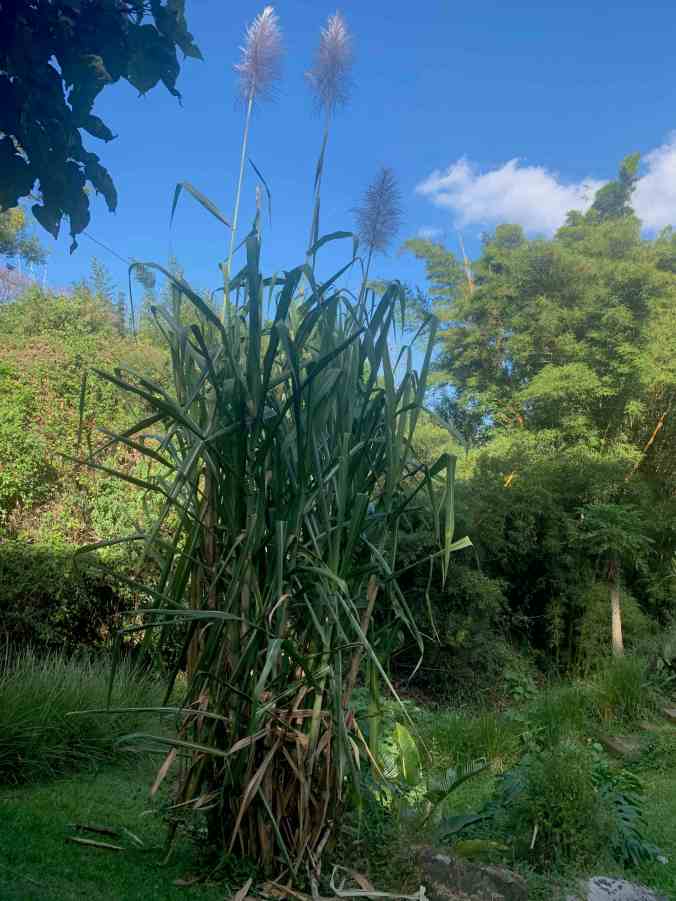
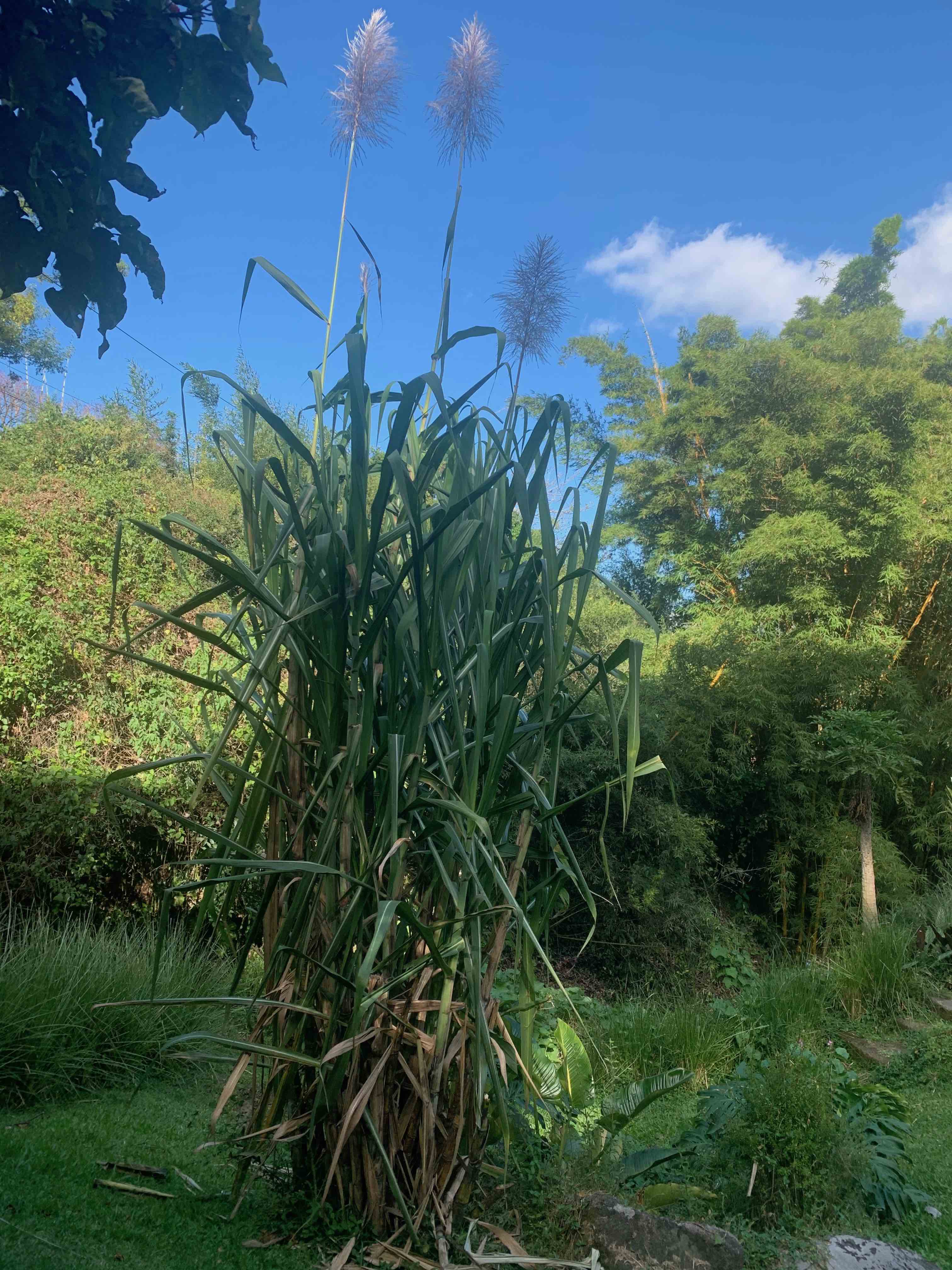
Most of my work recently, now that the poro saplings are planted, is removing unwanted grasses to make way for wanted grasses that help retain soil. One of the grasses planted this year, sugarcane, also surprised me. This plant above, now about one year old, suddenly shot up an extra five feet without my noticing, until yesterday. And the furry, flowery top of the stalks, now visible nearly 20 feet above ground, presumably mean something I will need to read up on. This first stand of sugarcane, which is at the highest point of the land on this property, provided us offspring that we planted along the lowest portion of land, neighboring bananas and plantains that will shade one section of coffee saplings.