A Cleaner Seine Is A More Inspiring Seine

A photo of people swimming in the Seine in Paris on July 17 2024.

People swimming in the Seine, in July of 2024.Photograph by Raphael Lafargue / Sipa / AP

Skip the first half if you are short on time, but in the second half of this article you will find the fruition of imagination and courage we always hope to see more of:

The Unexpectedly Hopeful Paris Olympics

The Games have never lived up to all their ideals—some of which were dubious to begin with. And yet this year’s iteration, for all its flaws, has already inspired some positive change.

…Which brings me to the Seine. When the Olympics returned to Paris, in 1924, the swimming took place not in the Seine but in a pool, the Piscine des Tourelles. Swimming in the Seine was banned altogether one year prior. It was, after all, not merely a river but a road through Paris, crowded with barges. It was also a sewer, filled with refuse from houseboats and the untreated sewage that overflowed the city’s nineteenth-century system when it rained. Various attempts to clean up the Seine failed. When Paris was selected to host the 2024 Games, seven years ago, it was still illegal to swim in the river. Continue reading
Groundwater Springs & Habitat

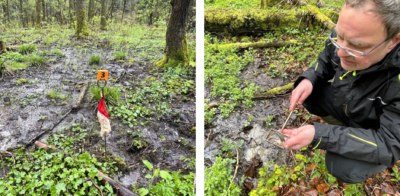
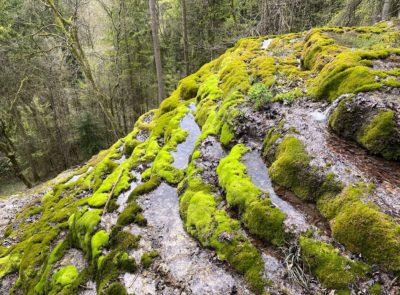
A spring in a forest in Bavaria, Germany.

A spring in a forest in Bavaria, Germany. IMAGEBROKER.COM GMBH & CO. KG / ALAMY STOCK PHOTO

Thanks to Yale e360 for publishing this article by Christian Schwägerl, whose influential book The Anthropocene was published one decade ago:

As World’s Springs Vanish, Ripple Effects Alter Ecosystems

Springs, which bring groundwater to the surface and support a host of unique species, are disappearing globally, victims of development and drought. Researchers are working to document and map these life-giving habitats in an effort to save them before they are gone.

A tufa spring in the Neumarkt region in Bavaria, Germany.

A tufa spring in the Neumarkt region in Bavaria, Germany. CHRISTIAN SCHWÄGERL

Strong winds sweep over the Rhön, a vast region of rolling, forested hills and pastureland in central Germany. Undeterred, Stefan Zaenker, leading a group of four volunteers, runs through his checklist alongside a forest road. Are rubber boots disinfected to prevent introducing potentially harmful microorganisms into the wetland? Are the team app and GPS functioning correctly? Have enough flags been packed?

Left: A flag marks a helocrene spring in the Rhön region of Germany. Right: Stefan Zaenker takes a sample from a spring.

Left: A flag marks a helocrene spring in the Rhön region of Germany. Right: Stefan Zaenker takes a sample from a spring. CHRISTIAN SCHWÄGERL

When all is in order, Zaenker, 56, leads the group into a soggy alder forest. Its mission for the day: to locate and map as-yet-undiscovered springs and document any species inhabiting them.

A senior conservation official for the state of Hesse, Zaenker considers springs so important for human life and biodiversity that he — along with volunteers from the Hesse Association for Cave and Karst Research — spends much of his spare time conducting large-scale searches for them in the Rhön, which includes the German states of Bavaria, Thuringia, and Hesse, and in a nearby national park. Continue reading

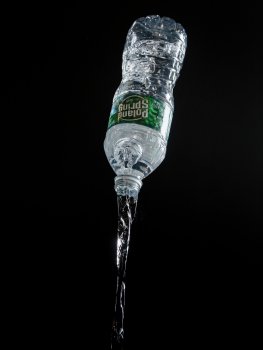
Really, Poland Spring?

Tristan Spinski

We all need drinking water. Those of us lucky enough to have good quality water from a public source can avoid bottled water, but still too many need or want what Poland Spring sells.

The New York Times deserves high praise for this series on water abuses, especially Hiroko Tabuchi‘s reporting on Poland Springs and its parent company’s practices:

Inside Poland Spring’s Hidden Attack on Water Rules It Didn’t Like

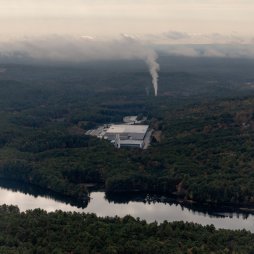
The BlueTriton bottling plant in Poland Spring, Maine, this month.

When Maine lawmakers tried to tighten regulations on large-scale access to water, the brand’s little-known parent company set out to rewrite the rules.

When Maine lawmakers tried to rein in large-scale access to the state’s freshwater this year, the effort initially gained momentum. The state had just emerged from drought, and many Mainers were sympathetic to protecting their snow-fed lakes and streams.

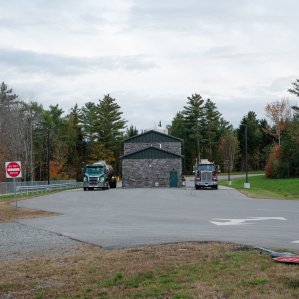
Water trucks filling up at a Poland Spring facility in Lincoln, Maine.

Then a Wall Street-backed giant called BlueTriton stepped in.

BlueTriton isn’t a household name, but its products are. Americans today buy more bottled water than any other packaged drink, and BlueTriton owns many of the nation’s biggest brands, including Poland Spring, which is named after a natural spring in Maine that ran dry decades ago.

Maine’s bill threatened BlueTriton’s access to the groundwater it bottles and sells. The legislation had already gotten a majority vote on the committee and was headed toward the full Legislature, when a lobbyist for BlueTriton proposed an amendment that would gut the entire bill. Continue reading

The Price Is Not Right For Groundwater

Not all natural resource utilization problems are simply a matter of pricing the resource correctly. But clearly it matters. Water hogging is apparently more widespread than we thought, and the price is clearly not right on this resource. This first in a series on the causes and consequences of disappearing water, by Mira Rojanasakul, Christopher Flavelle, Blacki Migliozzi and Eli Murray, has excellent interactive features to help understand these challenges:

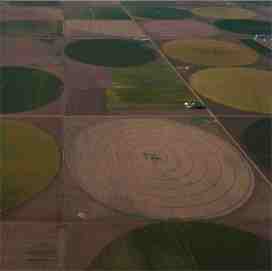
Center-pivot irrigation. Farming is a major groundwater user. Loren Elliott for The New York Times

America Is Using Up Its Groundwater Like There’s No Tomorrow

Overuse is draining and damaging aquifers nationwide, a New York Times data investigation revealed.

GLOBAL WARMING HAS FOCUSED concern on land and sky as soaring temperatures intensify hurricanes, droughts and wildfires. But another climate crisis is unfolding, underfoot and out of view.

Most American communities also rely on wells for tap water. Rebecca Noble for The New York Times

Many of the aquifers that supply 90 percent of the nation’s water systems, and which have transformed vast stretches of America into some of the world’s most bountiful farmland, are being severely depleted. These declines are threatening irreversible harm to the American economy and society as a whole.

The New York Times conducted a months-long examination of groundwater depletion, interviewing more than 100 experts, traveling the country and creating a comprehensive database using millions of readings from monitoring sites. Continue reading

The Downside Of Dry

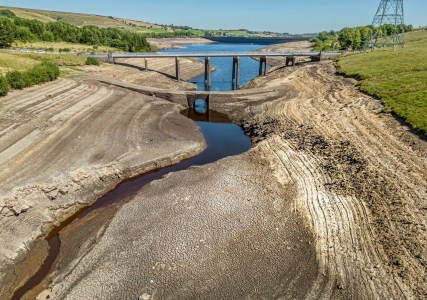
Baitings reservoir in Ripponden, West Yorkshire, in summer 2022, when the total stock of water in England’s reservoirs was at its lowest level since 1995. Photograph: Danny Lawson/PA

We do not favor panic button words in headlines; but when the cap fits, wear it:

‘Drought is on the verge of becoming the next pandemic’

While the world becomes drier, profit and pollution are draining our resources. We have to change our approach

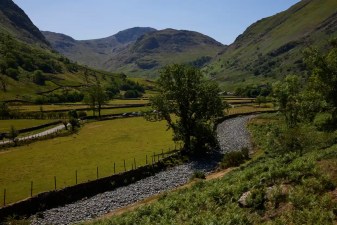
The River Derwent in Cumbria has run dry in parts of the Borrowdale valley for the third consecutive year. Photograph: Christopher Thomond/The Guardian

During the summer months in the Oxfordshire town where I live, I go swimming in the nearby 50-metre lido. With my inelegantly slow breaststroke, from time to time I accidentally gulp some of the pool’s opulent, chlorine-clean 5.9m litres of water. Sometimes, I swim while it’s raining, when fewer people brave it, alone in my lane with the strangely comforting feeling of having water above and below me. I stand a bottle of water at the end of the lane, to drink from halfway through my swim. I normally have a shower afterwards, even if I’ve showered that morning. I live a wet, drenched, quenched existence. But, as I discovered, this won’t last. I am living on borrowed time and borrowed water. Continue reading

Snow Lab & Melting

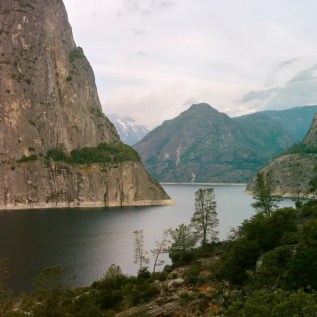
Water released from Hetch Hetchy Reservoir’s O’Shaughnessy Dam flows into the Tuolumne River. The reservoir currently supplies drinking water to 2.7 million San Francisco Bay Area residents. Photograph by Aubrey Trinnaman

We are gratified to know of such a place as a snow lab, and that their scientists share their knowledge in language we can all understand:

California’s Snow Is Melting, and It’s a Beautiful Thing

By Andrew Schwartz.

Dr. Schwartz is the lead scientist and station manager at the University of California, Berkeley, Central Sierra Snow Lab.

Photograph by Aubrey Trinnaman

SODA SPRINGS, Calif. — My fellow Californians often remark that the weather in this state seems it has been reduced to two seasons, both defined by natural disasters: In summer and fall, huge, intense wildfires rip their way across dry land, and winter and early spring bring intense atmospheric rivers with heavy rainfall, floods and landslides, along with winds that take down trees. Continue reading

A Proposal For The Colorado River States

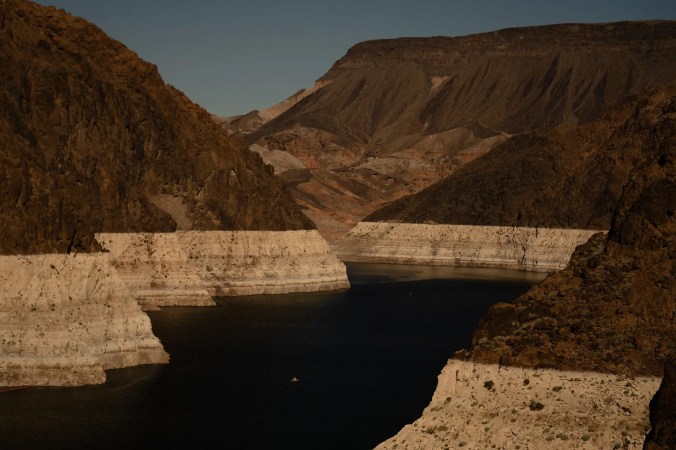
The Lake Mead reservoir in Nevada is showing a “bathtub ring” because of drought. Erin Schaff/The New York Times

We have featured the river plenty in recent years. No easy solutions. Bruce Babbitt, who was secretary of the Interior Department in the Clinton administration, and before that a governor of Arizona, has this to say:

Before Western States Suck the Colorado River Dry, We Have One Last Chance to Act

The Interior Department last summer dropped a bomb on the seven states that depend upon the Colorado River for water. Continue reading

Snowpack & Colorado River Recovery

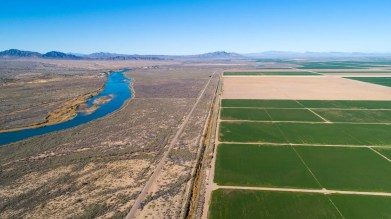
Among the arid lands where water from the Colorado River makes agriculture possible is the Colorado River Indian Tribes reservation, which serves Mohave, Chemehuevi, Hopi, and Navajo peoples. More than 70,000 acres of alfalfa, cotton, potatoes, and other crops are being produced on the reservation. (Image credit: Ted Wood/The Water Desk, CC BY-NC-ND 4.0)

The Colorado River holds our attention for many reasons, but mostly now due to climate impact. Our thanks to Bob Henson at Yale Climate Connection for this:

Wet winter won’t fix Colorado River woes

“One year of good flows doesn’t mean we have a trend,” noted one expert.

Snowpack has been running well above average this winter across the Colorado River watershed. It’s a rare bright spot after 23 years of grinding megadrought brought the driest conditions in 1,200 years to the basin that supplies 40 million people in Arizona, California, Colorado, Nevada, New Mexico, Utah, Wyoming, and Mexico. Continue reading

Why Waste Western Water?

A woman walks along a cliff top near Lake Powell, the second biggest reservoir in the U.S., where climate-change-driven drought continues to lower water levels. Photograph by David McNew / Getty

The management of water in the western USA has been an occasional topic in these pages and Rachel Monroe adds to our understanding:

The Water Wranglers of the West Are Struggling to Save the Colorado River

Farmers, bureaucrats, and water negotiators converged on Caesars Palace, in Las Vegas, to fight over the future of the drought-stricken Southwest.

In mid-December, I drove to Lake Mead, the nation’s largest reservoir, to see its infamous bathtub ring. The bathtub, in this metaphor, is Lake Mead, on the border between Nevada and Arizona; the ring is a chalk-white coating of minerals that its receding waters have left behind. The Southwest, which includes the Colorado River Basin, has been in a protracted drought since 2000; climate change has made it worse. Continue reading

Really, Danone?

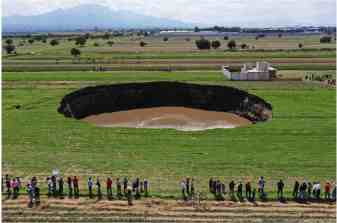
An aerial view of people standing around the sinkhole in Santa María Zacatepec, a small town in central Mexico. The opening, almost perfectly circular, grew to be longer than a football field. Photograph by Jose Castañares / AFP / Getty

Really, as in, can you not control yourselves? We asked the same of Nestle a couple times in the past:

The Sinkhole That Swallowed a Mexican Farm

A bottled-water company tapped an ancient aquifer that thousands of people and businesses share. Then came the protests.

A Bonafont bottling plant, which was occupied by activists, pictured on September 1, 2021. Photograph by Pedro Pardo / AFP / Getty

On May 29, 2021, a boom reverberated through Santa María Zacatepec, a small town near the city of Puebla, in central Mexico. At first, the sound might have been mistaken for one of the earthquakes or small volcanic eruptions that are common in the area. Then some local children told their mother that a strange hole had appeared in the farmland behind their house. Continue reading

Seeding Clouds To Relieve Megadrought

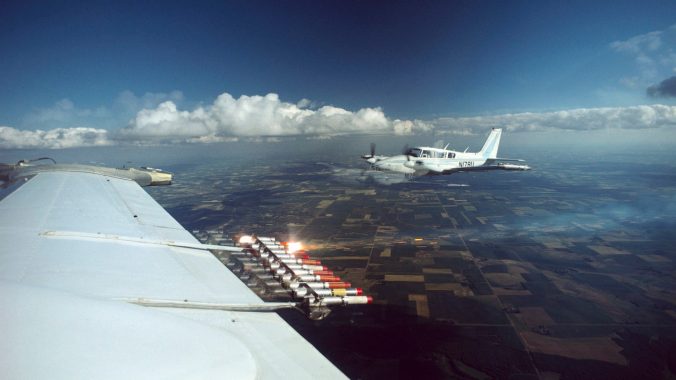
Cloud seeding equipment on the wing of plane flying over North Dakota. JIM BRANDENBURG VIA MINDEN PICTURES

Times are tough with regard to water, among other things. Tough times call for creative measures. Be creative, but also beware of unintended consequences:

Can Cloud Seeding Help Quench the Thirst of the U.S. West?

In the midst of an historic megadrought, states in the American West are embracing cloud seeding to increase snow and rainfall. Recent research suggests that the decades-old approach can be effective, though questions remain about how much water it can wring from the sky.

Not since Charlemagne was crowned Holy Roman Emperor in 800 A.D. has the American West been so dry. Continue reading

Greeley’s Conundrum

Thanks to Matthew Daly and PBS Newshour (USA) for this story:

Booming Colorado town asks, ‘Where will water come from?’

GREELEY, Colo. (AP) — “Go West, young man,” Horace Greeley famously urged.

The problem for the northern Colorado town that bears the 19th-century newspaper editor’s name: Too many people have heeded his advice.

By the tens of thousands newcomers have been streaming into Greeley — so much so that the city and surrounding Weld County grew by more than 30% from 2010 to 2020, according to the U.S. Census Bureau, making it one of the fastest-growing regions in the country.

And it’s not just Greeley. Continue reading

Changing Water Use, Last Chances

Sources: U.S. Geological Survey, U.S. Census Bureau Research: Austin R. Ramsey/IRW; Graphic: Kelly Martin/IRW

Yesterday’s post was about a book that argues we must change the way we source food. Water use is a parallel topic, of equal importance, and today National Public Radio (USA) presents an investigative report about Louisiana’s challenges related to water, and changes that must be made:

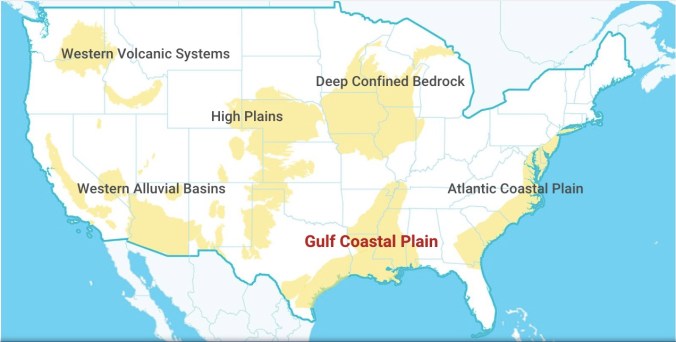
Known For Its Floods, Louisiana Is Running Dangerously Short Of Groundwater

A wastewater treatment plant in West Monroe, La., uses microalgae to biologically purify water. It’s the first step in a process that helps supply water for a local paper mill, saving the area’s stressed aquifer for residents. Austin R. Ramsey/IRW

Louisiana is known for its losing battle against rising seas and increasingly frequent floods. It can sometimes seem like the state has too much water. But the aquifers deep beneath its swampy landscape face a critical shortage.

Groundwater levels in and around Louisiana are falling faster than almost anywhere else in the country, according to U.S. Geological Survey data. An analysis by the Investigative Reporting Workshop and WWNO/WRKF traced the problem to decades of overuse, unregulated pumping by industries and agriculture, and scant oversight or action from legislative committees rife with conflicts of interest. Continue reading

Prospects For Green Hydrogen

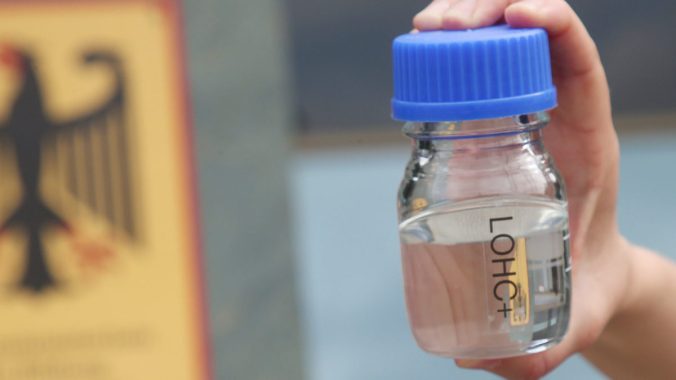
Green hydrogen can be stored in a liquid form. WOLFGANG KUMM/PICTURE-ALLIANCE/DPA/AP IMAGES

Thanks to Yale e360, as always, for news on innovative uses of water related to green energy:

Green Hydrogen: Could It Be Key to a Carbon-Free Economy?

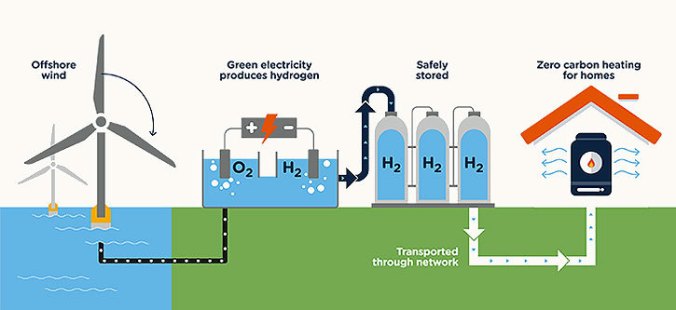
Green hydrogen, which uses renewable energy to produce hydrogen from water, is taking off around the globe. Its boosters say the fuel could play an important role in decarbonizing hard-to-electrify sectors of the economy, such as long-haul trucking, aviation, and heavy manufacturing.

Green hydrogen is produced using renewable energy, making it a CO2-free source of fuel. SGN

Saudi Arabia is constructing a futuristic city in the desert on the Red Sea called Neom. The $500 billion city — complete with flying taxis and robotic domestic help — is being built from scratch and will be home to a million people. And what energy product will be used both to power this city and sell to the world? Not oil. The Saudis are going big on something called green hydrogen — a carbon-free fuel made from water by using renewably produced electricity to split hydrogen molecules from oxygen molecules. Continue reading

Desalination’s Time Has Come

Carlsbad-Desal-Aerial-Mar-2015_web

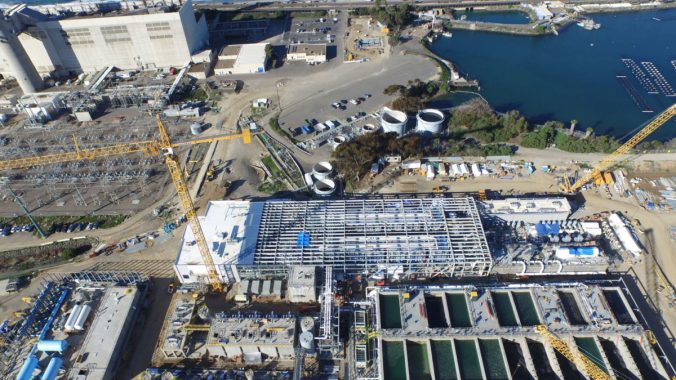
The Claude “Bud” Lewis Carlsbad Desalination Plant on the California coast provides 50 million gallons of fresh water a day to San Diego. POSEIDON WATER

Thanks to Jim Robbins at Yale e360:

As Water Scarcity Increases, Desalination Plants Are on the Rise

After decades of slow progress, desalination is increasingly being used to provide drinking water around the globe. Costs for processing salt water for drinking water have dropped, but it remains an expensive option and one that creates environmental problems that must be addressed.

Desalination-Facilities-and-Capacity_1-s2.0-S0048969718349167-gr3_lrg_FINAL_web

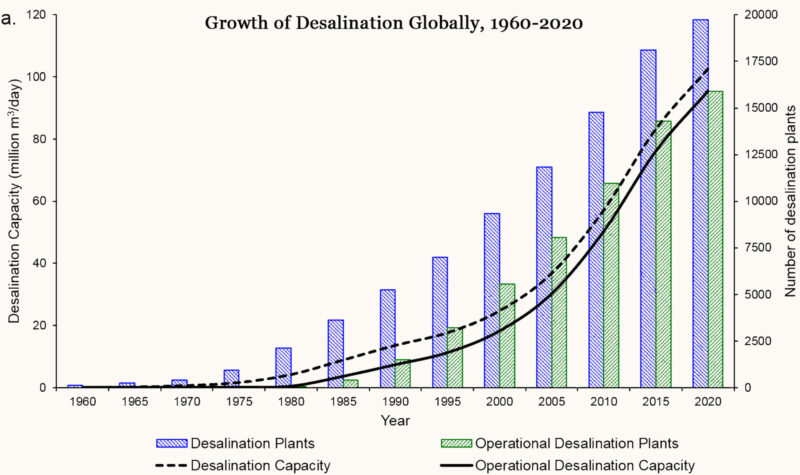
Desalination has been growing steadily in the last decade. JONES ET AL, SCIENCE OF THE TOTAL ENVIRONMENT, 2019

Some 30 miles north of San Diego, along the Pacific Coast, sits the Claude “Bud” Lewis Carlsbad Desalination Plant, the largest effort to turn salt water into fresh water in North America.

Each day 100 million gallons of seawater are pushed through semi-permeable membranes to create 50 million gallons of water that is piped to municipal users. Carlsbad, which became fully operational in 2015, creates about 10 percent of the fresh water the 3.1 million people in the region use, at about twice the cost of the other main source of water.

Expensive, yes, but vital for the fact that it is local and reliable. “Drought is a recurring condition here in California,” said Jeremy Crutchfield, water resources manager at the San Diego County Water Authority. “We just came out of a five-year drought in 2017. The plant has reduced our reliance on imported supplies, which is challenging at times here in California. So it’s a component for reliability.”

A second plant, similar to Carlsbad, is being built in Huntington, California with the same 50-million-gallon-a-day capability. Currently there are 11 desalination plants in California, and 10 more are proposed. Continue reading

Catch It To Drink It

The illustrative video above is on its own worth a couple minutes of your time. But the innovative approach to one of the world’s most pressing problems is the thing to take note of. Thanks to National Public Radio (USA) for bringing Evelyn Wang and Omar Yaghi’s work to our attention in this story:

prototype_31-ebd8f9a66e509c5d973bc08e1ef6ded01cd22246-s1200-c85.jpg

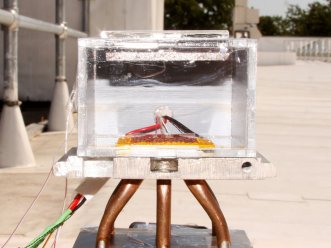
A prototype MOF-based water-collection device is set up for testing on the roof of a building on the MIT campus.
Courtesy Evelyn Yang, MIT

Researchers have come up with a new way to extract water from thin air. Literally.

This isn’t the first technology that can turn water vapor in the atmosphere into liquid water that people can drink, but researchers from the Massachusetts Institute of Technology and the University of California, Berkeley, say their approach uses less power and works in drier environments. Continue reading

The Future Runs Through It

CORiver-111118-0482_HooverAerial_web.jpg

After two decades of drought, Lake Mead in Nevada is just 40 percent full. TED WOOD

Thanks to Jim Robbins and Yale e360 for this second installment, and especially to Ted Wood for photography as visually compelling as the implication of the story:

CRISIS ON THE COLORADO: PART II

On the Water-Starved Colorado River, Drought Is the New Normal

With the Southwest locked in a 19-year drought and climate change making the region increasingly drier, water managers and users along the Colorado River are facing a troubling question: Are we in a new, more arid era when there will never be enough water?


corivermx-101118-0063_treeringlab_web

Scientists at the University of Arizona are using tree rings to study centuries of drought conditions in the Colorado River Basin.

In the basement of the University of Arizona’s Laboratory of Tree-Ring Research, the fragrant smell of pine hangs in the air as researchers comb through the stacks of tree slabs to find a round, 2-inch-thick piece of Douglas fir.

They point out an anomaly in the slab — an unusually wide set of rings that represent the years 1905 to 1922. Those rings mean it was a pluvial period — precipitation was well above average — and so the trees grew far more than other years.

“In 1905, the gates opened and it was very wet and stayed very wet until the 1920s,” said David Meko, a hydrologist at the lab who studies past climate and stream flow based on tree rings. “It guided their planning and how much water they thought was available.”

CORiver-0906-0037_MarkHarris_web.jpg

Mark Harris, a water manager in Grand Junction, Colorado.

The planning was that of the states that share the water of the Colorado River. Worried that a burgeoning California would take most of the water before it was fairly divvied up, representatives from the other Colorado River Basin states, presided over by U.S. Secretary of Commerce Herbert Hoover, came together in 1922 to develop an equitable apportionment. They looked at flow measurements and figured that the river contained an average of 15 million acre-feet. They divided the Colorado River states into two divisions – the upper basin and the lower basin, with the dividing line in northern Arizona near the Utah border. The upper basin states — Utah, Wyoming, Colorado, and New Mexico — agreed not to take more than a total of 7.5 million acre-feet and to allow the other half to flow south to the lower basin. The agreement they signed was called the 1922 Colorado River Compact, also known as the Law of the River. Continue reading
Colorado River’s Future

Thanks to Jim Robbins and Yale e360:

CRISIS ON THE COLORADO: PART I

The West’s Great River Hits Its Limits: Will the Colorado Run Dry?

TLW0288_CORiverHeadwaters_web.jpg

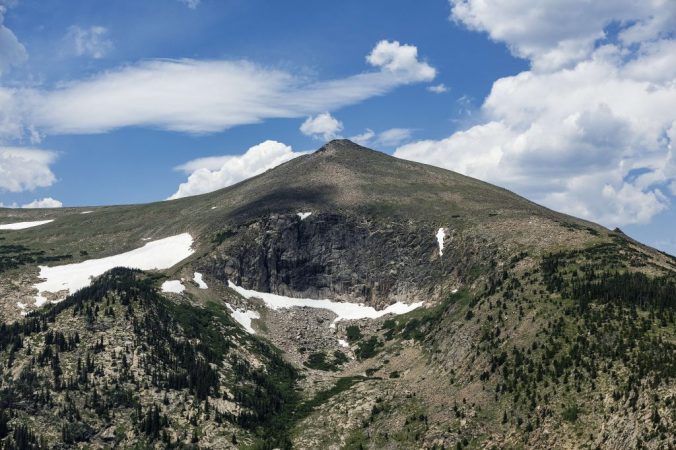
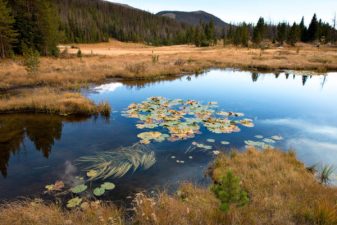
The headwaters of the Colorado River are in a marshy meadow in Rocky Mountain National Park.

As the Southwest faces rapid growth and unrelenting drought, the Colorado River is in crisis, with too many demands on its diminishing flow. Now those who depend on the river must confront the hard reality that their supply of Colorado water may be cut off. First in a series.

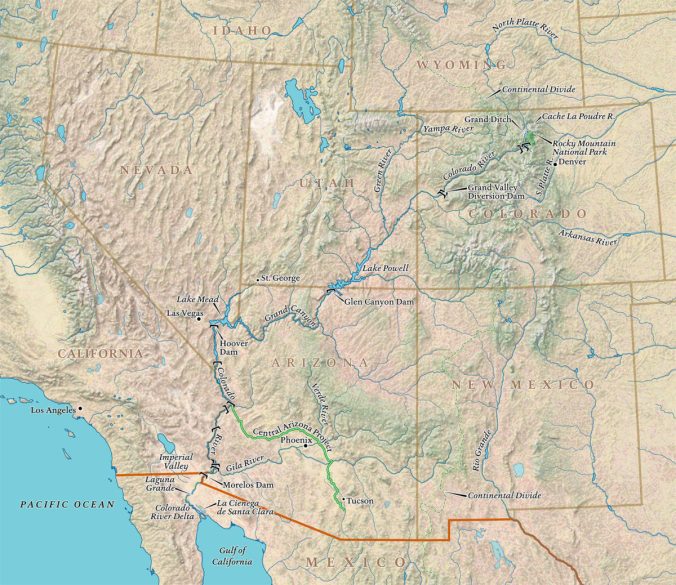
The beginnings of the mighty Colorado River on the west slope of Rocky Mountain National Park are humble. A large marsh creates a small trickle of a stream at La Poudre Pass, and thus begins the long, labyrinthine 1,450-mile journey of one of America’s great waterways.

Several miles later, in Rocky Mountain National Park’s Kawuneeche Valley, the Colorado River Trail allows hikers to walk along its course and, during low water, even jump across it. This valley is where the nascent river falls prey to its first diversion — 30 percent of its water is taken before it reaches the stream to irrigate distant fields.

Yale_e360-ColoR-Ovr_26_web.jpg

The Colorado flows 1,450 from its source in Colorado to the southwest, ending just short of the Gulf of California. MAP BY DAVID LINDROTH

The Never Summer Mountains tower over the the valley to the west. Cut across the face of these glacier-etched peaks is the Grand Ditch, an incision visible just above the timber line. The ditch collects water as the snow melts and, because it is higher in elevation than La Poudre Pass, funnels it 14 miles back across the Continental Divide, where it empties it into the headwaters of the Cache La Poudre River, which flows on to alfalfa and row crop farmers in eastern Colorado. Hand dug in the late 19th century with shovels and picks by Japanese crews, it was the first trans-basin diversion of the Colorado. Continue reading
Being Ecological When Nature Is Perceived With Limits

BeingEco

A book about ecology without information dumping, guilt inducing, or preaching to the choir.

This new book is mentioned in a description of coming to terms with a life without water, an essay written from the perspective of living in Cape Town, South Africa. The essay is moving in the way a dream can be, which fits the writer’s reference to what we all might come to know as “the water-anxiety dream.”

The essay was effective enough to get me to click through to find out more about the book to the left. Which leads to Timothy Morton, who has somehow avoided our notice until now. How had we missed an author of books with titles like Dark Ecology, and The Ecological Thought, as well as Ecology without Nature?

Nevermind how. My thanks to Rosa Lyster for this, among other gifts from her essay.

Lyster-Capetown-Drought

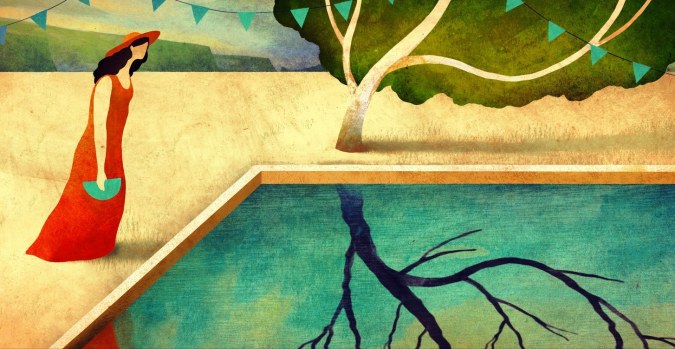
For some residents of Cape Town, the memory of the drought is already fading. But, in an increasingly parched world, will the anxiety ever really end? Illustration by Owen Gent

A friend of mine got married in her parents’ garden last year, on a lavishly beautiful late-summer afternoon in Cape Town. Many of the guests were British, and they could not stop remarking on the fineness of the weather. It was a startling reminder that some people still relish hot days with no possibility of rain, that not everyone looks upon February in the Western Cape as something to be endured. After the ceremony, my date and I stood by the swimming pool, drinking sparkling wine and monitoring the canapés. My friend’s stepfather came by to say hello, carefully picking his way past the bride’s two young brothers, who were playing an ecstatic game of hide-and-seek on the lawn, getting grass stains on their tiny suits. After gracefully accepting our praise about how lovely everything had been, he told us that he’d been having torrid anxiety dreams. We nodded. Weddings are notoriously hard on the old nerves—guests to be tended to, speeches to be made, and the pool just lying there, waiting for any old idiot to accidentally fall in and cast an undignified pall over the happy day. He shook his head. His dream, he explained, was about the garden. Continue reading
Using Water Cleverly

SandTroughBefore2-e1521583715535-1260x708

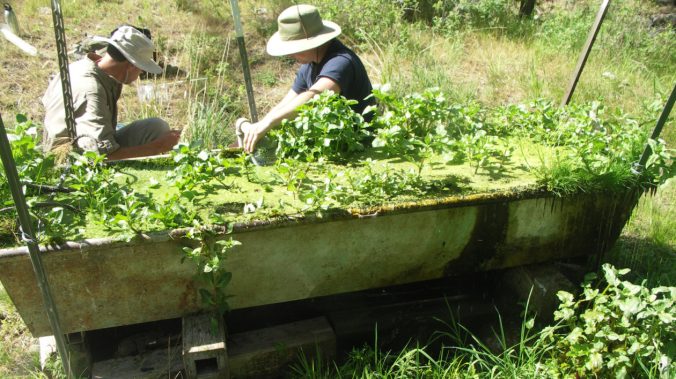
Hydrologists Zach Freed (The Nature Conservancy) and Hank Johnson (U.S. Geologic Survey) measure water chemistry of the spring from the inflow pipe to the old trough, which is filled with emergent aquatic vegetation. Photo © Allison Aldous / The Nature Conservancy

Thanks to Lisa Feldcamp at the Nature Conservancy for this story:

Sharing Water: How I Met the MacGyvers of Water Use

DSC_0131-1260x708.jpg

Down the stream at Sand Spring you can see an elk wallow. Photo © Lisa Feldkamp / The Nature Conservancy

“It’s like leaving the kitchen faucet on all year for one glass of water,” says Zach Freed, a hydrologist for the Nature Conservancy in Oregon. That’s how people in Oregon and throughout the US West have traditionally used spring water.

When European homesteaders first came west, spring water must have seemed like an endless resource. Homesteaders could find a potable spring and turn on the tap to provide water for their families and livestock. As the generations came and went, old ranches failed, and new ones sprang up. Springs came in and out of use, but it often happened that nobody ever turned off the tap. Continue reading