New World Rewilding

Mexican gray wolves have been reintroduced to Arizona and New Mexico over the last two decades. JIM CLARK / U.S. FISH AND WILDLIFE SERVICE

We have been posting about rewilding for nearly a decade, and it sees fair to say that the idea has developed traction worldwide:

T0GFFN Bison or Bufalo within prairie and pasture in protected natural area. Rancho el Uno, a space dedicated to the conservation of this species in Janos, Chihuahua. This fishery was reintroduced by the organization The Nature Conservancy, TNC. Janos Biosphere Reserve
  (© Photo: LuisGutierrez / NortePhoto.com

Bringing Back the Beasts: Global Rewilding Plans Take Shape

With a growing number of studies demonstrating the importance of large mammals to healthy ecosystems, scientists are proposing concrete plans to reintroduce these animals to the wild. The return of just 20 species to native habitats, they say, could be a boon to biodiversity.

A jaguar guards its prey, a white-lipped peccary, in Goiás, Brazil. OCTAVIO CAMPOS SALLES / ALAMY STOCK PHOTO

For thousands of years, bison herds thundered freely throughout the Chihuahuan Desert on both sides of what is now the U.S.-Mexico border. In November 2009, after three frantic months of chasing down the required permits, Rurik List and Nélida Barajas watched as 23 bison from Wind Cave National Park in South Dakota arrived by tractor-trailer at the Santa Teresa international cattle crossing in southeastern New Mexico.

The animals, 20 females and three males, galloped through the dusty stockyards, across the border, and into the state of Chihuahua. Continue reading

Alt-Leather, Vegan & Otherwise

Innovative vegan leather belt made from mycelium fiber, fungal spores and plant fibers. los_angela / iStock / Getty Images Plus

Our thanks to Linnea Harris for the latest news in alt-leather, which is best when vegan, except for when it is not:

The Future of Leather: How Pineapple Leaves, Cacti, and Mycelium Are Revolutionizing the Industry

Leather is everywhere – in our shoes, our purses and luggage, our winter jackets and stylish furniture – but its effect is seen globally.

To create the leather for our clothing, homewares, and other purposes, billions of cows are slaughtered each year. Continue reading

McKibben On The Supreme Court’s EPA Ruling

Photographs by Mitch Epstein

When you have found an explainer reliably clear on complicated but important issues, keep reading their essays:

The Supreme Court Tries to Overrule the Climate

A destructive decision in West Virginia v. E.P.A.

Credit where due: the Supreme Court’s 6–3 ruling in West Virginia v. E.P.A. is the culmination of a five-decade effort to make sure that the federal government won’t threaten the business status quo. Lewis Powell’s famous memo, written in 1971, before he joined the Supreme Court—between the enactment of a strong Clean Air Act and a strong Clean Water Act, each with huge popular support—called on “businessmen” to stand up to the tide of voices “from the college campus, the pulpit, the media, the intellectual and literary journals, the arts and sciences, and from politicians” calling for progressive change. Continue reading

215 Pounds Of Burmese Python

The Conservancy of Southwest Florida, which tracks and studies invasive Burmese pythons harming the state’s native ecosystem, said the nearly 18-foot female python was the largest to have been found in the Everglades. Jc Findley/Conservancy of Southwest Florida, via Associated Press

Since reading and sharing one article about invasive species we have been particularly attentive to the challenges of pythons introduced in the Everglades. We have linked to plenty of stories about the creative approaches to solving this problem.

But we never tire of the theme.

This article

Ian Easterling, left, and Ian Bartoszek, both biologists, removing a 14-foot female Burmese python captured in March in a mangrove in Southwest Florida. Conservancy of Southwest Florida, via Associated Press

To Catch a Snake: Largest Python Found in Everglades Signals a Threat

The Burmese python caught by a team of trackers breaks a record and shows the invasive species surviving in Florida’s ecosystem despite efforts to remove those snakes.

A team searching under dense vegetation in the pine flatwoods of the Everglades late last year came upon a slithering sight, the likes of which no one had found before in those parts: 215 pounds of snake. Continue reading

Justice For Dom & Bruno

Dom Phillips (center), seen here taking notes as he talks with Indigenous people, reported regularly for the Guardian. Photograph by Joao Laet / AFP / Getty

Only one article by Dom Phillips in our pages, and not a single mention of Bruno Pereira seems wrong, to say the least.  As a rule obituaries are not our thing in these pages, but we have made exceptions.

Bruno Pereira was among the many senior officials and veteran experts at FUNAI who had gained a reputation for a robust defense of the agency’s guidelines in the Javari. Photograph by Daniel Marenco

Two Murders in the Amazon

The disappearance of Dom Phillips and Bruno Araújo Pereira, and the crisis created by Jair Bolsonaro’s policies.

From the moment that Dom Phillips and Bruno Araújo Pereira vanished, on June 5th, in the Brazilian Amazon, there were suspicions of foul play. Phillips was a British freelance journalist dedicated to environmental issues, and Pereira, his friend and guide, was a prominent Brazilian Indigenous-affairs expert.

Photograph by Nelson Almeida / AFP / Getty

He was assisting Phillips with research for a book, tentatively titled “How to Save the Amazon.” Continue reading

Agrivoltaics Advancing

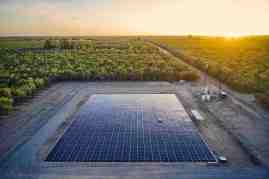
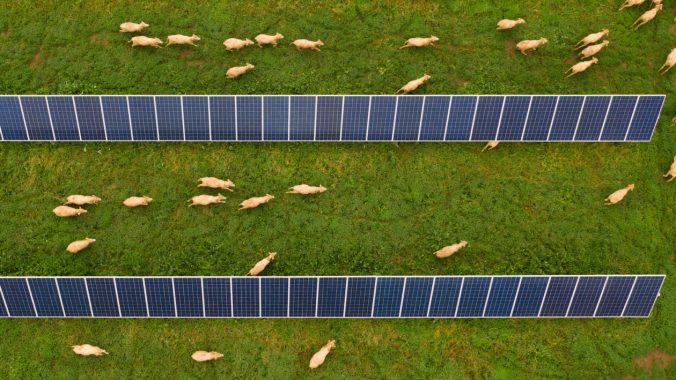
Solar panels on Paul Knowlton’s farm in Grafton, Mass. Cattle will graze below the panels, which rise to 14 feet above the ground. Tony Cenicola/The New York Times

The concept of agrivoltaics has been an occasional topic in our pages over the years, most recently as we have prepared to plant thousands of coffee saplings. Ellen Rosen focuses our attention on how the advances in technology, and entrepreneurship in this space, are addressing the challenges:

Can Dual-Use Solar Panels Provide Power and Share Space With Crops?

Companies like BlueWave are betting on it. But the technology has its critics.

Mr. Knowlton preparing the soil between the panels before he plants butternut squash and lettuce. Tony Cenicola/The New York Times

In its 150-year history, Paul Knowlton’s farm in Grafton, Mass., has produced vegetables, dairy products and, most recently, hay. The evolution of the farm’s use turned on changing markets and a variable climate. Recently, however, Mr. Knowlton added a new type of cash crop: solar power. Continue reading
Clever Climate Work Perk

(Adam Maida / The Atlantic ; CSA Images / Getty)

If you have not been reading Robinson Meyer’s excellent newsletter, take a look at this week’s and you might want to sign up over at The Atlantic:

Corporate Climate Action Is an Employee Perk

In February, Bank of America offered its employees a notable perk: If they had worked at the bank for at least three years, and made less than $250,000, then it would give them $4,000 to buy a new electric car. (Employees interested in merely leasing an EV could claim $2,000.) The move, attached to a company-wide round of salary increases, wasn’t the first time that the bank had made the offer; it had made a similar one in 2015, and again in 2020, although those incentives had also applied to gas-electric hybrids. Continue reading
Wetland Treasury

The U.S. once held a wealth of wetness, but the country’s treasury has shrivelled. Illustration by Carson Ellis

The word swamp does not have a pleasant ring to it. The thing itself, though, is something much more than pleasant. Essential to our future, Annie Proulx clarifies in a lovely manner, swamps should be treated with greater care:

Swamps Can Protect Against Climate Change,

If We Only Let Them
Wetlands absorb carbon dioxide and buffer the excesses of drought and flood, yet we’ve drained much of this land. Can we learn to love our swamps?

It can be hell finding one’s way across an extensive boggy moor—the partially dry, rough ground and the absence of any landmarks let the eye rove helplessly into the monotype distance. Continue reading
Big Science

While working on my doctoral dissertation in the early 1990s I had a clear view into how big businesses, and industry associations, influence the creation of knowledge in research universities. The big science problem (not to be confused with the Big Science album) was clearly there, we all can see now. But I did not find it so problematic at the time. Bibi van der Zee‘s review in the Guardian makes clear why we should be more concerned about who funds the creation of knowledge, and what strings may be attached:

The Playbook by Jennifer Jacquet review – how big business takes on science and wins

A ‘guide’ for companies looking to counter unwelcome research exposes the corporate world’s dark arts

“Playbook” is a term that feels overused at the moment – mostly because of Vladimir Putin’s military adventures. Continue reading
Turtles & Tortoises & Negative Senescence

A giant Galápagos tortoise, only as old as it feels. Meridith Kohut for The New York Times

When I learn a new word–even if it is a word I cannot picture using in conversation but it represents a concept that is interesting and surprising, I consider that a good day. Jack Tamisiea, thanks for the science reporting here, and especially for the word senescence:

Tortoises and turtles don’t just live for a long time — they barely age while they live.

The black marsh turtles displayed negative rates of senescence, meaning their mortality risk decreased as they aged. iStock/Getty Images

For mammals like humans, aging is inevitable. No matter how many vitamins we take, skin sags, bones soften and joints stiffen over time. However, turtles and tortoises age more gracefully. Despite their wrinkled skin and toothless gums, species like Galápagos giant tortoises seem unscathed by the ravages of aging. Some show few signs of slowing down as they plod into their 100s.

To determine what drives these ageless wonders, two groups of researchers examined turtles, tortoises and their ectothermic, or coldblooded, brethren in a pair of studies published Thursday in the journal Science. Continue reading