Deep Divers & Learning

Thanks to Stephanie Pain, Knowable Magazine and Smithsonian for this:

What Are Scientists Learning About the Deepest Diving Creatures in the Ocean?

Animals-turned-oceanographers are helping biologists find out what they do when they get to the cold, dark depths

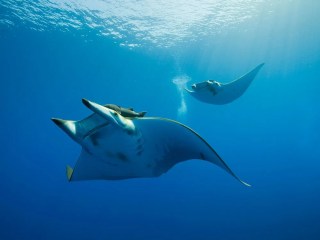
Chilean devil rays swim in the Atlantic Ocean near the Azores. Reinhard Dirscherl / ullstein bild via Getty Images

There’s only one word for it: indescribable. “It’s one of those awesome experiences you can’t put into words,” says fish ecologist Simon Thorrold. Thorrold is trying to explain how it feels to dive into the ocean and attach a tag to a whale shark — the most stupendous fish in the sea. “Every single time I do it, I get this huge adrenaline rush,” he says. “That’s partly about the science and the mad race to get the tags fixed. But part of it is just being human and amazed by nature and huge animals.”

Whale sharks are one of a select group of large marine animals that scientists like Thorrold, of the Woods Hole Oceanographic Institution in Massachusetts, have signed up as ocean-going research assistants. Continue reading
Orchidelirium Anew

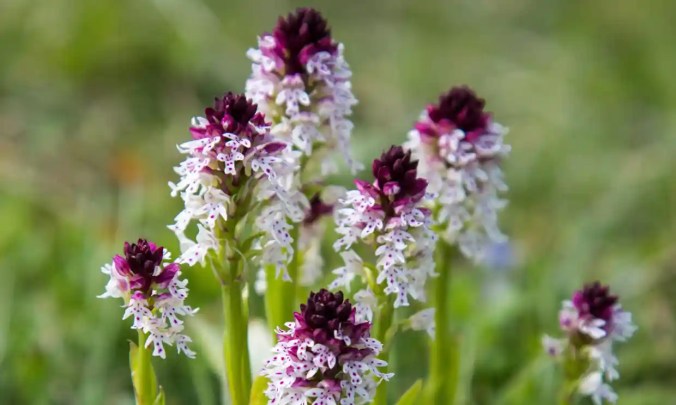
Burnt tip orchids. At least 10 vanished from a national nature reserve at Mount Caburn, East Sussex. Photograph: Katewarn Images/Alamy

Susan Orlean brought orchidelirium to our attention in 1999, shining a light on how and why these flowers inspire lots of good, and plenty of bad behavior. Orchids have been abundant in our pages over the years for various reasons, most recently due to a show; today due to criminal enterprise:

Spate of orchid thefts in England puts rare species at risk

Experts believe plants in Sussex and Kent were ‘stolen to order’

Hardy Orchid Society Replying to @HardyOrchidSoc This is what you should have seen. If you have any information that can help in the investigation please contact @kentpolice @BBCNews

A spate of thefts of rare orchids from sites in southern England has concerned scientists, who say endangered species may be at risk.

Orchid experts believe that the plants, from locations including in Sussex and Kent, may have been “stolen to order”.

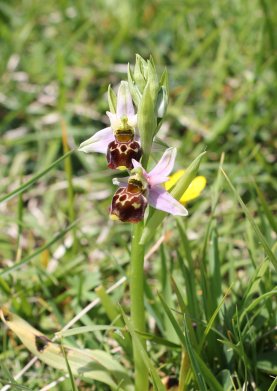
Conservationists at the Sussex Wildlife Trust were dismayed last week to hear of at least 10 burnt-tip orchids missing from a national nature reserve at Mount Caburn, while in Kent the Hardy Orchid Society reported that 30 late spider orchids had been taken from a site in Folkestone.

Neil Evans, of the Hardy Orchid Society, said: “The theft represents a major loss to the population. They are only found in this country in a few sites in Kent.” Continue reading

Tertulia & Touch

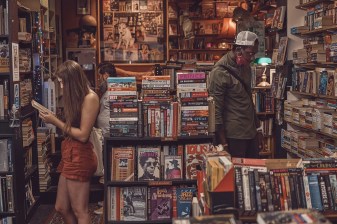
Customers in Bookmongers of Brixton, a book store in London. Apps have struggled to reproduce online the kind of real-world serendipity that puts a book in a reader’s hand. Tom Jamieson for The New York Times

Yesterday’s post notwithstanding, my favorite book review in ages was published five days ago. A couple weeks earlier I had read an essay that riffs off the book, written by the book author himself.  And I was all in–hook, line and sinker as they say–after reading the author’s punchy riff. The reviewer, one of my favorite cultural commentators, filleted the book such that I had to question my susceptibility to the book author’s riff essay.

One reason I read book reviews in a variety of publications is to get the next best thing to in-store browsing; comparative criticisms. But finding and holding a book is a whole other thing. Alexandra Alter’s article, about how technology may afford that in a new way, is of interest; Tertulia, if you can simulate that sensation of discovery, I will be all in:

A New Way to Choose Your Next Book

Most books are sold online, where it’s impossible to replicate the experience of browsing in a brick-and-mortar store. Book-discovery apps aim to change that.

By some measures, the book business is doing better than ever.

Last year, readers bought nearly 827 million print books, an increase of roughly 10 percent over 2020, and a record since NPD BookScan began tracking two decades ago.

But all is not as rosy as it seems. As book buyers have migrated online, it has gotten harder to sell books by new or lesser known authors. Continue reading
What the #@ ϟ ⚛︎!

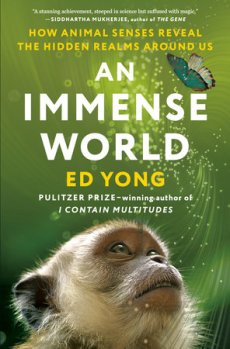
The first mention of humpback whales in our pages, more than a decade ago, was a very brief reference in a post explaining the tragedy of the commons, a precursor to Seth’s environmental history honors thesis.  One post mentions humpback whales in Monterey Bay but we missed the video above until now. There have been so many posts about these whales, that missing it makes the following book review all the more interesting to read to the end. Of course, since it is a review by Elizabeth Kolbert, about a book by Ed Yong, you will want to read to the end anyway:

The Strange and Secret Ways That Animals Perceive the World

Nonhuman creatures have senses that we’re just beginning to fathom. What would they tell us if we could only understand them?

One evening almost sixty years ago, a Tufts University researcher named Roger Payne was working in his lab when he heard a radio report about a whale that had washed up on a beach nearby. Although it was a cold, wet March night, he decided to drive to the shore. Continue reading

Really, Starbucks?

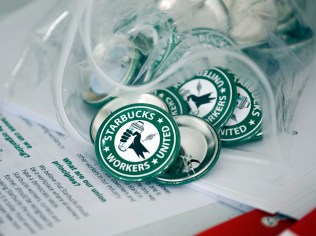
Pro-union pins sit on a table during a watch party for Starbucks’ employees union election in December in Buffalo, N.Y.  Starbucks union organizers say the company is closing a New York store to retaliate. Joshua Bessex/AP

Most of the companies and places and people we ask the question “Really?” of are more clearly acting in bad faith. In this case we are more puzzled that certain. We have generally been a fan of the company that had much to do with improving the lot of coffee farmers, with educating the public about coffee quality, with treating its employees fairly, and many other good works. If their employees feel the need to organize, and clearly want to organize, then Starbucks not supporting them seems out of character. Closing a shop location in Ithaca, a town we know well, may be due to that town being cosmopolitan enough to have several good coffee options:

Starbucks union says the coffee giant is closing a store to retaliate

Starbucks is closing a store in Ithaca, N.Y., in what Starbucks union organizers are calling an illegal move of retaliation after workers at the location voted to unionize. Continue reading

Two Wheels Good, The People’s Nag

The historian Jill Lepore has only been linked to twice before in our posts. Not more, because her topical variety is constantly beyond the scope of topics we focus on.

But her most recent essay is on topic for us. Bicycles might have been the invention that kept us part way out of the climate crisis, but then came the car.

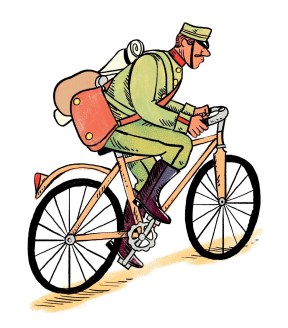
She uses the publication of the book to the right as a launch pad for an excellent history of the bicycle, combined with personal history:

Bicycles Have Evolved. Have We?

From the velocipede to the ten-speed, biking innovations brought riders freedom. But in a world built for cars, life behind handlebars is both charmed and dangerous.

My first bicycle was not, in fact, a bicycle. I rode it in 1968, when I was two years old and as tubby as a bear cub. It had four wheels, not two, and no pedals: strictly speaking, it was a scooter. But Playskool called it a Tyke Bike, so I say it qualifies, and aside from the matte-black, aluminum-alloy number that I’ve got now, which is called (by the manufacturer dead seriously, and by me aspirationally) the Bad Boy, the Tyke Bike may be the swankiest bicycle I’ve ever ridden. Continue reading
Adaptation Was Better Than Doing Nothing, But Nowhere Near Good Enough

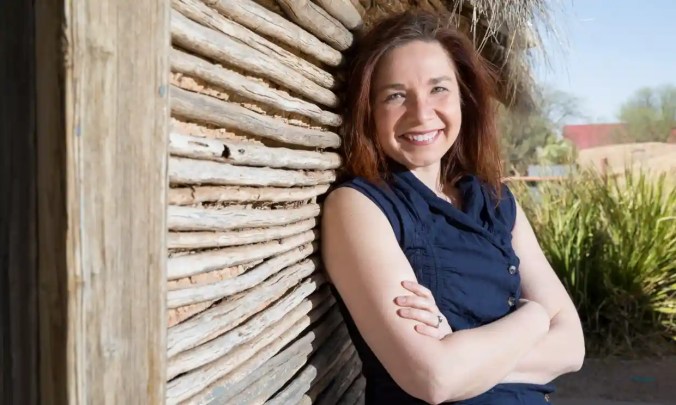
Katharine Hayhoe warns that if we continue emitting greenhouse gases no adaptation will be possible. Photograph: Courtesy of Dr Katharine Hayhoe

We have been promoting adaptation for about as long as we have been posting here.  Fiona Harvey the Guardian’s Environment correspondent, interviews a scientist who will not soft peddle how far gone we are from those options:

We cannot adapt our way out of climate crisis, warns leading scientist

Katharine Hayhoe says the world is heading for dangers people have not seen in 10,000 years of civilisation

The world cannot adapt its way out of the climate crisis, and counting on adaptation to limit damage is no substitute for urgently cutting greenhouse gases, a leading climate scientist has warned. Continue reading

What Is Inside Those Shipping Containers?

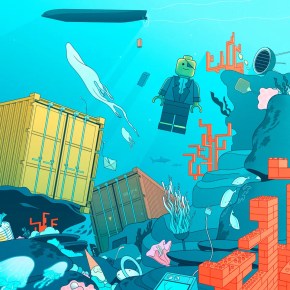
The shipping container is a lesson in the uncontainable nature of modern life. Illustration by Bianca Bagnarelli

We had never thought to ask the question before, but now it seems quite interesting. Give half an hour to Kathryn Schulz, whose writing has frequently interested us, to understand why:

When Shipping Containers Sink in the Drink

We’ve supersized our capacity to ship stuff across the seas. As our global supply chains grow, what can we gather from the junk that washes up on shore?

There is a stretch of coastline in southern Cornwall known for its dragons. The black ones are rare, the green ones rarer; even a dedicated dragon hunter can go a lifetime without coming across a single one. Continue reading

More Māori Ancestral Knowledge Coming Your Way

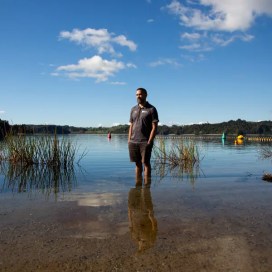
William Anaru, the biosecurity manager of the local tribe, Te Arawa, at Lake Rotomā. Cornell Tukiri for The New York Times

Pete McKenzie shares more from the place where ancient knowhow is respected:

As a weed choked a New Zealand lake, a tribe found a surprising solution in a centuries-old tool, adding to a pitched debate over how Indigenous knowledge can complement conventional science.

LAKE ROTOMA, New Zealand — A riot of native plant life once covered the shallows of Lake Rotomā, one of the many bodies of water that speckle New Zealand’s upper North Island. At night, mottled green crayfish scuttled from the deep to graze beneath the fronds in such plentiful numbers that the local Māori tribe could gather a meal in a few minutes of wading. Continue reading

Biggest Plant On Earth

The Posidonia australis seagrass meadow in Shark Bay, Western Australia. Photograph: Rachel Austin/UWA

We have posted several times about the world’s largest living thing. Since fungi are a different category of life, that leaves room for something to be classified as the largest living plant. Thanks to Graham Readfearn for this Guardian article pointing out to us what that thing is, and where:

The plant’s spread can be seen in this aerial view of Shark Bay. Photograph: Angela Rossen

Scientists discover ‘biggest plant on Earth’ off Western Australian coast

Genetic testing has determined a single 4,500-year-old seagrass may have spread over 200 sq km of underwater seafloor – about 20,000 football fields

About 4,500 years ago, a single seed – spawned from two different seagrass species – found itself nestled in a favourable spot somewhere in what is now known as Shark Bay, just off Australia’s west coast. Continue reading