Birds, Habitat & The Value Of Ecosystem Services

Fruit-eating animals spread the seeds of plants in ecosystems around the world. Their decline means plants could have a harder time finding new habitats as the climate changes. Karl-Josef Hildenbrand/DPA/AFP via Getty Images

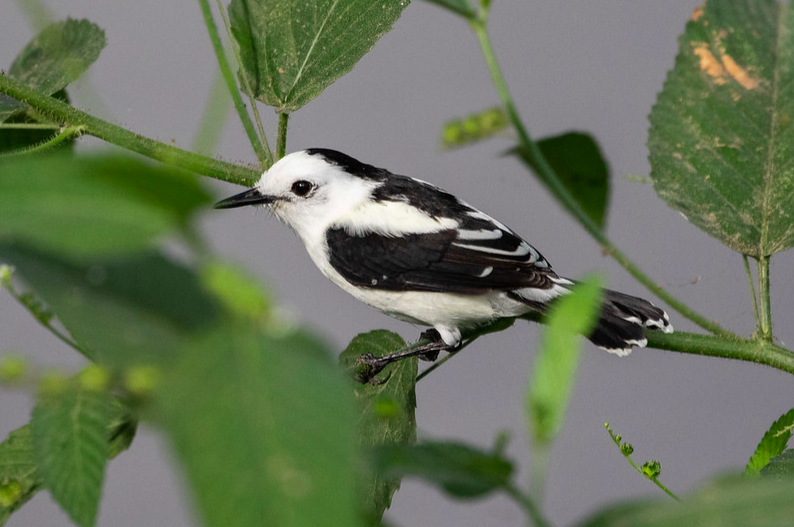
From the time we started managing lodges in biodiversity hotspots, bird habitat became an important sub-component of my professional life. Later, when Seth was working at the Cornell Lab of Ornithology, I learned to appreciate a bit more about the ecosystem services birds provide their habitats. I think more frequently about the protection of bird habitats now due to our coffee work,  as well as the conservation benefits that bird watchers might provide to bird habitats.

The importance of the ecosystem services birds provide their habitats will become more obvious as a result of disruptive rising temperatures. Thanks to Lauren Sommer and National Public Radio (USA) for one more way to think about birds’ services as the planet adapts:

To get by in a changing climate, plants need animal poop to carry them to safety

Evan Fricke knows exactly how long it takes, after a bird on the island of Saipan eats a piece of fruit, for it to come out the other end (Answer: as little as 10 minutes).

“There’s always this poop angle to my research,” says Fricke, an ecologist with Rice University. “PhD in bird poop basically.” Continue reading

Plastic Transformed With Purpose

Interior detail of “Earth Poetica,” which is a huge globe created out of plastic waste. Amit Elkayam for The New York Times

The challenge of plastic is a topic that goes back a decade in our pages.  We have featured artisanal plastic upcycling initiatives that we have supported entrepreneurially, as well as articles about other artisanal initiatives.

Today, in the same vein: Israeli Artist Turns Plastic Pollution Into ‘Earth Poetica’.

Beverly Barkat in her Jerusalem studio assembling “Earth Poetica,” a huge globe, from plastic waste. Its permanent home will be a building at ground zero in Manhattan. Amit Elkayam for The New York Times

In Beverly Barkat’s quest to connect people with nature, she found that environmental waste could be a powerful medium.

JERUSALEM — When the Jerusalem artist Beverly Barkat began to create an artwork for the lobby of a building in the new World Trade Center complex overlooking ground zero in Lower Manhattan, she aimed to come up with something architecturally site specific and impactful, large enough to connect with the space but not so enormous as to disconnect from the observer.

Barkat had a stark message to convey. Years earlier, she said, she had been struck by an image of children scavenging on a once-beautiful beach awash in plastic waste. Continue reading

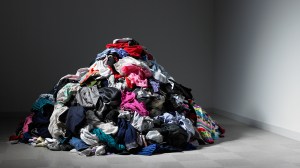
Too Much Hype About Too Much Stuff

The Economist recently promoted a notion:

Rags to riches – fashion as an asset class HOW DID second-hand clothes become fashion’s hottest buy? Online resale and rental firms are changing the calculus on what it means to buy fashion “as an investment”

Hype? We will see. The “trapped” value of fashion items in our homes might get liberated as discussed, but what about the fundamental trap of fashion?

Ryan McVay/Getty Images

Kenneth P. Pucker shares an important lesson from his time in industry, and kudos to Harvard Business Review for giving him the platform to explain The Myth of Sustainable Fashion:

Few industries tout their sustainability credentials more forcefully than the fashion industry. Products ranging from swimsuits to wedding dresses are marketed as carbon positive, organic, or vegan while yoga mats made from mushrooms and sneakers from sugar cane dot retail shelves. New business models including recycling, resale, rental, reuse, and repair are sold as environmental life savers. Continue reading

A Question Worth Asking, Again And Again

Photograph by Matthew Porter for The Atlantic

Surprising the question needs asking, but after reading HOW BAD ARE PLASTICS, REALLY? you will understand the rhetorical purpose. The author, Rebecca Altman, has written plenty on the topic, and here in the Atlantic her perspective is clear:

They’re harmful to health, environment, and human rights—and now poised to dominate this century as an unchecked cause of climate change.

This is hardly the time to talk about plastics is what I think when Dad, hovering over the waste bin at a post-funeral potluck, waves me over, his gesture discreet but emphatic. He has retrieved from the trash a crystalline plastic cup, with fluted, rigid sides. “Polystyrene,” he grins, inverting the cup to reveal its resin code (a 6 stamped inside the recycling symbol). “But not my kind.” Continue reading
The Great Bamboozle

Bill McKibben’s newsletter on Substack asks the question:

What happens if you greenwash greenwash?

It’s hard to go lower than net zero….

Greenwashing began, as it name implies, as a gentle, barely perceptible rain of fibs. Back at the start, it was mostly pictures; it was pretty easy to gauge how much environmental damage a company did by the number of penguin photographs it felt it needed to include in its annual report. Continue reading

Yakutia’s Outsized Impact

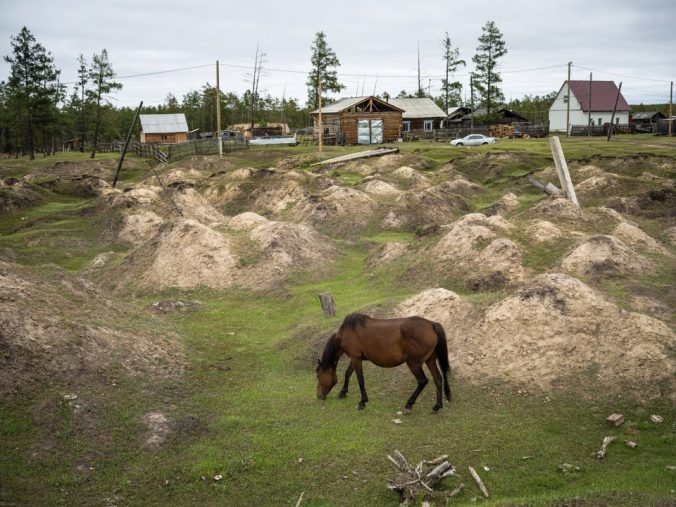
“The problem is, you can’t just turn off, let alone reverse, permafrost thaw,” one scientist said. “It won’t be possible to refreeze the ground and have it go back to how it was.” Photographs by Alexander Gronsky for The New Yorker

Joshua Yaffa reminds me, vividly, that my work in Yakutia 16 years ago was an exercise in futility:

The Great Siberian Thaw

Permafrost contains microbes, mammoths, and twice as much carbon as Earth’s atmosphere. What happens when it starts to melt?

Flying over Yakutia, in northeastern Russia, I watched the dark shades of the boreal forest blend with patches of soft, lightly colored grass. Continue reading

Schoonschip’s Floating Homes

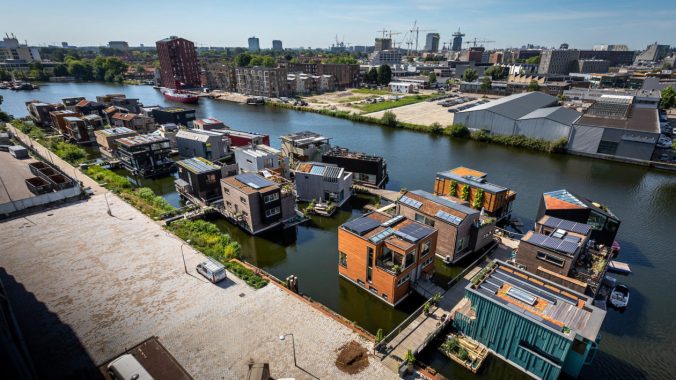
Schoonschip, a floating home development in Amsterdam. ISABEL NABUURS

Shira Rubin, writing in Yale e360, offers a view of Holland’s innovative housing approach to a future where the increase in waterscape can become an advantage. And she illustrates how this might be of use in other parts of the world facing the same challenges from rising seas:

Embracing a Wetter Future, the Dutch Turn to Floating Homes

Faced with worsening floods and a shortage of housing, the Netherlands is seeing growing interest in floating homes. These floating communities are inspiring more ambitious Dutch-led projects in flood-prone nations as far-flung as French Polynesia and the Maldives.

When a heavy storm hit in October, residents of the floating community of Schoonschip in Amsterdam had little doubt they could ride it out. They tied up their bikes and outdoor benches, checked in with neighbors to ensure everyone had enough food and water, and hunkered down as their neighborhood slid up and down its steel foundational pillars, rising along with the water and descending to its original position after the rain subsided. Continue reading

The New Forestry In Germany

KOENIGSHAIN, GERMANY – MAY 19: Aerial photograph of dead conifers in a mixed forest on May 19, 2020 in Koenigshain, Germany. Because of the last years of drought needleleaf forests are infested by bark beetles. Many trees are felled to stop spreading these beetles. (Photo by Florian Gaertner/Photothek via Getty Images)

Gabriel Popkin offers this overview of the history of, and the new German approach to forest management in his article titled FOREST FIGHT, in Science:

Forest researchers Pierre Ibisch (left) and Jeanette Blumröder check a data logger in a pine forest that burned in 2018 and is now being allowed to naturally regenerate. LENA MUCHA

Germany invented “scientific” forestry. But a huge dieback triggered by climate change has ignited a fierce debate over how the nation should manage its trees

SCHWENDA, GERMANY—Last summer, Friederike and Jörg von Beyme stood on a bramble-covered, Sun-blasted slope outside this small town in eastern Germany. Just 4 years ago, the hillside, part of a nearly 500-hectare forest the couple bought in 2002, was green and shady, covered in tall, neatly arranged Norway spruce trees the couple planned to cut and sell. Continue reading

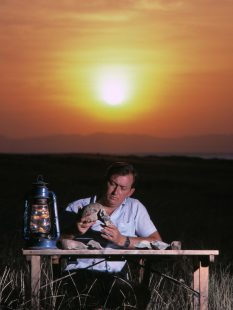
Postscript On Leaky

Over the decades, Leakey inspired countless scientists and activists through his books and talks. Photograph by William Campbell / Getty

We do not normally link to obituaries, but since I felt compelled to recently, this one seems a must also. Nearly two years ago we linked to a profile of Richard Leakey and the author of that profile has written a moving postscript:

On the night of January 2nd, I got a text from Paula Kahumbu, the Kenyan conservationist. “Dear friends, sad news,” she wrote. “Richard Leakey just passed away at his home in Kona Baridi.” Leakey, the renowned paleoanthropologist and wildlife conservationist, had been her mentor—a mercurial, controversial advocate for African wildlife, whose tumultuous career was central to Kenya’s history in the past half century. Continue reading

Tiles, Heritage & Conservation

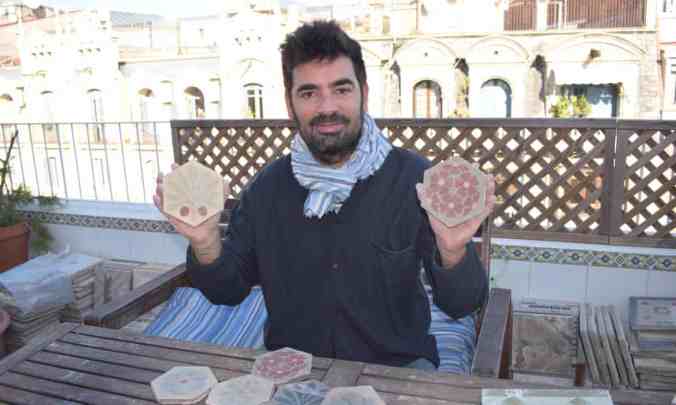
Joan Moliner with some of the 1,600 tiles he has found in builders’ skips. Photograph: Stephen Burgen/The Guardian

When we were working on the project that became Xandari Harbour, articles like the one below, or any about architectural preservation, were the type we most enjoyed sharing. It has been too long, so here goes:

A man on a mission to preserve Barcelona’s decorative floor tiles

As 19th-century apartment blocks become luxury flats, Joan Moliner is saving part of the city’s heritage

A tile display with Moliner’s Brompton bicycle. Photograph: Joan Moliner

Each morning, from the moment when Joan Moliner unfolds his bicycle for the ride to work to Barcelona city centre, he is on a mission, one eye on the road, the other on builders’ skips. His quarry, if that’s the word, is cement floor tiles.

All over the city, 19th-century apartment blocks are being made over into luxury flats. In the process, a vital part of Barcelona’s heritage – its decorative tiled floors – is ending up in a dump.

Conservation of the architectural heritage rarely extends beyond listing the facade, despite the wealth of interior detail in buildings erected at a time when Barcelona was a mecca for artists and artisans. Continue reading