
Frauenkirchen, Austria
Really, Australia?
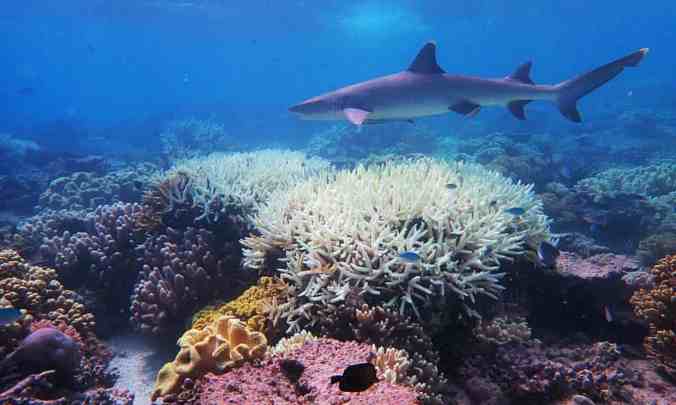
The Unesco world heritage committee’s decision on the Great Barrier Reef’s ‘in danger’ status is currently scheduled for 23 July. Photograph: James Cook University/AFP via Getty Images
It’s been a couple months since we asked anyone the fundamental question. Ok, we acknowledge our not being qualified to make the scientific judgement on whether the Great Barrier Reef is in sufficient danger to be listed as such, officially. But UNESCO has the qualified scientists, so let them do their job without undue influence. It sure seems likely to help the entire world to see how fossil-fueled climate change is impacting such natural wonders. It would raise consciousness in a way that might even be good for Australia–whose government obviously thinks otherwise. Hopefully UNESCO will stick to its principles and resist this lobbying. When oil-based economies come to lend a hand, watch out for conflict of interest:
‘Fossil fuel friends’: Saudi Arabia and Bahrain back Australia’s lobbying on Great Barrier Reef
Exclusive: oil rich nations back push against Unesco recommendation to have reef placed on world heritage ‘in danger’ list Continue reading
Bird of the Day: Yellow-eyed Babbler
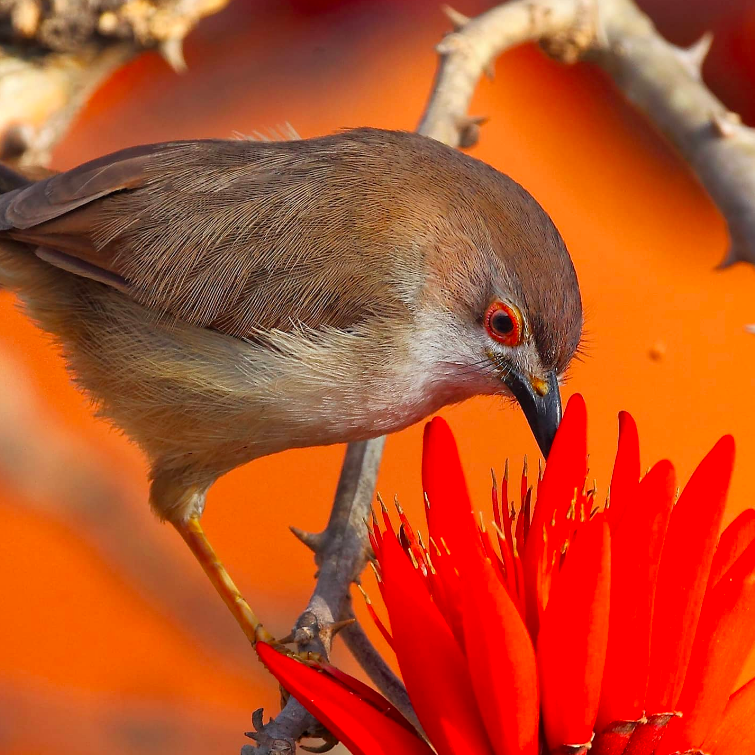
Bangalore, Karnataka
Reflecting On The Water’s Simplicity & Its Surrounding Complexity
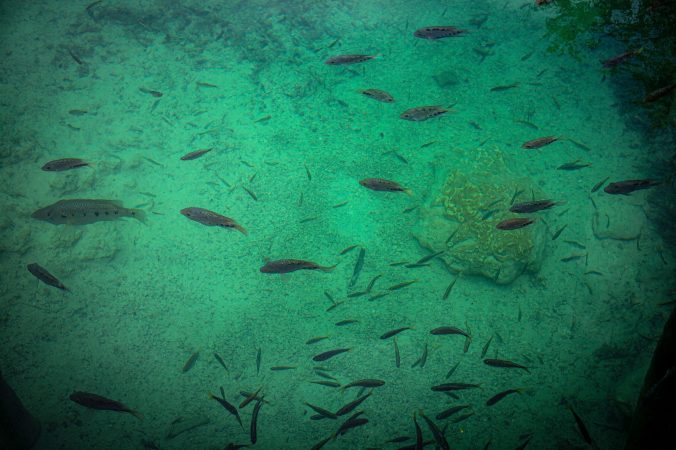
Photograph by Alejandro Cegarra for The New Yorker
My work in Costa Rica, motivated by previous work on my doctoral dissertation, started with an expectation that to protect nature we should search for entrepreneurial approaches that can complement regulatory and/or philanthropic efforts. Since then I am more convinced than ever that effective conservation depends on all three types of efforts.
So, after reading about the lagoon in the story below my thoughts wander into that territory, hoping that the author and her adopted community find a location-specific adaptation of that trifecta. A key insight of her story is the recognition of how easily perspective can be lost about the phenomenal beauty of some places in their natural state. We adjust, for better or worse:
How a Mexican Lagoon Lost Its Colors
Bacalar is poised to become one of the country’s great tourist destinations—if its ecosystem can survive.
The water of the Bacalar Lagoon, on the east coast of Mexico’s Yucatán Peninsula, is as pure as glacial ice. It contains scant organic material: some of its oldest inhabitants are oligotrophic microorganisms, so called for their minimal diet. As a result, the lagoon puts on a spectacular display in the sunlight. It’s said that there are seven distinct shades of blue in the water, from deep-sea indigo to sunset violet. In English, Bacalar is sometimes called the Lagoon of Seven Colors; its original name in Mayan, Siyan Ka’an Bakjalal, translates roughly to “place surrounded by reeds where the sky is born.”…
Read the entire story here.
Bird of the Day: Long-billed Corella
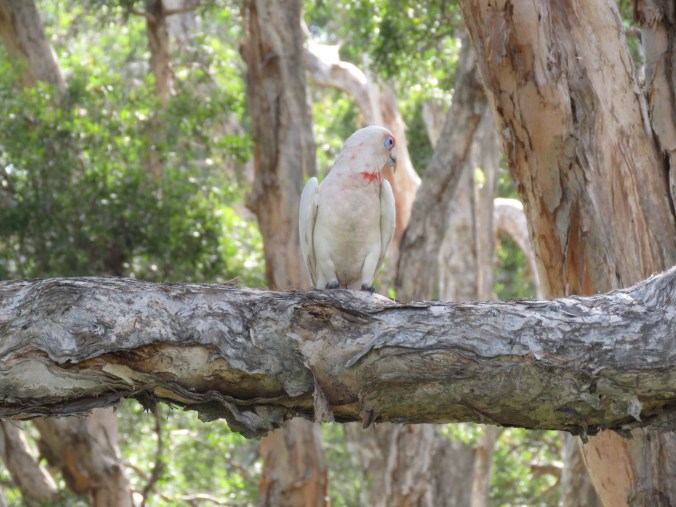
Sydney, New South Wales, Australia
Jane Goodall In Living Color
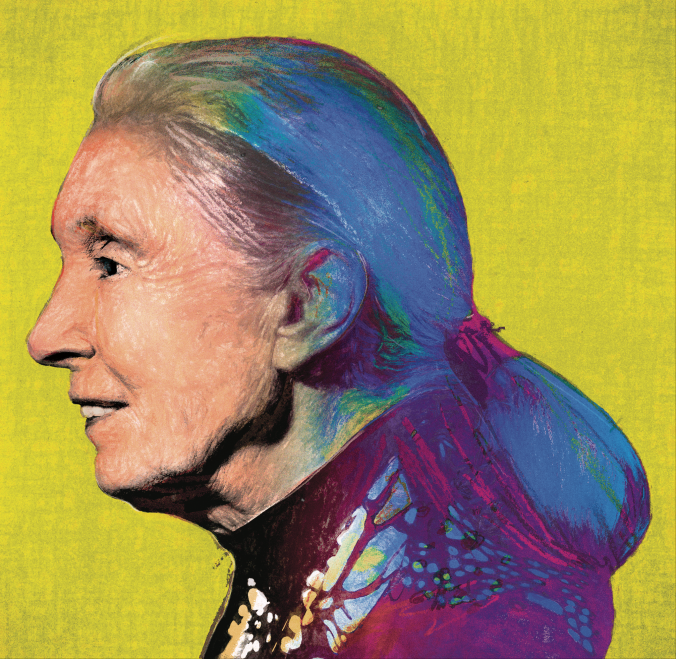
Long-time fans, far from first-time posting:
Why Jane Goodall Still Has Hope for Us Humans
Wherever the story of our natural world ultimately lands, Jane Goodall will have earned a proud place in its telling. Goodall, 87, first found fame in the early 1960s for her paradigm-busting work as a primatologist. Continue reading
Bird of the Day: Steller’s Jay
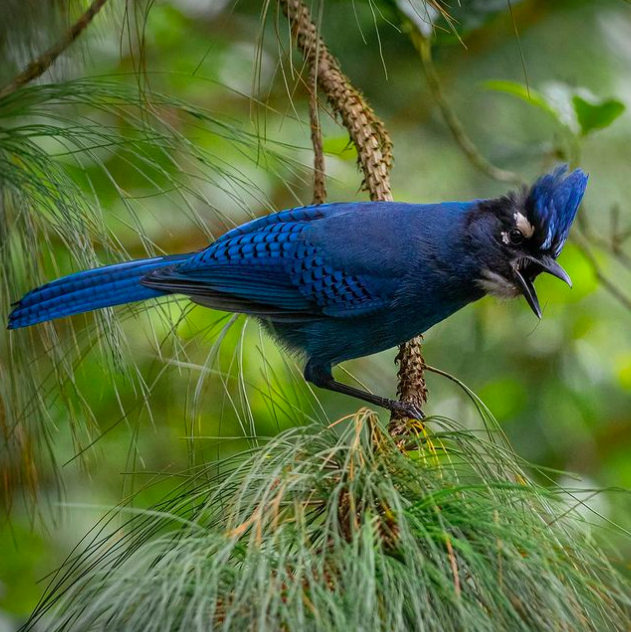 San Marcos, Guatemala
Adventures In Blue
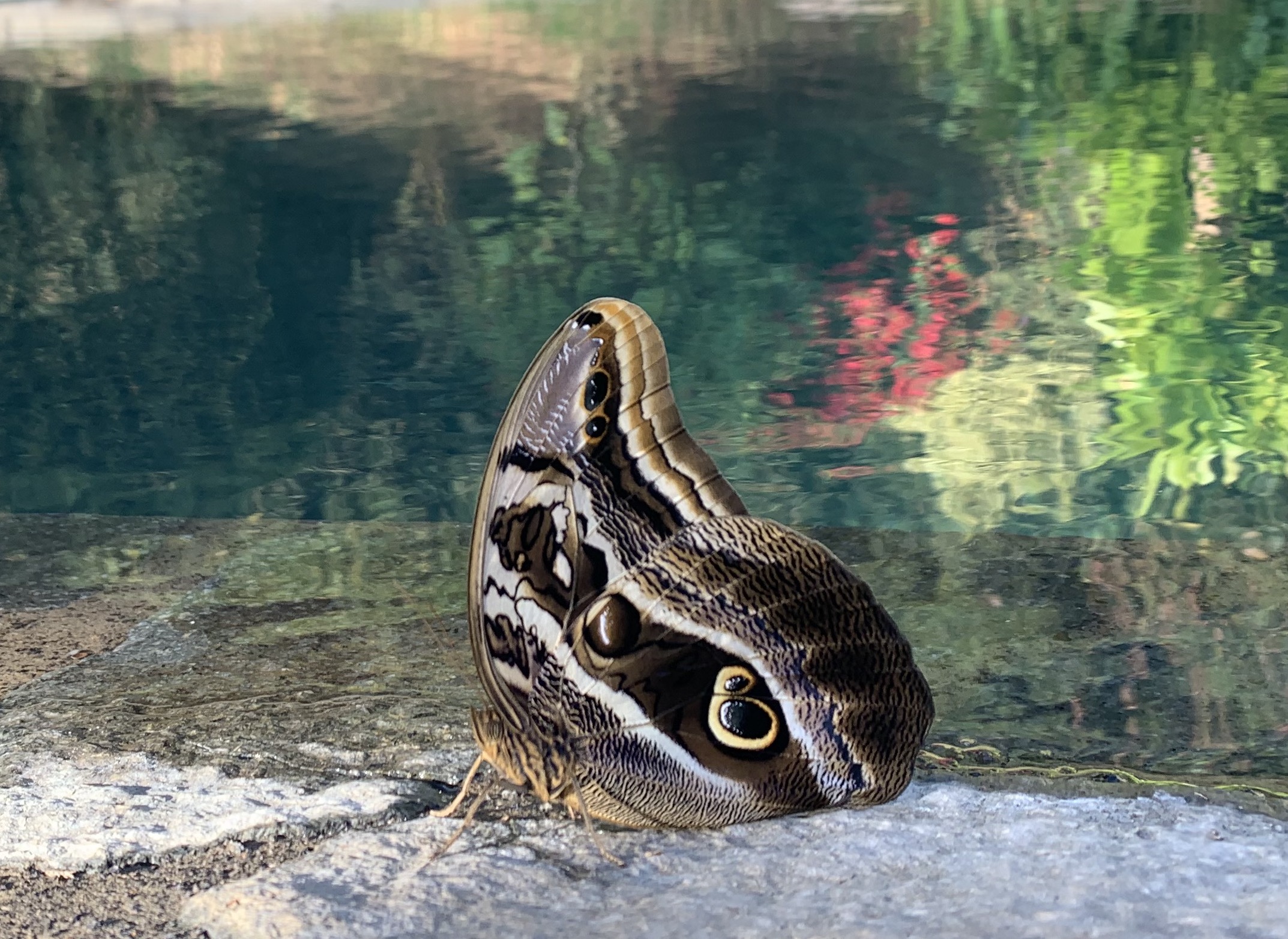
Blue morpho butterfly
The last time I posted about a blue insect you could see the blue. In the case of this butterfly above, all the blue is on the upper side of the wings, hidden in this view. To wrap up the thoughts started a couple days ago, I share a few more photos that for me qualify as visual micro-adventures.
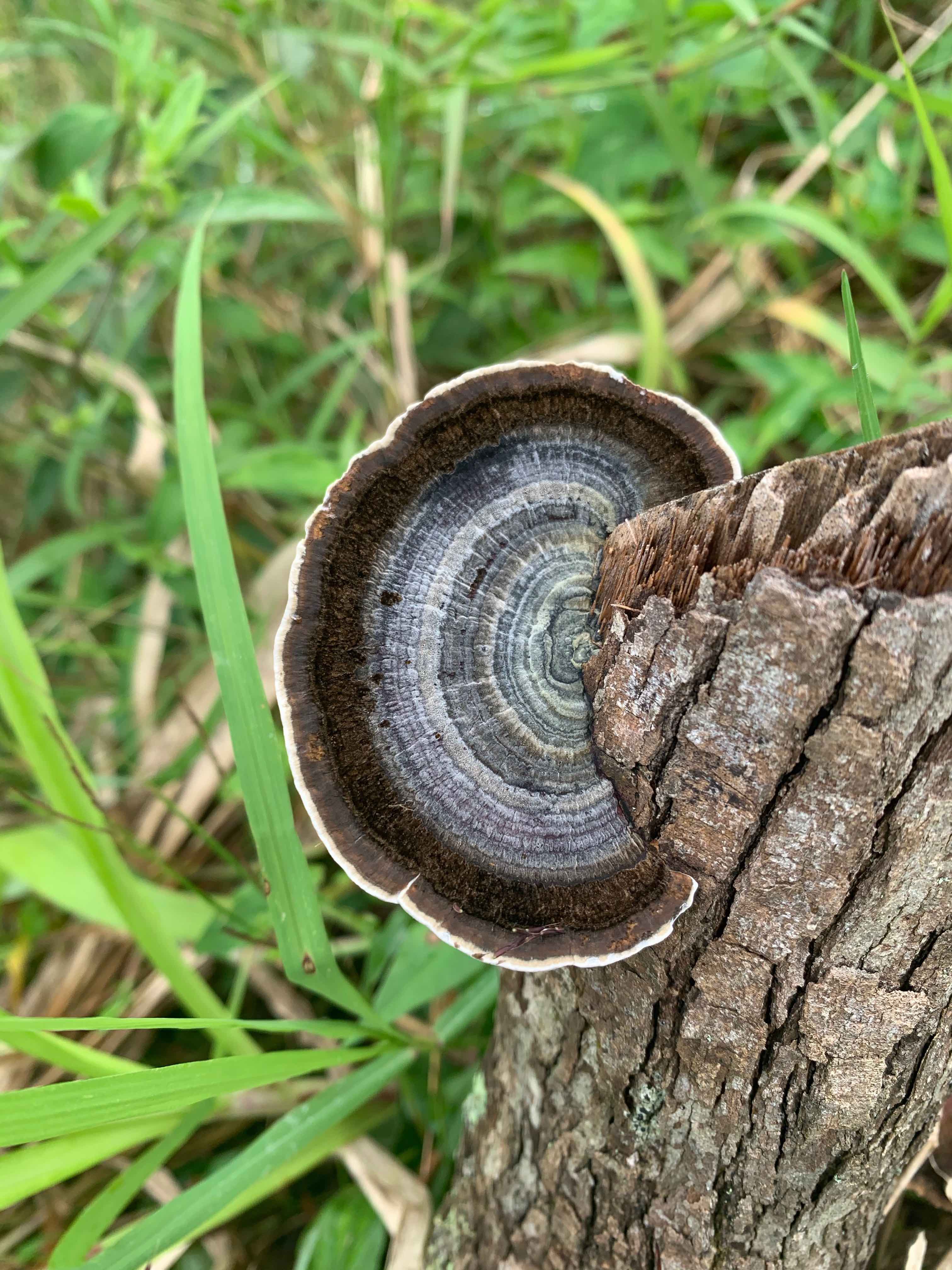
Probable identification: one of the 50 or so species of the Trametes genus of fungi
I do not know the species of this fungi, but I find it remarkable that it comes to my attention just after the surprise of seeing a blue morpho butterfly, not commonly seen on this land in Escazu. Remarkable because some of the colors in common, including an unexpected hint of blue.
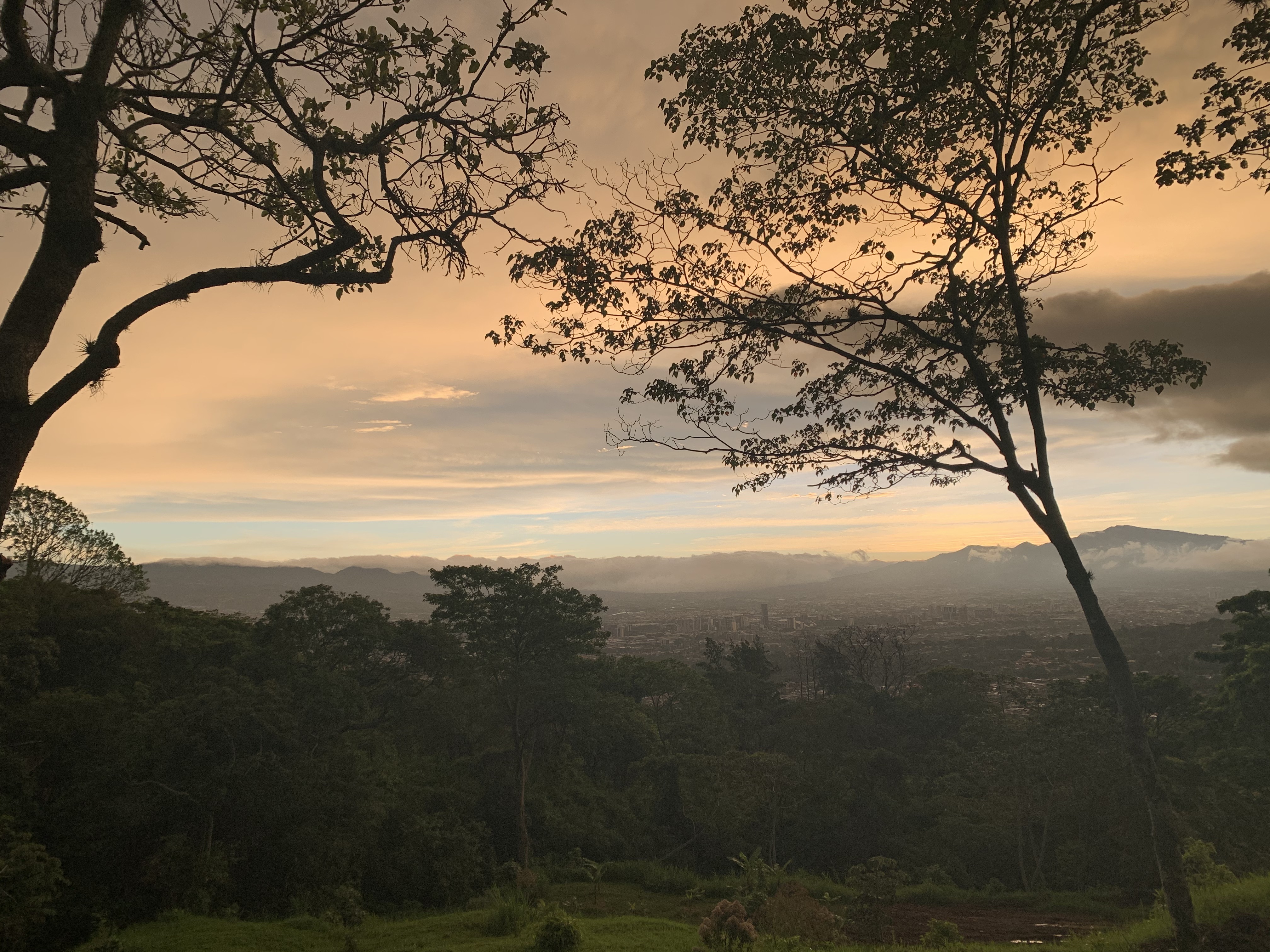
View to the east from Escazu as sun sets
Likewise, by the end of a day on this land, dusk may not produce a classical awe, but in the context of the various shades of brown it is something to still see some blue.
Bird of the Day: Greylag Goose
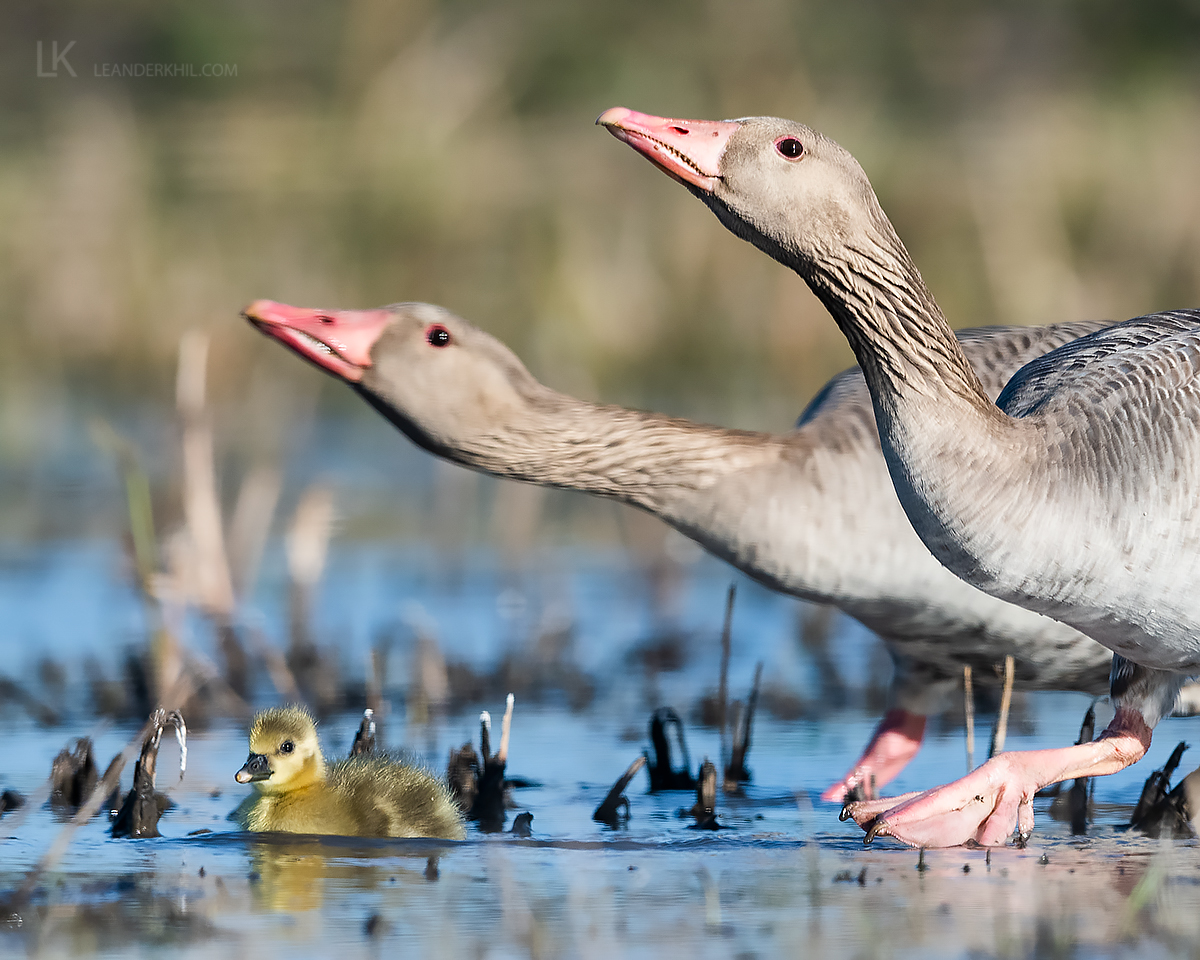
Frauenkirchen, Austria
Micro Versus Macro
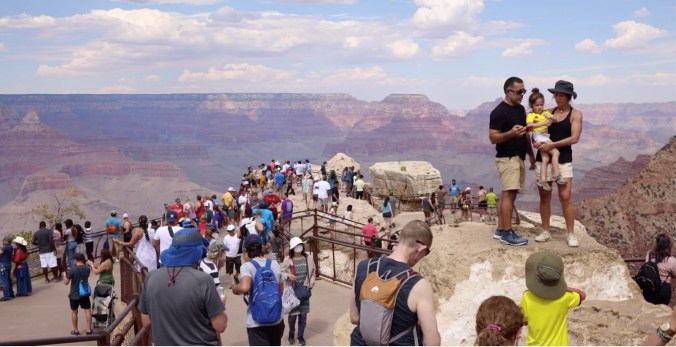
Mather Point, at Grand Canyon National Park, over the Fourth of July weekend.
Likely there is an algorithmic explanation for why the article I chose to riff on yesterday from one publication is followed by my coming across this article to riff on today as a follow-up:
PHOTO ESSAY
Americans are flocking to national parks in record numbers, in many cases leading to long lines and overcrowded facilities. Here’s what four parks looked like over the holiday weekend.
After so long being constrained from travel, and being socially distanced from others, I can imagine that all the people in all the crowded national parks are delighted by the combination of social and natural awe. As for me, I will continue the thoughts started yesterday, and share a few more images of a morning full of micro versus macro awe. About that ant I concluded with yesterday:
I have no clue about the species; but the herky-jerky movement is awesome. After that little parking lot observation, walking to the other side of the house, I see the hen again in a planter. I had shooed her away each recent morning, thinking that she was digging for worms or otherwise disrupting the growth of the herbs.
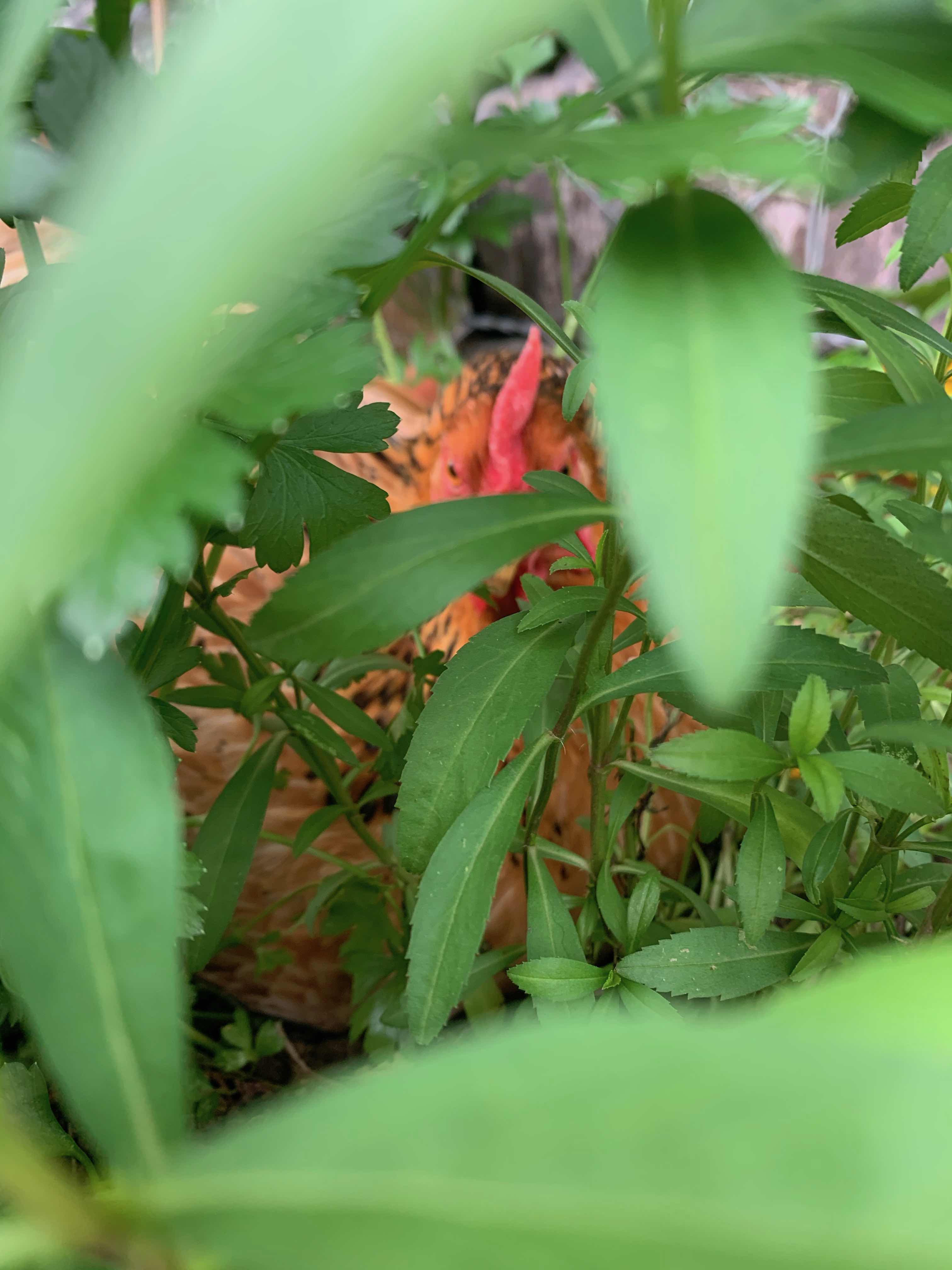
Hen again
I got her to vacate with such enthusiasm that she scrambled to the top of a tall column next to a mango tree where she often spends the night.
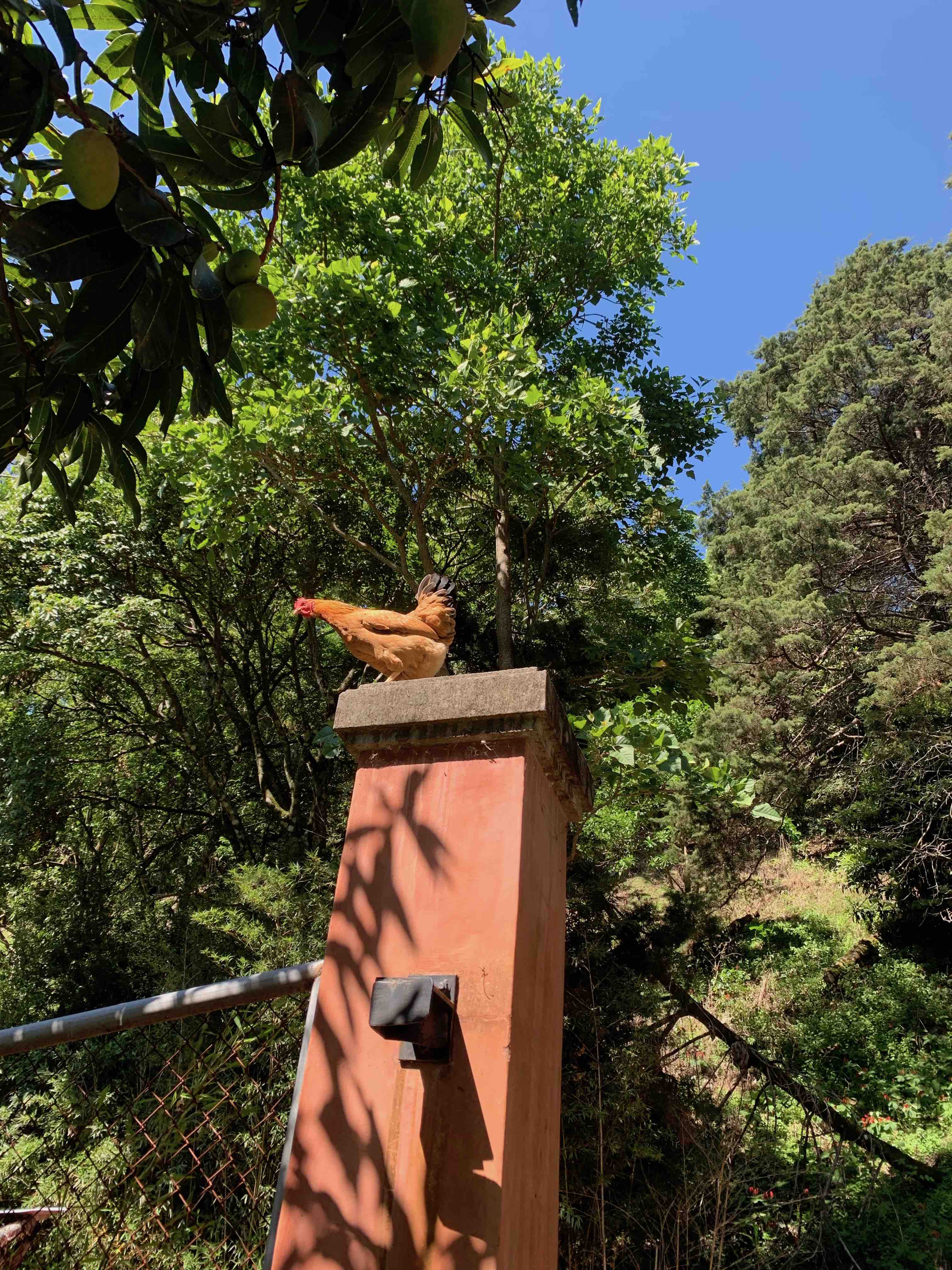
When I came back to inspect the damage to the herbs, I instead found what she was really doing there.
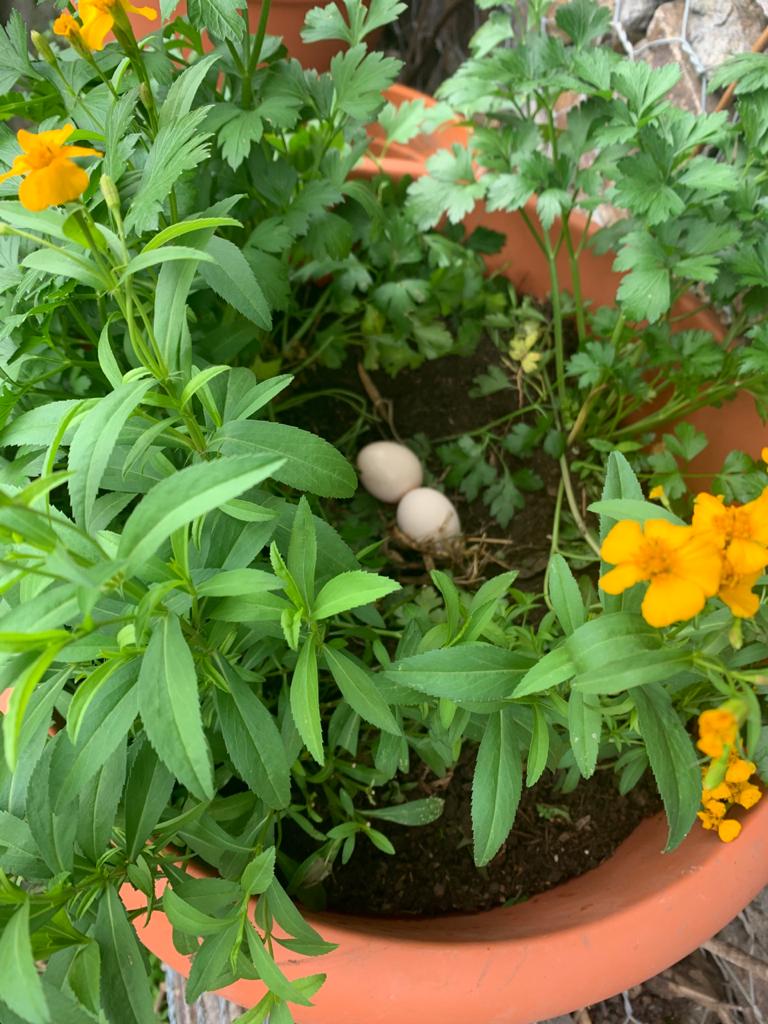
When your hen lays eggs in the tarragon and parsley bed, she is telling you something. Omelette
Not only not destructive; on the contrary, awesome breakfast.

Bird of the Day: American Avocet
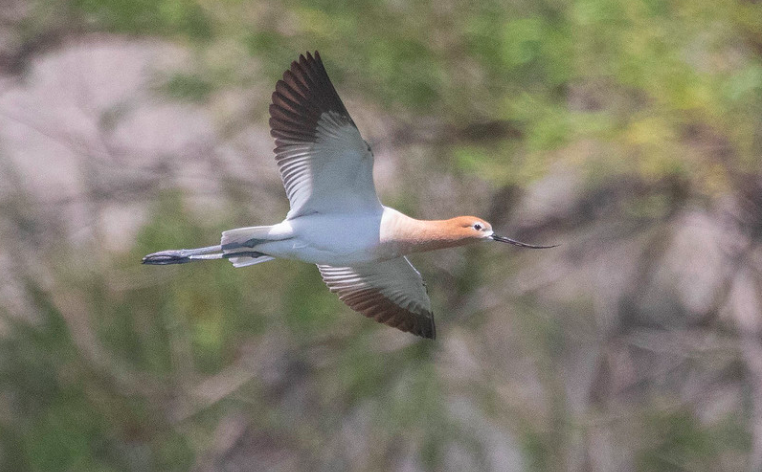
Terrell, TX
All In A Day’s Microadventures
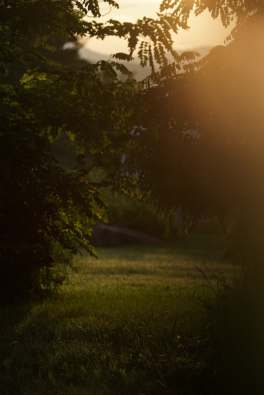
A New Hampshire lawn in June. John Tully for The New York Times
Emily Pennington has shared recommendations from some experienced folks about alternatives to the well-known spectacular adventures, such as hiking the Grand Canyon. She recommends trying microadventures in this article subtitled How to find a sense of awe and discover a miraculous world right outside your door. Early on she writes about what we are often looking for in the places we travel to :
…Researchers often describe awe as an emotion that combines an experience of vastness with both pleasure and a fear of the unknown. While many of us might consider these moments rare, ephemeral and tricky to reproduce, a few scientists are finding that this reverence is a skill that can be cultivated and has remarkable mental health benefits.
“Awe basically shuts down self-interest and self-representation and the nagging voice of the self,” said Dacher Keltner, a professor of psychology at the University of California, Berkeley. “That’s different from feeling pride or amusement or just feeling good. It’s like, ‘I’m after something sacred.’”
I have spent most days since early March 2020 looking for awe at or close to home, so I could relate immediately to what she was writing about in this article. A typical day starts with this view:
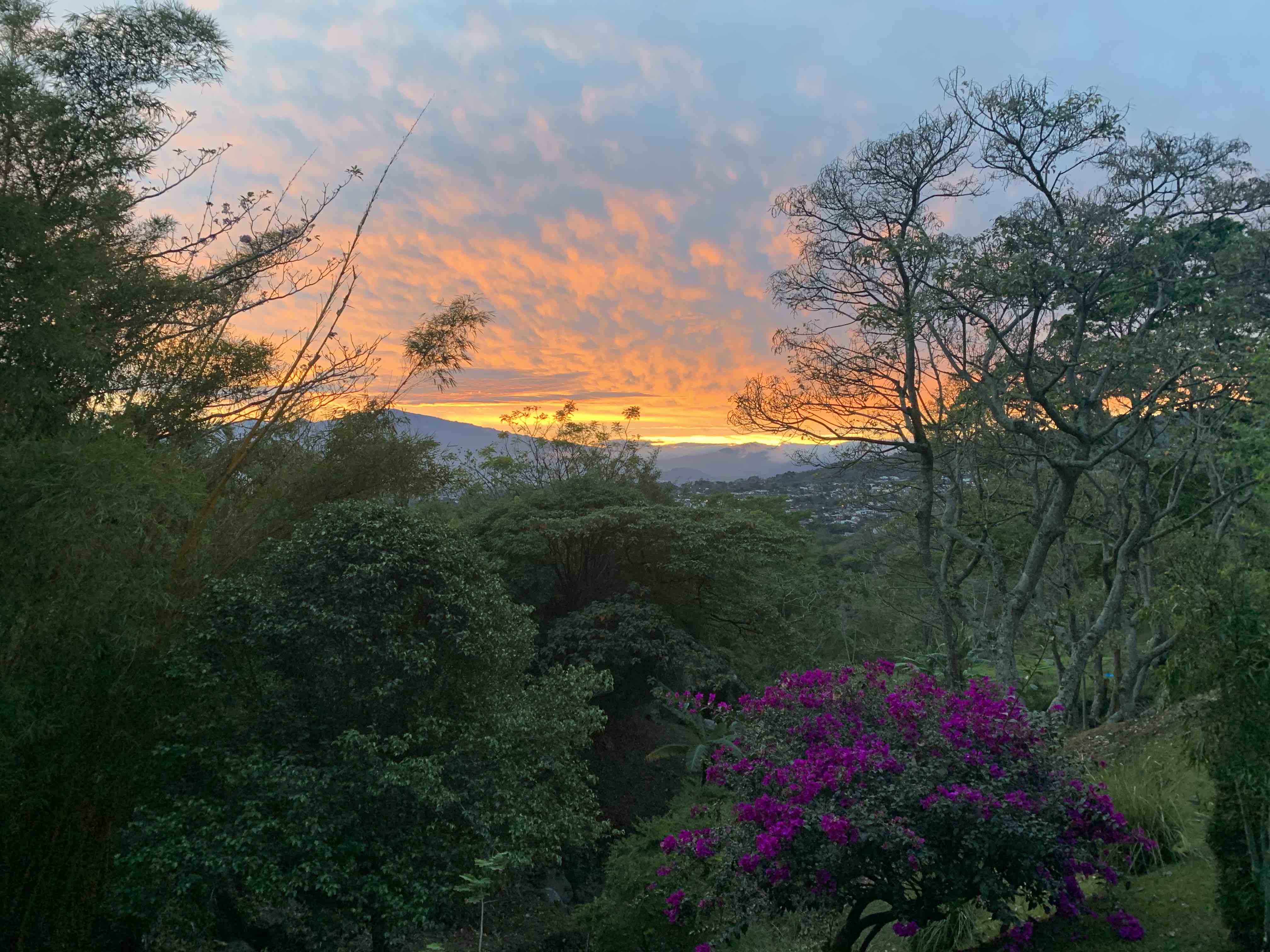
Start of a day’s microadventures
If you cannot imagine being awed by that, stop reading here. I will seek more awe as the day continues. Continue reading
Bird of the Day: King Vulture
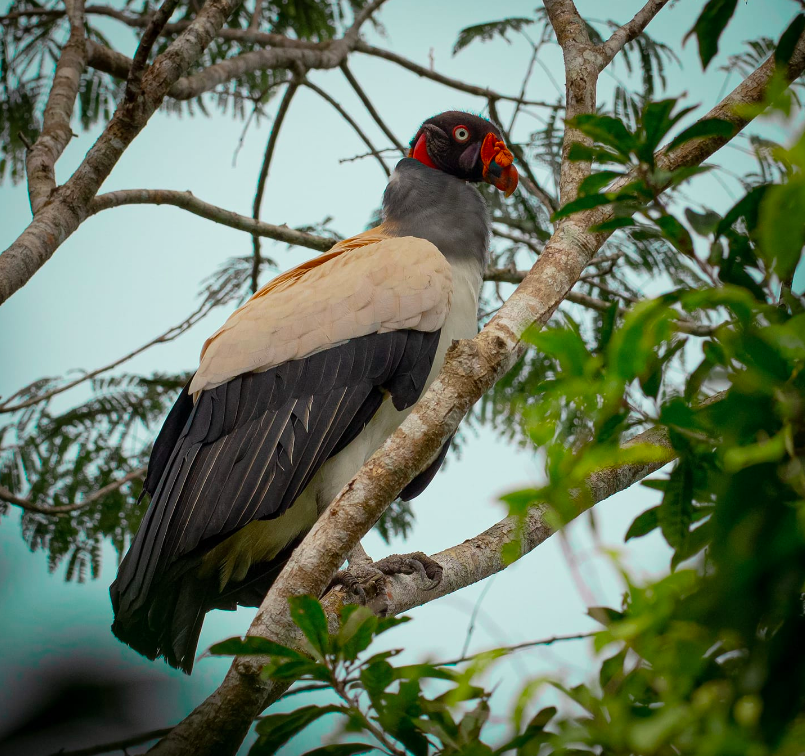
Biosfera Maya, Guatemala
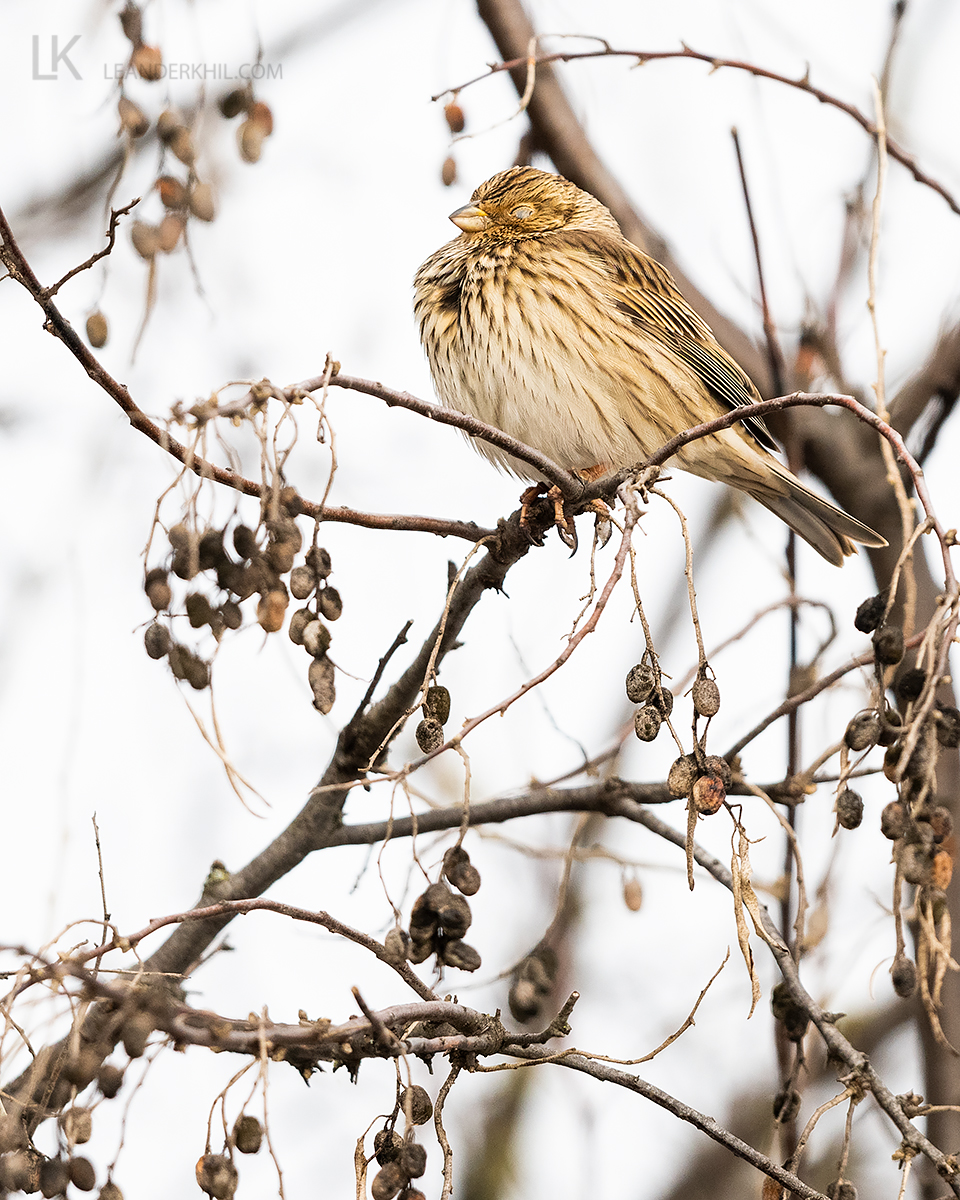
Bird of the Day: Corn Bunting
Mysterious Appearances Of Non-Migratory Birds

Andrea Mantegna’s “Madonna della Vittoria” was completed in Italy in 1496. Art work from © RMN-Grand Palais / Art Resource, NY
Rebecca Mead, whose last appearance in our pages was referred to just yesterday, explores a five-century old mystery involving birds that is a fun half-hour read, especially but not exclusively for bird nerds:
Where Did That Cockatoo Come From?
Birds native to Australasia are being found in Renaissance paintings—and in medieval manuscripts. Their presence exposes the depth of ancient trade routes.
“Madonna della Vittoria,” by the Renaissance painter Andrea Mantegna, must have looked imposing when it was first installed as an altarpiece in Santa Maria della Vittoria, a small chapel in the northern-Italian city of Mantua. The painting, which was commissioned by the city’s ruler, Francesco II Gonzaga, was completed in 1496, and measures more than nine feet in height. A worshipper’s eye likely lingered on its lower half—where the Virgin, seated on a marble pedestal, bestows a blessing on the kneeling, armored figure of Francesco—instead of straining to discern the intricacies of its upper half, which depicts a pergola bedecked with hanging ornaments and fruited vines. In the late eighteenth century, Napoleon’s forces looted the painting and transported it to the Louvre, where it now occupies a commanding spot in the Denon wing. Continue reading
Bird of the Day: Magnolia Warbler
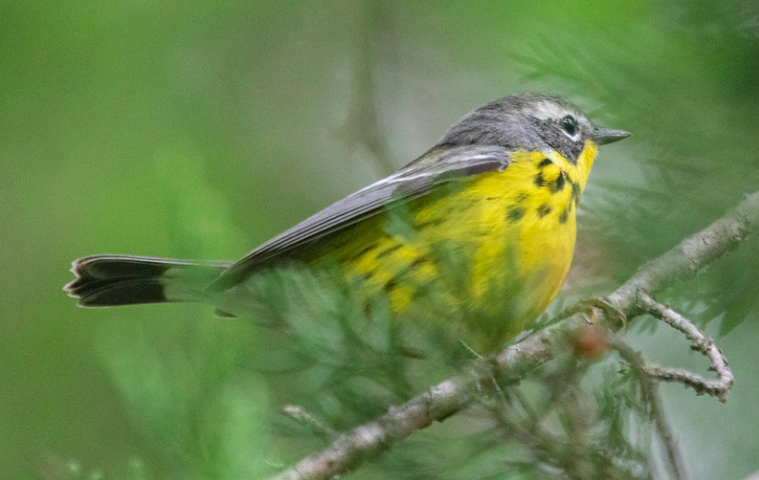
Lake Creek Trail, Williamson, TX
Sugarcane On The Curvy Berm & Other Wonders
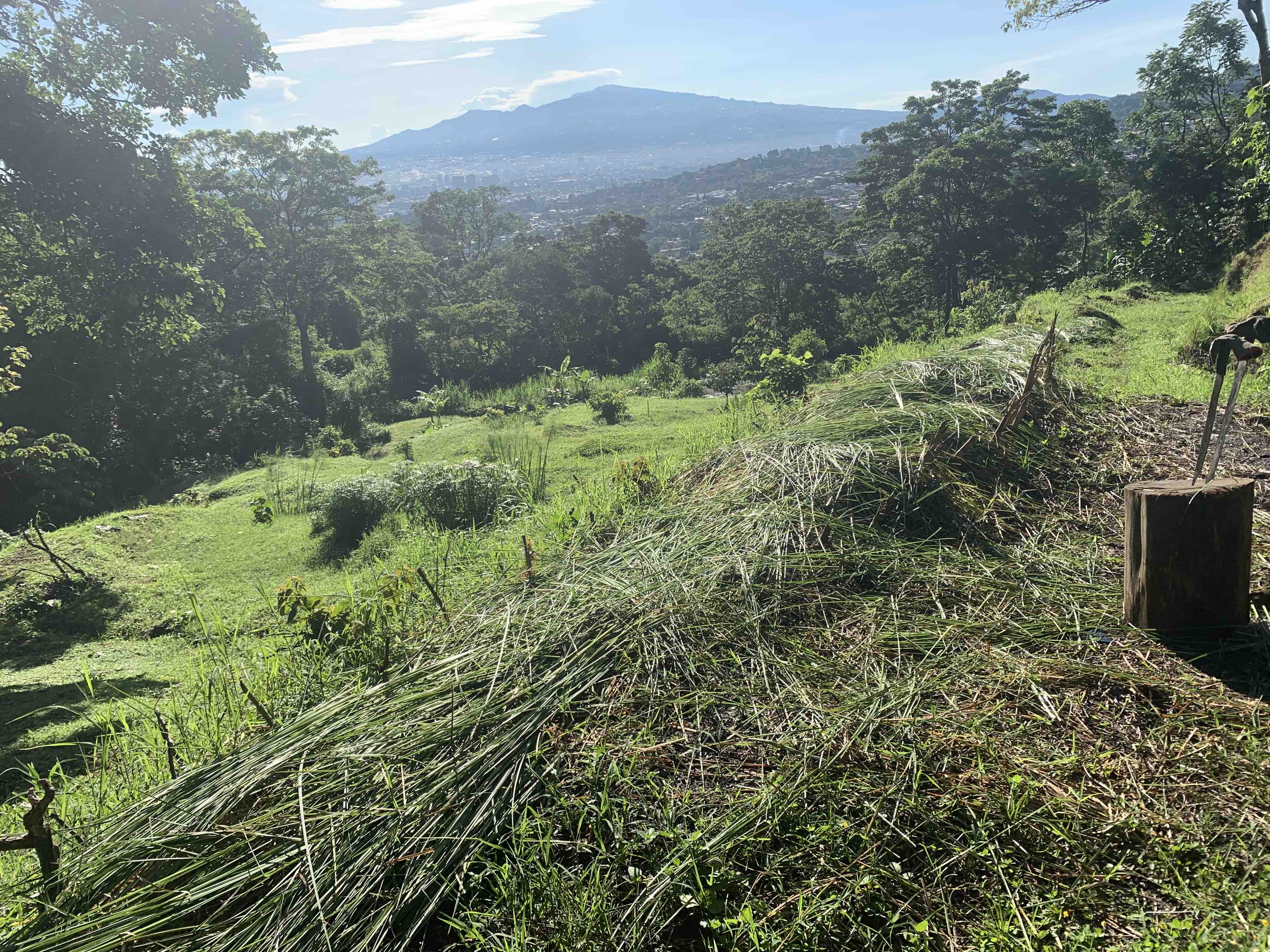
Sugarcane planted with vetiver grass mulching cover
The saving grace of the period from March, 2020 to the present day has been this few acres of land needing attention and care. Saving grace means that by giving attention and care to the land, I was simultaneously tending to my own wellbeing. The therapeutic value was such that by September, half a year of cloudy outlook was giving way to an urge to send postcards to the world. It was an urge urged by tending that land. As we began the second year of the venture that supports that land, all kinds of regenerative initiatives kept coming to my attention. And now it is nonstop planting around the curvy berm.
Bird of the Day: Sayaca Tanager
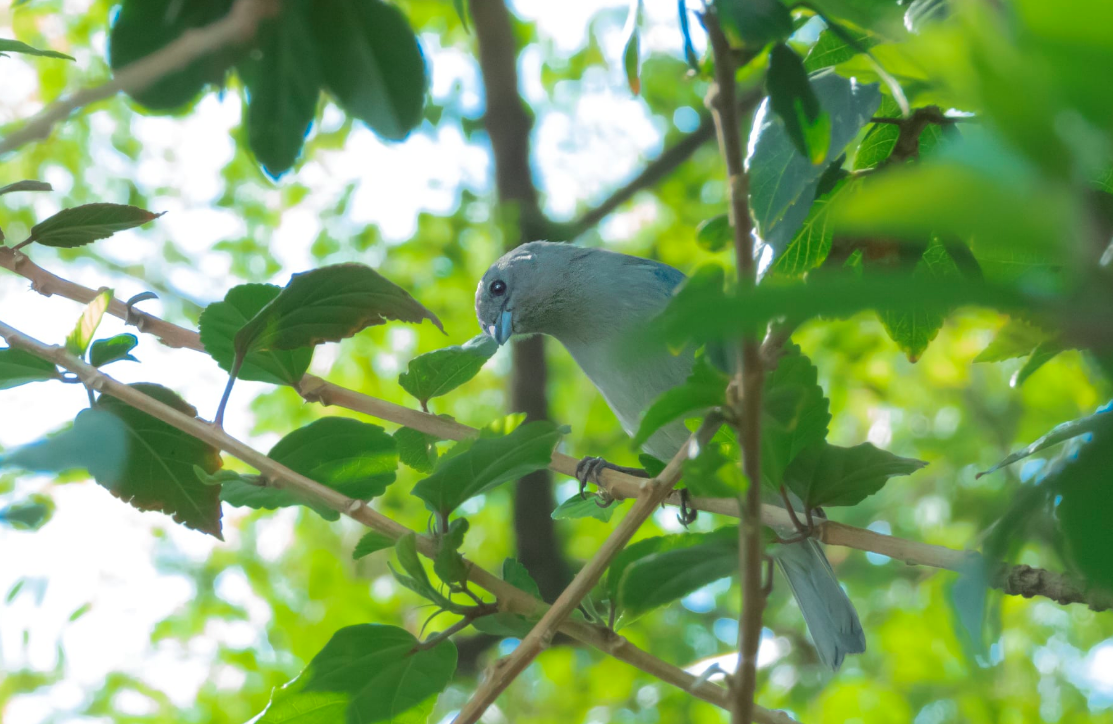
Plaza Barba de Padilla, Cochabamba, Bolivia
Weird Weather, Prophets Of Doom & Denialism’s Winning Streak
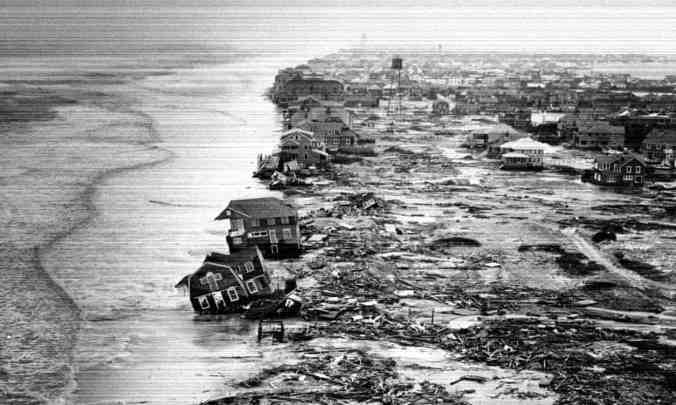
Homes destroyed by a storm in New York state in 1962. Photograph: Bettmann/Getty/Guardian Design
Yesterday’s link to a “winner” story is bookended by today’s long read about the “losers”–those who can read this–of the climate change game. Deniers of climate change come in many forms, but a common theme according to this detailed story is anti-regulatory zealotry. Deniers have won the major battles of public opinion for the last 60 years, while those ringing alarm bells on climate change may now be declared victors, if that is the right word, in the realm of reality versus opinion:
Sixty years of climate change warnings: the signs that were missed (and ignored)
The effects of ‘weird weather’ were already being felt in the 1960s, but scientists linking fossil fuels with climate change were dismissed as prophets of doom
In August 1974, the CIA produced a study on “climatological research as it pertains to intelligence problems”. The diagnosis was dramatic. It warned of the emergence of a new era of weird weather, leading to political unrest and mass migration (which, in turn, would cause more unrest). Continue reading
Bird of the Day: Northern Bentbill
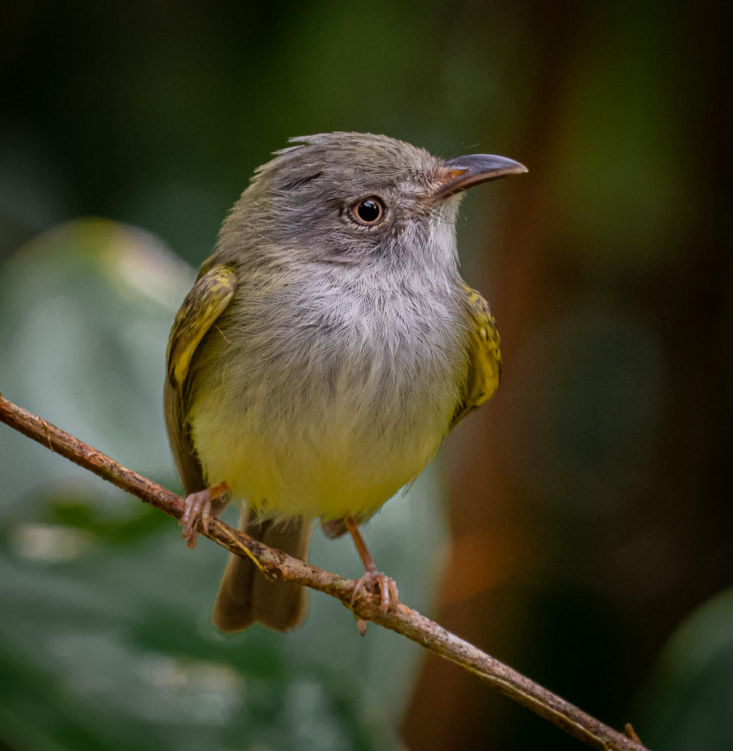
Biosfera Maya, Guatemala
 Organikos