Public Libraries Adapt

TCPL logo.jpgDuring this time in Ithaca, we made a couple visits with Fern to the Tompkins County Public Library, which I last visited in the first half of the 1990s when Seth and Milo began developing their bibliophilic tendencies. Each time we entered the library last week we were greeted by signs heralding the elimination of late return fines. As a budget conscious grad student at the time we first started using that library 25+ years ago, this policy change caught my attention, so I looked it up.

TCPLF logo.jpgIthaca has always been an inclusivity-centric community. So I am not surprised to see the wheelchair logo as prominent part of the library’s logo. But I was surprised to learn that there is a foundation that supports this adaptive mission. Given the dozens of stories about libraries that we have featured on this platform since 2011 it still surprises me to learn something new about them. How interesting that just a few days after returning from Ithaca, Emma Bowman fills me in on the bigger picture of this policy innovation:

‘We Wanted Our Patrons Back’ — Public Libraries Scrap Late Fines To Alleviate Inequity

For nearly a decade, Diana Ramirez hadn’t been able to take a book home from the San Diego Public Library. Her borrowing privileges were suspended, she was told, because of a mere $10 in late fees, an amount that had grown to $30 over the years. Continue reading
A Home For Potato Knowhow

1164

 A selection of the thousands of native potato varieties that grow in Peru. Photograph: The International Potato Centre

Thanks to Dan Collyns (last seen in our pages in 2013), writing in the Guardian, for this:

How Peru’s potato museum could stave off world food crisis

Agri-park high in the Andes preserves the expertise to breed strains fit for a changing climate

3008.jpg

A worker picking potatoes high in the Andes. Photograph: The International Potato Centre

With a climate changing faster than most crops can adapt and food security under threat around the world, scientists have found hope in a living museum dedicated to a staple eaten by millions daily: the humble potato.

High in the Peruvian Andes, agronomists are looking to the ancestral knowledge of farmers to identify genetic strains which could help the tubers survive increasingly frequent and intense droughts, floods and frosts.

6000 (2).jpg

 A selection of biofortified potatoes, grown to be higher in zinc and iron. Photograph: David Dudenhoeffer/The International Potato Centre

The Potato Park in Cusco is a 90 sq km (35 sq mile) expanse ranging from 3,400 to 4,900 metres (16,000 feet) above sea level. It has “maintained one of the highest diversities of native potatoes in the world, in a constant process of evolution,” says Alejandro Argumedo, the founder of Asociación Andes, an NGO which supports the park. Continue reading

Thanks, Giving & Thanksgiving

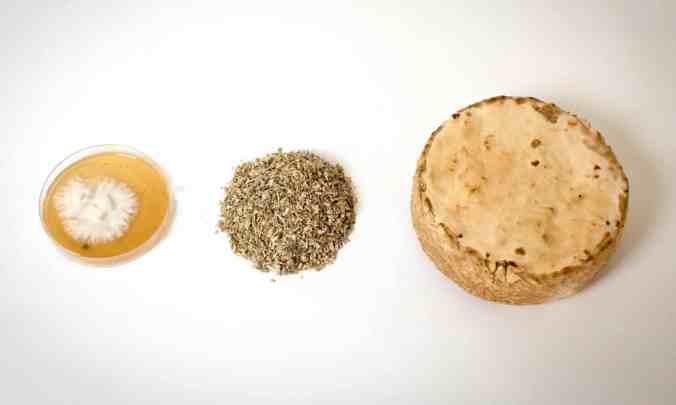
Thanks to the wonders of modern transportation I arrived to Costa Rica late last night after a week in Ithaca, where Amie and I reconnected with our two sons and our grand-daughter. Seth had brought gifts of honey and coffee from Rwanda, which we all enjoyed sampling. Milo gave us a better understanding of the work he has been doing with fungi and medicinal herbs in recent years. And we gave Slothicorn, on a t-shirt that fits Milo’s daughter both physically and metaphysically, as a reminder to all of us that she will be visiting us in Costa Rica before too long. Amie had found the artist of that and other fun shirts earlier this year, and we carry them in the Authentica shops. Thanks to her for finding the artist, and to the artist for the fun and creative approach to representing themes relevant to this rich coast country.

7fff53cb-56cc-4be9-8ac4-7667f3af4647.jpeg

While on the theme of thanks, there is much more to say. Too much more for a quick post. Thanksgiving showed up as a topic more than a couple times in the first few months of our setting up this platform in 2011. Since then, every year a post touches on it. So this is it for 2019, about giving and thanks and the holiday we think is one of the best ones out there. The zinger came to me as I started writing this.

I left home early in the morning to run some errands, and while out one of our team members back at the house sent this photo of a sloth. It was crawling, with a mate, in our garden, making its way over to the neighbor’s property. They seem to have enjoyed the flowers dropping from the vines my mother planted nearly two decades ago. We have seen a toucan as well as an emerald toucanet on our property, but a sloth sighting is more than rare, more like bizarre. They tend to live closer to sea level and our home is 1,400 meters above sea level. So, of all the things to say thanks about, at this moment this is my choice. I thank them for stopping by and giving me a reminder of the importance of wildlife. I wish them safe passage to their destination.

Technicolor Turkeys

e09ta7

Ocellated Turkey. Photo: Ray Wilson/Alamy

Those of us fortunate to have worked in Belize a couple years ago still talk about this very thing–of all the birds to be amazed by, how surprising that these turkeys could be the most exciting, even while abundant where we worked and ever-visible. Mindful of tomorrow’s holiday when the other turkey is more talked about, my thanks to Jessica Leber for this essay in Audubon Magazine:

The Wild Blue Turkey That Blew My Mind

Appreciating the avian diversity that’s there to astound us—if only we look. Continue reading

Countries Where Troubles Are Left Behind

17rebranding-art-superJumbo.jpg

Illustrations by Peter Arkle

Since finishing my doctoral work in the mid-1990s I have been working for and in emerging or re-emerging tourism destinations. I do not have time to comment on this now, but quick appreciation out to Tariro Mzezewa for this story, How to Rebrand a Country.

Having worked in two of the three countries she features, and having proposed work in the third (learning quite a bit about Rwanda for that proposal, nearly a decade prior to Seth’s work there this year) I will have more to say on this when time permits:

Colombia, Rwanda and Croatia were seen as dangerous and conflict-ridden. Now they top travel bucket lists. How other countries can follow their lead, in seven steps.

Twenty years ago, an opinion writer for The New York Times described Colombia as a country dominated by “drug killings, paramilitary massacres, guerrilla kidnappings, death squad murders and street crime.”

Five years before that, a 1994 Washington Post article grappled with the question of whether people would want to visit war-torn Croatia. “Only the more intrepid will consider a trip,” the article stated.

And a New Yorker article the same year described the genocide in Rwanda as being so dangerous that foreigners providing aid never went beyond the airport perimeter. One street was described as a place “where everything is shot up and every building is riddled.”

In the years since, conflict and strife have receded, with infrastructure rebuilt and economies recovering. And through a combination of marketing, social media and development — and with the fading associations of discord that come with the passage of time — these three countries are now booming tourist destinations, topping travel rankings, bucket lists and flooding Instagram feeds…

Read the whole story here.

Bill McKibben Does The New Math

GettyImages-480270745_KernCountyOilPumps_web2

An oil field near McKittrick, California. DAVID MCNEW/GETTY IMAGES

Thanks to Mr. McKibben, as always and to Yale e360 as the forum provided him, for more scientific evidence about the singular challenge facing all of us:

New Climate Math: The Numbers Keep Getting More Frightening

Scientists keep raising ever-louder alarms about the urgency of tackling climate change, but the world’s governments aren’t listening. Yet the latest numbers don’t lie: Nations now plan to keep producing more coal, oil, and gas than the planet can endure. Continue reading

Are We Willing To Do What It Takes?

Thanks to John R. Platt, by way of EcoWatch, for this:

Could inventing a better air conditioner help to save species from extinction?

It’s an idea so crazy it just might work — and it’s just one of many new and innovative conservation initiatives in development around the world to help stem the tide of biodiversity loss. Continue reading

America’s Best Idea Needs Help

24Waterman-jumbo.jpg

Heather McGrath/Redux

Thanks to Jon Waterman, a former park ranger and the author of National Geographic’s Atlas of the National Parks, for this note of caution:

CARBONDALE, Colo. — Deep inside Alaska’s six-million-acre Denali National Park and Preserve, I could see miles of space beneath my feet as I stood on the summit of the tallest mountain in North America. The startling view from the 20,310-foot Denali of rugged wilderness spreading out in all directions, plus the challenge of climbing it, were just two of the many wonders and adventures that I’ve experienced in America’s national parks.

I recently finished writing a book for National Geographic, Atlas of the National Parks, based on extensive research, a lifetime of exploring the parks and several years in the 1980s working as a ranger in two of them, Denali and Rocky Mountain in Colorado.

I meant the book as a celebration of the 103-year-old national park system, and it is. But what I also discovered was an operation in deep trouble, with some parks degraded by ruinous overcrowding; invasions of nonnative plants and animals that are upending delicate ecological balances; and a warming climate that is melting glaciers and withering away the rare yuccas that give their name to Joshua Tree National Park. Continue reading

Foods For Thought

5904.jpg

Composite: Alamy/Getty

Thanks to Clare Finney, writing for the Guardian, for a reminder, and some cases surprises, about foods we may love but should consider the consequences of:

To eat or not to eat: 10 of the world’s most controversial foods

From beef to cod to avocados to soya, many of our best-loved foods raise big ethical and environmental questions. What do the experts say?

Deforestation. Child labour. Pollution. Water shortages. The more we learn about the side-effects of food production, the more the act of feeding ourselves becomes fraught with anxiety. How can we be sure that certain foods are “good” or “bad” for society and the planet? As Tim Lang, professor of food policy at City University of London and the co-author of Sustainable Diets, puts it: “When you come to ‘judge’ food, you end up with an enormous list of variables, from taste to health outcomes to biodiversity.” Here are some of today’s most controversial products – and some thoughts that may help you when shopping. Continue reading

The Word Is Out

4523 (1).jpg

Oxford said the choice reflected the rise in climate awareness and the language we use to discuss it. Photograph: Dean Lewins/AAP

These annual declarations are often silly, but even when silly they say something about what we are thinking and talking more about. This is not exactly good news, except that it beats the alternative (not thinking or talking about it):

Oxford Dictionaries declares ‘climate emergency’ the word of 2019

Usage of the term increased 100-fold in the space of 12 months, dictionary says

Oxford Dictionaries has declared “climate emergency” the word of the year for 2019, following a hundred-fold increase in usage that it says demonstrated a “greater immediacy” in the way we talk about the climate.

Defined as “a situation in which urgent action is required to reduce or halt climate change and avoid potentially irreversible environmental damage resulting from it”, Oxford said the words soared from “relative obscurity” to “one of the most prominent – and prominently debated – terms of 2019.” Continue reading