The Showerhead That’s Ruling the Internet

This shower head Is blowing up on Kickstarter thanks in part to Apple's Tim Cook and Alphabet's Eric Schmidt. PHOTO: Nebia

This shower head Is blowing up on Kickstarter thanks in part to Apple’s Tim Cook and Alphabet’s Eric Schmidt. PHOTO: Nebia

What does it take to have the World Wide Web interested in you? And interested is putting it lightly, when we are talking a Kickstarter project that crossed its goal of $100,000 and how, in less than 8 hours. Not to forget having Tim Cook of Apple and Eric Schmidt of Alphabet back you.Well, it takes a showerhead. An extraordinary one at that. One that promises to reduce wastage of water in the shower by 70%, is iconic in design, and has its heart set on revolutionizing the use of water in developing markets. Nebia is here.
Continue reading

People First at This Public Regrigerator

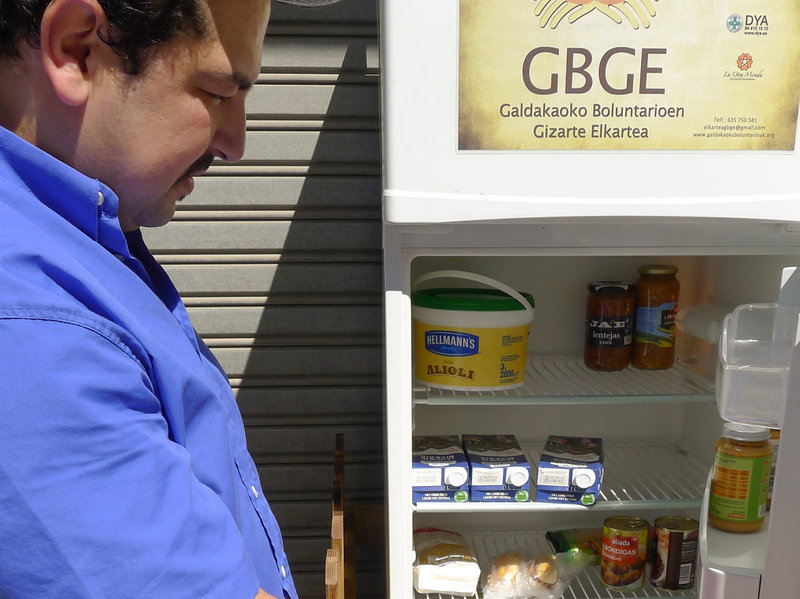
Issam Massaoudi, an unemployed Moroccan immigrant, checks out what's inside the Solidarity Fridge. Massaoudi says money is tight for him, and it's

Issam Massaoudi, an unemployed Moroccan immigrant, checks out what’s inside the Solidarity Fridge. Massaoudi says it’s “amazing” to be able to help himself to healthy food from Galdakao’s communal refrigerator. PHOTO: NPR

Last year, a small act of kindness in the desert country of Saudi Arabia warmed the hearts of many across the globe. An anonymous individual put a fridge outside his house and called on neighbors to fill it with food for the needy. And now a pioneering project in the Basque town of Galdakao, population about 30,000, aims to eliminate wastage of perfectly good groceries and food. Solidarity refrigerator is showing the world how a little generosity can go a long way.

Continue reading

Help in the Time of Crisis

Migrants from Iraq, Syria and other Middle Eastern nations are fleeing to Europe, a continent whose migrant camps are struggling to keep up with the growing numbers. PHOTO: SBS

Migrants from Iraq, Syria and other Middle Eastern nations are fleeing to Europe, a continent whose migrant camps are struggling to keep up with the growing numbers. PHOTO: SBS

Greece has agreed a deal in principle with its lenders about a third bailout, worth around €85bn and allowing some €10bn to be disbursed to the country’s struggling banks almost immediately. There is a long list of reforms the country has to carry out in return for the cash. While governments do the talking in terms of numbers, there is a group of people doing the talking – in deeds of compassion and kindness towards multitudes of refugees who wash up on the country’s already struggling shores. They come for travel, they stay back for humanity.

Continue reading

‘Lettuce’ Celebrate NASA’s Moment

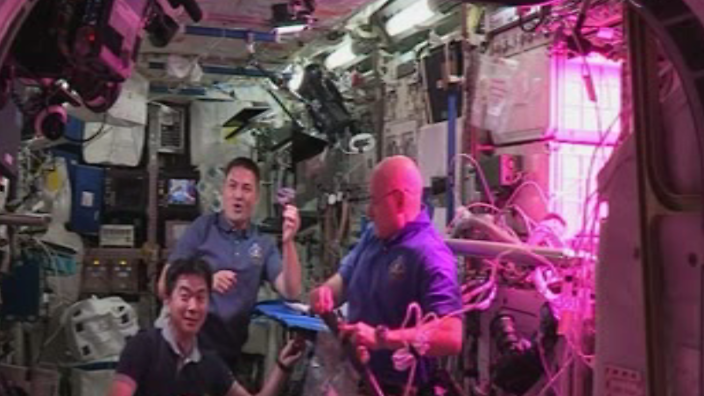
On Monday, astronauts aboard the International Space Station harvested and ate the first lettuce to have been grown in space. Photo by NASA

On Monday, astronauts aboard the International Space Station harvested and ate the first lettuce to have been grown in space. Photo by NASA 

“It was one small bite for man, one giant meal for mankind.” And that’s putting it lightly. On Monday, after watching a batch of red romaine lettuce grow under a purplish glow in the microgravity of space, NASA astronauts aboard the International Space Station harvested their own fresh produce. And this officially is the first time astronauts have dined on a harvest sown in space. Nothing like ‘home-grown’ food, right?

Continue reading

On the Tail of the Tiger

A captive tiger at Bannerghatta National Park, Bengaluru, India. PHOTO: Rosanna Abrachan

A captive tiger at Bannerghatta National Park, Bengaluru, India. PHOTO: Rosanna Abrachan

The world has seen the population of individual wild tigers dwindle from 100,000 in 1913 to just about 3,200 now. Classified into six species, a majority of these surviving cats belong to the specie panthera tigris tigris, more popularly known as the Bengal tiger, that are found in India. Here too, their population, estimated to be between 20,000-40,000 at the turn of the 20th century, reduced to fewer than 2,000 by the 1970s, mostly due to hunting and poaching. It has now inched to 2,226, making India home to 70% of the world’s total tiger population.

Continue reading

Let’s Fill Up on Some Brewtroleum

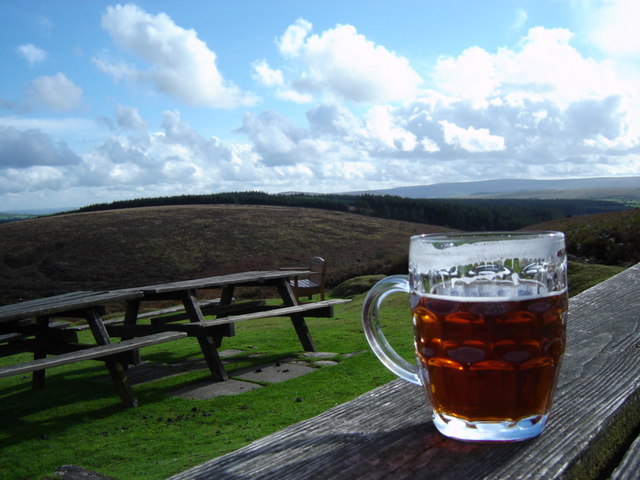
New Zealanders can now run their cars on the same fuel they run themselves on—beer. Brewtroleum is a new biofuel which mixes beer by-products with regular gasoline to power the nation's cars. PHOTO: Wikimedia Commons

New Zealanders can now run their cars on the same fuel they run themselves on—beer. Brewtroleum is a new biofuel which mixes beer by-products with regular gasoline to power cars. PHOTO: Wikimedia Commons

Generally, beer and moving cars don’t work well together. Remember the warnings against drinking and driving? But in a few places, companies are recycling the detritus of the beermaking process into a clean gasoline additive that allows cars to navigate without using as much of the precious fossil fuel.The latest venture comes from New Zealand where for a short time, motorists can fill up their cars with beer. Well, almost beer.

Continue reading

Helping the Ocean Clean Up

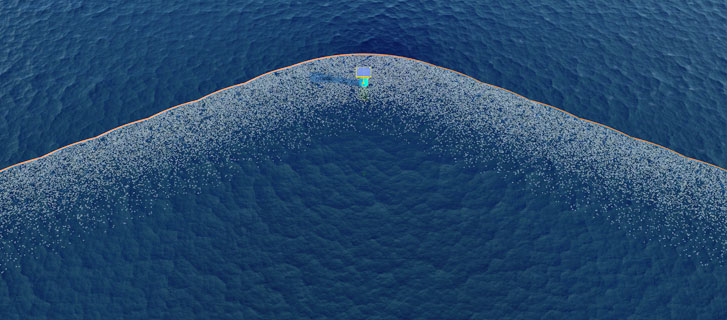
The Ocean Cleanup started tests in 2014 to see if the floating barriers are a feasible way to remove garbage. PHOTO: The Ocean Cleanup

The Ocean Cleanup started tests in 2014 to see if the floating barriers are a feasible way to remove garbage. PHOTO: The Ocean Cleanup

Dutch engineering student Boyan Slat announced in a 2012 TEDx talk that he had invented a way for the oceans to rid themselves of plastic with minimal human intervention. About 8 million tons of plastic enters the ocean each year. Part of this accumulates in 5 areas where currents converge: the gyres. At least 5.25 trillion pieces of plastic are currently in the oceans, a third of which is concentrated in the infamous Great Pacific Garbage Patch. Slat’s idea is to building a stationary array with floating barriers that would filter and collect floating plastic using the ocean’s natural currents.

Continue reading

Goodwill on Two Wheels

The Bike Project is run by former refugees and mechanics, who work with new refugees to fix up donated bikes. PHOTO: The Bike Project

The Bike Project is run by former refugees and mechanics, who work with new refugees to fix up donated bikes. PHOTO: The Bike Project

13,500 refugees flee to London each year. In that same period, around 27,500 bikes are abandoned. Just one of these abandoned bikes can help a refugee save 20 pounds a week on bus fare. That’s 1,040 pounds a year. Having fixed, donated, and helped refugees maintain over 300 bikes, The Bike Project is turning the wheels of goodwill and community development.

Continue reading

The Next Big Industry in China?

Satellites, drones and remote sensors will soon be deployed across China to detect pollution levels over land, sea and air. This may indicate that normal methods to identify pollution levels haven’t really shown expected results. Or, that the levels have exceeded expected limits. In a country that is not only among the world’s top polluters but also has some of the most polluted cities, are environmental reforms becoming the norm? And what do these mean for the rest of the world?

Continue reading

Sidestepping Oil With Sugar

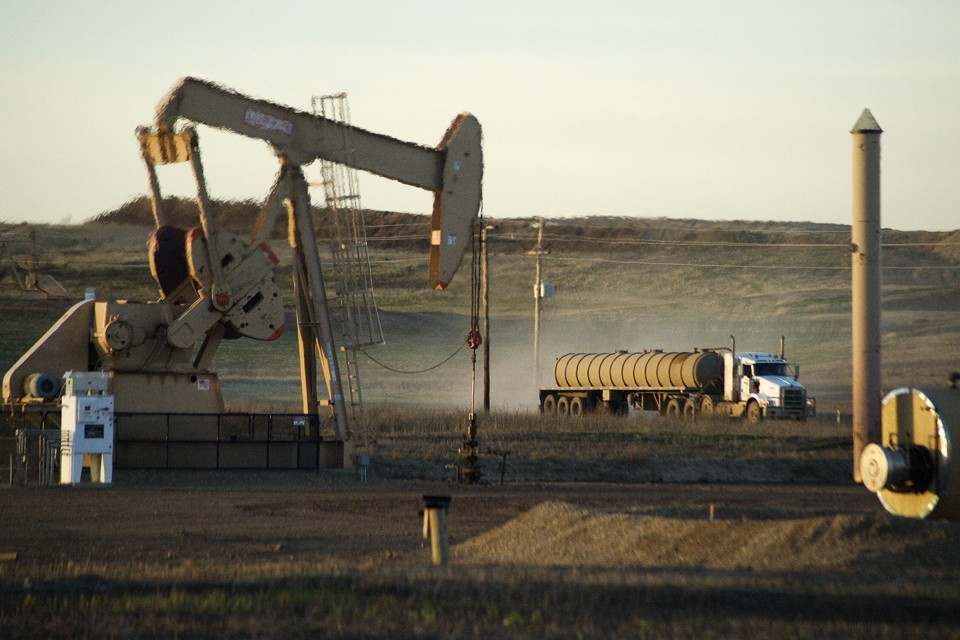
A service truck drives past an oil well on the Fort Berthold Indian Reservation in North Dakota, which produces nearly a third of US' oil. PHOTO: Andrew Cullen

A service truck drives past an oil well on the Fort Berthold Indian Reservation in North Dakota, which produces nearly a third of US’ oil. PHOTO: Andrew Cullen

Oil is one of the non-renewable resources available on the planet, and its scarcity is inevitable if the supply does not meet the growing demand in the current scenario, and it may even lead to “resource wars” among states in the coming years. Oil prices are now near a six-year low, moving down today to about $44 a barrel. The fall has been precipitous: Only a year ago, crude oil was more than $100 a barrel. With the world of oil production being susceptible to the smallest of changes in the global market, it shows up as a space conducive to innovations that can potentially make it economical.

Continue reading

Leaving an Ugly Mark in Space

It’s not just here on earth that litter is a problem. In the last 40 years, there have been more than 5,000 launches into space, and they’ve ended up leaving a mark, and now scientists are worried about the litter they’ve left behind. ‘Space junk‘ are the small objects that we’ve left behind in space.They include things like old satellites, gloves, and toolkits accidentally dropped by astronauts. In 2014, the International Space Station had to move three times to avoid lethal chunks of space debris. The problem also threatens crucial and costly satellites in orbit. So what is the scale of the space junk problem, and what can we do about it?

Continue reading

More Internet, More Power

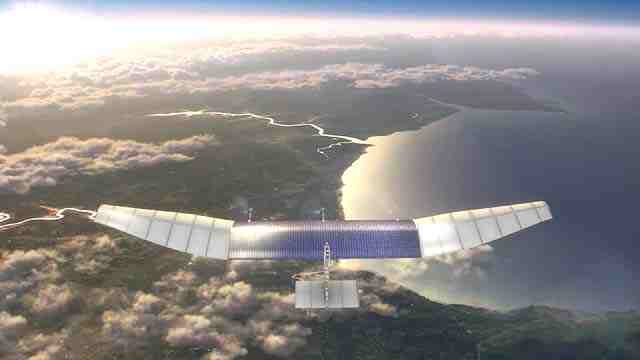
Facebook’s ‘Aquila’, the first solar powered internet drone, parallels Google’s Project Loon PHOTO: Jewish Business News

Facebook has unveiled its ambitious project with its first comprehensive solar powered drone. With the help of its first drone code named Aquila, the social networking giant aims to provide internet connection to 4 billion users across the secluded parts of the globe. In fact, Aquila joins Google’s Project Loon in the space of connecting people and places.

Continue reading

Talking the Lion’s Share of Conservation

An image of a lion projected on to New York's Empire State Building in memory of Cecil, the lion hunted down in Zimbabwe recently. PHOTO: BBC

An image of a lion projected on to New York’s Empire State Building in memory of Cecil, the lion hunted down in Zimbabwe recently. PHOTO: BBC

The hue and cry over Cecil the lion’s killing is yet to die down. Zimbabwe’s most popular lion’s death did stir up outrage in the quarters of animals rights crusaders and much indignation at how a ‘man who restores lives’ could take the life of another. While the need for a better conservation-hunting model has risen yet again and efforts are on to chalk out more effective regulation on hunting, the focus returns to how man-habitat-animal conflicts abet loss of lives. More interesting are the isolated voices that call animals in the wild just what they are – “killers”.

Continue reading

Sri Lanka Says Hello to Project Loon

In this June 10, 2013 photo released by Jon Shenk, a Google balloon sails through the air with the Southern Alps mountains in the background, in Tekapo, New Zealand (AP Photo/Jon Shenk)

In this June 10, 2013 photo released by Jon Shenk, a Google balloon sails through the air with the Southern Alps mountains in the background, in Tekapo, New Zealand (AP Photo/Jon Shenk)

Technology juggernaut Google changed the way we search with its proprietary algorithims. But the company is constantly working on technologically impressive, forward-leaning projects that have the promise to push broadscale change for billions of people around the world. Project Fi, self-driven vehicles, the delivery system named Project Wing and the three-dimensional mapping system named Project Tango later, Project Loon is here.

Continue reading