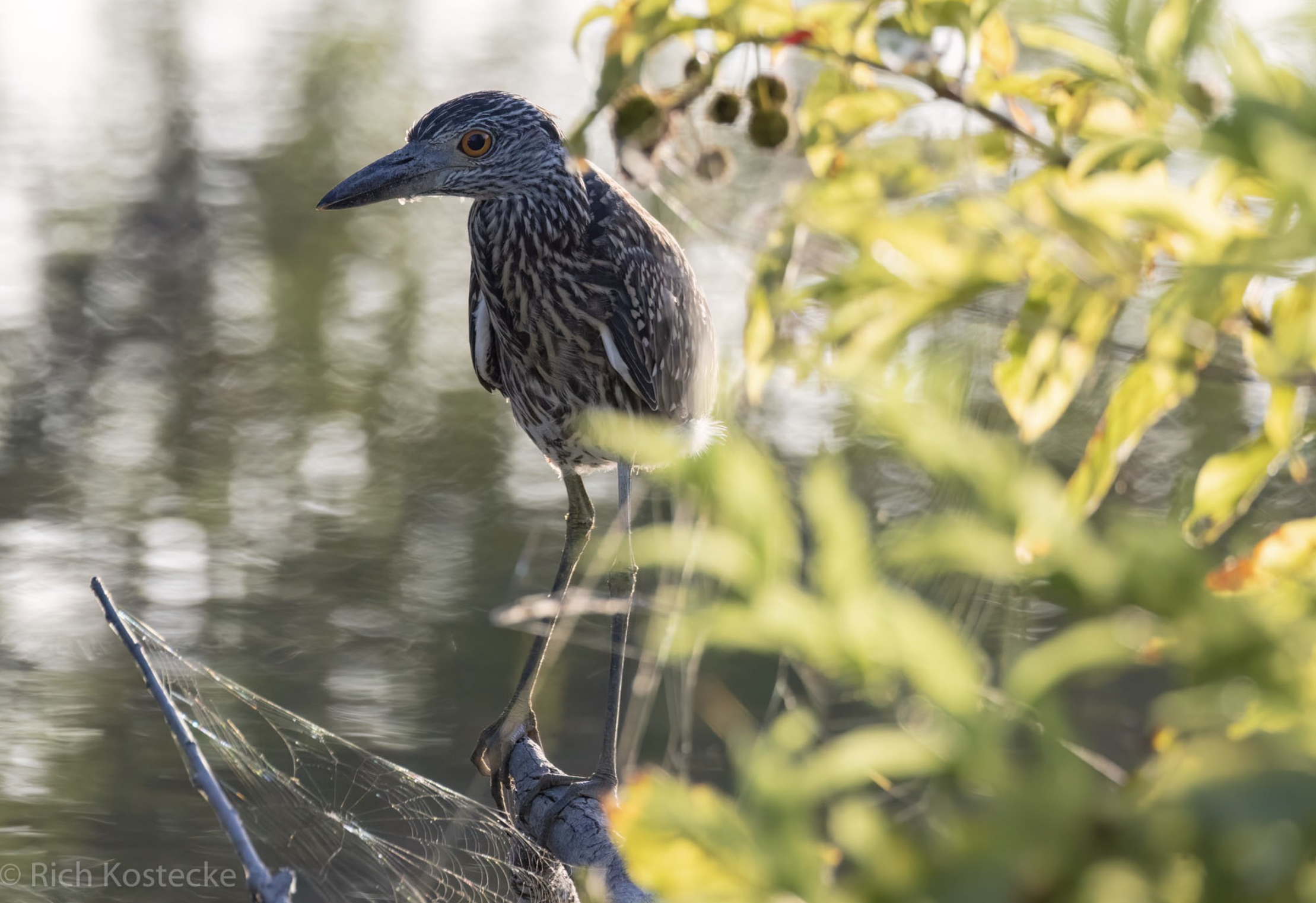
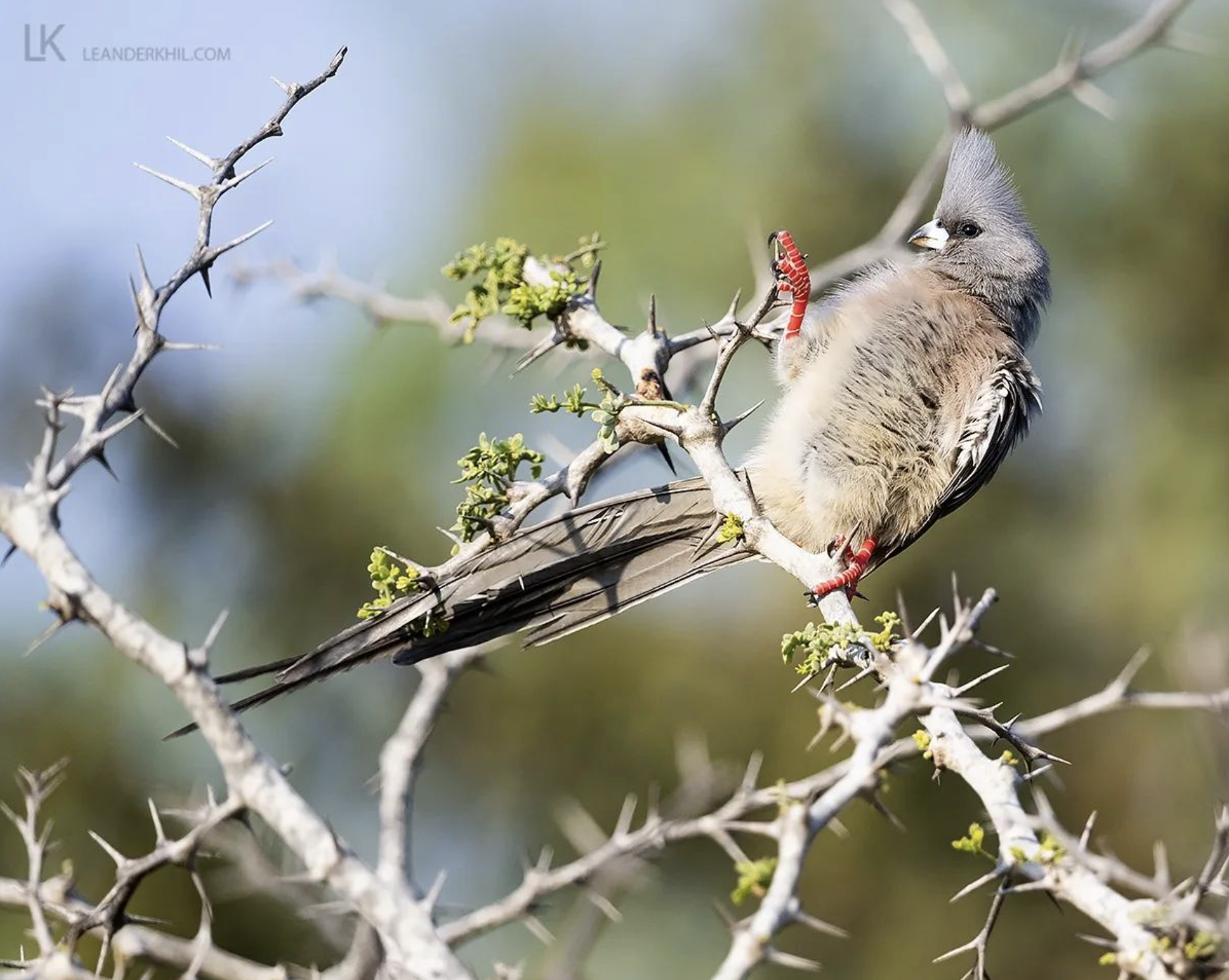
Willis Creek Wildlife Area, Williamson County, TX
Willis Creek Wildlife Area, Williamson County, TX
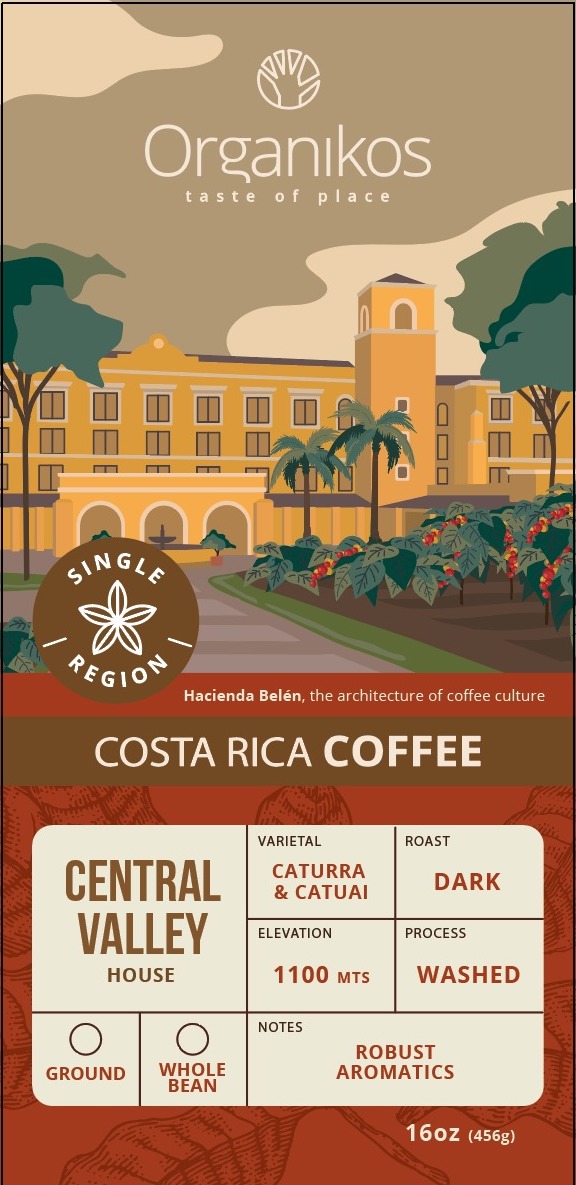 The same principles in the description of Italian roast apply in moderation to this dark roast of beans from the Central Valley. This region has not racked up prizes in competitions the way Los Santos coffees have. You might characterize it the way a work horse is different from a race horse. High utility; gets the job done with strength and consistency.
That metaphor has its limits but works for the same reason we call this our house coffee. For those who want to start the day with the energy that coffee offers and the strength of character that a dark roast provides, this is a reliable choice. The illustration on the label is of one of the first two locations where we set up shop when Organikos was being introduced through the Authentica shops.
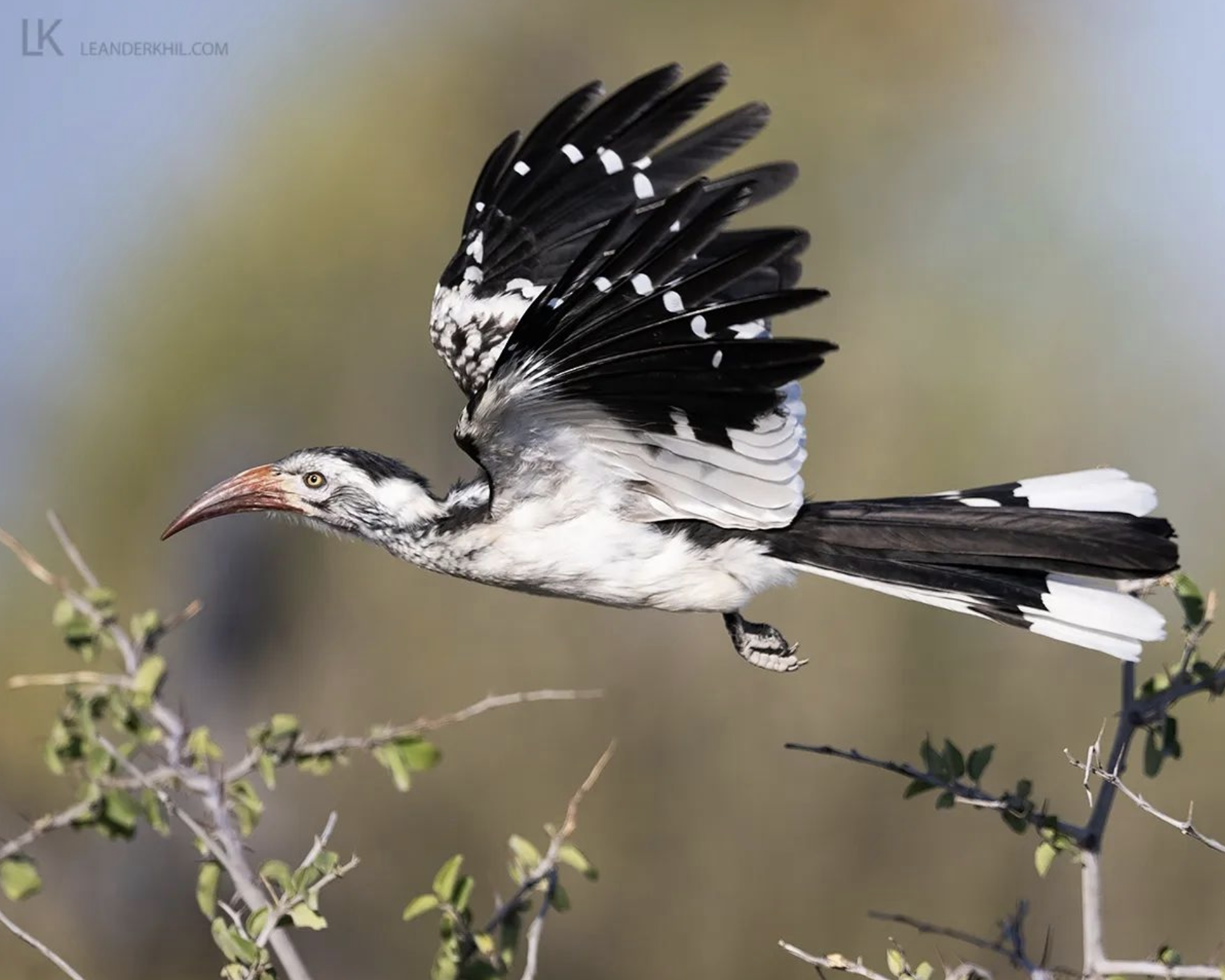
Etosha National Park, Namibia
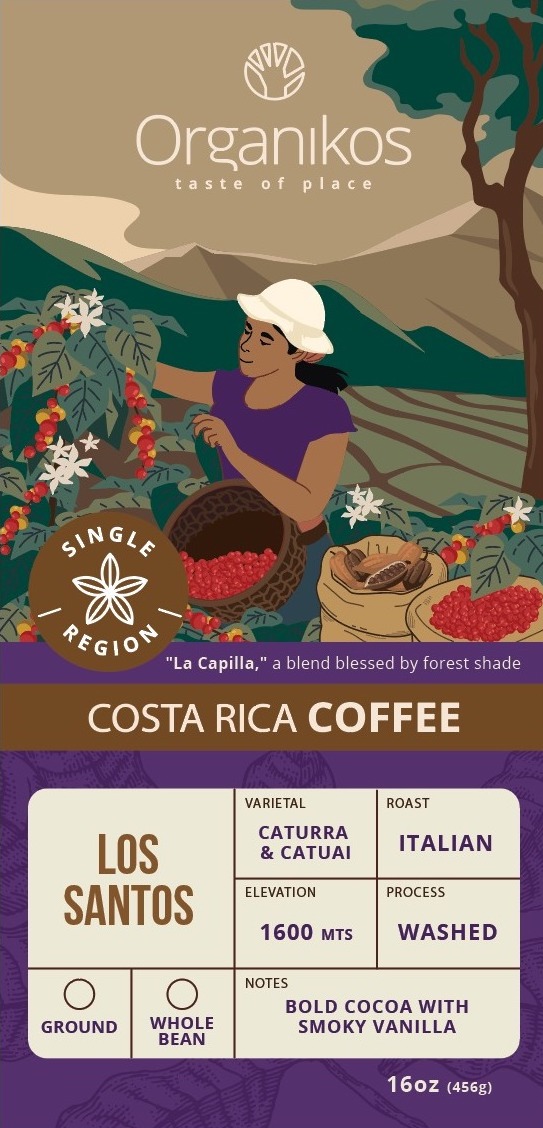 We offer La Capilla roasted at a higher temperature, around 480°F, and for 5–10 minutes longer than the medium roast. When roasted to the Italian level these beans arrive at a much darker brown color, closer to black, covered in oils released from the high temperature and length of exposure to that heat. It has a lower acidity level, leading to a boldness that is not the characteristic of the same beans roasted medium, which have a mellower mouthfeel.
Roasted hotter and longer also creates a slight smokiness, with notes of chocolate and a particular type of sweetness from the beans’ internal sugars being caramelized. Something about this combination, we have found, either you love, or you do not love. If you do, this is your coffee. If not, go medium.
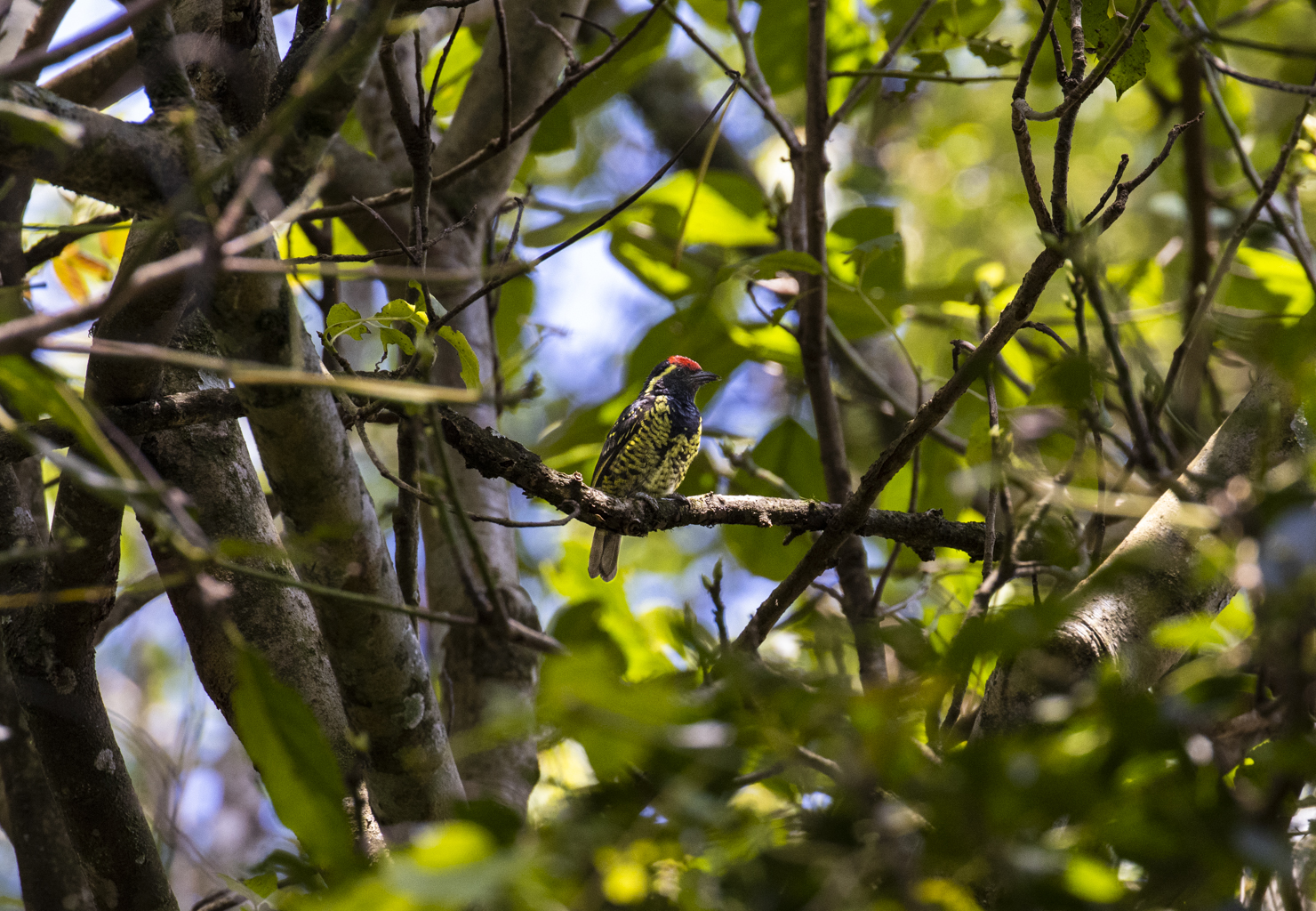
Kakamega Forest National Reserve, Kenya
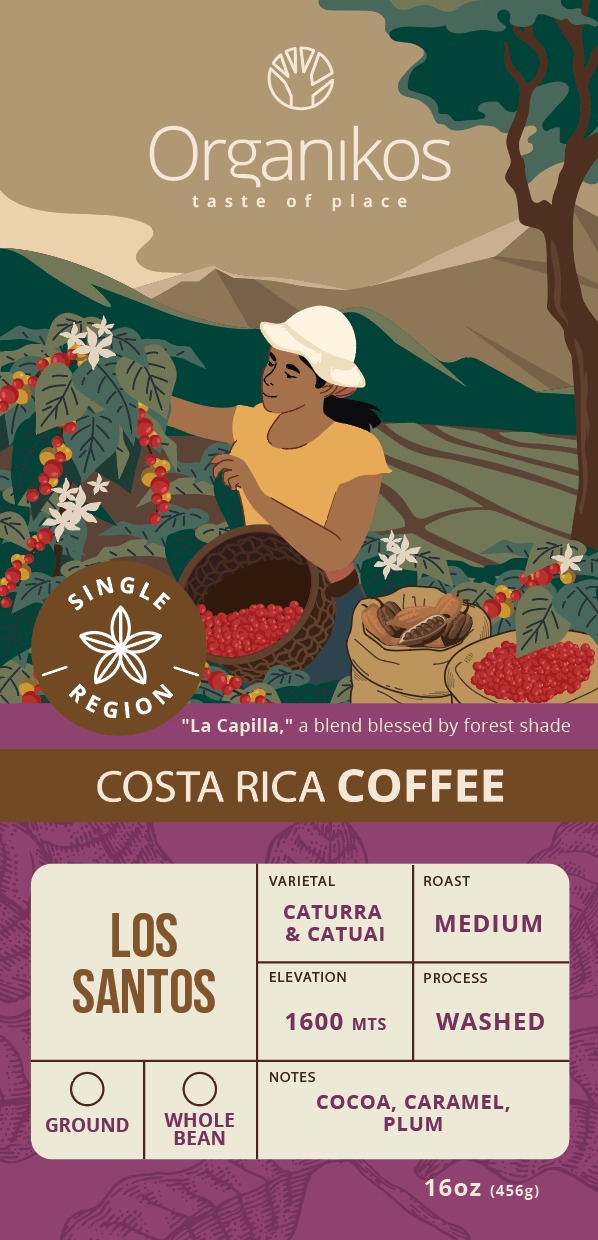 These beans, blended from a select group of smallholder coffee farms collectively known as “the chapel,” have a new illustration. This week it debuts in our shops in Costa Rica. A year after we introduced this coffee in our shops we could only guess it was to become the bestseller it now is.
During the pandemic, when the airports were shut down and there were few visitors to our shops, honoring the contracts we had with these farmers got us thinking creatively. We started offering this and a few other of our coffees for sale in the USA. Because it was a favorite in our home, La Capilla was chosen for this plum assignment. Then we knew.
Tarrazu started its qualification for denomination of origin status the same year we started roasting it, and qualified two years later. The rules are still being clarified on how to use the name, so on our labels we have reverted to the region’s traditional name Los Santos.
Namibia
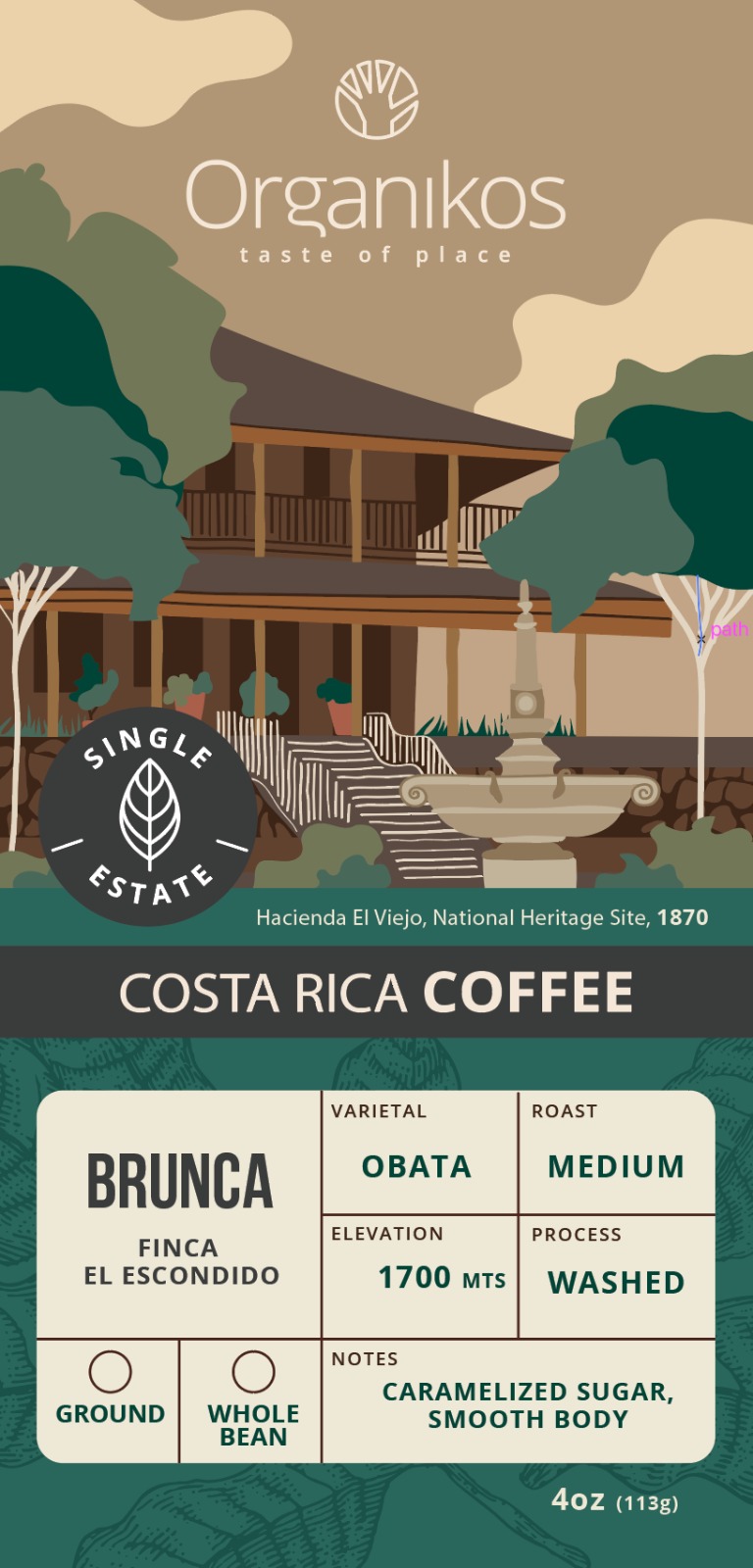 The last time we introduced a varietal of coffee that was new to Organikos it had taken about a year to settle on the farm we would source from for the longer term. For the geisha varietal that farm is Hacienda La Pradera. During the last two years offering their coffee we have underestimated the demand and run out of coffee long before the new harvest is available. So, as of now, we have no geisha to offer until April.
But as of this week, we have a new (to us) varietal, from a new (to us) farm. Obata is a hybrid brought to Costa Rica in 2014 by the Costa Rican Coffee Institute (ICAFE), prized for its resistance to rust. Finca El Escondido, in the Chirripo sub-region of Brunca may be the most successful farm to grow it so far. Continue reading
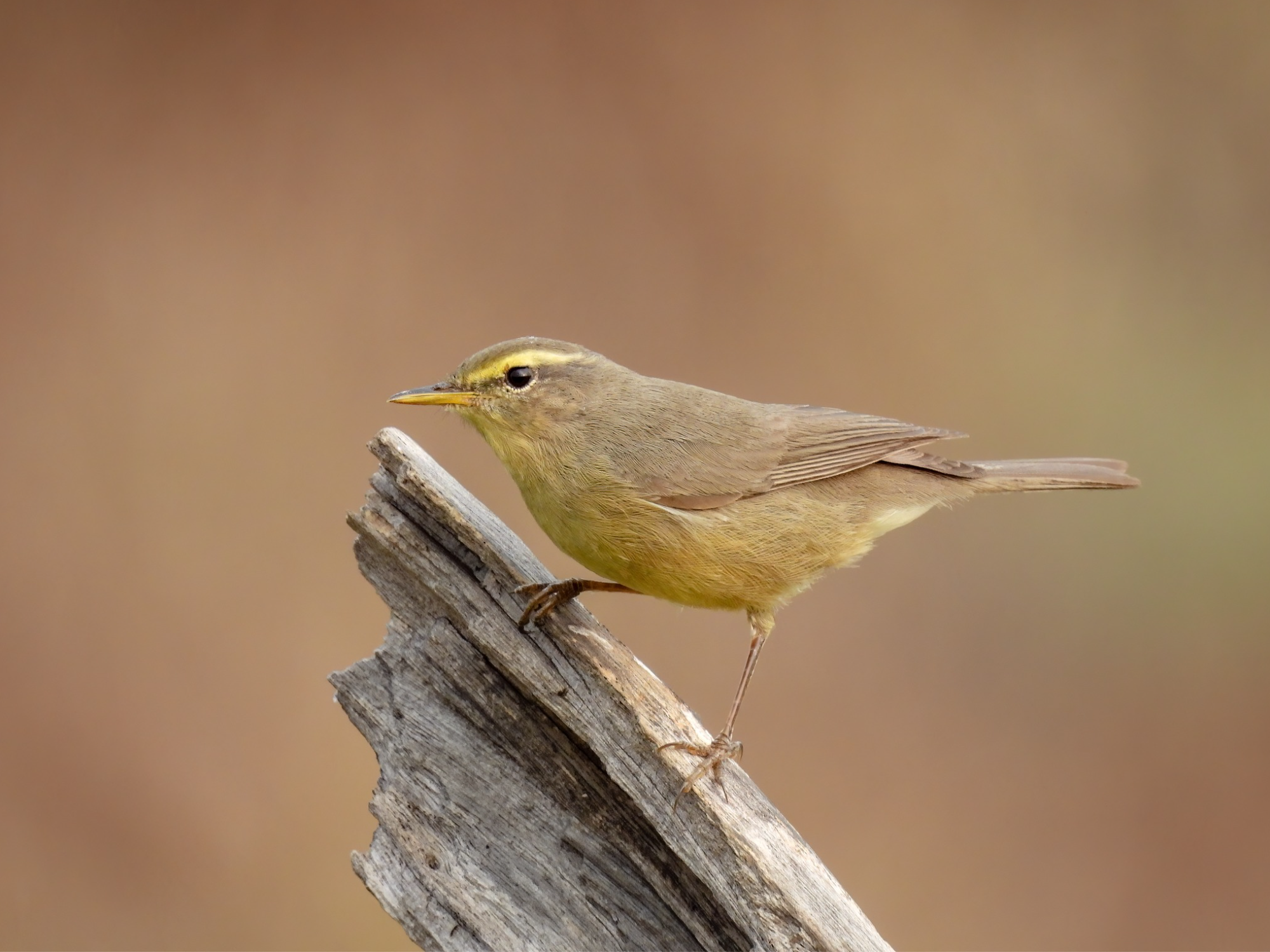
Vijayapura, Karnataka
 Fire and its suppression are topics we are never quite sure about. Scientifically, there may be a correct answer. But this personal account sounds worthy of consideration as well. This book review by Casey Schwartz in The Atlantic makes a compelling case:
Living Through the End of California
In a new book, Manjula Martin faces up to the way the altered environment of her home state will change her life forever.In his 1998 book, Ecology of Fear, Mike Davis, the late California muckraker and self-proclaimed Marxist environmentalist, made the case for “letting Malibu burn.” Continue reading
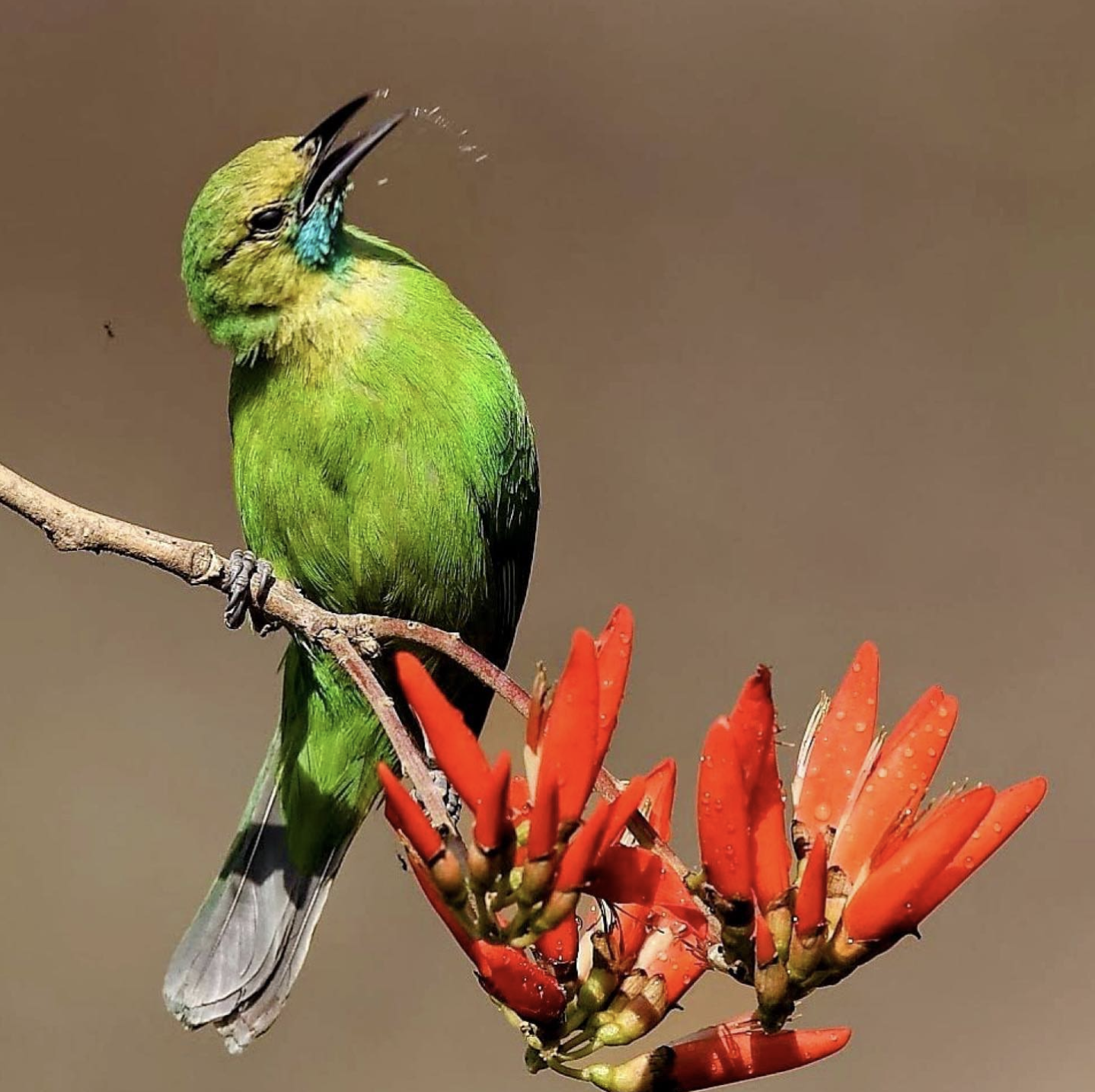
India
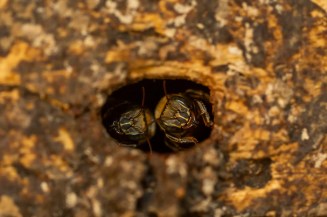
Melipona eburnea, a species of bee, is native to the Amazon. Unlike the more familiar but invasive honey bees from Africa and Europe that have spread through the Americas, these bees don’t sting. Ana Elisa Sotelo for National Geographic
The countless wonders of bees, as well as the many problems they now face, have made Melipona bees, also known as stingless bees, of particular interest to our daily scan for news stories:
In Peru, a Mission to Save the Stingless Bee
Native to the tropics, these pollinators are taking a lead role in one of the latest efforts to conserve the Amazon rainforest.
The Amazon is home to hundreds of species of stingless bee, but as deforestation converts the tropical landscape into farms and ranches, these and other native pollinators are in danger of disappearing. Ana Elisa Sotelo for National Geographic
As a child, Heriberto Vela, an Indigenous resident of Loreto, Peru, watched his father pull nests of wild stingless bees from trees in the Amazon forest. Together, the two then extracted honey from the nests to help cure colds and other ailments.
Stingless bees are native to the Amazon, unlike the more familiar but invasive honey bees from Africa and Europe that have spread through the Americas. The most obvious difference, perhaps, is that stingless bees don’t sting. Their honey, which is runny enough to be drunk like a liquid and is said to have a citrusy aftertaste, is used by many Indigenous Peruvians as a natural medicine. Continue reading
Etosha National Park, Namibia

Greg Curtis, the former deputy general counsel of Patagonia, is responsible for giving away huge sums of money to causes that are aligned with Patagonia’s history of environmental activism. Adam Amengual for The New York Times
When news broke about the company’s future, we were in awe; since then we heard little so this is a welcome update:
Patagonia’s Profits Are Funding Conservation — and Politics
$71 million of the clothing company’s earnings have been used since September 2022 to fund wildlife restoration, dam removal and Democratic groups.
A little more than $3 million to block a proposed mine in Alaska. Another $3 million to conserve land in Chile and Argentina. And $1 million to help elect Democrats around the country, including $200,000 to a super PAC this month.
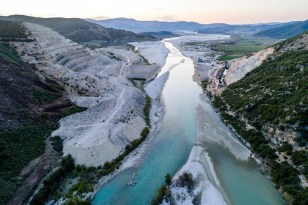
The site of the Kalivac Dam on the Vjosa River in Albania, where Holdfast has funded a major conservation project. Andrew Burr/Patagonia
Patagonia, the outdoor apparel brand, is funneling its profits to an array of groups working on everything from dam removal to voter registration.
In total, a network of nonprofit organizations linked to the company has distributed more than $71 million since September 2022, according to publicly available tax filings and internal documents reviewed by The Times. Continue reading
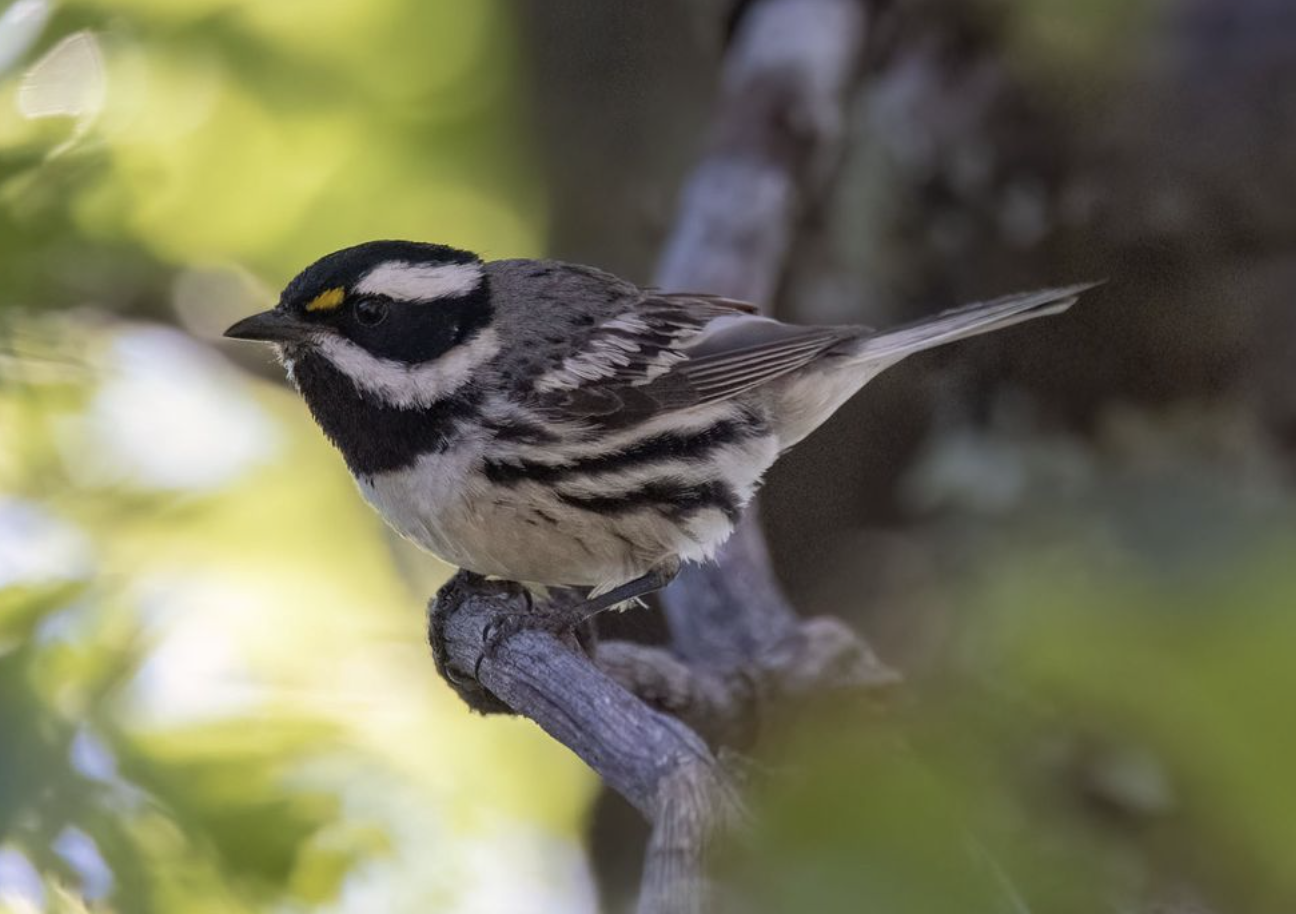
Male
Davis Mountains Preserve, TX
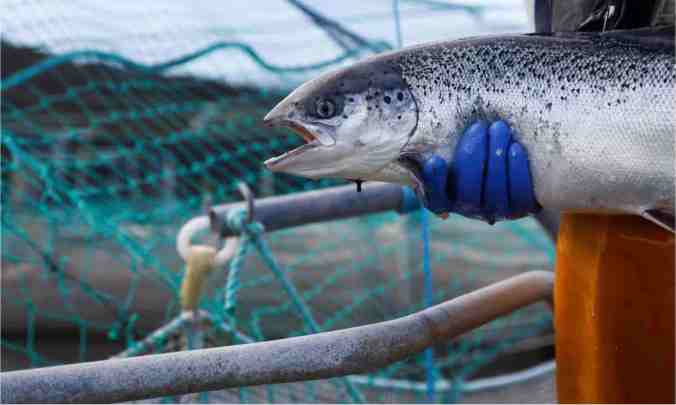
Salmon farms certified as organic have to adhere to certain standards. Photograph: Murdo MacLeod/The Guardian
Scotland has been moving in the right direction in other ways, so this call for action in an area where they have not been leading with best practices is worthy of attention. Thanks to the Guardian’s Karen McVeigh for providing it:
‘Unacceptable greenwashing’: Scottish farmed salmon should not be labelled organic, say charities
Open letter calls for Soil Association certification to be removed from industry, amid concerns of negative environmental impact
The British body that certifies food in the UK as organic has been accused of misleading consumers over its labelling of Scottish farmed salmon.
Thirty charities, conservation and community organisations, including WildFish, the Pesticide Action Network and Blue Marine Foundation, say the negative environmental impacts of the industry in Scotland “run completely counter” to the principles of the Soil Association’s promotion of healthy, humane and sustainable food. Continue reading
Etosha National Park, Namibia

A wind farm in rural Scotland. THE SCOTTISH GOVERNMENT
Not exactly manatee charisma, but another ray of sunshine from a place we have been cheering from a distance for a few years now:
Scotland’s Renewable Output More Than 100 Percent of Demand
For the first time, in 2022, Scottish renewables generated more power than the country used, new government figures show.
The growth of wind power, coupled with a small drop in electricity consumption, meant that the volume of electricity produced by renewables in Scotland was equal to 113 percent of demand. Continue reading
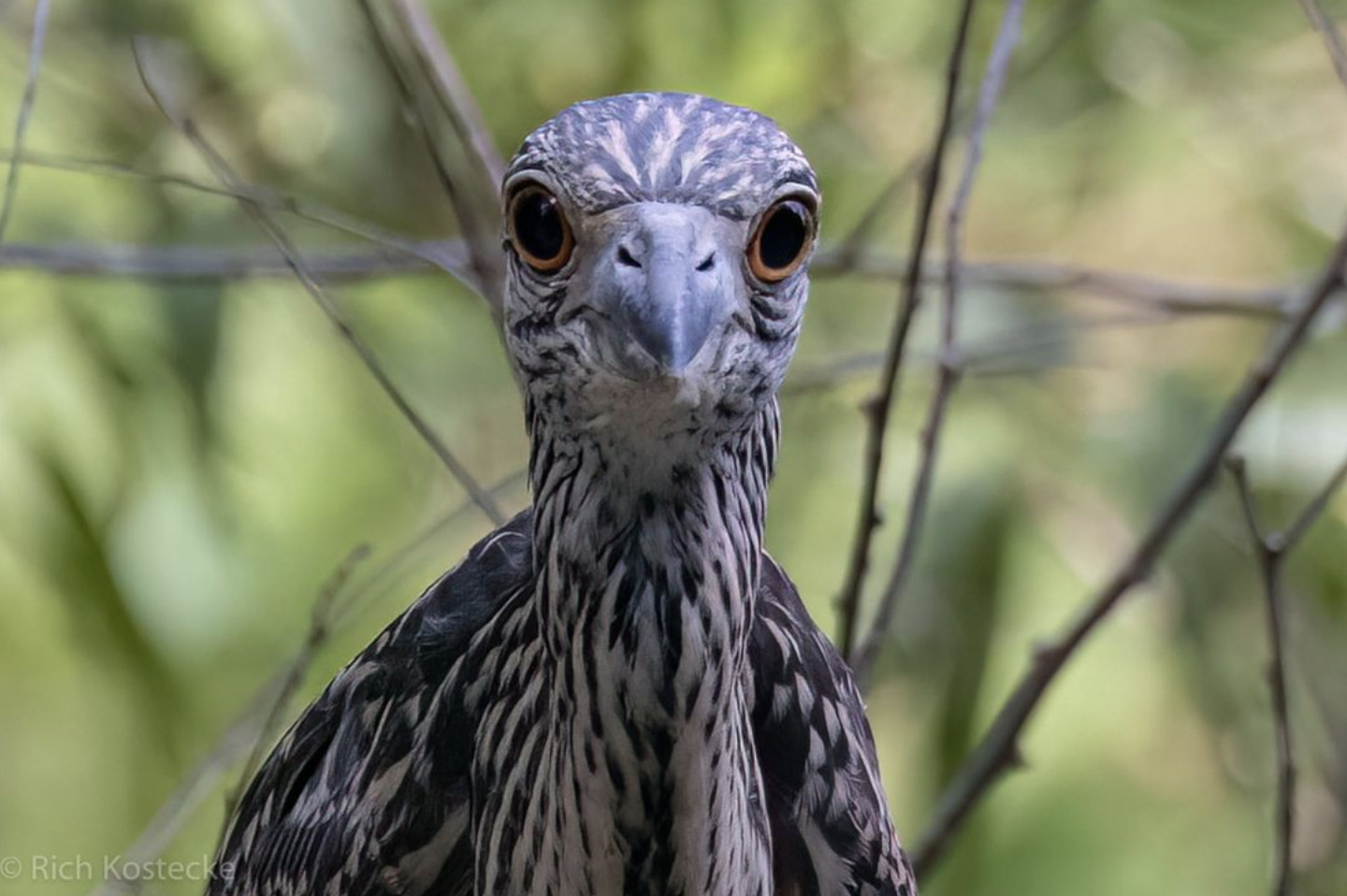
Juvenile
Willis Creek Wildlife Area, Granger Lake, TX
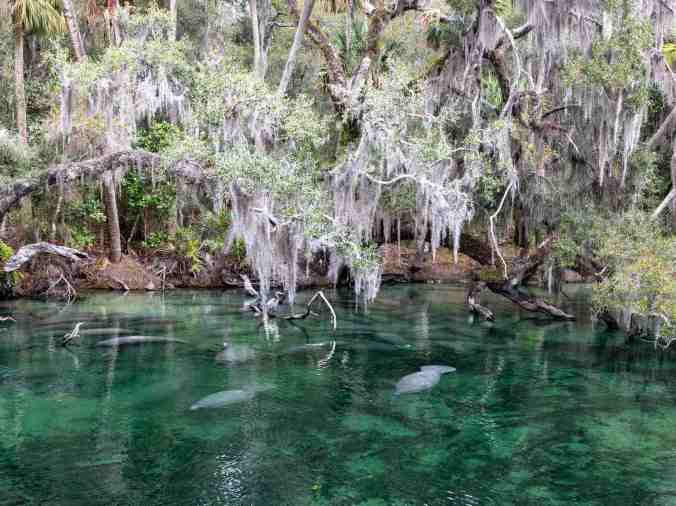
Manatees are generally solitary creatures, but tend to gather at warm water sites in the winter.
Florida State Parks
After a Kolbert doomcloud, a bit of sunshine is needed. Here it is in the form of creatures so charismatic they make you see something other than darkness. Thanks to National Public Radio (USA):
Legend has it that centuries ago, manatees used to be mistaken for mermaids, so a sight last week at one Florida state park would have put ancient sailors in shock.
Blue Spring State Park is home to one of the largest winter gathering sites for manatees in Florida, and recently, the park reached a new record when the number of manatees spotted in one group was nearly 1,000. Continue reading
 Organikos