With Rewilding, Markets Are Not Everything, But Are A Key Ingredient

Rewilding can support the development of a wide range of nature-based businesses. NEIL ALDRIDGE

Places can have a particular taste, maybe one that is even iconic, and coffee was the obvious tool in our taste of place toolkit for decades. When it came time to focus on these products as our primary work we drew on some earlier experiments.

One was with honey and the other was with wine. All that was long before coming home to Costa Rica to launch Organikos.

Lunch provided with products from the Wild Côa Network during the ERN-EYR event in the Greater Côa Valley. The Wild Côa Network, which now comprises over 50 members, is driving the development of nature-based enterprise in and around Portugal’s Greater Côa Valley. NELLEKE DE WEERD

We are about to introduce two new products, and one has a story that mixes conservation and rewilding. So, in this story  that follows we sense something akin to the Organikos products in our Authentica shops:

Nature-based business networks take off across Rewilding Europe landscapes

Helping nature heal can lead to prosperous local economies. Nature-based business networks are being developed in a growing number of our rewilding landscapes, enabling businesses and communities to benefit from nature recovery in a sustainable way. This, in turn, is generating more support for rewilding.

The network effect

Today, nature-based business networks are a growing feature of Rewilding Europe’s expanding portfolio of rewilding landscapes. These bring businesses together under a shared rewilding vision for the landscape, facilitating the creation of new tourism packages, helping to close gaps in tourism experiences, and creating new economic opportunities. Continue reading

When Kitten Videos Represent Important Environmental News

Screenshot

Cute kitten videos are everywhere, and we avoid posting them here. But due to the Cairngorms rewilding efforts in Scotland this type of video is different, so our thanks as always to the Guardian:

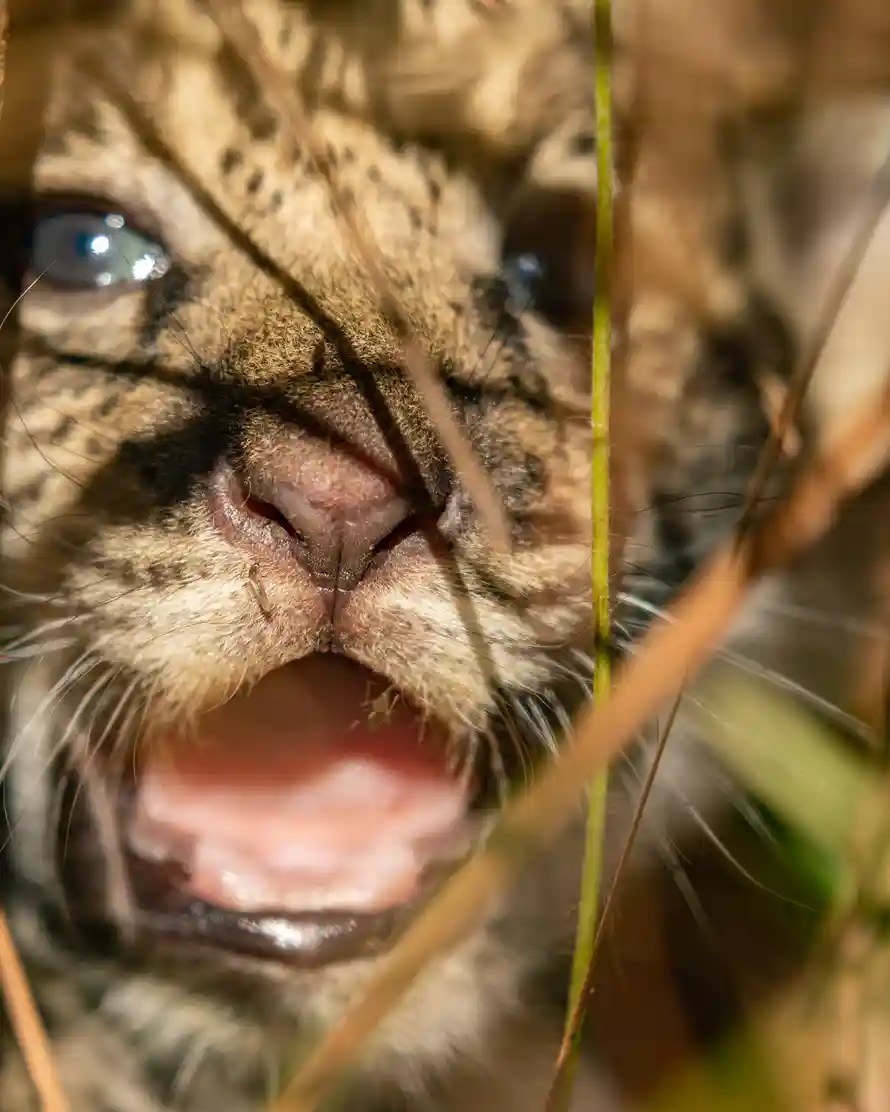
Wildcat kittens born outside captivity in Cairngorms a ‘major milestone’

Adult cats were released into national park last year after British population had come close to extinction

The birth of wildcat kittens in the Cairngorms national park has been hailed as a “major milestone” in efforts to rescue the secretive mammals from extinction in the UK. Continue reading

Romanian Bison & Carbon Sequestration

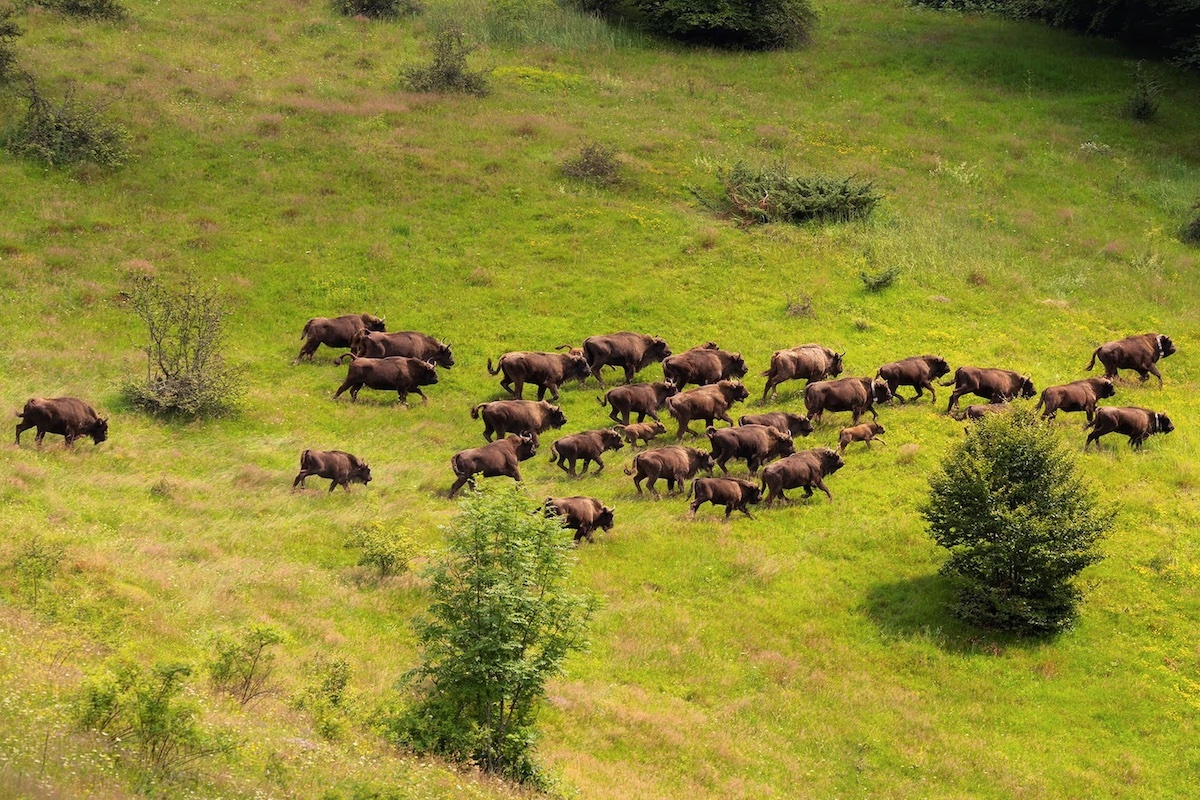
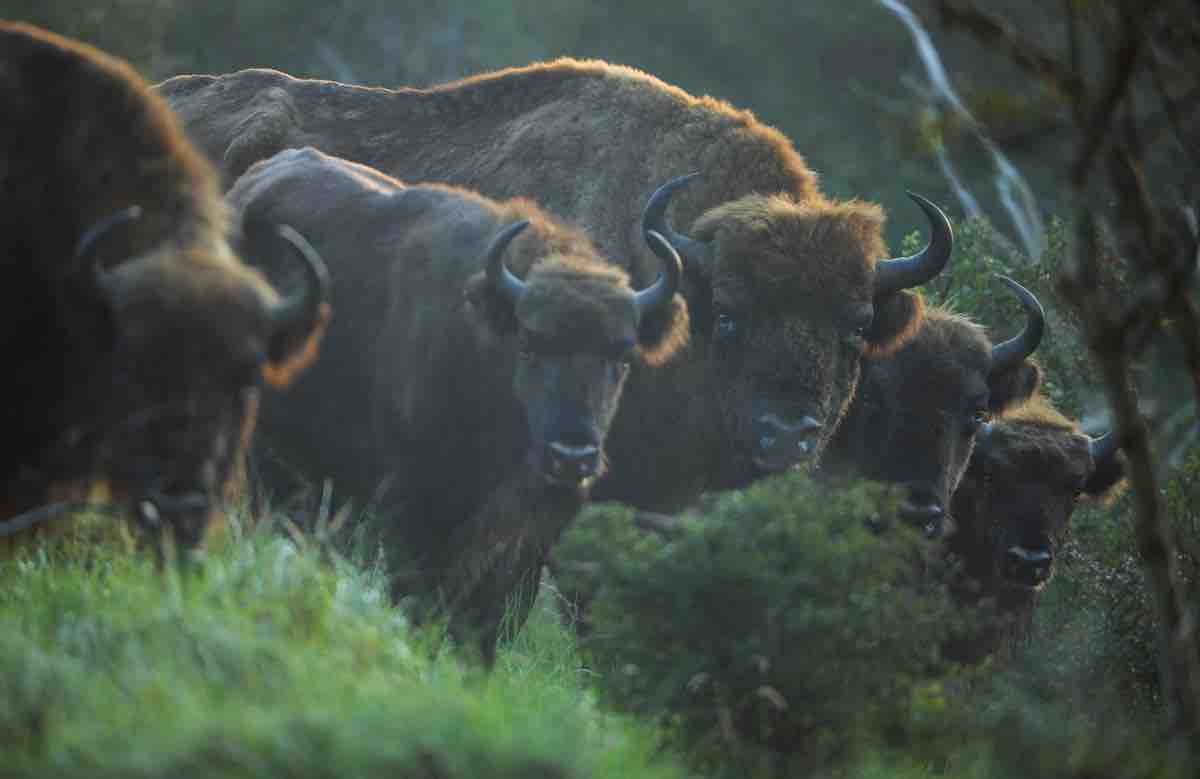
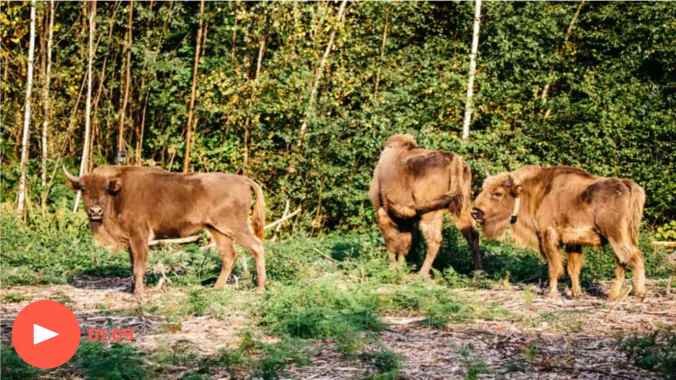
Bison (Bos Bonasus), Kennemerduinen National Park, Kraansvlak, The Netherlands. Enclousure in a fenced reserve, 250 hectar, in Kennemerduinen National Park. STAFFAN WIDSTRAND / REWILDING EUROPE

Bison restoration stories we have linked to are mostly in North America. But the Carpathian mountains have demonstrated Romania’s outsized efforts at rewilding. Now the largest such effort in Europe, according to Rewilding Europe, is this:

The goal of the Tarcu Mountains bison initiative is to help build a herd of at least 500 bison living in freedom by 2025 in the Southern Carpathians. This is an area spanning some 1.4 million hectares of wild mountains and valleys in the southern part of the Carpathian mountain chain.

Thanks to Yale e360 for more on this news from Romania.

European bison in the Carpathian Mountains in Romania. DANIEL MIRLEA / WWF ROMANIA

How a Small Herd of Romanian Bison Is Locking Away Thousands of Tons of Carbon

Gone from Romania for 200 years, European bison were reintroduced to the Țarcu Mountains, at the southern end of the Carpathian range, in 2014. Now numbering 170, the bison are reshaping the mountain landscape in ways that are helping clean up emissions. Continue reading
Community Income From Rewilding

Rewilding Spain’s sustainable forest management support service helps municipalities generate income through activities such as resin extraction. NEIL ALDRIDGE

In the decade since we have been watching the work of Rewilding Europe we have seen income generation growing in importance:

Allowing trees to grow old in healthy ecosystems can help to lock up and store huge amounts of carbon.
JUAN CARLOS MUÑOZ ROBREDO /

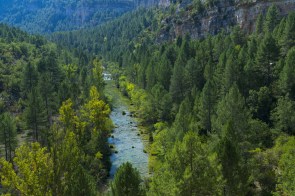
Rewilding forest generates revenue for communities in the Iberian Highlands

Rewilding Spain has signed its first agreement to protect an old-growth forest in the Iberian Highlands. A change in forest management will support natural regeneration, delivering benefits to both nature and people. With other owners of old-growth forests interested in signing similar agreements, there is significant scaling-up potential.

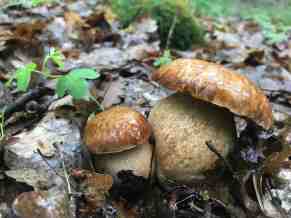
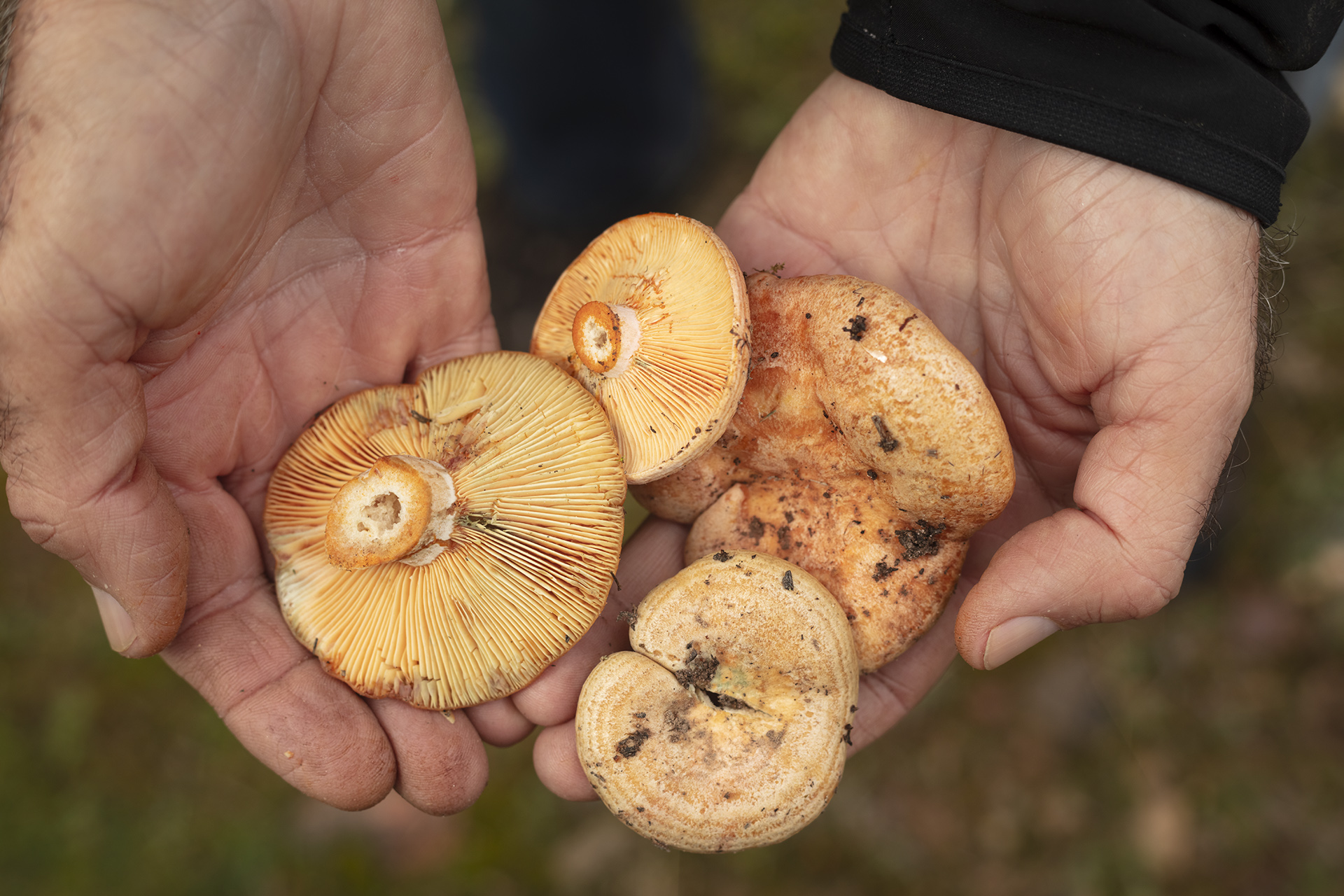
The old-growth forest protected by the new agreement is popular with mushroom pickers.
SEBASTIAN URSUTA

The importance of old-growth forests

Letting forests naturally regenerate is one of the most practical, immediate, and cost-effective ways of addressing our ecological and climate emergencies. As vital ecosystems that support millions of animals and plants, mature natural forests – or old-growth forests – lock up and store huge amounts of carbon. They are more resilient to climate change and disease than young tree plantations, with their diverse mix of native species allowing them to better adapt to a far wider range of conditions. Continue reading
Channeling Water Nature’s Way

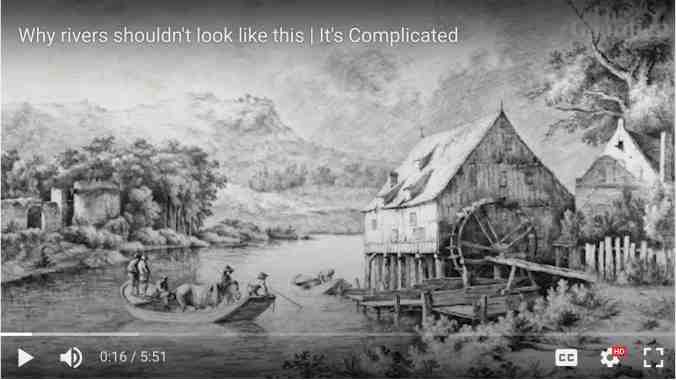
Just as much as we want packaging of our drinking water to be carefully thought out, we also want the channeling of water to make sense:

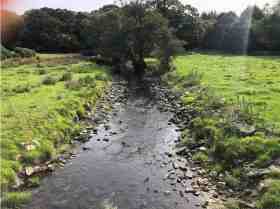
How the beck at James Robinson’s farm looked before the introduction of natural flood management techniques. Photograph: James Robinson

‘The wildlife that has come is phenomenal’: the UK farmers holding off floods the natural way

Planting trees, creating floodplains and rewilding rivers are among the new techniques being used to adapt to a heating climate

The streams, or becks, that run through James Robinson’s Lake District farm used to be cleaned out regularly – with vegetation yanked out and riverbeds dredged, or even completely filled in. Continue reading
Rhodope, Bulgaria & Rodopi, Greece

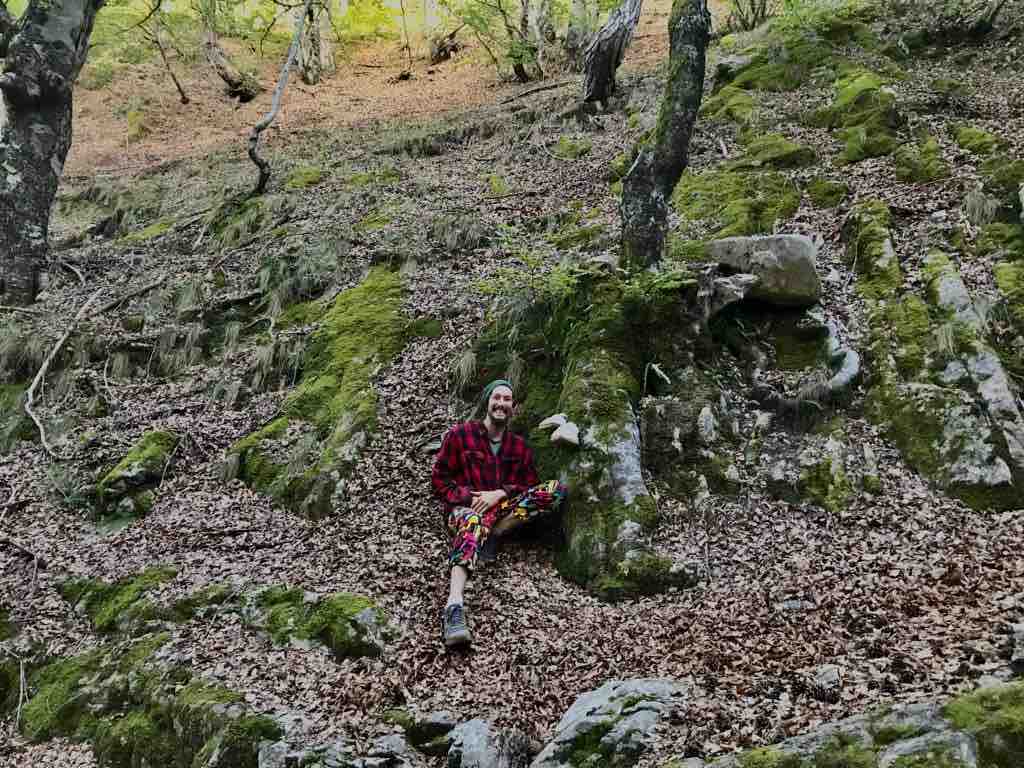
I first heard of this ecosystem nearly a decade ago, not realizing then that it spreads into northeastern Greece. We are in this ecosystem currently, on the Greek side, and yesterday visited the Rodopi Mountain Range National Park. In the photo above you can see Milo, in a location not far from that national park, with one of his favorite types of organism. I thought to revisit the Rewilding Europe website just now, and am happy to link again to their work:

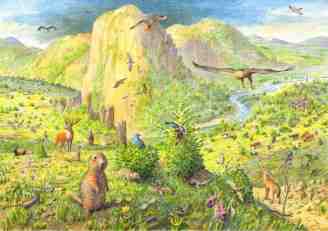
Rhodope Mountains is the most important breeding area for griffon vultures in Bulgaria. The whole region is also a stronghold  for wolf and jackal.

The Rhodope mountains hold a captivating array of of flora and fauna and is a stronghold of vultures in south-eastern Europe. It’s the only breeding spot in Bulgaria for griffon vultures and an important site for the globally threatened Egyptian vulture on the Balkan Peninsula. Additionally, rare cinereous vultures can be spotted soaring above. Among the dozens of other raptor species Eastern imperial eagle, Saker falcon, Levant sparrowhawk, Peregrine falcon and several other eagles can be mentioned.

The whole region is also a stronghold within Bulgaria for wolf and jackal. In recent years, brown bears have begun naturally recolonizing the Rhodopes, and the possibility of bear-watching is emerging in the landscape, particularly in the western part of the mountains.

Because of its location at the crossroads between the European and Asian continent, the impact of the Mediterranean, its pristine landscapes and the variety of habitats here in combination with the relatively small human disturbance, the Rhodope Mountains have a huge variety in species and habitats, and have become one of the bird watching hotspots in Europe.


Reclamation, Restoration & Biodiversity

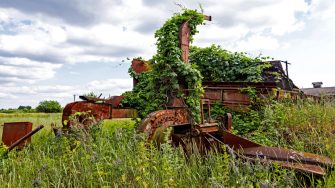
Overgrown agricultural machinery on a vacant farm near the Chernobyl Nuclear Power Plant in Ukraine. OKLA MICHEL / CTK VIA AP

Thanks to Fred Pearce, as always:

Abandoned Lands: A Hidden Resource for Restoring Biodiversity

Abandoned farmland has been increasing, with a billion acres — an area half the size of Australia — lost globally. Ecologists are increasingly pointing to the potential of these lands and of degraded forests as neglected resources for rewilding and for capturing carbon.

Gergana Daskalova was nine months old when she was taken in by her grandparents in their small village in Bulgaria. It was soon after the fall of the Iron Curtain, and her parents had left for the city after the closure of the village’s state-run collective farm. Continue reading

Rewilding On The Beara Peninsula

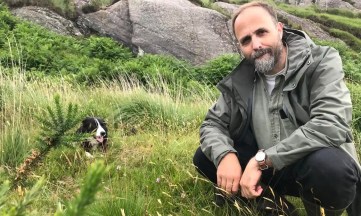
Eoghan Daltun with his dog on his farm, where native trees such as sessile oak, rowan and downy birch have self-seeded. Photograph: Rory Carroll/The Guardian

Rewilding remains one of our favorite topics to read about, and we share accordingly. Thanks to Rory Carroll for this article in the Guardian:

‘The result was amazing’: one man’s mission to reforest a barren Irish hillside

Eoghan Daltun has spent 14 years rewilding part of Beara peninsula into a showcase of diversity

Eoghan Daltun stood on a slope and pointed to a distant vista of verdant fields, craggy hills and conifer trees across the Beara peninsula in west Cork. Continue reading
Bringing Back Peat

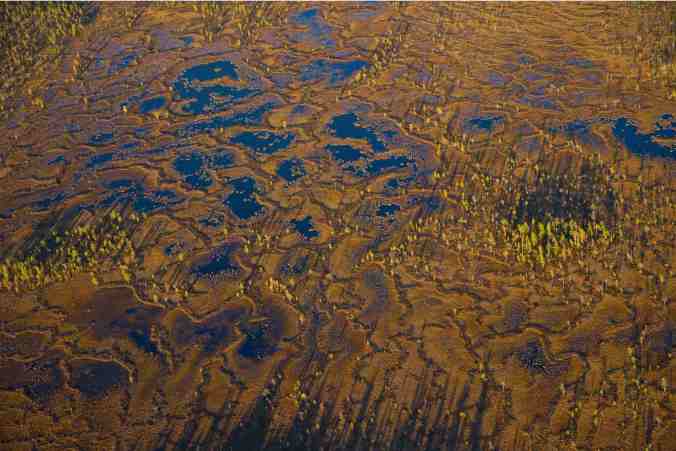
Peatland and taiga forest in northern Finland. NATURE PICTURE LIBRARY / ALAMY STOCK PHOTO

It has been a year since we linked to a peat-in-place story, of which there cannot be too many (so thank you, Yale e360):

Tero Mustonen. GOLDMAN ENVIRONMENTAL PRIZE

Finland Drained Its Peatlands. He’s Helping Bring Them Back

Tero Mustonen has led a successful effort to restore roughly 80 areas of ecologically critical peatlands across his native Finland. In an interview, he talks about the importance of bringing Indigenous knowledge to rewilding initiatives in far northern regions and beyond.

Until a century ago, almost a third of Finland was covered in pristine peatlands, which comprise one of the Earth’s largest and most important carbon sinks. Since then, however, half of Finnish peatlands have been strip-mined for fuel or drained to make room for forest plantations. Continue reading
Wilding The Golf Course

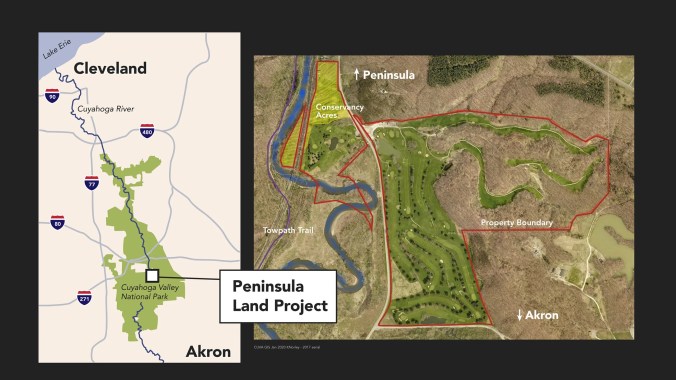
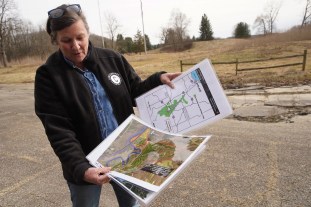
Map by Anna Yantek / Ideastream Public Media, with satellite imagery via the Conservancy for Cuyahoga Valley National Park

We do not mind the sport, per se, but its footprint is quite problematic. This story by Abigail Bottar with photos and video by Ryan Loew is worth a few minutes of your time, either reading or listening, if you want to see what is possible to mitigate the footprint:

Stacey Rusher, director of park projects at the Conservancy for Cuyahoga Valley National Park, holds maps of the former Brandywine Country Club golf course property.

Back to nature

At the former Brandywine golf course in Peninsula, a national park acquisition is allowing Mother Nature to retake her land.

On a warm winter day, Stacey Rusher serves as a guide through what used to be the par three golf course at the former Brandywine Country Club. Through fields of dry brush, up leaf-covered hills and past resting geese, she arrives at the banks of the Cuyahoga River. Continue reading
Realities Of Rewilding

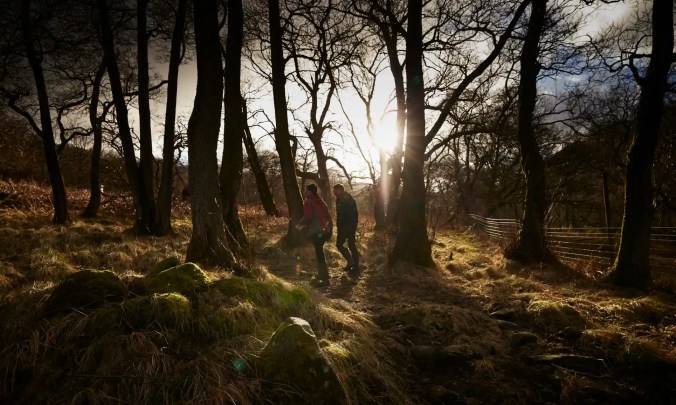
Haweswater in the Lake District where the RSPB is running rewilding projects based around Naddle farm and the surrounding farmland. Photograph: Christopher Thomond/The Guardian

Rewilding has been a favorite topic in our pages for most of the last decade. We appreciate the nuances, described by Ben Martynoga, in this particular community’s efforts and challenges related to rewilding:

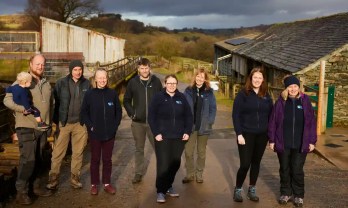
Staff and volunteers at Naddle farm, an ex-sheep barn which is now a tree nursery. Photograph: Christopher Thomond/The Guardian

‘The R-word can be alienating’: How Haweswater rewilding project aims to benefit all

On the Lake District’s north-eastern fringe, two farmsteads are restoring the landscape with a commitment to conservation and providing jobs

Until the last male golden eagle died in 2015, Haweswater, on the rugged north-eastern fringe of the Lake District, was England’s final refuge for the bird of prey. “Even now, whenever I go up Riggindale, it feels like something is missing,” says Spike Webb, a long-serving RSPB warden at its Haweswater site. Continue reading
Yellowstone, Rewilding & 06

The American west has told the rewilding story from multiple perspectives, and this book to the right makes a special place for the she-wolf in that story, according to this review in Inquisitive Biologist:

The wolves reintroduced to Yellowstone National Park in 1995 are some of the best-studied mammals on the planet. Biological technician and park ranger Rick McIntyre has spent over two decades scrutinizing their daily lives, venturing into the park every single day. Where his previous books focused on three notable alpha* males, it is ultimately the females that call the shots and make the decisions with lasting consequences. This book is a long overdue recognition of the female wolf and continues this multigenerational saga. Continue reading
American Prairie & American Bison

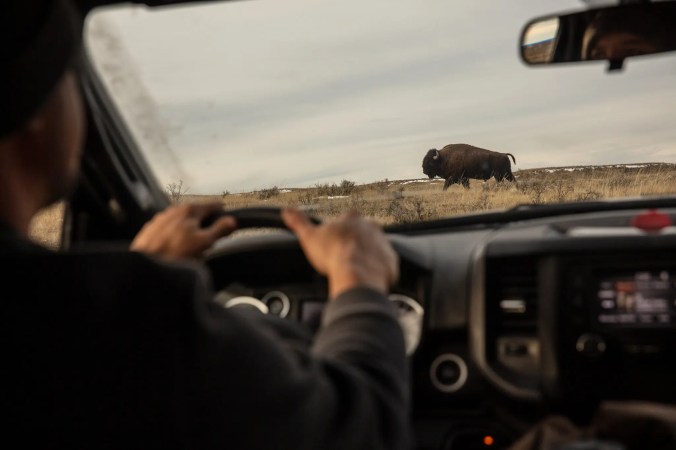
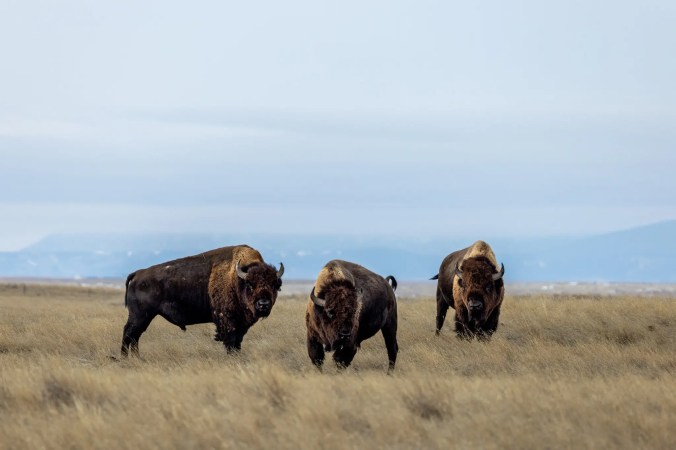
Scott Heidebrink, the director of bison restoration for the American Prairie Reserve in northeast Montana, checks on a herd. “There are ways that bison were impacting the landscape that we haven’t even thought about,” he said.

Bison restoration has been on our radar, primarily stories from the western USA, but also from the European context, where there has been considerable progress in recent years. Here is a good look at a conservation organization focused on habitat restoration, and the multi-species benefits:

Where the Bison Could Roam

Bison once numbered in the tens of millions in the United States. Now, a nonprofit is working to restore the shortgrass prairie, where the American icons and their ecosystem can thrive again.

MALTA, Mont. — Around 200 chocolate-brown bison raise their heads, following the low growl of a pickup truck slowly motoring across the sagebrush-studded prairie. Continue reading
India’s Zero Sum Game

When Pradip Krishen began creating Jaipur’s Kishan Bagh Desert Park, it was a wasteland of dunes and bald hillocks, strewn with trash. Looking at the landscape, he said, “Now, this is something I’d love to work on. ”Photographs by Bharat Sikka for The New Yorker

If I had to bet, based on our period living in India from 2010 to 2017, I would bet on the prime minister winning. That implies the country making less progress on conservation, if any, and more on development. As Dorothy Wickenden‘s article implies, it may be a zero sum game:

The Promise and the Politics of Rewilding India

Ecologists are trying to undo environmental damage in rain forests, deserts, and cities. Can their efforts succeed even as Narendra Modi pushes for rapid development?

Krishen’s first major restoration job was reclaiming the landscape around Mehrangarh Fort, in the Thar Desert.

On May 12, 1459, the Rajput warrior ruler Rao Jodha laid the first foundation stone of an impregnable fort, atop a jagged cliff of volcanic rock in the Thar Desert of Marwar. He called the citadel Mehrangarh, or “fort of the sun”—and, legend has it, he insured a propitious future by ordering a man buried alive on its grounds. Over time, as the royal clan secured its power, the compound grew to colossal proportions, with soaring battlements, ornately furnished palaces, and grand courtyards enclosed by intricate sandstone latticework. Four hundred feet below, the capital city of Jodhpur became a flourishing trade center. Continue reading
Charismatic Megafauna UK Rewilding

Wild bison released into Kent countryside – video

In Scotland the first such project we became aware of had wild but smaller animals as their focal point. Reforesting and other United Kingdom rewilding initiatives have until now been missing the biggest possible charismatic megafauna:

Wild bison return to UK for first time in thousands of years

The gentle giants released in Kent should transform a commercial pine forest into a vibrant natural woodland

Early on Monday morning, three gentle giants wandered out of a corral in the Kent countryside to become the first wild bison to roam in Britain for thousands of years. Continue reading
New World Rewilding

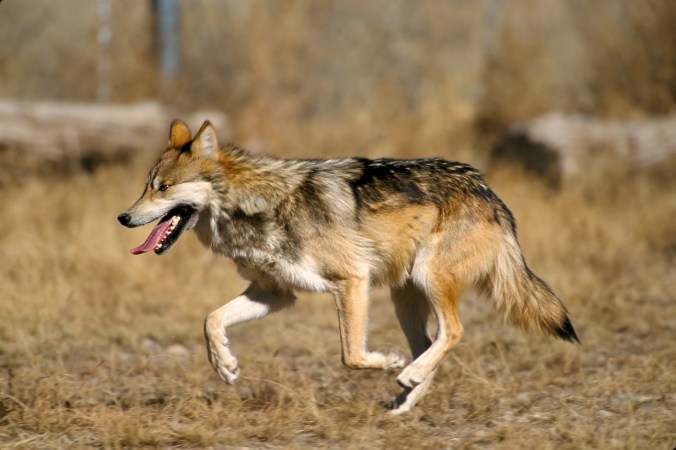
Mexican gray wolves have been reintroduced to Arizona and New Mexico over the last two decades. JIM CLARK / U.S. FISH AND WILDLIFE SERVICE

We have been posting about rewilding for nearly a decade, and it sees fair to say that the idea has developed traction worldwide:

T0GFFN Bison or Bufalo within prairie and pasture in protected natural area. Rancho el Uno, a space dedicated to the conservation of this species in Janos, Chihuahua. This fishery was reintroduced by the organization The Nature Conservancy, TNC. Janos Biosphere Reserve
  (© Photo: LuisGutierrez / NortePhoto.com

Bringing Back the Beasts: Global Rewilding Plans Take Shape

With a growing number of studies demonstrating the importance of large mammals to healthy ecosystems, scientists are proposing concrete plans to reintroduce these animals to the wild. The return of just 20 species to native habitats, they say, could be a boon to biodiversity.

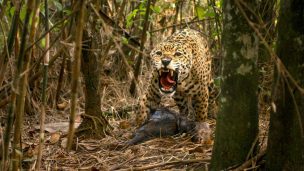
A jaguar guards its prey, a white-lipped peccary, in Goiás, Brazil. OCTAVIO CAMPOS SALLES / ALAMY STOCK PHOTO

For thousands of years, bison herds thundered freely throughout the Chihuahuan Desert on both sides of what is now the U.S.-Mexico border. In November 2009, after three frantic months of chasing down the required permits, Rurik List and Nélida Barajas watched as 23 bison from Wind Cave National Park in South Dakota arrived by tractor-trailer at the Santa Teresa international cattle crossing in southeastern New Mexico.

The animals, 20 females and three males, galloped through the dusty stockyards, across the border, and into the state of Chihuahua. Continue reading

Southern Cone Rewilding

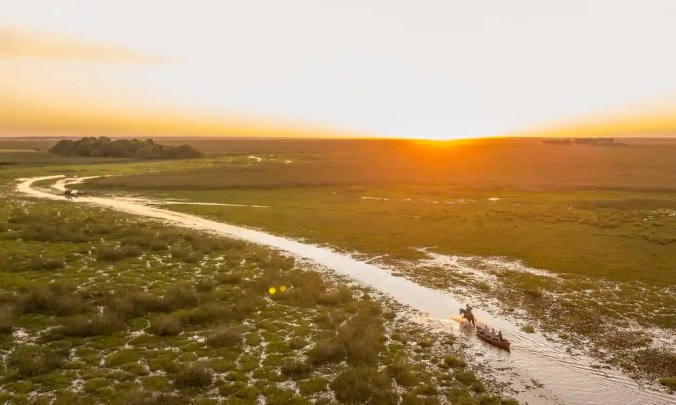
A horse and rider pull a tourist boat through the Iberá marshes

When we have linked to stories about conservation and efforts to rewild in the Southern Cone, it has been a mix of big cats and the efforts of Doug and Kris Tompkins. Our thanks to Patrick Greenfield and the Guardian for taking these themes long form:

El Impenetrable national park, home to thousands of charismatic plants, flowers and animals, including jaguars.

How to rewild a country: the story of Argentina

It began with a philanthropic couple buying a swamp but has become one of the world’s boldest experiments in restoring degraded habitats, bringing wildlife and landscapes back from the brink

Chapter one

The return of the jaguar

It took about three seconds for piranhas to devour part of her left foot, biologist Deborah Abregü recalls, as we sit waiting for pizzas to cook on an open fire in Argentina’s El Impenetrable national park. Continue reading

Cairngorms Connect & Scotland’s Rewilding

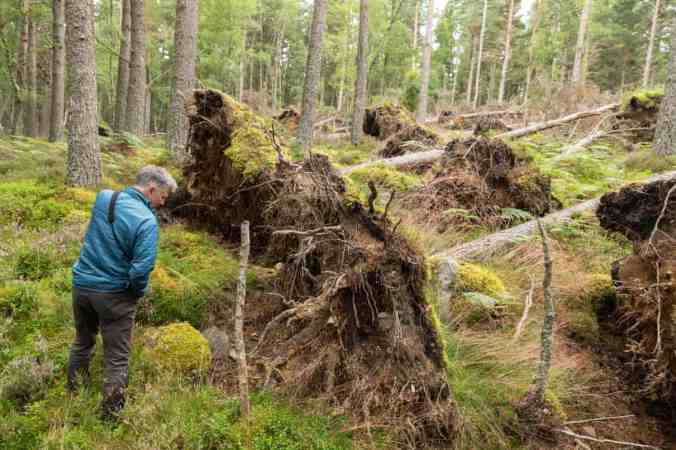
Jeremy Roberts examines the root plate of a felled Scots pine. Photograph: Mark Hamblin/The Guardian

Rewilding looks different in earlier posts about Scotland’s pioneering projects. But here is an additional piece of the puzzle worth understanding:

Chopping, twisting, felling: the unruly way to rewild Scotland’s forests

Orderly pine plantations in the Cairngorms are being messed up as part of a plan to let nature thrive

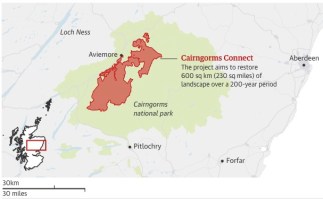
Cairngorms Connect is the UK’s largest land restoration project

The Scots pine plantations in Abernethy forest are the crème de la crème in forestry terms: tall, straight and dense. These plantations were created in the 1930s, and the wood had a variety of uses, from ships’ masts to trench timbers. Now, this woodland is being retrofitted for wildlife as part of the UK’s largest land restoration project because, although it is striking to wander in such a regimented landscape, nature prefers things to be less orderly. Continue reading
Monbiot’s Scrutiny In Perspective

Illustration by Eva Bee

The first I heard of him, nearly a decade ago, I was immediately hooked on his writing, and the ideas he was offering were surprising to read in a mainstream, if progressive, publication. He introduced me to rewilding. If you have not been reading or perhaps listening to George Monbiot during this decade you may not have noticed how his radicalism has evolved. In this editorial ostensibly about the Pandora Papers I learned something about Madeira that I want to read more about:

…A few decades after the Portuguese colonised Madeira in 1420, they developed a system that differed in some respects from anything that had gone before. By felling the forests after which they named the island (madeira is Portuguese for wood), they created, in this uninhabited sphere, a blank slate – a terra nullius – in which a new economy could be built. Continue reading

Gerald Durrell, The Stationary Ark, And A 2021 Maverick

Gerald Durrell, somehow, has escaped mention in 11,281 previous posts over the last decade+ on this platform. Today is the day to begin correcting that oversight. His novelist brother Lawrence is worthy of his own post here another day. And the family name was recently popularized on television. While Gerald’s own legacy is not easy to categorize, a good starting point is to look at Durrell Wildlife Conservation Trust and his related conservation work. Books are a big part of the legacy and the one to the right has had a tangible influence:

An Ark for Vanished Wildlife

Derek Gow’s maverick efforts to breed and reintroduce rare animals to Britain’s countryside.

Derek Gow wants his farm to be a breeding colony, a seedbed for a denuded island. Photograph by Jonny Weeks / eyevine / Redux

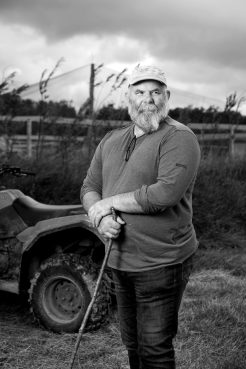
Derek Gow decided to abandon conventional farming about ten years ago, not long after the curlews left. At the time, Gow, who is thickset and white of beard, had a flock of fifteen hundred breeding ewes and a hundred and twenty cows, which he kept on a three-hundred-acre farm of heavy clay close to the border between Devon and Cornwall, in southwest England. He was renting an extra field from a neighbor, and a pair of curlews had come to forage for a few days. A farm worker spotted the distinctive brown birds; they have long beaks that slope downward, like violin bows. “He didn’t even recognize what they were,” Gow told me.

Curlews are Europe’s largest wading bird. Continue reading