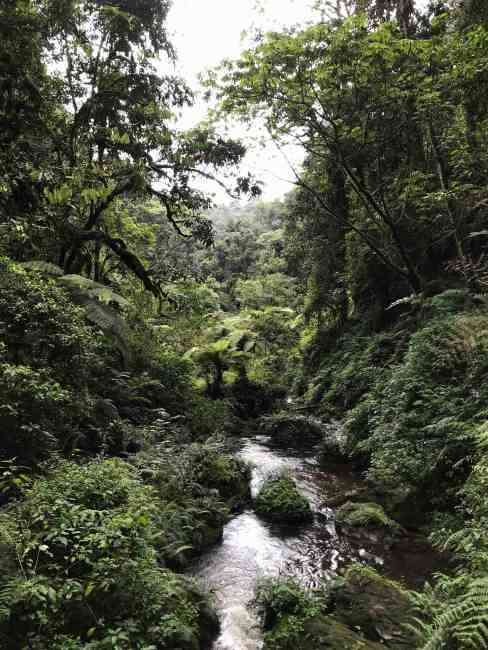
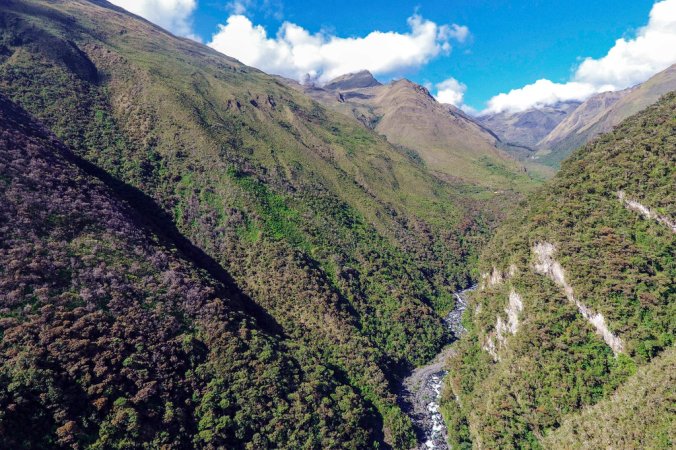
A view from inside Nyungwe National Park
When I came into the master of environmental management program at Yale FES, the Wildlife Conservation Society (WCS) wasn’t really on my radar as a big international conservation NGO — other names like the World Wildlife Fund, The Nature Conservancy, Conservation International, or Flora and Fauna International came to mind first. As I started to learn about the biodiversity hotspot of East Africa’s Albertine Rift, however, WCS programs and technical reports started to come up more and more, and the professional experience shared by my professors Amy and Bill in their class (Building a Conservation Toolkit: From Project Design to Evaluation) led to many discussions about their work with WCS.
As part of the Rwanda Study Tour, we met with WCS employees in Kigali and two towns neighboring Nyungwe National Park called Gisakura and Kitabi. These Rwandans, some of whom had been with the NGO for over fifteen years, told us about the conservation efforts carried out by WCS in the region, much of which revolves around capacity building, scientific monitoring, and community education and engagement. For example, since the nineties WCS has been recording phenological data from native trees and vegetation in Nyungwe, which can be a valuable reference for seasonal variations in plants affected by climate change. WCS has also trained park rangers on different data collection methods that have improved monitoring systems in the park to document cases of poaching efforts such as wire snares, which are still a major threat to the small forest antelopes that live in Nyungwe.
Continue reading →




 Countries that contain most of the world’s species biodiversity are also spending the least on a per-person basis to protect these natural assets, according to a MacArthur-supported
 Organikos