Nature, Peer-Reviewed Science Since 1869

The scientific journal Nature shows up in exactly one search result among thousands of posts here. And that one, because photos have such a wide audience. We have not linked to their articles because, since 1869, they are written by and oriented to highly credentialed scientists. A look at ten influential articles makes the point. And we can only respect what they do, even if we wish more of us could digest more of the science. Now that they offer some articles in audio version, this may make the science more accessible to those who hear better than they read. Judge for yourself, if you want to pay to play. The audio version of the article below (available on YouTube above) is free, but unless you have a subscription the written version is available for a small charge:

Rooftop solar panels in China. Tandem cells could boost power density in crowded urban areas. Credit: VCG/Getty

A new kind of solar cell is coming: is it the future of green energy?

Firms commercializing perovskite–silicon ‘tandem’ photovoltaics say that the panels will be more efficient and could lead to cheaper electricity.

On the outskirts of Brandenburg an der Havel, Germany, nestled among car dealerships and hardware shops, sits a two-storey factory stuffed with solar-power secrets. It’s here where UK firm Oxford PV is producing commercial solar cells using perovskites: cheap, abundant photovoltaic (PV) materials that some have hailed as the future of green energy. Surrounded by unkempt grass and a weed-strewn car park, the factory is a modest cradle for such a potentially transformative technology, but the firm’s chief technology officer Chris Case is clearly in love with the place. “This is the culmination of my dreams,” he says.

Rishi’s Wrong, Skidmore’s Right

Chris Skidmore said he could ‘no longer condone nor continue to support a government that is committed to a course of action that I know is wrong’. Photograph: Chris McAndrew/UK Parliament/PA

We rarely applaud those on the right side of the political spectrum when it comes to environmental issues. Most have been on the wrong side of history with regard to climate change. When one stands up and challenges the status quo, applause applause:

Chris Skidmore resigns Conservative whip over Sunak’s oil and gas licence plan

Former minister also resigns as an MP, which will trigger byelection in his Kingswood constituency

A former Conservative minister has announced he is resigning as an MP in protest at the party’s dash for oil and gas, setting up an awkward vote for the prime minister on the issue on Monday and an even more difficult byelection within weeks. Continue reading

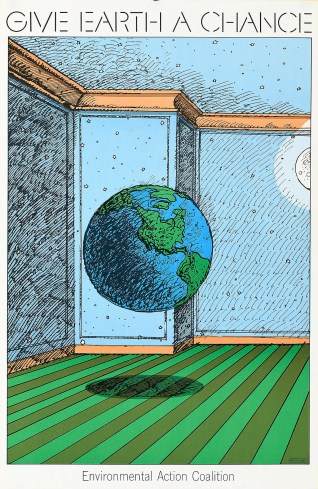
Give Earth A Chance, & Other EcoPosters

A poster from 1970 by Milton Glaser. via Poster House

If you happen to be in New York City and enjoy graphic design related to conservation you might enjoy this:

Told Ya So: The Prescient Posters of the Environmental Movement

Graphic artists have been helping call attention to climate change for decades, and a new exhibition charts the evolution of their pleas.

Last year was the warmest in recorded history. The graphic artists of the environmental movement tried to warn us. Their posters aimed to scare people straight with pictures of ecological ruin, or glorified nature, clean air and water, sunshine and verdure. Some offered earworm-y slogans and haunting visuals. Whatever their approach — bright, witty, somber, blunt, even sexy — they sought an image, a phrase, that could change enough minds to literally save the world. Continue reading

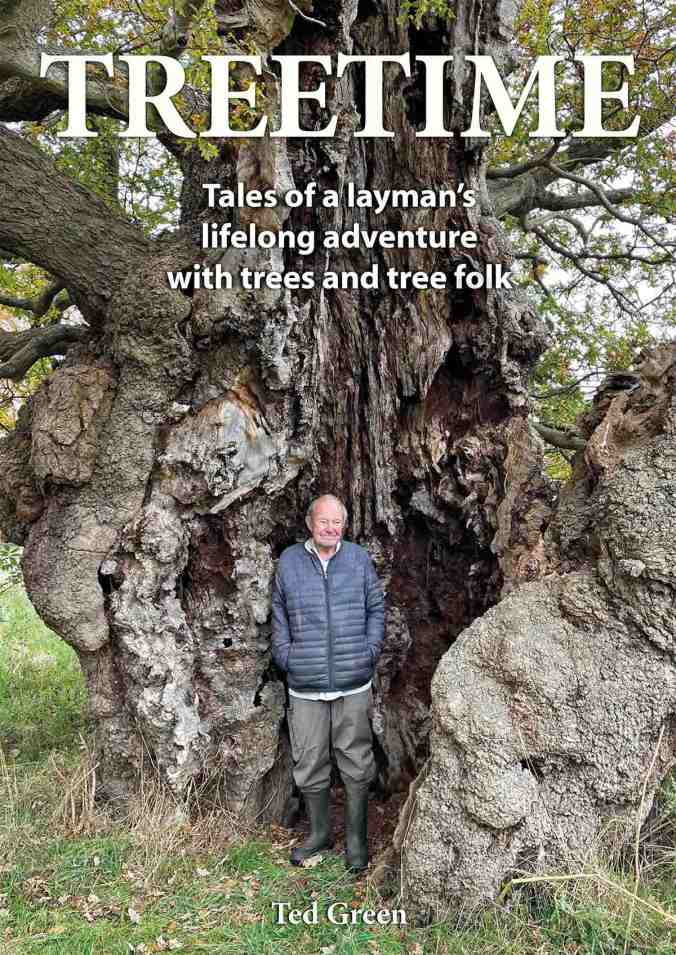
Ted Greene’s Treetime

Thanks to the Guardian for bringing the above book to our attention:

Ted Green, a conservation adviser to the crown estate at Windsor, has a provocative take on our ‘living heritage’

Ted Green is a rebel. He calls sheep “land maggots”. A horse-riding centre is “a dog-food complex”. And the ancient tree expert’s new book includes a photo of him sticking up two fingers at a portrait of Margaret Thatcher. Continue reading

More Honey & Bees, Also

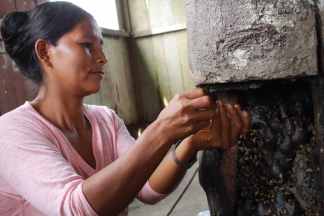
Tarkis Ríos Ushiñahua harvesting honey from stingless bees in a tree-trunk hive, at her home in Puerto Huamán in the Peruvian Amazon, 2019. [Hannah Hutchinson]

Along with anything else to get 2024 off to a good start, an article by Andrew Wingfield and Michael P. Gilmore that we missed from last year. The topic is one that we have only briefly touched on a couple times. The wider world of honey and the bees responsible for it are topics we hope to share more of this year.

To begin, let this bring some joy:

A Sweet and Potent Harvest

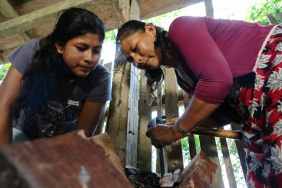
Tarkis Ríos Ushiñahua teaches her daughter to divide a hive, 2022. [Dylan Francis]

For the Maijuna of the Peruvian Amazon, harvesting honey from stingless bees is bringing prosperity and empowerment. Local beekeeping might also help preserve a vast ancestral forest.When Tarkis Ríos Ushiñahua collects honey from one of her beehives, she wears no protective clothing and uses just one tool, a large plastic syringe. 1 As she lifts the lid from the wooden box housing the hive, the bees swarm. They buzz around her face, land on her back, and settle in strands of her straight black hair, but they do no harm — these bees are stingless.

The bee yard of Loida Ríos Tamayo and Saúl Peterman Mosoline, 2021. [Enrique Redondo Navarro]

The slender tip of Ríos Ushiñahua’s syringe fits neatly inside the hive’s honeypots, brownish, papery-looking pouches that the bees have fashioned from wax and plant resins. Continue reading

More Civic Responsibility In 2024, Please

THR illustration.

Civic responsibility, short in supply in 2023, is worth pondering. The always interesting Hedgehog Review gets our vote for this final article link of 2023:

No Exit

The Uncivil Folly of Libertarian Flight
David Bosworth

Of all 36 ways to get out of trouble, the best way is—leave. —Chinese proverb

One of the scandalous revelations of the COVID pandemic was just how many of America’s superrich—our digerati, venture capitalists, corporate monopolists, hedge fund managers—had long been planning to abandon their fellow citizens should a dire national crisis arise. While poorly paid EMTs and other frontline health workers were risking their lives caring for the desperately ill, wealthy Americans who had amassed their fortunes during our tech-driven Gilded Age were fueling their private jets and stocking their remote shelters in unabashed displays of their proudly vaunted libertarian creed. Continue reading

Franzen, In The Interest Of Birds, Debunks A Myth

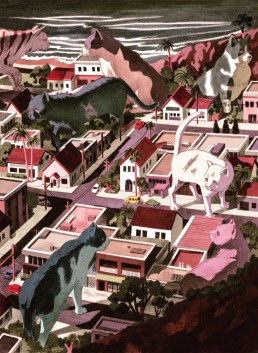
A long-serving animal-control officer described a system intensely pressured to keep animals moving through it. “No Kill sounds great,” the officer said. “But it’s a myth.”Illustration by Antoine Maillard

We have Jonathan Franzen to thank for some of the best writing on caring more about birds, and he helps close out 2023 with a detailed look at the implications and complications of a cat population explosion:

How the “No Kill” Movement Betrays Its Name

By keeping cats outdoors, trap-neuter-release policies have troubling consequences for city residents, local wildlife—and even the cats themselves.

This past June, at the height of kitten season in Los Angeles, Gail Raff got a call for help from the neighborhood of Valley Glen, where a young woman had trapped a cat that needed fixing. Although the City of Los Angeles subsidizes the sterilization of unowned cats, appointments at clinics are hard to come by, and Raff was known in the animal-rescue world as a trapper who secures as many appointments as she can. Continue reading

Avocados & Michoacán

An avocado farm in Yoricostio, Michoacán. All photographs from Mexico, August 2023, by Balazs Gardi for Harper’s Magazine © The artist

A decade ago we thought we should source from Harper’s more, but its blog no longer exists to read the whole story that prompted that idea. Still going strong after 173 years of publication, this recent article in the magazine helps us understand what is wrong with one of our favorite farm products:

Forbidden Fruit
by Alexander Sammon

The anti-avocado militias of Michoacán

Phone service was down—a fuse had blown in the cell tower during a recent storm—and even though my arrival had been cleared with the government of Cherán in advance, the armed guard manning the highway checkpoint, decked out in full fatigues, the wrong shade to pass for Mexican military, refused to wave me through. My guide, Uli Escamilla, assured him that we had an appointment, and that we could prove it if only we could call or text our envoy. The officer gripped his rifle with both hands and peered into the windows of our rental car. We tried to explain ourselves: we were journalists writing about the town’s war with the avocado, and had plans to meet with the local council. We finally managed to recall the first name of our point person on the council—Marcos—and after repeating it a number of times, we were let through. Continue reading

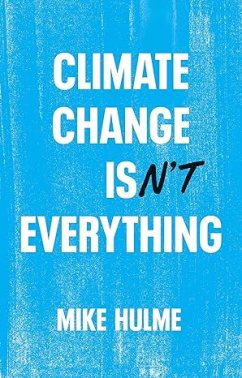
Mike Hulme’s Climate Change Isn’t Everything, Reviewed

Nicholas Clairmont reviews the book in this publication we have recently been following:

Warm Planet, Cool Heads

A new book warns against pushing all the world’s problems into the climate bucket.

Mike Hulme, a Cambridge professor of human geography who has served on the U.N.’s Intergovernmental Panel on Climate Change and holds a certificate for his contributions to that body’s climate science from when it was awarded the 2007 Nobel Peace Prize, is no climate denier. And yet time and again in his new book he is at pains to preempt the charge that, actually, he is. “Again, don’t misread me,” he writes at one point, “climate kills and climate change is real.” Elsewhere in the book he describes human-caused climate change as a “scientifically well-established fact.” So why the anxiety that readers will say, as he anticipates, “you sound just like a climate denier”? Continue reading

Bird-Friendly Architecture

The New York Times building uses fritted glass clad with rods, which make its facade more visible to birds. Photograph: Daniel Slim/AFP/Getty Images

Birds fall victim to carelessly designed buildings. Bravo to the New York Times for building a bird-friendly HQ. Also to the Guardian for reporting on their competitor’s leadership, and on the architects leading the way with careful design:

Buildings kill a billion US birds a year. These architects want to save them

Highly transparent glass can lead to devastating collisions. But innovations in design are creating safer skylines – without sacrificing beauty

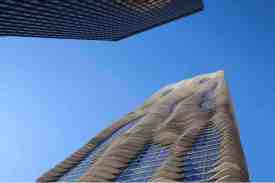
Chicago’s Aqua Tower was designed with birds in mind. Photograph: Radomir Rezny/Alamy

Chicago’s 82-story Aqua Tower appears to flutter with the wind. Its unusual, undulating facade has made it one of the most unique features of Chicago’s skyline, distinct from the many right-angled glass towers that surround it.

In designing it, the architect Jeanne Gang thought not only about how humans would see it, dancing against the sky, but also how it would look to the birds who fly past. The irregularity of the building’s face allows birds to see it more clearly and avoid fatal collisions. “It’s kind of designed to work for both humans and birds,” she said.

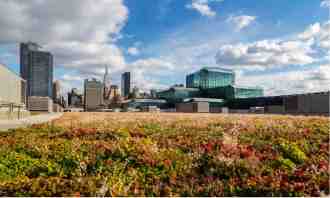
A green roof on the Javits Convention Center serves as a sanctuary for birds. Photograph: David Sundberg/Courtesy of Dan Piselli

As many as 1 billion birds in the US die in building collisions each year. And Chicago, which sits along the Mississippi Flyway, one of the four major north-south migration routes, is among the riskiest places for birds. This year, at least 1,000 birds died in one day from colliding with a single glass-covered building. Continue reading

McKibben On The LNG Methane Problem

Exporting LNG to China helps no one but frackers

Not as cheerful as Mr. Grouse, but this week’s newsletter is important reading in the interest of progress of this looming LNG problem (a gentle way of putting it, since it is more a PROBLEM than a problem):

Different Kinds of Winning

Helping Biden Help Himself–and the Planet–on Climate

We are, I think, edging towards a win on LNG exports, which would be a very good thing: a pause on the biggest fossil fuel expansion plan on earth. The question, I think, is if it will be the kind of win that makes it easier to boost the beleaguered presidential campaign of Joe Biden—which has got to be a central focus for anyone worried about the planet’s (and our democracy’s) future. And that is largely up to the White House. Continue reading

Holiday Cheer From Mr. Grouse

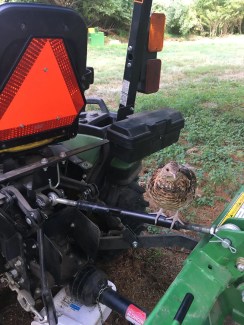
Bill Hartline and Mister Grouse. “He can be a pain, too,” Mr. Hartline said. Bill Hartline

Apart from bird-feeders, habituating wild animals among humans is troublesome. The Cornell Lab of Ornithology promotes birdfeeders so we trust that there is science supporting the practice. The science behind this grouse’s behavior represents another good exception:

Ruffed grouse are elusive and stealthy, but scientists are seeking a genetic explanation for why some of the birds become best buddies with people.

Mister Grouse helping with chores around the property. Bill Hartline

When Bill Hartline bought 50 acres of forested land outside Muncy, Pa., he was looking for a bit of solitude and a place to eventually build a new home in retirement. But during a camping trip there in early 2020, he discovered the wooded plot wasn’t as lonely as he thought. That evening, a ruffed grouse — a crow-size bird with a tiny mohawk and mottled feathers — appeared at his feet.

“I crouched down and said, ‘Hello.’ He cooed back and started following me around,” Mr. Hartline, 66, said. “Three years later, he’s still following me around.” Continue reading

The American Chestnut, Reconsidered

Illustration by The Atlantic. Source: Millennium Images / Gallery Stock; Bettmann/Getty

Katherine J. Wu reminds us of what it means to love something too much, and not enough:

America Lost Its One Perfect Tree

Lumber, shelter, delicious nuts—there was nothing the American chestnut couldn’t provide.

Across the Northeast, forests are haunted by the ghosts of American giants. A little more than a century ago, these woods brimmed with American chestnuts—stately Goliaths that could grow as high as 130 feet tall and more than 10 feet wide. Nicknamed “the redwoods of the East,” some 4 billion American chestnuts dotted the United States’ eastern flank, stretching from the misty coasts of Maine down into the thick humidity of Appalachia. Continue reading

Kelp & Life

Sugar kelp from Penobscot Bay, Maine. Photograph: Josie Iselin

We have featured the promise of various seaweed schemes many times, and we find it evergreen for further exploration:

Could I live and breathe seaweed – and reduce my use of plastics – for 24 hours?

Seaweed Day starts at 8am. Haunted by pervasive news that so many of our everyday habits harm our planet, I wonder how to minimize my personal use of plastics. I embark upon a day of replacing the microplastics that pollute our atmosphere, our water and even our bloodstreams.

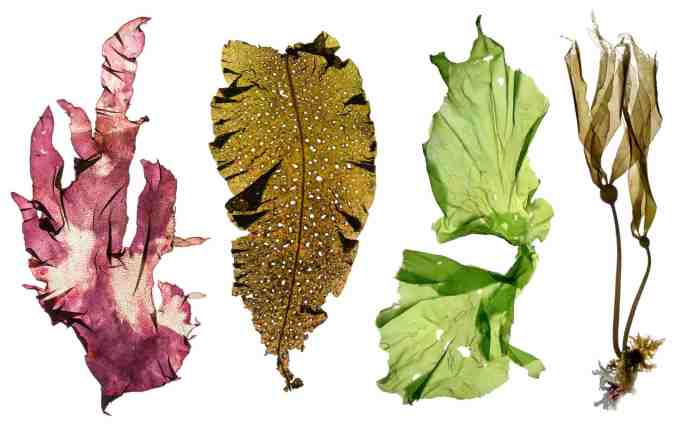
From left to right, Chondracanthus, Agarum, Ulva (sea lettuce), Nereocystis (juvenile bull kelp). Photograph: Josie Iselin

How much of my daily life can I accomplish with seaweed? Eating, washing, dressing? Armed with a budget of $500, I set out on a seaweed-based product shopping spree. Continue reading

Bikes Connected To The Grid

A man rides an ebike in Hermosa Beach, California. Photograph: Mel Melcon/Los Angeles Times/Getty Images

From one point of view ebikes could be viewed as just one more form of entertainment drawing energy from the grid. But an argument can be made that this increase in load on the grid is decreasing other carbon footprints. On top of that, maybe more people on bikes is its own gain:

Sales surge as cities and states look to cut pollution from cars and improve options for Americans to get around

After several years of false starts, electric bikes are finally entering the American mainstream, amid booming sales of a multiplying number of models on offer and as more states offer incentives for people to ditch their cars and shift to two, motor-assisted, wheels. Continue reading

Standing, Healthy Forests Are Essential

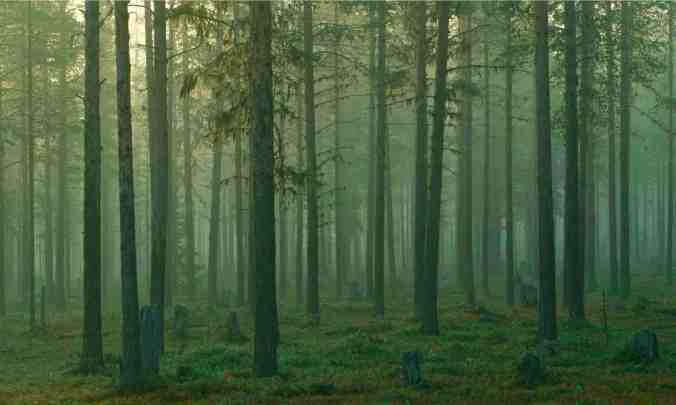
A managed forest near Jokkmokk, Sweden. Humanity will not limit global heating to safe levels without forests and woodland. Photograph: Peter Essick/Aurora/Getty Images

We thank Patrick Greenfield for this opinion in the Guardian:

Root and branch reform: if carbon markets aren’t working, how do we save our forests?

The world has looked to offsetting schemes to protect forests, fund conservation and fight the climate crisis – but many fail to fulfil their promises. Here are five ways to keep our forests standing

Keeping the world’s remaining forests standing is one of the most important environmental challenges of the 21st century. Continue reading

Cashmere, Goats & Accounting Flaws

An aerial photo of goats grazing on the Mongolian Plateau.

Goats grazing on the Mongolian Plateau in Central Asia. Gilles Sabrié for The New York Times

Goats have appeared in our pages from time to time over the years–usually related to their ecological contributions. Thanks to National Public Radio (USA) for the article below, which references the New York Times op-ed where the photo to the left was on display. Now it is time to talk about flaws in the accounting for the true costs of cashmere:

A goat that provides cashmere fibers grazes on foliage. Finnbarr Webster/Getty Images

The uncomfortable hidden costs behind the rise in cheap cashmere

The coveted material known for its luxurious softness has become much more accessible and affordable in recent years. But at what cost?

Who are they? Well, the fellers providing the goods are cashmere goats, many of whom live in parts of Central Asia, like northern China and Mongolia. Continue reading

Responsibility For Technology

Illustration by Ricardo Tomás

Cal Newport’s essay is an important declaration of our responsibility with regard to regulating technology:

It’s Time to Dismantle the Technopoly

As technology accelerates, we need to stop accepting the bad consequences along with the good ones.

In the fall of 2016—the year in which the proportion of online adults using social media reached eighty per cent—I published an Op-Ed in the Times that questioned the popular conception that you need to cultivate a strong social-media brand to succeed in the job market. “I think this behavior is misguided,” Continue reading

Nature’s Choice, Best Science Images

Credit: Thomas Vijayan

We encourage you to go to Nature to see the entire selection, if you think this one is amazing:

Melt warning. This shot of melt water pouring through the Austfonna ice cap on the Arctic island of Nordaustlandet, Norway, won the Nature category in the 2023 Drone Photo Awards. “I have visited this place several times before, but last year it was disheartening to witness the sea ice melting as early as June,” said photographer Thomas Vijayan.

Cop28 Resolution Translated Into Common Language

Peter Dejong/Associated Press

David Wallace-Wells keeps our attention focused on the real message out of Dubai:

It only took 28 years. When Sultan Ahmed Al Jaber banged his gavel on the resolution text of COP28 in Dubai on Wednesday, it marked what has been widely called a historic achievement: the first time nearly every country on Earth agreed that oil and gas play a role in driving global warming, and the first time they nodded toward the need for a fossil fuel drawdown. Continue reading