Removing Environmental Protections Will Not Seem So Clever In Hindsight

Sunset in the trees at Manatee Springs, Florida. Photograph: Michael Warren/Getty Images/iStockphoto

Oliver Milman, again, brings our attention to an environmental activism that deserves attention, this time for all the wrong reasons:

Experts fear half of the 290m wetland acres have lost federal protection and could be at risk from developers

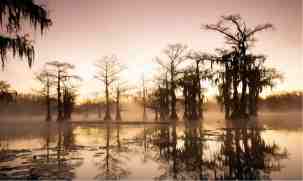
Lake Caddo, on the border between Louisiana and Texas, is a beautiful cypress swamp. Photograph: wanderluster/Getty Images

Often dismissed as dismal wet bogs and rampantly cleared since European arrival in the US, the underappreciated importance of wetlands has been placed into sharp relief by a supreme court ruling that has plunged many of these ecosystems into new peril.

The extent of wetlands, areas covered or saturated by water that encompass marshes, swamps and carbon-rich peatlands, has shrunk by 40% over the past 300 years as the US drained and filled them in for housing, highways, parking lots, golf courses and other uses. Globally, wetlands are disappearing three times faster than forests are. Continue reading
Frogs, Western Ghats & Science

Sathyabhama Das Biju (from left), James Hanken, Harvard’s Alexander Agassiz Professor of Zoology, and Sonali Garg during a June 2023 field trip to study amphibians in the Western Ghats, a biodiversity hotspot in India. Photo by A.J. Joji

During our seven years living and working in the Western Ghats we came to appreciate frogs through the eyes of our family, those of our staff, as well as travelers and occasional scientific references (the man on the left in the photo to the left having shown up in our pages one of those times). Good to know that the science is being shared for good cause, thanks to Anne J. Manning in this article for the Harvard Gazette:

The Indian Purple Frog, first described by Sathyabhama Das Biju in 2003.

Who will fight for the frogs?

Indian herpetologists bring their life’s work to Harvard just as study shows a world increasingly hostile to the fate of amphibians

Having pulled themselves from the water 360 million years ago, amphibians are our ancient forebears, the first vertebrates to inhabit land.

After 136 years from its original description, Günther’s shrub frog was recently rediscovered in the wild. Credit: S.D. Biju and Sonali Garg

Now, this diverse group of animals faces existential threats from climate change, habitat destruction, and disease. Two Harvard-affiliated scientists from India are drawing on decades of study — and an enduring love for the natural world — to sound a call to action to protect amphibians, and in particular, frogs.

Sathyabhama Das Biju, the Hrdy Fellow at Harvard Radcliffe Institute and a professor at the University of Delhi, and his former student Sonali Garg, now a biodiversity postdoctoral fellow at Harvard’s Museum of Comparative Zoology, are co-authors of a sobering new study in Nature, featured on the journal’s print cover, that assesses the global status of amphibians. It is a follow-up to a 2004 study about amphibian declines.

Franky’s narrow-mouthed frog is among the threatened species. Credit: S.D. Biju and Sonali Garg

Biju and Garg are experts in frog biology who specialize in the discovery and description of new species. Through laborious fieldwork, they have documented more than 100 new frog species across India, Sri Lanka, and other parts of the subcontinent.

According to the Nature study, which evaluated more than 8,000 amphibian species worldwide, two out of every five amphibians are now threatened with extinction. Climate change is one of the main drivers. Continue reading

Hurricane Otis & A Gut Punch


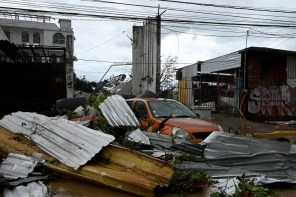
Acapulco shows signs of Hurricane Otis’s devastation on Wednesday.Photograph by Francisco Robles / AFP / Getty

While Acapulco got pummeled, a climate denier was elected to lead the majority party in the US House of Representatives, a different kind of gut punch. Thanks to Elizabeth Kolbert for this juxtaposition of facts:

Hurricane Otis and the World We Live in Now

The unexpected Category 5 storm is just the latest in a series of unprecedented climate disasters this year.

In the wee hours of Wednesday morning, Hurricane Otis crashed into the western coast of Mexico, just north of the resort city of Acapulco. Continue reading

Trust, The Most Essential Technology

Eric Risberg/Associated Press

On occasion, Ezra Klein’s work overlaps with themes of interest to us in these pages. Today is one of those days:

In July, Marc Andreessen — the godfather of the web browser, one of the founders of the venture capital firm Andreessen Horowitz and arguably the chief ideologist of the Silicon Valley elite — published a Substack piece that struck me as unusually revealing.

This was back when Mark Zuckerberg and Elon Musk were considering whether to settle their differences once and for all by beating on each other in a cage. Continue reading

Civil Disobedience & Civil Response

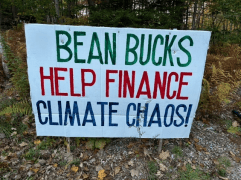
A sign made by William Rixon, who has been protesting L.L. Bean’s partnership with Citibank to offer the Bean Bucks credit card. Courtesy photo

Thanks to Bill McKibben for bringing this to our attention. And kudos to L.L. Bean’s CEO for having the decency to respond to this activist’s efforts to raise awareness of the company’s climate-unfriendly banking choice. Iconic companies messaging their environmental responsibilities need to be held to the same standard as the lousiest companies.

Climate demonstrator outside L.L. Bean gets surprise visit from CEO

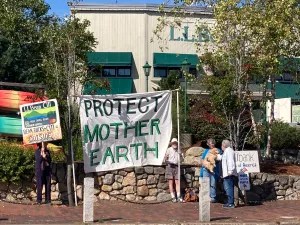
Bill Rixon outside the L.L. Bean retail store earlier this month. He was joined by Molly Schen, a member of Third Act Maine. Luna Soley / The Times Record

Freeport resident and retired schoolteacher William Rixon has been demonstrating outside L.L. Bean since the beginning of September. This week, he got a response.

“PROTECT MOTHER EARTH,” William Rixon’s homemade climate banner reads. Assembled with drop cloth and PVC piping, it stands at 10 feet, dwarfing Rixon.

Since September, Rixon and a group of fellow retirees have been standing with signs outside L.L. Bean’s sprawling downtown Freeport campus as well as its corporate headquarters just down the road. Continue reading
Really, Poland Spring?

Tristan Spinski

We all need drinking water. Those of us lucky enough to have good quality water from a public source can avoid bottled water, but still too many need or want what Poland Spring sells.

The New York Times deserves high praise for this series on water abuses, especially Hiroko Tabuchi‘s reporting on Poland Springs and its parent company’s practices:

Inside Poland Spring’s Hidden Attack on Water Rules It Didn’t Like

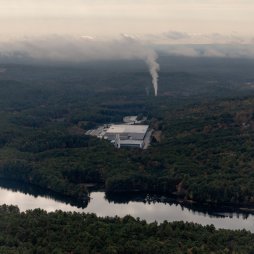
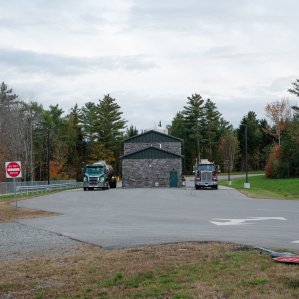
The BlueTriton bottling plant in Poland Spring, Maine, this month.

When Maine lawmakers tried to tighten regulations on large-scale access to water, the brand’s little-known parent company set out to rewrite the rules.

When Maine lawmakers tried to rein in large-scale access to the state’s freshwater this year, the effort initially gained momentum. The state had just emerged from drought, and many Mainers were sympathetic to protecting their snow-fed lakes and streams.

Water trucks filling up at a Poland Spring facility in Lincoln, Maine.

Then a Wall Street-backed giant called BlueTriton stepped in.

BlueTriton isn’t a household name, but its products are. Americans today buy more bottled water than any other packaged drink, and BlueTriton owns many of the nation’s biggest brands, including Poland Spring, which is named after a natural spring in Maine that ran dry decades ago.

Maine’s bill threatened BlueTriton’s access to the groundwater it bottles and sells. The legislation had already gotten a majority vote on the committee and was headed toward the full Legislature, when a lobbyist for BlueTriton proposed an amendment that would gut the entire bill. Continue reading

Pop-up Lake At Badwater Basin Salt Flats, Death Valley

Visitors gather at the sprawling temporary lake in the Badwater Basin salt flats of Death Valley national park, California. Photograph: Mario Tama/Getty Images

We had been wondering what the place might look like after Burning Man brought the rare weather to our attention:

Death Valley visitors delight in rare ephemeral lakes left behind by storm

Shimmering bodies of water have appeared in the sand dunes of the recently reopened national park after a summer deluge

After months of closure, visitors to Death Valley national park are being greeted by stunning new features, including lakes left behind by a ferocious summer deluge. Continue reading
US Supreme Court’s Extreme Tilt

Relentless and Loper Bright have been brought before the Supreme Court with the same all-but-explicit goal: to make it more difficult for the federal government to protect the public. Photograph by Jemal Countess / UPI /Shutterstock

Courts with politically appointed jurists can tilt to an extreme, as we see now at the highest level in the USA’s judicial system. Even as the environment needs more protection, the infrastructure for providing it is being dismantled (thanks as always to Elizabeth Kolbert):

The Supreme Court Looks Set to Deliver Another Blow to the Environment

Two upcoming cases take aim at the government’s power to regulate.

Last week, the United States Supreme Court agreed to hear a case that’s nominally about herring. Arguments will be heard this winter, in tandem with a case that the Court had agreed to hear earlier, that one also ostensibly about herring. In both cases, though, the Justices have much bigger fish to fry: what’s really at issue is the fate of federal regulation. The stakes are enormously high, and, given the Court’s predilections, the outcome seems likely to undermine still further the government’s ability to function. Continue reading

Pricing Flights Realistically

United Airlines wants to zero out its greenhouse gas emissions by 2050, but without using conventional carbon offsets. Nicolas Economou/NurPhoto via Getty Images

If airlines can quantify what it would cost to become carbon neutral within a relevant timeframe, it implies that we know by how much they are currently fudging their investment model. If it is going to require an investment of X number of dollars over Y number of years to achieve carbon neutrality then they should invest, and price their flights accordingly. Then we will all know the real cost of flying, including the environmental cost. Thanks to Umair Irfan (long time since we last saw his work) and to Vox for this:

Emirates demonstrated a Boeing 777 flight fueled with SAF earlier this year. Giuseppe Cacace/AFP via Getty Images

Airlines say they’ve found a route to climate-friendly flying

Cleaner, faster, cheaper — the aviation industry’s plan to decarbonize air travel, explained.

If you’ve caught an ad for an airline lately on TV, a podcast, or the entertainment display on your flight, you’ve probably heard the company brag about what it wants to do about climate change.

Major airlines like AmericanDeltaSouthwest, and United have all set targets of achieving net-zero greenhouse gas emissions by 2050. They’re using a suite of tactics including buying more fuel-efficient aircraft, electrifying their ground vehicles, and increasing the efficiency of their operations. They’re also testing the winds on battery- and hydrogen-powered planes, as well as some radically different aircraft designs. Continue reading
Preferred Pet Practices

Pet owners can reduce the carbon footprint of their furry loved ones without affecting their health, experts say. Photograph: Getty Images

Pets have featured in exactly one prior post in our pages. Now, thanks to Dwayne Grant and the Guardian, we see there is a topic related to pets quite relevant to our interests:

Throw a dog a bean: how to reduce the carbon footprint of your pets

Thinking about what your dog or cat eats and the products you buy for them can lessen the impact they have on the planet

Did you hear the one about the luxury aviation CEO who claims pets cause as much carbon pollution as private jets? Continue reading

Rishi Doubles Down On Awful

Prime Minister Rishi Sunak announcing last month that the U.K. will delay the phaseout of gasoline and diesel cars. JUSTIN TALLIS / POOL VIA AP

When leadership is most needed, the special relationship between the UK and the USA should count for something, but so far no sign of the USA pressing back on the UK’s awful reversal on their already tepid recent leadership on climate. We knew that leadershsip was lacking in the UK. The Orwell-worthy podium messaging in the photo to the left says all you need to know about efforts to obfuscate, but read Fred Pearce‘s account in Yale e360 anyway:

Demonstrators in Edinburgh protest the government’s recent approval of drilling in the Rosebank North Sea oil field. PRESS ASSOCIATION VIA AP IMAGES

Why Is Britain Retreating from Global Leadership on Climate Action?

While Britain has long been a leader in cutting emissions, Prime Minister Rishi Sunak is now implementing a stunning reversal of climate-friendly policies, with new plans to “max out” oil production. Business leaders have joined environmentalists in condemning the moves.

In 1988, British Prime Minister Margaret Thatcher became the first world leader to take a stand on fighting climate change. Continue reading
Climate Leadership Lacking In Too Many Places

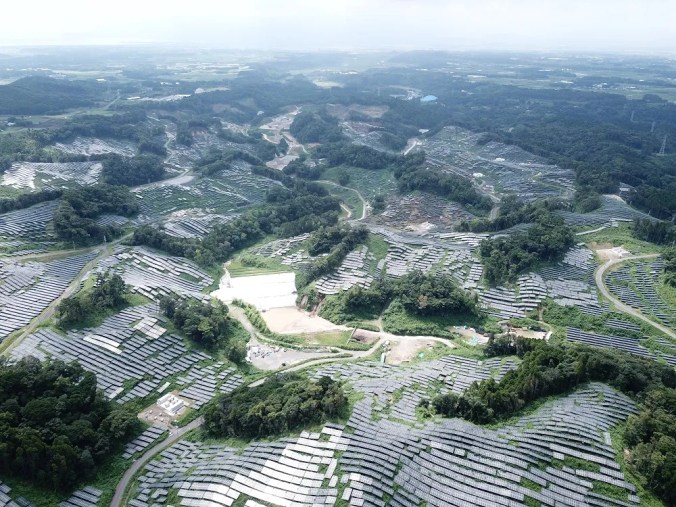
Once a golf course, now a solar farm supplying tens of thousands of homes in Japan

If you know a bit about Japan’s love of golf, the photo above says alot about leadership there in moving away from fossil fuels in the direction of alternative energy. But it is too little too late compared to what is happening elsewhere. Thanks as always to Bill McKibben for his newsletter:

Energy from Heaven

and not from Hell/Exxon.

Amid the torrent of hideous news last week, one item might have skipped your notice: Exxon announced the acquisition—its biggest since picking up Mobil a quarter century ago—of one of the largest fracking operators in the world. As the AP reported, “including debt, Exxon is committing about $64.5 billion to the acquisition, leaving no doubt of the Texas energy company’s commitment to fossil fuels.” In fact, it’s the declaration of conviction that they think they have enough political juice to keep us hooked on oil and gas for a few more decades, even in the face of the highest temperatures in 125,000 years. Continue reading

Going The Extra Mile For Monarch Butterflies

Ms. Elman collects butterfly eggs from milkweed plants growing wild along New York City’s highways. Karine Aigner

Some of the best stories are about people who go the extra mile for others:

To Save Monarch Butterflies, They Had to Silence the Lawn Mowers

An unlikely group of New Yorkers is winning small victories in the battle to protect butterfly habitats.

The small white dot under a milkweed plant is a monarch butterfly egg. Karine Aigner

The Long Island Expressway is not generally a place people linger, unless they’re stuck in traffic.

But during the summer, Robyn Elman can often be found walking alone near the highway’s shoulder, inspecting scraggly patches of overgrown milkweed. The plant is the only source of nutrition for monarch caterpillars before they transform into butterflies. Continue reading

Fossil Fuel-free Ammonia

A fossil fuel-free ammonia plant at the Kenya Nut Company, near Nairobi. TALUS RENEWABLES

Alternative fertilizer has been something of an environmental holy grail, and this technology looks to be large step in the right direction. Have a look at the two companies mentioned in this Yale e360 news short:

Farm in Kenya First to Produce Fossil-Free Fertilizer On Site

The Kenya Nut Company, near Nairobi, will be the first farm in the world to produce fertilizer, on site, that’s free of fossil fuels.

small fertilizer plant, built by U.S. startup Talus Renewables, will use solar power to strip hydrogen from water. Continue reading

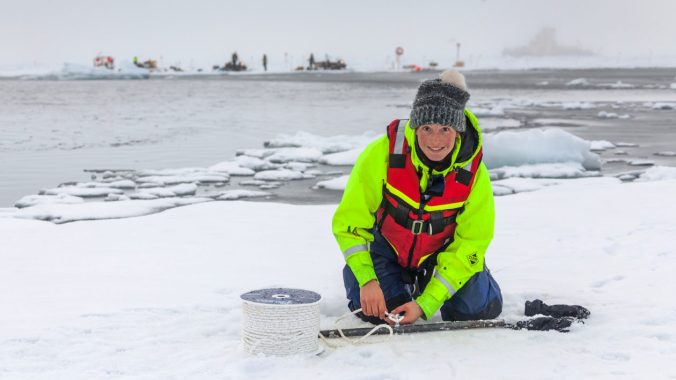
Climate Change As Understood By Helen Czerski’s Macro Physics

Helen Czerski on a 2018 ocean research expedition to the North Pole. MARIO HOPPMANN

We non-scientists have learned much from the scientists who study climate change, and surprises keep coming, this one from physicist Helen Czerski:

The Pacific Ocean, as seen from space. NASA

The Planet’s Big Blue Machine: Why the Ocean Engine Matters

The ocean is an enormous engine, turning heat energy into motion, says physicist Helen Czerski. But human activity is threatening that machine — depriving the seas of oxygen, increasing stratification, and potentially changing the currents that influence global weather.

Photographs of Earth taken by astronauts in space more than half a century ago revealed a blue planet dominated by oceans and billowing with clouds. Continue reading

Water Rights, Heritage & Responsibility

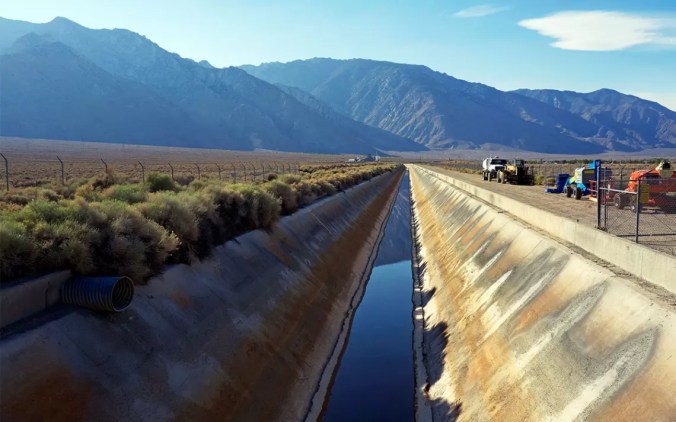
The Los Angeles Aqueduct. | Photo by Brian Melley/AP

California water has been covered in earlier posts, and it keeps getting more important. Once again, with abundance comes responsibility:

Dear Los Angeles: You’re Drinking Indigenous Water

How LA can localize its water supply and finally do right by the Owens Valley Paiute tribes

In August 2023, a tropical storm bore down upon Southern California for the first time in 84 years. As Hilary’s northward-rolling blanket of rain touched off mudslides from Hollywood to the San Bernardino Mountains, thigh-deep water floated vehicles in the streets of Cathedral City. To the east, 120 miles of Highway 395 were closed due to flooding and rock slides, pinching off the route between the city of Los Angeles and the once-green valley 300 miles away from which it has, for over a century, sourced fresh water. Continue reading

Really, Cargill?

Beka will hand-deliver a letter to the Cargill-MacMillian dynasty in Minneapolis on Thursday, calling on the billionaire owners of America’s biggest private company to stop destroying the Amazon rainforest and its people. Photograph: Thalia Juarez/The Guardian

Cargill has appeared a few times in our pages over the years, not always showing poor stewardship. But today, we have to ask whether they really are trying as diligently as possible to do the right thing. We applaud Beka and her community for this letter, and hope the recipients respond with the sense of responsibility that comes with their wealth:

A Cargill transshipment port for soy and corn projects on the Tapajos River in Itaituba, Para state, Brazil, in 2019. Photograph: Léo Corrêa/AP

‘Our world hangs by a thread’: Indigenous activist asks US agri giant to stop destroying Amazon rainforest

Beka Saw Munduruku , 21, traveled 4,000 miles to deliver letter and confront family behind Cargill empire over what she says amounts to a litany of broken promises

A 21-year-old Indigenous activist from a remote Amazonian village will hand deliver a letter to the Cargill-MacMillan dynasty in Minneapolis on Thursday, calling on the billionaire owners of the US’s biggest private company to stop destroying the Amazon rainforest and its people. Continue reading

With Exceptional Wealth Comes Exceptional Responsibility

Chuck Feeney’s stealthy giving earned him a nickname: “the James Bond of Philanthropy.” Atlantic Philanthropies

May the exceptionally wealthy take note of the example set by Chuck Feeney. Only once have we used the word billionaire in these pages, but a couple of times we pointed to this remarkable man who gave away all his billions while alive, and now that story is complete:

Chuck Feeney’s Legacy Is a Lesson for America’s Billionaires

Yes, the man avoided taxes, but he gave away his fortune, seeking nothing in return.

The selfless billionaire is a rare creature indeed. Chuck Feeney, who died on Monday at the age of 92, was one of them. Continue reading

Where Your Seafood Comes From, And How

Ian Urbina has chronicled this topic in the past, and the fishing crimes on the high seas have not abated, to say the least:

BEHIND THE SEAFOOD YOU EAT

China has invested heavily in an armada of far-flung fishing vessels, in part to extend its global influence. This maritime expansion has come at grave human cost.

DANIEL ARITONANG GRADUATED from high school in May, 2018, hoping to find a job. Short and lithe, he lived in the coastal village of Batu Lungun, Indonesia, where his father owned an auto shop. Aritonang spent his free time rebuilding engines in the shop, occasionally sneaking away to drag-race his blue Yamaha motorcycle on the village’s back roads. Continue reading

Alternative Land Improvement

The author in front of her new home. Photography courtesy of Jessica Andreone.

Lawns are not the only option for yards, and sometimes removing grass is the first step to improvement. Jessica Andreone’s story, on the Modern Farmer website (too long since our last link to that great resource), about alternative land improvement resonates with my own project over the last five years:

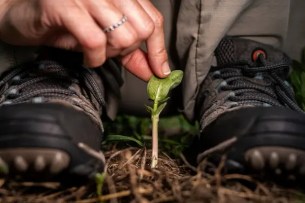
Crop plants growth is stunted from compacted soil.

We Bought a Home with a Sterile Suburban Yard. Our Journey To Bring Life Back is Just Beginning

When we bought our first home, we had grand plans to create a productive and pollinator-friendly oasis. Then the reality of poor soils and extreme weather hit.

My husband and I bought our first home in a small West Virginia town in January 2023. The bright green dwelling sits in the middle of a dead-end street where retirees claim most homes as the original dwellers. From 1978 until now, our house had only one homeowner. So, for the past 45 years, the yard has been a neatly mowed lawn with a single tulip tree. Continue reading