Thanks to Bridgett Ennis at Yale Climate Connections for expanding our coverage of brownfield remediation, which surprisingly has only featured in one previous post in our 13 years linking to environmental news stories. Now two:
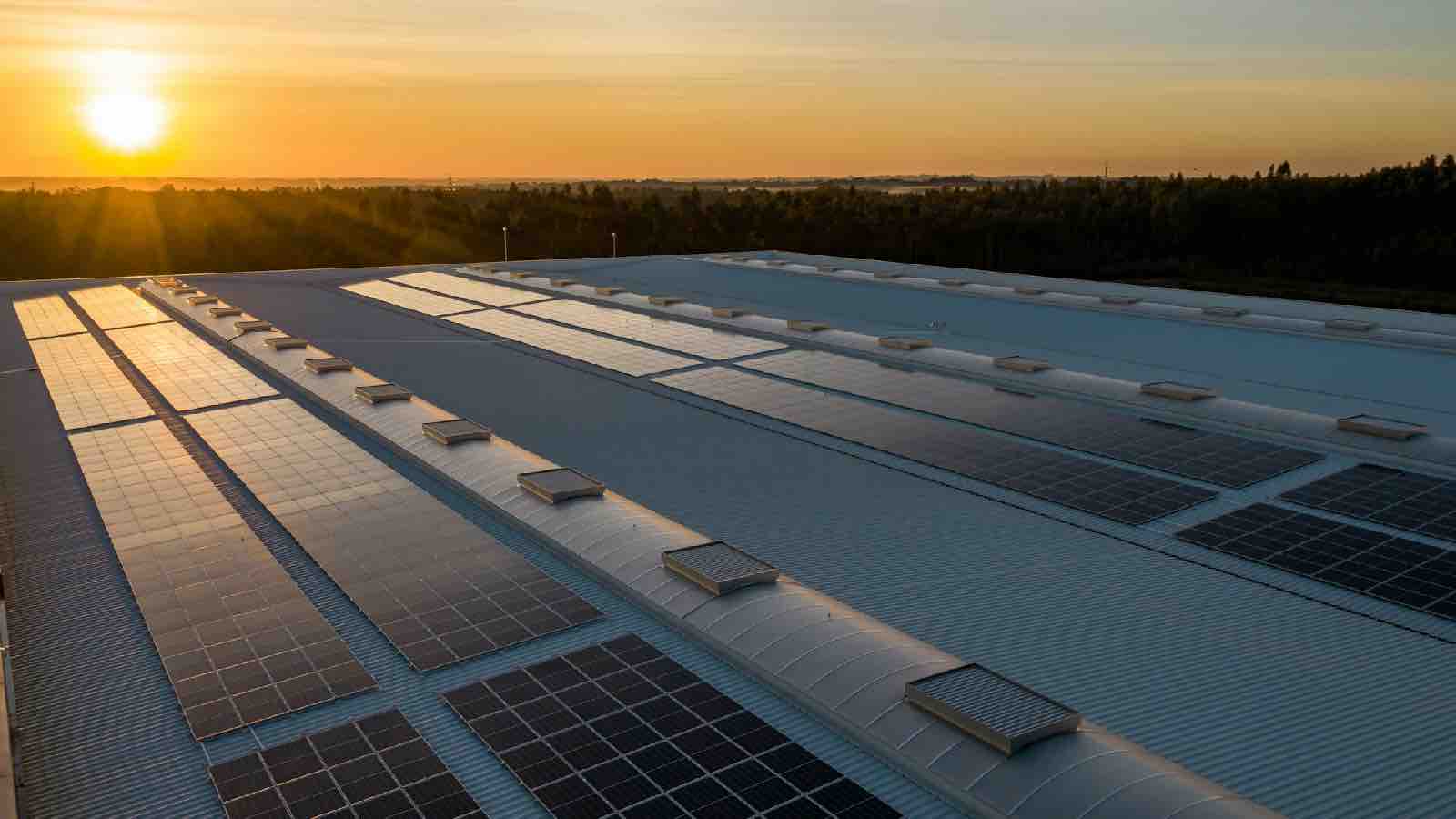
Solar developer BrightNight is set to transform the Starfire coal mine into an 800-megawatt solar farm, bringing renewable energy and jobs to southern Appalachia.
A massive solar farm is in the works at the site of one of the largest coal mines in southern Appalachia. Continue reading →
For part of almost every day this spring, the state produced more electricity than it needed from renewable sources.
Something approaching a miracle has been taking place in California this spring. Beginning in early March, for some portion of almost every day, a combination of solar, wind, geothermal, and hydropower has been producing more than a hundred per cent of the state’s demand for electricity. Continue reading →
Energy Observer, a ship equipped with solar panels and a hydrogen fuel cell, has spent the past seven years circumnavigating the globe, powered by sun, water, and salads.
One phrase that describes New York’s waterways is “diesel-powered”: supersized container ships, megayachts, oil tankers, garbage barges. But not every ship that comes to town is on a Greenpeace watch list; there are also schooners, plus the odd outrigger canoe. And recently a hundred-foot-long former racing catamaran from France, which had been retrofitted with solar panels and a hydrogen fuel cell, docked near Wall Street. Continue reading →
It is 70 years since at&t’s Bell Labs unveiled a new technology for turning sunlight into power. The phone company hoped it could replace the batteries that run equipment in out-of-the-way places. It also realised that powering devices with light alone showed how science could make the future seem wonderful; hence a press event at which sunshine kept a toy Ferris wheel spinning round and round. Continue reading →
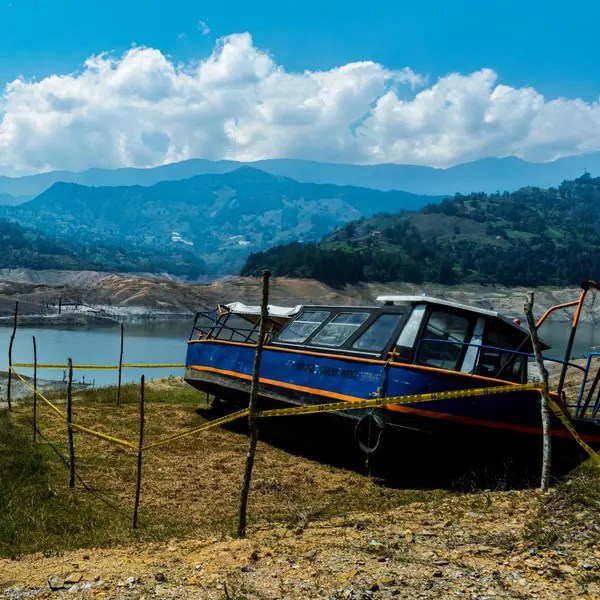
A dry section of the Guavio Reservoir that feeds the Guavio Hydroelectric Power Plant in Gachala, Colombia, in April. Jhojan Hilarion/Agence France-Presse — Getty Images
The struggle of the world’s largest source of renewable last year could have important implications for the fight against climate change.
Global pollution from electricity generation was set to fall last year, thanks to the growth of renewable energy. Then came the droughts.
Hydropower, the biggest source of renewable energy in the world, was crippled by lack of rain in several countries last year, driving up emissions as countries turned to fossil fuels to fill the gap. Continue reading →
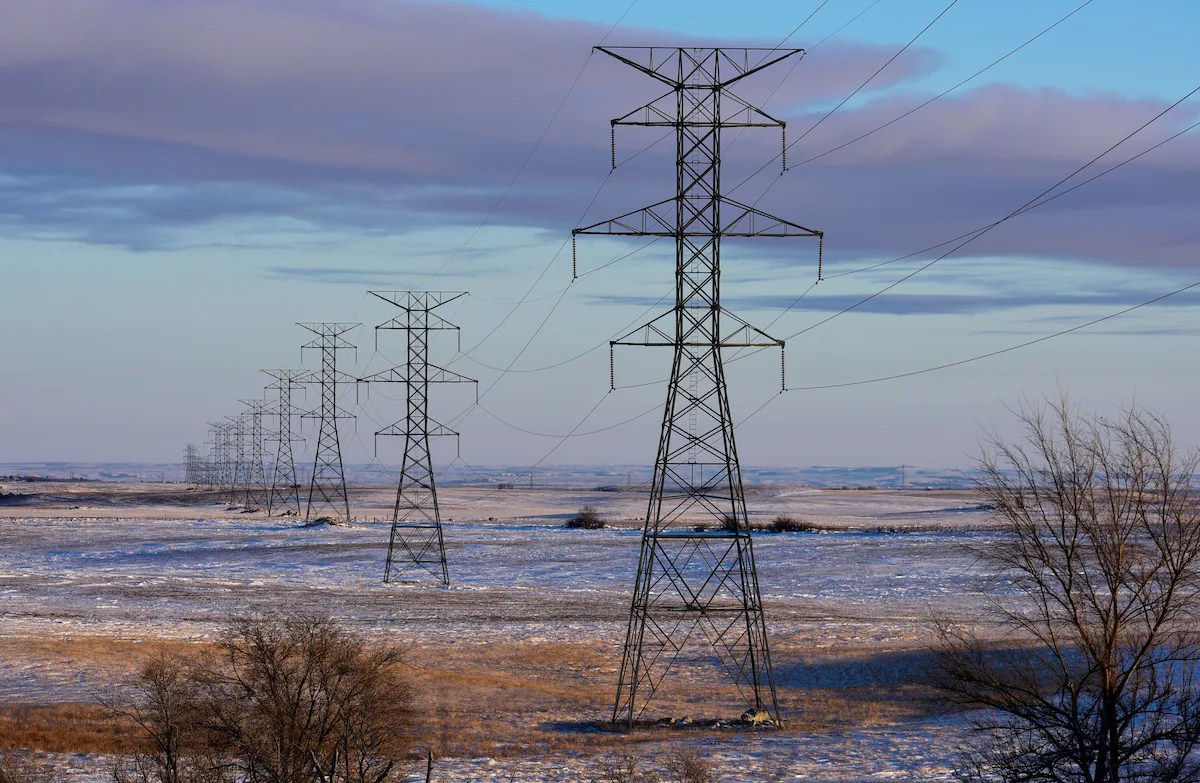
High voltage power transmission lines near Underwood, N.D. Installing new wires on the high-voltage lines that already carry power hundreds of miles across America could double the amount of power those lines carry. (Dan Koeck for The Washington Post)
Shannon Osaka, writing in The Washington Post, offers an unglamorous but effective-sounding story about the role that electrical transmission lines may play in upgrading our energy infrastructure:
Rewiring miles of power lines could make space for data centers, AI and a boom in renewables.
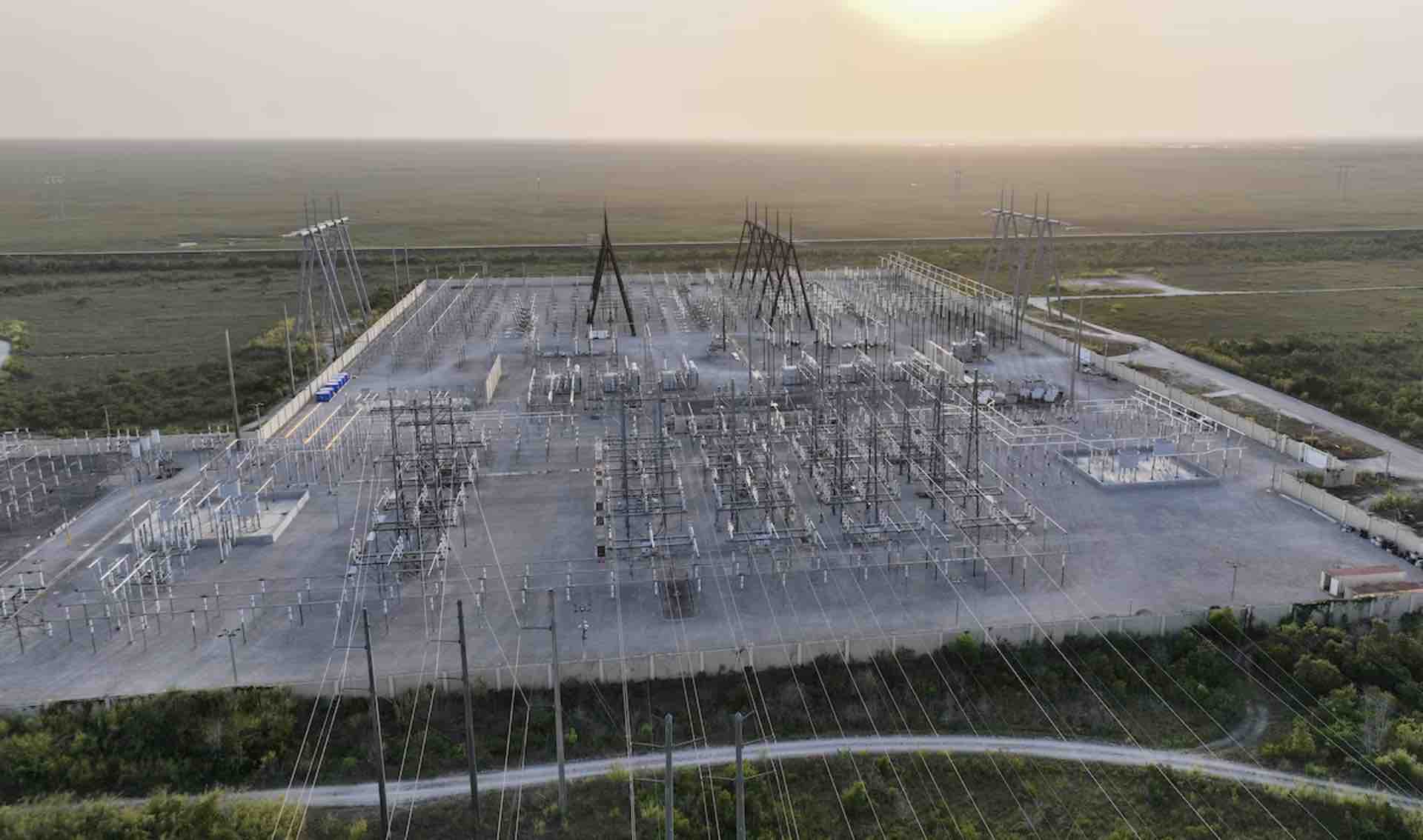
High voltage power lines run through a substation along the electrical power grid in Pembroke Pines, Florida. The grid is strained by increasing demand from electricity-hungry data centers and electric vehicles, as well as extreme weather events. (Joe Raedle/Getty Images)
There is one big thing holding the United States back from a pollution-free electricity grid running on wind, solar and battery power: not enough power lines.
As developers rush to install wind farms and solar plants to power data centers, artificial intelligence systems and electric vehicles, the nation’s sagging, out-of-date power lines are being overwhelmed — slowing the transition to clean energy and the fight against climate change. Continue reading →
We celebrate when a law is passed that moves the USA in the right direction, but the biggest such law ever still is in the process of implementation. So, creativity and vigilance are still key ingredients to making the best of the law:
Clean-energy investment in America is off the charts—but it still isn’t translating into enough electricity that people can actually use.
On august 2022, the U.S. passed the most ambitious climate legislation of any country, ever. As the director of President Joe Biden’s National Economic Council at the time, I helped design the law. Continue reading →
Fossil fuel growth has stalled while wind and solar are growing.
Solar and wind energy grew quickly enough in 2023 to push renewables up to 30% of global electricity supply and begin pushing fossil fuels off the power grid, the Ember climate consultancy concludes in a report released May 8. Continue reading →
Scientists still have a lot to figure out, but the idea of sourcing critical minerals from seaweed is too tantalizing not to look into. Photo by Upix Photography/Alamy Stock Photo
Plenty of links to articles about the importance of various types of seaweed in our pages, but in Hakai Magazine the environmental journalist Moira Donovan asks and provides a cogent answer to the most basic question:
The highly efficient devices are the darlings of the environmental movement. Here’s why.
Heat pumps, which both warm and cool buildings and are powered by electricity, have been touted as the answer to curbing greenhouse gas emissions produced by homes, businesses and office buildings, which are responsible for about one-third of the emissions in New York State. Continue reading →
People wait to board an electric bus in Pune, India. (Image credit: courtesy of ITDP)
Seven years and many bus stories among us recall the old buses. Noisy, smoke-belching, hot and crowded. Time to retire the old ones and at least lessen the noise and belching. Thanks to Sarah Spengeman and Yale Climate Connections:
Fast-growing cities need electric buses if the country is to meet its climate goals.
Public transportation riders in Pune, India, love the city’s new electric buses so much they will actually skip an older diesel bus that arrives earlier to wait for a smoother, cooler ride in a new model. This has fed a new problem: overcrowding. Fortunately, more new buses are on the way. Continue reading →
Aided by tax breaks and carbon credits, scores of plants are being developed or are now operating that remove CO2 from the air. Such facilities are considered necessary to limit global warming, but critics have questions about the high costs and where the captured carbon will go.
Texas is by far the top emitter of greenhouse gases in the United States: The oil-rich state releases twice as much carbon dioxide as the runner-up state, California, and as much as the entire country of Germany. Continue reading →
States are considering ‘climate superfund’ laws to hold Big Oil accountable
One prong of the climate fight involves installing so much renewable energy that fossil fuel use actually declines dramatically—a few places are finally showing that’s possible, like sunny Germany which last week said emissions in 2023 dropped more than ten percent. Continue reading →
With supply chains finally open, solar provided most of the nation’s new electricity capacity last year.
Solar accounted for most of the capacity the nation added to its electric grids last year. That feat marks the first time since World War II, when hydropower was booming, that a renewable power source has comprised more than half of the nation’s energy additions. Continue reading →
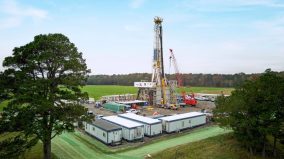
The drilling rig at ExxonMobil’s first lithium well, in southwest Arkansas. EXXONMOBIL
Thank you, Fred Pearce. It is not easy to trust ExxonMobil or any other petroleum company to do the right thing, but this sounds better than most of what we hear about their common practices:
The Smackover Formation in southern Arkansas was once a major oil producer. Now, companies hope to extract lithium — a key metal for electric vehicle batteries — from its underground brines using technologies they say could reduce mining’s carbon emissions and water use.
The town of Smackover, Arkansas, was founded a hundred years ago when a sawmill operator got lucky: his wildcat oil well yielded a gusher. Continue reading →
For the first time, in 2022, Scottish renewables generated more power than the country used, new government figures show.
The growth of wind power, coupled with a small drop in electricity consumption, meant that the volume of electricity produced by renewables in Scotland was equal to 113 percent of demand. Continue reading →
As studies show far more natural hydrogen underground than believed, well-funded efforts to drill for the gas are underway around the globe. Boosters see a plentiful green replacement for fossil fuels, but skeptics say its large-scale use may not be practical or cost-effective.
A remote community of mud huts and corrugated iron roofs in the arid savannah of West Africa could be a trailblazer for a new form of carbon-free energy. Continue reading →
To reach its climate goals, the U.S. will need to build solar arrays on some 15,000 square miles of land, an area larger than Maryland. Continue reading →
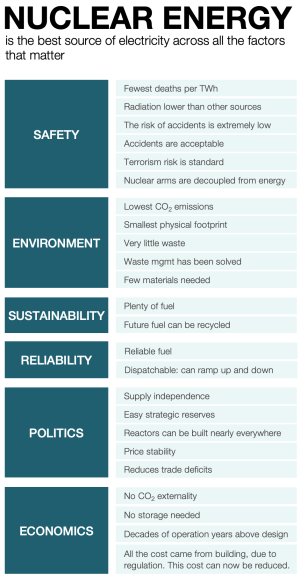
We have linked to articles about nuclear energy before, but this one is more like a cheat sheet for a yes opinion on the option than earlier articles we have read:
This article will convince you of that nuclear is the best source of energy.1 Don’t read it if you need your mind to remain anti-nuclear. If you are against nuclear, I recommend you to precisely write down your concerns and what it would take for you to be convinced that nuclear is great, otherwise you might move the goalposts subconsciously.
To do justice to the topic, the article had to cover all the important aspects of nuclear energy, and as a result is long. I chose to publish it in one piece despite that so all the relevant information is in one place, and I can update it over time and you can bookmark, reference, and share it. Continue reading →
The scientific journal Nature shows up in exactly one search result among thousands of posts here. And that one, because photos have such a wide audience. We have not linked to their articles because, since 1869, they are written by and oriented to highly credentialed scientists. A look at ten influential articles makes the point. And we can only respect what they do, even if we wish more of us could digest more of the science. Now that they offer some articles in audio version, this may make the science more accessible to those who hear better than they read. Judge for yourself, if you want to pay to play. The audio version of the article below (available on YouTube above) is free, but unless you have a subscription the written version is available for a small charge:
Rooftop solar panels in China. Tandem cells could boost power density in crowded urban areas. Credit: VCG/Getty
Firms commercializing perovskite–silicon ‘tandem’ photovoltaics say that the panels will be more efficient and could lead to cheaper electricity.
On the outskirts of Brandenburg an der Havel, Germany, nestled among car dealerships and hardware shops, sits a two-storey factory stuffed with solar-power secrets. It’s here where UK firm Oxford PV is producing commercial solar cells using perovskites: cheap, abundant photovoltaic (PV) materials that some have hailed as the future of green energy. Surrounded by unkempt grass and a weed-strewn car park, the factory is a modest cradle for such a potentially transformative technology, but the firm’s chief technology officer Chris Case is clearly in love with the place. “This is the culmination of my dreams,” he says.
 Thanks to Bridgett Ennis at Yale Climate Connections for expanding our coverage of brownfield remediation, which surprisingly has only featured in one previous post in our 13 years linking to environmental news stories. Now two: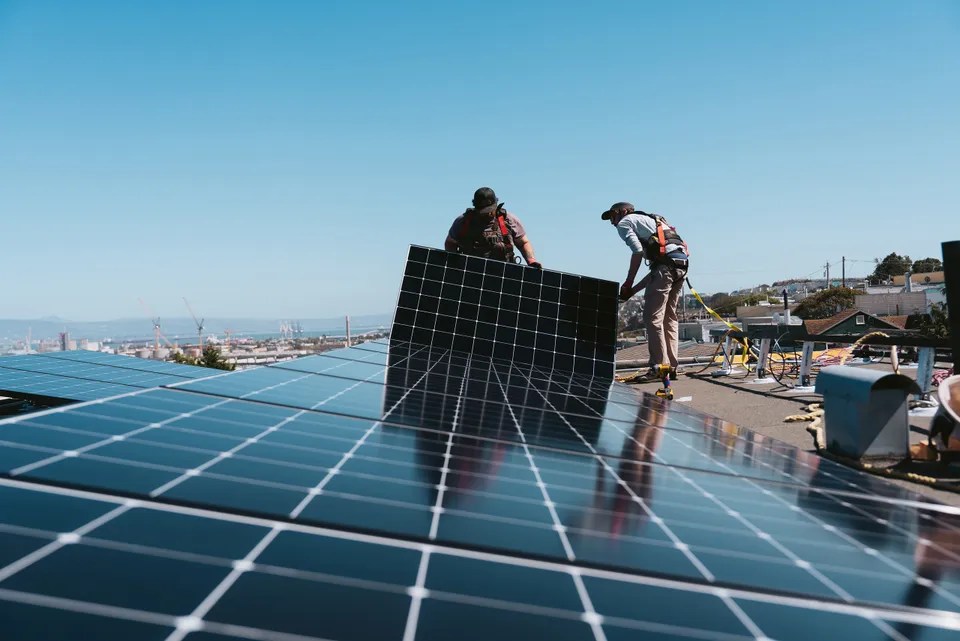












 Organikos