Whale Shark Citizen Science Maldives Redux

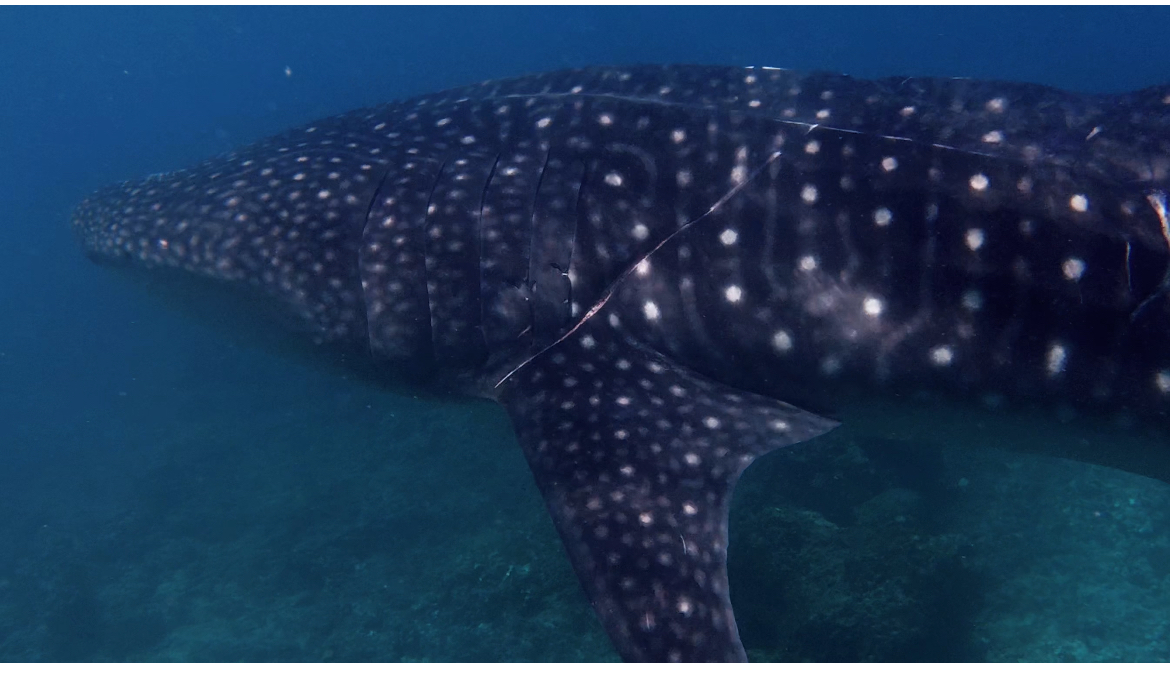
Photo credit: Sommer Laettner

In honor of International Whale Shark Day, which is August 30…

I posted last year about my experience volunteering with the Maldives Whale Shark Research Programme (MWSRP) and the great work they do.  Established in 2006, MWSRP undertakes research and monitoring of whale sharks and other marine megafauna in the Maldives and uses the associated findings and data to advocate for sound conservation policy in the country.

Throughout the year, the MWSRP team, together with volunteers, undertakes patrols along the reef in the South Ari Atoll Marine Protected Area and other locations in the Maldives to record sightings of whale sharks and other marine megafauna and to gather data on vessel traffic and behavior.  Whale shark encounters are documented via photos and video along with data on location, behavior, and ocean conditions.  Encounters are entered into the “BIG FISH network” database, an online citizen science platform developed by MWSRP as a monitoring network for awareness raising and stewardship of whale sharks in Maldives.

I returned to the Maldives this month to get an update on efforts to protect this iconic species and the livelihoods it supports, once again volunteering with MWSRP.  I found that there is both good news and bad news.

First the good news.  Continue reading
Whale Shark Citizen Science – Maldives

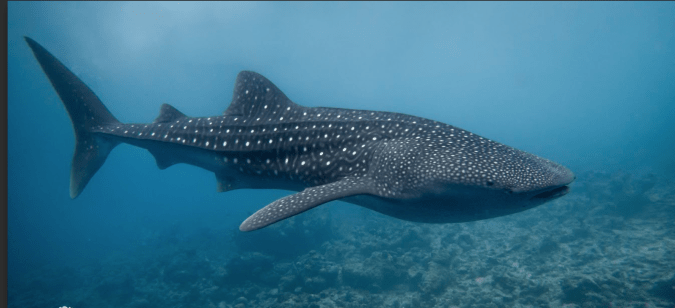
Photo credit: Maldives Whale Shark Research Programme (MWSRP).

In honor of International Whale Shark Day, which is August 30…

I have posted previously about whale shark encounter tourism and its role in conservation of this enigmatic species.  I recently had an opportunity to experience this personally via a 10-day volunteer gig with the Maldives Whale Shark Research Programme (MWSRP).  Established in 2006, MWSRP undertakes research and monitoring of whale sharks and other marine megafauna in the Maldives and uses the associated findings and data to advocate for sound conservation policy in the country.

Continue reading

Gardens As Havens For Wildlife

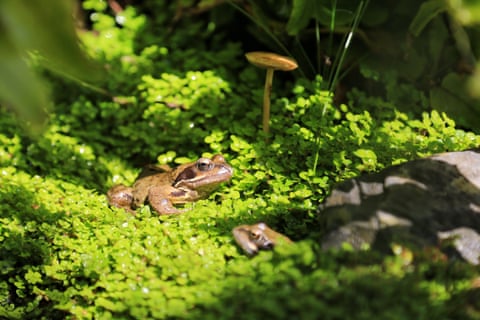
Two frogs in a garden pond enjoying the sunshine on a bed of weed.

Common frogs and other amphibians will spawn in the most modest of garden ponds. Photograph: Brendan Allis/Getty Images/iStockphoto

There are many variations on the theme of garden as haven in our pages over the years. The common thread is that at the scale of a garden, there is much that the individual can do to support conservation. Thanks to Jules Howard for adding to the theme:

The frogs may be gone, but life goes on: how I regained my faith in gardening for wildlife

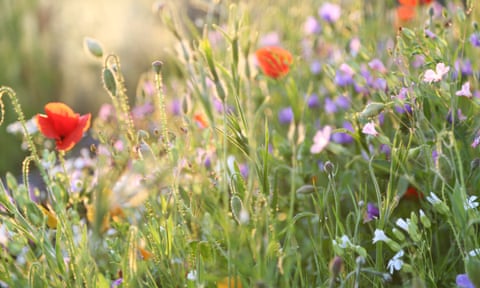
Wildflower field

Gardens allowed to grow a little wild can be a lifeline for struggling pollinator populations – in rural as well as urban areas. Photograph: kirin_photo/Getty Images/iStockphoto

The extremes of the climate crisis mean it’s harder than ever to provide a garden haven for birds, insects and other animals. Some gardeners are questioning whether trying to do the right thing is time well spent

More than two decades ago, I had the honour of running the world’s last (possibly only) frog telephone helpline. No, this is not a set-up for a punchline. Continue reading

International Seabed Authority

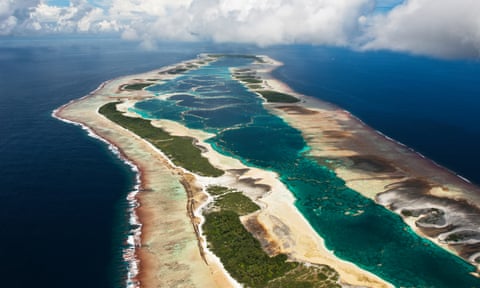
A long thin atoll around a lagoon

The Millennium Atoll in Kiribati, the Pacific state that is sponsoring Michael Lodge for re-election as ISA leader. Photograph: Mauricio Handler/Getty

Before we leave the subject of oceans, back to the question of how their protection is managed, and by whom.

We are learning today that some of the planet’s smaller nation states have a potentially significant, and clearly long overdue influence on how the oceans surrounding them will be protected:

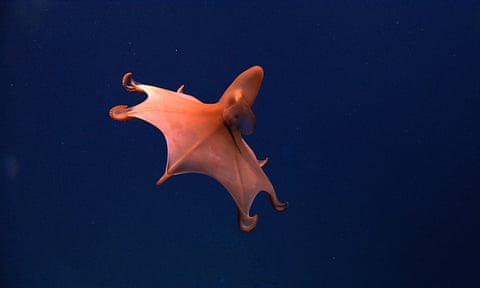
The rare dumbo octopus (Cirrothauma murrayi)

The rare dumbo octopus (Cirrothauma murrayi) is one of many creatures potentially at risk from deep-sea mining. Photograph: NOAA

Inside the battle for top job that will decide the future of deep-sea mining

Marking a pivotal moment for the fate of the barely known ecosystems on the ocean floor, 168 nations will decide this week who will head the International Seabed Authority

Deep-sea mining exploration machinery in the Pacific Ocean

Deep-sea mining exploration trials under way in the Clarion-Clipperton Zone of the Pacific Ocean between Hawaii and Mexico. Photograph: Richard Baron/The Metals Company

Leticia Carvalho is clear what the problem is with the body she hopes to be elected to run: “Trust is broken and leadership is missing.” Later this week, at the headquarters of the International Seabed Authority (ISA) in Kingston, Jamaica, nations negotiating rules governing deep-sea mining face a critical vote that could impact the nascent industry for years: who should be the next leader of the regulatory body? Continue reading

The Ocean’s Depths & You

An illustration of sea creatures floating in outer space. The planet Earth is in the center.

Isabel Seliger

While Brisa surfs in Tahiti, the fate of our oceans will be on our minds. While not self-evidently important to most of us, most of the time, their scale on our planet gets us to pay attention when someone makes the case. Porter Fox, who reports on climate change, has come to the following conclusions with regard to those waters:

There’s a New Reason to Save Life in the Deep Ocean

Honey Long and Prue Stent

To most of us, the ocean is a no man’s land — a vast, bottomless and uncharted void. Three-quarters of the ocean has never been seen by humans, and only a quarter of its floor has been mapped in detail, which means we have a better understanding of the surface of Mars than we do of the seas on our own planet. It is this lack of exploration and appreciation — particularly of the layer of cold, dark water that begins where light fades, known as the ocean’s twilight zone — that has led us to a very precarious place. Continue reading

Dos Rios, California’s New State Park

Dos Rios mural signage, photographed June 28, 2024 in Dos Rios located in Modesto, California

Grayson muralist Jose Muñóz hand-painted this sign welcoming visitors to Dos Rios. Geloy Concepcion for NPR

California has a new protected area, complete with a Native Use Garden. Visit the website for the Dos Rios, described by National Public Radio (USA) as follows:

A view from the Oak Tree Grove June 28, 2024 in Dos Rios State Park in Modesto, California.

The sun rises, shedding light onto an oak grove along the western edge of Dos Rios. Geloy Concepcion for NPR

California’s newest state park is like a time machine

At the crack of dawn in California’s Central Valley, birds sing their morning songs and critters chirp unabashedly. In a shady grove next to a river, an owl swoops down from the spindling branches of an oak tree that has stood its ground for centuries.

A few feet above the tree’s base, its massive trunk is lined with a white ring, indicating how high the San Joaquin River rose during a flood last year. Dos Rios is supposed to flood — it’s a floodplain, recently transformed into California’s newest state park.

Native use garden on June 28, 2024 in Dos Rios State Park in Modesto, California.

The Native Use Garden is a place where, with permission from Dos Rios staff, tribal members can go to gather native plants for ceremonial use and other cultural practices. Geloy Concepcion for NPR

The park opened this summer, emerging among the never-ending rows of agriculture the valley is known for. It’s a lush 2.5 square miles now bursting with hundreds of thousands of native trees, bushes and animals.

Dos Rios, named for the Tuolumne and San Joaquin rivers that meet at the edge of the park, is the first new California state park in more than a decade.

But it isn’t like most state parks. In addition to bringing much-needed green space to an underserved area, its unusual design uses nature-based climate solutions that reinvigorate native wildlife. Continue reading

Fighting Pollution With Garbage

Image may contain Outdoors Flower Plant Nature Pond and Water

Photograph: Abir Mahmud, University of Dhaka

Our thanks to Hannah Richter for her reporting and writing, as well as to Wired for publishing what sounds not like garden variety too good to be true, but quintessentially ridiculous.

Kudos to Nepal for testing out this idea in spite of how it sounds:

Image may contain Lake Nature Outdoors Water Aerial View Architecture and Building

Groups of platforms installed in Nagdaha lake in Nepal. PHOTOGRAPH: SAMYAK PRAJAPATI/THE SMALL EARTH NEPAL

Polluted Lakes Are Being Cleansed Using Floating Wetlands Made of Trash

Platforms combining plants and recycled garbage could offer a cut-price solution for reviving polluted bodies of water.

ON THE BANKS of Nagdaha, a polluted and lotus-infested lake in Nepal, Soni Pradhanang is putting trash back into the water—on purpose.

Image may contain Plant Potted Plant Water Waterfront Boat Transportation Vehicle Outdoors and Food

A floating treatment wetland system loaded with plants. PHOTOGRAPH: SAMYAK PRAJAPATI/THE SMALL EARTH NEPAL

She carefully assembles a platform of styrofoam and bamboo mats, then weaves it together with zip ties and coconut fiber, refuse from nearby tech stores. Then, she pokes 55 plants lush with red flowers through 2-inch holes in the platform, each plant set 6 inches apart. Though Pradhanang’s creation isn’t high-tech, it is effective, and one of the most affordable water-filtration systems available. “I’m cheap,” she says, laughing. Continue reading

Cultivation Of A Plot, Considered Further

A painting of two gardens one outside and one contained within a walled garden.

Illustration by Lauren Tamaki

There is more to The Garden Against Time than we appreciated with the first review we read, so thanks to Katie Kadue for this:

The Paradoxical Paradise of the Garden

Olivia Laing’s memoir of restoring a garden unearths the politics and history of cultivating a plot.

The reader of “Paradise Lost” encounters the Garden of Eden at the same time that Satan does. Having leapt over the garden wall, Milton’s athletic antihero flies up into a tree to survey his new surroundings. “Beneath him with new wonder now he views,” Milton writes, Continue reading

With Rewilding, Markets Are Not Everything, But Are A Key Ingredient

Rewilding can support the development of a wide range of nature-based businesses. NEIL ALDRIDGE

Places can have a particular taste, maybe one that is even iconic, and coffee was the obvious tool in our taste of place toolkit for decades. When it came time to focus on these products as our primary work we drew on some earlier experiments.

One was with honey and the other was with wine. All that was long before coming home to Costa Rica to launch Organikos.

Lunch provided with products from the Wild Côa Network during the ERN-EYR event in the Greater Côa Valley. The Wild Côa Network, which now comprises over 50 members, is driving the development of nature-based enterprise in and around Portugal’s Greater Côa Valley. NELLEKE DE WEERD

We are about to introduce two new products, and one has a story that mixes conservation and rewilding. So, in this story  that follows we sense something akin to the Organikos products in our Authentica shops:

Nature-based business networks take off across Rewilding Europe landscapes

Helping nature heal can lead to prosperous local economies. Nature-based business networks are being developed in a growing number of our rewilding landscapes, enabling businesses and communities to benefit from nature recovery in a sustainable way. This, in turn, is generating more support for rewilding.

The network effect

Today, nature-based business networks are a growing feature of Rewilding Europe’s expanding portfolio of rewilding landscapes. These bring businesses together under a shared rewilding vision for the landscape, facilitating the creation of new tourism packages, helping to close gaps in tourism experiences, and creating new economic opportunities. Continue reading

Groundwater Springs & Habitat

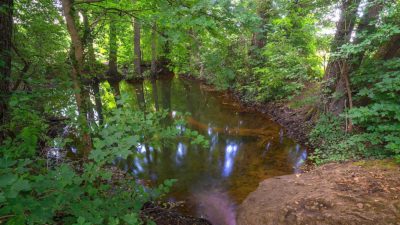
A spring in a forest in Bavaria, Germany.

A spring in a forest in Bavaria, Germany. IMAGEBROKER.COM GMBH & CO. KG / ALAMY STOCK PHOTO

Thanks to Yale e360 for publishing this article by Christian Schwägerl, whose influential book The Anthropocene was published one decade ago:

As World’s Springs Vanish, Ripple Effects Alter Ecosystems

Springs, which bring groundwater to the surface and support a host of unique species, are disappearing globally, victims of development and drought. Researchers are working to document and map these life-giving habitats in an effort to save them before they are gone.

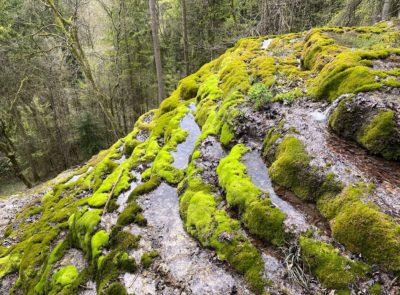
A tufa spring in the Neumarkt region in Bavaria, Germany.

A tufa spring in the Neumarkt region in Bavaria, Germany. CHRISTIAN SCHWÄGERL

Strong winds sweep over the Rhön, a vast region of rolling, forested hills and pastureland in central Germany. Undeterred, Stefan Zaenker, leading a group of four volunteers, runs through his checklist alongside a forest road. Are rubber boots disinfected to prevent introducing potentially harmful microorganisms into the wetland? Are the team app and GPS functioning correctly? Have enough flags been packed?

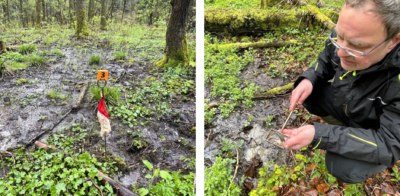
Left: A flag marks a helocrene spring in the Rhön region of Germany. Right: Stefan Zaenker takes a sample from a spring.

Left: A flag marks a helocrene spring in the Rhön region of Germany. Right: Stefan Zaenker takes a sample from a spring. CHRISTIAN SCHWÄGERL

When all is in order, Zaenker, 56, leads the group into a soggy alder forest. Its mission for the day: to locate and map as-yet-undiscovered springs and document any species inhabiting them.

A senior conservation official for the state of Hesse, Zaenker considers springs so important for human life and biodiversity that he — along with volunteers from the Hesse Association for Cave and Karst Research — spends much of his spare time conducting large-scale searches for them in the Rhön, which includes the German states of Bavaria, Thuringia, and Hesse, and in a nearby national park. Continue reading

The Garden Against Time, Reviewed

It always comes back to the commons. Thanks to Naomi Huffman at The Atlantic for bringing this book to our attention:

What Gardens of the Future Should Look Like

In her new book, Olivia Laing argues that the lives of all people are enriched with access to land they can use freely.

On a Sunday afternoon in May, the Elizabeth Street Garden, a serene public park wedged between Manhattan’s SoHo and Little Italy neighborhoods, was filled with people undeterred by the gray sky and spitting rain. Visitors sat at tables among fuchsia azaleas and yellow irises, and in the shade of loping old trees, talking, eating pizza, and drinking iced coffee. A painter faced an easel at the back of the garden and composed a watercolor. Continue reading

New England Botanic Garden at Tower Hill, Chestnuts & Apples

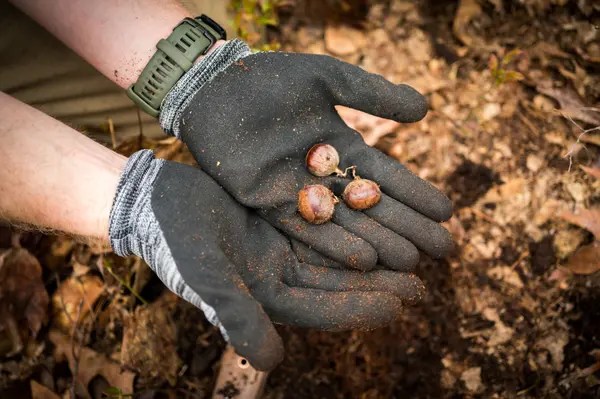
This spring, 160 chestnuts resulting from crosses made from large, standing American chestnut trees with natural blight resistance were planted at the botanic garden. Troy Thompson

Growing up in New England, apples and chestnuts were part of why autumn was my favorite season. During seven years living in walking distance of the Cornell orchards, apples remained a highlight of autumn well into adulthood. We have family who live in Boylston, so a visit to see this restoration project is now on my wish list. Thanks as always to Margaret Roach for all the gardens on that list:

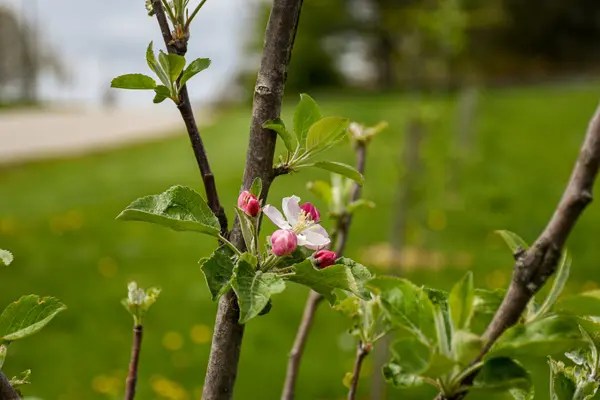
At the New England Botanic Garden at Tower Hill, in Boylston, Mass., the grafted heirloom apple trees are already big enough to bloom. But fruit isn’t expected for a few more years. New England Botanic Garden/Megan Stouffer

How Do You Restore a Chestnut Forest or an Apple Orchard? Very Slowly.

This botanic garden is determined to bring back the American chestnut tree and heirloom apples that taste like those grown 500 years ago. It won’t be easy.

“Explore what’s in bloom now,” exclaims a banner on the New England Botanic Garden at Tower Hill’s website. And, indeed, there is much to see. Continue reading

Popcorn’s Origin Story

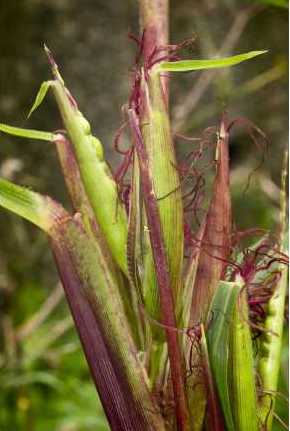
(Credit: vainillaychile/iStock via Getty Images Plus) The ancestor of maize was a grass called teosinte.

Since it is one of my go-to snacks, I frequently wonder about this, and appreciate the sleuthing by Sean Rafferty at SUNY Albany, and Discover magazine for publishing it:

How Was Popcorn Discovered?

Could a spill by the cook fire have been popcorn’s eureka moment?

You have to wonder how people originally figured out how to eat some foods that are beloved today. The cassava plant is toxic if not carefully processed through multiple steps. Yogurt is basically old milk that’s been around for a while and contaminated with bacteria. And who discovered that popcorn could be a toasty, tasty treat?

pile-of-popcorn

(Credit: Yeti studio/Shutterstock)

These kinds of food mysteries are pretty hard to solve. Archaeology depends on solid remains to figure out what happened in the past, especially for people who didn’t use any sort of writing. Unfortunately, most stuff people traditionally used made from wood, animal materials or cloth decays pretty quickly, and archaeologists like me never find it.

We have lots of evidence of hard stuff, such as pottery and stone tools, but softer things – such as leftovers from a meal – are much harder to find. Sometimes we get lucky, if softer stuff is found in very dry places that preserve it. Also, if stuff gets burned, it can last a very long time. Continue reading

Really, SpaceX?

A rocket stands with water in the foreground.

Starship, the upper stage of SpaceX’s new rocket, at its launchpad in Boca Chica, Texas. Conservationists are concerned with the environmental impact space operations have on the area.

After assurances about protecting the environment, damage was done. They declined responsibility (the words they used included “…it’s cool”). Not cool:

Wildlife Protections Take a Back Seat to SpaceX’s Ambitions

A New York Times investigation found that Elon Musk exploited federal agencies’ competing missions to achieve his goals for space travel.

As Elon Musk’s Starship — the largest rocket ever manufactured — successfully blasted toward the sky last month, the launch was hailed as a giant leap for SpaceX and the United States’ civilian space program.

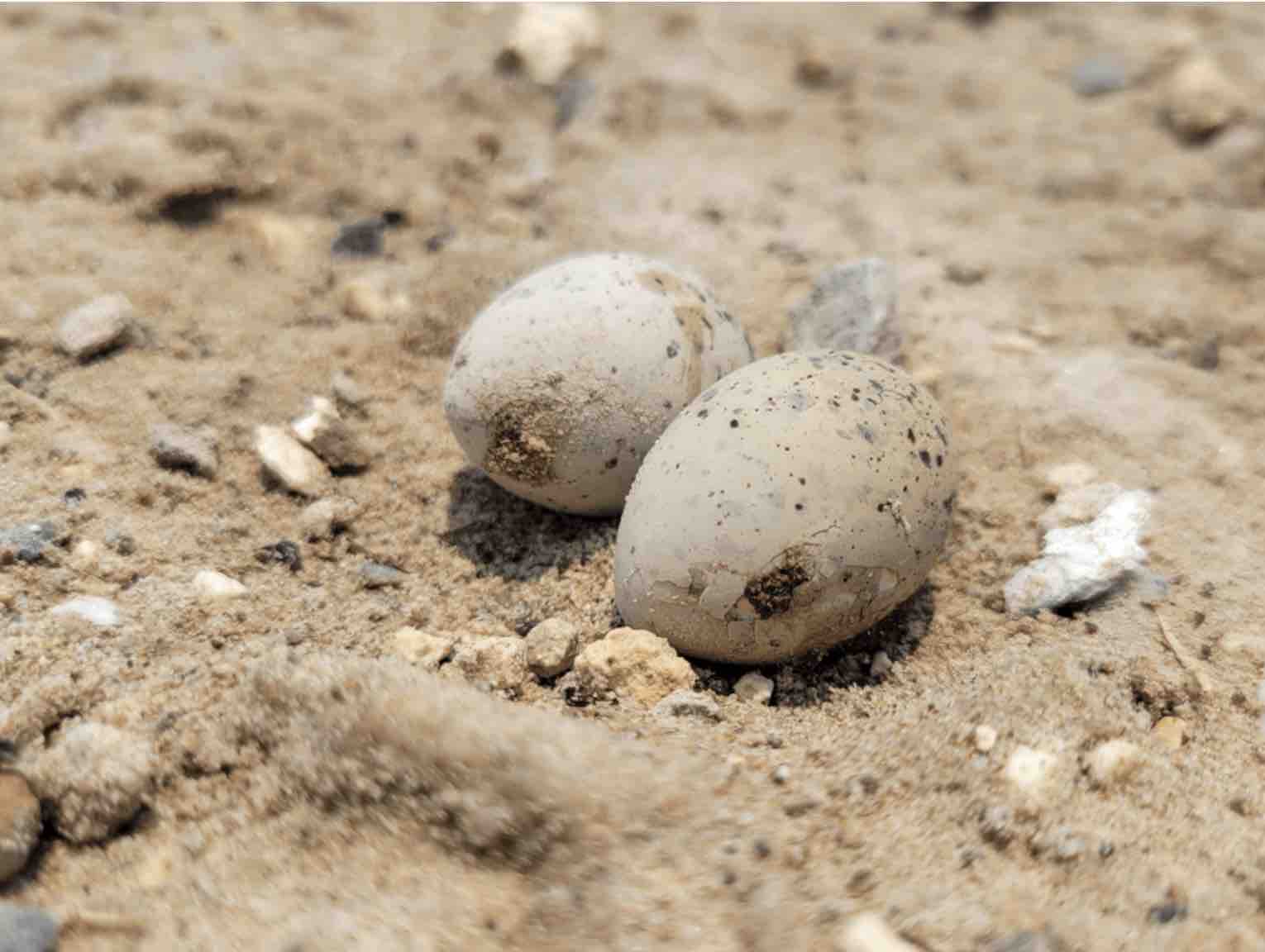
Figure 9. LETE 1 showing both eggs with large holes/cracks and dried egg contents emerging on June 6, 2024.

Two hours later, once conditions were deemed safe, a team from SpaceX, the U.S. Fish and Wildlife Service and a conservation group began canvassing the fragile migratory bird habitat surrounding the launch site.

The impact was obvious.

The launch had unleashed an enormous burst of mud, stones and fiery debris across the public lands encircling Mr. Musk’s $3 billion space compound. Chunks of sheet metal and insulation were strewn across the sand flats on one side of a state park. Elsewhere, a small fire had ignited, leaving a charred patch of park grasslands — remnants from the blastoff that burned 7.5 million pounds of fuel.

Most disturbing to one member of the entourage was the yellow smear on the soil in the same spot that a bird’s nest lay the day before. None of the nine nests recorded by the nonprofit Coastal Bend Bays & Estuaries Program before the launch had survived intact.

Egg yolk now stained the ground. Continue reading

Paul Theroux, Still Indulging

At home in Hawaii in 2021. Michelle Mishina Kunz for The New York Times

During the first few months of this platform, when travel experiences as well as variations on biophilia and  conservation became our prevailing themes, a post mentioned one of the great travel writers of our time. 13 years passed and this is his first full reference:

Paul Theroux on Necessary Solitude, Risks and the Joy of Writing

After 60 years of writing and publishing — and almost 60 books — I feel ordering my thoughts on paper to be not a job but a process of my life. You always hear writers complain about the hellish difficulty of writing, but it’s a dishonest complaint.

So many people have it much harder — soldiers, firefighters, field workers, truckers. The writer’s profession is a life of self-indulgence. Continue reading

Fungi & Brownfield Remediation

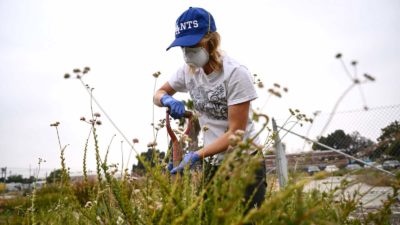
Researcher Danielle Stevenson digs up California buckwheat grown at a brownfield site in Los Angeles.

Researcher Danielle Stevenson digs up California buckwheat grown at a brownfield site in Los Angeles. PATRICK T. FALLON / AFP VIA GETTY IMAGES

Corporate irresponsibility abounds, so brownfield sites are abundant. And fungi sometimes offer relevant remediation options. Thanks to Richard Schiffman and Yale e360 for this interview on a topic we have cared about since launching this platform, and which we believe will be of increasing importance in our future:

Turning Brownfields to Blooming Meadows, With the Help of Fungi

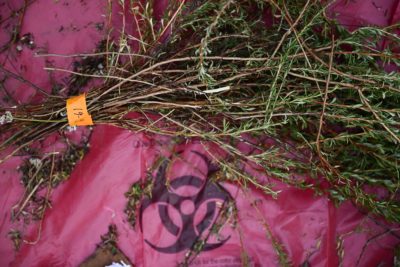
California buckwheat that has absorbed lead at a contaminated site in Los Angeles.

California buckwheat that has absorbed lead at a contaminated site in Los Angeles. PATRICK T. FALLON / AFP VIA GETTY IMAGES

Toxicologist Danielle Stevenson cleans up carbon-based pollutants and heavy metals from contaminated sites using fungi and plants. She’s also training environmental justice and tribal communities in using these methods so they can remediate toxic sites on their own.

The United States is dotted with up to a million brownfields — industrial and commercial properties polluted with hazardous substances. Continue reading

Solar Arboreal Synchronicity

Warm weather is one signal that guides the masting of beech trees, but now it appears that day length does more to determine the precise timing of the fruit release among European beeches.

We continue to enjoy learning about the communication between trees and this article from Quanta is an example why:

Across a Continent, Trees Sync Their Fruiting to the Sun

European beech trees more than 1,500 kilometers apart all drop their fruit at the same time in a grand synchronization event now linked to the summer solstice.

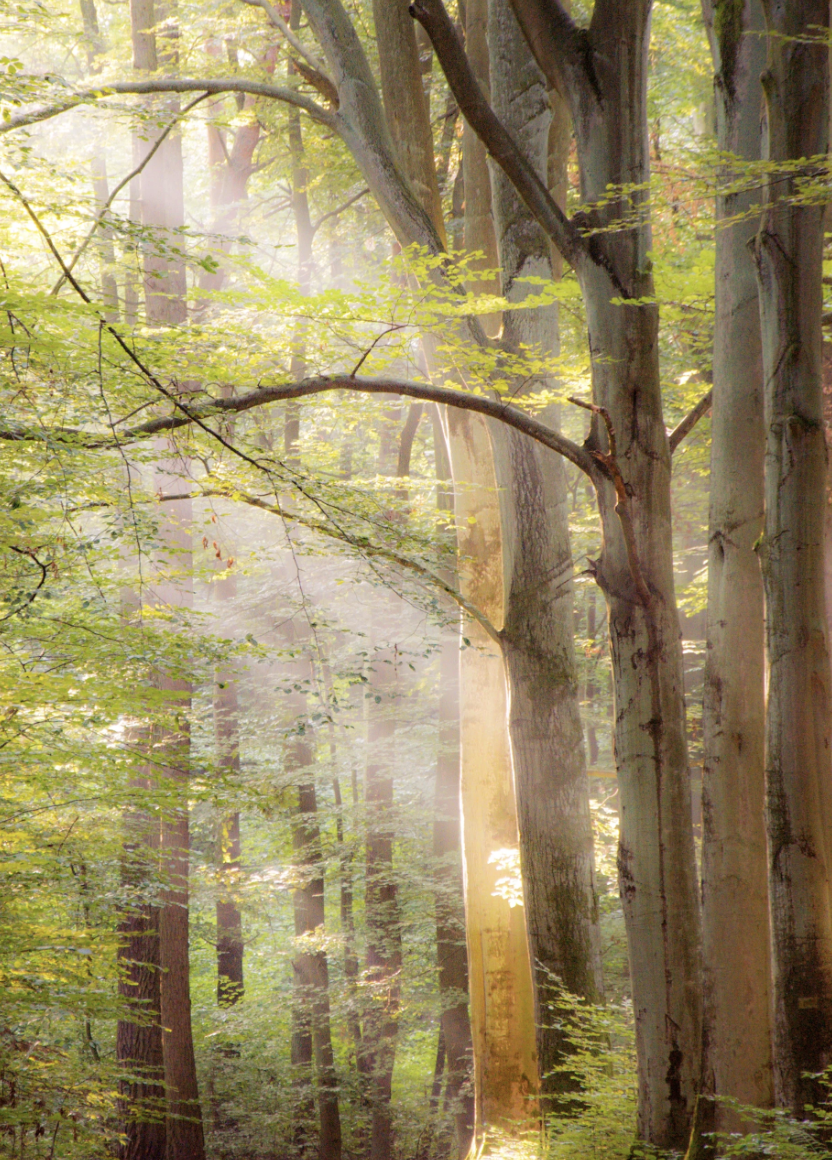
Each summer, like clockwork, millions of beech trees throughout Europe sync up, tuning their reproductive physiology to one another. Within a matter of days, the trees produce all the seeds they’ll make for the year, then release their fruit onto the forest floor to create a new generation and feed the surrounding ecosystem.

It’s a reproductive spectacle known as masting that’s common to many tree species, but European beeches are unique in theirability to synchronize this behavior on a continental scale. From England to Sweden to Italy — across multiple seas, time zones and climates — somehow these trees “know” when to reproduce. But how?

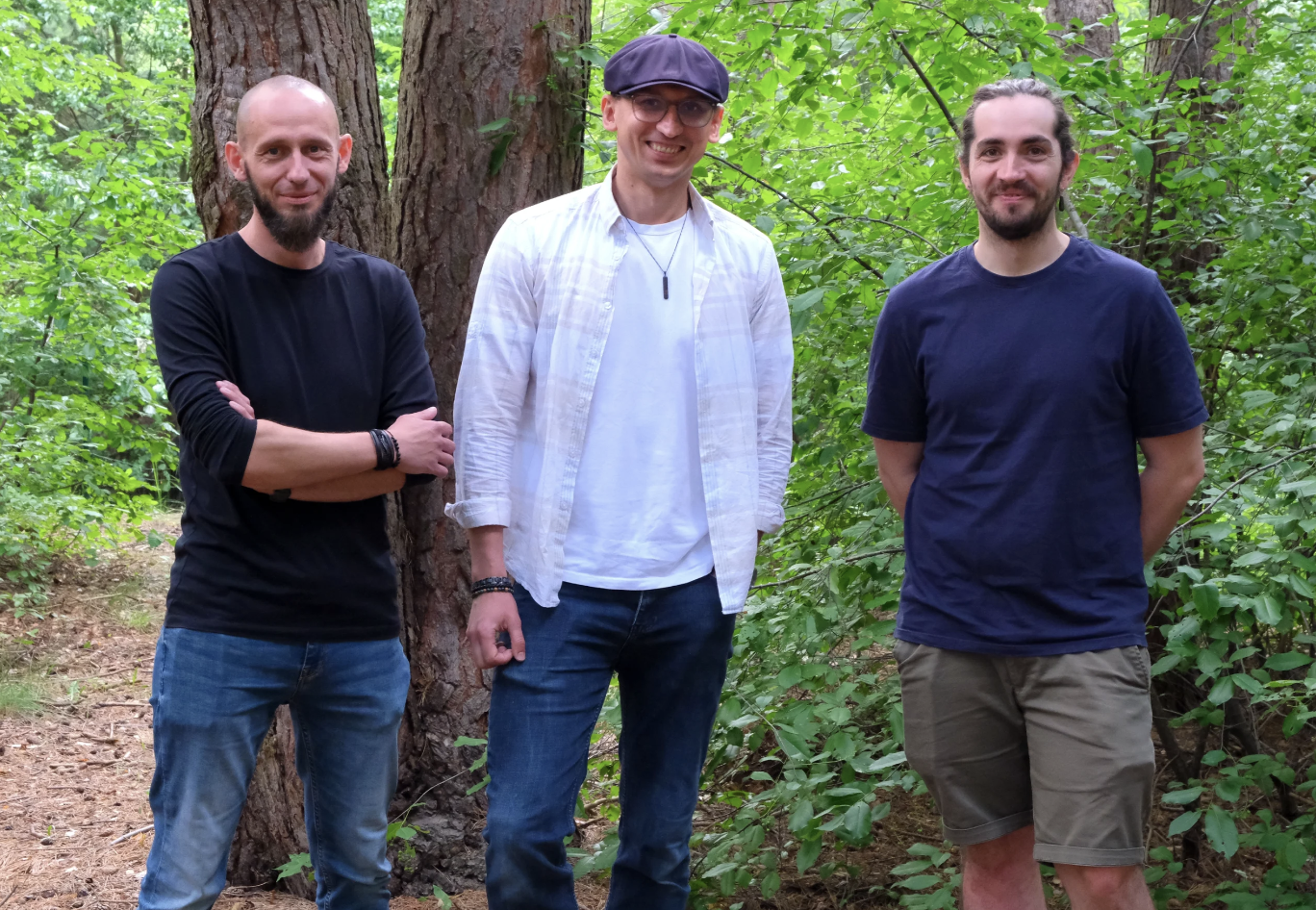
The recent discovery about European beech trees and the summer solstice was made by a team of researchers at Adam Mickiewicz University that included (from left to right) Jakub Szymkowiak, Michał Bogdziewicz and Valentin Journé, among others.

A group of ecologists has now identified the distinctive cue — what they call the “celestial starting gun” — that, along with balmy weather, triggers the phenomenon. Their analysis of over 60 years’ worth of seeding data suggests that European beech trees time their masting to the summer solstice and peak daylight.

Continue reading

The Light Eaters, Reviewed As An Anthropology Of Science

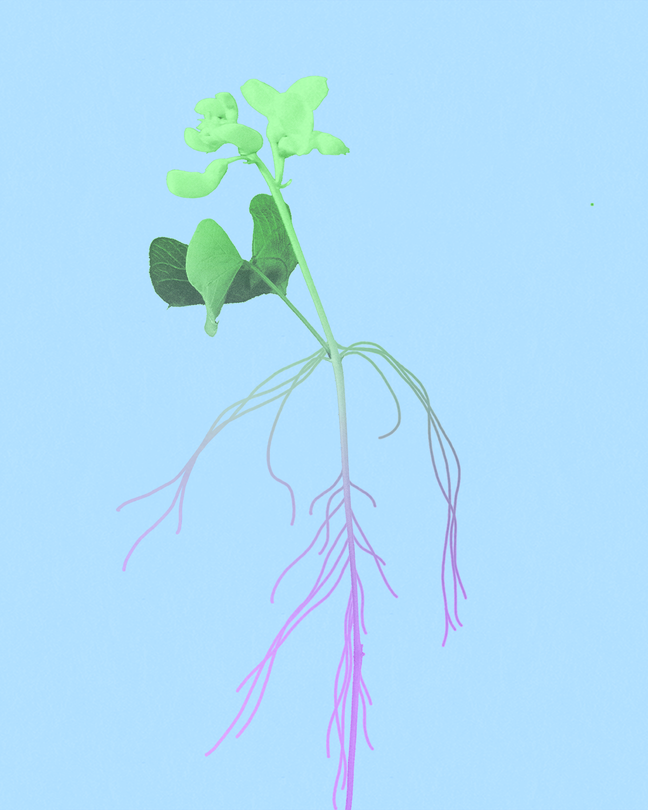
An illustration of a plant with central nervous system like tendrils coming out of the stem.We linked to this conversation with the author of The Light Eaters, and now see we can share this book excerpt published in The Atlantic:

On a freezing day in December 2021, I arrived in Madison, Wisconsin, to visit Simon Gilroy’s lab. In one room of the lab sat a flat of young tobacco and Arabidopsis plants, each imbued with fluorescent proteins derived from jellyfish.

The excerpt came to our attention reading this book review by The New Yorker’s Rachel Riederer which, like the book excerpt, makes you wonder what became of David Rhoades (we searched and could find no trail to follow, so it remains a mystery to us). It reveals the book to be more of an anthropological study of science than just a primer on plant communication:

Illustration of a face made from plants in a fieldA New Book About Plant Intelligence Highlights the Messiness of Scientific Change

In “The Light Eaters,” by Zoë Schlanger, the field of botany itself functions as a character—one in the process of undergoing a potentially radical transformation.

During the nineteen-seventies and eighties, a researcher at the University of Washington started noticing something strange in the college’s experimental forest. Continue reading

Nature’s Sobering Scenes Challenge Our Simple Wonder

Matt Williams

James Gorman‘s nature and scientific work has appeared so many times in our pages that we can say his style of writing mixes sobriety and wonderment. This essay’s message– birdwatching is not all rainbows and unicorns–is an amplification of that mixture:

From sibling murder to snakes for breakfast, birds’ lives may be darker than you imagine.

I saw a couple of crows dining on roadkill the other day as I was driving by and wondered, Does this count as bird-watching?

I think it should. I know that birding is having a moment. It was something you could do outside without catching Covid at the height of the pandemic. Continue reading

Becoming Earth, Adapted In Essay Form

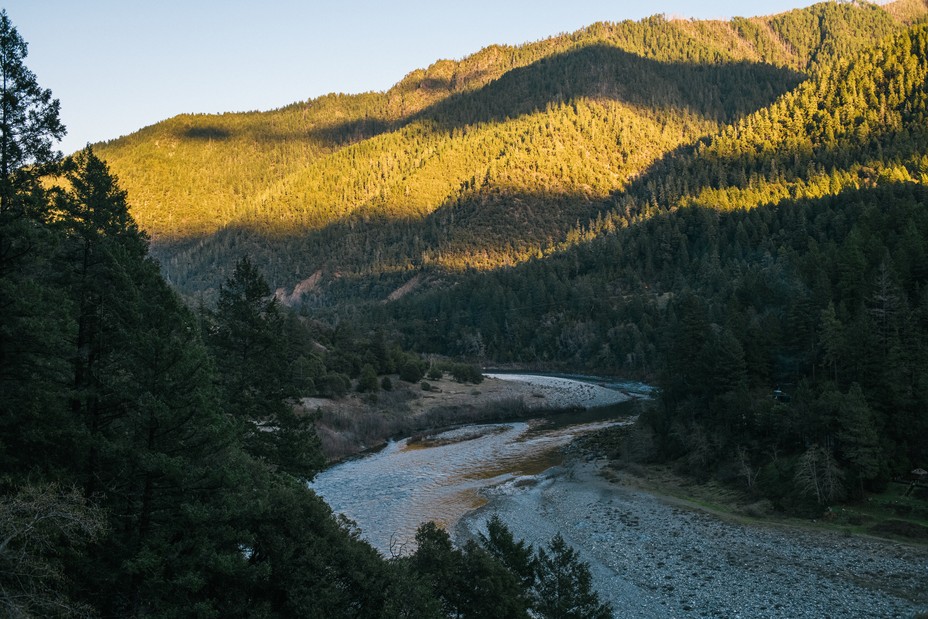
Picture of the view from Klamath from Orleans, California. Ancestral Karuk territory.

View of the Klamath from Orleans, California, ancestral Karuk territory. For millennia, the Yurok, Karuk and Hupa of northern California, and indigenous tribes worldwide, passed the use of fire down through generations as a means of land stewardship and survival. Light, frequent burning created fire-adapted landscapes.

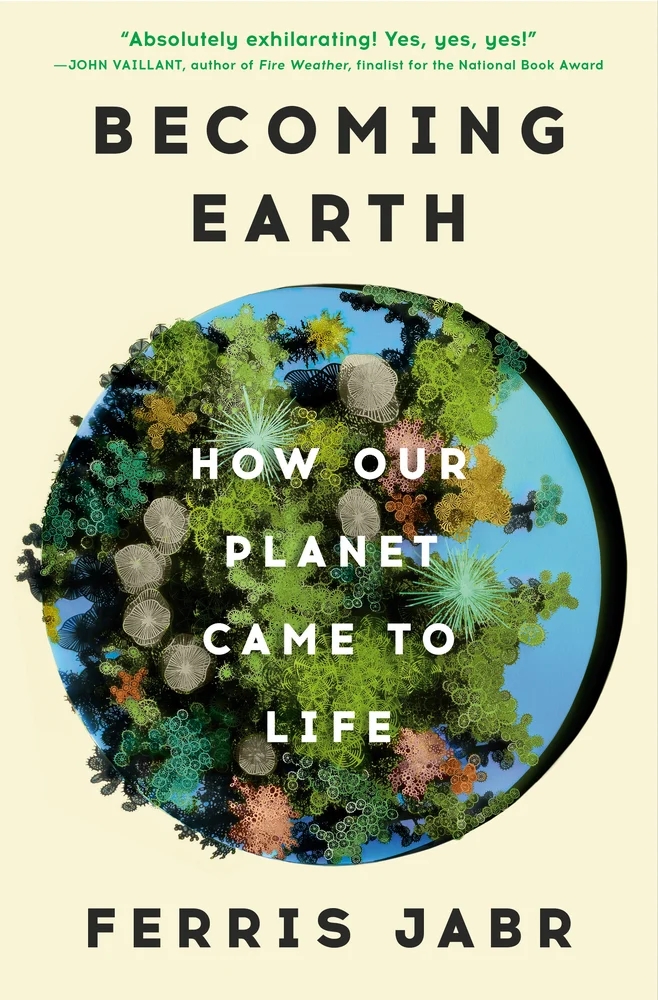
I recall during the pandemic reading the work of Ferris Jabr, which expanded on our understanding of the social networking of trees, an idea I remain compelled by. Now he has a book,  adapted for The Atlantic. In the essay form he focuses on the value of indigenous knowhow handed down generation to generation for centuries. He  highlights how fire is a wild, powerful element of nature, wielded as a tool for stable life of ecosystem and society.

Picture of a fire from a drip torch during a cultural prescribed burn training

Detail of a landscape during a cultural prescribed burn training (TREX) hosted by the Cultural Fire Management Council and the Nature Conservancy in Weitchpec, California. (Alexandra Hootnick)

THE DEEP CONNECTION BETWEEN LIFE AND FIRE

How wildfire defines the world

Perched on a densely forested hill crisscrossed with narrow, winding, often unsigned roads, Frank Lake’s house in Orleans, California, is not easy to find. On my way there one afternoon in late October, I got lost and inadvertently trespassed on two of his neighbors’ properties before I found the right place. When Lake, a research ecologist for the United States Forest Service, and his wife, Luna, bought their home in 2008, it was essentially a small cabin with a few amenities. They expanded it into a long and handsome red house with a gabled entrance and a wooden porch. A maze of Douglas firs, maples, and oaks, undergrown with ferns, blackberries, and manzanitas, covers much of the surrounding area. Continue reading