Leveraging Guarani Knowhow For Reforestation

A Guarani man walks through a cleared patch of Brazil’s Atlantic Forest that the local Indigenous community is trying to reforest. DIEGO HERCULANO / NURPHOTO VIA GETTY IMAGES

Thanks to Jill Langlois and Yale e360:

How Indigenous People Are Restoring Brazil’s Atlantic Forest

The Guarani Mbya people are working to restore the once-vast Atlantic Forest, which has been largely lost to development. Gaining official tenure of their lands, they hope, will boost their efforts, which range from planting native trees to reintroducing pollinators.

It was 2016 when Jurandir Jekupe noticed the bees were gone.

Their nests were once common in Yvy Porã, the Guarani Mbya village where Jekupe grew up and still lives. Continue reading

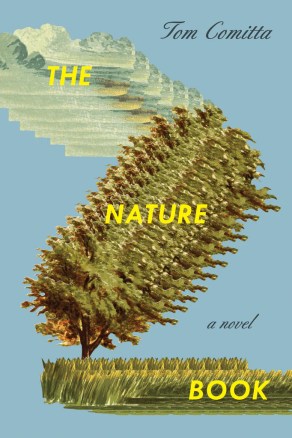
The Nature Book, Reviewed

Neither the author of the book,  nor Cara Blue Adams who reviews it in the essay below, is familiar in our pages. But it is an essay that evokes familiar themes, so here goes:

Searching for Unfamiliar Terrain in “The Nature Book”

We go to the wilderness to test ourselves against an environment indifferent to our presence. Can this experience be re-created in fiction?

The Wilderness Act, passed in 1964, established the National Wilderness Preservation System to safeguard federally owned land, beginning with 9.1 million acres, called “wilderness areas,” to be “designated for preservation and protection in their natural condition.” Continue reading

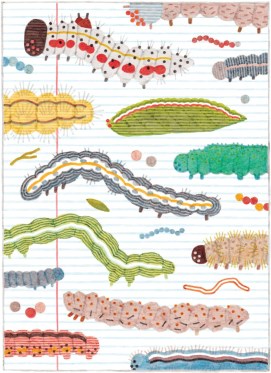
Caterpillars, Among Other Insects, More Appreciated

Some scientists warn of an insect apocalypse. The flying-insect community has been “decimated,” a research paper said. Illustration by Jochen Gerner

Insects were among the first regular features in these pages, thanks to Milo’s camera and personal interest. There were more when Seth worked in Costa Rica, followed by plenty of articles and editorials of various types, as well as my own discoveries while working outside. Looking back over those, I notice that caterpillars were featured only once, in a post on integrated pest management. So the following is a welcome addition to the mix:

The Little-Known World of Caterpillars

An entomologist races to find them before they disappear.

The Devils River, in southwestern Texas, runs, mirage-like, along the edge of the Chihuahuan Desert, through some of the most barren countryside in the United States. Access to the river is limited; unless you’re in a kayak, the only way to travel upstream is along a skein of rutted dirt roads. It was on one of these roads that, a few years ago, David Wagner noticed a shrub that seemed to him peculiarly filled with promise. Continue reading

Realities Of Rewilding

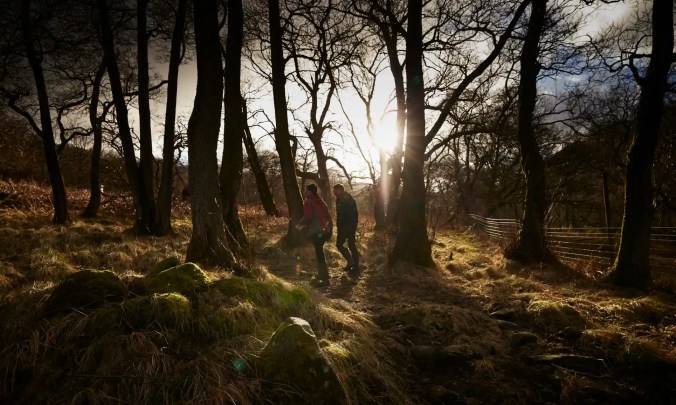
Haweswater in the Lake District where the RSPB is running rewilding projects based around Naddle farm and the surrounding farmland. Photograph: Christopher Thomond/The Guardian

Rewilding has been a favorite topic in our pages for most of the last decade. We appreciate the nuances, described by Ben Martynoga, in this particular community’s efforts and challenges related to rewilding:

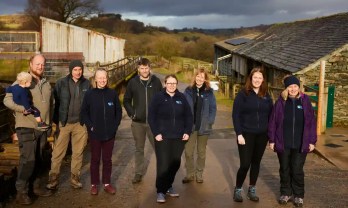
Staff and volunteers at Naddle farm, an ex-sheep barn which is now a tree nursery. Photograph: Christopher Thomond/The Guardian

‘The R-word can be alienating’: How Haweswater rewilding project aims to benefit all

On the Lake District’s north-eastern fringe, two farmsteads are restoring the landscape with a commitment to conservation and providing jobs

Until the last male golden eagle died in 2015, Haweswater, on the rugged north-eastern fringe of the Lake District, was England’s final refuge for the bird of prey. “Even now, whenever I go up Riggindale, it feels like something is missing,” says Spike Webb, a long-serving RSPB warden at its Haweswater site. Continue reading

An Insider’s View On Ocean

The treaty is meant to serve as a scaffold for future initiatives, and has the power to protect much of the ocean. Photograph by Philip Thurston / Getty

We thank Jeffrey J. Marlow, Assistant Professor of Biology at Boston University, once again; this time for an essay he just posted on the New Yorker’s website. The news in it is not new, but his take on it is:

The Inside Story of the U.N. High Seas Treaty

A new global agreement protects marine life in parts of the ocean that laws have been unable to reach.

The open ocean, which is home to millions of species and generates much of the oxygen we breathe, is a mostly lawless place. Nations have jurisdiction over waters near their coasts, but the high seas, which begin two hundred and thirty miles from shore, are a first-come, first-served domain: there’s little to stop someone from exploiting marine resources, whether plants and animals in the water or fossil fuels beneath the seafloor. Forty-three per cent of the planet’s surface is vulnerable to unregulated deep-sea drilling, overfishing, and bioprospecting. Continue reading

Sunflower Seastars & Ocean Futures

A sunflower sea star found in a kelp forest in waters off the Oregon coast before an invasion of sea urchins. Credit Scott Groth/Scott Groth, via Associated Press

Thanks to Nicholas Bakalar (last seen in these pages seven years ago, we welcome his science reporting work back after so long):

The Missing 24-Limbed Animals That Could Help Rescue the Ocean’s Forest

Scientists say that reintroducing the fast-moving predators to the West Coast could help control the spread of sea urchins that are devouring kelp.

The kelp forests off the West Coast are dying, and with their decline, an entire ecosystem of marine plants and animals is at risk. A large starfish with an appetite for sea urchins could come to the rescue. Continue reading

Economic Zones On Oceanic Commons

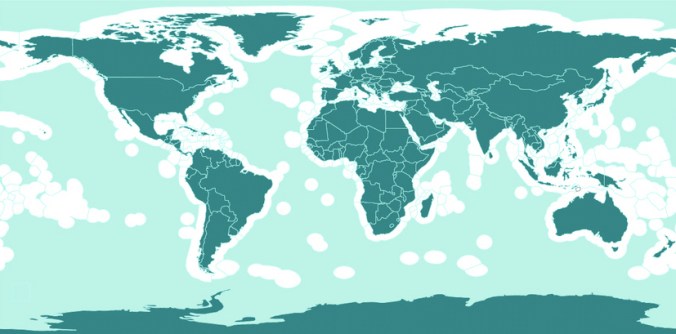
On this map, exclusive economic zones are shown in white and high seas, or areas beyond national jurisdiction, are shown in light green.

For some historical context it helps to think of the many challenges that commons represent. But here and now, this deal is as important as it gets:

Countries Reach Deal to Protect Marine Life in International Waters

UN member states have forged a landmark deal to guard ocean life, charting a path to create new protected areas in international waters. Continue reading

Protecting Insects Requires More Effort

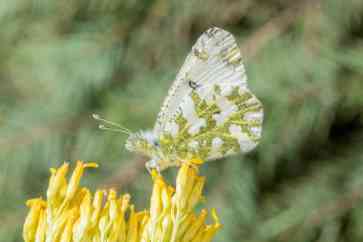
The large marble butterfly is now locally extinct in some places. Rick and Nora Bowers/Alamy

Insects matter, and our thanks to Catrin Einhorn for making it more clear why:

Are Butterflies Wildlife? Depends Where You Live.

A legal quirk leaves officials in at least a dozen states with little or no authority to protect insects. That’s a growing problem for humans.

It’s tough being an insect. They get swatted, stomped and sprayed without a thought. Their mere presence can provoke irrational panic. Even everyday language disparages them: “Stop bugging me,” we say. Continue reading

The Secret Perfume Of Birds, Reviewed By The Inquisitive Biologist

The Inquisitive Biologist recently came to our attention with a book review, and now another review of a book on a topic that is new (to us):

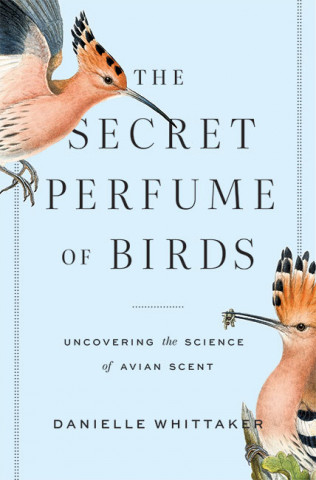
To successfully navigate their world, organisms rely on numerous senses. Birds are no exception to this; and yet, for a long time, people have been convinced that birds cannot smell. This came as a surprise to evolutionary biologist Danielle J. Whittaker. Given that smell is effectively chemoreception (the sensing of chemical gradients in your environment) and was one of the first senses to evolve, why would birds have no use for it? The Secret Perfume of Birds tells the story of 15 years spent investigating the olfactory capabilities of birds and provides an insider’s account of scientific research. Continue reading

Darkness Reconsidered

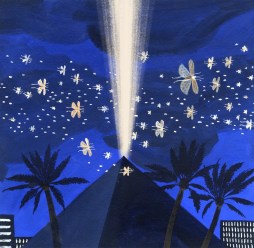
The Luxor Hotel’s “sky beam,” in Las Vegas, generates forty-two billion candlepower of light each night, confusing flying creatures that are drawn to its radiance. Illustration by Carson Ellis

We already linked to one review of it but this book seems worthy of at least two, and if at least one of them is by this essayist then probably two will be enough:

Is Artificial Light Poisoning the Planet?

A Swedish ecologist argues that its ubiquity is wrecking our habitats—and our health.

Among the many looming ecological disasters that terrify us today, one that only a handful of people have contemplated as sufficiently looming and terrifying is the loss of the bats in our belfry. Continue reading

Guyana & Petroleum

Recent view of Kaiteur Falls from a small plane

Yesterday’s link to the story about Greenland‘s approach to carefully harnessing the economic power of tourism made me think today about a recent visit to Guyana that Amie and I made. What I knew of Greenland before reading that article was limited, but it included the newsworthy commitment they made, which I acknowledge having found inspirational. But I am a layperson on what such commitments actually mean. Continue reading

Living Carbon

OUR MISSION

We believe the challenge of climate instability is the biggest opportunity for global mobilization we have ever seen. It is an opportunity to learn how to use technology to rebalance our ecosystems rather than further alienate us from them. We work with the inherent power of plants, informed by generations of scientific research, to restore ecosystems, improve biodiversity, and enhance the ability of photosynthetic organisms to draw down and store carbon from the atmosphere.

A mission we are curious about, click the image above to learn more.

Flaco Free

Central Park Zoo

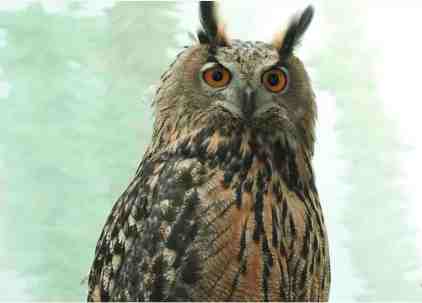
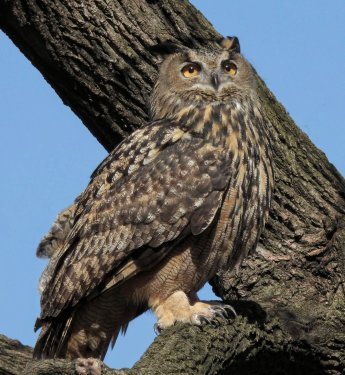
Flaco is only the latest of a long history of unusual bird stories from New York City’s Central Park. Thanks to Louis C. Hochman at National Public Radio’s excellent Gothamist collaborative for local news for this latest one:

Manhattan Bird Alert@BirdCentralPark. Flaco the Eurasian Eagle-Owl showing his talons and looking mighty on a sunny day in Central Park.

Flaco to remain free: Central Park Zoo gives up on capturing escaped owl for now

Flaco, the Eurasian eagle owl that escaped the Central Park Zoo early this month after his habitat was vandalized, will be allowed to stay free for now.

The zoo says it’s putting on hold efforts to recover Flaco, who has been “very successful at hunting and consuming the abundant prey in the park.” Continue reading

Keep The Night Sky Dark

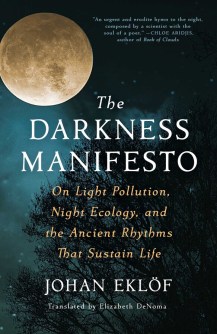
While sunlight gives electricity for the lights we need, there can be too much of a good thing. Thanks to Lisa Abend at the New York Times for this review:

A Manifesto for Loving the Darkness, and Not Metaphorically

Light pollution is disruptive to many species, from corals to bats to the humans who put up all those lights. “The Darkness Manifesto” urges us to reconsider our drive to dispel the dark.

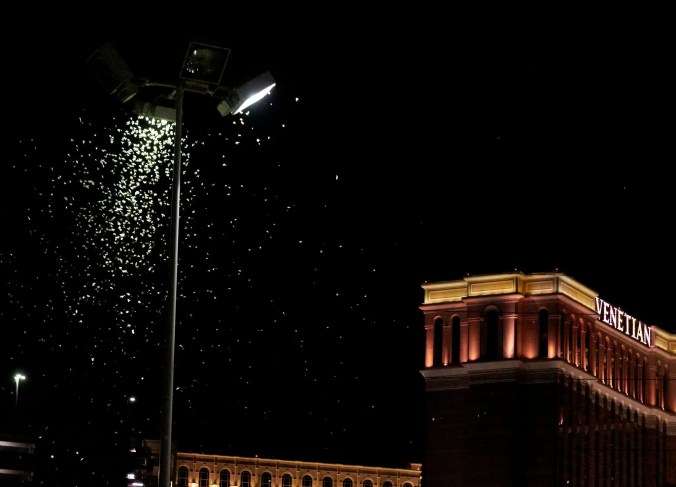
Artificial lights disorient many species, including the grasshoppers that swarmed the powerful lights over the Las Vegas strip in 2019. Bridget Bennett/Agence France-Presse — Getty Images

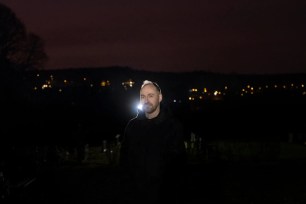
Losing a connection to the night sky is losing our connection to nature, said Johan Eklöf, but it is also losing some of our history. “What we see now is the same sky as our ancestors were looking at and making up stories about.” Nora Lorek for The New York Times

The zoologist Johan Eklöf began to consider the disappearance of darkness in our brightly lit world in 2015, when he was out counting bats in southern Sweden. The surrounding grounds were dark, as they had been decades earlier when his academic adviser had tallied the bat populations in the region’s churches. In the intervening years, however, those churches — whose belfries are famously appreciated by the winged mammals — had been illuminated with floodlights. “I started to think, how do the bats actually react to this?” Eklöf says. Continue reading

Renewable Energy & Winged Creatures

PHOTOGRAPH: YUKIKO YAMAMOTO/GETTY IMAGES

We knew  that the intersection between renewable energy and birds can be problematic, so we thank Emma Foehringer Merchant for this look at one initiative to address it:

Wanted: Dead Birds and Bats, Felled by Renewables

Scientists say collecting, studying, and storing the carcasses from wind and solar facilities can unlock new insights.

“This is one of the least smelly carcasses,” said Todd Katzner, peering over his lab manager’s shoulder as she sliced a bit of flesh from a dead pigeon lying on a steel lab table. The specimens that arrive at this facility in Boise, Idaho, are often long dead, and the bodies smell, he said, like “nothing that you can easily describe, other than yuck.” Continue reading

War With The Newts & Anticipation

The MIT Press ReaderJohn Rieder, an emeritus professor of English at the University of Hawai‘i at Mānoa, shares the following, excerpted from the book Uneven Futures: Strategies for Community Survival From Speculative Fiction:

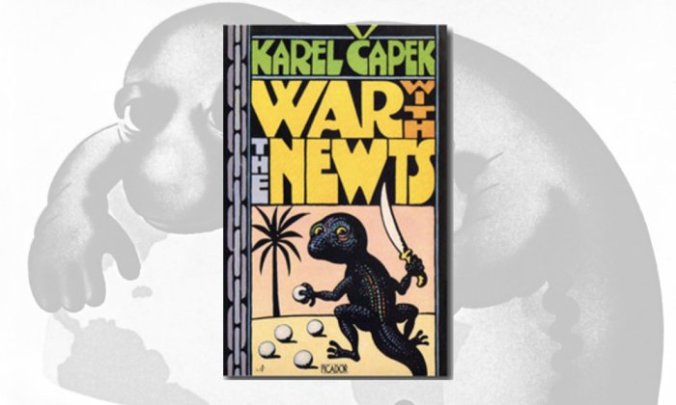
On Karel Čapek’s Prophetic Science Fiction Novel ‘War With the Newts’

The Czech writer’s darkly humorous novel, published in 1936, anticipated our current reality with eerie accuracy.

Karel Čapek’s “War with the Newts,” published in 1936, one of the greatest pieces of science fiction of the 20th century, is a prophetic work. When I say prophetic, I mean it has the gift of seeing the present for what it is — and not only seeing it but also telling the rest of us what we have been looking at. Continue reading

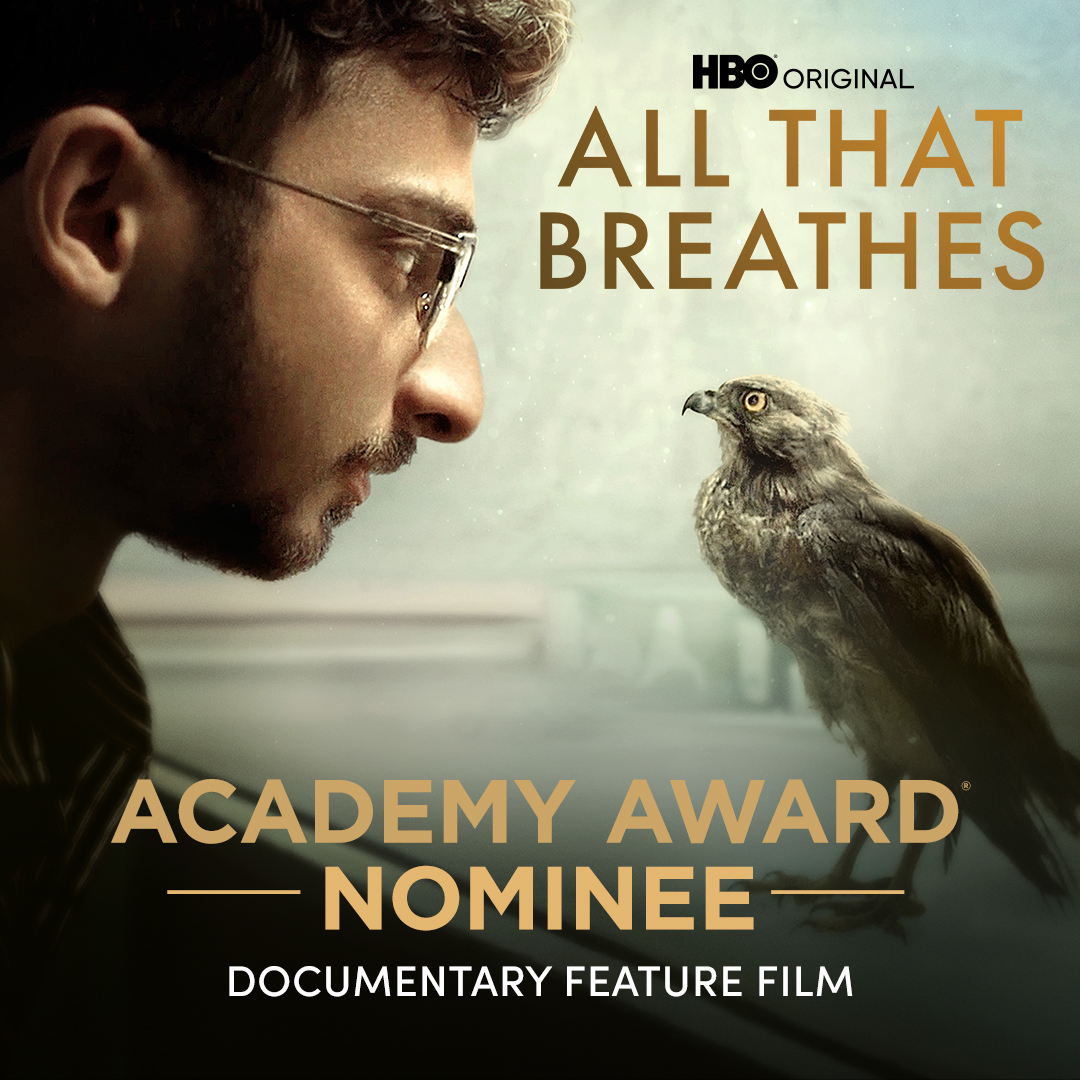
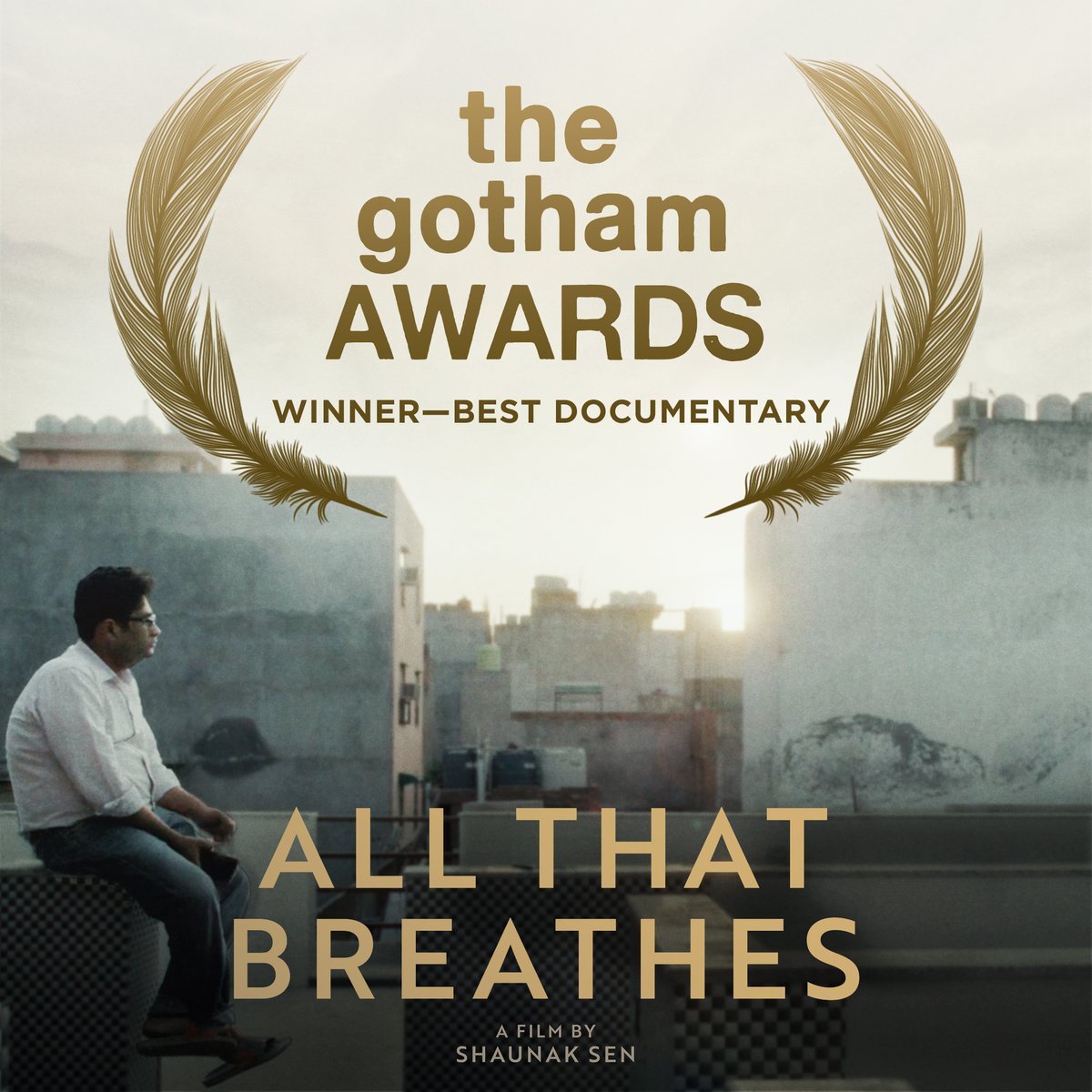
All That Breathes, A Film & A Feeling

Image posted by nswewind to twitterWith a film review titled It’s easy to focus on what’s bad — ‘All That Breathes’ celebrates the good it would be difficult to resist reading, but spoilers can be annoying; not here:

In Anne Lamott’s book on writing, she tells a great story about facing tasks that seem overwhelming. Her 10-year-old brother was doing a big school project on birds, and as the deadline loomed, he became paralyzed by how much he still had to do. His father put his arm around him and gave him a piece of advice, “Bird by bird, buddy,” he told him. “Just take it bird by bird.”

Image posted by asideshowfilm to twitterThis useful life lesson takes literal form in All That Breathes, a wonderful new documentary that arrives on HBO and HBO Max garlanded with international awards. Directed by Shaunak Sen — and ravishingly shot by Ben Bernhard — this inspiring film takes us inside the lives of two ordinary seeming Muslim brothers in Delhi who are actually extraordinary in their dedication to doing good in a city teetering on the edge of apocalypse.

The brothers are named Saud and Nadeem, the former friendly, the latter a little grumpy. Continue reading

UK Plant Prospecting & iNaturalist

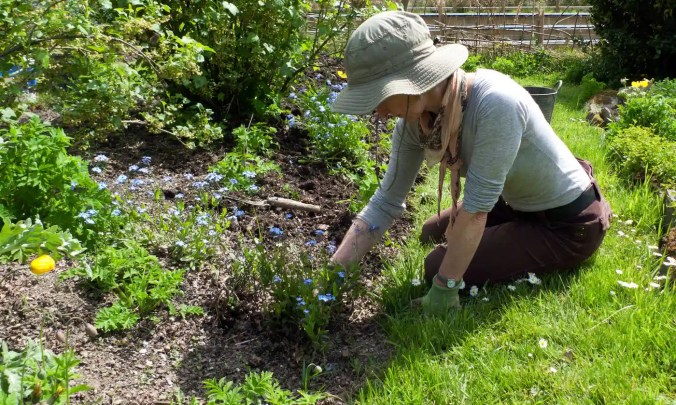
While once gardening was somewhat of a battle against nature, people are now working with native plants and animals. Photograph: Kathy deWitt/Alamy

We are happy to see citizen scientists putting this technology to such use anywhere, but particularly gratified to know that a large organization is encouraging its use for such an important initiative:

RHS asks gardeners to find interesting ‘weeds’ that may be rare plants

People urged to submit specimens to an app as private gardens may be fresh source of scientific discovery

Record the “weeds” that pop up in your garden because they could be a rare plant, the Royal Horticultural Society has said. Continue reading

Collaborative Cataloging of Feathered Finery

Architect Esha Munshi and veterinarian Sherwin Everett, founders of the Feather Library

Over the years we talked about feathers from numerous perspectives, including scientific and artistic. Thanks once again to the Guardian for sharing this inspiring Citizen Science story.

Plucky idea: the feather library providing a visual A to Z of India’s birds

Finding a trapped silverbill during lockdown inspired Esha Munshi to create an invaluable record of species in an uncertain world

Esha Munshi, an architect based in Ahmedabad, has “breathed birds” as far back as she can remember. She has travelled all over India on birding trips and has, she says, spotted 1,060 of the 1,400 bird species in the country.

An Indian golden oriole feather, left, and white-throated kingfisher feathers

But it was at home, during the Covid-19 lockdown in 2020, that she saw an Indian silverbill caught in the protective netting on her balcony, attracting the attention of her cat. Although the bird escaped, some of its feathers were damaged. When Munshi saw the exquisite markings and patterns, she tried to identify the bird, but was struck by how little information there was online.

Continue reading

Seed Bank Futures

Hassan Machlab, a country manager with ICARDA in Lebanon, stands in the middle of a field with newly planted grains at the ICARDA research station, Dec. 21, 2022. Dalia Khamissy for NPR

Protecting plant species’ futures with seed banks grows greater in importance as time passes, because challenges to the planet multiply. We appreciate updates like this one by Ruth Sherlock and colleagues at National Public Radio (USA):

How ancient seeds from the Fertile Crescent could help save us from climate change
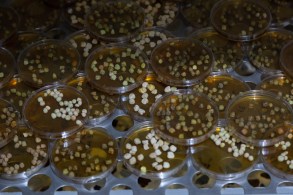
Chickpea grains are tested for various diseases at the ICARDA research station, Dec. 21, 2022. Dalia Khamissy for NPR

TERBOL, Lebanon — Inside a large freezer room at the International Center for Agricultural Research in the Dry Areas, tens of thousands of seeds are stored at a constant temperature of minus-4 degrees Fahrenheit. After being threshed and cleaned, the seeds are placed inside small, sealed foil packets and stored on rows of heavy, sliding metal shelves.
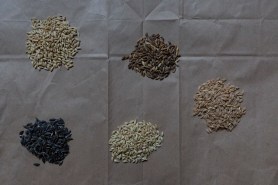
Barley grains stored at the ICARDA research station. Dalia Khamissy for NPR

Some of them may hold keys to helping the planet’s food supply adapt to climate change.

The gene bank can hold as many as 120,000 varieties of plants. Many of the seeds come from crops as old as agriculture itself. They’re sown by farmers in the Fertile Crescent region, where cultivation began some 11,000 years ago. Other seeds were deposited by researchers who’ve hiked in the past four decades through forests and mountains in the Middle East, Asia and North Africa, searching for wild relatives of wheat, legumes and other crops that are important to the human diet. Continue reading