Birds, Citizen Science & You

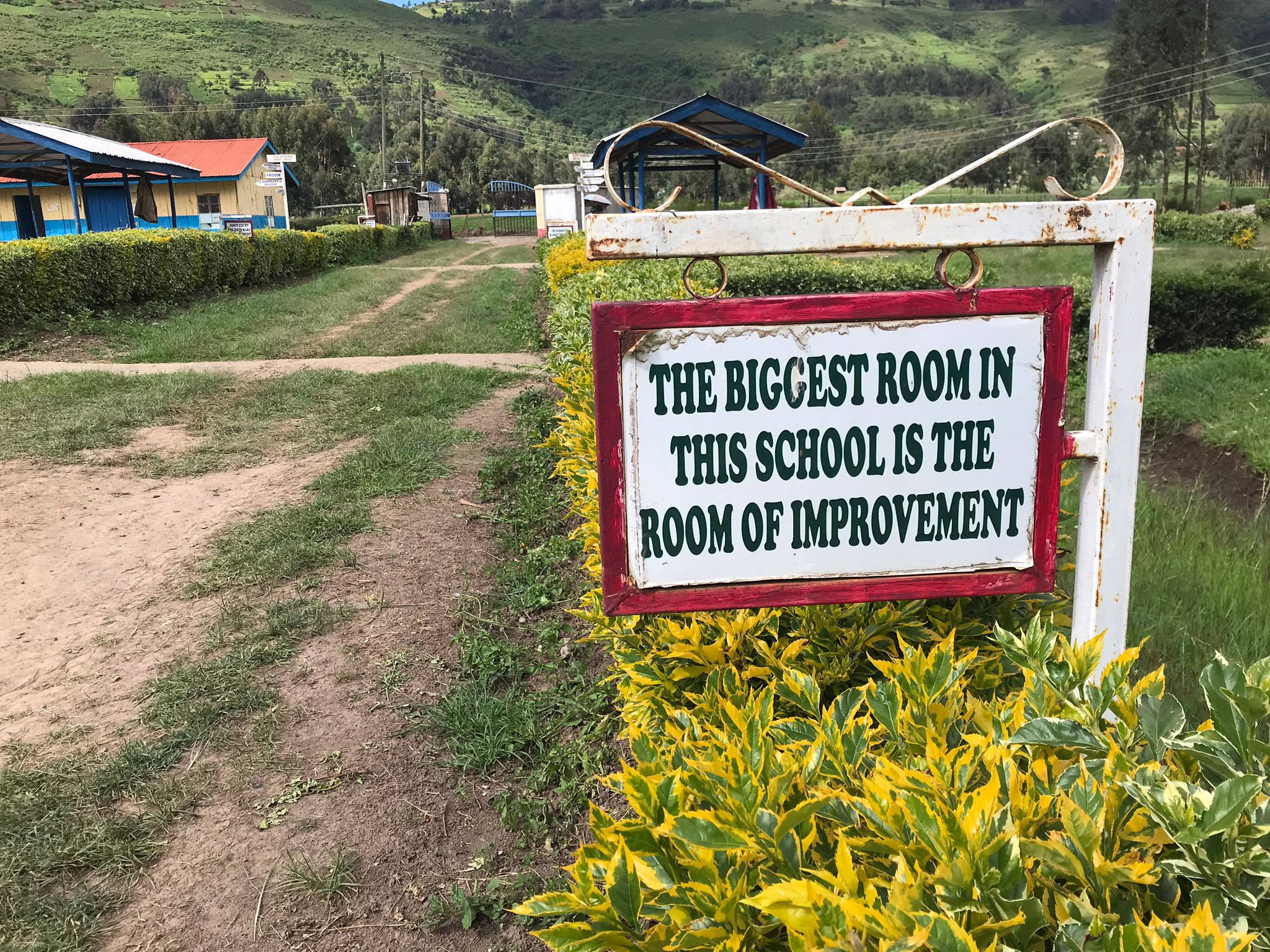
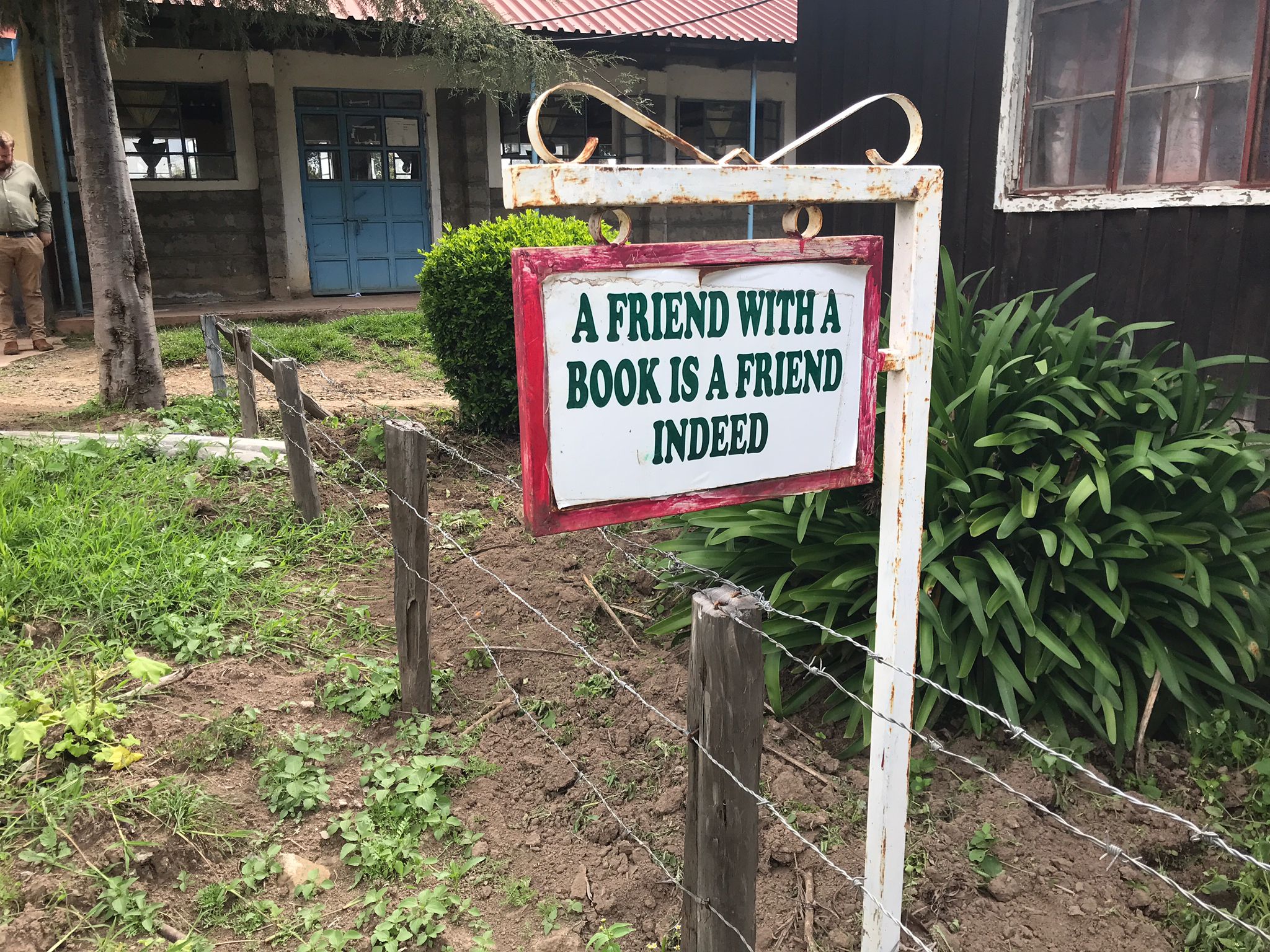
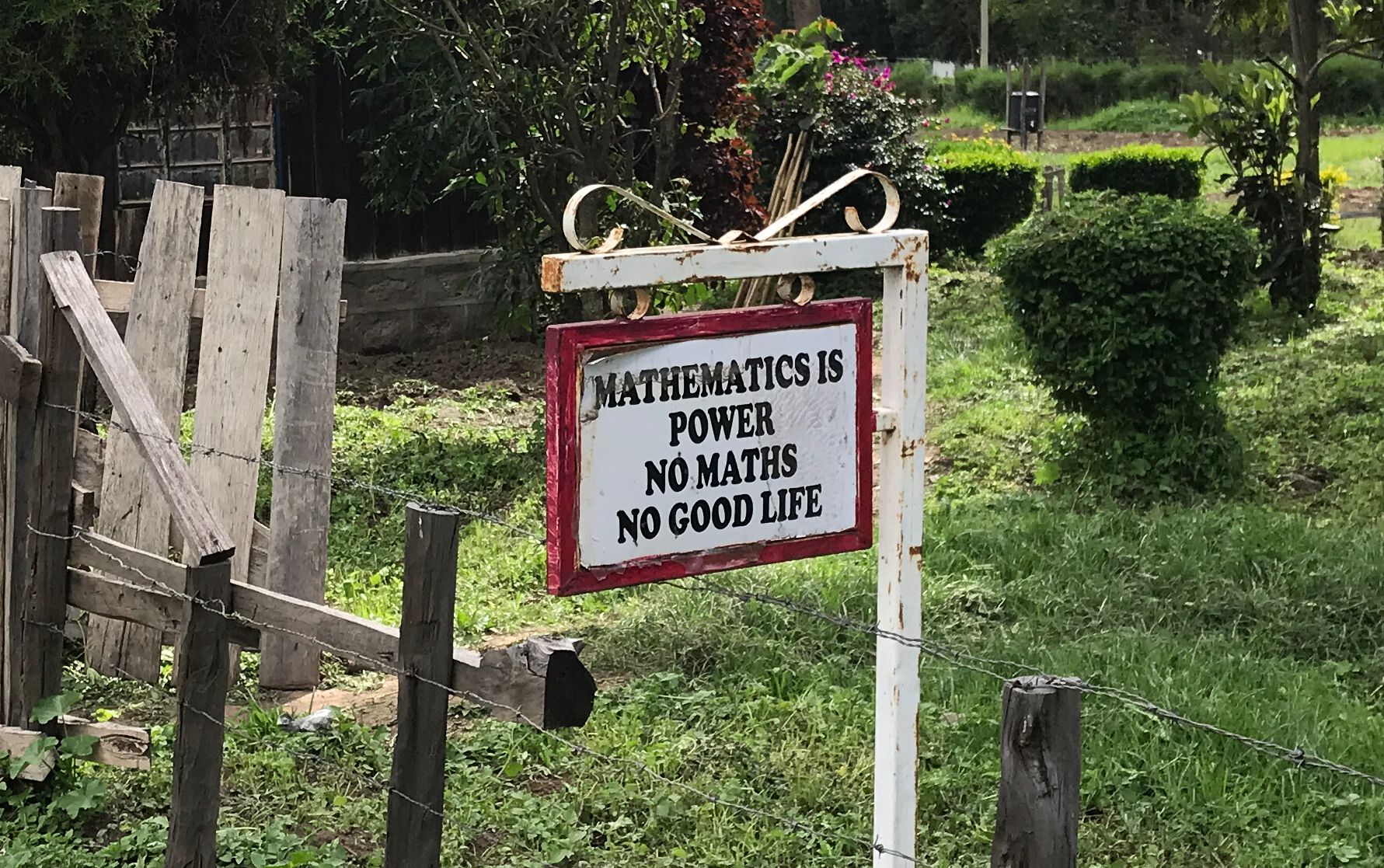
Seth has been working in various African countries recently, and is somewhere in Kenya at this moment, for work. There is a school in the vicinity, with these signs. We have not yet had the chance to hear any details about the school, but these signs anyway say most of what we might want to know.
His work, related to forest management, clearly intersects with his longstanding interest in birds, strengthened by his three years working at the Cornell Lab of Ornithology. That period coincides with our learning about citizen science and in the years since we have shared many stories from the field.
The pictures arrived from Kenya just as this initiative between the Cornell Lab of Ornithology and the New York Times comes to my attention, which you might find interesting:

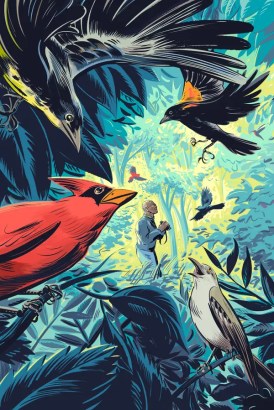
Mike McQuade

Go Birding With The Times

Our understanding of birds has been profoundly shaped by the work of everyday people. After all, anyone can step outside and pay attention to an untamed world swooping above. Continue reading
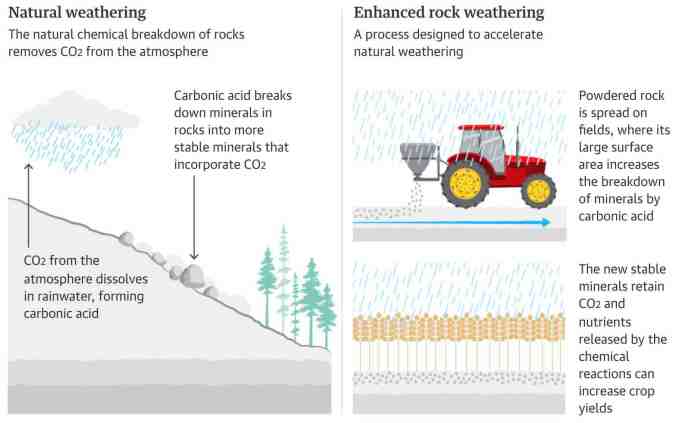
Greenland’s Rock Flour

Guardian graphic. Source: Guardian research

Damian Carrington, Environment editor at the Guardian, shares these findings:

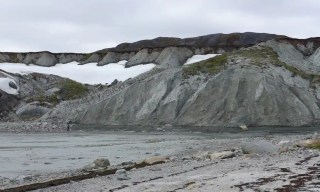
Eight-thousand-year-old marine deposits, exposed by the slow rise of Greenland after the last ice age. The cliffs are about 15 metres high. Photograph: Minik Rosing

Rock ‘flour’ from Greenland can capture significant CO2, study shows

Powder produced by ice sheets could be used to help tackle climate crisis when spread on farm fields

Rock “flour” produced by the grinding under Greenland’s glaciers can trap climate-heating carbon dioxide when spread on farm fields, research has shown for the first time.

Natural chemical reactions break down the rock powder and lead to CO2 from the air being fixed in new carbonate minerals. Continue reading

Give It Up For Oysters

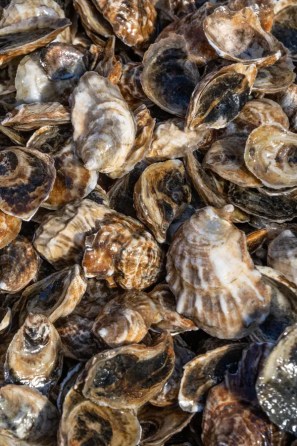
Among the ocean’s best filter feeders, one oyster cleans 50 gallons of water per day. Tony Cenicola/The New York Times

We have linked to stories about the environmental services that oysters provide, as well as the environmental activists who leverage those services; today a riff on those topics:

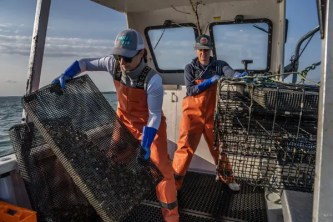
Stefanie Bassett and Elizabeth Peeples left their city lives behind to raise mollusks.

The Little Ram Oyster Co., a farm of 2 million oysters on the North Fork of Long Island, started with a Groupon.

To celebrate a friend’s birthday in the summer of 2017, Stefanie Bassett and Elizabeth Peeples joined eight other enthusiasts in Long Island City to learn how to shuck oysters at a discount. The Brooklyn couple, who knew each other from middle school in Columbia, Md., always had a love for the delicacy. But as they laughed with their friends and fumbled with their oyster knives, they also listened intently as an instructor explained the history and magic of the mollusks.

Ms. Bassett and Ms. Peeples prepare oyster cages to be put into the water. Tony Cenicola/The New York Times

“The thing that drew our attention was the positive environmental impact oysters have,” said Ms. Bassett, 42.

Among the ocean’s best filter feeders, one oyster cleans 50 gallons of water per day. New York was once known as “the Big Oyster,” but over-harvesting and poor water quality wiped out the population by the 21st century. The couple learned about efforts to bring them back to the harbor. Continue reading

Weed Is A Weed Is A Weed

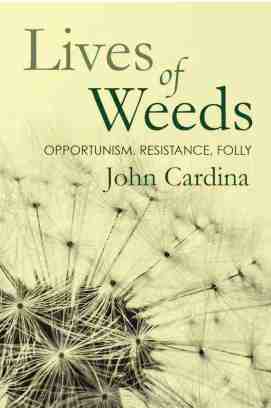
Weeds are classified subject to norms, we have read; thanks to Rivka Galchen for reminding us, and reference to this book:

What Is a Weed?

The names we call plants say more about us than they do about the greenery that surrounds us.

Steve Brill’s first stop was the greenery behind the bike racks. Brill, who is known as Wildman Steve, picked up a weed with heart-shaped seed pods and a small, four-petalled white flower. About thirty of us were gathered for a three-hour foraging tour through Prospect Park, in Brooklyn.

Illustration by Karlotta Freier

The plant was shepherd’s purse, a name that references the seed pods’ resemblance to the containers shepherds used to make from the bladders of sheep. “It’s in the mustard family,” Brill said. “Most all of the flowers in the mustard family are four petals in the shape of a cross.” He encouraged everyone to take a bite, and to tell him what vegetable it tasted like. Continue reading
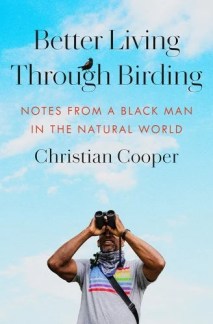
Better Living Through Birding, Christian Cooper’s Forthcoming Book

Wesley Allsbrook

Christian Cooper, an American science writer, is author of the forthcoming book (below left) from which the following essay in the New York Times is adapted:

Three Years After a Fateful Day in Central Park, Birding Continues to Change My Life

Early in the morning of May 25, 2020, I biked from my apartment on Manhattan’s Lower East Side to Central Park to go birding in the Ramble. Despite the uncertainties of the time — New Yorkers were living in a hot spot of the raging Covid pandemic, with no vaccine in sight — I strove to start this warm, sunlit Memorial Day on a happy note by wandering my favorite urban woodlands in search of migrating songbirds.

I was focused on the end-of-season hunt for a mourning warbler, a small yellow and gray skulking bird that’s difficult to spot and relatively rare. I hadn’t yet seen one that year.

Visiting the park in the morning to look for birds has long been a springtime routine for me. I wake before sunrise and grab my Swarovski binoculars — a 50th-birthday present from my father — and head out the door. Continue reading
11 Years, 11 Months & 11 Days Later

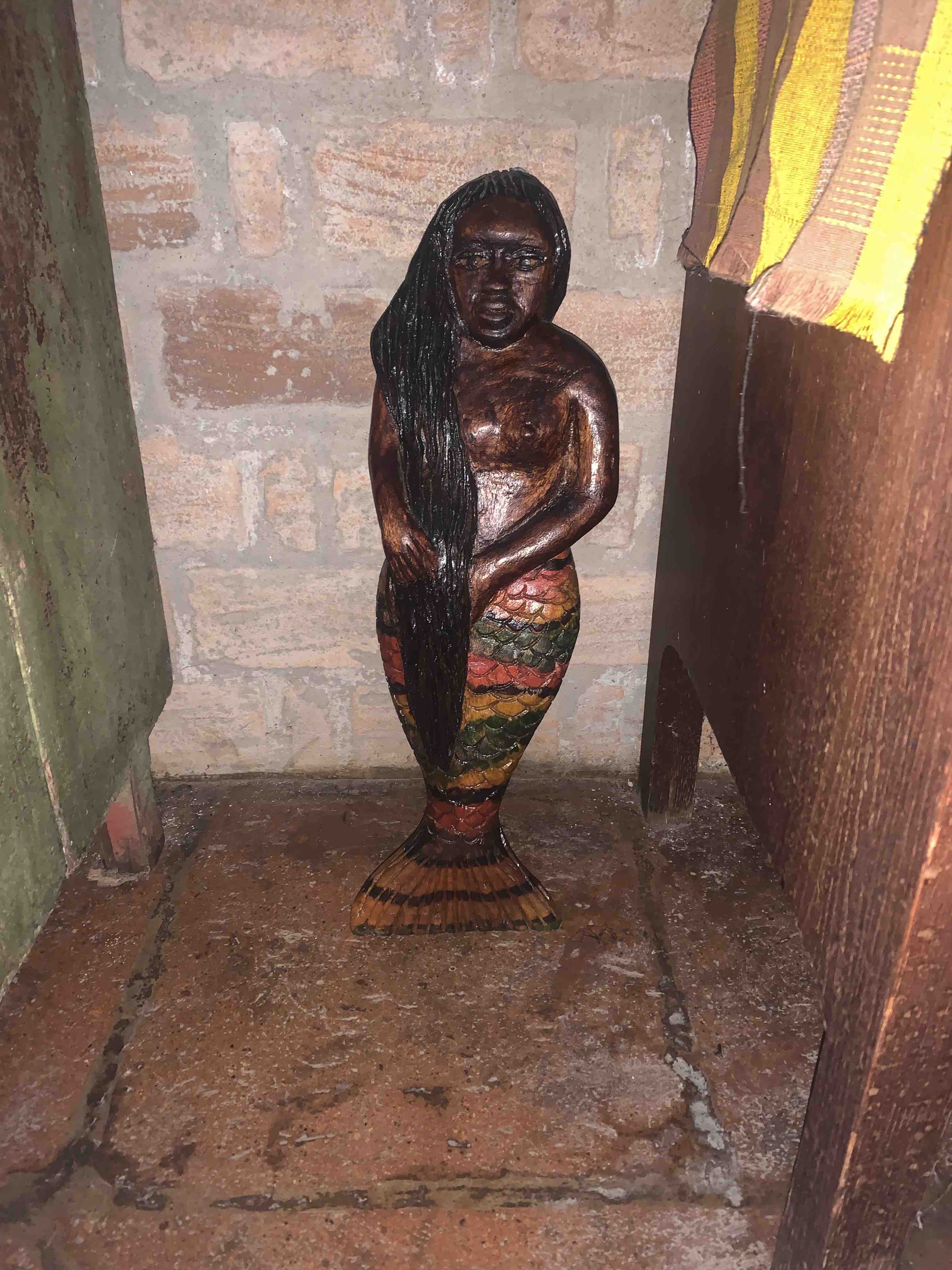
Mermaid (now in Escazu, Costa Rica), handcrafted by Rock Bottom from driftwood in Port Antonio, Jamaica

June 15, 2011 was the day we first posted on this platform, and while we have evolved since then we have remained constant and consistent in a few ways. In the daily search for something worth sharing, photos of birds from around the world have been the most constant–as in, every day since the first photo was shared by this old friend who got us started on that daily routine. Thank you, Vijaykumar, for a healthy habit-formation.

Consistent have been the shared convictions that environmental conservation, no matter how bleak the news, is worth our effort.

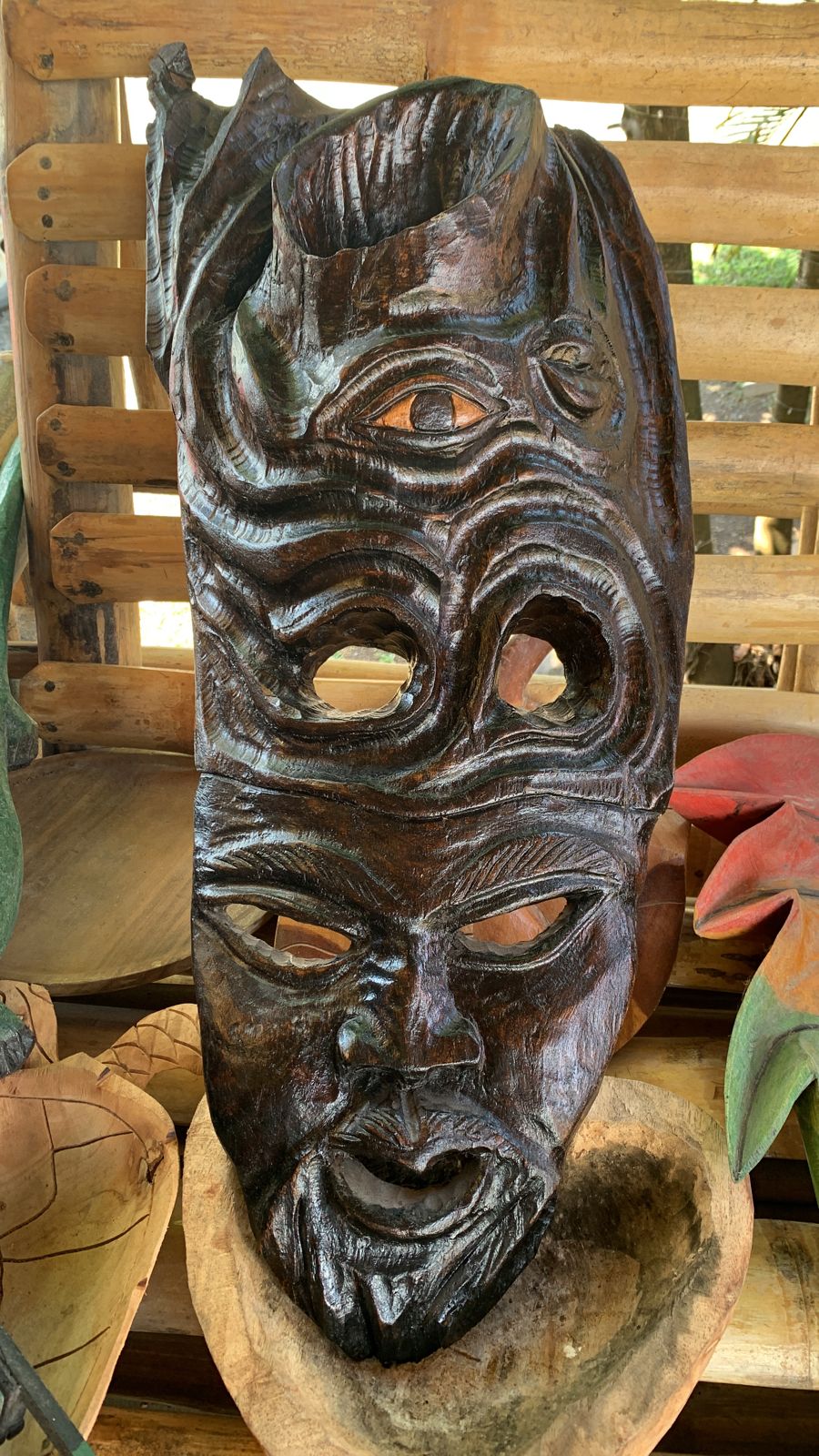
Maroon shaman mask with third eye for healing power (now in Ithaca, NY USA), handcrafted by Rock Bottom from driftwood in Port Antonio, Jamaica

Plenty more constantly interesting sub-topics like books and libraries, seemingly unrelated to the environment, have been the focus of daily posts; but they are related. As is artisan production, riffed upon many times in these pages, especially now that it is the focus of our day jobs.

So today, heading toward the twelve year mark posting here, a nod to an artisan named Rock Bottom. He carves driftwood in Port Antonio, Jamaica.

There is an effort in that part of Jamaica to revive and strengthen traditional crafts, and the work of Rock Bottom is a model for what we can hope to see more of. My hope is that the amazing engine of economic activity that Jamaica’s tourism sector represents will valorize his work and the work of others akin to his.

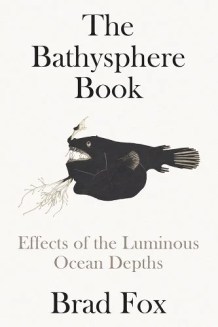
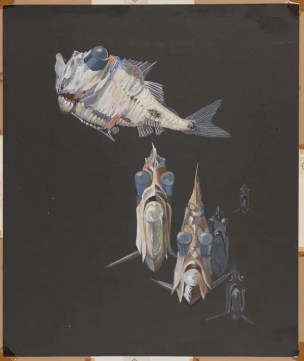
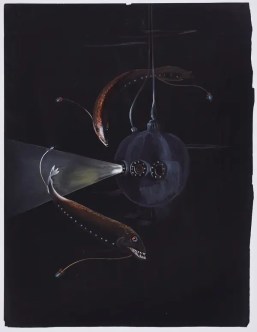
The Bathysphere Book, Reviewed

When a book like this comes along, take in what the review has to say, maybe read a second opinion, then go find a copy from any of the several independent booksellers offering it:

In “The Bathysphere Book,” Brad Fox chronicles the fascinating Depression-era ocean explorations of William Beebe.

Wildlife Conservation Society Archives

Consider the siphonophore. An inhabitant of the lightless ocean, it looks like a single organism, but is actually a collection of minute creatures, each with its own purpose, working in harmony to move, to eat, to stay alive. They seem impossible but they are real. In 1930 William Beebe was 3,000 feet underwater in a bathysphere, an early deep-sea submersible, when he spotted a huge one: a writhing 20-yard mass whose pale magenta shone impossibly against the absolute blackness of the water. As you can imagine, it made an impression.

Wildlife Conservation Society Archives

“The siphonophore mind, Beebe thought, asks us to rethink our individuality, to consider our epidermis as only one way to measure the extent of our bodies,” writes Brad Fox in “The Bathysphere Book,” a hypnotic new account of Beebe’s Depression-era underwater exploration. “In that light, our furious competition, our back-stabbing and fights over resources, is nonsense. Better we work together, getting closer and closer, more finely attuned to each other’s needs until we are indistinguishable.” Continue reading
Green Capitalism Explained & Criticized

We are new to the website where this interview is on offer, and appreciate its proclamation: “We cut through the noise. Of social media. And algorithmic distraction. We find the serious stuff. The stuff you miss. Every week. With human curators.” We are also new to the explainer and critic on a set of topics we often have had links to:

ADRIENNE BULLER ON GREEN CAPITALISM AND THE PITFALLS OF CLIMATE FINANCE

Adrienne Buller is Director of Research at the think tank Common Wealth, where she leads investigative projects about building a democratic economy. She previously researched the intersection of finance and the climate crisis at InfluenceMap, and has also written for The Guardian and the Financial Times, among other publications. Continue reading
About The Food Waste Known As Diversion

Photograph by Grant Cornett

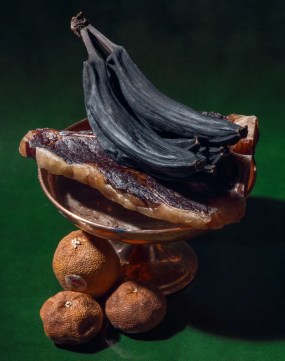
As still life compositions go, the photo to the right is classic in style and weirdly perfect for the essay it accompanies.  Helen Rosner frequently writes about food, including a review that convinced me to watch The Bear, and this is the best of her work that I have read:

The Promises of the Home “Composting” Machine

A new crop of techy appliances wants to help fight the food-waste crisis. How virtuous should we feel using them?

In the course of a week, my kitchen produces a shocking quantity of what we might think of as edible trash: apple peels, garlic nubs, a bit of gristle from a steak, Dorito dust, tea bags, the iron-hard heel of a loaf of bread that’s been sitting out overnight. The meat scraps I feed to my dog. The bones and vegetable scraps I store in the freezer in gallon-size ziplock bags and periodically bung into a pot and simmer into stock. But even then, once the stock is made, and the chicken bones or onion ends are leached of all their flavor, I’m left again with edible trash—only now it’s soggy. And then there are the times when the strawberries aren’t sealed right and become fuzzy with mold, or the delivery sandwich turns out to be gross, or the refrigerator’s compressor breaks and somehow we don’t notice, or I’m just exhausted and overwhelmed and want everything gone. Continue reading
Another Year, Another Invasive Python Initiative: Inversa Leathers

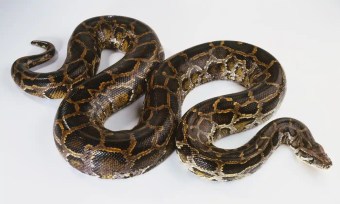
The invasive Burmese python has become the apex predator in the Florida Everglades, displacing the native American alligator. Photograph: Dorling Kindersley ltd/Alamy

We have been paying attention to this problem for more than a decade, and seen ideas like this before; until the problem is mitigated, we will continue sharing:

Could handbags be the haute couture solution to Florida’s python problem?

Invasive Burmese pythons are devastating wildlife but one firm believes turning snake leather into accessories could be a win-win

The fight to eradicate Burmese pythons from the Florida Everglades has intertwined with New York’s haute fashion scene in a project launched by a group of environmental activists who have already experienced success working with the skins of other invasive species. Continue reading
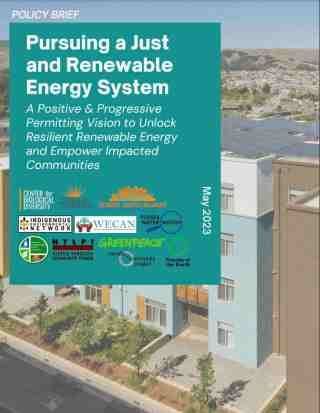
What Does Positive & Progressive Permitting Look Like?

We have seen the Center for Biological Diversity mentioned in his newsletters before, but this week Bill McKibben links to this recently released document. The Center offers a positive and progressive consideration of priorities we should give to permitting renewable energy, contrasting efforts to gut regulatory protections related to fossil fuel permitting highlighted in his current newsletter:

Introduction

It is indisputable that the climate emergency requires the United States to rapidly transform its majority fossil energy system to 100% clean and renewable energy.

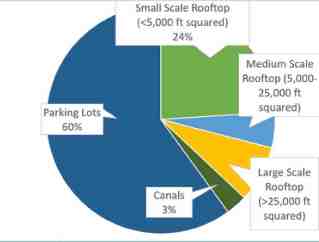
Distributed solar on rooftops alone can generate a significant portion of our energy demands while also bringing key benefits like resilience, local job generation, and avoided wildlife impacts. Once distributed energy is maximized, building renewables on top of parking lots and canals as additional built surfaces can fill the remaining gap in our current energy demand. Prioritizing these sites for renewable energy can avoid the community impacts and bottlenecks associated large-scale transmission construction.

The United Nations Intergovernmental Panel on Climate Change’s recent sixth synthesis report makes absolutely clear that an unprecedented bold transition to renewable energy with an equally aggressive effort to halt new fossil fuel development and phase out existing fossil fuel usage is absolutely vital to avoiding the most catastrophic consequences of climate change (1). This necessary transformation presents a tremendous opportunity to pursue a far more just path forward—one that ends the status quo entrenchment of the fossil fuel industry; empowers federal agencies to use their authorities to accelerate the transitions to a justly sourced, justly implemented, resilient, and equitable power system; actualizes the principles of environmental justice; and preserves our core environmental laws. Continue reading
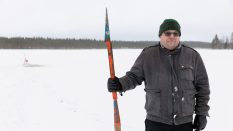
Reversal Of Absurd Destruction Counts As Progress in Brazil’s Amazon

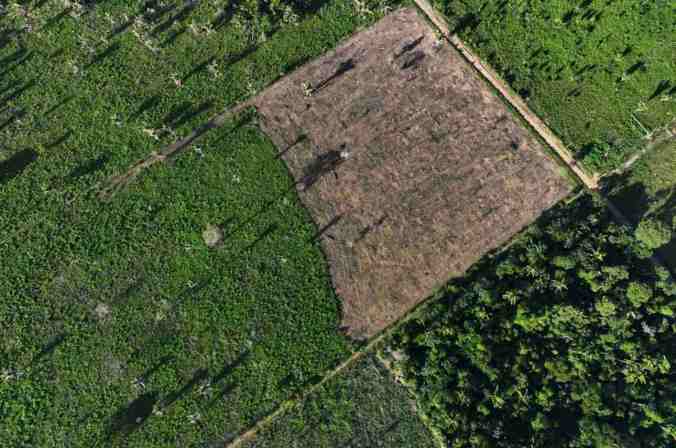
An aerial view shows a deforested area during an operation to combat deforestation at the Cachoeira Seca indigenous reserve, in Uruara, Para State, Brazil January 19, 2023. REUTERS/Ueslei Marcelino

What counts as good news now in one part of the world is simply a reversal of absurd destruction trends of recent years. Without minimizing its importance we can acknowledge that a positive reversal is a low bar for what needs to be accomplished:

Deforestation in Brazil’s Amazon falls 68% in April, first major drop under Lula

SAO PAULO, May 12 (Reuters) – Deforestation in Brazil’s Amazon rainforest fell 68% in April from the previous year, preliminary government data showed on Friday, a positive reading for President Luiz Inacio Lula da Silva as it represents the first major drop under his watch. Continue reading

The Lab Of Peter Girguis

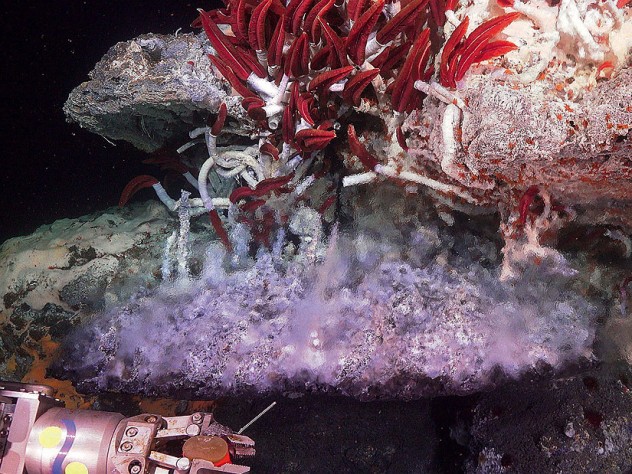
Giant tubeworms take up chemicals from a hydrothermal vent 6,200 feet deep in the Gulf of California (the Girguis lab is world-renowned for research on these worms). Photograph courtesy of the Schmidt Ocean Institute

Our thanks to Veronique Greenwood (after a few years’ absence from our notice) for her most recent article in Harvard Magazine:

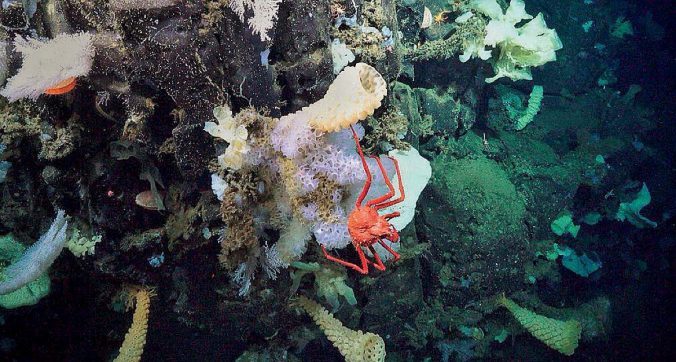
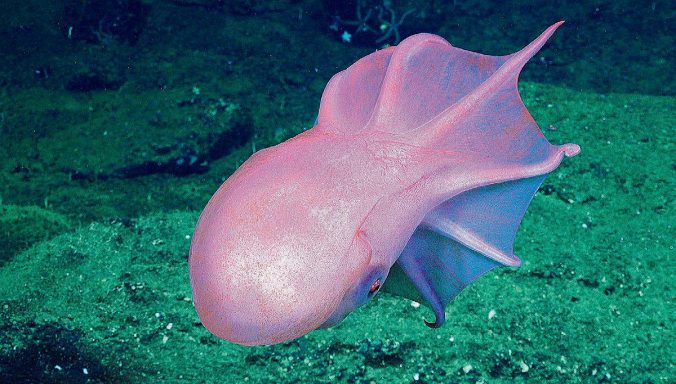
Top: a remote dive at Emery Knoll, a deepwater reef off Southern California, reveals crabs, sponges, and corals. Bottom: a rare sighting of the massive seven-arm octopus, Haliphron atlanticus. Photographs courtesy of the Schmidt Ocean Institute

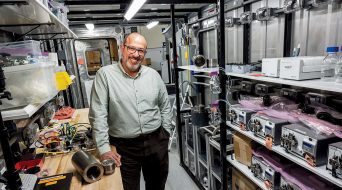
Peter Girguis on terra firma in the lab. Photograph by Jim Harrison

Plumbing the Deep Sea

Peter Girguis probes life on the ocean floor

In a cavernous underground space behind Harvard’s Biological Laboratories, biochemist Peter Girguis frowns at the pressure vessel in his hand. The machined titanium cylinder, about the size of a French press, gleams as he works to release the cap, and he chuckles at his own stubbornness. He could probably find a tool to loosen it, he remarks. Continue reading

Chilekwa Mumba, 2023 Goldman Environmental Prize Winner

The 2023 Goldman Prize goes to this man:

Alarmed by the pollution produced by the Konkola Copper Mines operation in the Copperbelt Province of Zambia, Chilekwa Mumba organized a lawsuit to hold the mine’s parent company, Vedanta Resources, responsible. Chilekwa’s victory in the UK Supreme Court set a legal precedent—it was the first time an English court ruled that a British company could be held liable for the environmental damage caused by subsidiary-run operations in another country. This precedent has since been applied to hold Shell Global—one of the world’s 10 largest corporations by revenue—liable for its pollution in Nigeria.

Our thanks to Jocelyn C. Zuckerman for this conversation with him:

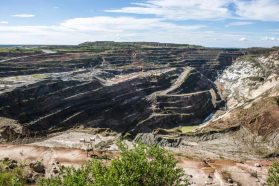
The Nchanga copper mine, operated by Konkola Copper Mines, in Chingola, Zambia. WALDO SWIEGERS / BLOOMBERG VIA GETTY IMAGES

This Zambian Took on a U.K. Mining Giant on Pollution and Won

Chilekwa Mumba led a court battle to hold a U.K.-based company responsible for the gross pollution from a copper mine it owns in Zambia. In an interview, he talks about how he and local villagers faced arrest to overcome long odds and finally win a landmark legal victory.

The southern African nation of Zambia is home to a wealth of minerals — in particular, lots of the copper and cobalt that the world will require to power a green economy. Continue reading
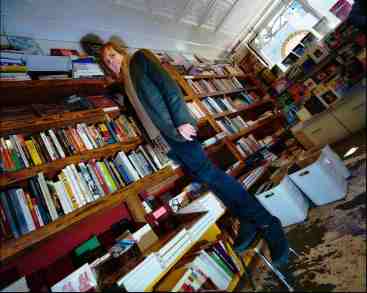
Bringing Back Peat

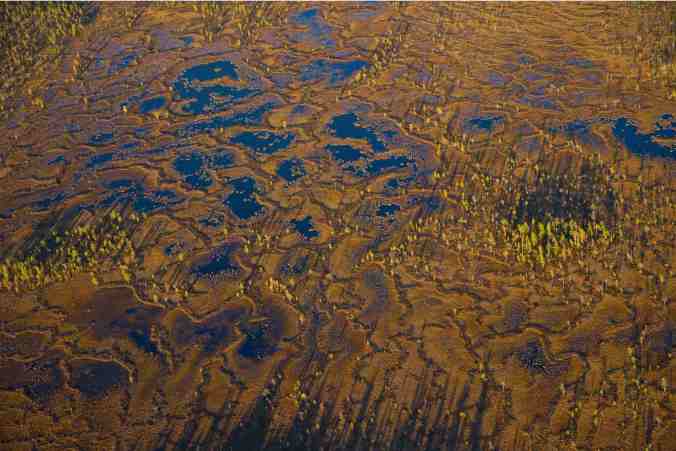
Peatland and taiga forest in northern Finland. NATURE PICTURE LIBRARY / ALAMY STOCK PHOTO

It has been a year since we linked to a peat-in-place story, of which there cannot be too many (so thank you, Yale e360):

Tero Mustonen. GOLDMAN ENVIRONMENTAL PRIZE

Finland Drained Its Peatlands. He’s Helping Bring Them Back

Tero Mustonen has led a successful effort to restore roughly 80 areas of ecologically critical peatlands across his native Finland. In an interview, he talks about the importance of bringing Indigenous knowledge to rewilding initiatives in far northern regions and beyond.

Until a century ago, almost a third of Finland was covered in pristine peatlands, which comprise one of the Earth’s largest and most important carbon sinks. Since then, however, half of Finnish peatlands have been strip-mined for fuel or drained to make room for forest plantations. Continue reading

Viewed From Above, Our Most Important Leaks

Illustration by Ard Su

David W. Brown offers this updated look at the use of satellite technology for a key metric:

A Security Camera for the Planet

A new satellite, funded by a nonprofit, aims to pinpoint emissions of methane—a gas that plays a major role in global warming.

When his phone rang, Berrien Moore III, the dean of the College of Atmospheric and Geographic Sciences at the University of Oklahoma, was fumbling with his bow tie, preparing for a formal ceremony honoring a colleague. He glanced down at the number and recognized it as nasa headquarters. This was a bad sign, he thought. In Moore’s experience, bureaucrats never called after hours with good news.

It can see large methane concentrations along its orbital path, but can’t pinpoint emissions sources. Illustration by Ard Su

For roughly six years, Moore and his colleagues had been working on a space-based scientific instrument called the Geostationary Carbon Cycle Observatory, or GeoCarb. nasa had approved their proposal in 2016; it was now 2022, and GeoCarb was being built by Lockheed Martin, in Palo Alto, California. Once it was in space and mounted to a communications satellite, GeoCarb would scan land in the Western Hemisphere continuously in strips, taking meticulous measurements of three carbon-based gases: carbon dioxide, carbon monoxide, and methane. It would give scientists a detailed view of the carbon cycle—the process by which carbon circulates through the Earth’s forests, lakes, trees, oceans, ice, and other natural features. Continue reading

Andy Hunter Scales Up Without Selling Out

Andy Hunter, the founder of Bookshop.org (pictured here at Spoonbill & Sugartown Books in Brooklyn) developed his love for books early. “I became a reader, in the beginning, because it provided me solace,” he says. PHOTOGRAPH: YAEL MALKA

Who could resist a story about scaling up without selling out–especially when it involves an online book shop?

Our thanks to Kate Knibbs, a senior writer at WIRED, for this profile of someone who has indirectly featured in our pages without being named before.

Not to mention the photographs by Yael Malka accompanying the story:

How Bookshop.org Survives—and Thrives—in Amazon’s World

Andy Hunter’s ecommerce platform was a pandemic hit. Now he’s on a mission to prove that small businesses can scale up without selling out.

“DO YOU REMEMBER what kind of beer it was?”

PHOTOGRAPH: YAEL MALKA

Andy Hunter pauses for so long before answering my question, it’s awkward. He’s racking his brain. I’ve asked him to tell me about the night he came up with the idea that led to his improbably successful bookselling startup, Bookshop.org. As a former magazine editor, he wants to get the details right.

He remembers the easy stuff: It was 2018. He was on the road for work. At the time, Hunter ran the midsize literary publishing house Catapult, a job that required schmoozing at industry events. The night of his big brainstorm, he was away from his two young daughters and his usual evening obligations—dishes, bedtime rituals—and had a rare moment to think, and drink a beer. Continue reading

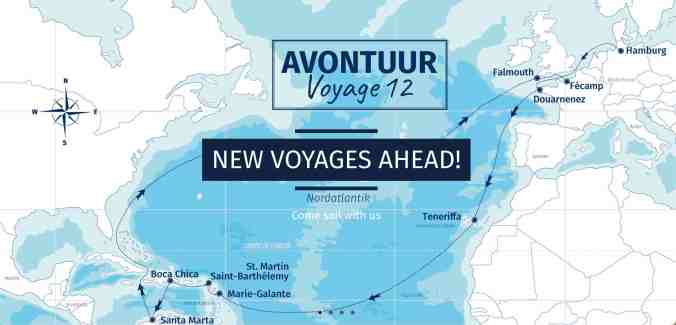
#CargoUnderSail #RethinkShipping

Illustration by Owen D. Pomery

The Climate Crisis Gives Sailing Ships a Second Wind

Cargo vessels are some of the dirtiest vehicles in existence. Can a centuries-old technology help to clean them up?

In February, 1912, Londoners packed a dock on the River Thames to gawk at the Selandia, a ship that could race through the water without any sails or smokestacks. Winston Churchill, then the minister in charge of the British Royal Navy, declared it “the most perfect maritime masterpiece of the twentieth century.” But, as the Selandia continued its journey around the world, some onlookers were so spooked that they called it the Devil Ship…

The history is a fun read, so continue to the whole story here. But then, take a closer look at the company featured in the article:

Our Story

Over the course of 20 years working in the maritime industry Cornelius Bockermann witnessed first hand how humans adversely affect our environment. He knew something had to change. In 2013, he moved with his family to Cairns and shipped all their possessions from Germany to their new home in Australia. Through the process of shipping his own goods he experienced the disconnect between commerce and environmental preservation. Upon learning of plans to expand fossil fuel based shipping along the Queensland coast and amongst the Great Barrier Reef he knew he had to act. The question became how do you offer businesses and consumers a sustainable option in shipping?

Cargo Under Sail is the answer and the Dutch schooner named the AVONTUUR is the vessel to start it.

We are a passionate collective of individuals working to create a supply chain that merges the relationship between commerce and preservation. We are restless and can no longer wait for others to make a change.

Our Mission Zero

To eliminate pollution caused by shipping cargo.

We have a five-stage approach:

1. Raise Awareness about the environmental destruction caused by the shipping industry

2. Model a clean shipping future with our AVONTUUR

3. Sell premium AVONTUUR products to support the ongoing operation of the project.

4.  Establish a demand for products shipped by sail

5. Build a modern sail cargo fleet

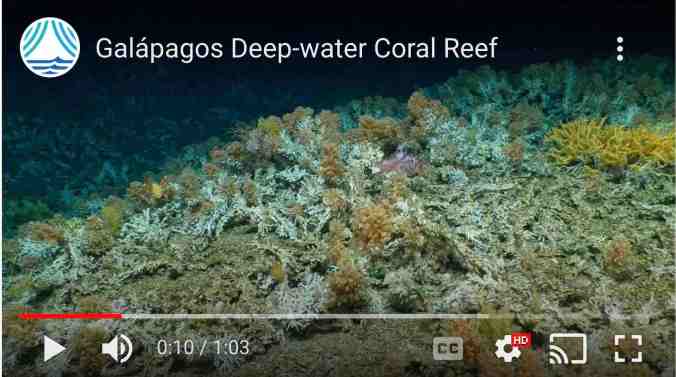
Galápagos Reef Discovery, Deep

The video is worth a minute of your time, and the short article that follows is as close as we get to nature-related good news these days. Our thanks, as always, to Yale e360:

Pristine Deep-Sea Reef Discovered in the Galápagos

The newly discovered deep-sea reef in the Galápagos Marine Reserve. WOODS HOLE OCEANOGRAPHIC INSTITUTION

In Ecuador’s Galápagos Islands, where ocean warming has decimated shallow-water reefs, scientists have discovered a healthy, sprawling coral reef hidden deep under the sea.

“This newly discovered reef is potentially an area of global significance,” Michelle Taylor of the University of Essex, co-lead of the expedition, said in a statement. It is “a site we can monitor over time to see how a pristine habitat evolves with our current climate crisis.” Continue reading

The Forest Gives Much

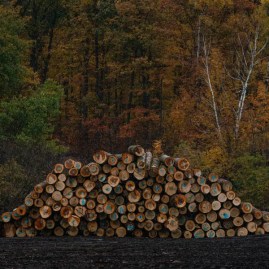
Freshly harvested logs from the Menominee Forest in Keshena, Wis., marked with color to indicate each log’s grade.

Sustainable forestry is a long-running topic in these pages over the years. The previous times we have linked to Cara Buckley stories we have been enriched by the humanity in environmental stories, so here we combine her unique talent to the topic of forestry:
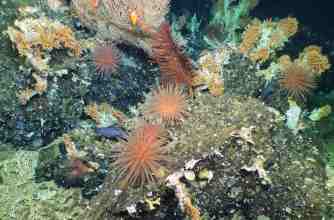
The Giving Forest
The Menominee tribe has sustainably logged its forest in Wisconsin for 160 years. But that careful balance faces a crisis: too many trees and too few loggers.

A tree marked for cutting. The Menominee harvest only trees that are sick and dying or those that have fallen naturally
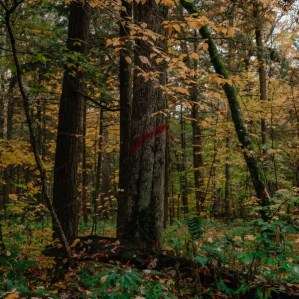
MENOMINEE COUNTY, Wis. — Amid the sprawling farmlands of northeast Wisconsin, the Menominee forest feels like an elixir, and a marvel. Its trees press in, towering and close, softening the air, a dense emerald wilderness that’s home to wolves, bears, otters, warblers and hawks, and that shows little hint of human hands.

Yet over the last 160 years, much of this forest has been chopped down and regrown nearly three times. The Menominee Tribe of Wisconsin, its stewards, have pulled nearly two hundred million cubic feet of timber from this land since 1854 — white pine cut into museum displays and hard maple made into basketball courts for the Olympics. Continue reading