Quiet Catches Criminals

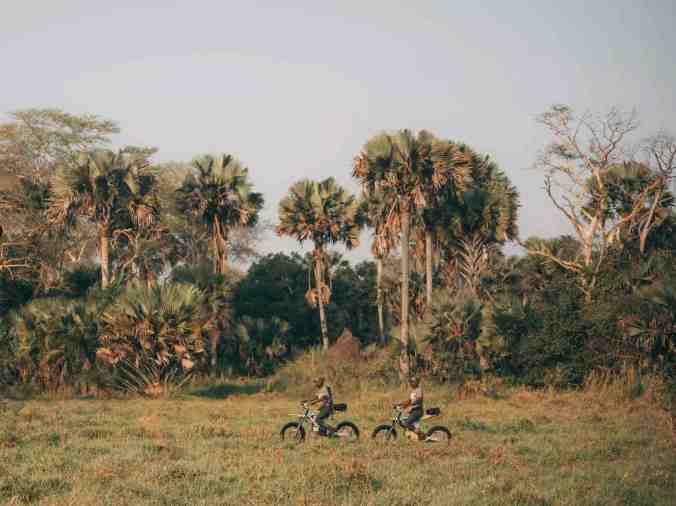
PHOTOGRAPH: JUSTIN SULLIVAN/CAKE

We have always had a soft spot for creative approaches to reducing, if not ending, poaching. And now this, thanks to Andy Jones at Wired:

Park Rangers Are Using Silent Ebikes to Catch Poachers

A Swedish electric bike is helping Mozambique’s park rangers protect game and reducing the need for fossil fuel infrastructure in Africa’s remotest areas.

AT THE END of 2021, a group of night poachers in a Mozambique national park—using torchlight to blind antelopes—were suddenly the ones left stunned in the dark. Continue reading

Prairie Revival

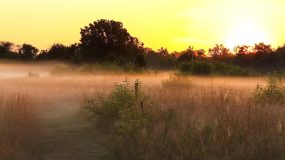
Sunrise at the Hempstead Plains on Long Island, New York. STEVE PFOST / NEWSDAY RM VIA GETTY IMAGES

Thanks to Yale e360’s Janet Martinelli:

Amid the Sprawl, a Long Island Prairie Makes a Quiet Comeback

Tucked into quintessential suburbia, the Hempstead Plains Preserve is a small sliver of the grassland that once covered a vast area of Long Island. New research shows that thoughtfully planted yards and gardens can bolster the biodiversity in such urban wildland fragments.

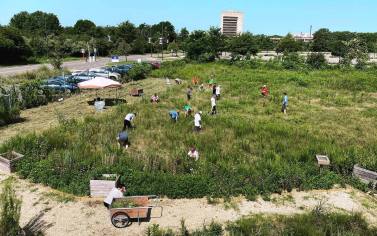
Volunteers remove invasive Chinese bushclover from the Hempstead Plains Preserve at Nassau Community College. FRIENDS OF HEMPSTEAD PLAINS

The Hempstead Plains Preserve is a place where you can imagine the presence of creatures past. Birdfoot violets, now gone, once colored the landscape with a wash of purple in spring. The heath hen, a large grouse that went extinct 90 years ago, performed its elaborate courtship dances on the Plains.

On a late afternoon in October, the slanting autumn sun lit up in a blaze of gold the grasses and wildflowers on this narrow, 19-acre sliver of land — almost all that is left of the tallgrass prairie that once covered more than 50 square miles at the heart of Long Island, New York, a fish-shaped island that stretches east into the Atlantic Ocean. Continue reading

Giving A Bread Its Due Honor

President Emmanuel Macron of France described the baguette as “250 grams of magic and perfection in our daily lives.” Eric Gaillard/Reuters

When the baguette was a daily part of our family’s life, we were fortunate to have a personal connection to the best guide, whose photo in the story below is as fitting as the photo above:

Steven Kaplan, perhaps the baguette’s most dedicated historian, says the bread has “little sites of memories” that “testify to a sensuality.” Daniel Janin/Agence France-Presse — Getty Images

A Slice of France, the Baguette Is Granted World Heritage Status

More than six billion baguettes are sold every year in France. But the bread is under threat, with bakeries vanishing in rural areas.

PARIS— It is more French than, perhaps, the Eiffel Tower or the Seine. It is carried home by millions each day under arms or strapped to the back of bicycles. It is the baguette, the bread that has set the pace for life in France for decades and has become an essential part of French identity.

On Wednesday, UNESCO, the United Nations heritage agency, named the baguette something worthy of humanity’s preservation, adding it to its exalted “intangible cultural heritage” list. Continue reading

Thwaites & Us

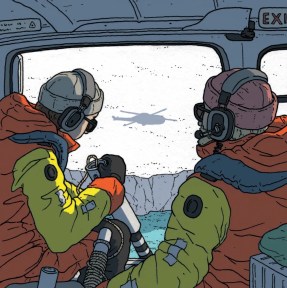
Probes beneath the ice could shed light on the fate of the world’s coastlines. Illustration by Owen D. Pomery

Most of us do not spend much time thinking about what is happening there, but Antarctica’s future is now very much entwined with the future of the rest of the planet.  All of us. So, thanks to David W. Brown for this travelogue:

Journey to the Doomsday Glacier

Thwaites could reshape the world’s coastlines. But how do you study one of the world’s most inaccessible places?

I first saw our icebreaker, the RV Araon, when we were due to leave for Antarctica. The largest icebreakers are more than five hundred feet long, but the Araon was only the length of a football field; I wondered how it would handle the waves of the Southern Ocean, and how it would fare against the thick sea ice that guards the last wilderness on Earth. Continue reading

Understanding & Reviving Games From Other Places, And Times Before

Leaving aside the question of why so many of the world’s most important historical artifacts are in London, rather than where they originated, the curator in the video above is charming. And the man in the photo just below to the right is his counterpart in the place where this particular artifact originated.  My interest in board games is much less well informed, but like Mr. Mofaq I have an interest in their revival, so Deb Amlen’s article in the New York Times is appreciated:

Hoshmand Mofaq, an Iraqi artist, pondered his next move on one of the Royal Game of Ur boards he designed. Mr. Mofaq is part of a group who hope to popularize and return the game to the Iraqi people as part of their cultural heritage. Shwan Mohammed/Agence France-Presse — Getty Images

For 4,600 years, a mysterious game slept in the dust of southern Iraq, largely forgotten. The passion of a museum curator and the hunger of young Iraqis for their cultural history may bring it back.

It is the end of a long, hot day of selling your wares in a market in ancient Mesopotamia, around 2,400 B.C., and you are looking for a way to unwind.

Netflix will not be invented for another four and a half millenniums, but as luck would have it, a pub lies ahead in the distance. A beer and a round of the Middle East’s favorite game is just the thing to pick you up. The thrill of the game is irresistible: It is impossible to predict who will win in this race to get your pieces to the end of the board, even in the last few moves.

One of the boards of the Royal Game of Ur excavated in the 1920s, on display at the British Museum. The British Museum, via Commons.wikimedia.org

You sit down across from your opponent, who offers you the first turn. You pick up the four-sided dice and shake them in your fist. Maybe this time the rumored fortunetelling aspect of the game will bless you with a spate of good luck and prosperity. Continue reading

Imposing On Pastoral Beauty To Capture Wind’s Power

Pinnacle turbines dot the skyline in Keyser, West Virginia, where, according to Andrew Cosner, a twenty-one-year-old technician, some residents remain hostile to the new wind farm: “They say it ruins the landscape and it’s ugly.”

It is to each of us whether we find the view attractive or not, and there was a time when I found large man-made structures an imposition on pastoral beauty.

Smith stands in the nacelle of one of the turbines just before daybreak.

As time passes I find myself drawn more to such a view as that in the photo above as a signal of progress.  It is not because the view is in a place far away from me– on the mountain ridge above where I live there is a row of such turbines and I am constantly gazing at that horizon. Published in the print edition of the November 28, 2022, issue of the New Yorker, with the headline “Blade Runners,” D.T. Max provides some context, but the photos do the heavy lifting:

THE BLADE RUNNERS POWERING A WIND FARM

In West Virginia, a crew of five watches over twenty-three giant turbines.

The Pinnacle wind-power plant extends for roughly four miles in the northeastern corner of West Virginia. Continue reading

Artificial Islands, Natural Grasses & Wildlife Oases In Urban Waterways

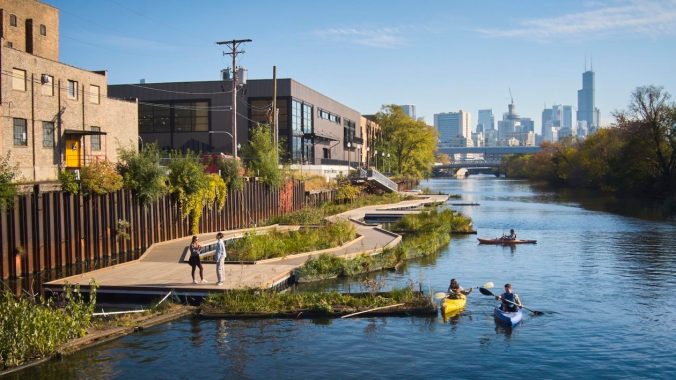
Floating wetlands along the Chicago River’s Wild Mile. DAVE BURK / SOM

Thanks to Susan Cosier and Yale e360 for this:

How Floating Wetlands Are Helping to Clean Up Urban Waters

As cities around the world look to rid their waterways of remaining pollution, researchers are installing artificial islands brimming with grasses and sedges. The islands’ surfaces attract wildlife, while the underwater plant roots absorb contaminants and support aquatic life.

Five small islands roughly the size of backyard swimming pools float next to the concrete riverbank of Bubbly Creek, a stretch of the Chicago River named for the gas that once rose to the surface after stockyards dumped animal waste and byproducts into the waterway. Continue reading

Startling Capacities Of Regional Forests

Harvard Forest (pictured) was included in a study that looks at how New England forests can be better utilized in the fight against climate change.
Stephanie Mitchell/Harvard Staff Photographer

We had no clue how much forest area that region has, nor how much capacity to absorb carbon that would translate to:

New England forests, new strategies can offset most regional emissions over 30 years, report says

Study, led by Harvard ecologist, lays out five policies to boost levels of absorption as six states lower emissions

A major new report suggests that with a handful of strategies New England’s 32 million acres of forests, which cover about three-quarters of the region, could eventually come close to absorbing 100 percent of all the carbon produced by the six states. Continue reading

Coral Defying The Odds

Corals in the waters of the Ras Mohammed National Park in the Red Sea near Sharm el Sheikh, Egypt, home to one of the only reefs in the world that can tolerate heat. Sima Diab for The New York Times

Our thanks to Jenny Gross and Vivian Yee reporting from Egypt:

Attendees of the United Nations climate conference took breaks from negotiations to see the corals for themselves.Credit…Mohammed Abed/Agence France-Presse — Getty Images

As warming waters devastate coral around the world, the sea’s stunningly colorful reefs have been remarkably resilient. But pollution, mass tourism and overfishing put them at risk.

SHARM El SHEIKH, Egypt — The vast majority of the world’s coral reefs are likely to be severely damaged in the coming decades if the planet keeps warming at its current rate. Continue reading

57+ Countries, All Important, But A Few Favorites

Stelios Trilyrakis, the chef behind Ntounias in Crete, pats one of his heritage cows, a rare Cretan species called Gidomouskara. SteMajourneys

I have a longstanding habit, in an article like this one listing travel experiences including 5. Savor an Unforgettable Lunch at Ntounias in Western Crete, of skimming to find whether the writer(s) have been to anywhere that I know firsthand; if they write something meaningful about a place I know, I read the entire article. These days I have less interest in going to places I do not already know (between 57 and 60 countries where I have had meaningful experiences, ranging from a few days to living there for a year or more).

When I see Crete, I am all in, for reasons I have made plain previously. In this case I want to abandon all responsibilities and get on a plane.

Since that is not possible I am left to desk-travel, which is what I did to learn more about this place. I see now that on the two occasions when I have mentioned Xania I have spelled it two different ways. With the X my spelling was transliterating into English the letter used in the Greek alphabet for spelling that town’s name; otherwise the dipthong of Ch is necessary to produce the sound of the Greek letter that looks like an elongated X. Now that I have excused my spelling discrepancies, and daydreamed of a meal on the island of Crete at a later date, I will get on with my responsibilities.

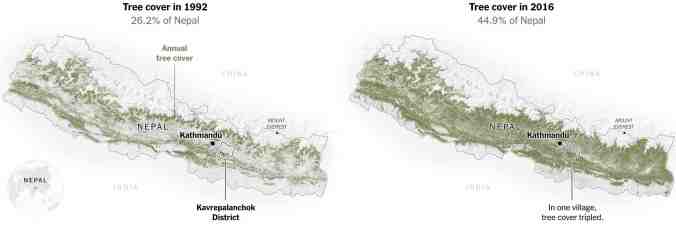
Nepal’s Community Forests

Note: Green areas show land that is mostly covered by trees, based on an analysis of satellite imagery. Source: Jefferson Fox, Jamon Van Den Hoek, Kaspar Hurni, Alexander Smith and Sumeet Saksena.By Pablo Robles

We have shared plenty of stories about Nepal, but until now no story about Nepal involving trees or forests. We welcome this one:

The community forests in Khairahani, Nepal, stretching over several tree-capped hills in March. Karan Deep Singh/The New York Times

An effort decades in the making is showing results in Nepal, a rare success story in a world of cascading climate disasters and despair

KANKALI COMMUNITY FOREST, Nepal — The old man moved gingerly, hill after hill, cutting dry shrubs until he was surrounded by trees that had grown from seedlings he had planted two decades ago. He pointed to a row of low peaks above the Kathmandu valley that were covered with dense foliage. Continue reading

Greenhouse By Joost

We have not heard news of Joost Bakker in over a decade, so Max Veenhuyzen’s profile and introduction to the documentary previewed above is most welcome:

‘We can have houses covered with biology, plants, ecosystems and waterfalls’: Greenhouse by Joost documents the green-thinking initiatives of Future Food System. Photograph: Dean Bradley/Madman Entertainment

Mushroom walls and waste-fuelled stoves: inside the self-sufficient home of tomorrow

Joost Bakker believes a house can be more than a place to live: it can be a self-sustaining weapon against the climate crisis. A new Australian documentary explores his bold blueprint

Future Food System is anchored by self-watering garden beds filled with 35 tonnes of soil. Photograph: Earl Carter Images

“The most destructive things we humans do,” says Joost Bakker, “is eat.”

In terms of sentences that grab your attention, the introduction to new Australian documentary Greenhouse by Joost is right up there. Then again, Bakker – a multi-disciplinary designer, no-waste advocate and the film’s eponymous protagonist – has long been something of a provocateur. Continue reading

Wonders Of The Yucatán

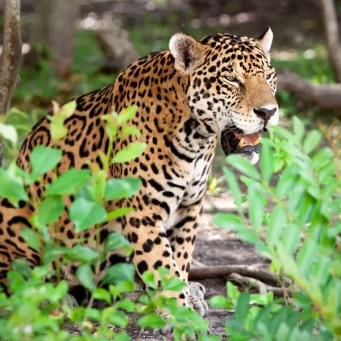
In Calakmul and elsewhere, the fierce jaguar was worshiped as a deity. Ancient rulers and warriors adorned themselves with the animal’s skulls, skins, fangs and claws. Adrian Wilson for The New York Times

Several months ago when we confirmed our plans to attend a wedding in Merida, Mexico on November 5, Calakmul came to mind. We had already explored many famous Maya sites in Central America, most recently in Belize, not to mention Mexico, over the last three decades; and we have also been fortunate with big cat sightings.

We decided against extending our stay, choosing to spend a few days in Mexico City instead (I have been obsessed with Barragán in recent years, so seeing his former home and workshop there was a must). Charly Wilder‘s article in the New York Times, which I am only seeing now, makes me wonder when we will return to see what we neglected in the Yucatan:

The number of jaguars is growing in Mexico, especially in areas of the Yucatán Peninsula. Patryk Kosmider/Getty Images

Thanks to Mexican conservation efforts, the jaguar is making a comeback in the Yucatán Peninsula. A traveler ventures into its habitat in the tropical jungles surrounding an ancient Maya city.

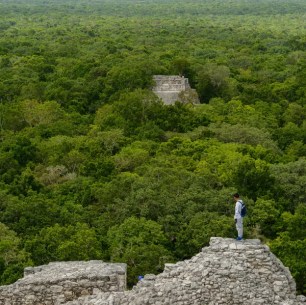
From the top of the great pyramid of the ancient Maya city of Calakmul in the southern Yucatán Peninsula in Mexico, you can see all the way to Guatemala. The jungle stretches out infinitely in every direction, an ocean of green punctuated only by the stepped pyramid peaks of two other Maya temples. Continue reading

Blue Carbon Collaboration

Scientists fixed bio-logger tags equipped with cameras on tiger sharks in the Bahamas to map the ocean’s seagrass meadows. Photograph: Diego Camejo/Beneath the Waves

We thank Laura Paddison for this underwater news, published in the Guardian, that has implication for climate change mitigation:

Scientists discover ‘world’s largest’ seagrass forest – by strapping cameras to sharks

New study, carried out using tiger sharks in the Bahamas, extends total known global seagrass coverage by more than 40%

Tiger sharks are notoriously fierce. The huge animals, which can grow to more than 16ft, are ruthless predators and scared of absolutely nothing – recent research found that while other shark species fled coastal waters during strong storms, tiger sharks “didn’t even flinch”.

But recently they have a new role that could help burnish their reputations: marine scientists. Continue reading

A Paradox Wrapped In A Conundrum

We almost always side with the animals. But sometimes there are no easy answers. Just puzzles.

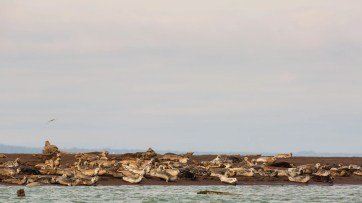
Parker Miles Blohm / KNKX. Harbor seals hauled out at low tide on the Nisqually River on October 10, 2022.

In this case, for what it is worth, our support is with the humans:

Seals and sea lions vex Washington tribes as Marine Mammal Protection Act turns 50

50 years ago, President Nixon signed the Marine Mammal Protection Act into law. The act has been hugely successful in restoring the abundance of the marine species it protects. But some say it’s too successful.

Tribes in particular say their treaty rights to fishing are under threat because now, too many seals and sea lions are feasting on endangered salmon. Continue reading

Berms & Dunes & Native Knowhow

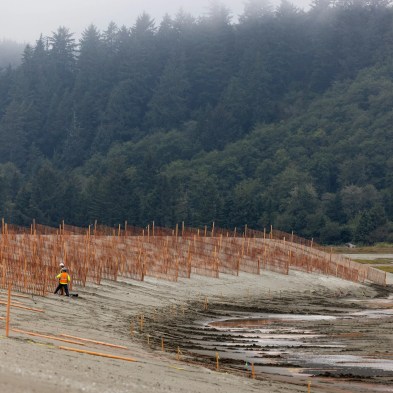
Old State Route 105 ends abruptly at the edge of the Pacific Ocean, after coastal erosion took out the road near the Shoalwater Bay Reservation in Tokeland, Wash.

We have often thought consulting those who have been on the land longest is a good idea, so this story is heartening:

Native American tribes are competing for the first federal grants designed to help move communities away from high water and other dangers posed by climate change.

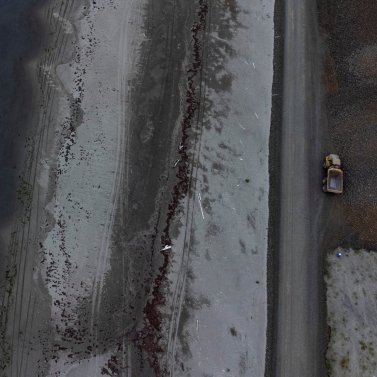
The U.S. Army Corps of Engineers is building a dune to protect the Shoalwater Bay Reservation.

SHOALWATER BAY INDIAN RESERVATION, Wash. — The van carrying tribal officials veered off the coastal highway, away from the Pacific and onto a dirt path hidden by cedar and spruce trees. After climbing an old logging road, it emerged into a clearing high above the Shoalwater Bay Indian Reservation, half a square mile of oceanfront that’s disappearing fast.

The tribal leaders want to relocate to the remote hilltop where they were standing, despite its uneven terrain. “If you can believe it, this is the most suitable land we have for building,” said Quintin Swanson, treasurer of the 471-member tribe. Moving up the mountain could cost half a billion dollars, he said.

As climate change gets worse, tribes like Shoalwater Bay are being squeezed between existential threats and brutal financial arithmetic. Consigned to marginal land more than a century ago by the United States government, some tribes are now trying to relocate to areas better protected from extreme weather yet lack the money to pay for that move. Continue reading

Tagging Technology Gives Godwit Game

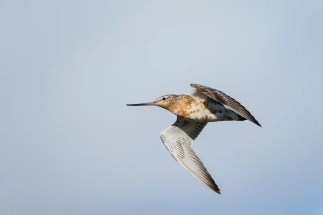
A juvenile bar-tailed godwit has flown from Alaska in the US to Tasmania in Australia, covering a record 13,560kms without stopping. Photograph: Johnny Madsen/Alamy

Who’s got game in the bird world is not, strictly speaking, a phrase associated with ornithologists or what they do for a living. But sometimes, their news features what looks like competitive sport to the lay public. We have shared news of long-journey bird species on several occasions, and one that has the right stuff now stands out from the rest by virtue of tagging technology:

Bar-tailed godwit sets world record with 13,560km continuous flight from Alaska to southern Australia

Satellite tag data suggests five-month-old migratory bird did not stop during voyage which took 11 days and one hour to reach Tasmania

A juvenile bar-tailed godwit – known only by its satellite tag number 234684 – has flown 13,560 kilometres from Alaska to the Australian state of Tasmania without stopping, appearing to set a new world record for marathon bird flights. Continue reading

David Wallace-Wells & Co With New Perspective

After providing some of the deepest gloom, one of the environmental journalists we respect for not flinching or sugar-coating is singing a new tune, at least on this day:

Beyond Catastrophe

A New Climate Reality Is Coming Into View

By David Wallace-Wells
Photographs by Devin Oktar Yalkin
Captions by Charley Locke

You can never really see the future, only imagine it, then try to make sense of the new world when it arrives Continue reading

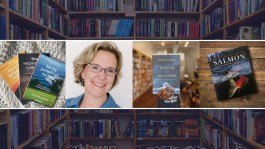
About Patagonia’s Book Imprint

(Photo credit: Foreground book photos courtesy of Patagonia)

We already long-respected the company for plenty of good reasons; now one more:

Hope and action: The mission of Patagonia Books

Philanthropy has been a part of Patagonia Books’ mission and operations from the beginning, says Director Karla Olson.

When Yvon Chouinard, the founder of the outdoor wear and gear giant Patagonia, announced his decision to donate his $3-billion company to the newly established nonprofit Holdfast Collective for the purpose of combating climate change, Yale Climate Connections was both impressed and curious. Continue reading

Birds, Us, Past & Future

Our daily photo feature has been a long-running privilege for us to share from our various bird photographer friends who travel the world, and clearly a reason for some visitors to stay tuned here. We do what we can to ensure those birds are there for future generations to appreciate. The book featured above is likely to be of interest to many of those visitors. The author, seen only once before in our pages more than ten years ago, Tim Birkhead offers historical perspective that is well-reviewed and his publisher has this to say:

Since the dawn of human history, birds have stirred our imagination, inspiring and challenging our ideas about science, faith, art, and philosophy. Continue reading