Trees’ Wondrous Capabilities

Diana Beresford-Kroeger at her home in Ontario. “If you build back the forests, you oxygenate the atmosphere more, and it buys us time,” she said. Nasuna Stuart-Ulin for The New York Times

Another round of thanks to Cara Buckley for a vividly written snapshot. Using Science and Celtic Wisdom to Save Trees (and Souls) is about one person’s multi-talented capacity to inspire us in new ways related to trees, and the patience it has required:

Diana Beresford-Kroeger, a botanist and author, has created a forest with tree species handpicked for their ability to withstand a warming planet.

MERRICKVILLE, Ontario — There aren’t many scientists raised in the ways of druids by Celtic medicine women, but there is at least one. She lives in the woods of Canada, in a forest she helped grow. From there, wielding just a pencil, she has been working to save some of the oldest life-forms on Earth by bewitching its humans. Continue reading
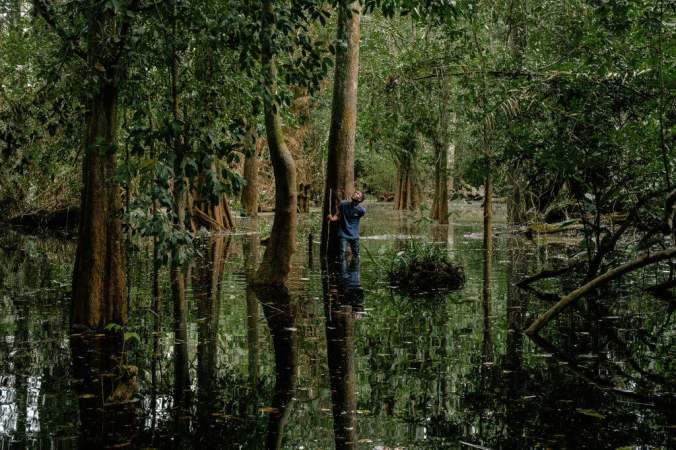

Keep Peat In Place

Nanna Heitmann for The New York Times

Peat is back on our radar, with this excellent report by Matthew Thompson in the New York Times. It is part of a new series called Headway, an initiative “exploring the world’s challenges through the lens of progress,” which is exactly the founding sentiment of our platform here. So, read on:

Rural Congolese villagers are being asked to protect one of earth’s most precious ecosystems. What can other places contribute to our shared future?

Imagine someone showed up on your doorstep one day and told you that the swampy forest not far from your home contained a rare and precious soil, so powerful that the planet’s future hinges on its preservation. The world is relying on you to keep the soil undisturbed, you’re told, or sinister forces will be unleashed, large enough to doom us all. Continue reading

Wendell Berry Here & Now

Berry has found a kind of salvation—and a lifelong subject—in his stewardship of the land he farms in Kentucky. Illustration by John Broadley

When we previously mentioned him it was without as much background as he deserved. So now, a corrective titled Wendell Berry’s Advice for a Cataclysmic Age, by Dorothy Wickenden. It  comes with a set of photographs that motivate you to read on:

Sixty years after renouncing modernity, the writer is still contemplating a better way forward.

Hidden in the woods on a slope above the Kentucky River, just south of the Ohio border, is a twelve-by-sixteen-foot cabin with a long front porch. If not for the concrete pilings that raise the building high off the ground, it would seem almost a living part of the forest. Readers around the world know the “long-legged house” as the place where Wendell Berry, as a twenty-nine-year-old married man with two young children, found his voice. As he explained in his essay by that name, he built the cabin in the summer of 1963—a place where he could write, read, and contemplate the legacies of his forebears, and what inheritance he might leave behind.

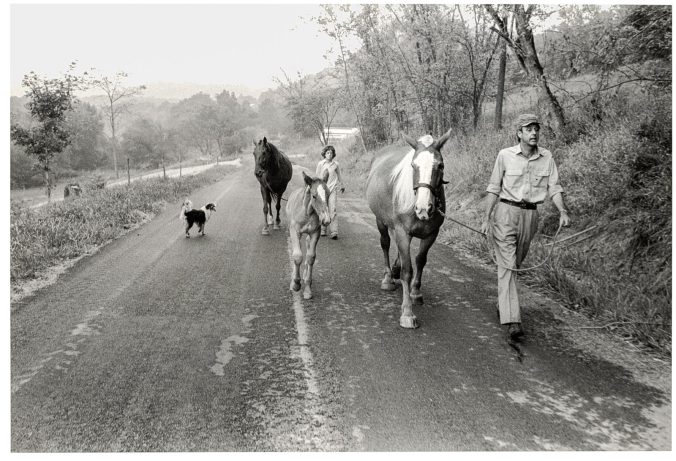
When Berry moved to the country with his wife, Tanya, he gave her a privy that “never aspired so high as to have a door.” Photograph by James Baker Hall

The cabin began as a log house built by Berry’s great-great-great-grandfather Ben Perry, one of the area’s first settlers, and it lived on as a multigenerational salvage operation. Continue reading

The Standing Rock Sioux Tribe Asks For Your Help

If you have been following the pipeline news stories and you care, but not yet found a way to get involved, the Standing Rock Sioux tribe offers you a simple first step to help them end the DAPL. Click on the DAPL EIS Countdown Alert signup image below to show support, by asking to be alerted when public comments open:

The Next Step to End DAPL

The fight to stop the Dakota Access pipeline isn’t over, and you can help right now! This month, the U.S. Army Corps of Engineers will take public comment on DAPL’s fatally flawed Environmental Impact Statement (EIS). Sign up to be first in line to tell the Corps to conduct a proper environmental review — without interference from the fossil fuel industry. We’ll let you know how to make your voice heard as soon as the comment period opens! Thank you for standing with Standing Rock.

Why War On Wolves?

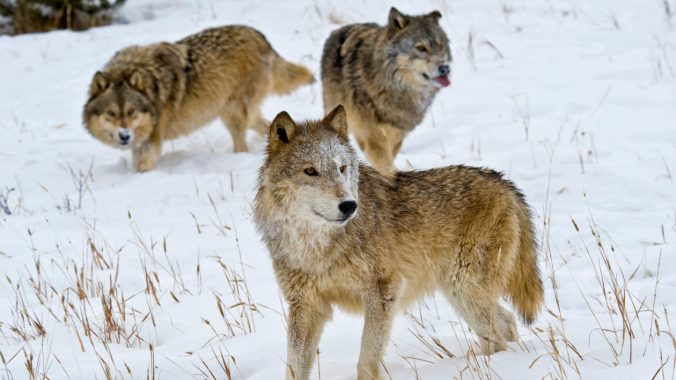
Gray wolves in Montana. DENNIS FAST / VWPICS / UNIVERSAL IMAGES GROUP VIA GETTY IMAGES

At Yale e360 this opinion by Ted Williams is an important read:

America’s New War on Wolves and Why It Must Be Stopped

Hunting of wolves is again legal in the Northern Rockies, where running them over with snowmobiles or incinerating them in their dens is now permitted. The Biden administration must stop the slaughter of these wolves and protect their recovery from the brink of extinction.

America’s tradition of persecuting wolves has resumed. And although it’s mostly happening on federal land, the Biden administration appears singularly unmoved and unconcerned. Continue reading

Organikos In Antarctica

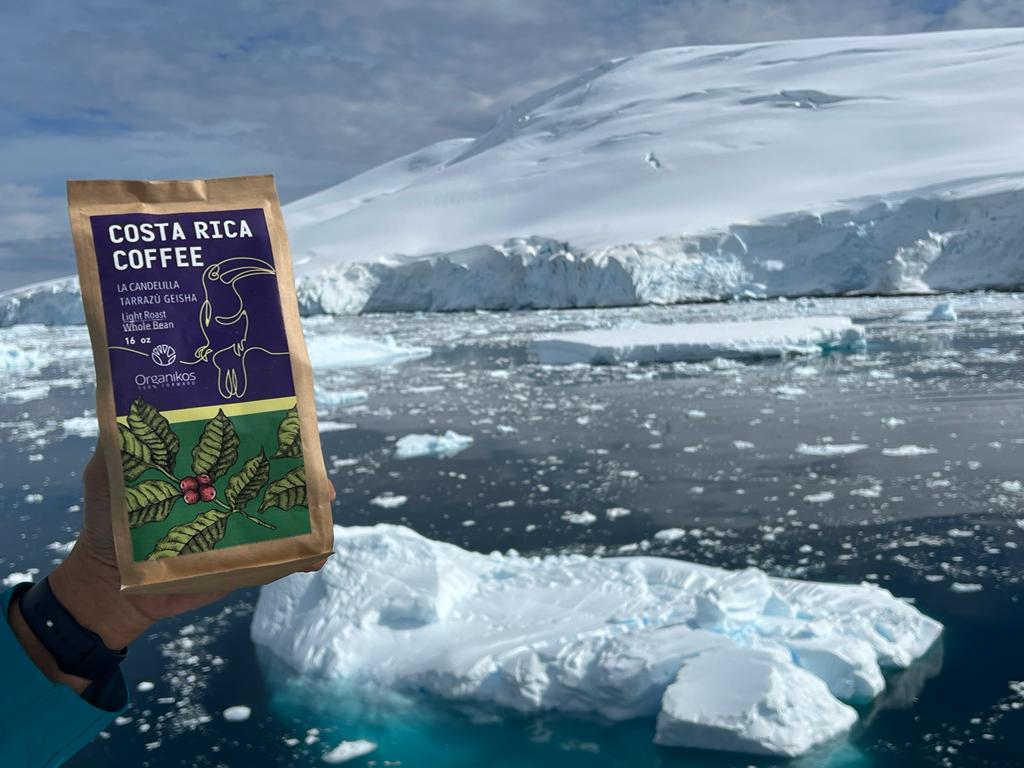
A bag of Organikos coffee, geisha whole bean, with Antarctica in the background

On Sundays I try to stay away from the Authentica shops in order to do other types of work. But on a recent Sunday morning we needed to deliver coffee that had just been roasted to the Belen shop. While bringing the coffee in, a man was poring over the labels in our honey display. My conversation with him started on the minutiae of how these raw honeys are prepared, and extended for more than an hour to the subject of the current coffee harvest. When I told him about the recently introduced geisha varietal, he enjoyed hearing as much as I enjoyed conveying its phenomenal success in Panama first, and now Costa Rica. And so, yesterday, he sent the photo above as promised, holding a bag of our coffee in front of the Antarctic coast, where he is on a scientific expedition.

Organikos served coffee at the southern most tip of the South American continent a dozen years ago, and I am happy to see its reach extending further south and keeping the scientists warm and happy.

New Technology For Anti-Poaching

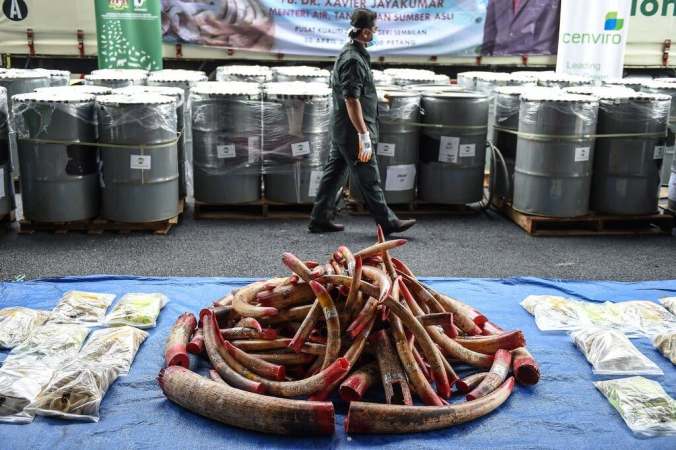
Seized ivory tusks before being destroyed at a waste management center in Port Dickson, Malaysia, in 2019. Mohd Rasfan/Agence France-Presse — Getty Images

Poaching has a puzzling array of culprits as well as victims, and many possible solutions. I have thought over the years that the Tiger Trail approach was replicable for this purpose. But genetic technology might scale more effectively. And with climate change overshadowing other crises, you might think this topic is past its prime, so read the comments section at the end of this article. Thanks to Catherine M. Allchin (how did we miss her prior work?) for this story, and please click through to read it in the New York Times:

It Helped Catch Serial Killers. Can It Stop Elephant and Wildlife Poachers, Too?

Scientists used a genetic investigation technique with the aim of helping turn the tide against illicit hauls of ivory and other animal parts.

Cambodian law enforcement officials received a tip from investigators in the U.S. Department of Homeland Security. Continue reading

Invasivorism & Reasonable Questions

Grey squirrels have driven the local extinction of the native red across much of England and Wales. Photograph: Paul Broadbent/Alamy

If you do not eat animal protein, this concept may not appeal to you. But if you allow that others who eat meat may be able to do so ethically, then read on.

If you do eat any kind of meat, then it is a reasonable question whether invasive species are fair game: Rack of squirrel, anyone? The chefs putting invasive species on the menu

Roast rack of squirrel, fondant jersey royal potatoes, carrot and wild garlic served at Paul Wedgwood’s restaurant in Edinburgh, Scotland. Photograph: Wedgwood

‘Invasivorism’ is a growing ethical dining trend but is ‘eat them to beat them’ really the answer?

From oral contraceptives to proposals to edit their DNA, efforts to control the UK’s invasive grey squirrel population have become increasingly elaborate. But a growing number of chefs and conservationists have a far simpler idea, which they see as part of the trend in ethical dining: eat them. Continue reading

More On, And From, Kim Stanley Robinson

“The Ministry for the Future” displays Robinson’s anti-anti-utopianism: its prognosis is both heartening and harrowing. Illustration by Deena So’Oteh

Thirteen months ago I first became aware of this author and this book. Four months ago Robinson showed up on my radar again. I still had not made time for his book. And two weeks ago, another reminder of how my time has and has not been employed, this time posed as a question: Can Science Fiction Wake Us Up to Our Climate Reality? I already feel quite awake to that reality, but the question is still of considerable interest.

Kim Stanley Robinson’s novels envision the dire problems of the future—but also their solutions.

Robinson at home in Davis, California. Much of his sci-fi could seem like nature writing, with the Sierra Nevadas—his “heart’s home”—recast as Mercury or Mars. Photograph by Jim McAuley for The New Yorker

Last summer, the science-fiction writer Kim Stanley Robinson went on a backpacking trip with some friends. They headed into the High Sierra, hiking toward Deadman Canyon—a fifty-mile walk through challenging terrain. Now sixty-nine, Robinson has been hiking and camping in the Sierras for half a century. At home, in Davis, California, he tracks his explorations on a wall-mounted map, its topography thick with ink. He is a devotee of the “ultralight” approach to backpacking and prefers to travel without water, instead gathering it along the way, from lakes and streams. Arriving at the canyon, with its broad, verdant floor cradled in smooth slopes of granite, he planned to fill his bottles with meltwater from the seven glaciers buried in its headwall. Continue reading

Container Ships Versus Whales & Whale-watchers

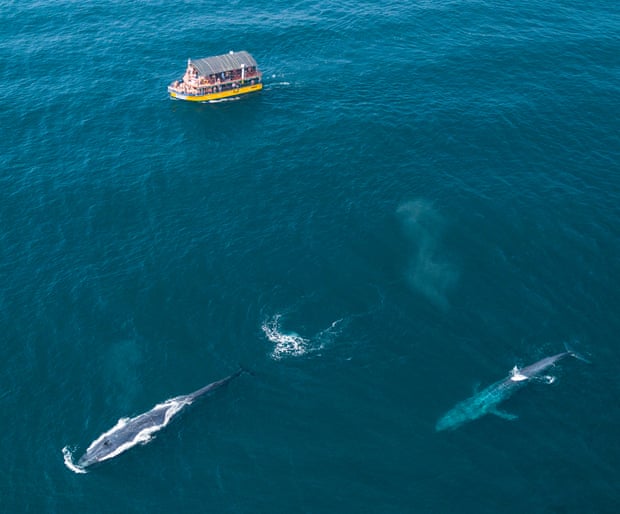
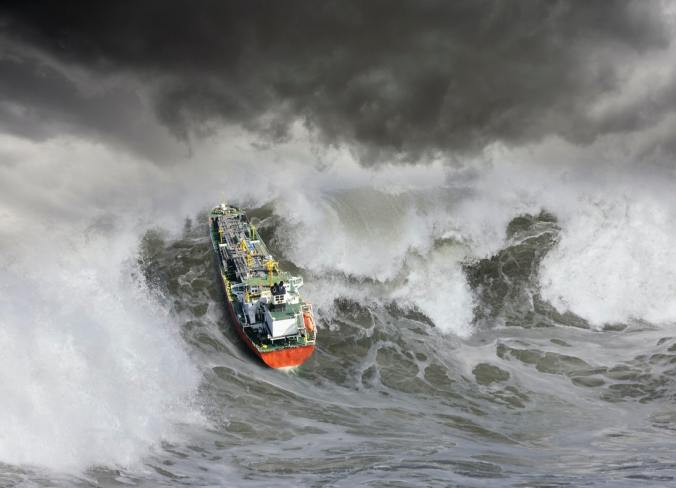
Whale-watching tourism is lucrative for Sri Lanka but even the small boats are at risk from the huge tankers and container ships that use the route. Photograph: IFAW/Christian Loader

It seems a minor request, asking the companies whose ships pass through Sri Lanka’s waters to be considerate of the whales who live in those waters:

‘Giant obstacle course’: call to reroute major shipping lanes to protect blue whales

Unique colony of blue whales increasingly at risk from tankers and container ships, say marine campaigners

Scientists and conservation groups are calling for one of the world’s busiest shipping lanes to be rerouted in an effort to protect the world’s largest animal. Continue reading

Chile Has New Hands On Deck

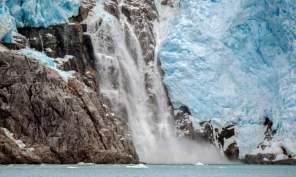
The receding Santa Ines glacier in Seno Ballena fjord in Punta Arenas, southern Chile. Photograph: Martin Bernetti/AFP/Getty

Bringing experts into government does not sound like a news story, until you consider Chile. A country governed for decades by Chicago school economics–a strong invisible hand of market forces combined with a strong visible hand of military rule to keep leftists at bay–Chile’s most recent election led to some new hands in the governance picture.

With the climate crisis, Chile has an opportunity to set a new example for the world. The failure of markets until now to address a human-induced environmental catastrophe will be met with the combined force of expert scientific knowledge and public sector governance:

‘We need politicians and experts’: how Chile is putting the climate crisis first

President Gabriel Boric has brought renowned named climate scientist Maisa Rojas into government to help ensure a greener future

‘We need politicians and experts’: how Chile is putting the climate crisis first
President Gabriel Boric has brought renowned named climate scientist Maisa Rojas into government to help ensure a greener future

Hidden behind the Andes in a quiet corner of South America, a formidable generation of former student leaders are putting together one of the world’s most exciting progressive movements.

On 11 March, Gabriel Boric, 35, a tattooed leftist with a steely resolve to reform Chile from the bottom up, will become the country’s youngest ever president – and his green agenda is echoing across the world as time ticks away on an impending climate catastrophe.

“It is so exciting to see what these young people have done,” says Maisa Rojas, 49, a renowned Chilean climate scientist who has been named environment minister in a cabinet including several of Boric’s student protest generation. Continue reading

Agave, Night, Nectar

Video (click image above): Mexican long-nosed bats drinking nectar from agave flowers at night. Credit: Bat Conservation International

Bats, agave, and half a minute of night-time feeding are in the video above, which is also embedded in this article by Janet Marinelli, published in Yale e360:

How Preserving Agave Could Help Save an Endangered Bat

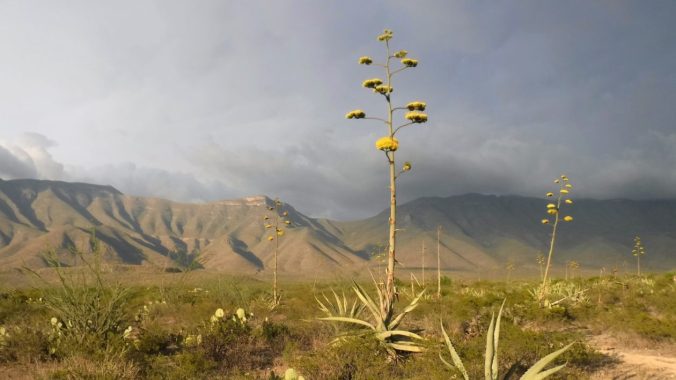
Drought linked to climate change, along with overgrazing, is destroying the agave plants on which the Mexican long-nosed bat depends. Now, an initiative is trying to restore the balance between the agaves, the bats that feed on them, and the people who live on these lands.

Agaves blooming in Estanque de Norias, Mexico. KRISTEN LEAR / BAT CONSERVATION INTERNATIONAL

At the southeast tip of a large valley in the northern Sierra Madre Oriental is the small Mexican town of Estanque de Norias, some 200 miles west of the Texas border at Laredo.

Continue reading

Volunteering For Town-Saving

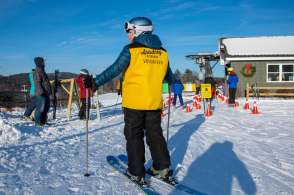
The Ascutney ski resort once boasted 1,800 vertical feet of skiing on over 50 trails. When it closed for the last time in 2010, it was a crushing blow to the town of West Windsor. Caleb Kenna for The New York Times

Volunteers inspire more volunteerism, so here is another story about a community volunteering to save its own future, thanks to David Goodman and the New York Times for A Town That Saved a Mountain, and a Mountain That Saved a Town:

At the heart of the mountain’s revival is Ascutney Outdoors, a nonprofit with over 100 volunteers that now runs recreation on the mountain. Caleb Kenna for The New York Times

After the Ascutney ski resort in Vermont closed because of erratic snowfall and mismanagement, it threatened to take with it the nearby town of West Windsor. The community took the situation into its own hands.

Jim Lyall briskly skied up Mount Ascutney, eagerly pointing out the view. We were skinning up a ski area in southern Vermont, but the chairlifts are long gone. At the top of the mountain we arrived at an abandoned ski patrol cabin and lift station. A cold breeze whipped through the deserted structures. It had a ghostly, post-apocalyptic feel. Continue reading

Palm Oil Potential

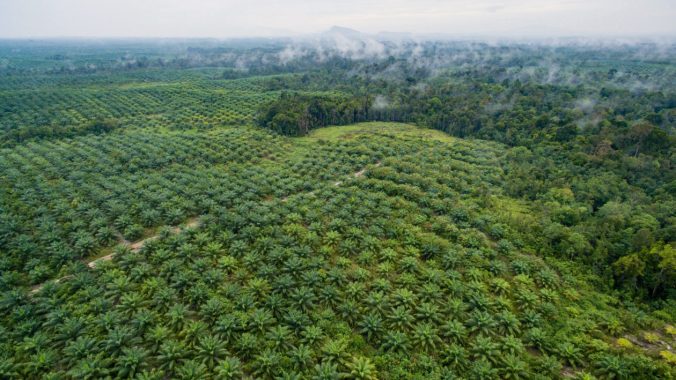
An oil palm plantation encroaches on a rainforest in West Kalimantan, Indonesia. NANANG SUJANA / CIFOR

Palm oil’s problems, and potential solutions have been catalogued in these pages many times. In this recent story by James Dinneen, writing again for Yale Environment 360, a new potential solution is explored:

Can Synthetic Palm Oil Help Save the World’s Tropical Forests?

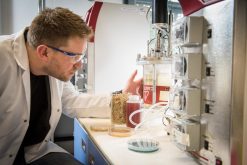
Christopher Chuck, a chemical engineer at the University of Bath, is working to produce yeast able to generate more oil from cheaper feedstocks. UNIVERSITY OF BATH

Numerous startups are creating synthetic palm oil in the lab, hoping to slow the loss of tropical forests to oil palm cultivation. But palm oil is the most widely used vegetable oil, and producing a synthetic version on a large scale remains a daunting challenge.

Tom Jeffries and Tom Kelleher met at Rutgers University in the 1970s while studying industrially useful microbes. Jeffries went on to run a yeast genomics program at the U.S. Department of Agriculture; Kelleher spent decades in the biomedical industry, working with biologics like insulin, which are produced by genetically modified microbes in giant, fermenting vats. Continue reading
Cairngorms Connect & Scotland’s Rewilding

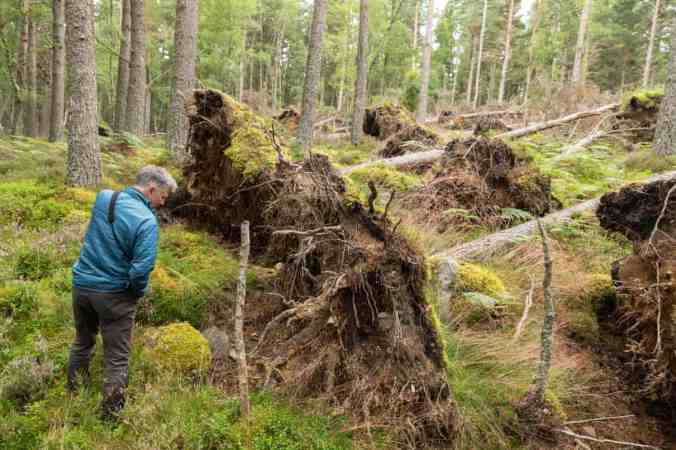
Jeremy Roberts examines the root plate of a felled Scots pine. Photograph: Mark Hamblin/The Guardian

Rewilding looks different in earlier posts about Scotland’s pioneering projects. But here is an additional piece of the puzzle worth understanding:

Chopping, twisting, felling: the unruly way to rewild Scotland’s forests

Orderly pine plantations in the Cairngorms are being messed up as part of a plan to let nature thrive

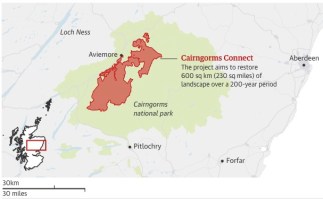
Cairngorms Connect is the UK’s largest land restoration project

The Scots pine plantations in Abernethy forest are the crème de la crème in forestry terms: tall, straight and dense. These plantations were created in the 1930s, and the wood had a variety of uses, from ships’ masts to trench timbers. Now, this woodland is being retrofitted for wildlife as part of the UK’s largest land restoration project because, although it is striking to wander in such a regimented landscape, nature prefers things to be less orderly. Continue reading
Big Win On Climate, Says McKibben

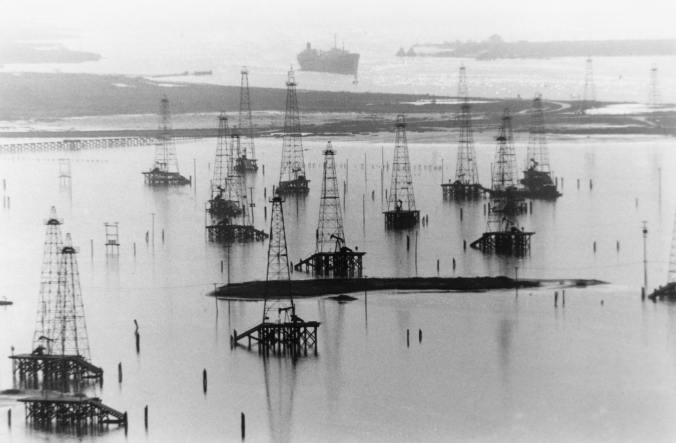
Early offshore action in Texas. the rigs are bigger now—so big that a federal court found yesterday that they’re endangering the climate.

His first book was an early harbinger that we wish had changed the world. Now, decades later, his newsletter is worth subscribing to. When Bill McKibben says something has gone right, we cannot wait to read it:

Something went right!?

Through no fault of its own, Biden’s team gets a big win on climate

Last summer the Biden administration granted the largest set of offshore oil leases in American history. The ironies abounded—Biden had insisted during his campaign that he would not be doing this (“And by the way, no more drilling on federal lands, period. Period, period, period,” he’d explained during the New Hampshire primary); it was the Interior Department that officially sold the leases, headed by a secretary, Deb Haaland, that environmentalists had fought like crazy to get confirmed. Continue reading
Hargila


“Hargila” Film Documents India’s Grassroots Effort to Save the Endangered Greater Adjutant Stork

A new film by the Cornell Lab of Ornithology’s Center for Conservation Media tells the story of a wildlife photographer who travels to India intent on documenting the rarest stork on earth, but soon discovers a conservation hero and her inspiring efforts to rally a community to save it. Hargila documents the Greater Adjutant, a huge scavenging stork that was once widely distributed across India and Southeast Asia but is now mostly confined to a last stronghold in Assam, with small populations persisting in Cambodia’s northern plains region. Greater Adjutants are called “hargila” in the Assamese language, which literally translates as “bone swallower.” Continue reading

Blacksmithing The Zero Waste Knife

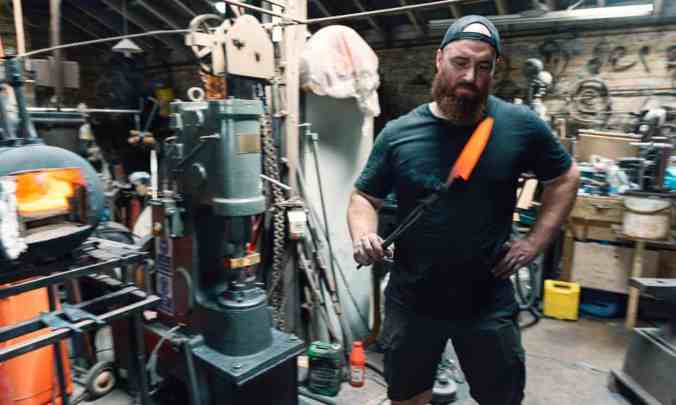
I have mentioned more than once about my brief blacksmithing experience. I have a respect for the profession. I have a new level of respect for this particular blacksmith featured in Matthew Weaver’s article below, so would encourage you to visit his website by clicking the image to the left:

Tim Westley making a zero-waste knife at his forge. Photograph: Xavier D Buendia/XDBPhotography

‘My customers like zero waste’: the blacksmith recycling canisters into cult kitchen knives

Tim Westley takes up chef friend’s challenge to transform laughing gas litter

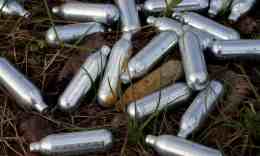
Discarded nitrous oxide gas canisters. Photograph: Gareth Fuller/PA

The little steel bulbs that litter parks, roadsides and city centres – the discarded canisters from Britain’s second favourite drug, laughing gas – cause misery to many communities. But now one blacksmith has found an innovative use for them: turning them into handmade kitchen knives.

The prevalence of the canisters has prompted some councils to impose local bans, while the home secretary is keen to outlaw them nationally. But Tim Westley’s handmade kitchen knives are gaining a cult following among environmentally conscious foodies after being endorsed by chefs committed to low waste. Continue reading
Plastic Transformed With Purpose

Interior detail of “Earth Poetica,” which is a huge globe created out of plastic waste. Amit Elkayam for The New York Times

The challenge of plastic is a topic that goes back a decade in our pages.  We have featured artisanal plastic upcycling initiatives that we have supported entrepreneurially, as well as articles about other artisanal initiatives.

Today, in the same vein: Israeli Artist Turns Plastic Pollution Into ‘Earth Poetica’.

Beverly Barkat in her Jerusalem studio assembling “Earth Poetica,” a huge globe, from plastic waste. Its permanent home will be a building at ground zero in Manhattan. Amit Elkayam for The New York Times

In Beverly Barkat’s quest to connect people with nature, she found that environmental waste could be a powerful medium.

JERUSALEM — When the Jerusalem artist Beverly Barkat began to create an artwork for the lobby of a building in the new World Trade Center complex overlooking ground zero in Lower Manhattan, she aimed to come up with something architecturally site specific and impactful, large enough to connect with the space but not so enormous as to disconnect from the observer.

Barkat had a stark message to convey. Years earlier, she said, she had been struck by an image of children scavenging on a once-beautiful beach awash in plastic waste. Continue reading
The Great Bamboozle

Bill McKibben’s newsletter on Substack asks the question:

What happens if you greenwash greenwash?

It’s hard to go lower than net zero….

Greenwashing began, as it name implies, as a gentle, barely perceptible rain of fibs. Back at the start, it was mostly pictures; it was pretty easy to gauge how much environmental damage a company did by the number of penguin photographs it felt it needed to include in its annual report. Continue reading