Reef Rescuers

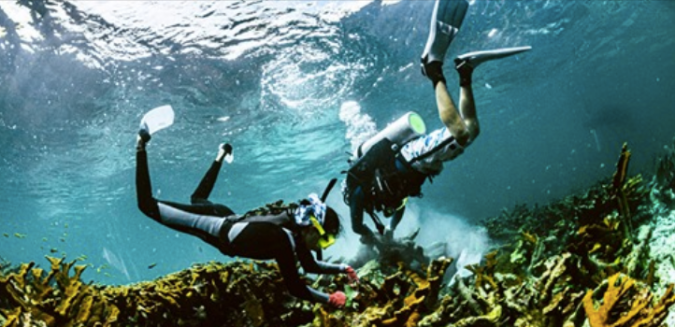
Members of a team calling itself “the Brigade” work to repair hurricane-damaged corals off the coast of Mexico.

An inspiring example of collaborative efforts that bring environmentalists and the insurance industry together to protect fragile marine ecosystems.

A Race Against Time to Rescue a Reef From Climate Change

In an unusual experiment, a coral reef in Mexico is now insured against hurricanes. A team of locals known as “the Brigade” rushed to repair the devastated corals, piece by piece.

When Hurricane Delta hit Puerto Morelos, Mexico, in October, a team known as the Brigade waited anxiously for the sea to quiet. The group, an assortment of tour guides, diving instructors, park rangers, fishermen and researchers, needed to get in the water as soon as possible. The coral reef that protects their town — an undersea forest of living limestone branches that blunted the storm’s destructive power — had taken a beating.

Now it was their turn to help the reef, and they didn’t have much time.

“We’re like paramedics,” said María del Carmen García Rivas, director of the national park that manages the reef and a leader of the Brigade. When broken corals roll around and get buried in the sand, they soon die. But pieces can be saved if they are fastened back onto the reef.

“The more days that pass, the less chance they have of survival,” she said.

The race to repair the reef is more than an ecological fight; it’s also a radical experiment in finance. The reef could be the first natural structure in the world with its own insurance policy, according to environmental groups and insurance companies. And Hurricane Delta’s force triggered the first payout — about $850,000 to be used for the reef’s repairs.

The success or failure of this experiment could determine whether communities around the world start using a new tool that marries nature and finance to protect against the effects of climate change. The response to Delta was a first test. Continue reading
Urban Rewilding: Giving Space for People and Nature

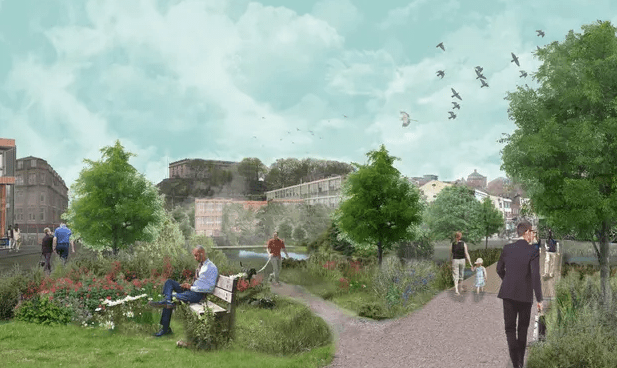
What the Broadmarsh area of central Nottingham could look like if the Wildlife Trust’s ambitious post-Covid wildscape plan gets the go-ahead. Photograph: The Wildlife Trusts

When we’ve written about rewilding on this site before we usually are referring to bringing  wildlife back into a landscape that had lost it for decades, if not centuries.  This Nottingham project has precedent in terms of plans to transform an urban eyesore into public space that is welcoming to both biodiversity of fauna and flora, and the people who will benefit from taking pleasure in it.

Thanks to the Guardian for highlighting the story. We look forward to reading about the finished project!

An additional Public Service Announcement: If you like this story the Nottingham Wildlife Trust has an ongoing petition to help make this project a reality. Please feel free to follow the link and add your name. Being local to Nottingham is not required.

Going wild? A radical green plan for Nottingham’s unloved shopping centre

An empty 1970s shopping centre in Nottingham could be transformed into wetlands, pocket woodlands and a wildflower meadow as part of a post-pandemic urban rewilding project.

The debate about Broadmarsh shopping centre, considered an eyesore by many, has rumbled on for years. This year it was undergoing a £86m revamp by real estate investment trust Intu when the firm went into administration.

The number of empty shops on UK high streets has risen to its highest level in six years, and as retail giants such as Debenhams and Arcadia Group falter, Nottinghamshire Wildlife Trust has come up with a new model of inner city regeneration: urban rewilding.

The trust wants to bulldoze the already half-demolished Broadmarsh building and turn it into 2.5 hectares (6 acres) of scruffy green space at an estimated cost of £3-4m. The designs were created with Influence Landscape Architects and could set a precedent for what to do with the growing amount of vacant retail space in other cities. “It’s unbelievable to hear that stores like Debenhams are in the position they are in – they’re stalwarts of the city, but it does put out an opportunity,” said Sara Boland, managing director of Influence. Continue reading
More On The Social Networking Of Trees

On a topic we have posted about at least a few times before, here is the latest science on the ways in which trees communicate among themselves, and with others, accompanied by some phenomenally beautiful supporting photographs (especially the fungi):

The Social Life of Forests

Trees appear to communicate and cooperate through subterranean networks of fungi. What are they sharing with one another?

By Ferris Jabr
Photographs by Brendan George Ko

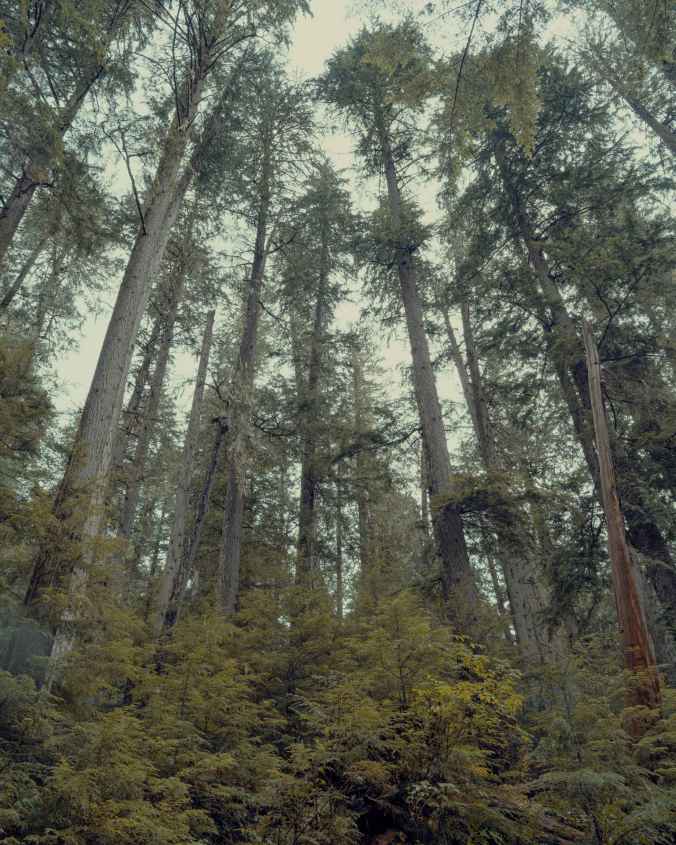
As a child, Suzanne Simard often roamed Canada’s old-growth forests with her siblings, building forts from fallen branches, foraging mushrooms and huckleberries and occasionally eating handfuls of dirt (she liked the taste). Her grandfather and uncles, meanwhile, worked nearby as horse loggers, using low-impact methods to selectively harvest cedar, Douglas fir and white pine. They took so few trees that Simard never noticed much of a difference. The forest seemed ageless and infinite, pillared with conifers, jeweled with raindrops and brimming with ferns and fairy bells. She experienced it as “nature in the raw” — a mythic realm, perfect as it was. When she began attending the University of British Columbia, she was elated to discover forestry: an entire field of science devoted to her beloved domain. It seemed like the natural choice.

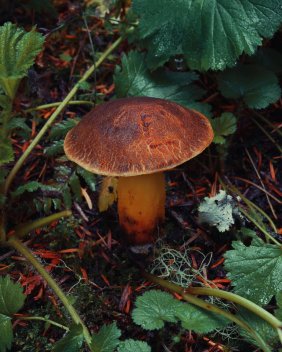
Mushrooms and conks are the fruiting bodies of fungi. Their underground filaments form networks among the root systems.

By the time she was in grad school at Oregon State University, however, Simard understood that commercial clearcutting had largely superseded the sustainable logging practices of the past. Loggers were replacing diverse forests with homogeneous plantations, evenly spaced in upturned soil stripped of most underbrush. Without any competitors, the thinking went, the newly planted trees would thrive. Instead, they were frequently more vulnerable to disease and climatic stress than trees in old-growth forests. In particular, Simard noticed that up to 10 percent of newly planted Douglas fir were likely to get sick and die whenever nearby aspen, paper birch and cottonwood were removed. The reasons were unclear. The planted saplings had plenty of space, and they received more light and water than trees in old, dense forests. So why were they so frail? Continue reading
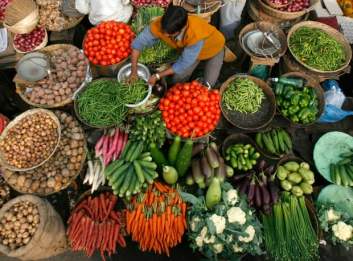
The Miracle Of Soil, Explained

As we work to improve the soil in advance of planting thousands of coffee seedlings in a few months, we appreciate a video like this one as a tool for explaining what we are doing, and why. Thanks to Phoebe Weston for bringing this to my attention.

Parasitism’s Charisma Deficit

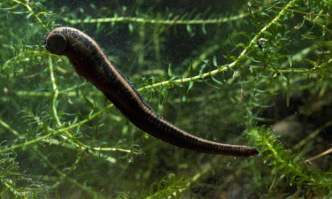
The medicinal leech, Hirudo medicinalis, is one of the few parasites formally protected. Photograph: Stephen Dalton/Alamy

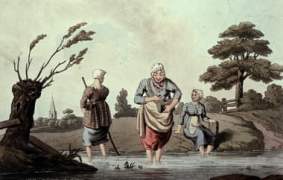
By the time I was welcoming guests to a place where they would experience them in the wild, I had become accustomed to leeches. I did not enjoy feeling them in my hiking boot or elsewhere on my body, but after a few times I stopped being freaked out by it. As unlikely as it sounds, I eventually found them fascinating, if not charismatic. I could appreciate their place in the ecosystem we were working to protect, but I could not bring myself to celebrate them in public. A photograph like the one above would not win them new friends but illustrations like the one below might help. Phoebe Weston’s article about the challenges of protecting parasites rings true:

Overlooked and unloved: how a global project could unlock the world of parasites

The tiny freeloaders may be considered disgusting by many but new research shows they are crucial in shaping ecosystems

A coloured aquatint from the early 19th century shows three women gathering leeches in a stream. Photograph: Wellcome Collection

The leech craze of the 1800s put parasites on the map. Collectors (usually women and sometimes old horses) would stand in ponds waiting for medicinal leeches to come and suck their blood. They were then picked off and sold for bloodletting.

The parasites were so popular that by the early 1900s they were nearly extinct, and there was a coordinated effort to save them. Even so, the European medicinal leech, Hirudo medicinalishas been labelled as near threatened on the IUCN red list since 1996, and remains one of the few parasites with formal protections. Continue reading
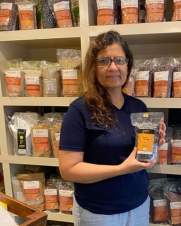
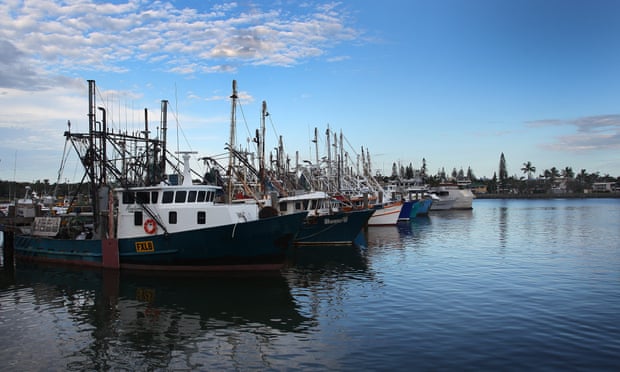
A Step To Reduce Overfishing, Even A Modest One, Is Better Than No Step

Research has found that sustainably managed oceans can provide six times more food than today. Photograph: Lisa Maree Williams/Getty Images

It is too few countries protecting too little ocean space, but it is a step in the right direction:

Global sustainable fishing initiative agreed by 14 countries

Governments to reduce pollution in oceans and end subsidies that contribute to overfishing

Governments responsible for 40% of the world’s coastlines have pledged to end overfishing, restore dwindling fish populations and stop the flow of plastic pollution into the seas in the next 10 years.

The leaders of the 14 countries set out a series of commitments on Wednesday that mark the world’s biggest ocean sustainability initiative, in the absence of a fully fledged UN treaty on marine life.

The countries – Australia, Canada, Chile, Fiji, Ghana, Indonesia, Jamaica, Japan, Kenya, Mexico, Namibia, Norway, Palau and Portugal – will end harmful subsidies that contribute to overfishing, a key demand of campaigners. They will also aim to eliminate illegal fishing through better enforcement and management, and to minimise bycatch and discards, as well as implementing national fisheries plans based on scientific advice.

Each of the countries, members of the High Level Panel for Sustainable Ocean Economy, has also pledged to ensure that all the areas of ocean within its own national jurisdiction – known as exclusive economic zones – are managed sustainably by 2025. That amounts to an area of ocean roughly the size of Africa. Continue reading
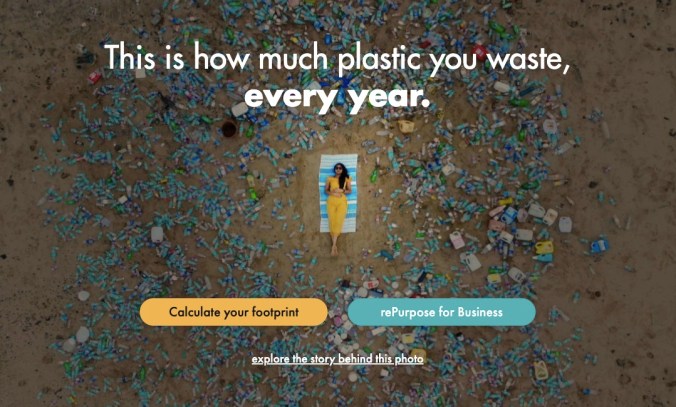
2020 Goldman Prize Winners

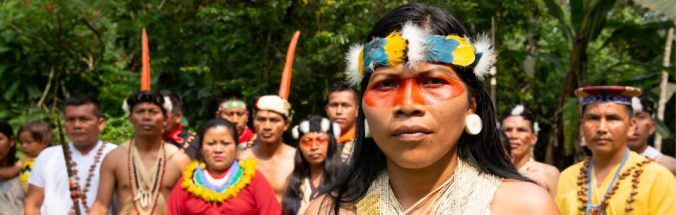
Nemonte Nenquimo led an indigenous campaign and legal action that resulted in a court ruling protecting 500,000 acres of Amazonian rainforest and Waorani territory from oil extraction. Nenquimo’s leadership and the lawsuit set a legal precedent for indigenous rights in Ecuador, and other tribes are following in her footsteps to protect additional tracts of rainforest from oil extraction.

The last time we mentioned a Goldman Prize winner was also the only time we have done so. What explains that? Nothing, really. Just a missed opportunity each year to celebrate things we care about. Today we share the news on one of the six prize winners for 2020:

Guardians of the Amazon Rainforest

Despite its relatively small area, Ecuador is one of the 10 most biodiverse countries on Earth. It contains pristine Amazon rainforests with rich wildlife, complex ecosystems, and significant populations of indigenous communities. Long protectors of this territory, the Waorani people are traditional hunter-gatherers organized into small clan settlements. Continue reading

Sheltering in Nature

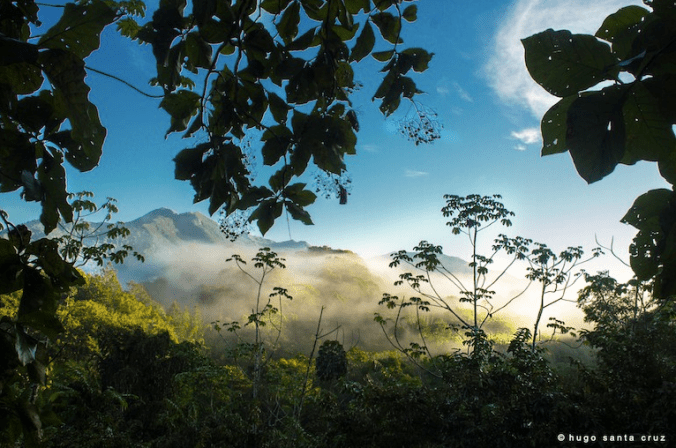
The Turrubares Hills in Costa Rica’s Central Pacific region. Photo courtesy of Hugo Santa Cruz.

This is an exciting example of the old adage about life’s lemons and making lemonade. The Macaw Sanctuary is an inspirational space and we’re proud to have explored it with Hugo during the Global Big Day.

Thank you to Milan Sime Martinic and the inspiration of Mongabay for nature and conservation stories.

A new conservation project is created in Costa Rica thanks to COVID-19

  • Hugo Santa Cruz is a photographer contributing to a new Netflix documentary about nature and coping with COVID-19.
  • A Bolivian currently stuck in Costa Rica due to the pandemic, he has turned his camera lens on the local landscape, which has helped him deal with his separation from family and friends.
  • Many hours spent in the rainforest have given him solace and also an idea to aid the rich natural heritage that he is currently documenting.
  • Santa Cruz is now a co-founder of the new Center for Biodiversity Restoration Foundation, which will work to restore and connect natural areas in the region.

Call him inspired.

If Biblical Ishmael were banished to the desert, naturalist Hugo Santa Cruz is quarantined to wander in paradise, a paradise in the Costa Rican jungle, that is.

He is in the Central American rainforest along the Paso de Las Lapas Biological Corridor, an area near the Pacific coast that converges with the mountainous foothills of the western dry tropical forest.

Roaming some 370 hectares of ample primary and secondary forests, regenerated forests restored from human damage, plus plantings, ponds, and biodiverse jungle, Santa Cruz is deep in the wilderness, far from home due to the COVID-19 shutdown of travel and normal activities. He is exploring the jungle, studying the animals, photographing, filming, and registering the species he encounters. Continue reading

Thanks For The Birds

Can you name this bird. Caroline Tompkins for The New York Times

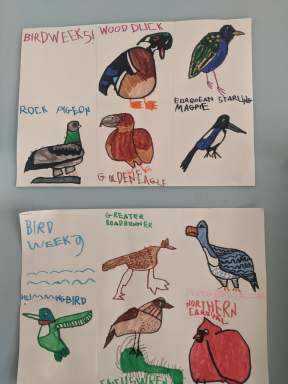
On this day each year, we reflect on things to be grateful for. Today, as tempting as it may be to talk about coffee, I am mindful of how important birds have been in our family. In 2014 I was on the terrace at Xandari with Seth. He was recently graduated from college, where he had worked on an outreach program for school children to get them interested in birds, and birdwatching. Now he was training to manage the type of lodge where birdwatching is an activity, and one of his sidelines at Xandari was guiding birdwatching tours in the forest reserve that was part of the property.

As we sat on the terrace discussing the day’s plan, a young couple and their son sat down for breakfast. I said hello to them, and I asked the boy if he was enjoying Costa Rica. He lit up, and said it was his first morning here, but so far it was great. I asked what was great, and without missing a beat he said, with cheer: the birds woke me up! The conversation that followed was a once in a lifetime pleasure. I asked why he was so happy about that, and he and his parents explained that during the school year that had just ended, his class had been “celebrating urban birds” in Brooklyn, NY. It turned out his class was one of the many that Seth had been doing outreach with during the previous year. I told the young fellow that if he wanted to take a birdwatching tour, I had a recommendation of who could guide him.

I am mindful about birds today thanks to Dan Sinker’s op-ed essay:

The Birds Are Outside

One bird feeder became two, then three. Months passed.

Dan Sinker

Me, my wife, our teenager and our 5-year old, we knew nothing about birds before the lockdown sent us inside in March. Our cramped home was suburban-convenient before the pandemic hit, nestled a few blocks from a school we don’t go in and a train downtown we won’t ride, and now it is just small.

It was a bedroom short and had nothing a person could call work space beyond the dining room table even before it became our entire lives. But it did have windows, sunny and bright in the morning, that looked out on the worn patch of yard just outside so I bought a bird feeder and some cheap seed and mounted it just outside our dining room window. We needed a distraction. Continue reading

Sugar’s Greater Potential

The wily ways of the biggest petrochemical companies have been a concern since we started this platform, and when something seems like big news, but turns not to be so big, we share what we find.  We have previously shared a story or two about sugar’s potential as an energy source, but in its recent edition The Economist weighs in on what may be sugar’s bigger than big potential:

Better disposable coffee cups

They can be made with the waste from sugar cane

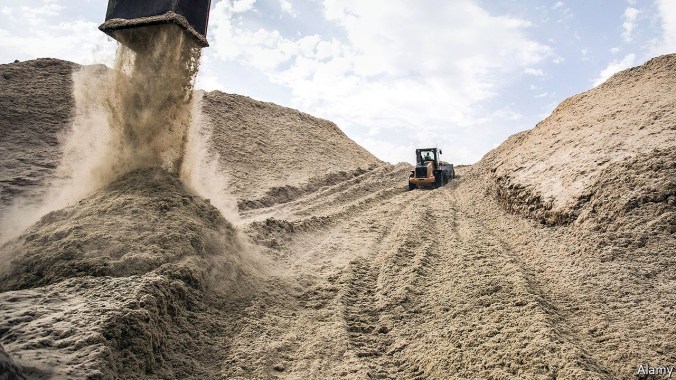
Sugar cane contains around 10% sugar. But that means it contains around 90% non-sugar—the material known as bagasse (pictured) which remains once the cane has been pulverised and the sugar-bearing juice squeezed out of it. World production of cane sugar was 185m tonnes in 2017. That results in a lot of bagasse. Continue reading

Does Planting A Trillion Trees Sound Implausible?

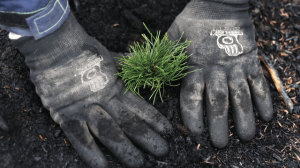
A nursery manager plants a whitebark pine at Glacier National Park in Montana in September 2019, part of an effort to restore vegetation following a wildfire. (Chip Somodevilla/Getty Images)

Here in Iota-drenched Costa Rica there is damage from this hurricane and from the one that just ended a week earlier, but it is minuscule compared to what Nicaragua and Honduras have sustained. If you are scientifically inclined, then two complementary ideas are easy to digest: 1) the people suffering most from the effects of climate change are among the least responsible for causing it; and 2) they live in places that may be best-suited for mitigating it.  For our part, planting trees when coffee is purchased is a drop in the ocean of need. A story we missed from a few months ago gives some hope that this particular idea has a future:

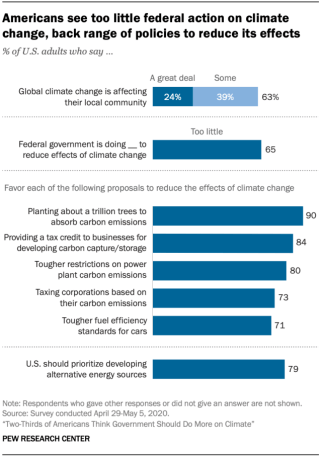
Two-Thirds of Americans Think Government Should Do More on Climate

Bipartisan backing for carbon capture tax credits, extensive tree-planting efforts

A majority of Americans continue to say they see the effects of climate change in their own communities and believe that the federal government falls short in its efforts to reduce the impacts of climate change.

At a time when partisanship colors most views of policy, broad majorities of the public – including more than half of Republicans and overwhelming shares of Democrats – say they would favor a range of initiatives to reduce the impacts of climate change, including large-scale tree planting efforts, tax credits for businesses that capture carbon emissions and tougher fuel efficiency standards for vehicles, according to a new Pew Research Center survey. Continue reading
Major Marine Sanctuary, An Unexpected Gift Of 2020

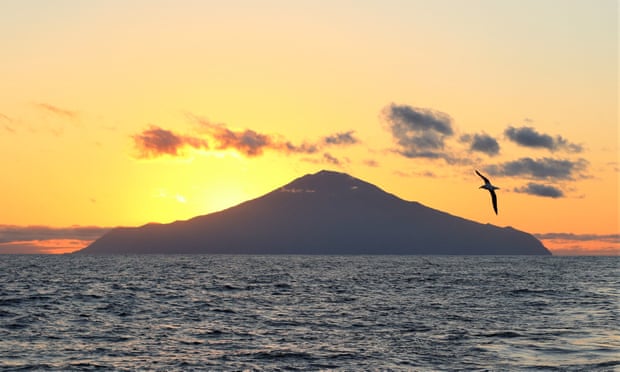
The marine sanctuary off Tristan da Cunha will be the fourth largest in the world. Photograph: Andy Schofield/RSPB/PA

The Guardian shares some welcome conservation news from a lesser-known bit of land surrounded by plenty water-based wildlife:

Tiny Atlantic island takes giant leap towards protecting world’s oceans

UK overseas territory Tristan da Cunha’s new marine protected area will be fourth largest sanctuary of its kind

Rockhopper penguins on Tristan da Cunha will be among a wealth of marine life to benefit. Photograph: Trevor Glass/RSPB/PA

A community of 250 people on one of the most remote inhabited islands on Earth has made a significant contribution to marine wildlife conservation by banning bottom-trawling fishing, deep-sea mining and other harmful activities from its waters.

The government of Tristan da Cunha, a volcanic archipelago in the south Atlantic and part of the UK’s overseas territories, has announced that almost 700,000 sq km of its waters will become a marine protected area (MPA), the fourth largest such sanctuary in the world. Continue reading
Protecting Peat Bog Is Big

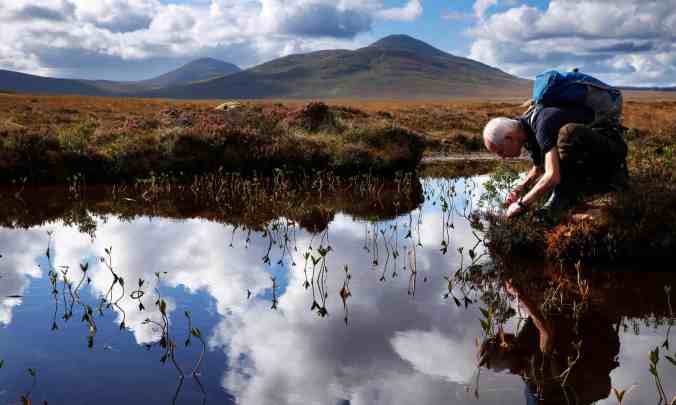
Andrew Coupar, a NatureScot peatlands expert, at the Forsinard visitor centre. Photograph: Murdo MacLeod/The Guardian

If you go to the home improvement center, or any gardening shop, you will see this stuff in plastic bags, ranging in size from small pillow to half-bale. If you purchase it you are buying into a destructive practice that goes beyond the destruction of amazingly beautiful landscape. If heritage status helps end that, we are all for it:

World heritage status for Scottish peat bogs could help UK hit net zero goals

Hopes rise that the Flow Country, the world’s largest carbon store, could become first peatland to win the status

Ecologists estimate that while peatlands cover only 3% of the Earth’s land surface, they hold 30% of the carbon stored on land. Photograph: Murdo MacLeod/The Guardian

Andrew Coupar has crouched down by a small pool, its surface peppered with the small stalks of bogbean. In autumn its dark green oval leaves echo the muted browns, greens and ochres of the surrounding peatland.

In spring, however, the bogbean’s pink-fringed white flowers put on a remarkable display, carpeting the cluster of pools that mirror the blue skies and light clouds above and, along the horizon to west, the mountains of Sutherland. Continue reading
Authentica & Sense Of Place

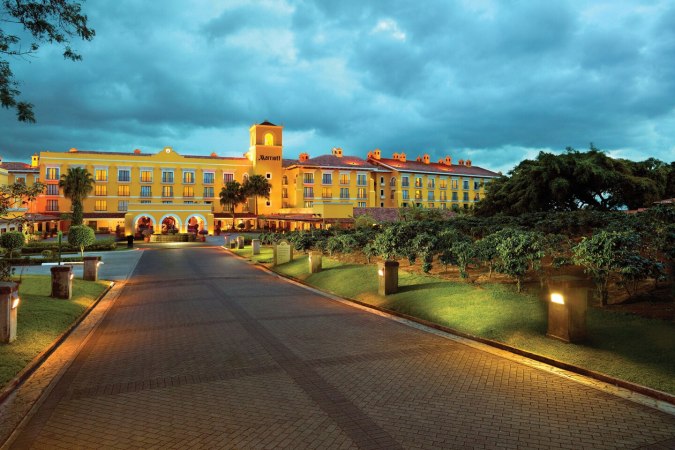
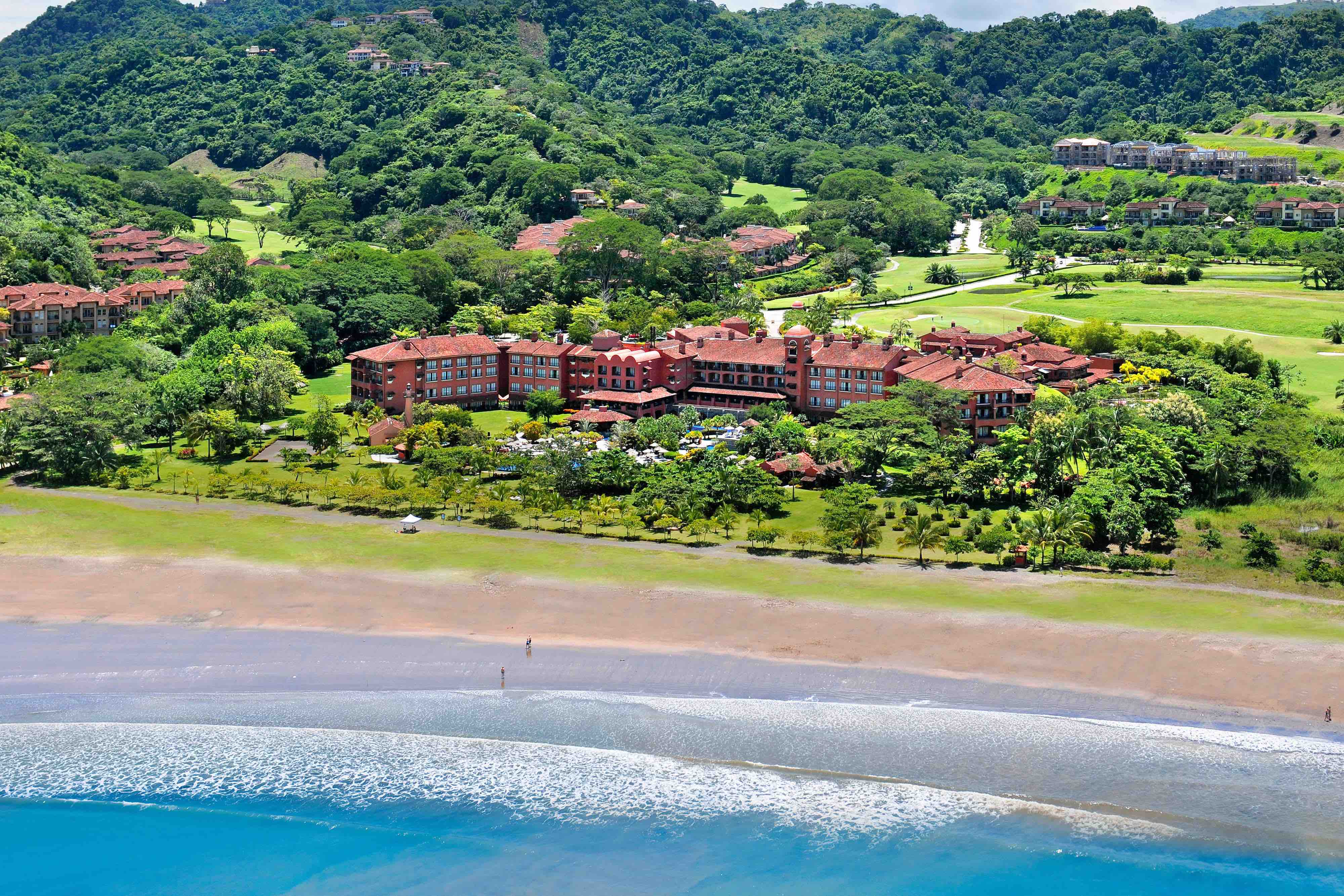
After completing our work in India and transitioning home to Costa Rica in late 2018, two properties came back to the forefront of my attention. The property above is set on a coffee estate in the Central Valley and the one below is set on a Pacific beachfront property that is 90 minutes from the Central Valley property. I knew both properties during their original construction and opening phases and ever since then believed that these were among the most special Marriott properties in the world.

They were going through renovations that started in 2018 and were to be completed in late 2019. My attention was drawn by a creative new focus on sustainability, the tiniest of examples being this one. Another example was that they invited proposals for how the gift shops in both hotels might be managed differently going forward. We submitted a proposal–with a focus on locally produced and design-forward products–and it was chosen for implementation. The rest is history that I have written about plenty in the last year.

Authentica has started its second year of operation, and Costa Rica has just re-opened its borders to receive international visitors again. These two Marriott properties have transformed operations to ensure maximum safety in response to the global health concerns. Our shops have transformed accordingly, and yet our original intent is as strong as ever: come in and sense the place.

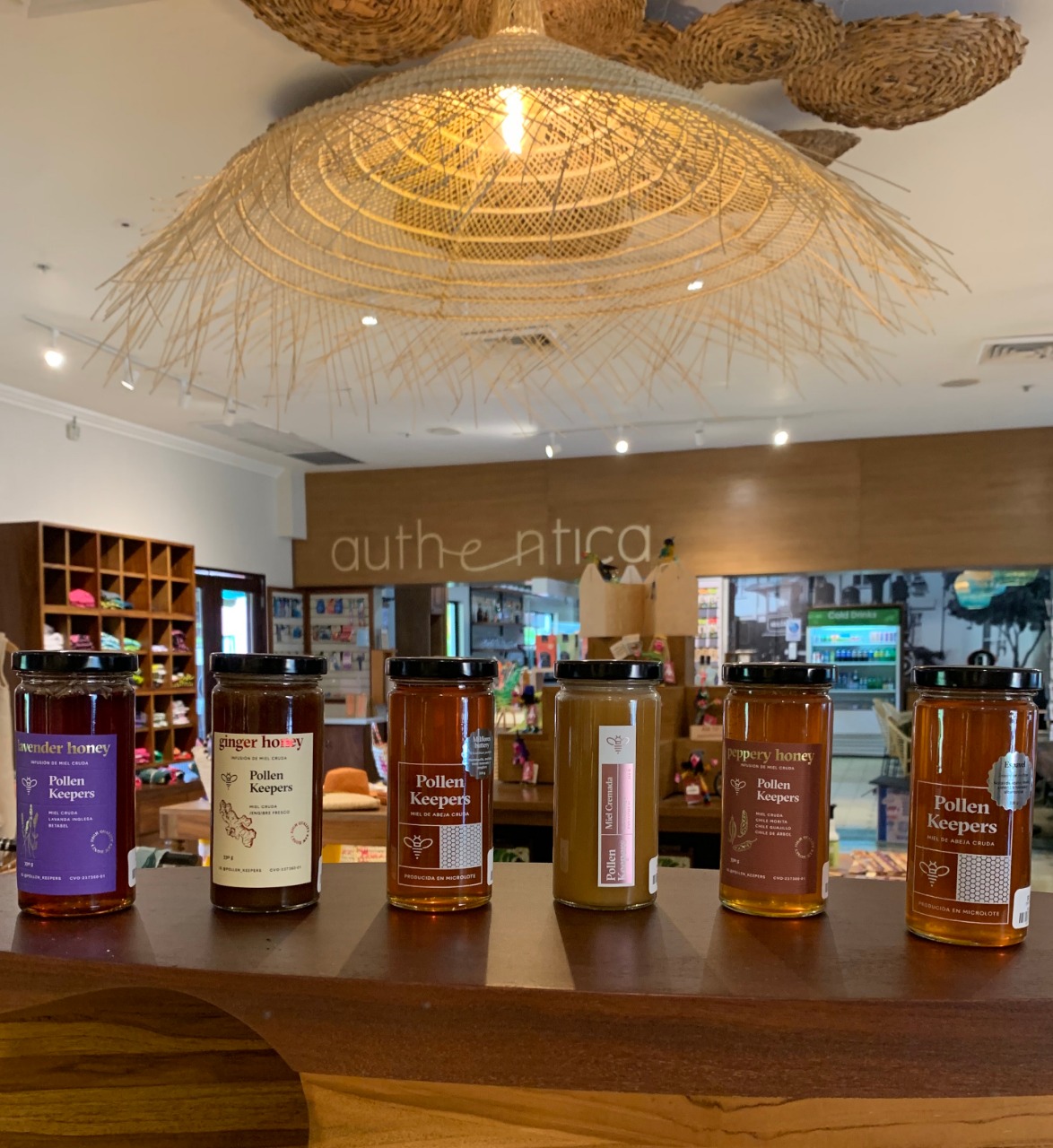
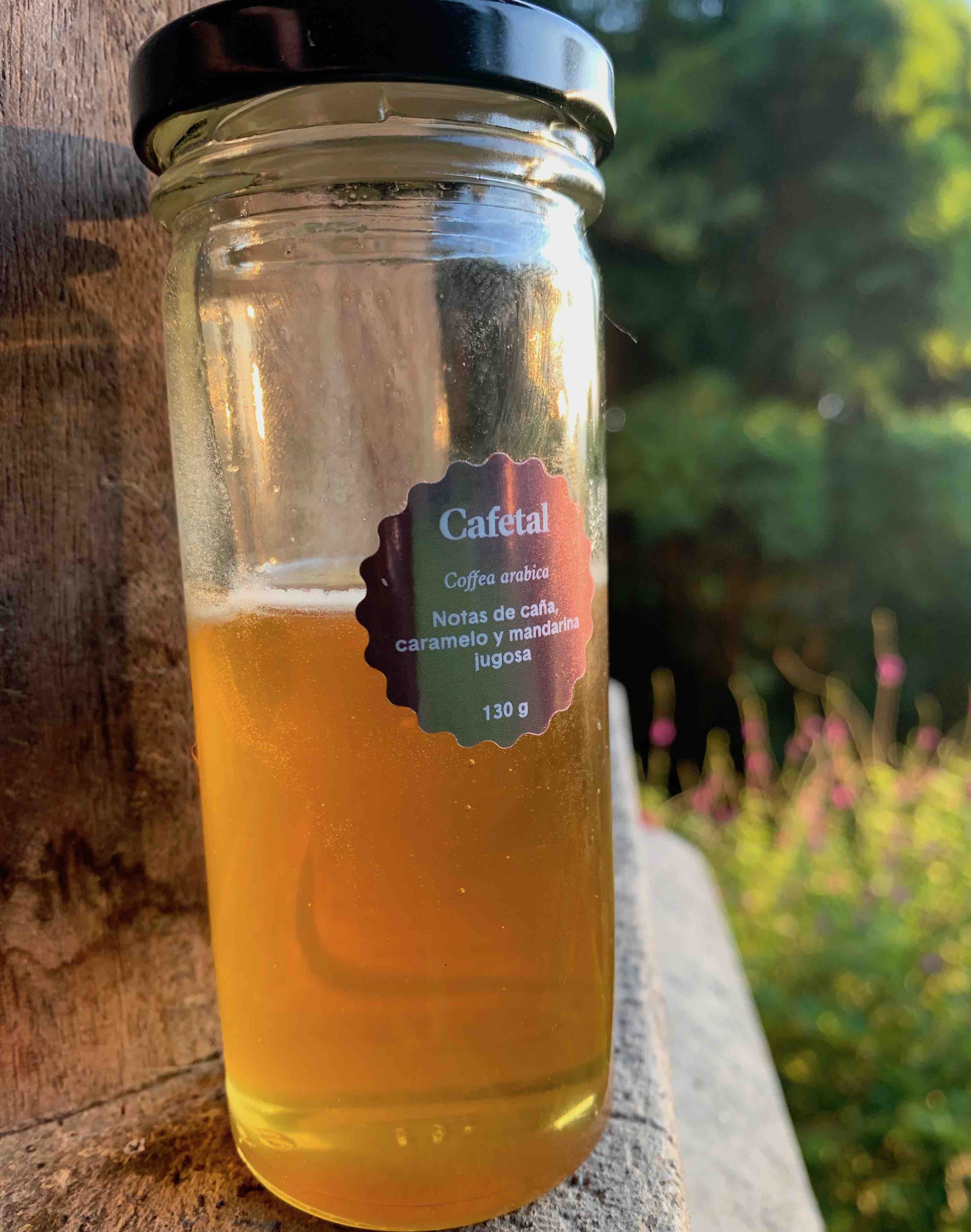
Organikos coffee, our best-selling “taste of place” product, was joined in both shops last week by another way to sense the terrain of Costa Rica’s various regions. Pollen Keepers is a small family business whose bee colonies are placed to capture unique characteristics of a location. One of those is a coffee farm, and the honey produced there is unlike any I have had before. I am still learning the vocabulary for tasting notes for honey, which we have been sampling in recent weeks at home, so will keep it simple: Cafetal is my favorite, so far.

Foodways As Tangible & Intangible Heritage

In the 1960s, the Green Revolution placed a premium on high crop yields over factors such as crop diversity and soil preservation. Photograph: Rupak de Chowdhuri/Reuters

2010-2017, from our base in Kerala, India one of our primary activities was food heritage preservation. And it is a constant theme in these pages. Along the way it became clear that both foodstuffs, the tangible things that are used to make food, and foodways, the intangible knowhow for using foodstuffs to make food, are equally worthy of our attention. Thanks to the Guardian for sharing this:

‘Mind-boggling variety’: the food crusaders preserving India’s heritage

A rich range of native crops and seeds is being nurtured in an effort to halt the country’s rapidly vanishing food diversity

Babita Bhatt left a career in software to launch her own business in natural products grown in the Himalayas. Photograph: Handout

A small army of botanical heritage enthusiasts is spearheading a movement in India for the revival and preservation of the country’s rapidly vanishing food biodiversity by bringing back the rich crop varieties that thrived in the past, but are now on the verge of extinction.

Babita Bhatt, a 43-year-old former software professional, is just one of these crusaders, who are eschewing established careers and fat pay packets to become farmers, activists and entrepreneurs.

Fear of feeding her young daughter foods covered in pesticides was the trigger for Bhatt to move to the hills of Uttarakhand. Trading a steady income for the financial insecurity of an entrepreneur, she launched Himalaya2Home, a self-funded venture, in 2018. Continue reading
Uncommon Response To An Uncommon Ocean Spill

Replica Air Jordans, constructed by the artist Andy Yoder’s from trash gathered on dumpster dives, evoke the Great Sneaker Spill of 1990. Greg Staley

We shared another story years ago about a creative response to an ocean spill, but it was the frequent kind of spill, involving oil. More common in our pages are stories about creative responses to the plague of waste, especially that from plastic. Today’s story is in good company:

If the Shoe Floats

Over the decades, a mass of flotsam from a freighter accident has inspired scientific discovery, urban legend and, now, an art exhibition commemorating the Great Sneaker Spill of 1990.

Mr. Yoder wields a glue gun to create a sneaker replica for an installation that also stands as commentary on environmental destruction. Greg Staley

It seemingly happened so long ago that the event has assumed elements of urban legend — the saga of the Great Sneaker Spill.

Sometimes referred to as the Great Shoe Spill, the tale recounts an event on May 27, 1990, when, during a sudden violent storm in the North Pacific, five shipping containers were swept off the deck of the freighter Hansea Carrier somewhere between Seoul and Seattle.

Of the 40-foot steel boxes that broke loose and crashed into the ocean, one sank to the bottom and four broke open to spill out a stream of contents that included computer monitors, sex toys and 61,280 Nike sneakers destined for America’s basketball courts and city streets.

… cartons from McDonald’s takeout meals … Greg Staley

The incident went on to become a parable of environmental disaster, as well as a red-letter event in the history of sneakerheads. For months, the buoyant flotilla drifted, carried by wind and currents until, in early 1991, beachcombers reported coming upon batches of the sneakers off Vancouver Island in Canada, pushed north on the Davidson Current. That spring, driven southward by opposing breezes, more of them turned up along the coastlines of Washington and Oregon.

… and posters from a David Hockney exhibition. Greg Staley

The Great Sneaker Spill might have gone unremembered had it not been for the enterprising scavengers who washed and resold the flotsam and Curtis Ebbesmeyer, an oceanographer who, alerted to the spill’s existence by his mother, later used it as the basis for a study of little-known currents. Continue reading
Character & Entrepreneurial Conservation

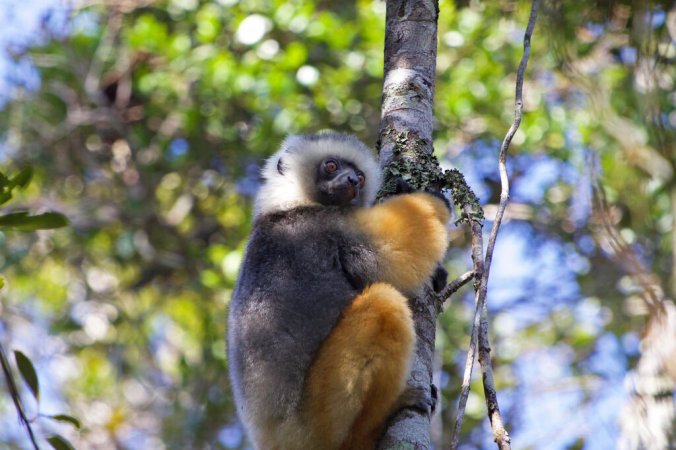
A diadem sifaka, a type of lemur, in northern Madagascar. Erik Vance/The New York Times

Erik Vance, whose work I have not seen in more than three years, caught my attention again this week. Then it was in National Geographic and from my perch in Belize his story had an obvious connection to my location. This story, in the New York Times, is read from a perch in Costa Rica. My perspective, as ever, is influenced by the search for examples of entrepreneurial conservation. I am happy to read about this one full of interesting characters, in a country I have yet to visit, where there is resonance with some of my experience in Costa Rica. Creative people, knowing that the country’s public conservation commitments have their limits, achieve remarkable conservation goals through private reserves that add to the public good. The section describing a small park with big potential could have also been written about Seth’s workplace last year:

In Madagascar, Endangered Lemurs Find a Private Refuge

Climate change is shifting the habitats of endangered species and requiring conservation scientists to think outside traditional park boundaries.

Sambava, Madagascar — Madagascar has always been one of the best places on Earth to study the natural world. Continue reading
From Seedlings To Saplings in 90 Days

PoroSeedlings

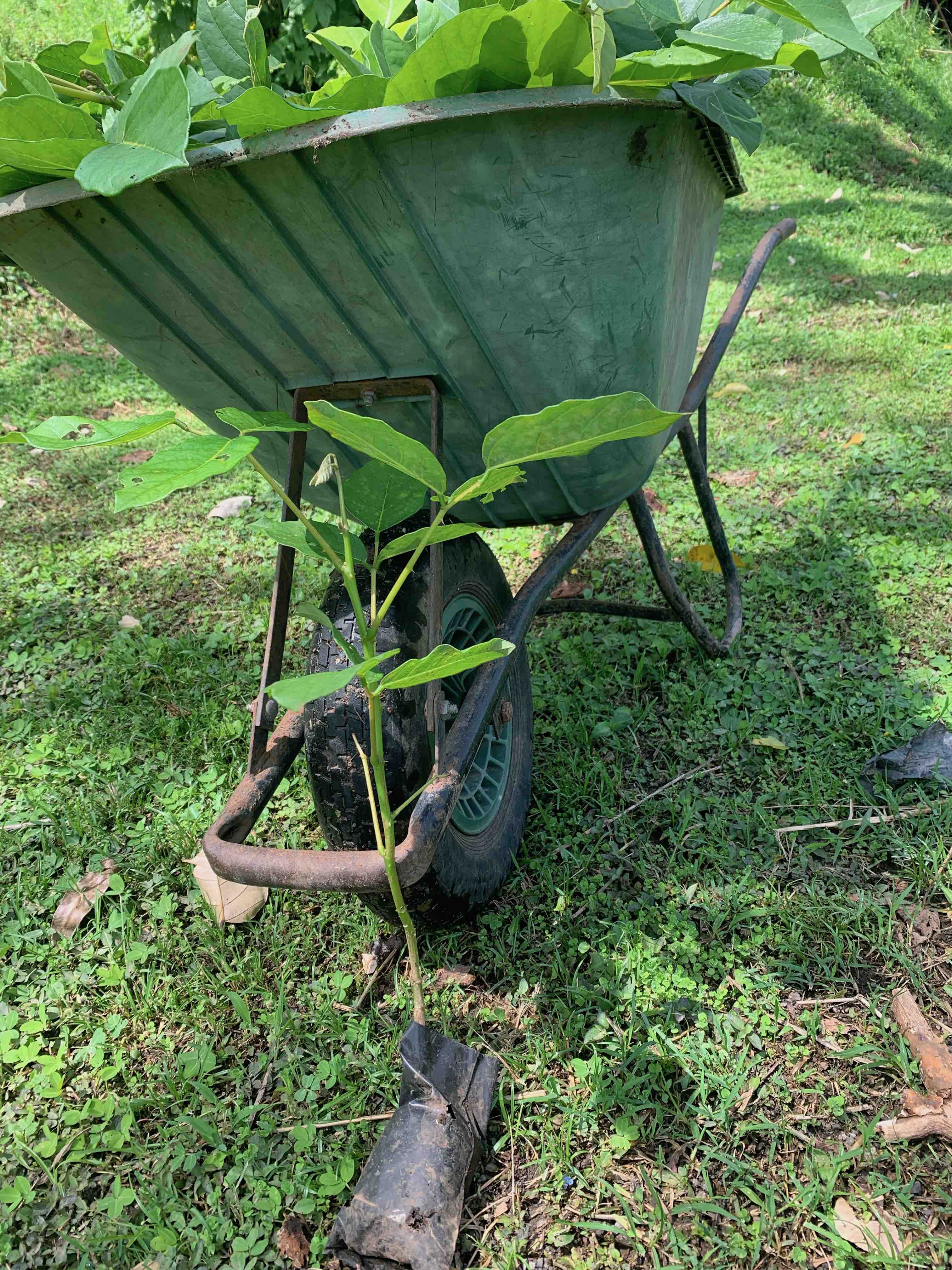
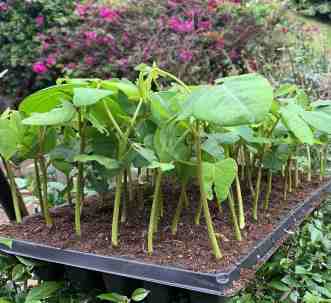
Last mention of poro tree seedlings was three months ago. We are regenerating bird habitat by restoring a portion of an erstwhile coffee estate.

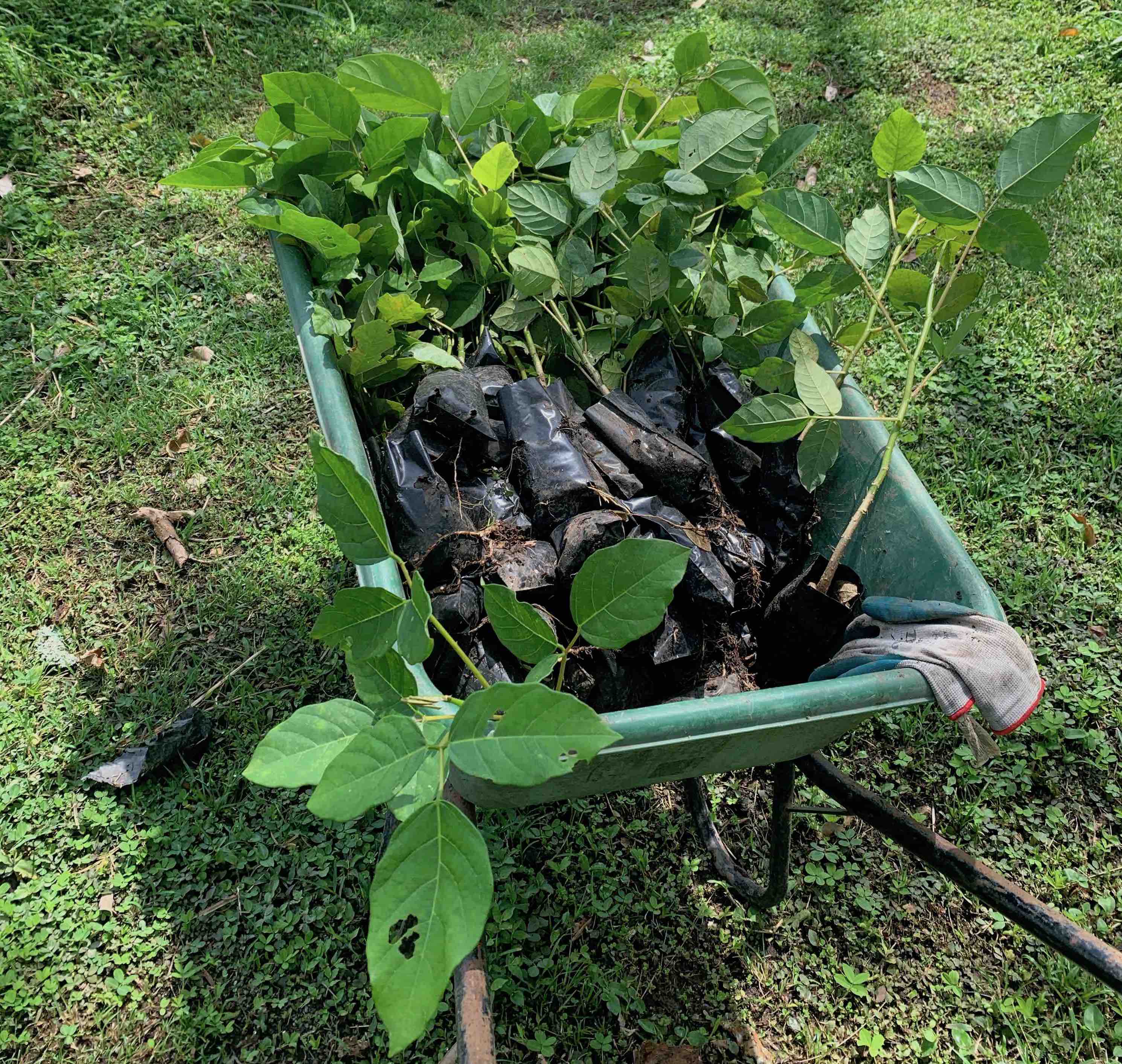
Those six-inch seedlings have become two-foot saplings over the three months since that post. Yesterday we started planting those. 60 so far.

Biochar & Regeneration During The Dry Season

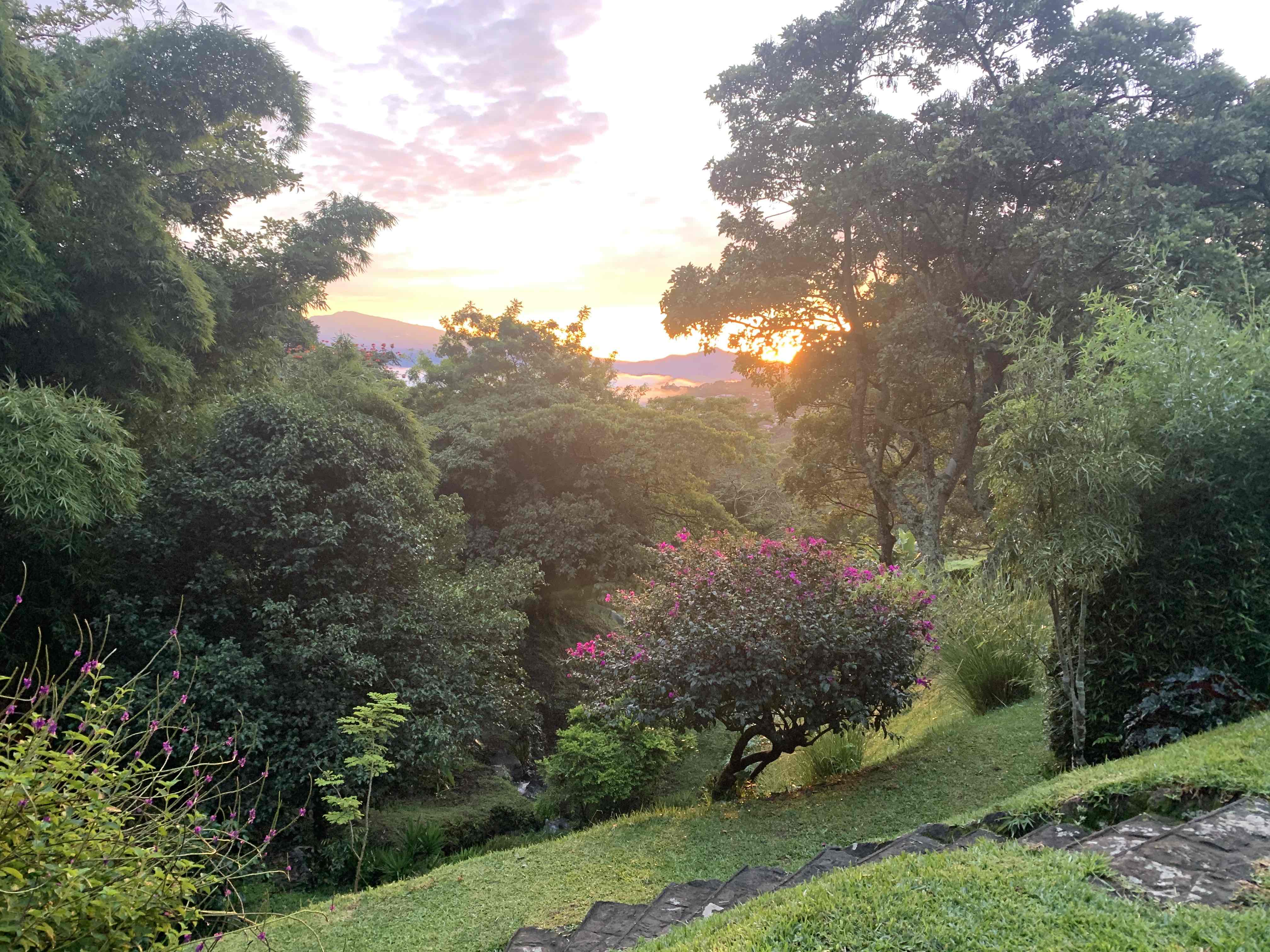
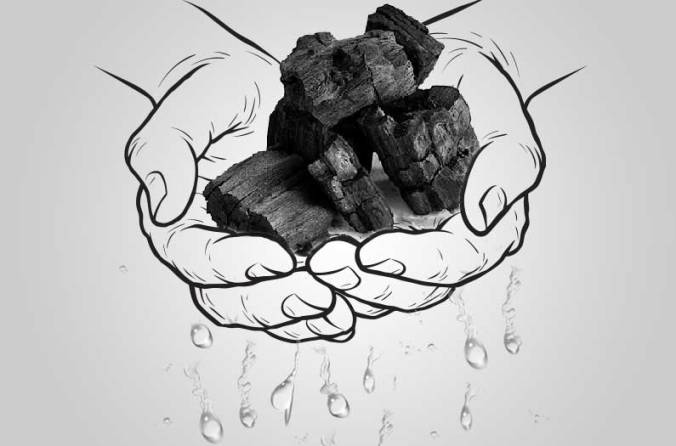
This is not the first time I am hearing of it, but this concept is counterintuitive to me because it involves combustion, which I associate with carbon emissions. On our hillside we are working to regenerate quality soil on what once was a fertile, productive coffee farm. When the sun rises over what we planted this year to help prepare the soil for next year’s coffee planting, I have been considering what we need to do differently during the dry season. October is the last month of rainy season, so we are almost there. It is clear that we need all the good ideas we can find in this effort. This seems worthy of consideration:

Loading soil with biochar allows farmers to cut way back on irrigation

At high applications levels, researchers found that biochar can not only soak up a lot of carbon, but also reduce the need for irrigation by almost 40%.

Biochar – the charcoal product used to enrich agricultural soil and trap carbon—may have a hidden commercial benefit for farmers: it could lock moisture in the soil and save on gallons of costly irrigation.

The coarse, black material, made by combusting wood, grass, and other organic materials under low-oxygen conditions, helps to sequester carbon in the soil. Continue reading