Solar’s Impressive Portion Of USA Energy Supply Increase

Robert Nickelsberg/Getty Images

Thanks to Tik Root, Senior Staff Writer at Grist:

Solar hits a renewable energy milestone not seen since WWII

With supply chains finally open, solar provided most of the nation’s new electricity capacity last year.

Solar accounted for most of the capacity the nation added to its electric grids last year. That feat marks the first time since World War II, when hydropower was booming, that a renewable power source has comprised more than half of the nation’s energy additions.  Continue reading

A Tiny Forest For Roosevelt Island

An artist’s rendering of the Manhattan Healing Forest. Courtesy of SUGi

Thanks to Cara Buckley for another in her long line of tree stories:

Coming Soon to Manhattan, a Brand-New Tiny Forest

Pocket-size forests filled with native plants have been embraced worldwide for their environmental benefits. Now one is planned for New York City.

A trend that’s gaining momentum around the world is set to finally arrive in Manhattan. It’s a tiny forest, to be planted on the southern end of Roosevelt Island, in the East River, this spring. According to its creators, it would be the first of its kind in the city and would consist of 1,000 native plants, trees and shrubs, covering just 2,700 square feet. Continue reading

Hacienda La Amistad, 2024

Amistad label circa 2019

Amistad label 2020-2023

We have been offering this Hacienda La Amistad coffee since 2019. The original label, seen in the photo above, was one we thought perfect for its simplicity.

During the pandemic, with time on our hands, we redesigned all of our labels and came up with this label to the left.  It served us well over the last few years,  as we expanded from selling only in the Authentica shops in Costa Rica to also roasting and selling in the USA.

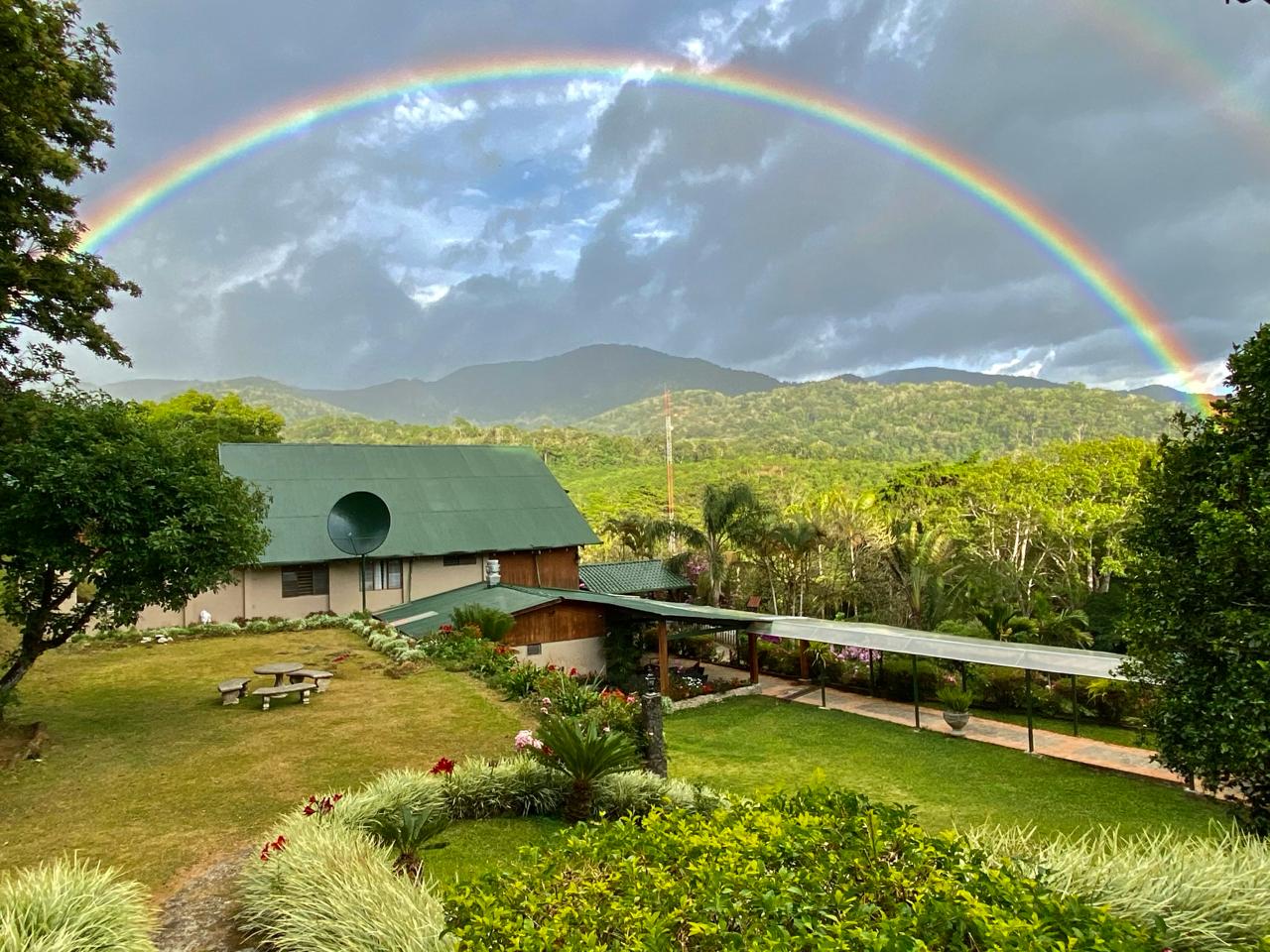
Starting in early 2024 we began rethinking all of our coffee labels. We approached the task region by region, with the blends and the single estates following a common design style. We saved this coffee for last, for no particular reason, but yesterday the rainbow over the farm was our signal that it was time to release the new label:

Hacienda La Amistad March 10, 2024

Thank you to the farm for the inspiration:

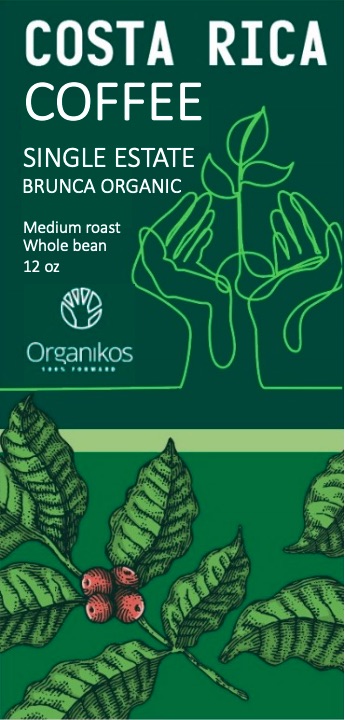
Amistad label, 2024

First Nations’ Food Sovereignty

Delphine Lee

Thanks to Mother Jones for this:

Tribal Nations Are Taking Back Their Food Systems

A new farm bill program aims to undo centuries of federal mismanagement.

The farm bill is one of the most important but least understood pieces of US legislation, and it’s overdue for renewal. Continue reading

Climate Change Challenges In Italy’s Food Basket

The inside of a rice plant about to flower. With global heating, farmers fear extreme weather events such as drought will become more frequent

Thanks to Ottavia Spaggiari for this article, and to Marco Massa and Haakon Sand for the photos. We are closer to the challenges coffee faces in the context of climate change, but we know it is a global race to find solutions:

Risotto crisis: the fight to save Italy’s beloved dish from extinction

After drought devastated prized arborio and carnaroli harvests in the Po valley, new rice varieties offer a glimmer of hope. But none are yet suitable for use in the traditional recipe

Biometeorologist Marta Galvagno at work

For most of winter and spring in 2022, Luigi Ferraris, a 58-year-old rice farmer from Mortara, a town in the Po valley, remained hopeful. Rainfall had been down 40% in the first six months of the year, and snow had accumulated thinly in the Alps, prompting an 88% drop in the amount of water coming to the Po River from snow-melt; flow in the river and its connected canals was at a historic low. Continue reading

Arizona Youth Climate Coalition

(Photo credit: kevin dooley / CC BY 2.0)

Thanks to Yale Climate Connections for this:

High schoolers helped develop Tuscon’s climate action plan

They may not be able to vote yet, but they’re already having an influence.

In the past few years, young people have made headlines with their fight against climate change. Continue reading

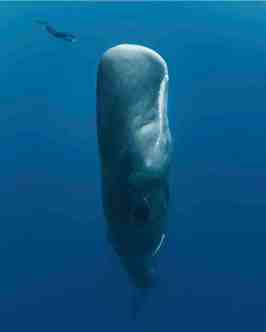
Whales, Big Brains & Codas

Shawn Heinrichs

Marine biologists are full of surprises, and those who study whales sometimes give the best surprises. Thanks to Ross Andersen and The Atlantic for this story:

HOW FIRST CONTACT WITH WHALE CIVILIZATION COULD UNFOLD

If we can learn to speak their language, what should we say?

One night last winter, over drinks in downtown Los Angeles, the biologist David Gruber told me that human beings might someday talk to sperm whales. In 2020, Gruber founded Project CETI with some of the world’s leading artificial-intelligence researchers, and they have so far raised $33 million for a high-tech effort to learn the whales’ language. Gruber said that they hope to record billions of the animals’ clicking sounds with floating hydrophones, and then to decipher the sounds’ meaning using neural networks. I was immediately intrigued. For years, I had been toiling away on a book about the search for cosmic civilizations with whom we might communicate. This one was right here on Earth. Continue reading

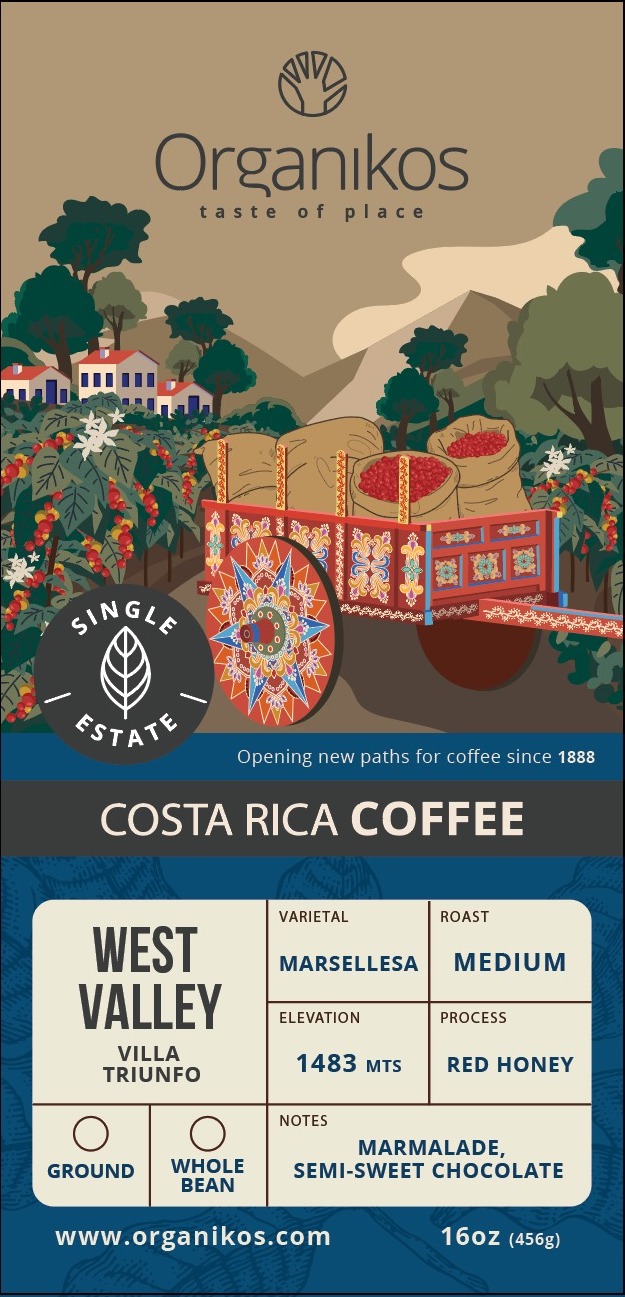
Villa Triunfo, Old Farm & New School

We have shared a few posts in these pages mentioning Villa Triunfo, but now we have designed a new label for it. So, time to celebrate that. What is most important to us about the farm is that it is one of the oldest continuously operating coffee farms in Costa Rica, since its first plantings in the late 1800s.

That, and the fact that today it is also one of the more innovative in terms of pioneering hybrids that help the coffee stay fit in the context of climate change and the various challenges (such as the uniquely problematic mold that is called rust). It is the end of harvest season, when coffees in the West Valley are being processed. The red honey process used for this coffee allows all the sugars from the juicy fruit to absorb into the beans. We look forward to cupping it soon.

Capturing Carbon In Trillions Of Tons Of Soil

Thanks to Yale Climate Connections for sharing Max Graham’s article at Grist:

How much carbon can farmers store in their soil? Nobody’s sure.

Advocates say the long-awaited farm bill could help fix that.

Dirt, it turns out, isn’t just worm poop. It’s also a humongous receptacle of carbon, some 2.5 trillion tons of it — three times more than all the carbon in the atmosphere. Continue reading

Canvus & The Beauty Of Upcycled Turbines

Visitors to Every Child’s Playground in Avon, Ohio, will find products from Canvus’s nearby factory. Photographer: Brian Kaiser/Bloomberg

We missed Bloomberg’s story about Canvus back in November, but happy to share it now:

Retired Wind Turbine Blades Live on as Park Benches and Picnic Tables

To keep turbine blades from piling up in landfills, startups like Canvus are turning them into new products — and free marketing for wind power.


At first glance, the benches outside the Great Lakes Science Center in downtown Cleveland seem unremarkable. But a closer inspection shows that their droplet-shaped shells aren’t made from wood or metal. A scan of the attached QR codes reveals even more: These benches used to be wind turbine blades…


A big thanks to Yale Climate Connections for bringing Canvus to our attention today:

Carbon Clean 200’s Performance Update Report

A press release for this report above summarizes the findings:

Carbon Clean 200 Companies Outperform Dirty Energy by 39%

The 11th cohort of global Clean200 leaves dirty energy investments in the dust

As You Sow and Corporate Knights today released their 11th update of the Carbon Clean200™, a list of 200 publicly traded companies worldwide leading the way among global peers to a clean energy present and future. These companies generated almost double the returns of the main fossil fuel index from July 1, 2016, to January 15, 2024, despite geopolitical tensions that have favored fossil fuel stocks in the past two years. Continue reading
Returning Golf Land To Nature

The San Geronimo Golf Course is being reclaimed and rewilded and is now known as San Geronimo Commons. Jim Wilson/The New York Times

Golf is known to be problematic. But then again, what is not problematic? And we appreciate seeing cases where golf gives way to nature. Our thanks to Cara Buckley for bringing this story to our attention in the New York Times. We applaud the imagination of those responsible:

After Shutting Down, These Golf Courses Went Wild

The restoration of the San Geronimo land is still underway. Trails are planned that would skirt sensitive habitat and help to make it starkly different from its time as a golf course. Jim Wilson / The New York Times Image

Most defunct golf courses get paved over, but a number are getting transformed into ecological life rafts for wildlife, plants — and people.

There was scraggly grass in one sand trap and wooden blocks and a toy castle in another, evidence of children at play. People were walking their dogs on the fairway, which was looking rather ragged and unkempt. This was only to be expected. Continue reading
Pause On Terminals for LNG Export

Activists protest against fossil fuels and in particular fracking and liquefied natural gas, or LNG, on day eight of the UNFCCC COP28 Climate Conference at Expo City Dubai on December 8, 2023, in Dubai, United Arab Emirates. (Photo by Sean Gallup/Getty Images)

The news was hailed weeks ago as a big deal. Yale Climate Connections takes the proclomation a step further:

Why Biden’s pause on new LNG export terminals is a BFD

The administration’s move puts a spotlight on a potent climate-warming gas: methane, the main ingredient in natural gas.

Natural gas has long been touted as a “bridge fuel” to a clean energy future that gets all its power from renewable sources like wind, solar, and geothermal power. Continue reading
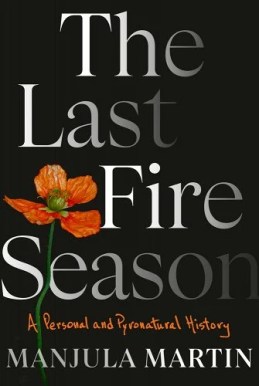
The Last Fire Season, Reviewed

Fire and its suppression are topics we are never quite sure about. Scientifically, there may be a correct answer. But this personal account sounds worthy of consideration as well.  This book review by Casey Schwartz in The Atlantic makes a compelling case:

Living Through the End of California
In a new book, Manjula Martin faces up to the way the altered environment of her home state will change her life forever.

In his 1998 book, Ecology of Fear, Mike Davis, the late California muckraker and self-proclaimed Marxist environmentalist, made the case for “letting Malibu burn.” Continue reading
Melipona Bees, A Peruvian Wonder

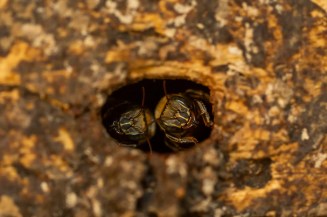
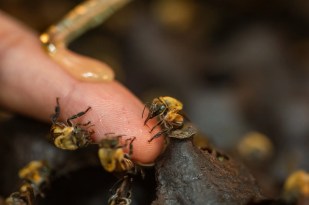
Melipona eburnea, a species of bee, is native to the Amazon. Unlike the more familiar but invasive honey bees from Africa and Europe that have spread through the Americas, these bees don’t sting. Ana Elisa Sotelo for National Geographic

The countless wonders of bees, as well as the many problems they now face, have made Melipona bees, also known as stingless bees, of particular interest to our daily scan for news stories:

Native to the tropics, these pollinators are taking a lead role in one of the latest efforts to conserve the Amazon rainforest.

Investing Patagonia’s Proceeds In Conservation

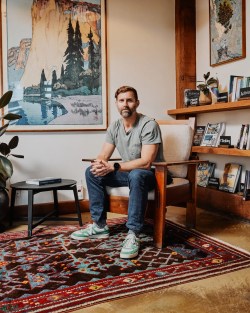
Greg Curtis, the former deputy general counsel of Patagonia, is responsible for giving away huge sums of money to causes that are aligned with Patagonia’s history of environmental activism. Adam Amengual for The New York Times

When news broke about the company’s future, we were in awe; since then we heard little so this is a welcome update:

Patagonia’s Profits Are Funding Conservation — and Politics

$71 million of the clothing company’s earnings have been used since September 2022 to fund wildlife restoration, dam removal and Democratic groups.

A little more than $3 million to block a proposed mine in Alaska. Another $3 million to conserve land in Chile and Argentina. And $1 million to help elect Democrats around the country, including $200,000 to a super PAC this month.

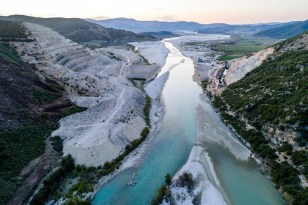
The site of the Kalivac Dam on the Vjosa River in Albania, where Holdfast has funded a major conservation project. Andrew Burr/Patagonia

Patagonia, the outdoor apparel brand, is funneling its profits to an array of groups working on everything from dam removal to voter registration.

In total, a network of nonprofit organizations linked to the company has distributed more than $71 million since September 2022, according to publicly available tax filings and internal documents reviewed by The Times. Continue reading

Manatees, To Brighten Your Horizon

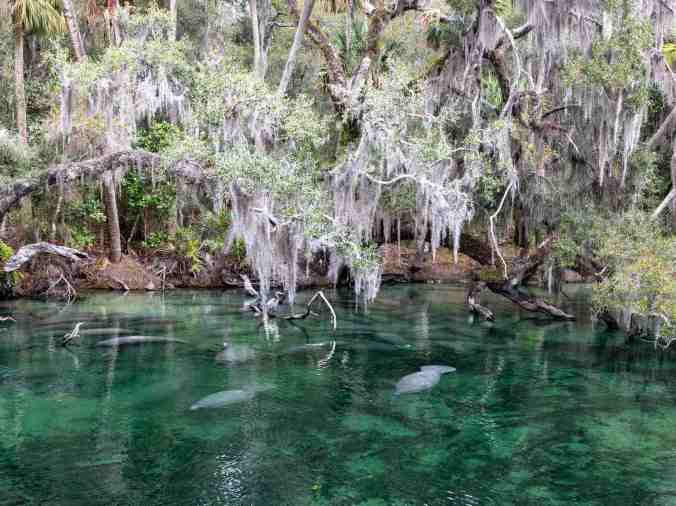
Manatees are generally solitary creatures, but tend to gather at warm water sites in the winter.
Florida State Parks

After a Kolbert doomcloud, a bit of sunshine is needed. Here it is in the form of creatures so charismatic they make you see something other than darkness. Thanks to National Public Radio (USA):

Legend has it that centuries ago, manatees used to be mistaken for mermaids, so a sight last week at one Florida state park would have put ancient sailors in shock.

Blue Spring State Park is home to one of the largest winter gathering sites for manatees in Florida, and recently, the park reached a new record when the number of manatees spotted in one group was nearly 1,000. Continue reading
Victorious, For Now, Reining In LNG

When Bill McKibben announces victory, savor it but stay vigilant:

A Massive Win, and What It Means

For Once, Big Oil Takes It on the Chin

I wrote you two days ago with provisional good news—it looked as if the long and deep fight to rein in runaway LNG export growth had scored a huge victory. Continue reading
How Birds See Color

Forget cerulean — a bright, clear sky is actually dominated by ultraviolet light. Humans can’t see ultraviolet light, but many birds can. “Their sky will be essentially an ultraviolet sky,” said Daniel Hanley, a sensory ecologist at George Mason University.

Birds have gotten more attention in our pages than any other person, place or thing since we first started. Today that attention is focused on their sight:

A Bird’s-Eye View of a Technicolor World

Scientists have devised a new video system that reveals how animals see color, and us.

Is the sky truly blue?

Insects Love Solar Farms

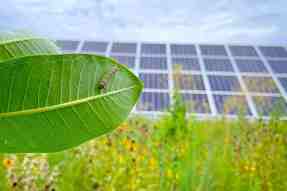
A monarch caterpillar on a common milkweed leaf at a solar farm in Minnesota. LEE WALSTON / ARGONNE NATIONAL LABORATORY

We have already linked a couple of times to the multidimensional benefits of solar, and here is another dimension:

At Solar Farms Planted with Native Vegetation, Insects Flourish

To reach its climate goals, the U.S. will need to build solar arrays on some 15,000 square miles of land, an area larger than Maryland. Continue reading