Civic Responsibility, Palm Oil & Change

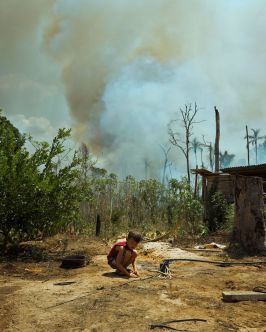
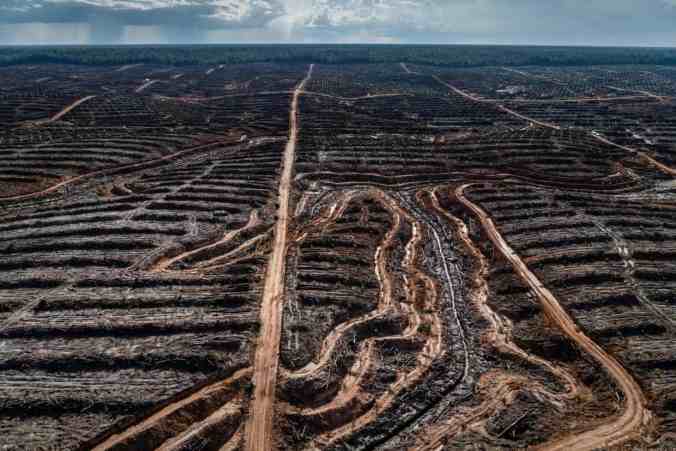
Forest clearance in Indonesia. Palm oil production in the country, which is one of the world’s largest producers, has been linked to deforestation. Photograph: Ulet Ifansasti/Greenpeace
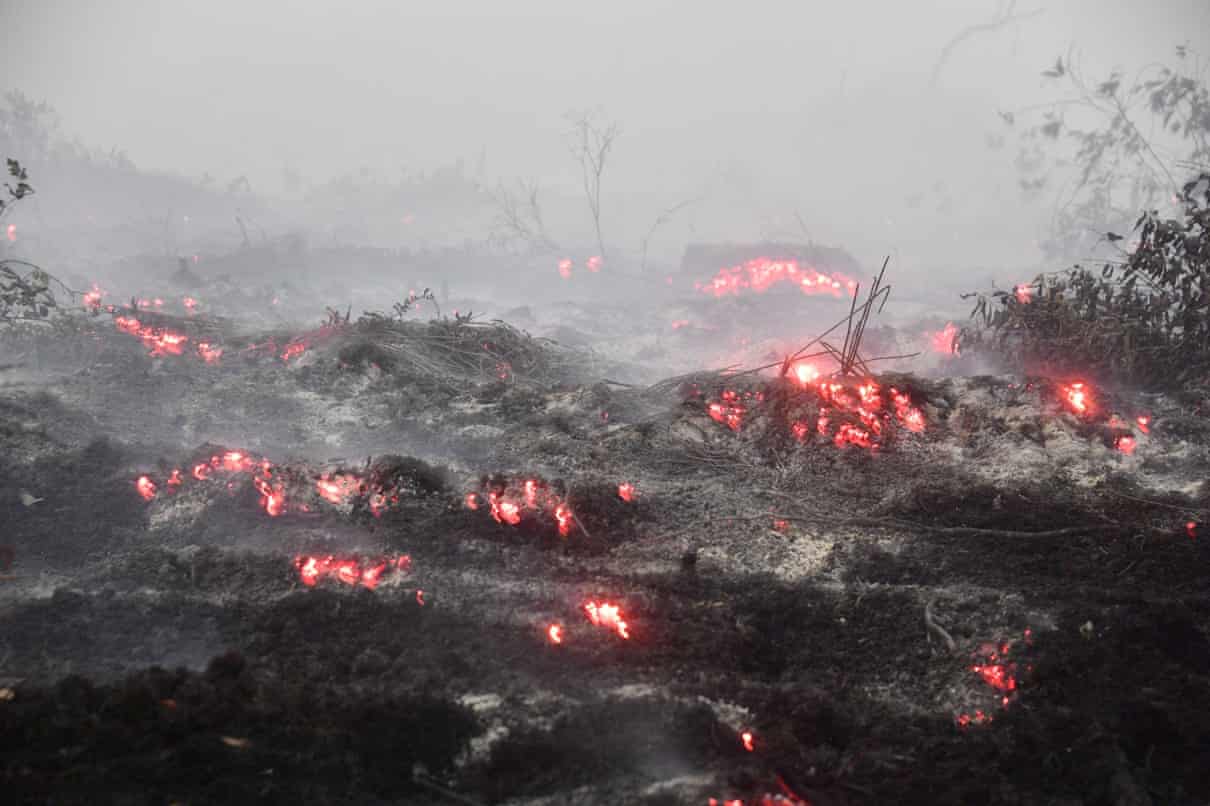
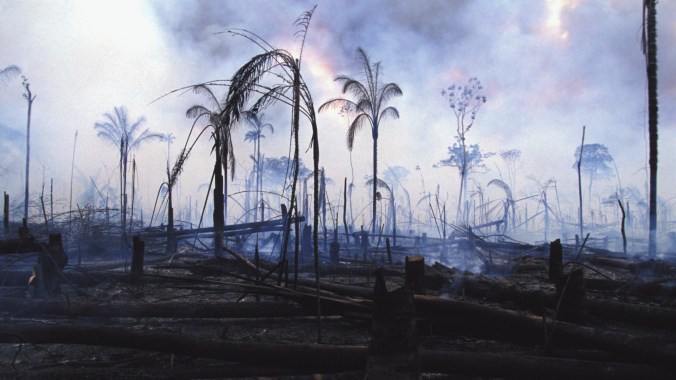
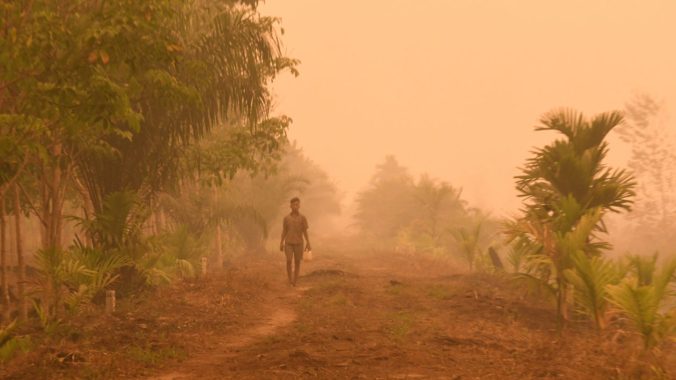
Smouldering peatland following a suspected land clearance fire in Kampar, Sumatra, in 2019. Photograph: Adek Berry/AFP/Getty Images

Palm oil has a dirty history. It causes havoc, to put it politely. May we all do our part to elect civic leaders with a keen sense of responsibility for devastation in other parts of the world, and get them to take action to reduce it. We thank Patrick Greenfield for his reporting in this article titled The UK city taking a stand on palm oil in the fight against deforestation:

A growing number of towns and villages are following Chester’s lead in helping local businesses to eradicate deforestation-linked oil from their supply chains

Orangutans, tigers, Sumatran rhinos and many other threatened species are affected by habitat loss and human-wildlife conflict that stems from palm oil plantations. Photograph: Vier Pfoten/Four Paws/Rhoi/REX/Shutterstock

From mince pies and biscuits to lipstick and soap, palm oil grown on deforested land in south-east Asia will have been hard to avoid this Christmas. The vegetable oil is found in almost half of all packaged products in UK supermarkets, according to WWF.

But a growing number of towns and cities are trying to use only sustainable palm oil, helping orangutans, tigers, Sumatran rhinos and many other threatened species. Continue reading

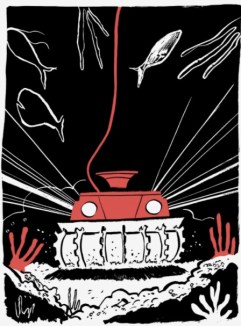
The Biggest Land Grab In The History Of Humankind

Illustration by João Fazenda

When she publishes an essay, or a longform reported article, it should be clear before you start that you are almost certainly not going to enjoy what you learn:

It’s rare that a tiny country like Nauru gets to determine the course of world events. But, for tangled reasons, this rare event is playing out right now. If Nauru has its way, enormous bulldozers could descend on the largest, still mostly untouched ecosystem in the world—the seafloor—sometime within the next few years. Hundreds of marine scientists have signed a statement warning that this would be an ecological disaster resulting in damage “irreversible on multi-­generational timescales.” Continue reading

Beggar Thy Southern Neighbors

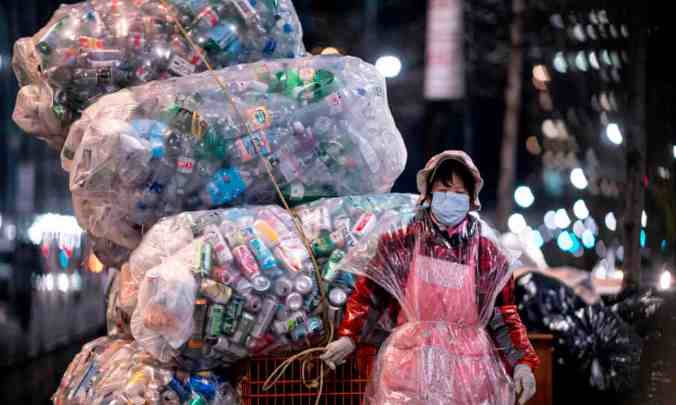
A woman pulls a cart loaded with bags of recyclables through the streets of New York. Photograph: Johannes Eisele/AFP/Getty

Thanks to the Guardian for this Econ 101 textbook example of a “beggar thy neighbor” action taken in one country and imposed on others, using “market forces” explanations to justify the action:

Latin America urges US to reduce plastic waste exports to region

Study finds exports to region doubled in 2020 with practice predicted to grow as US invests in recycling plants

Environmental organisations across Latin America have called on the US to reduce plastic waste exports to the region, after a report found the US had doubled exports to some countries in the region during the first seven months of 2020. Continue reading

Entangled In Costa Rica

If you have visited Costa Rica, or been fortunate enough to live here, you might have already become entangled with the country’s many opportunities to support conservation. For many decades foreigners have been welcomed to join in the country’s marine and terrestrial conservation initiatives. Many of those foreigners adopt the country as home after getting entangled in all kinds of good ways.

The first eight minutes of the video above are bliss: several young people are introduced, each of whom has become entangled. Along with those introductions, some stunning photography and videography showcasing Costa Rica’s nature, helping you to understand the entanglement. At 8:14 you see the dictionary definitions of entangled. The next 17 minutes are a case study in industrial fishing’s unintended consequences. Not surprisingly, this has already received lots of awards, but they ask you to share freely, so please do. And if you want to support financially, that will be appreciated as well.

The Nutmeg’s Curse, Reviewed

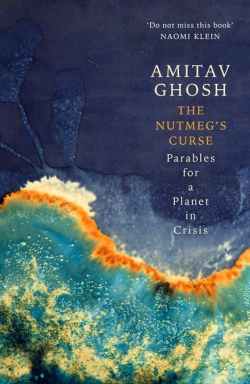
The Nutmeg’s Curse: Parables for a Planet in Crisis
by Amitav Ghosh
Hachette
352pp
Published October 2021
ISBN: 9781529369458

Amitav Ghosh, appearing in our pages only once before, has a new book. The title of this review of the book, A Dazzling Synthesis, says plenty, as does the endorsement from Naomi Klein:

We have been aware for centuries that we are responsible for the earth’s denudation: its ‘cold staring spaces’, as English writer John Evelyn called them in 1706, mourning the trees chopped down on his estate.  Around a hundred years later, the Prussian explorer Alexander Von Humboldt worried over ‘mankind’s mischief’, conjecturing that if humans ever ventured into outer space, they would carry with them a tendency to leave everything ravaged and barren.  (The closer they resembled man, he also observed, ‘the sadder monkeys look’).  ‘Are the green fields gone?’ asked the narrator of Herman Melville’s Moby Dick, published fifty years after Von Humboldt’s 1801 diary, as he watched his fellow Manhattanites staring dreamily out to sea.  Continue reading

287 Pounds Of Plastic Per Person Each Year?

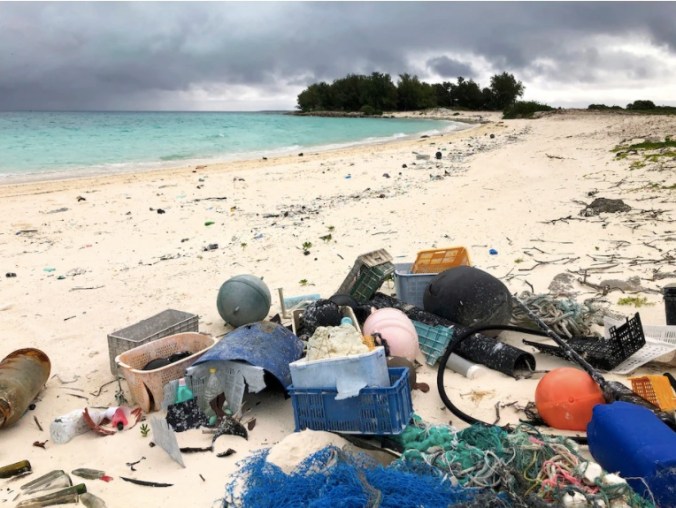
Plastic and other debris is seen on the beach on Midway Atoll in the Northwestern Hawaiian Islands in 2019. (Caleb Jones/AP)

It is clear to me now, after two years of our two Authentica shops offering products made from recycled plastic (among other recycled materials), we will need to be at this for a long time to make a dent. Of all the amazing capabilities we humans have, our ability to generate plastic waste is among the most remarkable. Our thanks to Tik Root for reporting on this finding:

U.S. is top contributor to plastic waste, report shows

Scientists reveal the U.S. role in the ‘deluge’ of plastic littering the world’s oceans in a congressionally mandated report

The United States ranks as the world’s leading contributor of plastic waste and needs a national strategy to combat the issue, according to a congressionally mandated report released Tuesday. Continue reading

Thanks Big Oil, We Got Your Messages

Illustration: Guardian Design

Geoffrey Supran and Naomi Oreskes have compiled reminders of the messaging from some of big oil’s leaders of climate change messaging, and shared it with us in the Guardian:

The forgotten oil ads that told us climate change was nothing

Since the 1980s, fossil fuel firms have run ads touting climate denial messages – many of which they’d now like us to forget. Here’s our visual guide

Both ads from the Informed Citizens for the Environment, 1991

Why is meaningful action to avert the climate crisis proving so difficult? It is, at least in part, because of ads.

The fossil fuel industry has perpetrated a multi-decade, multibillion dollar disinformation, propaganda and lobbying campaign to delay climate action by confusing the public and policymakers about the climate crisis and its solutions. This has involved a remarkable array of advertisements – with headlines ranging from “Lies they tell our children” to “Oil pumps life” – seeking to convince the public that the climate crisis is not real, not human-made, not serious and not solvable. The campaign continues to this day. Continue reading

Rigged With Irony

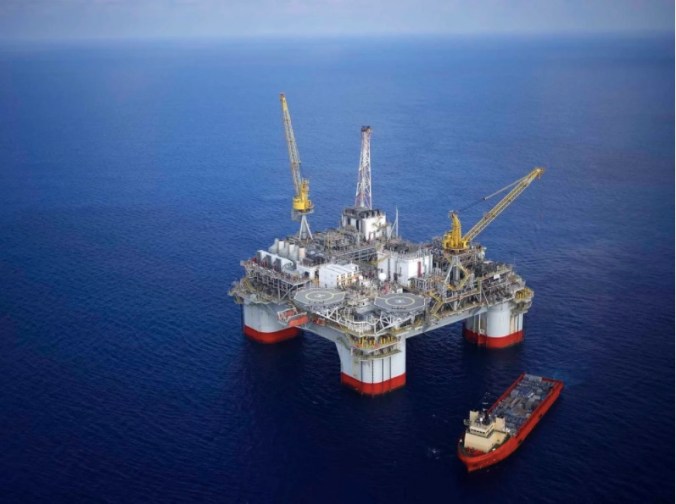
A supply ship sits anchored next to the Chevron Corp. Jack/St. Malo deep water oil platform in the Gulf of Mexico in the aerial photograph taken off the coast of Louisiana, U.S., on Friday, May 18, 2018. Bloomberg/Bloomberg via Getty Images

Irony is not always funny:

The Biden administration sold oil and gas leases days after the climate summit

Days after President Joe Biden told world leaders that his administration is committed to slowing climate change with “action, and not words,” his Interior Department oversaw one of the largest oil and gas lease sales in American history. Continue reading

Global North, Global South & Responsibilities

Photo: Hannah Whitaker; Prop Styling: Marina Bevilacqua.

David Wallace-Wells has done it again. Devastated me with considerations I should have had on my own, but had not. And he makes it so vivid that once you see his point you cannot stop seeing it. Having lived in the Global South for a majority of my adult years, but having been born into and lived in the Global North for the first half of my life, this story resonates with me in ways I cannot quite describe. But the quote from Proverbs in yesterday’s post seems even more intensely relevant:

Climate Reparations

A trillion tons of carbon hangs in the air, put there by the world’s rich, an existential threat to its poor. Can we remove it?

I. What Is Owed

Brazil, 2019. Photo: Cristina de Middel/Magnum Photos

The math is as simple as the moral claim. We know how much carbon has been emitted and by which countries, which means we know who is most responsible and who will suffer most and that they are not the same. We know that the burden imposed on the world’s poorest by its richest is gruesome, that it is growing, and that it represents a climate apartheid demanding reparation — or should know it. We know we can remove some of that carbon from the atmosphere and undo at least some of the damage. We know the cost of doing so using tools we have today. And we know that unless we use them, the problem will never go away. Continue reading

Telling Off The Fossil Fuel CEO

Click to the right to see the CEO of an oil company take a strong verbal assault from a fellow panelist.  It is uncomfortable to watch. And that is exactly the purpose. Read more about the context in the description below, titled Shell CEO Roasted at TED Climate Conference He Was Foolishly Invited to Speak At. We can expect to see more disruptions like this one in the future:

As Shell’s CEO Ben van Beurden spoke at a TED conference, he was interrupted by organizers, one of whom called him “one of the most evil people in the world.”

On Thursday, a strange scene unfolded at the International Conference Centrein Edinburgh. Shell CEO Ben van Beurden took the stage with a prominent climate scientist and Christiana Figueres, the woman who negotiated the Paris Agreement, at a TED Countdown conference. Continue reading

Legal Consequences For Deforestation

Ron Haviv / VII / Redux

This article by Robinson Meyer, a staff writer at The Atlantic and the author of the newsletter The Weekly Planet, is worth reading if Brazil’s role in climate change has been on your mind:

Deforestation Is a Crime

A new bipartisan bill would treat it that way.

The world doesn’t agree on many things, but one of them is that global deforestation is a problem. If deforestation were a country, it would be the world’s third-largest source of climate-warming pollution, after the United States and China. (It would also be a terrible place to live—bulldozers everywhere and no shade to speak of.) Parts of the Amazon now emit more carbon pollution than they capture because of deforestation, a recent study found.

Knowing about a problem is, of course, different from knowing what to do about it. Continue reading

Know Where Your Coffee Comes From

Illustrations by Hokyoung Kim

Most of the coffee stories I tell here are short reports on our efforts to regenerate a onetime coffee farm. Plenty of others we link to are about challenges facing coffee farmers and efforts to improve their lot . I cannot find a story like the one below that we have featured previously, where coffee farming is effectively undermining conservation. Reading this new longform work by Wyatt Williams will not make anyone happy, but that must be the point. The illustrations by Hokyoung Kim are a perfect accompaniment:

The Case of the Vanishing Jungle

It seemed like an easy crime to stop: protected Indonesian rainforest, cut for coffee farms. But a globalized economy can undermine even the best-laid plans.

In the fall of 2015, Matt Leggett, a newly hired senior adviser for the Wildlife Conservation Society, found himself sitting in a meeting in Jakarta, Indonesia, wondering if someone had missed the point. The meeting, as he remembers it, was meant to unveil some good news about tigers. In brief: Back in 2002, a survey of one of the last habitats of the critically endangered Sumatran tiger, Bukit Barisan Selatan National Park, showed a tiger population that, in biologist-speak, amounted to only 1.6 tigers per 100 square kilometers. Continue reading

While Considering The Switch To EV

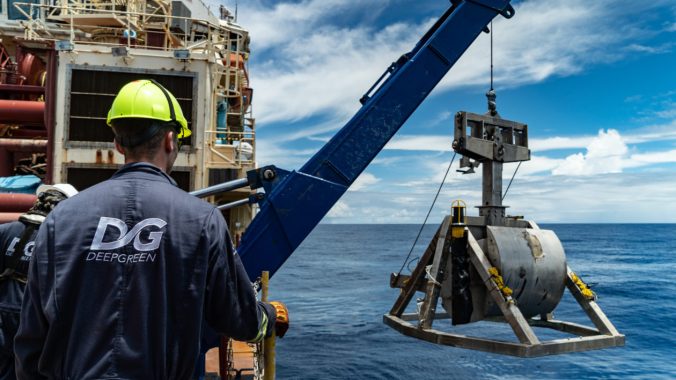
Researchers with DeepGreen Metals deploy a box core tool to capture a sample of the seafloor. THE METALS COMPANY

As more and more households and businesses and governments plan their switch to electric vehicles, considering the ripple effects is as important now as it was in the age of fossil-fueled vehicles:

The Race for EV Parts Leads to Risky Deep-Ocean Mining

The electric vehicle boom is driving a surge in demand for prized metals needed for batteries and other components. Some companies say the solution lies in mining the deep oceans, but scientists say that could irreversibly damage a vast, largely pristine ecosystem.

A polymetallic nodule containing manganese, nickel, cobalt and copper gathered from the seafloor. THE METALS COMPANY

Nauru, lying about halfway across the vast expanse of the Pacific Ocean between Australia and Hawaii, is the world’s smallest island nation. But in the emerging industry of deep-sea mining, it punches far above its weight.

This June, Nauru gave notice to the International Seabed Authority (ISA), the UN agency charged with regulating mining in international waters, that it was triggering the so-called two-year rule: The agency will have to consider any application for a deep-sea mining license two years from now, under whatever regulations are on the books at the time. This effectively forces the ISA’s hand to finalize a regulatory mining code before that deadline. With this latest development, a once-fanciful idea may soon become a global industry. Continue reading

The Alberta Tar Sands Prize

In a world that will need less oil, the attraction of going to a landlocked continental interior, such as Alberta, Canada, and trying to separate petroleum from sand is waning. Photograph by Ben Nelms / Bloomberg / Getty

Oil from the tar sands of Alberta will sink us faster than we are already sinking. How important is it to keep it where it is? Akin to some sort of holy grail. Thanks to Bill McKibben, as always, for weekly reminders to keep our eyes on the prize:

We Love You, Alberta—Just Not Your Tar Sands

If the province’s oil is dug up and burned, it will be calculably harder to limit the damage from climate change.

Some weeks ago, the government of Alberta wrote to me—and apparently to a number of other environmentalists and environmental groups. We are all subjects of an “anti-Alberta energy inquiry,” and have the right to respond to charges that are being levelled by a government commission. Alberta, it turns out, has spent three and a half million dollars in an effort to find out whether foreigners are unfairly targeting its oil-and-gas industry. I’m mentioned dozens of times in the draft report, due to be finished this week, and it contains links to lots of articles of mine explaining why the province’s vast tar-sands project should be curtailed. Continue reading

Really, Australia?

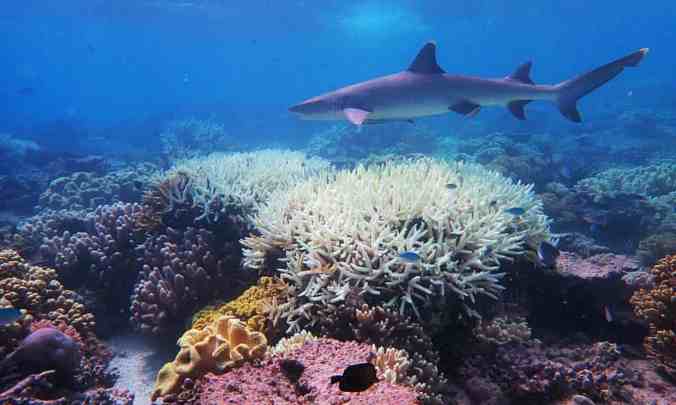
The Unesco world heritage committee’s decision on the Great Barrier Reef’s ‘in danger’ status is currently scheduled for 23 July. Photograph: James Cook University/AFP via Getty Images

It’s been a couple months since we asked anyone the fundamental question. Ok, we acknowledge our not being qualified to make the scientific judgement on whether the Great Barrier Reef is in sufficient danger to be listed as such, officially. But UNESCO has the qualified scientists, so let them do their job without undue influence. It sure seems likely to help the entire world to see how fossil-fueled climate change is impacting such natural wonders. It would raise consciousness in a way that might even be good for Australia–whose government obviously thinks otherwise. Hopefully UNESCO will stick to its principles and resist this lobbying. When oil-based economies come to lend a hand, watch out for conflict of interest:

‘Fossil fuel friends’: Saudi Arabia and Bahrain back Australia’s lobbying on Great Barrier Reef

Exclusive: oil rich nations back push against Unesco recommendation to have reef placed on world heritage ‘in danger’ list Continue reading

Exxon’s Emerging Reckoning

The pressure has been mounting for some time, but it is finally causing needed changes. There were plenty of headlines late last week, but only today do we feel this news means something potentially lasting:

ExxonMobil loses a proxy fight with green investors

An activist hedge fund succeeds in nominating at least two climate-friendly directors to the energy giant’s board

“The stone age did not end for lack of stone, and the oil age will end long before the world runs out of petroleum.” That battle cry animates critics of Big Oil, who dream of phasing out hydrocarbons in favour of cleaner fuels and technologies. Continue reading
Palm Oil & Us

A villager walks through a haze from fires in burned peatland at an oil palm plantation in Sumatra, Indonesia. MUHAMMAD ADIMAJA / GREENPEACE

For all the attention we have given palm oil in the decade of posting links to stories here, strange that Jocelyn Zuckerman only appears once in our pages before today. As with fossil fuels the onus should not be entirely on individuals as consumers; collective action and public policy are essential tools to limiting the damage that corporate palm interests have been causing, relatively unchecked, for too long. We thank her for this clear, strong statement:

The Time Has Come to Rein In the Global Scourge of Palm Oil

The cultivation of palm oil, found in roughly half of U.S. grocery products, has devastated tropical ecosystems, released vast amounts of C02 into the atmosphere, and impoverished rural communities. But efforts are underway that could curb the abuses of this powerful industry.

A few weeks ago, the Sri Lankan president announced that his government would ban all imports of palm oil, with immediate effect, and ordered the country’s plantation companies to begin uprooting their oil-palm monocultures and replacing them with more environmentally friendly crops. Citing concerns about soil erosion, water scarcity, and threats to biodiversity and public health, President Gotabaya Rajapaksa explained that his aim was to “make the country free from oil palm plantations and palm oil consumption.” Continue reading
Climate Change, Personal Responsibility & Collective Responsibility

ExxonMobil, the owner of this Louisiana oil refinery, has adopted a tobacco-industry strategy to protect its business model. Photograph by Barry Lewis / Getty

This is a question we ask, rhetorically, all the time. But we normally neither seek the actual answer nor come across the answer; but today is different, thanks to Bill McKibben’s weekly newsletter:

The Particular Psychology of Destroying a Planet

What kind of thinking goes into engaging in planetary sabotage?

Two weeks ago, I looked at the question of the anxiety that the climate crisis is causing our psyches. But, if you think about it, there’s an equally interesting question regarding the human mind: How is it that some people, or corporations, can knowingly perpetuate the damage? Or, as people routinely ask me, “Don’t they have grandchildren?” Continue reading

Really, Wyoming?

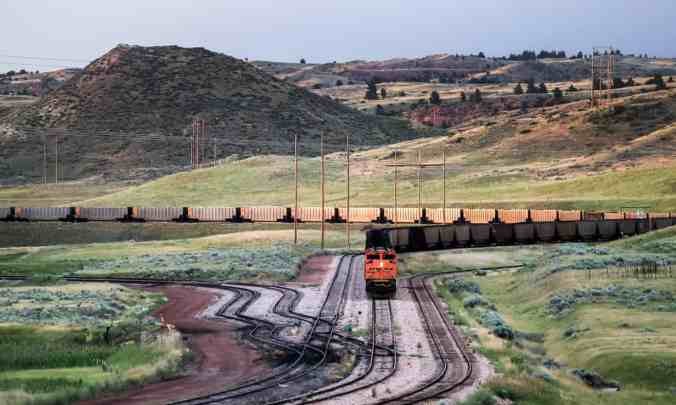
A train loaded with newly mined coal near Gillette, Wyoming. Photograph: Tannen Maury/EPA

It’s been too long since we last asked this question that had been a mainstay in these pages, but today we have to ask it of Wyoming, based on this story:

Wyoming stands up for coal with threat to sue states that refuse to buy it

Republican governor says measure sends message that Wyoming is ‘prepared to bring litigation to protect her interests’

Wyoming is faced by a transition to renewable energy that’s gathering pace across America, but it has now come up with a novel and controversial plan to protect its mining industry – sue other states that refuse to take its coal. Continue reading