82 Leading Scientists Agree

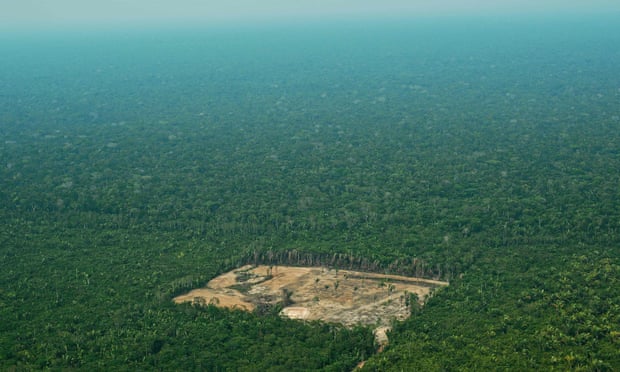
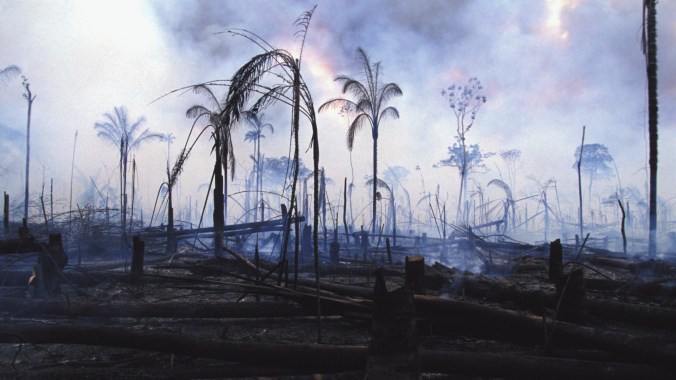
Aerial view of deforestation in the Western Amazon region of Brazil.

Aerial view of deforestation in the Western Amazon region of Brazil. Photograph: Carl de Souza/AFP/Getty Images

To state the obvious, yes:

Humans need to value nature as well as profits to survive, UN report finds

Focus on market has led to climate crises, with spiritual, cultural and emotional benefits of nature ignored

Taking into account all the benefits nature provides to humans and redefining what it means to have a “good quality of life” is key to living sustainably on Earth, a four-year assessment by 82 leading scientists has found. Continue reading

Agrivoltaics Advancing

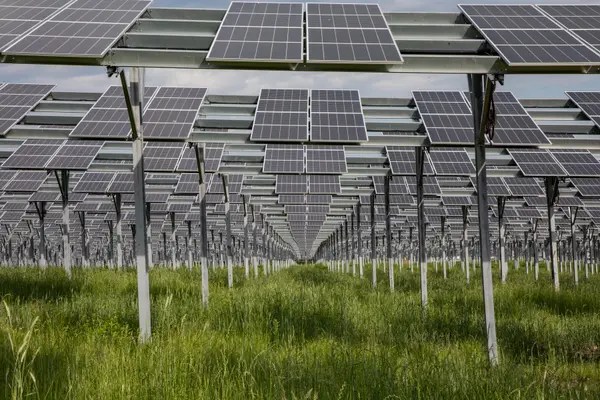
Solar panels on Paul Knowlton’s farm in Grafton, Mass. Cattle will graze below the panels, which rise to 14 feet above the ground. Tony Cenicola/The New York Times

The concept of agrivoltaics has been an occasional topic in our pages over the years, most recently as we have prepared to plant thousands of coffee saplings. Ellen Rosen focuses our attention on how the advances in technology, and entrepreneurship in this space, are addressing the challenges:

Can Dual-Use Solar Panels Provide Power and Share Space With Crops?

Companies like BlueWave are betting on it. But the technology has its critics.

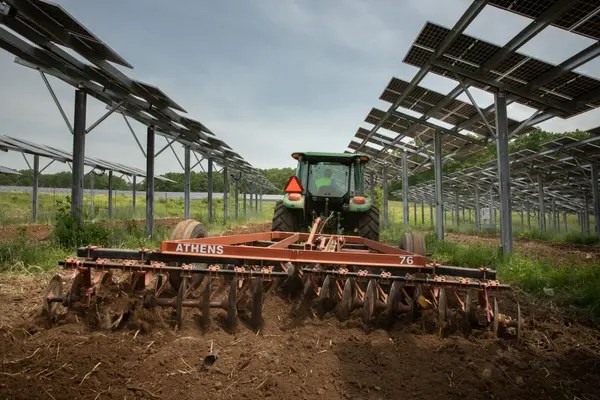
Mr. Knowlton preparing the soil between the panels before he plants butternut squash and lettuce. Tony Cenicola/The New York Times

In its 150-year history, Paul Knowlton’s farm in Grafton, Mass., has produced vegetables, dairy products and, most recently, hay. The evolution of the farm’s use turned on changing markets and a variable climate. Recently, however, Mr. Knowlton added a new type of cash crop: solar power. Continue reading

Big Science

While working on my doctoral dissertation in the early 1990s I had a clear view into how big businesses, and industry associations, influence the creation of knowledge in research universities. The big science problem (not to be confused with the Big Science album) was clearly there, we all can see now. But I did not find it so problematic at the time. Bibi van der Zee‘s review in the Guardian makes clear why we should be more concerned about who funds the creation of knowledge, and what strings may be attached:

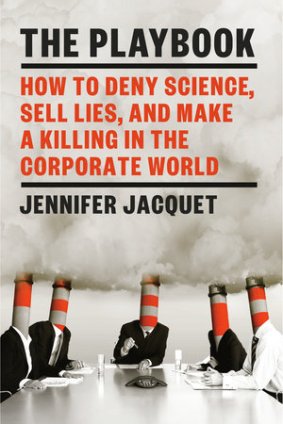
The Playbook by Jennifer Jacquet review – how big business takes on science and wins

A ‘guide’ for companies looking to counter unwelcome research exposes the corporate world’s dark arts

“Playbook” is a term that feels overused at the moment – mostly because of Vladimir Putin’s military adventures. Continue reading

Rural Wind & Gold

Thanks to Josh Gabbatis and the folks at CarbonBrief:

Windfarms raise incomes and house prices in rural US, study finds

Wind turbines have increased local incomes by around 5% and house values by 2.6% in parts of the US, according to a new study.

The research, published in the journal Energy Policy, found benefits in terms of jobs, taxes and land payments associated with renewable energy. Continue reading

Kaboom! The First Successful Climate Raid Ever

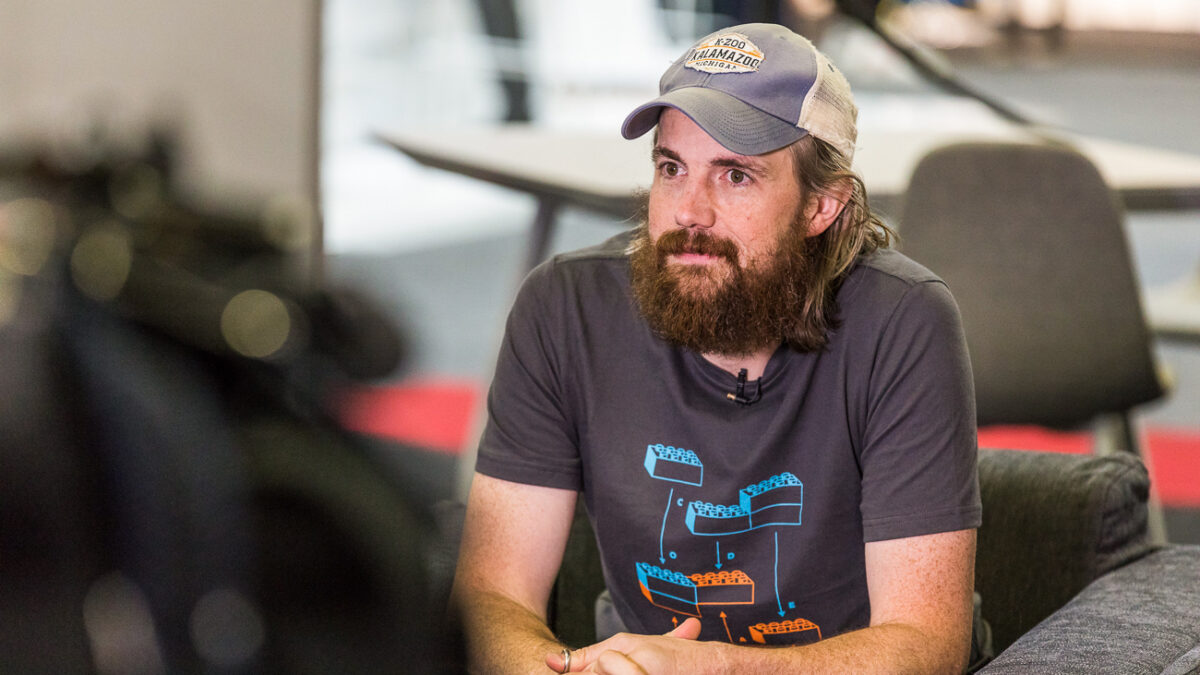
Capitalism in the right hands: How a tech bro just rewrote Australia’s climate future

Until reading about them in this newsletter I read each week, Blair Palese, Peter McKillop and the Climate & Capital Media team were not on my radar. Now they are, and I enjoyed reading what they have written to Jeff Bezos about changing the game:

Capitalism in the right hands: How a tech bro just rewrote Australia’s climate future

  • Following a stunning shareholder coup, Australian software billionaire Mike Cannon-Brookes becomes the world’s first corporate raider with a mission to radically reduce Australia’s carbon footprint.
  • Cannon-Brookes made billions in software, but he is not retiring from the game in order to “give back” in the gentlemanly pursuit of charity.
  • His victorious raid demonstrates that real climate action requires more than just writing checks.
  • Instead Cannon-Brookes channeled corporate raider Carl Icahn, investor Henry Kravis, feminist organizer Gloria Steinem, Cajun political strategist James Carville and to do what no person has ever done: Merge political, financial, shareholder, and climate action into a single, ground-breaking capitalist moment to take on global warming.
  • We thought Jeff Bezos should know Mike.

Dear Jeff Bezos,

Greetings from Climate & Capital Media. We tried to send you a message on LinkedIn, but there are like at least two dozen Jeff Bezoses and you are not one of them. We applaud your commitment to climate action and setting up the $10 Billion charitable Earth Fund.

But word in New York is you are a tad frustrated with the fund’s impact. Continue reading

What Is Inside Those Shipping Containers?

The shipping container is a lesson in the uncontainable nature of modern life. Illustration by Bianca Bagnarelli

We had never thought to ask the question before, but now it seems quite interesting. Give half an hour to Kathryn Schulz, whose writing has frequently interested us, to understand why:

When Shipping Containers Sink in the Drink

We’ve supersized our capacity to ship stuff across the seas. As our global supply chains grow, what can we gather from the junk that washes up on shore?

There is a stretch of coastline in southern Cornwall known for its dragons. The black ones are rare, the green ones rarer; even a dedicated dragon hunter can go a lifetime without coming across a single one. Continue reading

The Dirty Banking & Fossil Fuel Relationship Seen From Another Angle

We know a bit about dirty banking. While we do not think money is a dirty word, we have seen how dirty it can get when mixed with fossil fuels. So thanks, as always, to Bill McKibben for this further illumination. We are sharing his newsletter, rather than the New Yorker story he references, because as you will see below he encourages sharing Your money is your carbon:

If you’ve got $125k in the financial system, it’s doing as much damage as your cooking and your heating and your flying. These are the most important new climate numbers for many years

Earlier today I published a big story in the New Yorker about how banks are driving the climate crisis. A report from a consortium of environmental groups made clear that for the biggest, richest companies on earth, the cash they keep in the banking system (which gets lent out for pipelines and the like) produces more carbon than their actual, you know, business. Google emits more carbon from its money than its phones, and Netflix from its streaming, and so on. Continue reading

Carbon, Sequestration & Hope

(Brandon Thibodeaux / The New York Times / Redux)

When I read about a promising new technology related to carbon sequestration, I am ambivalent based on the experience of many past false hopes. Carbon is a very large problem. Finding new methods of sequestration is a very challenging puzzle.

I track such developments every week by reading the newsletter that Bill McKibben posts on Substack. Most weeks I post something here from that, and do my best to balance the terrifying and enraging with the more hopeful news he occasionally shares there.

The only other newsletter I read regularly is Robinson Meyer’s newsletter for the Atlantic, called The Weekly Planet. Here is one of his worth reading for a bit of encouragement (when you click the hyperlink it will go to the current newsletter, which until April 20 is this one; after April 20 scroll to find this edition):

The Biggest Investment Ever in Sucking Carbon Out of the Sky

The world’s biggest tech companies are getting serious about carbon removal, the still-nascent technology wherein humanity can pull heat-trapping carbon dioxide out of the atmosphere. Yesterday, an alliance of prominent Silicon Valley companies—including Google, Meta, Shopify, and the payment company Stripe—announced that it is purchasing $925 million in carbon removal over the next eight years. In a world awash in overhyped corporate climate commitments, this is actually a big deal. Continue reading

When Diplomats Must Be Undiplomatic

Yesterday I posted about one of the easier topics among the many options I have to post about every day. Today, a topic increasingly frequent in my posts, but definitely not an easy one. So I look to one person to summarize our week-to-week progress or lack of it. As always, I recommend signing up for his newsletter:

The World’s Top Diplomat Has Had It Up to Here

The Secretary General of the UN models how to think about climate change

I can remember when some of us organized what may have been the planet’s first truly huge climate march, with 400,000 people descending on New York in 2014. Then UN Secretary General Ban Ki-moon came to walk with us for a few blocks, and it was considered remarkable: the world’s top diplomat had previously been too diplomatic to join in protests challenging the policies of his member nations. Continue reading

Senegal’s Plastic Recycling Entrepreneurship

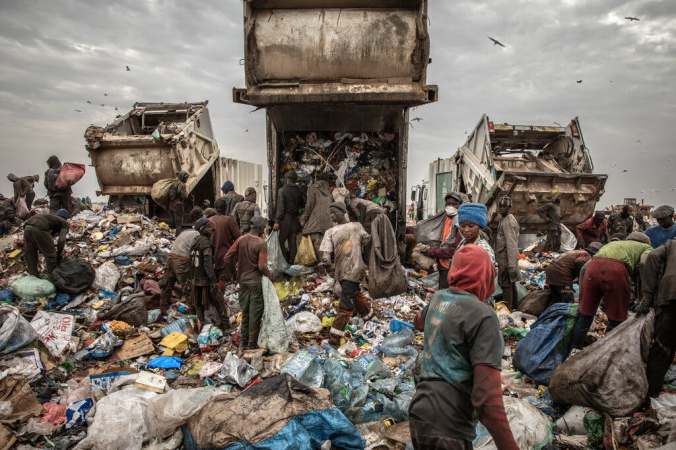
Waste pickers searching for plastics at the main dump in Dakar, Senegal.

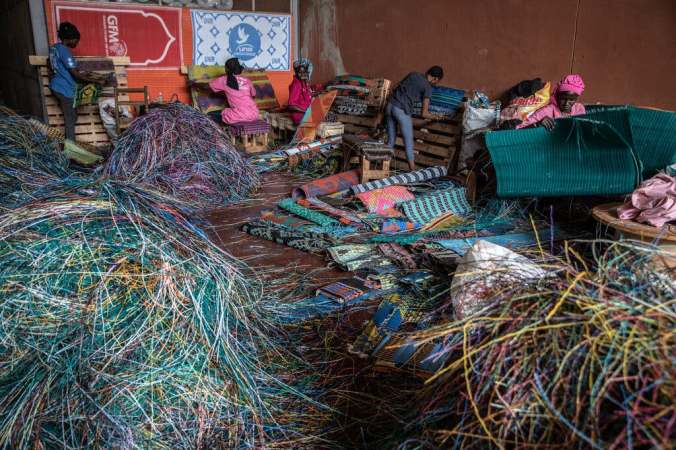
The article below, written by Ruth Maclean and accompanied with photographs by Finbarr O’Reilly, is a portrait in developing world green opportunism. It is not a pretty picture, per se, but it is a sight to behold after the market for recycled plastic seemed to implode in recent years. The photo above shows the gritty reality of the work. The photos below show some of the prettier, and more entrepreneurial downstream opportunities from that work:

Workers stripping reusable plastic from mats at the Sosenap factory, which recycles plastic to make mats and carpets in Diamniadio, on the outskirts of Dakar.

‘Everyone’s Looking for Plastic.’ As Waste Rises, So Does Recycling.

Plagued by plastic pollution, Senegal wants to replace pickers at the garbage dump with a formal recycling system that takes advantage of the new market for plastics.

The main event at the outdoor venue for Dakar Fashion Week in December, which had a theme of sustainability.

DAKAR, Senegal — A crowd of people holding curved metal spikes jumped on trash spilling out of a dump truck in Senegal’s biggest landfill, hacking at the garbage to find valuable plastic. Continue reading

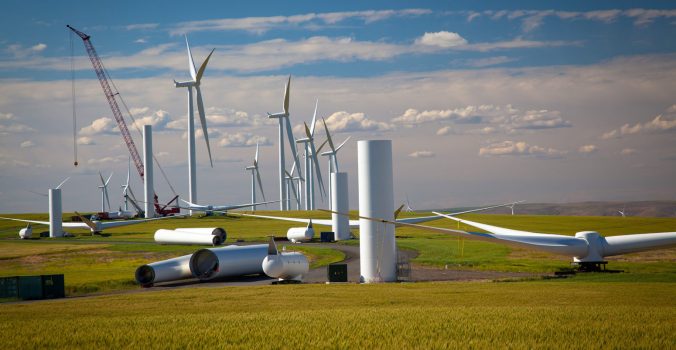
Turbines Replacing Rigs In Scotland’s Waters

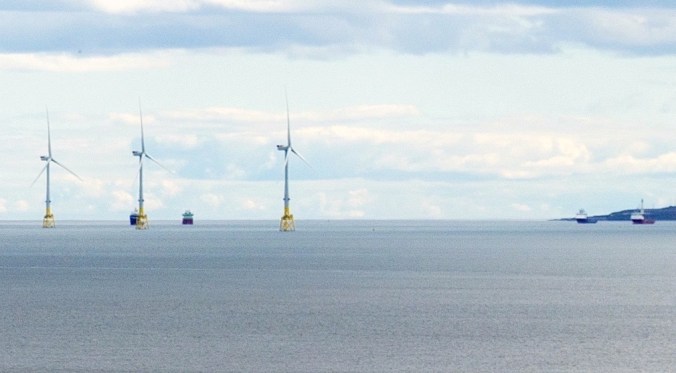
The Aberdeen Bay Wind Farm, an offshore wind demonstration facility off the coast of Aberdeenshire, in the North Sea, Scotland. ZANASZANAS VIA WIKIPEDIA

When big oil companies dismantle rigs and switch to building new turbines, it has the ring of something good. Our thanks to Yale E360 for this news brief:

North Sea Fossil Fuel Companies Plan to Invest More in Wind than Oil Drilling

Having won rights to develop wind farms off the coast of Scotland, Shell, Total, and BP are set to invest more in wind power than in oil and gas drilling in the North Sea in the years ahead, the latest evidence of oil majors changing tack on renewables to better navigate the energy transition. Continue reading

A Time For Giving, With Top Shelf Advice

MacKenzie Scott never featured in our many posts about the fortune she suddenly found herself with. She wants to give that fortune away, fast. So, she is a person of interest to us, for all kinds of good reasons. But not so fast, the Economist’s semi-charitable subtitle, the charity-industrial complex, seems to say introducing the article below about advisors to givers:

Bridgespan Group: the most powerful consultants you’ve never heard of

They direct philanthropic billions around the world

OVER THE past 18 months, the world has heard a lot about MacKenzie Scott, the billionaire philanthropist formerly married to Amazon’s Jeff Bezos. She has given generously to charities on the frontline of the pandemic, including food banks, schools and children’s health programmes. Relatively unknown, however, is the consultancy that has helped distribute almost $9bn on Ms Scott’s behalf: the Bridgespan Group. Continue reading

Rehabilitation Of Antitrust Law

Starting seven years ago I have been paying attention to monopoly power mostly in the context of Amazon. One of the clearest articles on the topic focused on a young person’s breakthrough idea. So I was very happy to read about Lina Khan’s Battle to Rein in Big Tech by rehabilitating antitrust law:

As monopolies and other large companies gain increasing control of our daily lives, Khan is Joe Biden’s pick to do something about it.

In the spring of 2011, a recent Williams College graduate named Lina Khan interviewed for a job at the Open Markets Program, in Washington, D.C. Open Markets, which was part of the New America think tank, was dedicated to the study of monopolies and the ways in which concentration in the American economy was suppressing innovation, depressing wages, and fuelling inequality. Continue reading

Legal Consequences For Deforestation

Ron Haviv / VII / Redux

This article by Robinson Meyer, a staff writer at The Atlantic and the author of the newsletter The Weekly Planet, is worth reading if Brazil’s role in climate change has been on your mind:

Deforestation Is a Crime

A new bipartisan bill would treat it that way.

The world doesn’t agree on many things, but one of them is that global deforestation is a problem. If deforestation were a country, it would be the world’s third-largest source of climate-warming pollution, after the United States and China. (It would also be a terrible place to live—bulldozers everywhere and no shade to speak of.) Parts of the Amazon now emit more carbon pollution than they capture because of deforestation, a recent study found.

Knowing about a problem is, of course, different from knowing what to do about it. Continue reading

Monbiot’s Scrutiny In Perspective

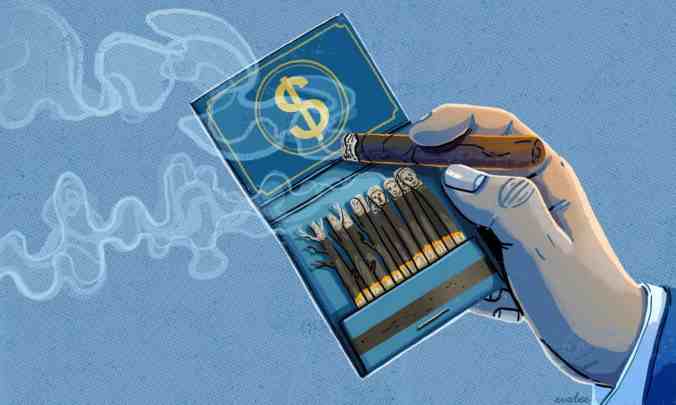
Illustration by Eva Bee

The first I heard of him, nearly a decade ago, I was immediately hooked on his writing, and the ideas he was offering were surprising to read in a mainstream, if progressive, publication. He introduced me to rewilding. If you have not been reading or perhaps listening to George Monbiot during this decade you may not have noticed how his radicalism has evolved. In this editorial ostensibly about the Pandora Papers I learned something about Madeira that I want to read more about:

…A few decades after the Portuguese colonised Madeira in 1420, they developed a system that differed in some respects from anything that had gone before. By felling the forests after which they named the island (madeira is Portuguese for wood), they created, in this uninhabited sphere, a blank slate – a terra nullius – in which a new economy could be built. Continue reading

Planned Obsolescence Reconsidered

Sandra Goldmark’s essay, Built Not to Last: How to Overcome Planned Obsolescence, is worthy of a few minutes:

What you can do as an individual consumer, a business patron, and a voter

In 2020, people worldwide bought some 24 billion pairs of shoes, 64 million cars, and 1.4 billion smartphones—200 million of them from Apple. More than 80 percent of iPhones sold last year went to “upgraders,” not first-time buyers. It’s all part of business as usual. Continue reading

Bitcoin’s Carbon Footprint Explained

Cryptocurrency’s immense carbon footprint has been well known since early on. What to do about it is the question. Getting a good answer to that question depends in part on understanding the nature of the problem. Read below for the clarity of the explanation on this topic, and let the illustrations make it that much clearer:

Bitcoin Uses More Electricity Than Many Countries. How Is That Possible?

Cryptocurrencies have emerged as one of the most captivating, yet head-scratching, investments in the world. They soar in value. They crash. They’ll change the world, their fans claim, by displacing traditional currencies like the dollar, rupee or ruble. They’re named after dog memes. Continue reading

Recycling 2.0, Maine Gets It Done

A collection facility in Bend, Ore. The state is expected to adopt a recycling law similar to Maine’s within weeks. Leon Werdinger/Alamy

When we were making decisions about coffee and chocolates that we would offer in the Authentica shops, which we knew to be best-selling categories for travelers wanting to take something home from Costa Rica, product quality was the top consideration. Packaging was a close second. Relative to what was sold in other shops, we radically reduced the carbon footprint of the packaging, and more recently took another step further down that road. We know that every little effort counts, but we also know that the big game is elsewhere, and we are happy to see a relatively small state making big strides in the USA:

Maine Will Make Companies Pay for Recycling. Here’s How It Works.

The law aims to take the cost burden of recycling away from taxpayers. One environmental advocate said the change could be “transformative.”

Gov. Janet Mills of Maine, a Democrat, signed the new recycling policies into law this month. Robert F. Bukaty/Associated Press

Recycling, that feel-good moment when people put their paper and plastic in special bins, was a headache for municipal governments even in good times. And, only a small amount was actually getting recycled.

Then, five years ago, China stopped buying most of America’s recycling, and dozens of cities across the United States suspended or weakened their recycling programs.

Now, Maine has implemented a new law that could transform the way packaging is recycled by requiring manufacturers, rather than taxpayers, to cover the cost. Nearly a dozen states have been considering similar regulations and Oregon is about to sign its own version in coming weeks. Continue reading

When Renewables Are Less Expensive Than Coal…

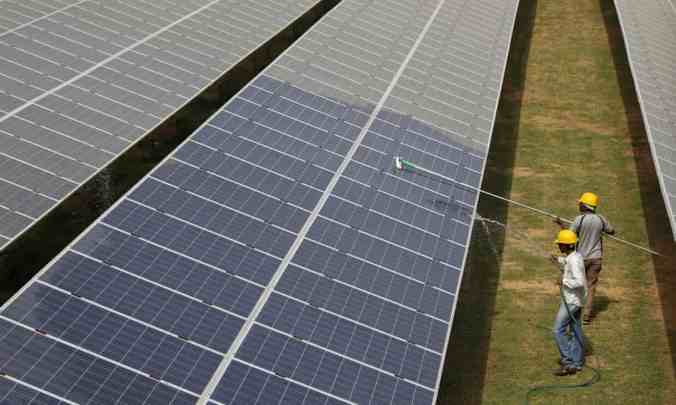
A solar power plant in Gujarat, India. Renewable energy in the country would be cheaper than between 87% and 91% of new coal plants, the report says. Photograph: Amit Dave/Reuters

Looks like we are almost there:

Most new wind and solar projects will be cheaper than coal, report finds

Almost two-thirds of renewable energy schemes built globally last year expected to undercut coal costs

Almost two-thirds of wind and solar projects built globally last year will be able to generate cheaper electricity than even the world’s cheapest new coal plants, according to a report from the International Renewable Energy Agency (Irena). Continue reading

The Human Touch

The Economist offers this brief thinkpiece on what to make of the recent uptick in interest in craft-made products (unless you are a subscriber to the magazine you will need to sign up for free limited access to the magazine’s website):

Can human creativity prevent mass unemployment?

The market for artisan goods is likely to grow. But organised craft could lose its charm

In “THE REPAIR SHOP”, a British television series, carpenters, textile workers and mechanics mend family heirlooms that viewers have brought to their workshop. The fascination comes from watching them apply their craft to restore these keepsakes and the emotional appeal from the tears that follow when the owner is presented with the beautifully rendered result. Continue reading