Gardens As Havens For Wildlife

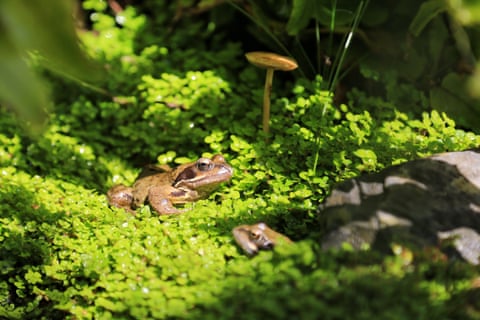
Two frogs in a garden pond enjoying the sunshine on a bed of weed.

Common frogs and other amphibians will spawn in the most modest of garden ponds. Photograph: Brendan Allis/Getty Images/iStockphoto

There are many variations on the theme of garden as haven in our pages over the years. The common thread is that at the scale of a garden, there is much that the individual can do to support conservation. Thanks to Jules Howard for adding to the theme:

The frogs may be gone, but life goes on: how I regained my faith in gardening for wildlife

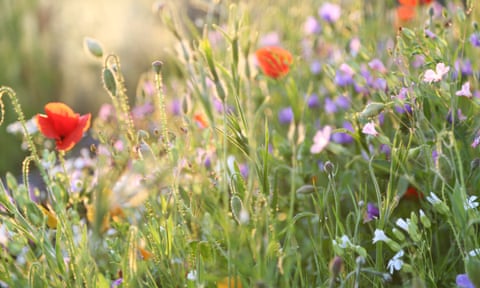
Wildflower field

Gardens allowed to grow a little wild can be a lifeline for struggling pollinator populations – in rural as well as urban areas. Photograph: kirin_photo/Getty Images/iStockphoto

The extremes of the climate crisis mean it’s harder than ever to provide a garden haven for birds, insects and other animals. Some gardeners are questioning whether trying to do the right thing is time well spent

More than two decades ago, I had the honour of running the world’s last (possibly only) frog telephone helpline. No, this is not a set-up for a punchline. Continue reading
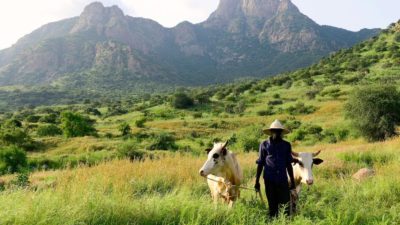
Dry, Hot Places Greening?

The Guera Mountains in southern Chad, a region that has grown greener in recent decades.

The Guera Mountains in southern Chad, a region that has grown greener in recent decades. NATURE PICTURE LIBRARY / ALAMY STOCK PHOTO

Fred Pearce, writing in Yale e360, offers this surprising news from some of the driest, hottest places:

With CO2 Levels Rising, World’s Drylands Are Turning Green

Despite warnings that climate change would create widespread desertification, many drylands are getting greener because of increased CO2 in the air — a trend that recent studies indicate will continue. But scientists warn this added vegetation may soak up scarce water supplies.

Southeast Australia has been getting hotter and drier. Droughts have lengthened, and temperatures regularly soar above 95 degrees F (35 degrees C). Continue reading

Culling Questions

Because invasive species are among the main drivers of extinction today, conservationists have made efforts to cull mice in favor of albatrosses, rats in favor of puffins, and pythons in favor of bobcats. Illustration by Javier Jaén; Source photographs from Getty

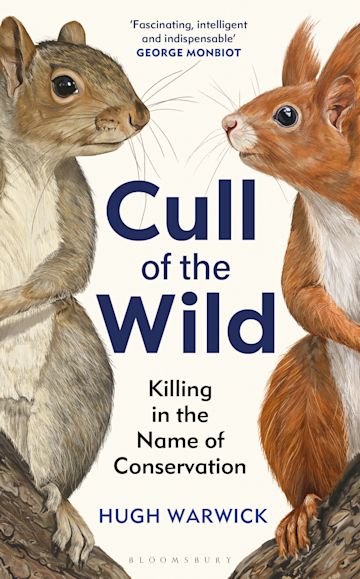
Invasive species have received plenty of attention in our pages in the years since we first shared on this topic. Creative approaches to solving the problem abound. Elizabeth Kolbert reviews two books that take up the moral implications:

Cull of the Wild coverShould We Kill Some Wild Creatures to Protect Others?

Where humans have tilted the game in favor of one species, some believe we should cull predators to save their prey. Others think it’s a mistake to pick sides.

The northern spotted owl is about a foot and a half high, with very dark eyes, a greenish beak, and a rim of feathers, called a facial disk, that makes it appear to be regarding the world with worried perplexity. Like most owls, northern spotteds are nocturnal, but, unlike most of their brethren, they are picky. They can live only in old-growth forests in the Pacific Northwest. Their diet is restricted and seems to consist mainly of flying squirrels. They’re incapable of building nests of their own, and so, to raise their young, they rely on tree cavities or on basketlike growths that are produced by arboreal infections and known, evocatively, as witches’ brooms.

Hedgehogs, Killing, and Kindness: The Contradictions of Care in Conservation PracticeThe spotted owl’s fastidiousness produced one of the great environmental conflicts of the twentieth century. By the late nineteen-eighties, it was estimated that only fifteen hundred breeding pairs survived. Since the owls depended on old growth, the only way to save them, according to biologists, was to preserve the Northwest’s remaining stands of ancient trees. The timber industry countered that leaving those trees untouched would cost thousands of jobs. The two sides adopted increasingly confrontational tactics. Continue reading

Nature’s Ghosts, Author’s Viewpoint

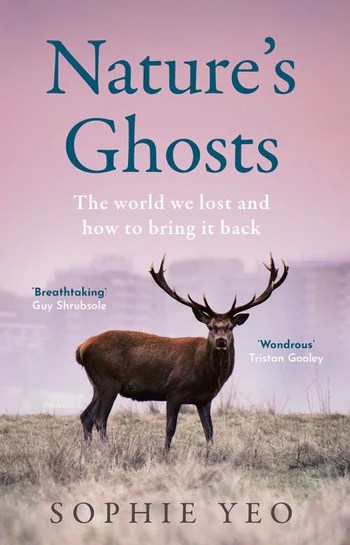
Thanks to Sophie Yeo, editor of Inkcap Journal and the author of this book to the right, for sharing that book’s key insights in essay form in the Guardian:

Nature’s ghosts: how reviving medieval farming offers wildlife an unexpected haven

Agriculture is often seen as the enemy of biodiversity, but in an excerpt from her new book Sophie Yeo explains how techniques from the middle ages allow plants and animals to flourish

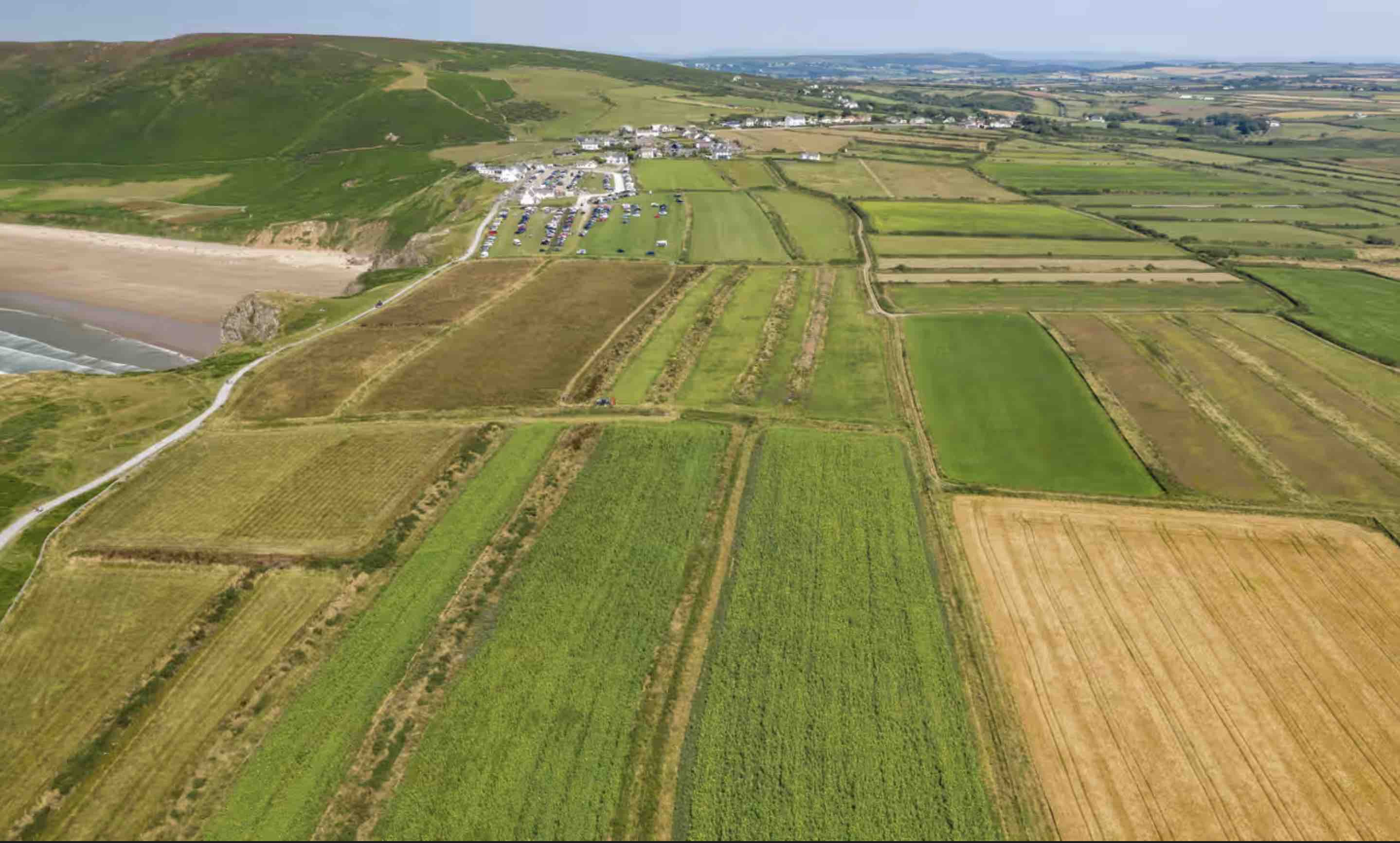
The Vile, a medieval strip field system below Rhossili village, Gower, Wales. Photograph: Wales/Alamy

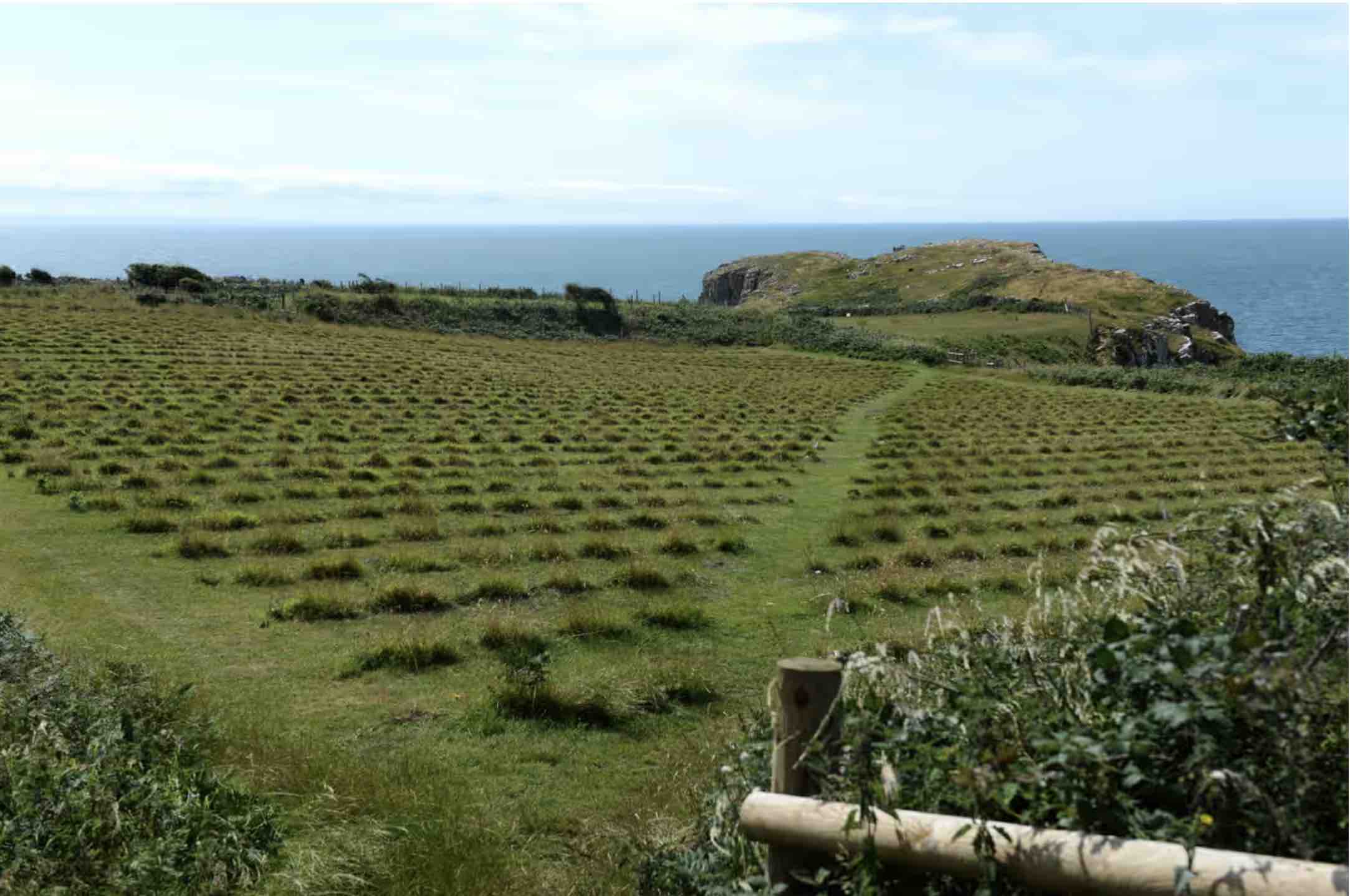
The Vile clings on to the edge of the Gower peninsula. Its fields are lined up like strips of carpet, together leading to the edge of the cliff that drops into the sea. Each one is tiny, around 1-2 acres. From the sky, they look like airport runways, although this comparison would have seemed nonsensical to those who tended them for most of their existence.

A field of lavender on the Vile above Fall bay, Rhossili, planted in summer 2019 to encourage pollinating insects. Photograph: Holden Wildlife/Alamy

That is because the Vile is special: a working example of how much of Britain would have been farmed during the middle ages. Farmers have most likely been trying to tame this promontory since before the Norman conquest.

The fields have retained their old names, speaking to a long history of struggle against the soil. Stoneyland. Sandyland. Bramble Bush. Mounds of soil known as “baulks” separate one strip from the next. Continue reading

Marsh Matters

Coastal marshlands exist in a precarious state: they need enough sediment to stay above water but not so much they get buried. In San Francisco Bay, the US Army Corps of Engineers and others are working to develop a less destructive way of giving marshes the mud they need. Photo by Aerial Archives/Alamy Stock Photo

For the record, marshes matter, so our thanks to Erica Gies, writing for Hakai:

Making a Marsh out of a Mud Pile

In San Francisco Bay, scientists are looking for a better way to rebuild flagging marshland.

The water in California’s San Francisco Bay could rise more than two meters by the year 2100. For the region’s tidal marshes and their inhabitants, such as the endangered Ridgway’s rail and the salt marsh harvest mouse, it’s a potential death sentence. Continue reading

Returning Golf Land To Nature

The San Geronimo Golf Course is being reclaimed and rewilded and is now known as San Geronimo Commons. Jim Wilson/The New York Times

Golf is known to be problematic. But then again, what is not problematic? And we appreciate seeing cases where golf gives way to nature. Our thanks to Cara Buckley for bringing this story to our attention in the New York Times. We applaud the imagination of those responsible:

After Shutting Down, These Golf Courses Went Wild

The restoration of the San Geronimo land is still underway. Trails are planned that would skirt sensitive habitat and help to make it starkly different from its time as a golf course. Jim Wilson / The New York Times Image

Most defunct golf courses get paved over, but a number are getting transformed into ecological life rafts for wildlife, plants — and people.

There was scraggly grass in one sand trap and wooden blocks and a toy castle in another, evidence of children at play. People were walking their dogs on the fairway, which was looking rather ragged and unkempt. This was only to be expected. Continue reading
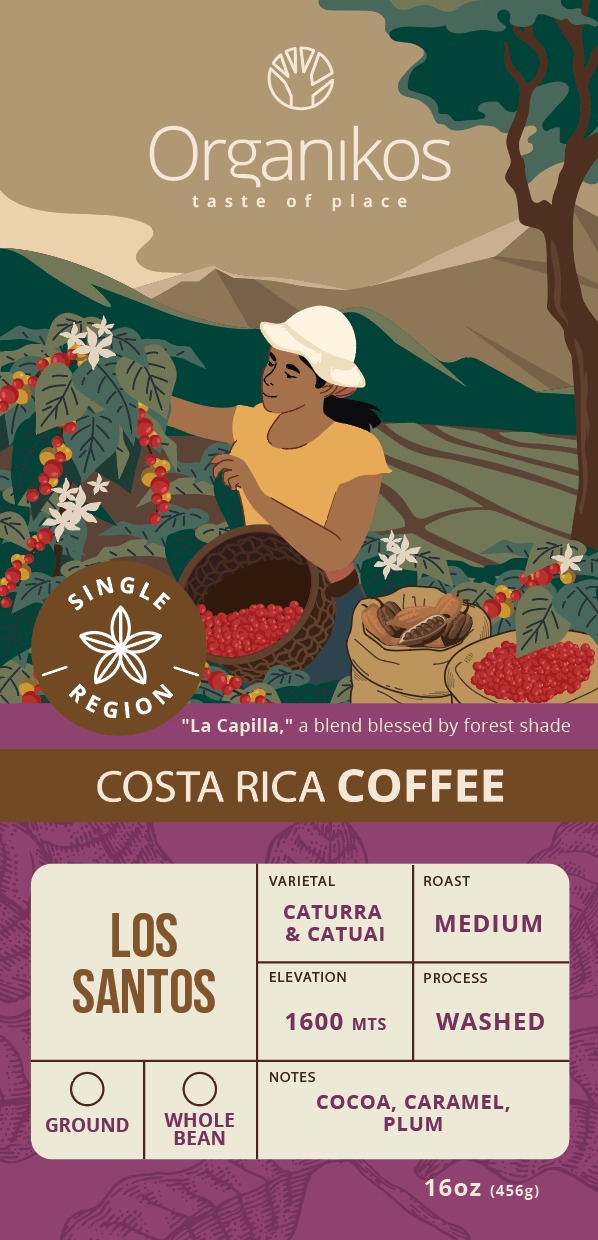
La Capilla, A Plum Assignment

These beans, blended from a select group of smallholder coffee farms collectively known as “the chapel,” have a new illustration. This week it debuts in our shops in Costa Rica. A year after we introduced this coffee in our shops we could only guess it was to become the bestseller it now is.

During the pandemic, when the airports were shut down and there were few visitors to our shops, honoring the contracts we had with these farmers got us thinking creatively. We started offering this and a few other of our coffees for sale in the USA. Because it was a favorite in our home, La Capilla was chosen for this plum assignment. Then we knew.

Tarrazu started its qualification for denomination of origin status the same year we started roasting it, and qualified two years later. The rules are still being clarified on how to use the name, so on our labels we have reverted to the region’s traditional name Los Santos.


Channeling Water Nature’s Way

Just as much as we want packaging of our drinking water to be carefully thought out, we also want the channeling of water to make sense:

How the beck at James Robinson’s farm looked before the introduction of natural flood management techniques. Photograph: James Robinson

‘The wildlife that has come is phenomenal’: the UK farmers holding off floods the natural way

Planting trees, creating floodplains and rewilding rivers are among the new techniques being used to adapt to a heating climate

The streams, or becks, that run through James Robinson’s Lake District farm used to be cleaned out regularly – with vegetation yanked out and riverbeds dredged, or even completely filled in. Continue reading
Frogs, Western Ghats & Science

Sathyabhama Das Biju (from left), James Hanken, Harvard’s Alexander Agassiz Professor of Zoology, and Sonali Garg during a June 2023 field trip to study amphibians in the Western Ghats, a biodiversity hotspot in India. Photo by A.J. Joji

During our seven years living and working in the Western Ghats we came to appreciate frogs through the eyes of our family, those of our staff, as well as travelers and occasional scientific references (the man on the left in the photo to the left having shown up in our pages one of those times). Good to know that the science is being shared for good cause, thanks to Anne J. Manning in this article for the Harvard Gazette:

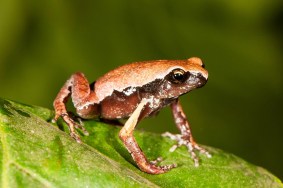
The Indian Purple Frog, first described by Sathyabhama Das Biju in 2003.

Who will fight for the frogs?

Indian herpetologists bring their life’s work to Harvard just as study shows a world increasingly hostile to the fate of amphibians

Having pulled themselves from the water 360 million years ago, amphibians are our ancient forebears, the first vertebrates to inhabit land.

After 136 years from its original description, Günther’s shrub frog was recently rediscovered in the wild. Credit: S.D. Biju and Sonali Garg

Now, this diverse group of animals faces existential threats from climate change, habitat destruction, and disease. Two Harvard-affiliated scientists from India are drawing on decades of study — and an enduring love for the natural world — to sound a call to action to protect amphibians, and in particular, frogs.

Sathyabhama Das Biju, the Hrdy Fellow at Harvard Radcliffe Institute and a professor at the University of Delhi, and his former student Sonali Garg, now a biodiversity postdoctoral fellow at Harvard’s Museum of Comparative Zoology, are co-authors of a sobering new study in Nature, featured on the journal’s print cover, that assesses the global status of amphibians. It is a follow-up to a 2004 study about amphibian declines.

Franky’s narrow-mouthed frog is among the threatened species. Credit: S.D. Biju and Sonali Garg

Biju and Garg are experts in frog biology who specialize in the discovery and description of new species. Through laborious fieldwork, they have documented more than 100 new frog species across India, Sri Lanka, and other parts of the subcontinent.

According to the Nature study, which evaluated more than 8,000 amphibian species worldwide, two out of every five amphibians are now threatened with extinction. Climate change is one of the main drivers. Continue reading
Species-Specific Safe Spaces

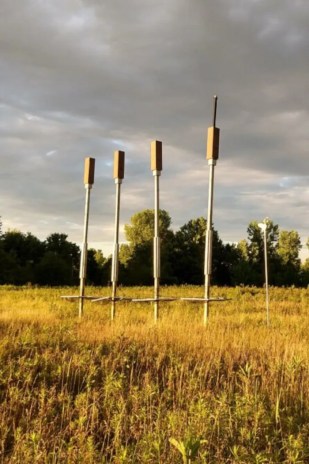
O’Keefe’s team designed bat boxes that offer a wide range of interior temperatures. Joy O’Keefe

We have pointed to stories about activism and entrepreneurship in the interest of protecting animal habitat plenty of times, but not so much on the science of the field work. As part of its Climate Desk collaboration Mother Jones shares this article originally published by Undark, written by Marta Zaraska, that addresses some of the science of species-specific safe spaces:

Inside Scientists’ Race to Create Safe Refuges for Animals

Climate crisis is destroying habitats. Can technology help create new ones?

Conservation ecologist Ox Lennon simulated stacks of rocks that would create crevices big enough for skinks, but too small for mice. Courtesy Ox Lennon

In 2016, Ox Lennon was trying to peek in the crevices inside a pile of rocks. They considered everything from injecting builders’ foam into the tiny spaces to create a mold to dumping a heap of stones into a CT scanner. Still, they couldn’t get the data they were after: how to stack rocks so that a mouse wouldn’t squeeze through, but a small lizard could hide safely inside. Continue reading
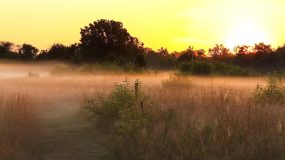
Planting For Foraging

Picking too many fiddleheads from a single ostrich fern plant can reduce its productivity. Jared Rosenbaum, a field botanist, never harvests more than one or two from any individual plant. (Also, cooking with fiddleheads can be toxic, so be sure to wash them well and never eat them raw: Always boil them before you sauté or cook them in any other way.) Jared Rosenbaum/Wild Ridge Plants

Margaret Roach delivers the goods when we need a dose of useful plant life information:

Why It’s Better to Plant Wild Greens Than to Forage for Them

This spring, don’t forage for wild edible plants. Instead, welcome them into your garden.

Jared Rosenbaum knows the primal thrill of foraging — a sense of interdependence with the natural world that he wants his son to experience, too.

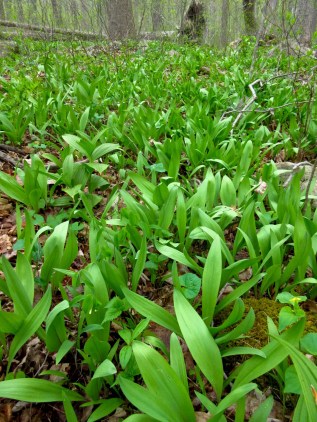
But as a field botanist, he also understands that foraging is one of the many pressures on native-plant populations. And he has a proposition for gardeners: What if we gave back to the wild edible plants that tempt us on our springtime woodland hikes, by welcoming them into the landscapes we cultivate?

For a fleeting moment each spring, wild leeks (otherwise known as ramps) are a star of restaurant menus, creating a demand that has intensified the pressure on wild populations. Jared Rosenbaum/Wild Ridge Plants

It’s one layer of the habitat restoration and ecological design inspiration that he and his wife, Rachel Mackow, provide to clients of Wild Ridge Plants, in rural Pohatcong Township, N.J. And it’s reflected in many of their mail-order nursery’s plant choices, too.

In Mr. Rosenbaum’s recent book, “Wild Plant Culture: A Guide to Restoring Edible and Medicinal Native Plant Communities,” he revisits that idea: “The time has come to reconnect with our habitats, right where we live, work, and play,” he writes. “Not as museum pieces, but as vital, sustaining elements in our lives, livelihoods, and lifeways.”

That includes our gardens. Continue reading
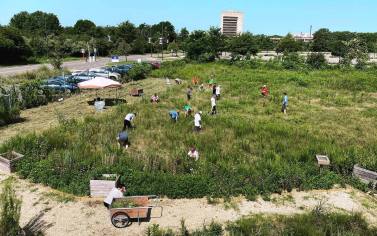
American Prairie & American Bison

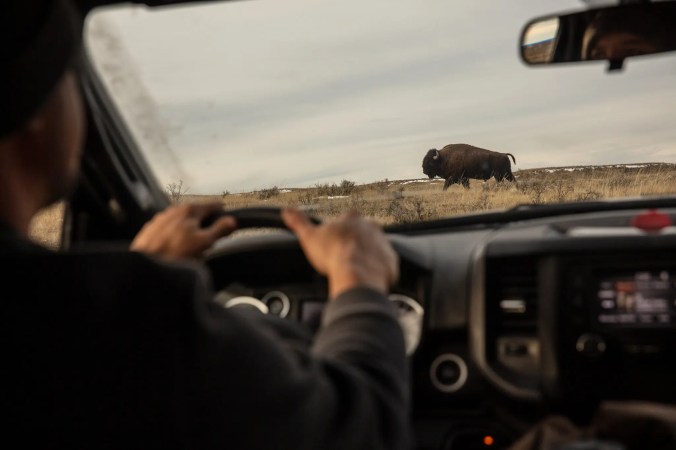
Scott Heidebrink, the director of bison restoration for the American Prairie Reserve in northeast Montana, checks on a herd. “There are ways that bison were impacting the landscape that we haven’t even thought about,” he said.

Bison restoration has been on our radar, primarily stories from the western USA, but also from the European context, where there has been considerable progress in recent years. Here is a good look at a conservation organization focused on habitat restoration, and the multi-species benefits:

Where the Bison Could Roam

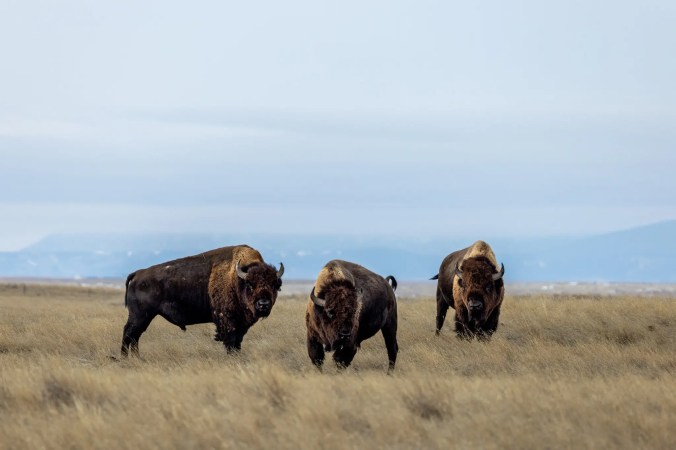
Bison once numbered in the tens of millions in the United States. Now, a nonprofit is working to restore the shortgrass prairie, where the American icons and their ecosystem can thrive again.

MALTA, Mont. — Around 200 chocolate-brown bison raise their heads, following the low growl of a pickup truck slowly motoring across the sagebrush-studded prairie. Continue reading
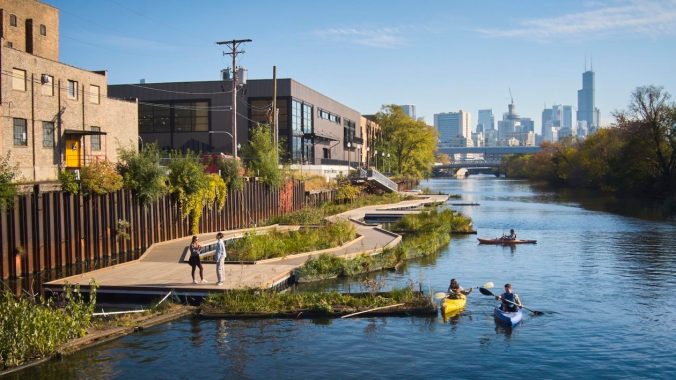
Prairie Revival

Sunrise at the Hempstead Plains on Long Island, New York. STEVE PFOST / NEWSDAY RM VIA GETTY IMAGES

Thanks to Yale e360’s Janet Martinelli:

Amid the Sprawl, a Long Island Prairie Makes a Quiet Comeback

Tucked into quintessential suburbia, the Hempstead Plains Preserve is a small sliver of the grassland that once covered a vast area of Long Island. New research shows that thoughtfully planted yards and gardens can bolster the biodiversity in such urban wildland fragments.

Volunteers remove invasive Chinese bushclover from the Hempstead Plains Preserve at Nassau Community College. FRIENDS OF HEMPSTEAD PLAINS

The Hempstead Plains Preserve is a place where you can imagine the presence of creatures past. Birdfoot violets, now gone, once colored the landscape with a wash of purple in spring. The heath hen, a large grouse that went extinct 90 years ago, performed its elaborate courtship dances on the Plains.

On a late afternoon in October, the slanting autumn sun lit up in a blaze of gold the grasses and wildflowers on this narrow, 19-acre sliver of land — almost all that is left of the tallgrass prairie that once covered more than 50 square miles at the heart of Long Island, New York, a fish-shaped island that stretches east into the Atlantic Ocean. Continue reading
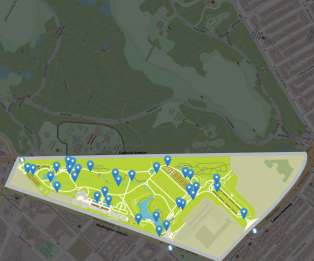
Artificial Islands, Natural Grasses & Wildlife Oases In Urban Waterways

Floating wetlands along the Chicago River’s Wild Mile. DAVE BURK / SOM

Thanks to Susan Cosier and Yale e360 for this:

How Floating Wetlands Are Helping to Clean Up Urban Waters

As cities around the world look to rid their waterways of remaining pollution, researchers are installing artificial islands brimming with grasses and sedges. The islands’ surfaces attract wildlife, while the underwater plant roots absorb contaminants and support aquatic life.

Five small islands roughly the size of backyard swimming pools float next to the concrete riverbank of Bubbly Creek, a stretch of the Chicago River named for the gas that once rose to the surface after stockyards dumped animal waste and byproducts into the waterway. Continue reading
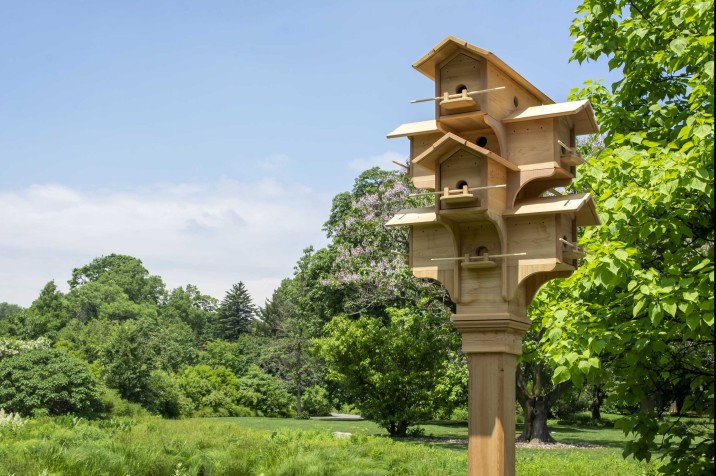
Hotel-ish Homes For Birds, Brooklyn Botanic Garden

Artist-made birdhouses are installed throughout the Garden as part of For the Birds. Use the exhibition map or scan the list below to explore!

Zach Helfand gives us a quick sketch of what happens when celebrities, and celebrity architects, collaborate on behalf of birds. When you next have the opportunity to visit the Brooklyn Botanic Garden, keep this initiative in mind:

To benefit the Audubon Society, “For the Birds,” a COVID passion project, brings together ornithophiles and artist-designed birdhouses, including a 12BR Apt, A/C, No Elv, Vus.

100 Martin Inn birdhouse on location at Brooklyn Botanic Garden.

The recent housing market has brought about ruinous price increases, a bidding war over a fifth-floor walkup studio with no oven, and enough of a civic exodus for the Post to declaim, earlier this month, “listen up, new york—florida sucks, and you’ll all be back in five years.” But that doesn’t mean deals can’t be had. Take a unit that just went on the market. It’s a newly built architect-designed twelve-bedroom in shall we say Crown Heights, with finishes by a master carpenter and three-hundred-and-sixty-degree views of Prospect Park. Continue reading
More Māori Ancestral Knowledge Coming Your Way

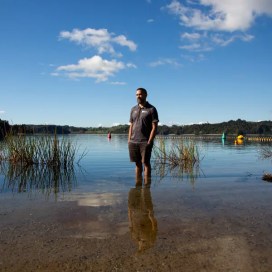
William Anaru, the biosecurity manager of the local tribe, Te Arawa, at Lake Rotomā. Cornell Tukiri for The New York Times

Pete McKenzie shares more from the place where ancient knowhow is respected:

As a weed choked a New Zealand lake, a tribe found a surprising solution in a centuries-old tool, adding to a pitched debate over how Indigenous knowledge can complement conventional science.

LAKE ROTOMA, New Zealand — A riot of native plant life once covered the shallows of Lake Rotomā, one of the many bodies of water that speckle New Zealand’s upper North Island. At night, mottled green crayfish scuttled from the deep to graze beneath the fronds in such plentiful numbers that the local Māori tribe could gather a meal in a few minutes of wading. Continue reading
Vagrancies Better Appreciated

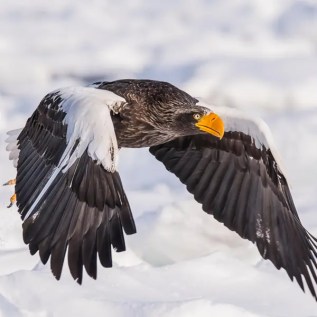
A Stellar’s sea eagle, native to East Asia. Design Pics Inc./Alamy

These two themes, birds and their various forms of adaptation, make Marion Renault’s article These Birds Aren’t Lost. They’re Adapting a perfect fit for sharing here as an excerpt, and recommending that you read the story where it was published:

Bird-watchers love to see vagrants, or birds that have traveled far outside their range. But scientists say they have a lot to teach us in a world facing ecological change.

From what we can tell, the Steller’s sea eagle trekking across North America does not appear homesick.

The bird has strayed thousands of miles from its native range in East Asia over the last two years, roving from the Denali Highway in Alaska down to a potential sighting South Texas before moving eastward and back north to Canada and New England. Its cartoonish yellow beak and distinctive wing coloration recently attracted crowds of rapt birders to Maine before turning up on April Fools’ Day in Nova Scotia. Continue reading
Healing Earth & Avoiding Amazon

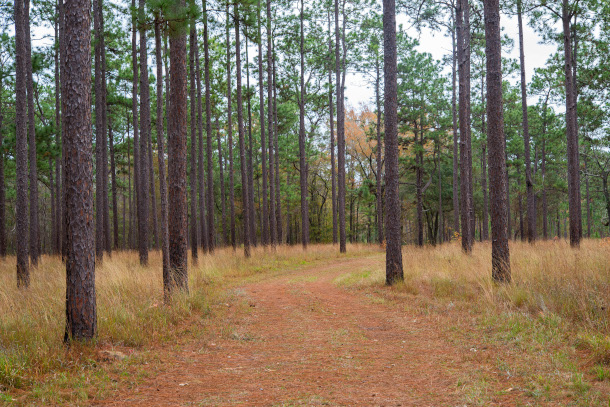
Longleaf pines once covered 90 million acres from Virginia to east Texas but today only about 5 percent of historic range remains intact. Marion Clifton Davis was a modern conservationist who bought tens of thousands of acres in the Florida sandhills and turned them into a private reserve, a project aimed at restoring back the Longleaf pine forest. (Photo: Florida Fish and Wildlife, Flickr, CC BY ND 2.0)

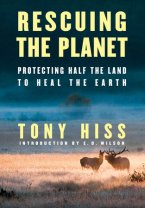
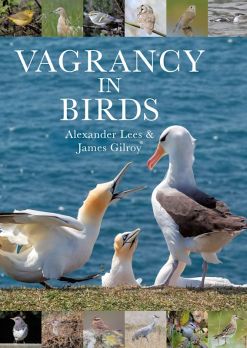
When you have 12 minutes to spare, listen to Tony Hiss talk about his new book on this excellent episode of Living On Earth, and if you decide to buy the book and want to avoid Amazon click the image of the book below:

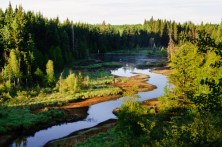
The Boreal Forest is the world’s largest intact forest ecosystem and is a carbon sink. It’s estimated that if global warming exceeds the 3-5 degree Celsius heat stress and water scarcity could trigger extensive forest death and a dangerous release of the stored carbon dioxide into the atmosphere. (Photo: Kevin Owen, Flickr, CC BY NC ND 2.0)

Climate change is placing stress on plants and animals to rapidly adapt but without intact habitat, that could become impossible for many. Tony Hiss is an award-winning author and joins Host Bobby Bascomb to talk about his book Rescuing the Planet: Protecting Half the Land to Heal the Earth, which looks at several places across North America where communities are already working to protect habitat and biodiversity.

Transcript

BASCOMB: It’s Living on Earth, I’m Bobby Bascomb.

During his first few days in office President Biden announced the goal of protecting 30 percent of US land and water by the year 2030 with a long term goal of 50 percent by 2050. Continue reading
Butterflies, Challenges & Hope

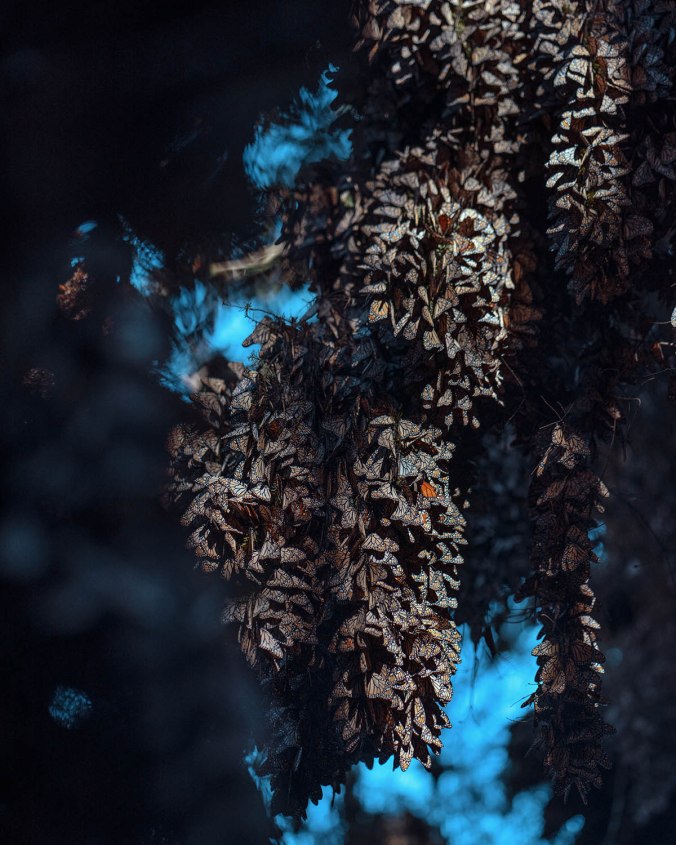
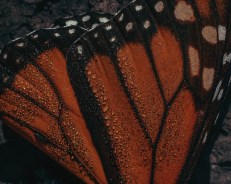
Monarchs in the early morning. They hibernate from November until the beginning of March. With warmer temperatures, they become sexually mature, mate, and begin their northerly migration.

Just for the beauty of the photographs, this is worth a visit. But there is also an audio accompaniment, allowing you to hear the butterflies. The story of the challenge their habitat faces is, like so many other stories we encounter, painful to read. But there is hope as well:

SAVING THE BUTTERFLY FOREST

Environmental destruction and violence threaten one of the world’s most extraordinary insect migrations.

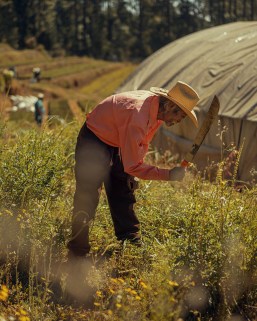
Marciano Solis Sacarias,
a landowner, working at
Las Novias del Sol,
a tree-nursery coöperative.

Every November, around the Day of the Dead, millions of monarch butterflies descend on a forest of oyamel firs in the mountains of central Mexico. The butterflies have never seen the forest before, but they know—perhaps through an inner compass—that this is where they belong. They leave Canada and the northeastern United States in late summer and fly for two months, as far as three thousand miles south and west across the continent. The journey is the most evolutionarily advanced migration of any known butterfly, perhaps of any known insect. Continue reading

Hedgerow Versus Berm, Win-Win

Phoebe Weston is back in our pages with a story about the importance of a seemingly prosaic part of the old UK landscape–hedgerows.

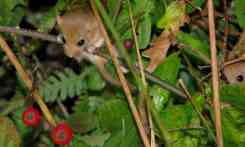
Young dormice photographed by ecologist Rob Wolton during a two-year study of his hedge in Devon. Photograph: Robert Wolton
She covers their prospective role in meeting net-zero targets and the video above is an excellent primer on that. The details in her article below about Rob Wolton’s investigation of his own hedgerow is fascinating.  I am interested in the topic as much for the biodiversity implications as I consider whether my berms should all remain berms, or if some portion should become hedgerow:
‘Reservoirs of life’: how hedgerows can help the UK reach net zero in 2050

They store carbon and are havens for wildlife – it’s no wonder experts are calling for Britain’s hedge network to be extended
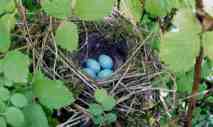
A dunnock’s nest containing eggs in Rob Wolton’s hedge. Thrush and bullfinch also made their homes in the hedgerow. Photograph: Robert Wolton

One New Year’s Day, ecologist Rob Wolton came up with an unusual resolution – to spend the next 12 months studying a hedge 40 metres from his house in the middle of Devon. He wanted to make a list of every plant, animal and fungus that used it. Why? Because a wildlife-enthusiast friend challenged him to do it during a long car journey.

“I thought it would take a year, but at the end of the first one Continue reading