Giving A Bread Its Due Honor

President Emmanuel Macron of France described the baguette as “250 grams of magic and perfection in our daily lives.” Eric Gaillard/Reuters

When the baguette was a daily part of our family’s life, we were fortunate to have a personal connection to the best guide, whose photo in the story below is as fitting as the photo above:

Steven Kaplan, perhaps the baguette’s most dedicated historian, says the bread has “little sites of memories” that “testify to a sensuality.” Daniel Janin/Agence France-Presse — Getty Images

A Slice of France, the Baguette Is Granted World Heritage Status

More than six billion baguettes are sold every year in France. But the bread is under threat, with bakeries vanishing in rural areas.

PARIS— It is more French than, perhaps, the Eiffel Tower or the Seine. It is carried home by millions each day under arms or strapped to the back of bicycles. It is the baguette, the bread that has set the pace for life in France for decades and has become an essential part of French identity.

On Wednesday, UNESCO, the United Nations heritage agency, named the baguette something worthy of humanity’s preservation, adding it to its exalted “intangible cultural heritage” list. Continue reading

Understanding & Reviving Games From Other Places, And Times Before

Leaving aside the question of why so many of the world’s most important historical artifacts are in London, rather than where they originated, the curator in the video above is charming. And the man in the photo just below to the right is his counterpart in the place where this particular artifact originated.  My interest in board games is much less well informed, but like Mr. Mofaq I have an interest in their revival, so Deb Amlen’s article in the New York Times is appreciated:

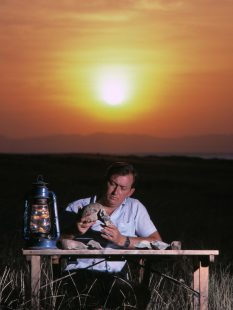
Hoshmand Mofaq, an Iraqi artist, pondered his next move on one of the Royal Game of Ur boards he designed. Mr. Mofaq is part of a group who hope to popularize and return the game to the Iraqi people as part of their cultural heritage. Shwan Mohammed/Agence France-Presse — Getty Images

For 4,600 years, a mysterious game slept in the dust of southern Iraq, largely forgotten. The passion of a museum curator and the hunger of young Iraqis for their cultural history may bring it back.

It is the end of a long, hot day of selling your wares in a market in ancient Mesopotamia, around 2,400 B.C., and you are looking for a way to unwind.

Netflix will not be invented for another four and a half millenniums, but as luck would have it, a pub lies ahead in the distance. A beer and a round of the Middle East’s favorite game is just the thing to pick you up. The thrill of the game is irresistible: It is impossible to predict who will win in this race to get your pieces to the end of the board, even in the last few moves.

One of the boards of the Royal Game of Ur excavated in the 1920s, on display at the British Museum. The British Museum, via Commons.wikimedia.org

You sit down across from your opponent, who offers you the first turn. You pick up the four-sided dice and shake them in your fist. Maybe this time the rumored fortunetelling aspect of the game will bless you with a spate of good luck and prosperity. Continue reading

Victors’ History Reconsidered

Yesterday, in a post about one type of spoils of victory, we shared some reading about responsibilities. Today, in a discussion of the book Indigenous Continent, we consider a different type of spoil of victory.

The accepted wisdom that history is written by the victors is contestable, and David Treuer seems the perfect person to walk us through this book’s attempt at doing so with regard to the indigenous peoples of what is now called North America:

Do We Have the History of Native Americans Backward?

They dominated far longer than they were dominated, and, a new book contends, shaped the United States in profound ways.

A portrait of Thayendanegea, painted in London, in 1785, by Gilbert Stuart. Art work by Gilbert Charles Stuart / British Museum

I remember when I first encountered what must be the best-selling book of Native American history ever published, “Bury My Heart at Wounded Knee,” by Dee Brown. I was twenty years old, and had made my way from the Leech Lake Reservation, in northern Minnesota, where I grew up, to Princeton, in a part of New Jersey that seemed to have no Indians at all. Since “Bury My Heart” appeared, in 1970, it has been translated into seventeen languages, and sold millions of copies. In the opening pages, Brown wrote, “The greatest concentration of recorded experience and observation came out of the thirty-year span between 1860 and 1890—the period covered by this book. It was an incredible era of violence, greed, audacity, sentimentality, undirected exuberance, and an almost reverential attitude toward the ideal of personal freedom for those who already had it. During that time the culture and civilization of the American Indian was destroyed.” Continue reading

Coffee, History & Literature

Adam Gopnik, one of our favorite essayists, wrote an excellent essay on this topic; and Michael Pollan, among others, wrote a book.

There is still plenty to say about the history of coffee, as far as we are concerned, and Ed Simon demonstrates it in this essay from The Millions, an online magazine:

Coffee, the Great Literary Stimulant

“I have measured out my life with coffee spoons.” –T.S Eliot, “The Love Song of J. Alfred Prufrock” (1915)

Maronite priest Antonio Fausto Naironi once claimed that the greatest of miracles happened in ninth-century Ethiopia. It was then and there, in the province of Oromia, that a young shepherd named Kaldi noticed that his goats were prone to running, leaping, and dancing after they had eaten blood-red berries from a mysterious bush. Continue reading

Birds, Us, Past & Future

Our daily photo feature has been a long-running privilege for us to share from our various bird photographer friends who travel the world, and clearly a reason for some visitors to stay tuned here. We do what we can to ensure those birds are there for future generations to appreciate. The book featured above is likely to be of interest to many of those visitors. The author, seen only once before in our pages more than ten years ago, Tim Birkhead offers historical perspective that is well-reviewed and his publisher has this to say:

Since the dawn of human history, birds have stirred our imagination, inspiring and challenging our ideas about science, faith, art, and philosophy. Continue reading

The 150 Most Consequential Years

Amanda Northrop/Vox; Getty Images

Our thanks to Vox for this conversation with one of the great economic historians of our time:

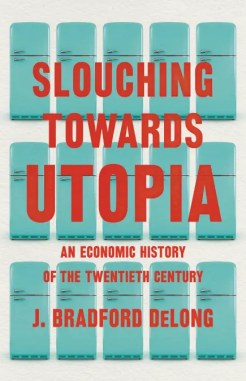
Humanity was stagnant for millennia — then something big changed 150 years ago

Why the years from 1870 to 2010 were humanity’s most important.

“The 140 years from 1870 to 2010 of the long twentieth century were, I strongly believe, the most consequential years of all humanity’s centuries.”

So argues Slouching Towards Utopia: An Economic History of the Twentieth Century, the new magnum opus from UC Berkeley professor Brad DeLong. It’s a bold claim. Homo sapiens has been around for at least 300,000 years; the “long twentieth century” represents 0.05 percent of that history.

But to DeLong, who beyond his academic work is known for his widely read blog on economics, something incredible happened in that sliver of time that eluded our species for the other 99.95 percent of our history. Continue reading

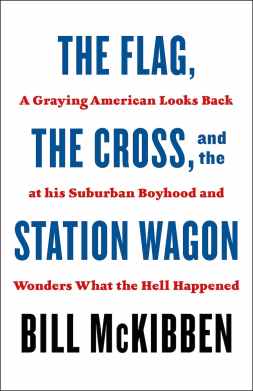
McKibben With 2022 Perspective

If Timothy Egan thinks that one day Bill McKibben may win a Nobel prize, do not bet against it–only ask whether it will be for his contribution to literature or instead to world peace:

In his writings, his many speeches and bullhorn exhortations, Bill McKibben comes across as one of the least cynical people on the battlefield of public opinion. He’s passionate about solving problems others have given up on, about building a better world and particularly about climate change, the issue that has made him the Paul Revere of alarm about our fevered planet. Continue reading
Resistance Is Futile

Illustration by Kotryna Zukauskaite

We do not have time for the patience required for proving the futility of resistance, but this historical perspective is valuable nonetheless:

When Coal First Arrived, Americans Said ‘No Thanks’

Back in the 19th century, coal was the nation’s newfangled fuel source—and it faced the same resistance as wind and solar today

Steven Preister’s house in Washington, D.C. is a piece of American history, a gorgeous 110-year-old colonial with wooden columns and a front porch, perfect for relaxing in the summer. Continue reading

The Parthenon Marbles, Back Where They Belong

The Parthenon in 1875.

The Parthenon in 1875. Interfoto/Alamy

The Elgin Room of the British Museum in an undated photograph taken during the Victorian era.

The Elgin Room of the British Museum in an undated photograph taken during the Victorian era. Keasbury-Gordon Photograph Archive, via Alamy

The original Parthenon marbles belong back in Athens, in the museum built for them. With all due respect to my British friends, my opinion is informed partly by my mother being from Greece, but mostly by an impartial logic.

That logic is expressed in the article below, which also happens to lay out an interesting sideshow:

Robots at the Marmi di Carra marble workshop in Italy carved a replica of a horse head, the original of which sits in the British Museum in London.

Robots at the Marmi di Carra marble workshop in Italy carved a replica of a horse head, the original of which sits in the British Museum in London.

Few cultural disputes inflame British passions more than the disposition of the Parthenon Marbles. Public debate about the statuary has raged since the early 1800s, when the sculptures and bas-reliefs, which date from 447 B.C. to 432 B.C., were stripped from the Parthenon and other Classical Greek temples on the Acropolis of Athens by agents of Thomas Bruce, a Scottish statesman and seventh earl of Elgin. The marbles were purchased — some say looted — by Elgin during his time as ambassador to the Ottoman Empire, the occupying power; they have resided in the British Museum since 1817. Continue reading
Adriatic, The Experience & The Book

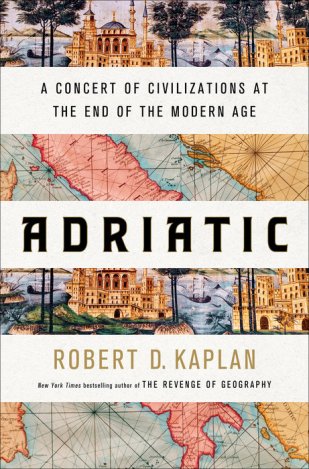
When I first set foot in Croatia more than two decades ago it was for a project to assist the country in defending the coastal areas from the pressures of mass tourism development. Within a couple of years I was doing similar work in Montenegro. Before too long we were enough in love with the region to make it our family’s home for a year.

So seeing this book about the future importance of the region, by an eminent scholar, is both heartwarming and concerning:

“[An] elegantly layered exploration of Europe’s past and future . . . a multifaceted masterpiece.”—The Wall Street Journal

“A lovely, personal journey around the Adriatic, in which Robert Kaplan revisits places and peoples he first encountered decades ago.”—Peter Frankopan, author of The Silk Roads

In this insightful travelogue, Robert D. Kaplan, geopolitical expert and bestselling author of Balkan Ghosts and The Revenge of Geography, turns his perceptive eye to a region that for centuries has been a meeting point of cultures, trade, and ideas. Continue reading

Library!

The Long Room is at the heart of a $95 million conservation project at Trinity College Dublin’s Old Library. Paulo Nunes dos Santos for The New York Times

The exclamation point in this post’s title signifies enthusiastic appreciation for a pleasant surprise. A story about libraries to take the mind off all that other news, and point it to lasting treasures. Our thanks to Ed O’Loughlin for the story, Paulo Nunes dos Santos for the photos, and The New York Times for the publication:

An Irish National Treasure Gets Set for a Long-Needed Restoration

The majestic Old Library at Trinity College Dublin, where some of Ireland’s most ancient and valuable books are stored, is a popular tourist attraction.

A librarian walking along the corridors in the upper gallery. Paulo Nunes dos Santos for The New York Times

DUBLIN — The Long Room, with its imposing oak ceiling and two levels of bookshelves laden with some of Ireland’s most ancient and valuable volumes, is the oldest part of the library in Trinity College Dublin, in constant use since 1732.

But that remarkable record is about to be disrupted, as engineers, architects and conservation experts embark on a 90 million euro, or $95 million, program to restore and upgrade the college’s Old Library building, of which the Long Room is the main part. Continue reading
Camping, The Book Review

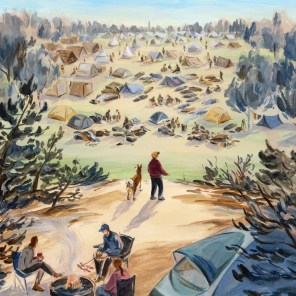
A recent book by the historian Phoebe S. K. Young explores what, exactly, camping is, and how the pursuit intersects with protest culture, homelessness, and identity. Illustration by Sally Deng

We have not featured much on camping recently, but some old favorites come to mind when reading this book review titled The Confounding Politics of Camping in America by Dan Piepenbring:

For centuries, sleeping outside has been embraced or condemned, depending on who’s doing it.

By the eighteen-seventies, the society pages of Scribner’s Monthly could no longer hide it: the “American pleasure-seeking public” had run out of places to seek their pleasure. Summer after summer, vacationers resigned themselves to “broiling in a roadside farm-house” among the “odor of piggery and soap-suds.” Or they visited costly resort towns, finding “more anxious swarming crowds than those left behind.” Continue reading
Indigenous Knowhow & Conservation

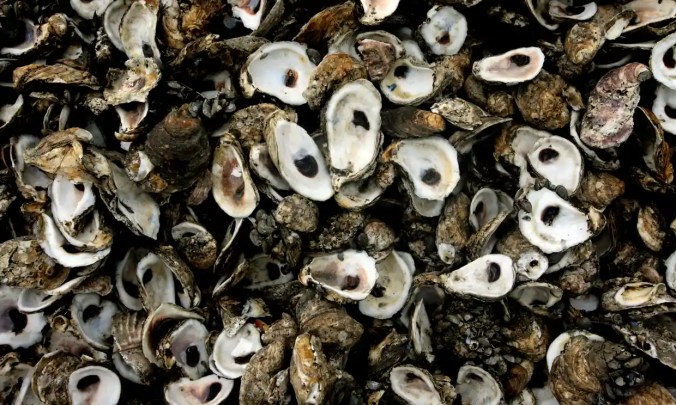
Prof Ian McNevin said ‘the scale of Indigenous oyster harvesting is extraordinary’, and compared it to contemporary commercial oyster farms. Photograph: Orjan F Ellingvag/Corbis/Getty Images

Some of us writing in these pages have been fans of oysters primarily for their culinary value (living in France, and then later in Croatia, could create such bias). But we have posted more frequently about the resiliency that oysters have come to represent in the search for protection against climate impact. Here is some more on that topic, intersecting with another theme we pay frequent attention to:

Precolonial First Nations oyster fisheries sustained millennia of intense harvests, study shows

Researchers in Australia and North America say management of oyster reefs should incorporate Indigenous knowledge

Oyster fisheries in Australia and North America survived for up to 10,000 years prior to colonisation, sustaining First Nations communities even under intense harvest, according to new research. Continue reading

Writing About The Banda Islands & Nutmeg & Us

Around the time we shared a book review of Amitav Ghosh’s most recent work he gave a lecture about the Banda Islands, explaining the relationship between nutmeg and our current challenges related to climate change. It includes conversation with his host, a professor of creative writing, who draws out of Ghosh on his writing process.

The best part of the lecture is about half way through, when Ghosh talks about the agency of botanicals, a topic that many of us first encountered in the writings of Michael Pollan. Thanks to Rhoda Feng for giving Ghosh’s book another review, which led me to find the video above:

A SMALL BUT INCREDIBLY VALUABLE NUT

At the end of Amitav Ghosh’s SEA OF POPPIES (2008), a character reflects on how her life has been governed not by the sign of Saturn but by the poppy seed. Offering a seed to her lover, she says: ‘Here, taste it. It is the star that took us from our homes and put us on this ship. It is the planet that rules our destiny.’ SEA OF POPPIES is part of the Ibis trilogy by Ghosh – followed by RIVER OF SMOKE (2011) and FLOOD OF FIRE (2015) – about the nineteenth-century Anglo-Chinese Opium Wars. Continue reading

If You Happen To Be In London

Museum number: BP.1079
© Victoria and Albert Museum, London, courtesy Frederick Warne & Co Ltd.

Do you have the inclination of switching from city life to rural? I, for one, made the switch and have no inclination to ever live in a city again. Occasional visits are fine. But as the theme song from a tv show of my youth had it “…keep Manhattan, just give me that country life…”.

My reason for thinking about this today is related to the book on the right. Whether or not you are a fan of her books, you might find the case of Beatrix Potter’s life choices worthy of consideration. Rizzoli has published this book to accompany an exhibition at the Victoria & Albert Museum. Our appreciation to Anna Russell for describing both, and adding plenty of detail about the author’s life, in this article:

The Secret Life of Beatrix Potter

A new book and an exhibition on Potter, who wrote “The Tale of Peter Rabbit,” use letters, sketches, and a coded journal to capture an author who delighted in the detail and humor of the natural world.

Many teen-agers will go to great lengths to keep their diaries private—I kept a little key for mine in a wooden jewelry box, which I guarded jealously—but the children’s book author Beatrix Potter took it to an extreme. Continue reading
Frederick Law Olmsted At 200

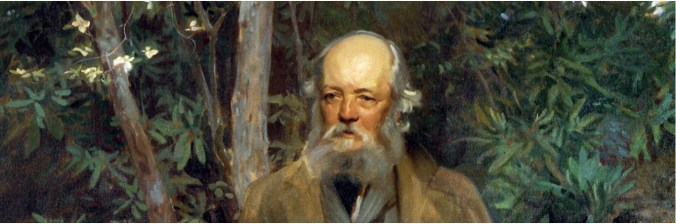
Portrait of Frederick Law Olmsted (detail), 1895, by John Singer Sargent (1856–1925); The Artchives/Alamy Stock Photo.

From Hedgehog Review, a bit of scholarly reflection on a man whose impact on the landscape of cityscapes is still worthy of consideration:

The Man Who Built Forward Better

On Frederick Law Olmsted’s Bicentennial

Witold Rybczynski

What would Frederick Law Olmsted (1822–1903) make of his works today, in the bicentennial year of his birth? No doubt he would be delighted by the survival and continued popularity of so many of his big-city parks, particularly Central Park and Prospect Park, but also parks in Boston, Chicago, and Montreal, as well as Buffalo, Detroit, Rochester, and Louisville. He might be surprised by the bewildering range of activities these parks now accommodate—not only boating and ice-skating, as in his day, but exercising, jogging, picnicking, and games, as well as popular theatrical and musical events. I don’t think this variety would displease him. After all, it was he who introduced free band concerts in Central Park, over the objections of many of his strait-laced colleagues. He would be pleased by the banning of automobiles; his winding carriage drives were never intended for fast—and noisy—traffic. Continue reading
Less Beef Is Better, No Beef Is Best

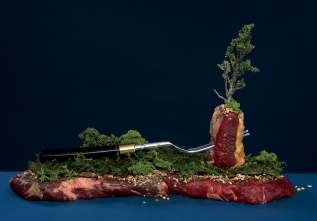
A beef rib lifter stacked with strip steak and a sagebrush tree. Photograph by Kyoko Hamada. Styled by Martin Bourne

The photo to the left might have appealed to me last year or earlier. But having tried giving up beef for so long, and finally prevailing, now it has no appeal. It does not disgust me, but I expect to get there.

Ligaya Mishan’s article What Does the End of Beef Mean for Our Sense of Self? has excellent photography by Kyoko Hamada.

My highest compliment is reserved for the stylist Martin Bourne, for making the photos just slightly creepy, matching my current emotional response to looking at beef.

Strip steaks alongside a piece of sirloin tip. Photograph by Kyoko Hamada. Styled by Martin Bourne

When it comes to America’s legacy of Manifest Destiny, there’s perhaps no meal more symbolic than a bleeding steak. So who are we now that we’re consuming less red meat?

MEAT IS PRIMAL, or so some of us think: that humans have always eaten it; that it is the anchor of a meal, the central dish around which other foods revolve, like courtiers around a king; that only outliers have ever refused it. But today, those imagined outliers are multiplying. The United Nations Food and Agriculture Organization reports that the consumption of beef per capita worldwide has declined for 15 years. Nearly a fourth of Americans claimed to have eaten less meat in 2019, according to a Gallup poll. The recipe site Epicurious, which reaches an audience of 10 million, phased out beef as an ingredient in new recipes in 2020. Continue reading

Good Fences Make Good Neighbors

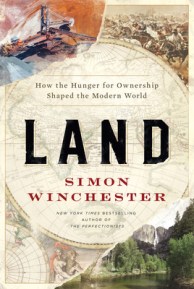
Land acquisition, for the purpose of conservation, is a subject that we touch upon from time to time. The bigger arc of land acquisition’s history, as well as its future, helps with perspective. The book to the right (linked to an independent bookseller’s website), potentially important for such perspective, is reviewed by Francisco Cantú in Human History and the Hunger for Land, as excerpted below (you can listen to the review by clicking the start button here):

From Bronze Age farmers to New World colonialists, the stories of struggle to claim more ground have shaped where and how we live.

Territorial expansion once meant conquest, but other modes are being explored. Illustration by Vincent Mahé

The final piece of terrain to be incorporated into the contiguous United States was an oddly shaped strip stretching from Las Cruces, New Mexico, to Yuma, Arizona. Known as the Gadsden Purchase, the area was obtained from Mexico in 1854 for ten million dollars, adding nearly thirty thousand square miles to a nation still drunk with Manifest Destiny expansionism. The motivations for acquiring the land were many—it contained huge deposits of ore and precious metals, held vast agricultural potential in the soils of its fertile river valleys, and, most important, had an arid climate that could allow a rail route to connect the coasts while remaining free from snowpack year-round. Continue reading

Postscript On Leaky

Over the decades, Leakey inspired countless scientists and activists through his books and talks. Photograph by William Campbell / Getty

We do not normally link to obituaries, but since I felt compelled to recently, this one seems a must also. Nearly two years ago we linked to a profile of Richard Leakey and the author of that profile has written a moving postscript:

On the night of January 2nd, I got a text from Paula Kahumbu, the Kenyan conservationist. “Dear friends, sad news,” she wrote. “Richard Leakey just passed away at his home in Kona Baridi.” Leakey, the renowned paleoanthropologist and wildlife conservationist, had been her mentor—a mercurial, controversial advocate for African wildlife, whose tumultuous career was central to Kenya’s history in the past half century. Continue reading

Something In The Air For Onetime Mining Communities

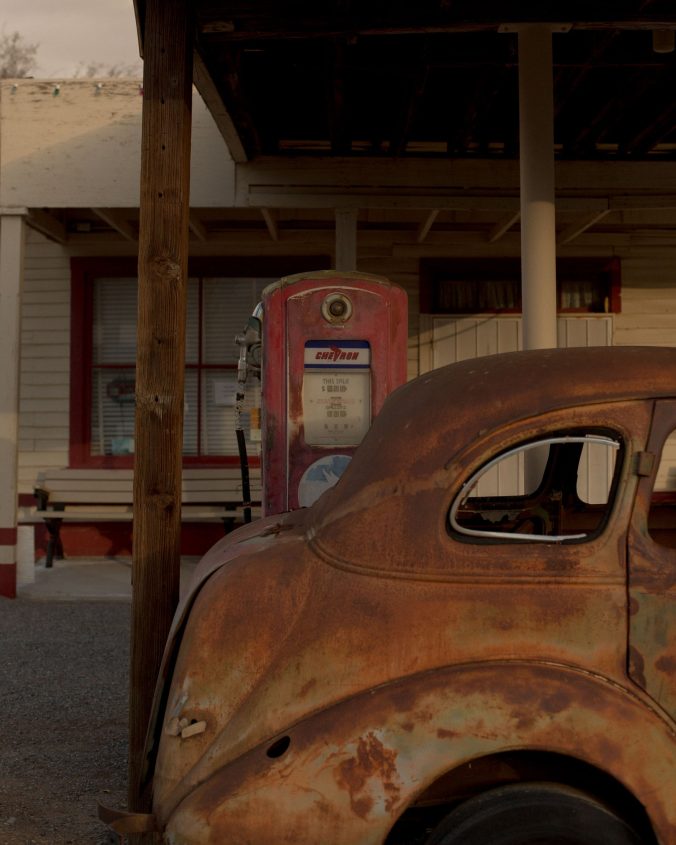
The Shoshone Museum documents the town’s scrappy past as a mining community.

When Alex Ross, a music critic, wanders from criticism to commentary or into especially unexpected territory, it is always for good reason. He clearly has a love of desert ecosystems. His most recent publication intersects desert ecosystem with a deserted mining community. It reaches me just after yesterday’s link to a model for improving the prospects of a coal extraction community, so there is something in the air:

The Queen of the Desert

How Susan Sorrells transformed a Death Valley mining village into a model of ecologically conscious tourism.

For mile after mile along California State Route 127, a two-lane desert road, there are no services, no homes.

Next services 57 miles” reads a sign at the southern end of California State Route 127, which goes from the Mojave Desert town of Baker up to the Nevada border, skirting the edge of Death Valley National Park. It’s one of those two-lane desert roads that slices across the landscape like a never-ending airport runway. There’s an extended stretch that consists of a long downward slope followed by an equally long ascent. If you’re driving at night, the headlights of cars coming in the opposite direction float above one another in midair, like planes waiting to land. But cars are infrequent. For mile after mile, there are no services, no homes. Continue reading