Culling Questions

Because invasive species are among the main drivers of extinction today, conservationists have made efforts to cull mice in favor of albatrosses, rats in favor of puffins, and pythons in favor of bobcats. Illustration by Javier Jaén; Source photographs from Getty

Invasive species have received plenty of attention in our pages in the years since we first shared on this topic. Creative approaches to solving the problem abound. Elizabeth Kolbert reviews two books that take up the moral implications:

Cull of the Wild coverShould We Kill Some Wild Creatures to Protect Others?

Where humans have tilted the game in favor of one species, some believe we should cull predators to save their prey. Others think it’s a mistake to pick sides.

The northern spotted owl is about a foot and a half high, with very dark eyes, a greenish beak, and a rim of feathers, called a facial disk, that makes it appear to be regarding the world with worried perplexity. Like most owls, northern spotteds are nocturnal, but, unlike most of their brethren, they are picky. They can live only in old-growth forests in the Pacific Northwest. Their diet is restricted and seems to consist mainly of flying squirrels. They’re incapable of building nests of their own, and so, to raise their young, they rely on tree cavities or on basketlike growths that are produced by arboreal infections and known, evocatively, as witches’ brooms.

Hedgehogs, Killing, and Kindness: The Contradictions of Care in Conservation PracticeThe spotted owl’s fastidiousness produced one of the great environmental conflicts of the twentieth century. By the late nineteen-eighties, it was estimated that only fifteen hundred breeding pairs survived. Since the owls depended on old growth, the only way to save them, according to biologists, was to preserve the Northwest’s remaining stands of ancient trees. The timber industry countered that leaving those trees untouched would cost thousands of jobs. The two sides adopted increasingly confrontational tactics. Continue reading
An Unappreciated Creature

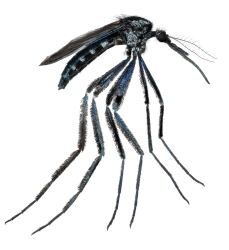
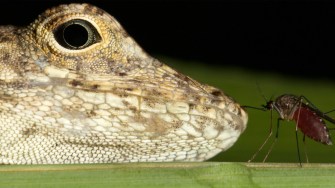
A macro image of a Costa Rican mosquito, Psorophora cilipes.

Living in, or even just visiting Costa Rica, inspires appreciation, and respect, for nature. But one creature defies this spirit:

Entomologist says there is much scientists don’t know about habitats, habits, impacts on their environments

A blood-sucking nuisance, mosquitoes are responsible for spreading diseases to hundreds of millions of people every year. True?

A Culex mosquito feeding from an invasive brown anole lizard in Florida. Photos courtesy of Lawrence Reeves

Yes, says entomologist Lawrence Reeves, but it’s also true that mosquitoes primarily feed on plant sugars, not blood. Only female mosquitoes consume blood, and only when they need it to complete their reproductive cycle. Also, it is possible some may serve as pollinators like bees, allowing plants to produce fruit, seeds, and more young plants. Continue reading

Ants & Us

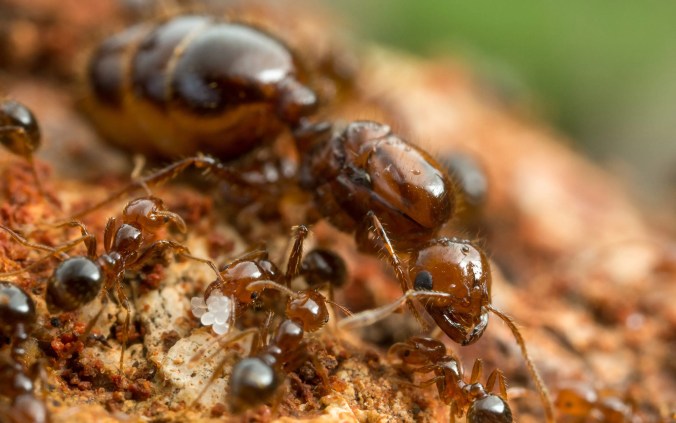
A queen Solenopsis invicta, an invasive fire ant. Photo by Alex Wild

John Whitfield, author of this article in Aeon, is a science journalist whose writing has appeared in Nature, among publications:

A polygyne population of red imported fire ants at Brackenridge Field. Austin, Texas, USA. Photo by Alexander Wild

Ant geopolitics

Over the past four centuries quadrillions of ants have created a strange and turbulent global society that shadows our own

It is a familiar story: a small group of animals living in a wooded grassland begin, against all odds, to populate Earth. At first, they occupy a specific ecological place in the landscape, kept in check by other species. Then something changes. The animals find a way to travel to new places. They learn to cope with unpredictability. They adapt to new kinds of food and shelter. They are clever. And they are aggressive. Continue reading
Invasive Pythons Are Winning, Get Your Game On

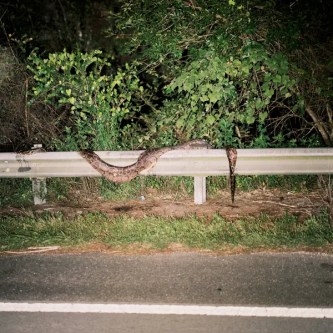
A Burmese python that was hit by a car. Zack Wittman for The New York Times

Nearly 12 years to the day since the first spectacular article we read on invasive species, we still watch for these stories. When it is invasive-hunting season, we take notice when new initiatives are announced:

Her Livelihood? Hunting Pythons in the Dead of Night.

Amy Siewe teaches people how to find and euthanize invasive Burmese pythons, which have been so successful at adapting to Florida that they appear here to stay.

On a clothing rack in Ms. Siewe’s living room are a dozen of skins, dyed deep hues by a tannery that helps her make python-leather products, including Apple Watch bands. Zack Wittman for The New York Times

An unexpected chill can fall over the Florida Everglades late at night. Stars speckle the sky. Frogs croak and croak, their mating calls echoing in the air.

It is all peace and wonder until you remember why you are out at this hour, on the flatbed of a pickup truck outfitted with spotlights, trying to find invasive creatures lurking in the shadows.

A python hunt might evoke images of hunters trudging through swamps and wresting reptiles out of the mud. In reality, it involves cruising the lonely roads that traverse the Everglades in S.U.V.s, hoping for a glimpse of a giant snake. It is strange work, straining on the eyes, brutal on the sleep schedule. Continue reading

Another Year, Another Invasive Python Initiative: Inversa Leathers

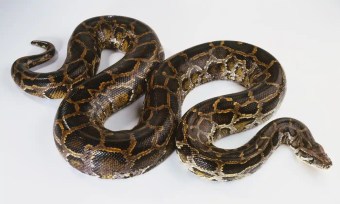
The invasive Burmese python has become the apex predator in the Florida Everglades, displacing the native American alligator. Photograph: Dorling Kindersley ltd/Alamy

We have been paying attention to this problem for more than a decade, and seen ideas like this before; until the problem is mitigated, we will continue sharing:

Could handbags be the haute couture solution to Florida’s python problem?

Invasive Burmese pythons are devastating wildlife but one firm believes turning snake leather into accessories could be a win-win

The fight to eradicate Burmese pythons from the Florida Everglades has intertwined with New York’s haute fashion scene in a project launched by a group of environmental activists who have already experienced success working with the skins of other invasive species. Continue reading
The Great Atlantic Sargassum Belt

A worker removing sargassum with machinery at a resort in Cancun, Mexico, last year. Alonso Cupul/EPA, via Shutterstock

We have seen its beauty and otherwise tended to feature its positive uses, but not all seaweed is created equal; so, our thanks to Livia Albeck-Ripka and Emily Schmall for this news and analysis:

A Giant Blob of Seaweed is Heading to Florida

The mass, known as the great Atlantic Sargassum belt, is drifting toward the Gulf of Mexico. Scientists say seaweed is likely to come ashore by summer to create a rotting, stinking, scourge.

For much of the year, an enormous brown blob floats, relatively harmlessly, across the Atlantic Ocean. Its tendrils provide shelter and breeding grounds for fish, crabs and sea turtles. Spanning thousands of miles, it is so large that it can be seen from outer space. Continue reading
Protecting Insects Requires More Effort

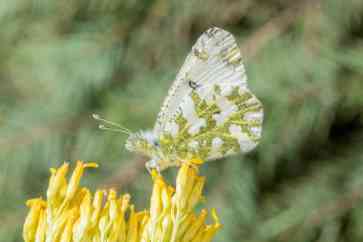
The large marble butterfly is now locally extinct in some places. Rick and Nora Bowers/Alamy

Insects matter, and our thanks to Catrin Einhorn for making it more clear why:

Are Butterflies Wildlife? Depends Where You Live.

A legal quirk leaves officials in at least a dozen states with little or no authority to protect insects. That’s a growing problem for humans.

It’s tough being an insect. They get swatted, stomped and sprayed without a thought. Their mere presence can provoke irrational panic. Even everyday language disparages them: “Stop bugging me,” we say. Continue reading
Bravo, Bobbi Wilson!

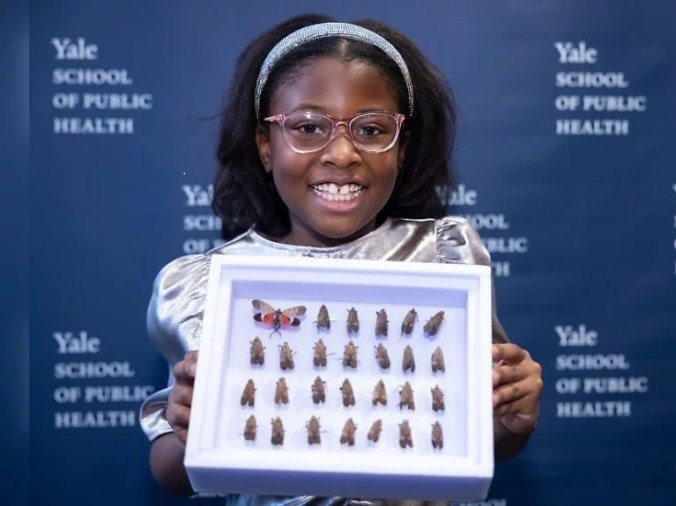
Bobbi Wilson holds her collection of spotted lanternflies as she is honored at the Yale School of Public Health on Jan. 20. Andrew Hurley/Yale University

A young person doing their part, on their own, to help with an environmental scourge. Hats off to that. The unneighborly act aside, this is a story to celebrate (thanks to National Public Radio, USA) and an extra bravo to Yale University for their part in it:

Yale honors the work of a 9-year-old Black girl whose neighbor reported her to police

Nine-year-old Bobbi Wilson may be in the fourth grade, but last month the Yale School of Public Health held a ceremony honoring the budding scientist’s recent work. Continue reading
Prairie Revival

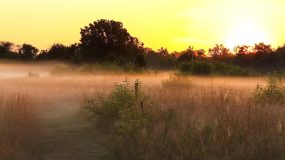
Sunrise at the Hempstead Plains on Long Island, New York. STEVE PFOST / NEWSDAY RM VIA GETTY IMAGES

Thanks to Yale e360’s Janet Martinelli:

Amid the Sprawl, a Long Island Prairie Makes a Quiet Comeback

Tucked into quintessential suburbia, the Hempstead Plains Preserve is a small sliver of the grassland that once covered a vast area of Long Island. New research shows that thoughtfully planted yards and gardens can bolster the biodiversity in such urban wildland fragments.

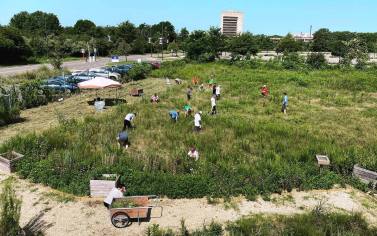
Volunteers remove invasive Chinese bushclover from the Hempstead Plains Preserve at Nassau Community College. FRIENDS OF HEMPSTEAD PLAINS

The Hempstead Plains Preserve is a place where you can imagine the presence of creatures past. Birdfoot violets, now gone, once colored the landscape with a wash of purple in spring. The heath hen, a large grouse that went extinct 90 years ago, performed its elaborate courtship dances on the Plains.

On a late afternoon in October, the slanting autumn sun lit up in a blaze of gold the grasses and wildflowers on this narrow, 19-acre sliver of land — almost all that is left of the tallgrass prairie that once covered more than 50 square miles at the heart of Long Island, New York, a fish-shaped island that stretches east into the Atlantic Ocean. Continue reading
Lionfish, Competition & The Big Tournament

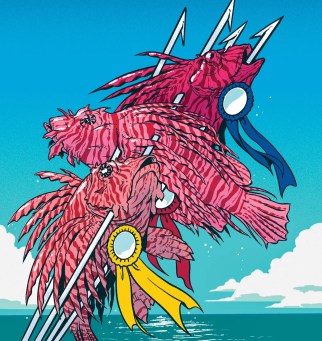
“What you’re hunting isn’t prey,” a lionfish diver told me. “It’s the enemy.”Illustrations by Johnny Dombrowski

D. T. Max has vividly sketched humans in competitive mode, harnessing tournament rules to address the aggressions of this introduced species. In the decades-long perspective, lionfish are winning the bigger tournament by adapting and expanding their range; but we admire the drive to end that success:

Killing Invasive Species Is Now a Competitive Sport

In the Panhandle, where swarms of lionfish gobble up native species, a tournament offers cash prizes to divers skilled at spearing one predator after another.

Rachel Bowman is a diver who specializes in the hunting, catching, and killing of lionfish, a species native to Indo-Pacific waters. Continue reading

Lionfish Leather

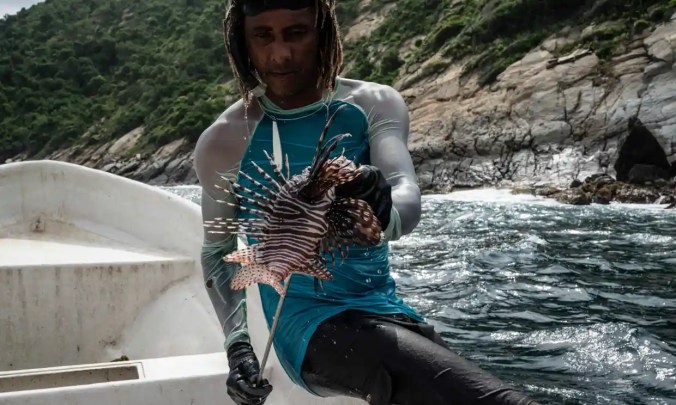
A lionfish caught off Venezuela, where the authorities organise sport fishing competitions to curb the dangerous proliferation of the invasive species. Photograph: Yuri Cortéz/AFP/Getty

Lionfish came to our attention in a series of posts starting in 2014. That year we came to see that fighting this invasive species would require innovative entrepreneurial conservation methods. We published more posts and series about initiatives in the years since then, but the problem continued to grow. For some reason the stories about initiatives started fading from our attention and then stopped with a post in 2018. Now, 22 posts since the first post and four years since the last one, lionfish are back in our thoughts thanks to Inversa’s innovation:

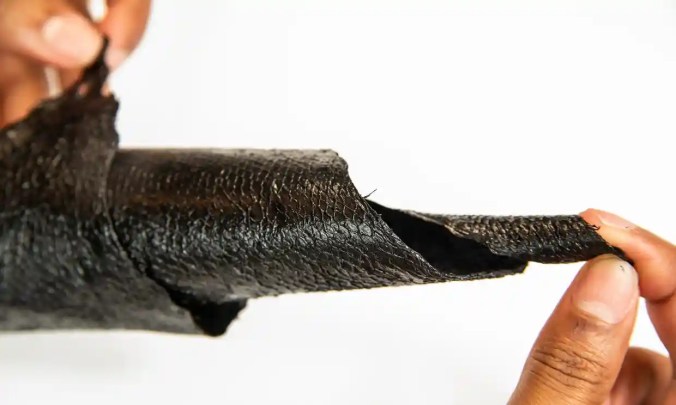
Lionfish leather. Inversa says it is helping to solve an environmental crisis by using an invasive species that eats lots of other fish but has no predators in much of its range. Photograph: Inversa

Fish leather is here, it’s sustainable – and it’s made from invasive species to boot

An avid diver saw how lionfish have devastated populations of Florida’s native tropical fish and resolved to help solve the problem

Aarav Chavda has been diving off the coast of Florida for years. Each time he became increasingly depressed by the ever-growing void, as colourful species of fish and coral reefs continued to disappear. Continue reading
More Māori Ancestral Knowledge Coming Your Way

William Anaru, the biosecurity manager of the local tribe, Te Arawa, at Lake Rotomā. Cornell Tukiri for The New York Times

Pete McKenzie shares more from the place where ancient knowhow is respected:

As a weed choked a New Zealand lake, a tribe found a surprising solution in a centuries-old tool, adding to a pitched debate over how Indigenous knowledge can complement conventional science.

LAKE ROTOMA, New Zealand — A riot of native plant life once covered the shallows of Lake Rotomā, one of the many bodies of water that speckle New Zealand’s upper North Island. At night, mottled green crayfish scuttled from the deep to graze beneath the fronds in such plentiful numbers that the local Māori tribe could gather a meal in a few minutes of wading. Continue reading
Pythons, Bobcats & Camera Traps

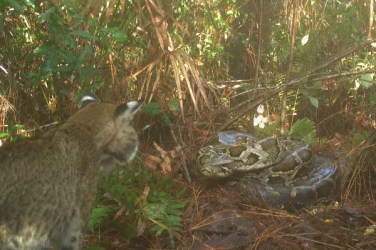
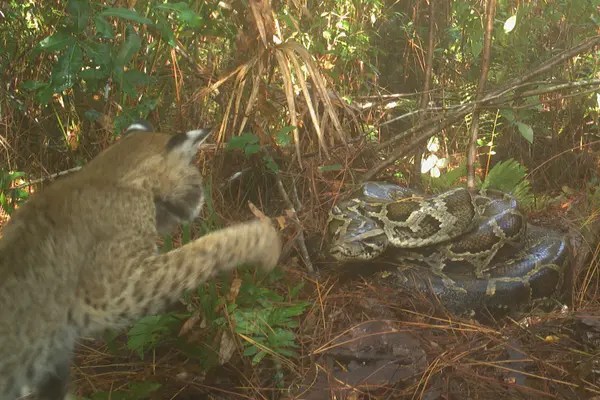
A Burmese python and a bobcat facing off in the Big Cypress National Preserve in Florida last June, captured by a trap camera set up by the U.S. Geological Survey. U.S.G.S.

We have been posting about invasive pythons, as well as plenty of other invasive species, annually for more than a decade now. Likewise, feline wildlife has been a recurring theme. Not to mention camera traps, another theme we care about.

For a surprising overlap of those two themes, or otherwise just a very well-written story about wildlife, read Matt Kaplan’s article about how Bobcats With a Taste for Python Eggs Might Be the Guardians of Florida’s Swamp.

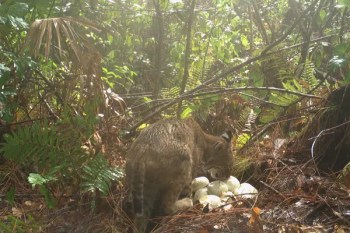
The bobcat eating the eggs. U.S.G.S.

Our congratulations to Dr. Andrea Currylow for the determined pursuit leading this scientific finding, and with no disrespect to pythons as a species in their native territories, in this case may the best cat win:

Cameras captured the wild feline purloining a Burmese python’s eggs, giving hope that the state’s native species are responding to a voracious, invasive predator.

The bobcat took a swipe. U.S.G.S.

The voracious appetite of the invasive Burmese python is causing Florida’s mammal and bird populations to plummet. With little natural competition to control the big snake’s numbers, the situation looks desperate. But new observations suggest that the bobcat, a wildcat native to Florida, might be able to help. Continue reading

Invasivorism & Reasonable Questions

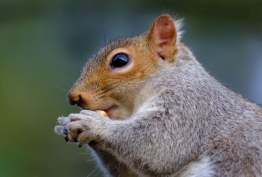
Grey squirrels have driven the local extinction of the native red across much of England and Wales. Photograph: Paul Broadbent/Alamy

If you do not eat animal protein, this concept may not appeal to you. But if you allow that others who eat meat may be able to do so ethically, then read on.

If you do eat any kind of meat, then it is a reasonable question whether invasive species are fair game: Rack of squirrel, anyone? The chefs putting invasive species on the menu

Roast rack of squirrel, fondant jersey royal potatoes, carrot and wild garlic served at Paul Wedgwood’s restaurant in Edinburgh, Scotland. Photograph: Wedgwood

‘Invasivorism’ is a growing ethical dining trend but is ‘eat them to beat them’ really the answer?

From oral contraceptives to proposals to edit their DNA, efforts to control the UK’s invasive grey squirrel population have become increasingly elaborate. But a growing number of chefs and conservationists have a far simpler idea, which they see as part of the trend in ethical dining: eat them. Continue reading
Crazy Yellow Ants, Be Gone From This Island

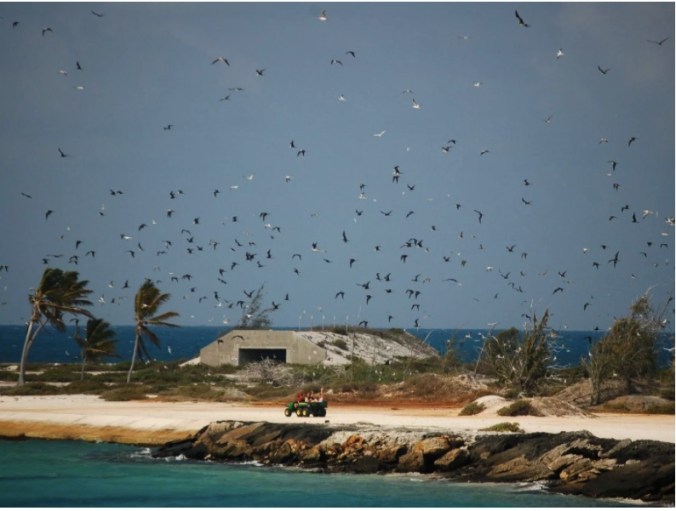
Hundreds of frigate birds and boobies fly over a Crazy Ant Strike Team crew of volunteers at Johnston Atoll NWR.
USFWS

In common language, they are called crazy. They terrorize birds on an island where they did not belong. On this platform we are always going to side with the birds. Full stop. But, even these lousy things ants do are impressive. They remind us that one day ants will rule the planet.

Yellow Crazy Ants, An Enemy To Seabirds, Have Been Wiped Out On A Remote Atoll

The yellow crazy ant was last spotted by Crazy Ant Strike Teams on the vital seabird nesting grounds in December 2017, but it was too soon to tell if they’d been fully extinguished because their colonies are found underground. Robert Peck/HCSU/USGS

After more than a decade, the terrorizing reign of the yellow crazy ant is over on the Johnston Atoll National Wildlife Refuge, part of the Pacific Remote Islands Marine National Monument.

The nonnative invasive insect had been threatening ground-nesting seabirds on the atoll since at least 2010, nearly wiping out the island’s red-tailed tropicbird colony in just a few years and wreaking havoc on other seabirds. But the U.S. Fish and Wildlife Service announced Wednesday that its campaign to eradicate the insects has been a success. Continue reading
The Locus Of Locust Control

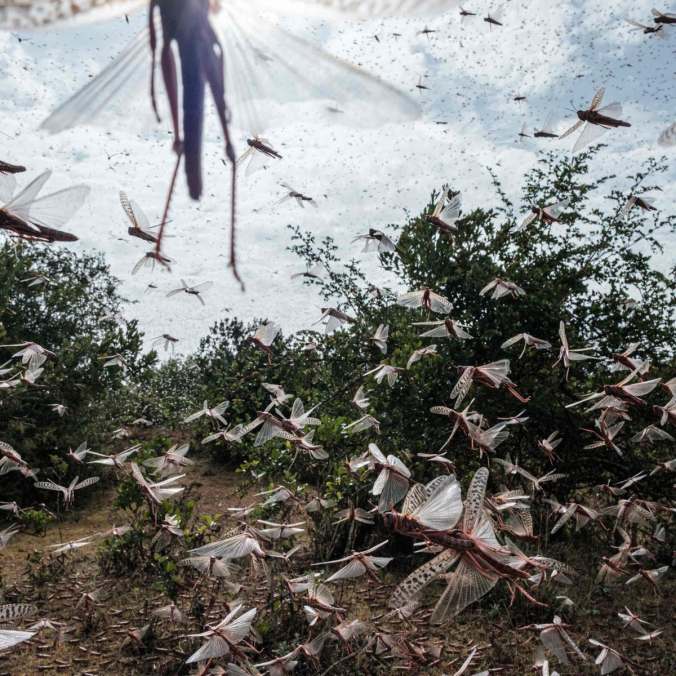
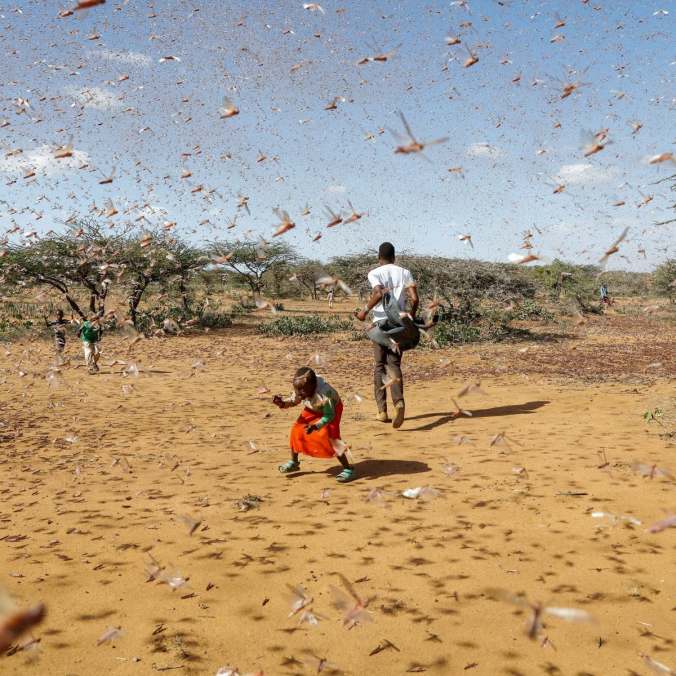
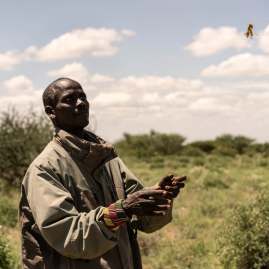
A swarm of desert locusts in Meru, Kenya, in February. Yasuyoshi Chiba/Agence France-Presse — Getty Images

We respect all things natural, but we acknowledge there are phenomena that test our principles. Historic swarms of locusts, for example, make us believe that getting control over their impact is essential for communities where they can lay waste to human endeavor, so we thank Rachel Nuwer for this story from one of the hardest-hit regions:

A swarm inundating Naiperere, near the town of Rumuruti, in Kenya in January. When the rains come, locusts can form swarms of more than 15 million insects per square mile. Baz Ratner/Reuters

As Locusts Swarmed East Africa, This Tech Helped Squash Them

A hastily formed crowdsourcing operation to contain the insects in Kenya, Ethiopia and Somalia could help manage climate-related disasters everywhere.

Lake Joseph, a locust tracker, in Samburu County, Kenya in May 2020. Fredrik Lerneryd/Getty Images

Melodine Jeptoo will never forget the first time she saw a locust swarm. Moving like a dark cloud, the insects blotted out the sky and pelted her like hail.

“When they’re flying, they really hit you hard,” said Ms. Jeptoo, who lives in Kenya and works with PlantVillage, a nonprofit group that uses technology to help farmers adapt to climate change. Continue reading
Kelp Forests And Invasive Urchins

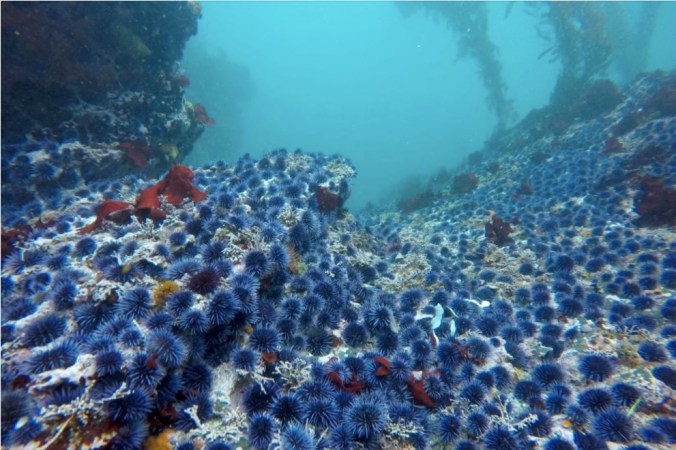
Purple sea urchins have boomed off Northern California, destroying kelp forests that provide a crucial ecosystem. Steve Lonhart / NOAA MBNMS

Kelp is being farmed now, but where it is a naturally occurring forest it needs help. Thanks to National Public Radio (USA) for this:

In Hotter Climate, ‘Zombie’ Urchins Are Winning And Kelp Forests Are Losing

They’re purple, spiky and voracious, and just off the West Coast, there are more of them than you can count.

Purple sea urchins have exploded in recent years off California, covering the ocean floor in what divers describe as a “purple carpet.” Continue reading
Under A White Sky

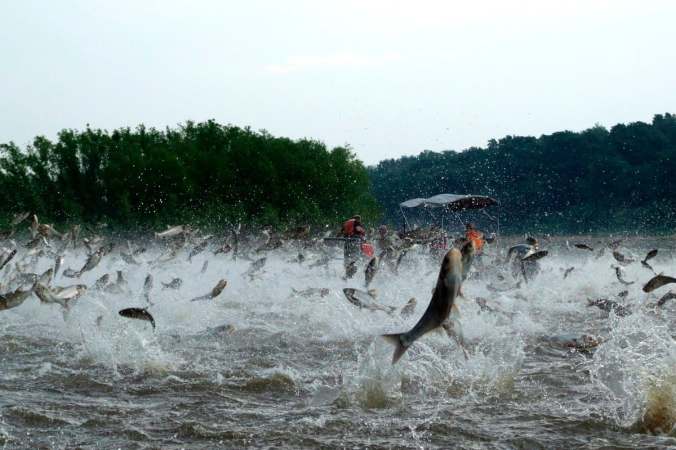
The continuing struggle to prevent Asian carp from entering the Great Lakes system has included solutions ranging from electrified water barriers to thrillingly impractical suggestions like stopping them with flying knives. Nerissa Michaels/Illinois River Biological Station, via Detroit Free Press

We have not featured any of her work since this review of H is for Hawk but we are happy to read Helen Macdonald’s work again with this review:

Can We Patch Up the Natural World We’ve Hurt?

UNDER A WHITE SKY
The Nature of the Future
By Elizabeth Kolbert

A few years ago YouTube recommended I watch a video with the word “carpocalypse” in its title. I clicked the link — of course I did — and stared in awe at what resembled a mash-up of a video game, nature documentary and war movie. I saw a river full of fish leaping from the water like chaotic piscine fireworks and men in speedboats yelling and holding out nets to catch them as if they were wet and weighty butterflies. Fish hitting people in the face, fish landing in boats, fish flapping between people’s feet in a mess of slime and blood. Continue reading

Organikos A Decade Ago & Non-Patagonian Beavers

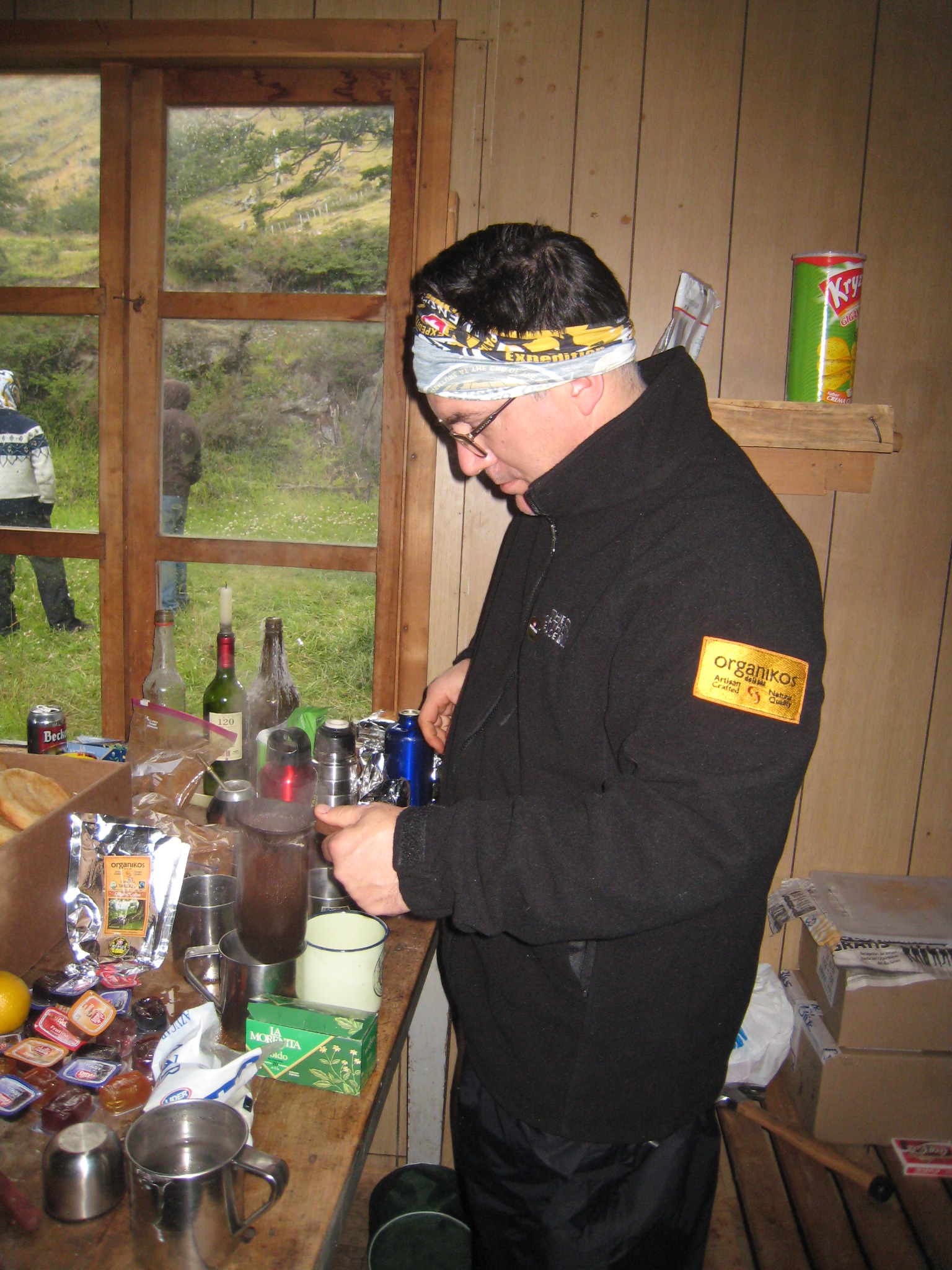
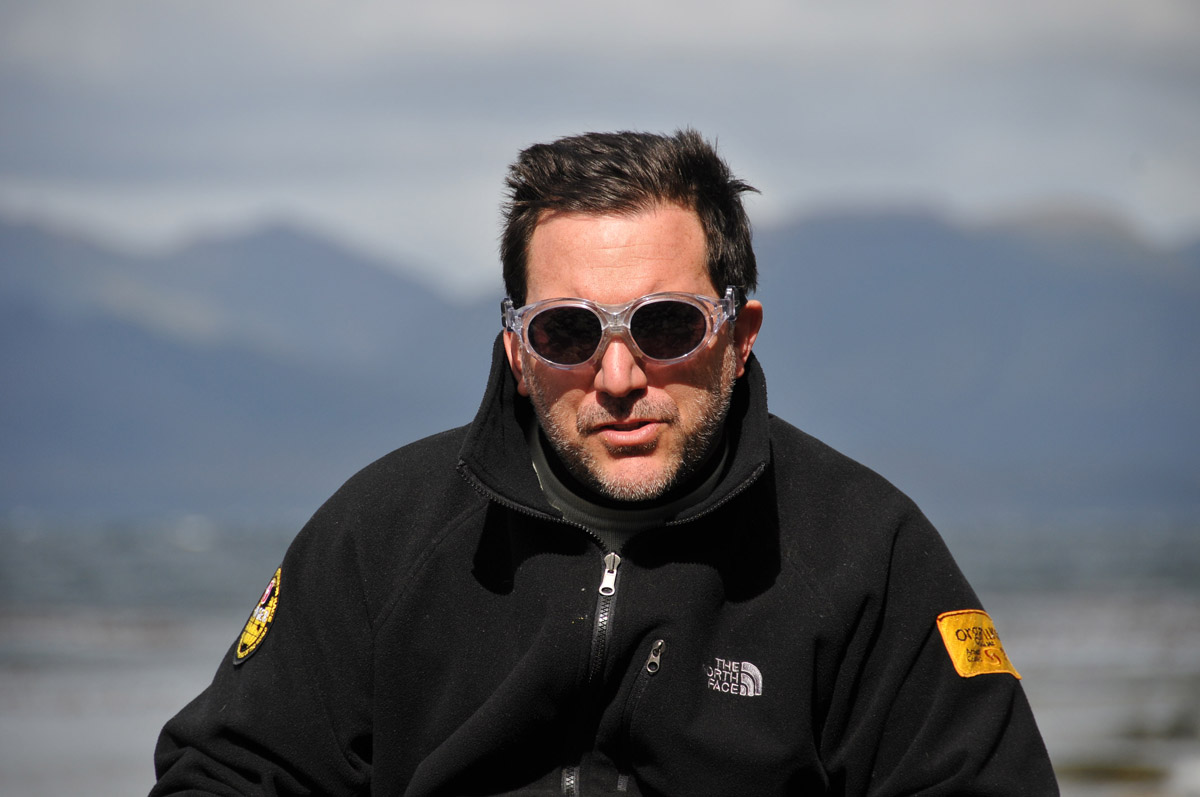
In a brief interview a student recorded my description of the work I was doing in southern Chile from 2008-2010. The Patagonia Expedition Race had secured Wenger’s sponsorship, and now graduate students from Columbia Business School, as well as from Cornell Hotel School, were developing a strategy for how best to use that sponsorship money to achieve lasting conservation results. The patch on the left arm of my jacket shows another sponsor.

Organikos was a minor sponsor compared to Wenger, but in that earlier iteration of Organikos we were already thinking about what is now the 100% Forward commitment.  As a sponsor, I also served coffee from sunrise to sunset at each station along the Race’s 500-mile route. Somewhere I have photos of the race teams drinking Organikos coffee, but at the moment I only find this one of me prepping coffee in the traditional Costa Rican manner to serve to Race volunteers in a farmhouse where we had spent the night on Tierra del Fuego.

In this photo to the left I was waiting for the racers who would soon be arriving at this station in their kayaks. As serious as I appeared to be, it would take nearly a decade to get that coffee launched more formally into the market.

Images Andrew Wilson, Mark Humpfrey, Nicola MaCleod and Bruce Duncan of Team Helly Hansen-Prunesco paddling their way to victory in stage 15 of the 2010 Wenger Patagonian Expedition Race on the island of Tierra del Fuego in southern Chile. Michael Clark Photography

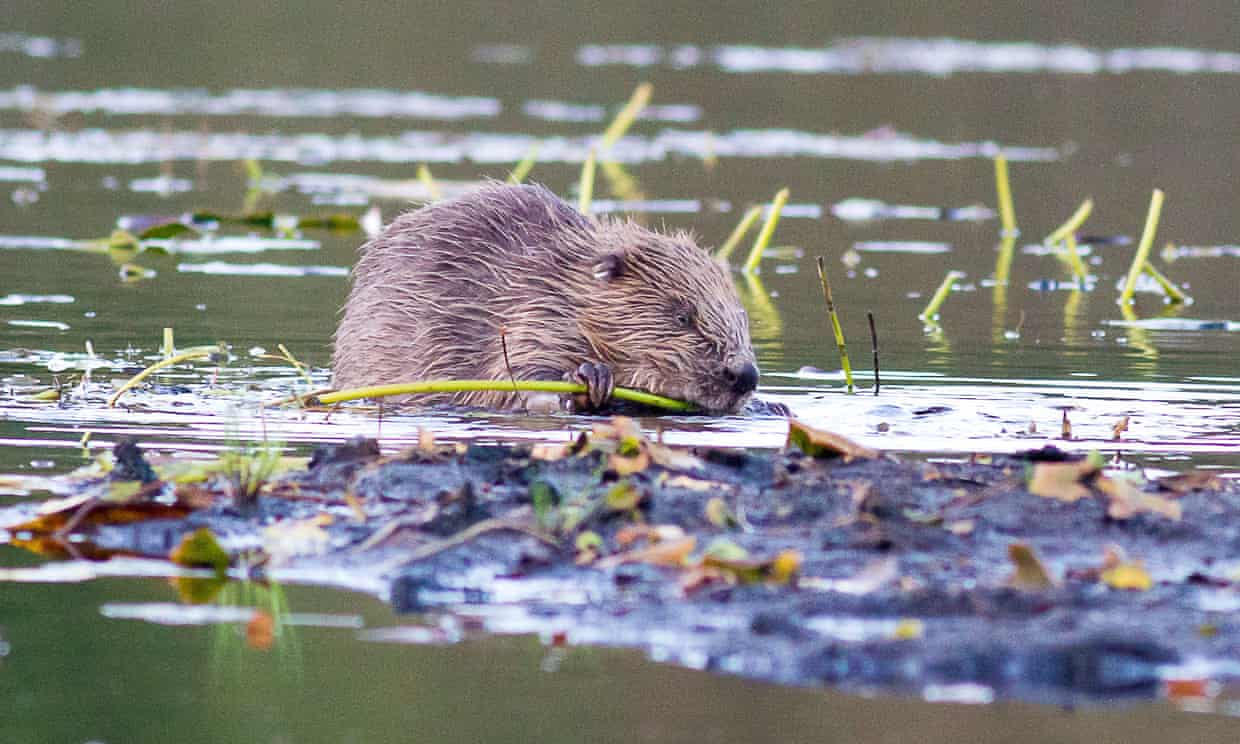
Not long after the photos above were taken, we accepted a new assignment in India that would put the original idea of Organikos on hold. Recently, when Seth took the name and gave it a clear conservation mission, coffee was still the most viable product to start with. I am reminded of all that thanks to Sandra Laville, and the Guardian. Her article, full of good news related to conservation funding in the UK, triggers my memory of the fact that beavers are an invasive species in Patagonia and the Race had the mission of controlling their spread, in the interest of wilderness conservation. Beavers in their natural habitat are in need of protection in some locations, I see:

Wetlands, beavers and Cinderella causes; the growth of environmental funding

Donations from individuals and charities to green causes more than double since 2016

Funding from the People’s Trust for Endangered Species helped reintroduce beavers in Knapdale Forest in Scotland. Photograph: Steve Gardner/Scottish Wildlife Trust/PA

Philanthropic donations to environmental causes have more than doubled in value in the UK as the climate crisis and unprecedented biodiversity loss attract increasing attention from individuals and charities.

The amounts of money given to support efforts to tackle climate change and nature loss range from £5,000 to millions of pounds, and the focus of the funding is as broad.

It includes a £10,000 donation given to support a successful campaign for a deposit return scheme in Scotland; the funding of grassroots defenders of Europe’s last primeval forest, in Poland, and the protection of wetlands in Montenegro; and millions of pounds in support of environmental legal challenges and donations to back campaigning against fossil fuels. Continue reading

You Can’t Have Your Crabcake And Eat It Too

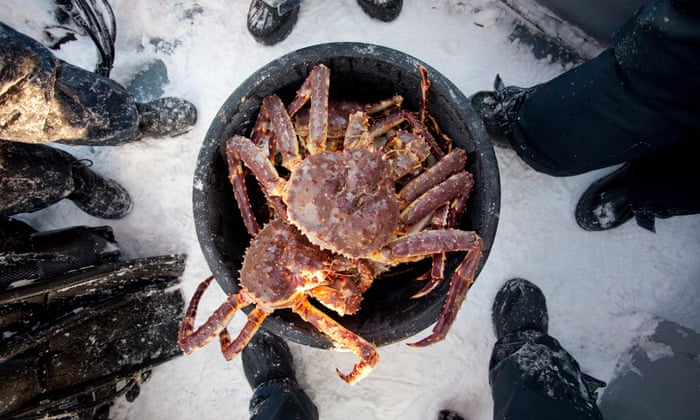
Pot of red gold … Norway exported nearly $9m worth of king crab in October alone. Photograph: Cultura Travel/Philip Lee Harvey/Getty

Invasive species sometimes lead to creative opportunities, but rarely without some tradeoffs:

Crab-22: how Norway’s fisheries got rich – but on an invasive species

Known locally as ‘Stalin’s Red Army’, an invasion of king crabs from Russia created a lucrative industry, and difficult choices

Bugøynes

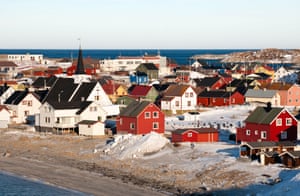
Fishermen in Bugøynes were struggling before the crabs marched in from Russia. Photograph: Nadia Isakova/Alamy

The Norwegian fishing village of Bugøynes, 310 miles north of the Arctic Circle and a frigid, dark place for much of the year, was on the edge of ruin.

Work was scarce. Years of overfishing and mismanagement had stymied cod quotas. Boats lay idle in cold waters. Those who chose to stay were forced to rely on what meagre wages they could still muster from fishing and processing. Continue reading