Emma Marris On Urban Shade

A man wipes his forehead under the hot sun as he walks under shade sail.

Matt McClain / The Washington Post / Getty

The science writer Emma Marris, here featured in The Atlantic, first came to our attention in a passing mention ten years ago, then again in full force six years ago. Whether or not you live in an urban area, you likely depend on urban areas for some part of your livelihood so her essay may be of interest:

Trees are nice and all, but they’re not enough.

On a 92-degree Saturday afternoon in Portland, Oregon, I went looking for shade in Cully Park, which was built on top of an old landfill and opened in 2018. The city included plenty of trees in the design—I mean, this is Oregon. Continue reading

The Garden Against Time, Reviewed

It always comes back to the commons. Thanks to Naomi Huffman at The Atlantic for bringing this book to our attention:

What Gardens of the Future Should Look Like

In her new book, Olivia Laing argues that the lives of all people are enriched with access to land they can use freely.

On a Sunday afternoon in May, the Elizabeth Street Garden, a serene public park wedged between Manhattan’s SoHo and Little Italy neighborhoods, was filled with people undeterred by the gray sky and spitting rain. Visitors sat at tables among fuchsia azaleas and yellow irises, and in the shade of loping old trees, talking, eating pizza, and drinking iced coffee. A painter faced an easel at the back of the garden and composed a watercolor. Continue reading

The Vertical Forest In Milan

The Vertical Forest, a residential complex in Milan. Marta Carenzi/Archivio Marta Carenzi/Mondadori Portfolio, via Getty Images

Italy has not figured in our climate change solutions coverage, until now. Our thanks to Stephen Wallis and the New York Times for this:

A Growth Spurt in Green Architecture

Buildings made shaggy with vegetation or fragrant with wood are no longer novelties.

In the lineup of climate villains, architecture towers above many. The building and construction industries account for some 37 percent of worldwide carbon dioxide emissions, according to the United Nations Environment Program. Three of the most commonly used building materials — concrete, steel and aluminum — generate nearly a quarter of all carbon output. Continue reading

New Landscape Vision For Dia Beacon

Rendered view looking north toward the new wet meadow after a big storm. “This will actually be something that you could come to experience in and of itself,” Dia’s director, Jessica Morgan, says of the landscape. Studio Zewde

We are impressed with the new direction that this institution is taking with one of the profession’s rising stars:

In a high-profile commission, Sara Zewde, a landscape architect, is designing eight acres of varied terrain at Dia Beacon that includes meadowlands, wetlands, rolling topography and pathways for visitors. Rafael Rios for The New York Times

Sara Zewde Sows, and Dia Beacon Reaps

On eight acres, a landscape architect challenges ideas about the legacy of the land, the museum’s history and climate change.

When it is introduced this year, the new and varied terrain of Dia Beacon, with its sculptural landforms, meadowlands and pathways, may surprise and delight.

Sara Zewde, the landscape architect who received the high-profile commission in 2021 to reimagine the museum’s eight back acres, says the goal wasn’t just dressing up Dia’s buildings with attractive plants. She sees her profession as a field “that has the skill set to take ecology, to take culture, to take people and tap into something bigger.” Continue reading

Insect Oases

A small patch of native plants in Melbourne, Australia, draws native insects. MATA, ET AL.

Thanks to Yale e360 for this short story on small wonders:

Even a Small Patch of Native Greenery Can Give a Big Boost to Local Insects

In cities, a little native greenery can go a long way. Australian scientists found that, after adding native shrubs to a planting in Melbourne, the number of insect species at the site increased sevenfold. Continue reading

Property Rights Versus Trespassing Rights

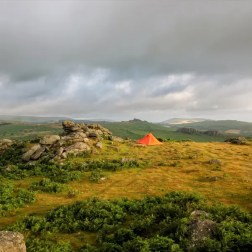
A wealthy couple bought an estate inside Dartmoor National Park and then successfully sued to bar campers from using their land. That ruling is now being appealed. Muir Vidler for The New York Times

Property rights, a foundational aspect of modern society, occasionally bump up against other rights. The journalist Brooke Jarvis has a new article that touches on this theme, we are happy to see:

The Fight for the Right to Trespass

A group of English activists want to legally enshrine the “right to roam” — and spread the idea that nature is a common good.

The signs on the gate at the entrance to the path and along the edge of the reservoir were clear. “No swimming,” they warned, white letters on a red background.
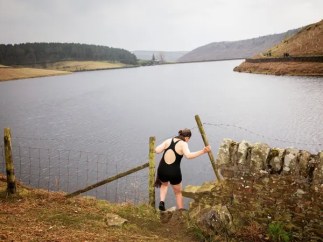
A protester at Kinder Reservoir. Muir Vidler for The New York Times

On a chill mid-April day in northwest England, with low, gray clouds and rain in the forecast, the signs hardly seemed necessary. But then people began arriving, by the dozens and then the hundreds. Some walked only from nearby Hayfield, while others came by train or bus or foot from many hours away. In a long, trailing line, they tramped up the hill beside the dam and around the shore of the reservoir, slipping in mud and jumping over puddles. Above them rose a long, curving hill of open moorland, its heather still winter brown. When they came to a gap between a stone wall and a metal fence, they squeezed through it, one by one, slipping under strings of barbed wire toward the water below. Continue reading

New Roots Garden, Urban Oasis

Sheryll Durrant has managed the New Roots Garden, which sits between the Grand Concourse and the Metro North railroad tracks in the Bronx, with volunteers for eight years.

We have linked out to stories about urban farming plenty of times; it never gets old:

Vital Places of Refuge in the Bronx, Community Gardens Gain Recognition

Lawmakers in Albany voted to designate community gardens statewide as crucial to the urban environment, especially in the fight against climate change. The bill awaits the governor’s signature but the role of these gardens stretches back decades.

The Morning Glory garden in the West Farms section of the Bronx is among more than 500 community gardens in New York City.

Sheryll Durrant left her family farm in Jamaica in 1989 and embarked on a career in corporate marketing. But after the 2008 financial meltdown, she reconsidered her life.

She returned to her roots.

Now she runs a thriving urban farm wedged into a triangular plot in the Bronx, between the Grand Concourse and the Metro North railroad tracks. At her farm, New Roots Garden, membership consists of refugees and migrants, resettled by the International Rescue Committee, whose herbs and vegetables sustain their memories of home.

“Just putting your hands in soil is a form of healing,” Ms. Durrant, 63, said. Continue reading

Paris & Continuous Greening

Paris’ iconic zinc roofs can heat up to 194 degrees F on a hot summer day. JAN WOITAS / PICTURE-ALLIANCE VIA GETTY IMAGES

We have celebrated the many greening efforts made in Paris over the last decade, and today is a small but important addition to our knowledge of those commitments. Our thanks to Jeff Goodell in Yale e360:

A rendering of a rooftop terrace installed by the Parisian startup Roofscapes. ROOFSCAPES

Paris When It Sizzles: The City of Light Aims to Get Smart on Heat

With its zinc roofs and minimal tree cover, Paris was not built to handle the new era of extreme heat. Now, like other cities worldwide, it is looking at ways to adapt to rising temperatures — planting rooftop terraces, rethinking its pavements, and greening its boulevards.

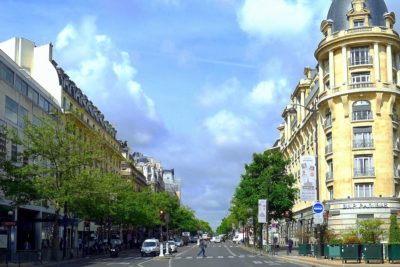
The tree-lined Boulevard des Italiens is much cooler than nearby streets that lack trees.

The tree-lined Boulevard des Italiens is much cooler than nearby streets that lack trees. MBZT VIA WIKIPEDIA

There’s a long tradition in France of taking August off for holiday. Paris virtually shuts down as the temperature drifts around in the seventies, and people go to the beach or the mountains to cool off and relax. Think of it as an old‑fashioned adaptation to heat. People who stick around during August are often older or have jobs that require them to stay and keep the city functioning. Continue reading

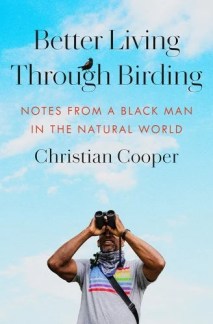
Better Living Through Birding, Christian Cooper’s Forthcoming Book

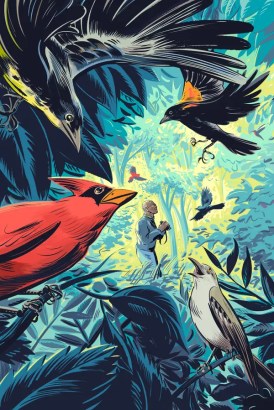
Wesley Allsbrook

Christian Cooper, an American science writer, is author of the forthcoming book (below left) from which the following essay in the New York Times is adapted:

Three Years After a Fateful Day in Central Park, Birding Continues to Change My Life

Early in the morning of May 25, 2020, I biked from my apartment on Manhattan’s Lower East Side to Central Park to go birding in the Ramble. Despite the uncertainties of the time — New Yorkers were living in a hot spot of the raging Covid pandemic, with no vaccine in sight — I strove to start this warm, sunlit Memorial Day on a happy note by wandering my favorite urban woodlands in search of migrating songbirds.

I was focused on the end-of-season hunt for a mourning warbler, a small yellow and gray skulking bird that’s difficult to spot and relatively rare. I hadn’t yet seen one that year.

Visiting the park in the morning to look for birds has long been a springtime routine for me. I wake before sunrise and grab my Swarovski binoculars — a 50th-birthday present from my father — and head out the door. Continue reading

Libraries Old & New

Adults and children in a room of a library with bookshelves, an orange light in the ceiling and an orange wall.

The Adams Street Library in Dumbo, Brooklyn, has a children’s space with hues reminiscent of a Creamsicle. Justin Kaneps for The New York Times

The name Michael Kimmelman is rare in these pages, but in covering one of our favorite topics he gets our full attention again today:

As New York Weighs Library Cuts, Three New Branches Show Their Value

Facing a giant budget deficit, Mayor Eric Adams proposed cuts to New York libraries. But they play an outsize role in the city, offering services and safety.

Adults and children gather in a well-lit children’s room in a library that is filled with bookshelves. One child sits on a color-blocked rug, drawing.

The children’s room at the Macomb’s Bridge branch in Upper Manhattan; below, the entrance and canopy outside refer to the original landmarked architecture. Justin Kaneps for The New York Times Image

A city is only as good as its public spaces. The Covid-19 pandemic was another reminder: For quarantined New Yorkers, parks, outdoor dining sheds and reopened libraries became lifelines.

But now Mayor Eric Adams wants to slash funds for parks ($46 million) and for libraries ($13 million this fiscal year, more than $20 million next), and the City Council is debating the dining sheds. The sheds need regulation and the city budget needs to be cut by perhaps $3 billion. That said, if you don’t find the current political conversation shortsighted, you might want to do what I recently did and check out some of the library branches that have opened since the start of 2020. I visited three of them — each one a boon for its neighborhood, and money well-spent. Continue reading

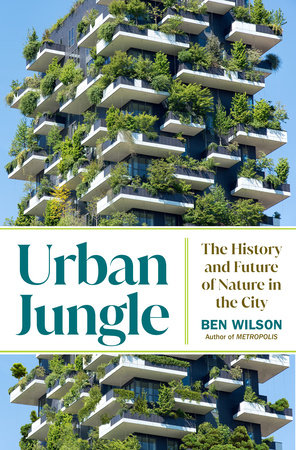
Urban Jungle, Covered In Literary Review

We look forward to Ben Wilson’s new book, as reviewed here:

Where the Streets are Paved with Goldenrod

No one, you would think, aspires to be a night-soil man. Yet in the late 1950s, Shi Chuangxiang’s labours in the latrines of Beijing briefly won him national praise. He was proclaimed a socialist hero and met the head of state. Back then, human excreta mattered, so much so that gangs fought for the plummest spots. Why? Because cities, until relatively recently in human history, were a part of healthy ecosystems that operated according to the principles of nutrient exchange: take, use, return, all in neat equilibrium. The spoils of Mr Shi (who was nicknamed ‘Stinky Shit Egg’), collected at a time when synthetic plant food was not widely available in China, became the organic fertiliser that was intended to power the country’s Great Leap Forward in agriculture. Continue reading

Spirit Catcher and Lumen-Less Lantern, An Art Intervention by Willie Cole

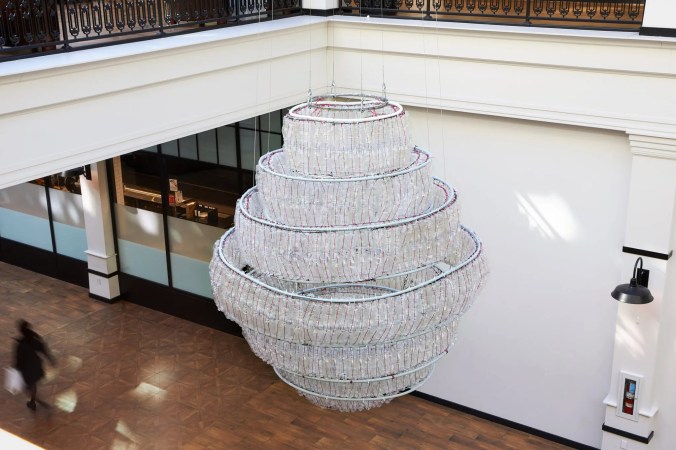
Willie Cole in his artist-in-residence studio at Express Newark, where he has been assembling chandeliers made from thousands of used plastic bottles. Rachel Vanni for The New York Times

Recycling has been a key theme in these pages since we started. Sometimes upcycle has been the term. Of course, reuse is also interesting.

All of these are worth our attention and support.

Our thanks to Laura van Straaten and the New York Times for bringing Willie Cole’s exhibition into view:

The artist invited the community in Newark to reimagine objects that would otherwise be destined for a landfill — to look at them in a fresh, imaginative way.

“Spirit Catcher” by Willie Cole is made of thousands of water bottles held together with metal wire and sculpted to resemble a chandelier. Rachel Vanni for The New York Times

NEWARK — The artist Willie Cole has created two colossal new sculptures and generated a provocative group exhibition stemming from an unusual open call asking artists to transform objects destined for landfill into something imaginative and new. Continue reading

Kenya’s Libraries Get The Attention They Deserve

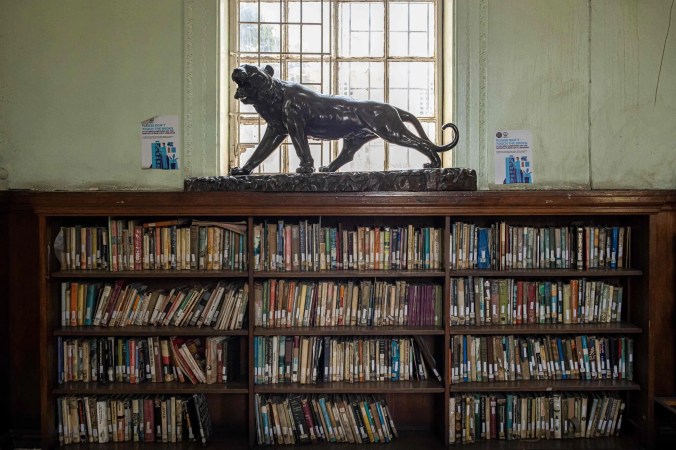
The archives of the McMillan Memorial Library are being digitized. Kenyans are also being invited to bring items such as photographs or letters to create an archive anchored in collective memory. Patrick Meinhardt/Agence France-Presse — Getty Images

Palace is a fine way to think about libraries, and Kenya has a movement to make this metaphor work:

Turning Nairobi’s Public Libraries Into ‘Palaces for the People’

A Kenyan nonprofit is restoring iconic public libraries, leaving behind a segregated past and turning them into inclusive spaces.

A project to preserve libraries such as this one is not a sprint or even a marathon, but a relay, said Lola Shoneyin, a Nigerian novelist. Patrick Meinhardt/Agence France-Presse — Getty Images

In 1931, the first library in Kenya’s capital, Nairobi, opened its doors — to white patrons only. Continue reading

Bronx River Alliance’s Foodway

Just after recently learning that this borough is the greenest, another story clues us in on this innovative program:

The Bronx River Foodway

Fresh Food from Our Land

The Foodway connects the river area with people, growing food and medicinal plants. Come explore the food forest and relish (hah!) the delight of seeds becoming plants for life.

The Guardian’s Meka Boyle gives another reason why visiting this borough is a worthwhile extension to any visit to New York City:

‘It made my heart sing’: finding herbs and medicine in the Bronx food forest

The Bronx River Foodway, the only legal place to forage in New York, celebrates the end of a season

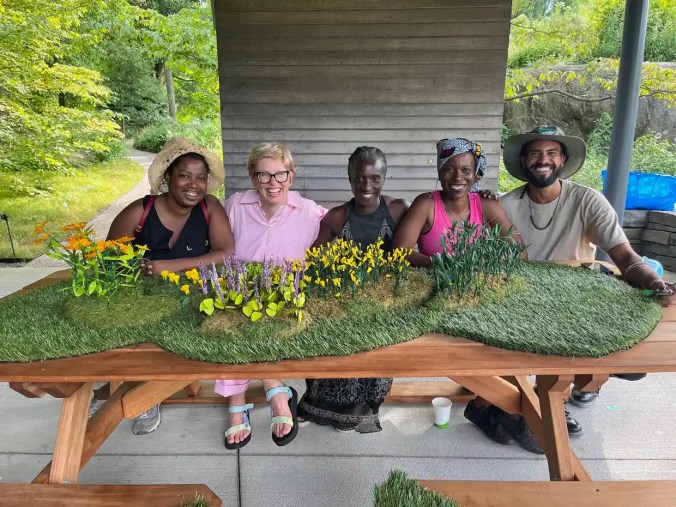
Foodway team members gathered around a picnic bench at the New York Botanical Garden created by the artist Elizebeth Hamby. Photograph: Courtesy Elizabeth Hamby

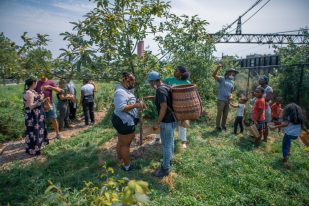
Bimwala’s tours are a mix of returning foragers eager to learn more and newcomers, many of whom have lived in the Bronx for decades. Photograph: Courtesy of Nathan Hunter

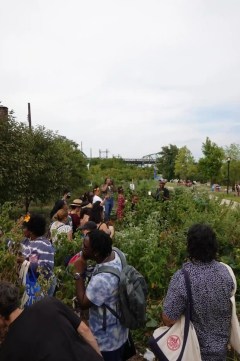
On a crisp November day in the South Bronx, more than 300 people made their way from Westchester Avenue below the clamor of the 6 train down a tree-lined path leading to Concrete Plant park. This is the home of the Bronx River Foodway, a quarter-acre food forest full of edible, mostly native plants. What looks like a stretch of land dotted with trees appears at first glance to be overrun by weeds, but the wild foliage has been intentionally planted by the Foodway. It is the only legal foraging site in New York City.

Neighbors young and old poured on to the grassy banks of the Bronx River to celebrate the end of the season and the foliage of the Bronx, including an array of snacks made from foraged ingredients: ginkgo cheese and acorn crackers, and pickled mushrooms and herbal ales made at recent four-part cooking series put on by the Foodway over the last two months. Continue reading

The Bronx & Greener Pastures

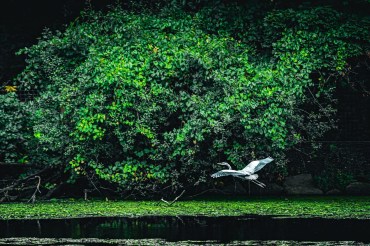
Van Cortlandt Lake, one of the many places popular with birds — and those who watch them.

Early in our life together, in the early/mid-1980s, Amie and I lived in two of the five boroughs that make up New York City. We never lived in the one that today, we learn, has had the most nature all along (we thank David Gonzalez for both the photographs and text of this article).

While we are not giving up the greener pastures we chose decades ago to be our home base, we are happy to know that The Bronx is so green, and can even picture making a special trip to visit this often unheralded part of New York City:

The lagoon at Pelham Bay Park.

Soundview Park

If you said Brooklyn, Manhattan, Staten Island or Queens, guess again.

From hidden coves tucked along the Orchard Beach marshes to wide promenades covered by regal arches of trees in Soundview, there is a lot more green to the Bronx than the zoo or the infield at Yankee Stadium. The pastoral vibe might make you think you’re upstate, but as they said in the classic ’80s hip-hop movie “Beat Street,” this is the Bronx. Continue reading

If You Happen To Be In New York City

Installed in several locations on the Allen Street Malls between Broome and Hester Streets, this group exhibition features four artworks by five artists addressing themes of nature. Artists include Elizabeth Knowles and Eric David Laxman, Elaine Lorenz, Judith Peck, and Michael Wolf.

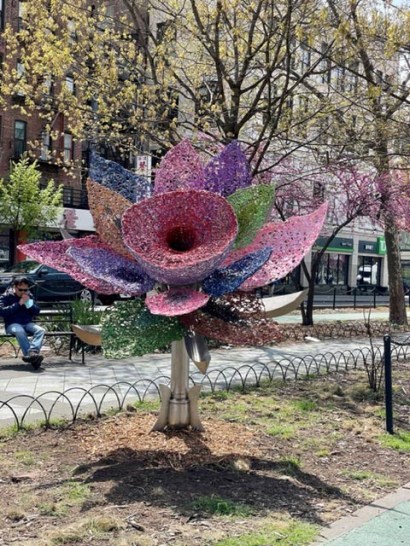
While at Cornell University last month I got my fill of early autumn florals and educational signage. While in the Botanic Gardens I was struck by a floral sculpture, a type of art I am not often moved by. But that one worked. And so, looking through the Art in the Parks section  of the New York City Department of Parks & Recreation  website,  the  image to the right caught my  attention.  And scrolling further through that collection I saw the image  below, which on a day after hurricane-driven rains  in  Costa  Rica,  with  the  morning sky clear of clouds,  hits the spot:

Naomi Lawrence, Tierra Fragil

September 25, 2022 to September 10, 2023
Morningside Park, Manhattan

Description:Tierra Fragil, depicts endangered insects and birds with the flowers and plants imperative to their survival. The mural informs and encourages the preservation of familiar species whose presence we may have taken for granted.

Tierra Fragil is made possible in part with public funds from Creative Engagement a regrant program supported by the New York City Department of Cultural Affairs in partnership with the City Council and the New York State Council on the Arts with support of the office of the Governor and the New York State Legislature, UMEZ Arts Engagement a regrant program supported by the Upper Manhattan Empowerment Zone Development Corporation and administered by LMCC. Additional funding was provided by the Friends of Morningside Park.

Ending Lawn Sprawl

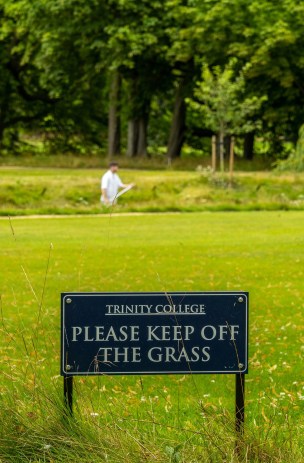
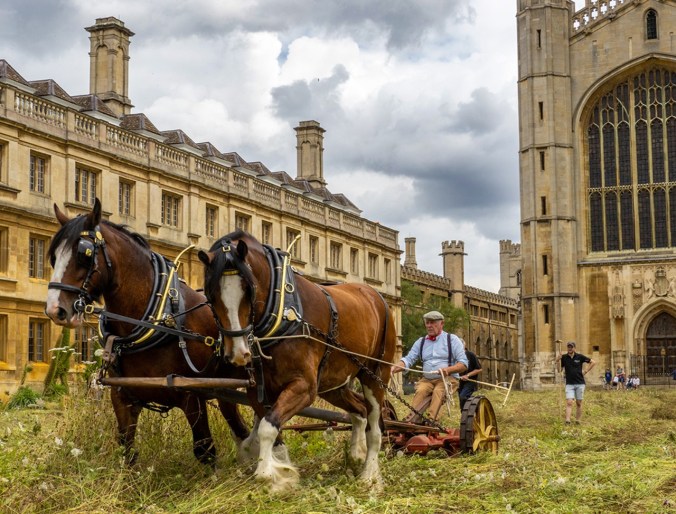
Grow wild Ordinarily only academics can walk on the grass courts of Cambridge’s colleges. Peter Dench

Tom Banham’s article in 1843, a masterpiece of longform writing on the topic of lawns, is preaching to the converted (me, at least). I live in a location with abundant rain and grass is more of a pest than the mainstay of beautifully manicured sprawling lawns (for which I am a sucker as much as anyone is).

We just planted the first couple dozen of 1,000+ coffee saplings and the grass on the hills where they are being planted plays a role in soil retention but we want the soil’s nutrients focused on the coffee. But there are plenty of more important reasons to be concerned about grass sprawl elsewhere:

The going gets turf: do lawns have a future in the age of drought?

Our gardens are sterile deserts that guzzle water and chemicals. Perhaps it’s time to let them be

The harvesting in August 2021 of the wildflower meadow planted at King’s College, Cambridge. Peter Dench

The lawns at Tusmore House, a neo-Palladian mansion 15 miles north of Oxford, are so perfectly flat and exactingly shorn that they induce a kind of vertigo. Continue reading

Western Wind Power’s Impacts

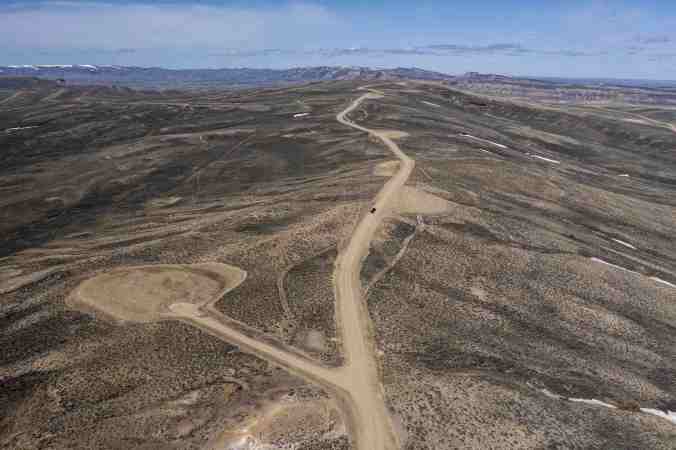
Pads have been cleared in preparation for massive wind turbines at Overland Trail Ranch. (Robert Gauthier / Los Angeles Times)

Wind power is part of our future. Full stop. But it is worth thinking about how the infrastructure for that power will change places of vast beauty and tradition.

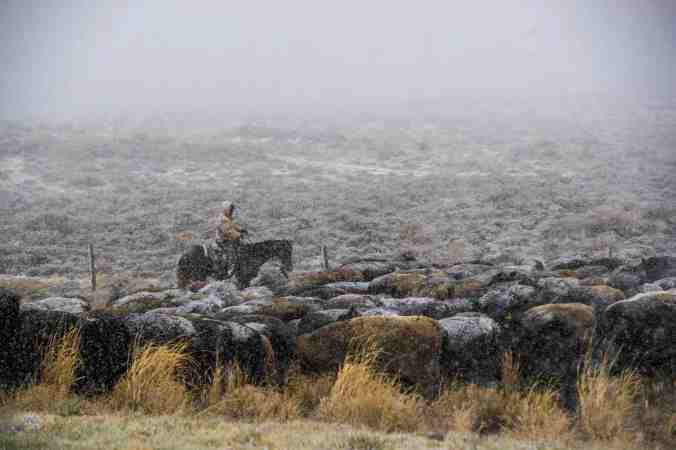
A worker herds cattle at Overland Trail Ranch as a snowstorm moves in. (Robert Gauthier / Los Angeles Times)

This article by Sammy Roth, with photography by Robert Gauthier, is a worthy thought piece on what we gain, what we give up, and who decides how and where wind energy comes to town:

This power line could save California — and forever change the American West

PacifiCorp’s Ekola Flats wind farm has 63 turbines, most of them rated at 4.3 megawatts — almost six times as much power as some of the old steel-lattice wind towers in the California desert outside Palm Springs. (Robert Gauthier / Los Angeles Times)

I know the wind turbine blades aren’t going to kill me. At least, I’m pretty sure.

No matter how many times I watch the slender arms swoop down toward me — packing as much punch as 20 Ford F-150 pickup trucks — it’s hard to shake the feeling they’re going to knock me off my feet. They sweep within a few dozen feet of the ground before launching back toward the heavens, reaching nearly 500 feet above my head — higher than the highest redwood.

They’re eerily quiet, emitting only a low hum. But in the howling wind, the tips could be barreling past at 183 mph. Continue reading

Trees & Careful Planting

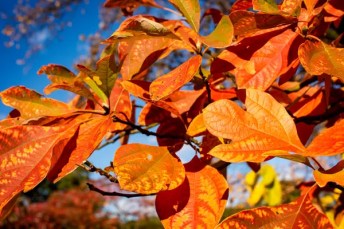
Fast-to-establish sassafras (Sassafras albidum), an Eastern native tree, has distinctively shaped leaves that fire up brilliantly in autumn. Michael Stewart/Courtesy Brooklyn Botanic Garden

One of the minor downsides to life in the tropics is decades of missed autumn leaves. But that downside is counterbalanced by so many upsides that the loss is trivial. And we have photos like the one to the right, as well as the possibility of travel (including to the botanical gardens featured in the story below), plus plenty of writing on the science of those colors, to dissipate the trivia.

Mr. Roddick is often asked to open up a tree’s canopy to let in more light. His answer is based on the tree’s species, its health and its age. “Better to train a young tree to fit into a garden as opposed to trying to change an old tree,” he said. Michael Stewart/Courtesy Brooklyn Botanic Garden

Besides, our trees are awesome for reasons other than color. They grow fast. Some of them fix nitrogen. And most of those we have been planting have a shading responsibility specific to the coffee we are planting. So this article resonates even if some of the particulars are not relevant to our land, trees, and related growing conditions. Margaret Roach has been a constant companion reminding me of all this, through her writings mainly on gardens in the north.

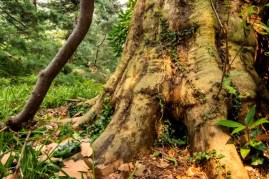
The base of an old London plane tree at Brooklyn Botanic Garden. Tree roots on most landscape trees are shallow and prone to injury, yet we often fail to consider how our gardening and home-improvement projects will affect them. Michael Stewart/Courtesy Brooklyn Botanic Garden

Trees can take a lot of punishment, but they have their limits. Here’s how to work around them safely.

If trees could talk, they’d probably start by saying, “Enough with the insults already.”

In more than 30 years of working with trees, Christopher Roddick has made it a practice to listen to their unspoken language — and to show respect for some of the largest and oldest organisms among us. Continue reading

Frederick Law Olmsted At 200

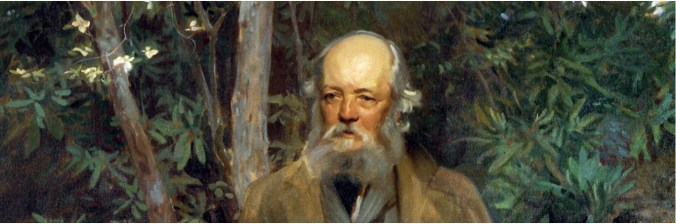
Portrait of Frederick Law Olmsted (detail), 1895, by John Singer Sargent (1856–1925); The Artchives/Alamy Stock Photo.

From Hedgehog Review, a bit of scholarly reflection on a man whose impact on the landscape of cityscapes is still worthy of consideration:

The Man Who Built Forward Better

On Frederick Law Olmsted’s Bicentennial

Witold Rybczynski

What would Frederick Law Olmsted (1822–1903) make of his works today, in the bicentennial year of his birth? No doubt he would be delighted by the survival and continued popularity of so many of his big-city parks, particularly Central Park and Prospect Park, but also parks in Boston, Chicago, and Montreal, as well as Buffalo, Detroit, Rochester, and Louisville. He might be surprised by the bewildering range of activities these parks now accommodate—not only boating and ice-skating, as in his day, but exercising, jogging, picnicking, and games, as well as popular theatrical and musical events. I don’t think this variety would displease him. After all, it was he who introduced free band concerts in Central Park, over the objections of many of his strait-laced colleagues. He would be pleased by the banning of automobiles; his winding carriage drives were never intended for fast—and noisy—traffic. Continue reading