First Drafts Of History

First reading of the day was this essay by a historian linked to once and referred to one time previously. And next up, the conscience of our generation compounds the idea, or rather pounds the idea home about who is writing the first draft of what will become our history, by defining reality as we see it today. I have listened to conversations with Daniel Yergin twice recently, and acknowledge being sucked into his expert definition of how to understand the fossil fuel world. I appreciate McKibben’s cold water on my face:

Who gets to define reality?

A search for the climate high ground

“Realism” is the high ground in politics—a high ground from which to rain down artillery fire on new ideas.

To wit, this week the New York Times profiled Canadian energy analyst Vaclav Smil, who—alongside others like Daniel Yergin—has long insisted that the transformation from fossil fuels to hydrocarbons must take a long time. Smil is a good writer and a smart historian; he’s documented the many-decades-long transitions from, say, wood to coal, and coal to oil as dominant energy sources. Continue reading
Sensory Loading, Overloading & Unloading

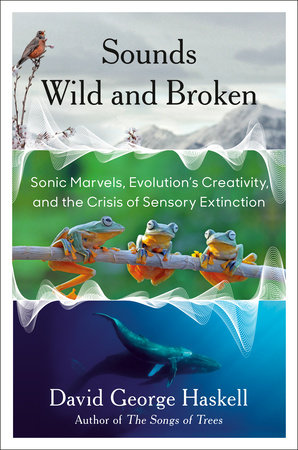
Sounds Wild and Broken by David George Haskell
In early August, 2007 we arrived in a leafy suburb on the north side of Atlanta. We had spent the previous year living on this island, where doors did not have locks and during the daytime the only man-made sounds tended to be those of fishing boats coming and going. At night on that island there were no noises other than nature’s, including small waves hitting the shores and in summertime the crickets. On the first night in Atlanta I opened the window to let in the night air, and the sound of the superhighway, a mile or so away, was distracting enough that I had to close the window to sleep. It’s not that I had not appreciated the quiet of the island, but I was surprised by how much I had adapted to it. The opening of this book review, for these reasons, resonates with my own experience:

Sounds Wild and Broken review – a moving paean to Earth’s fraying soundtrack

David George Haskell’s often wonderful book explores some of the lost frequencies of nature – heard clearly again during Covid’s initial human hush

Lockdown was, among other things, a sudden collective experiment in volume control. Sound waves from the regular rush-hour thrum of cities usually penetrate more than a kilometre below the Earth’s surface. Continue reading

Unexpectedly Amazing In Kerala

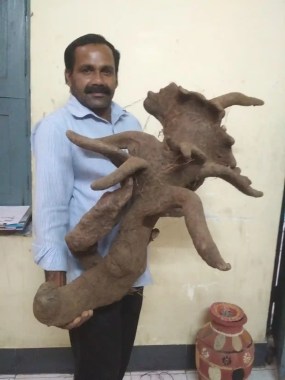
Shaji has a prized collection of more than 200 varieties of tubers. Photograph: Shaji NM

In our Kerala days we visited Wayanad many times, but I would remember if I had met Shaji. We would have sought his advice to expand on the agricultural initiatives at the properties we developed and managed.  Monika Mondal’s story ‘The tuber man of Kerala’ on a quest to champion India’s rare and indigenous crops brings back memories of unassuming neighbors doing unexpectedly amazing things:

Shaji NM has devoted his life to collecting and farming tubers such as yam, cassava and taro, and promoting them across the country

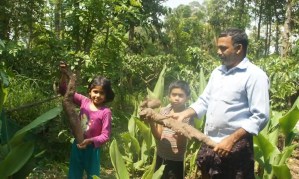
Shaji NM has spent the past two decades travelling across India to collect rare indigenous tubers. Photograph: Shaji NM

Known as “the tuber man of Kerala”, Shaji NM has travelled throughout India over the past two decades, sometimes inspecting bushes in tribal villages, at other times studying the ground of forests closer to home among the green hills of Wayanad in Kerala. His one purpose, and what earned him his title, is to collect rare indigenous varieties of tuber crops.

“People call me crazy, but it’s for the love of tubers that I do what I do,” says Shaji. “I have developed an emotional relationship with the tuber. When we did not have anything to eat, we had tubers.” Continue reading

Nature’s Energy Storage Potential

Decarbonization would be easier if we could bank clean energy for later. Illustrations by Hudson Christie

Thanks to Matthew Hutson for the article in the current edition of the New Yorker titled The Renewable-Energy Revolution Will Need Renewable Storage:

Can gravity, pressure, and other elemental forces save us from becoming a battery-powered civilization?

We need to vastly expand our energy-storage capacity if we’re to avoid climate catastrophe.

The German word Dunkelflaute means “dark doldrums.” It chills the hearts of renewable-energy engineers, who use it to refer to the lulls when solar panels and wind turbines are thwarted by clouds, night, or still air. On a bright, cloudless day, a solar farm can generate prodigious amounts of electricity; when it’s gusty, wind turbines whoosh neighborhoods to life. But at night solar cells do little, and in calm air turbines sit useless. These renewable energy sources stop renewing until the weather, or the planet, turns. Continue reading

Climate Policies To Cheer On

(Washington Post illustration; Demetrius Freeman/The Washington Post; iStock)

I am heading to Ithaca tomorrow for family reasons, so the third item described in the story that follows is of particular interest. But every one of the items is worth reflecting on, in a news world without enough such stories. Our thanks to the Washington Post Staff who put this list together:

10 recent climate policies that could make a difference

Stories from the past six months that show what local and national policy change can look like

The most recent IPCC report makes it clear: There is no one silver bullet that can address global warming. Instead, nations, businesses, communities and individuals all have a role to play in helping to create a safer and more sustainable future. But without action from the world’s wealthiest countries, the nations and people who are least at fault for fueling climate change will be the ones who suffer the most, the scientists behind the report warn. Continue reading

Tidal Power

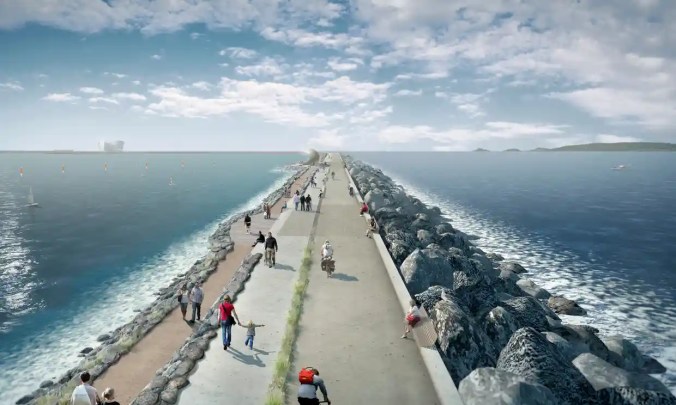
An impression of a £1.3bn tidal lagoon project, which the government refused to back in 2018. Photograph: Tidal Lagoon Power/PA

Most of our attention to ocean water is focused on the climate,  and the few renewable energy stories with oceans featured have been about offshore wind projects. Today’s news corrects the deficit of attention to the power of tidal waves:

Could Anglesey’s tidal energy project drive a new energy revolution?

Experts say Wales has huge potential for generating renewable marine power, yet, so far, ambitious schemes have been ignored

South Stack lighthouse on Holy Island, north Wales: construction on the island’s tidal stream project has just begun. Photograph: Getty Images

On the stunning and craggy coastline of Holy Island in north Wales, work has started on a construction project to generate energy from one of the world’s greatest untapped energy resources: tidal power.

The Morlais project, on the small island off the west of Anglesey has benefited from £31m in what is likely to be the last large grant for Wales from the European Union’s regional funding programme. It will install turbines at what will be one of the largest tidal stream energy sites in the world, covering 13 square miles of the seabed. Continue reading

Old Growth Forest Protection Schemes

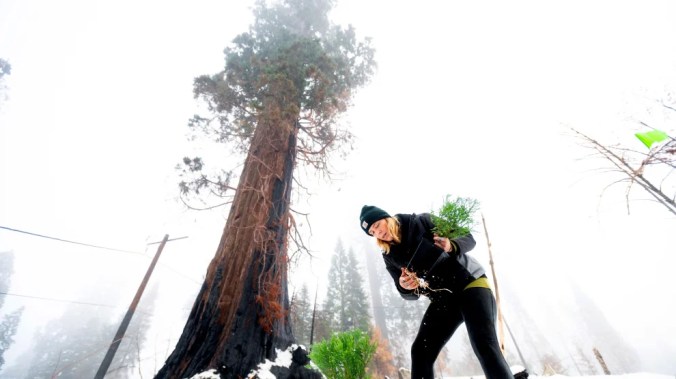
Caryssa Rouser, a propagation specialist with Archangel Ancient Tree Archive, plants a sequoia tree in October, 2021, in Sequoia Crest, California. Noah Berger/AP

Old growth forests matter for so many reasons. Not least, biophilic reasons. But at this moment, we rightly pay more attention to their value with regard to urgent climate issues. Maddie Oatman makes a good case in this Mother Jones essay:

Why Old-Growth Forests Matter So Much in the Fight Against Climate Change

Biden’s executive order to preserve ancient trees is a big deal—but it could have gone further.

Few experiences have rendered me as awestruck as the winter morning I spent wandering through a grove of ancient sequoias, their sienna bark glowing against the snowy ground. Continue reading

Mosquito GMO News

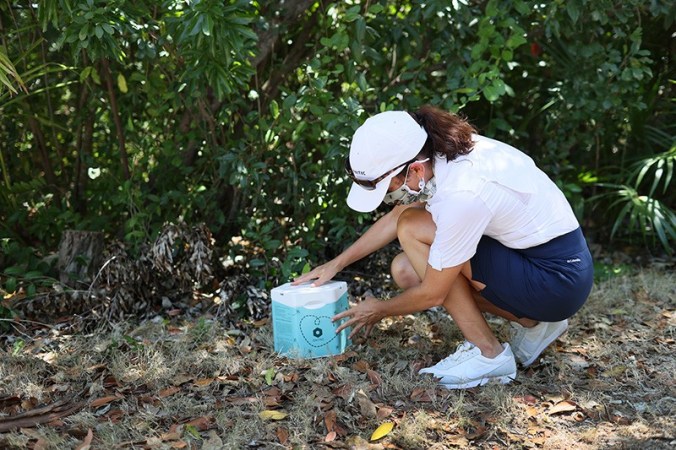
Biotechnology firm Oxitec ran the first open-air test of genetically modified mosquitoes in the United States by placing boxes of its eggs in selected spots in the Florida Keys. Credit: Joe Raedle/Getty

Genetically modified this and that have been concerns of ours for most of the time we have been posting on environmental issues and nature news. This news below may be the best test of how tolerant one might become about a technology that is inherently full of danger–of the unintended consequences variety more than the known in advance variety–and yet could tame some of the greatest natural pests that mankind suffers from:

Biotech firm announces results from first US trial of genetically modified mosquitoes

Oxitec reports that its insects behaved as planned — but a larger trial is needed to learn whether they can reduce wild mosquito populations.

Researchers have completed the first open-air study of genetically engineered mosquitoes in the United States. The results, according to the biotechnology firm running the experiment, are positive. But larger tests are still needed to determine whether the insects can achieve the ultimate goal of suppressing a wild population of potentially virus-carrying mosquitoes. Continue reading

Plant-based Diet Enhanced By The Sea

Seaweed ecologist Dr Sophie Steinhagen inspects the crop at the seafarm in the Koster archipelago in Sweden.

Three months into a beef-free diet, with no temptation to lapse, I am aware that other animal protein is so far a saving grace. When I switch entirely to alternative creatures such as crickets, and to plants including seaweed, I will know the transformation is complete.

Seaweed farming in Sweden could be a vital component of the shift away from eating meat for protein.

Meanwhile, thanks to the Guardian for Richard Orange’s reporting from Malmö on Sea-farmed supercrop: how seaweed could transform the way we live.

From high-protein food to plastics and fuel, Swedish scientists are attempting to tap the marine plant’s huge potential

Steinhagen inspects the tanks in her “seaweed kindergarten”.

You can just see the buoys of the seafarm,” Dr Sophie Steinhagen yells over the high whine of the boat as it approaches the small islands of Sweden’s Koster archipelago. The engine drops to a sputter, and Steinhagen heaves up a rope to reveal the harvest hanging beneath: strand after strand of sea lettuce, translucent and emerald green. Continue reading