Animal Bridges, Saving Lives & Protecting Species

A wildlife overpass in Banff national park, in the Canadian Rockies. Photograph: Ross MacDonald/Banff National Park

Protecting wilderness–for broad reasons related to the value of biodiversity as well more narrow reasons related to mankind’s  basic requirements–have been a constant theme on this platform since we started; animal bridges, per se, have not. Here is a look at why these bridges matter:

How creating wildlife crossings can help reindeer, bears – and even crabs

Sweden’s announcement this week that it is to build a series of animal bridges is the latest in global efforts to help wildlife navigate busy roads

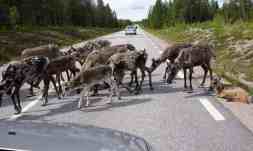
Reindeer viaducts in Sweden will keep herds safe from traffic as they roam in search of grazing. Photograph: Pawel Garski./Alamy

Every April, Sweden’s main highway comes to a periodic standstill. Hundreds of reindeer overseen by indigenous Sami herders shuffle across the asphalt on the E4 as they begin their journey west to the mountains after a winter gorging on the lichen near the city of Umeå. As Sweden’s main arterial road has become busier, the crossings have become increasingly fractious, especially if authorities do not arrive in time to close the road. Sometimes drivers try to overtake the reindeer as they cross – spooking the animals and causing long traffic jams as their Sami owners battle to regain control. Continue reading
Look, Smell, Taste, Don’t Waste

Catchy. Effective? We will see.  Thanks to the Guardian for this view on a UK initiative to reducing food waste at home:

Cut food waste at home by sniffing and tasting, urges new campaign

National government-backed initiative will replace ‘use by’ with ‘best before’ and urge people to judge for themselves

Worried about whether the yoghurt, milk and cheese sitting in your fridge is still safe to eat? Rather than rely on the misleading “best by” date stamped on the side, perhaps its time to “sniff and taste” your staple foods. Continue reading
Urban Greening Ideas Are Infectious, Union Square Park Case In Point

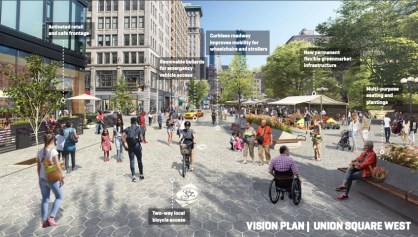
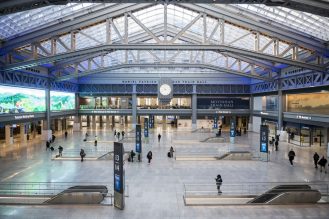
The image to the left is surely evocative for different people in different ways. I cannot see it without flashbacks to what that same spot looked and smelled and sounded like in 1987. It was a peculiar moment in time; I’ll leave it at that. This rendering reaches me just after seeing images of Penn Station’s recent renovation, which itself got me thinking about unique solutions to different kinds of urban challenges. In that case the interior was the thing. For cities where there is too much built space and traffic, greening of arteries is the thing. Also coincidental was last week’s news about the plan for the neighborhood where our sons attended school during the 2003-2004 academic year, which reaffirms my sense that good ideas are infectious.

Those news from New York and from Paris transported me to a very different urban space where we lived and worked for seven years. The image above and the title screen to the right both serve well to evoke an idea that was generated in one of India’s best preserved colonial harbor neighborhoods. Just prior to opening this property in that neighborhood we hosted four young creative professionals from Europe and the USA, two authors and two architects. One of the architects had recently completed work on our then-favorite model of urban re-utilization.
I stood with him on a rooftop overlooking the spice-trading on the street where our hotel was under construction. We had a breezy conversation about how this space might be made more accessible, and I commented on this neighborhood needing an urban design that, like the repurposing of two crumbling spice warehouses into our hotel would be respectful of history while not a slave to it. And the next day he disappeared, as guests do, but the idea is still out there, gestating, and in my hazy memory looks something like this image below.

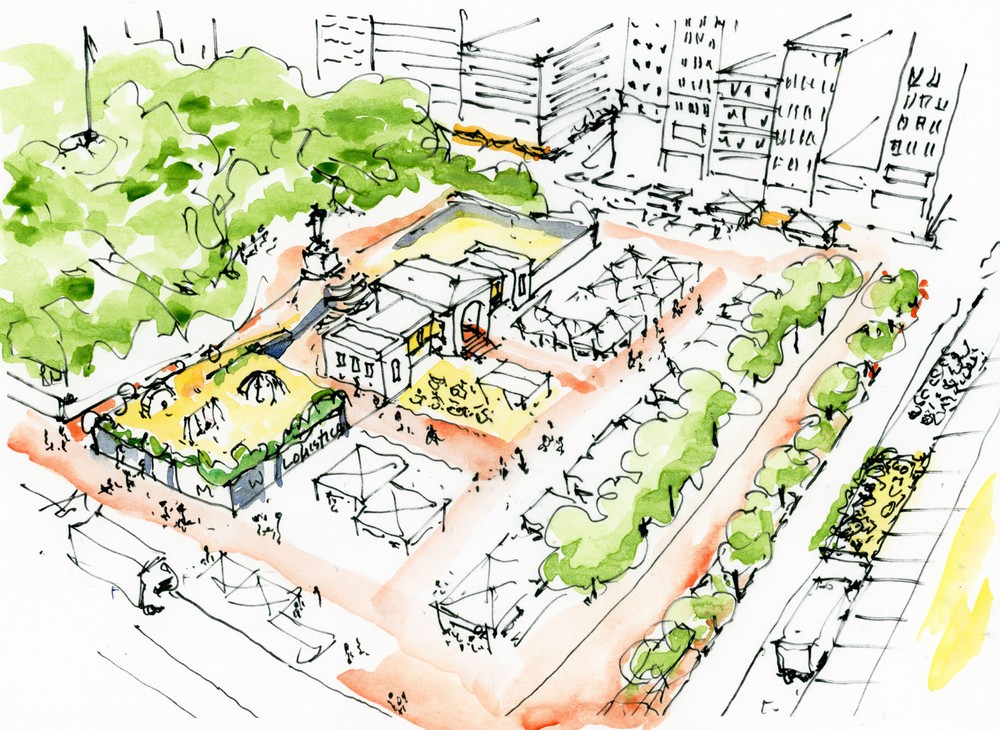
“Envisioning Union Square’s Vibrant North Plaza” – Watercolor by Guido Hartray

Not the specifics, of course. But this dream-like watercolor rendering of Union Square Park’s future layout is a perfect reminder of that rooftop conversation about how Mattacherry might one day be a more effective version of its already awesome self. Carolyn McShea has posted this research note about the Union Square initiative on the website of Marvel Architects:

A Guiding Vision for Union Square and 14th Street

Union Square is famous for its rich activist history, successful Business Improvement District (BID) and 24/7 residential-commercial community that is also home to some of the city’s iconic buildings that have reached National Historic Landmark status. 14th Street is considered as a commercial corridor for New Yorkers and key cross-town thoroughfare. Continue reading
First Things First

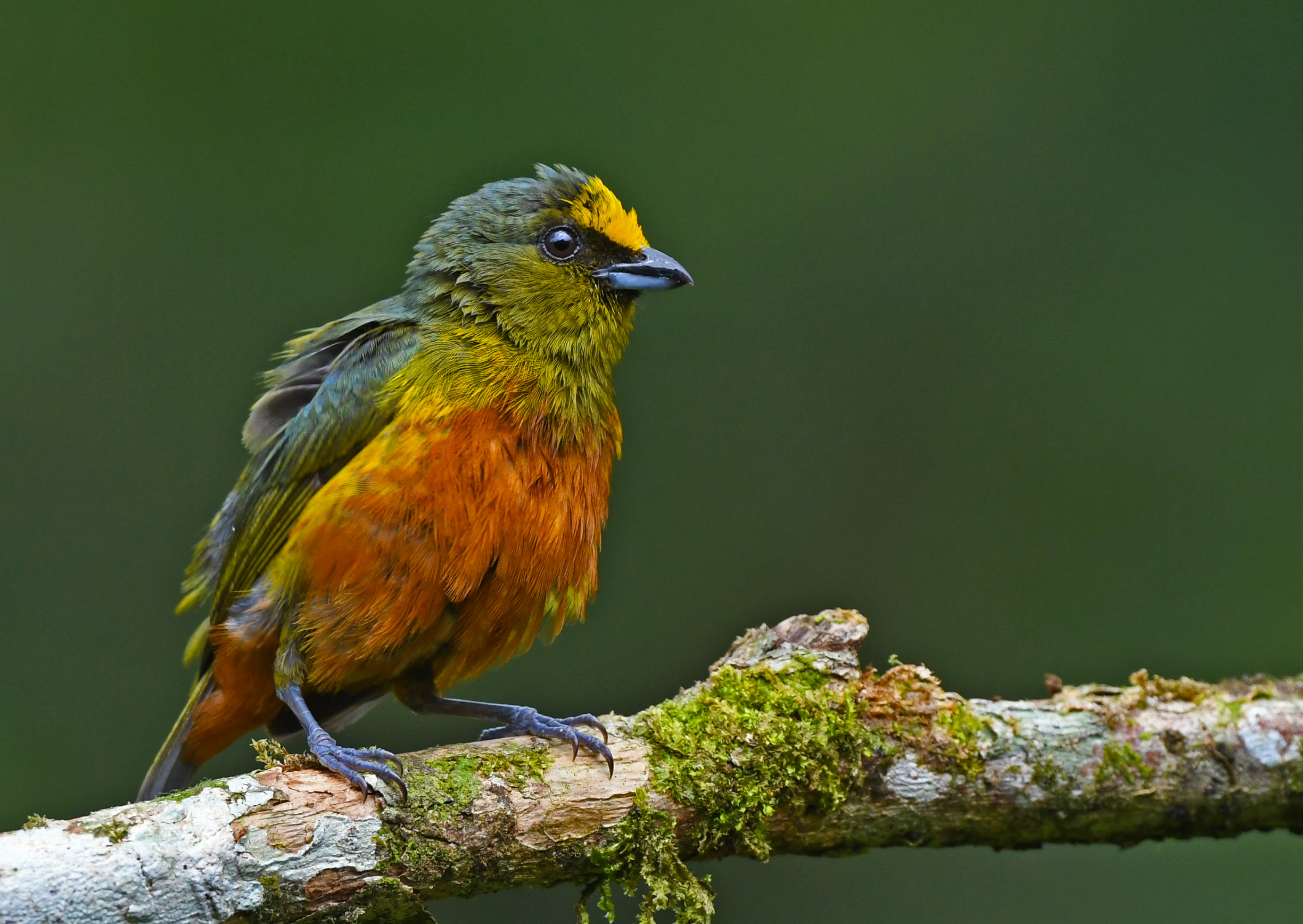
Last week I walked with my grand-daughter among these almendro trees. Amie and I helped plant these when they were foot-high saplings in 2019, and we tagged one with our grand-daughter’s name. The trees, now 3+ feet high, are part of a coastal reforestation scheme; their beneficence includes producing fruits favored by scarlet macaws.

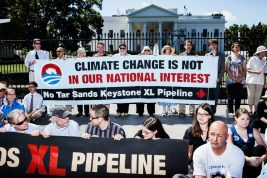
Demonstrators gather in front of the White House to protest the proposed Keystone XL pipeline, in the summer of 2011. Photograph by Melissa Golden / Redux

Everyone loves scarlet macaws. And these trees grow faster than our grand-daughter, giving constant positive feedback. When you have an opportunity to do something like plant a tree, or any other restorative act, first things first: do it. Thanks to Bill McKibben for pointing this out as one of the highlights of yesterday’s change of scenery in Washington, D.C.:

Joe Biden’s Cancellation of the Keystone Pipeline Is a Landmark in the Climate Fight

In his first hours in office, Joe Biden has settled—almost certainly, once and for all—one of the greatest environmental battles this country has seen. He has cancelled the permit allowing the Keystone XL pipeline to cross the border from Canada into the United States, and the story behind that victory illustrates a lot about where we stand in the push for a fair and working planet. Continue reading
Bike Sharing Effectively

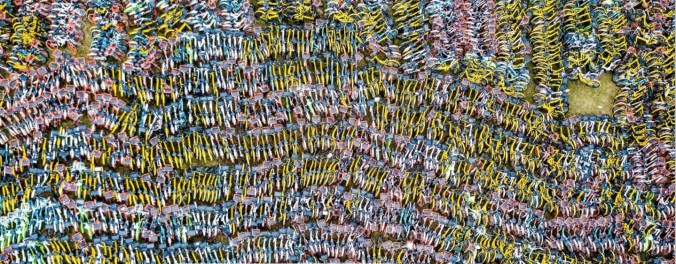
Getty Images

Thanks to the BBC for this feature story:

Why some bike shares work and others don’t

Bicycle share schemes have had huge success in some cities and flopped spectacularly in others – what is it that makes or breaks a bike share?

A set of iconic photos from 2017 show brightly coloured fields which, at first glance, look like meadows filled with flowers in full bloom. It takes a while to register that the images aren’t of verdant fields, but ones filled with bicycles: hundreds and thousands of two-wheelers, stacked end-to-end in what came to be called China’s bicycle graveyards. Continue reading
Hacienda La Amistad’s Neighbor Under New Management

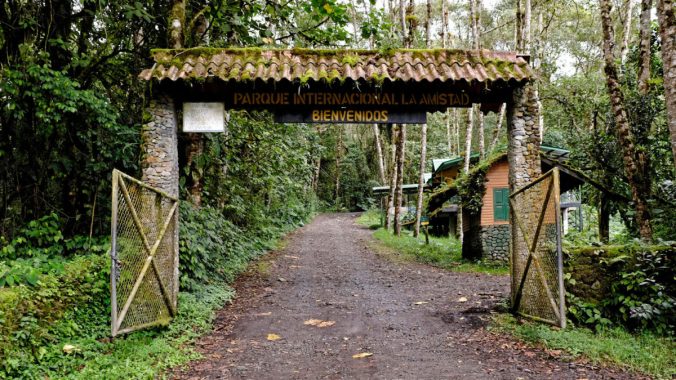
The entrance to La Amistad National Park, which will now be controlled by the Naso under a joint management plan with the government. EDDIE GERALD / ALAMY

We offer coffee from the oldest organic coffee farm in Latin America, which sits on the border of the La Amistad International Park. During our visit to the farm in late 2019 we heard firsthand the family history that led to the creation of what is now a transnational park, while retaining a large private protected area named Hacienda La Amistad (coffee is farmed on a small percentage of that land). Recently Fred Pearce, who frequently writes about forest management best practices, shares news from Panama focusing on the decision to transfer park management to an indigenous community whose ancestral lands in:

Forest Defenders: A Panamanian Tribe Regains Control of Its Lands

With a landmark court ruling, the Naso people of Panama have won the rights to ancestral territory that includes two national reserves the tribe will now help manage. The victory comes as mounting evidence shows that Indigenous groups are often the best protectors of their lands.

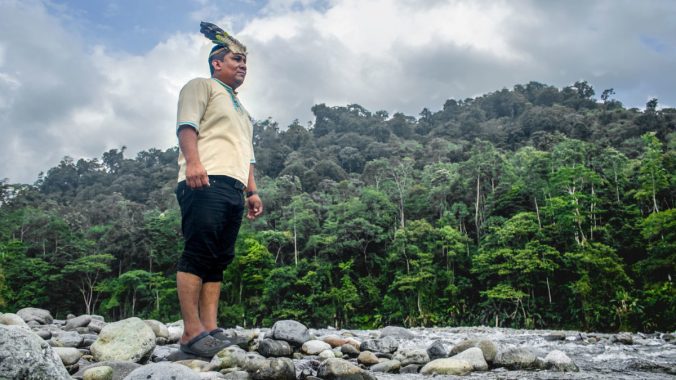
Reynaldo Santana, the King of the Naso, on the banks of the Teribe River in northwest Panama. NORLANDO MEZA

Tribal groups in Panama are celebrating a victory for their rights to control some of Central America’s largest forests — a victory that could benefit conservation throughout the region.

The landmark ruling, by the country’s Supreme Court, upholds a claim by the Naso people of northwest Panama — who live in remote villages, grow subsistence crops, maintain their own forests and native language, and elect their own monarch — to create a semi-autonomous territory, known in Panama as a comarca, covering some 400,000 acres of their ancestral lands.

“This is an act of justice that will restore tranquillity to the Naso by securing our land,” says the King of the Naso, Reynaldo Santana. Continue reading
Post-Harvest Coffee Processing

Processing coffee after harvest refers to getting the beans out of the cherry, with fruity pulp removed. How that happens, and what follows, is partly a function of tradition, which is itself a function of geography.

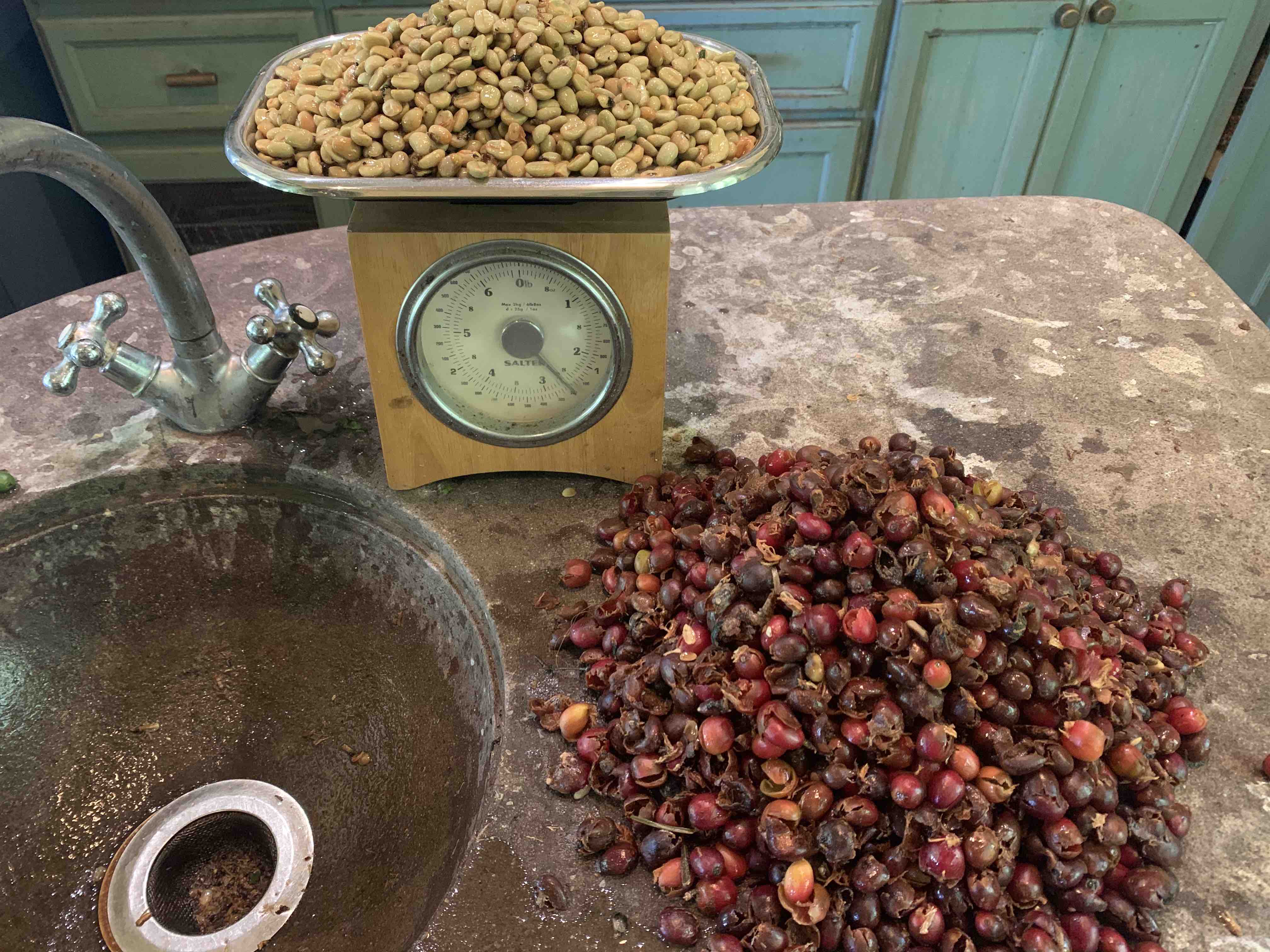
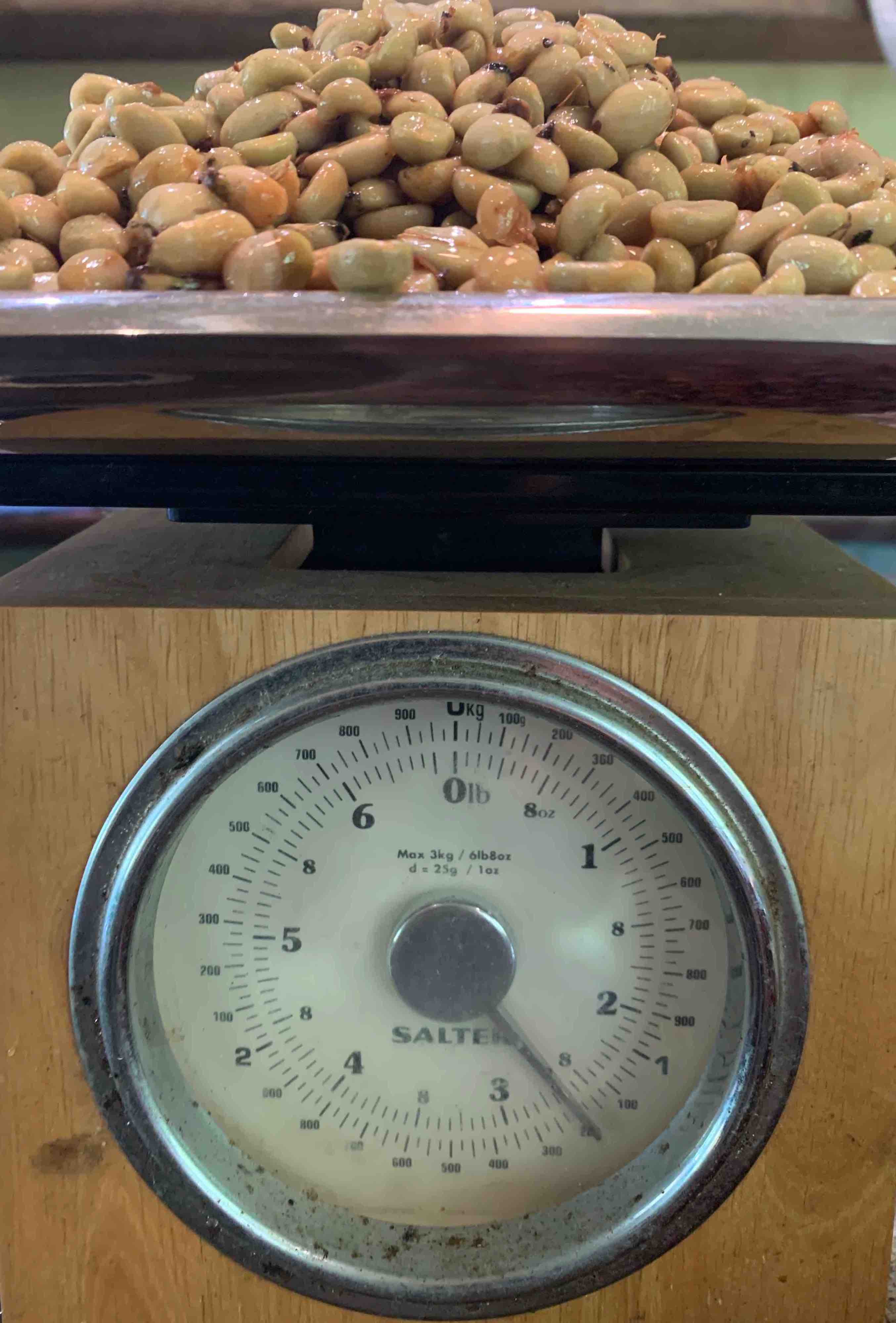
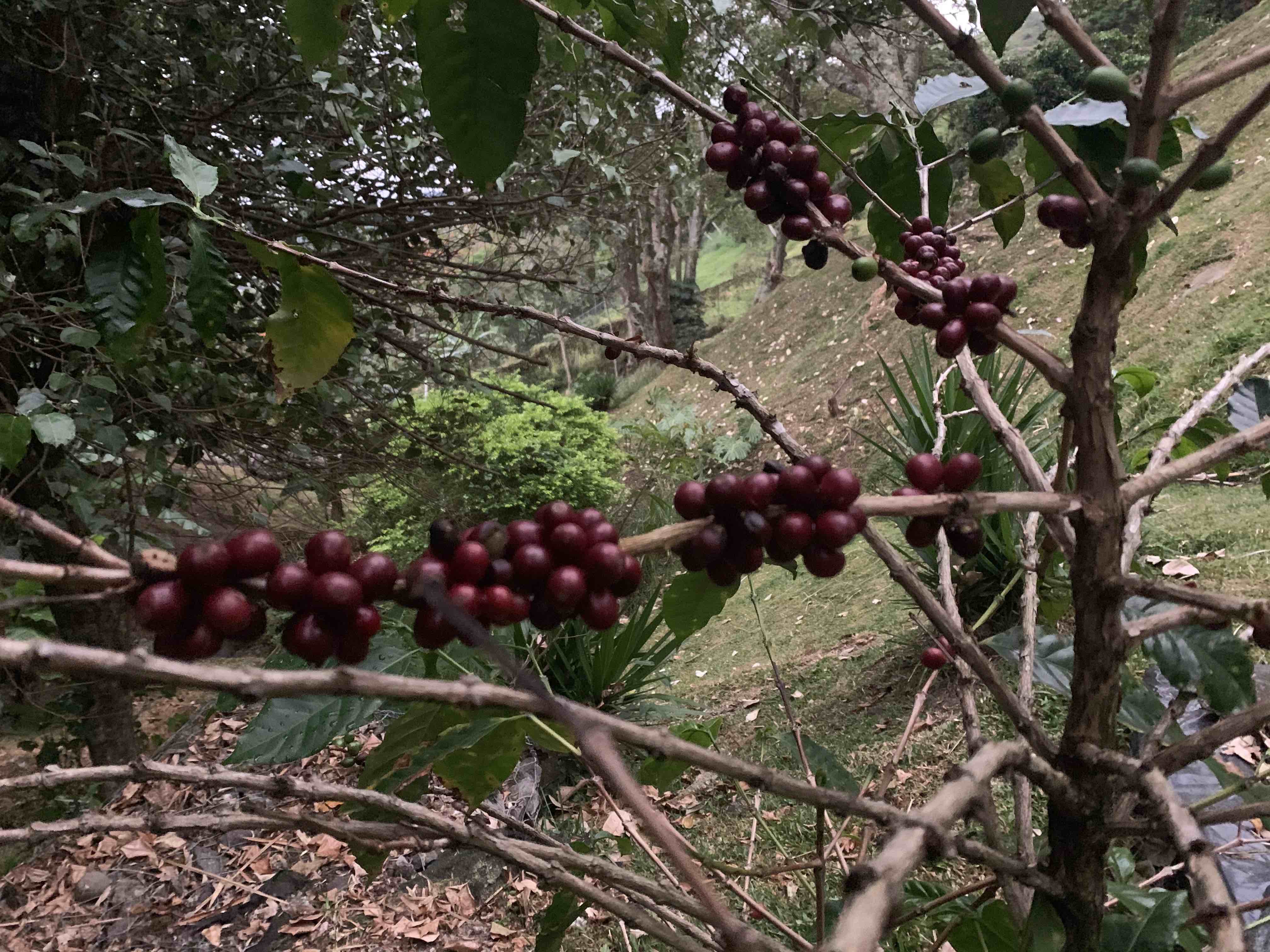
In Costa Rica, due to the abundance of water, the tradition historically was to wash the beans. Since I am in Costa Rica I will give a simple illustration of this process using a small quantity of beans. These are from a handful of trees as mentioned in yesterday’s post.

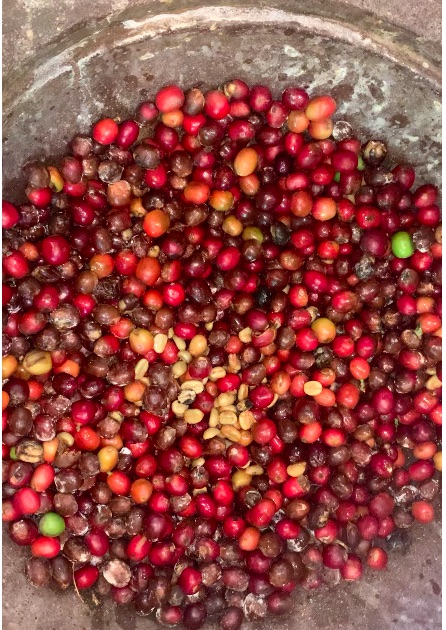
In the photo above, where the coffee is in a round sink basin, you can see some beans in the middle that have been removed from the cherries. You can also see a couple green beans, which get sorted out. The goal of the “washed” method of processing coffee post-harvest is to get all the beans out of all the cherries, with as much residual pulp removed as possible. Water makes this process easier. The skins and other residual material does not historically have much, if any, value. In recent years farms are taking greater care to compost this material and use the result to fertilize the soil where the coffee grows.

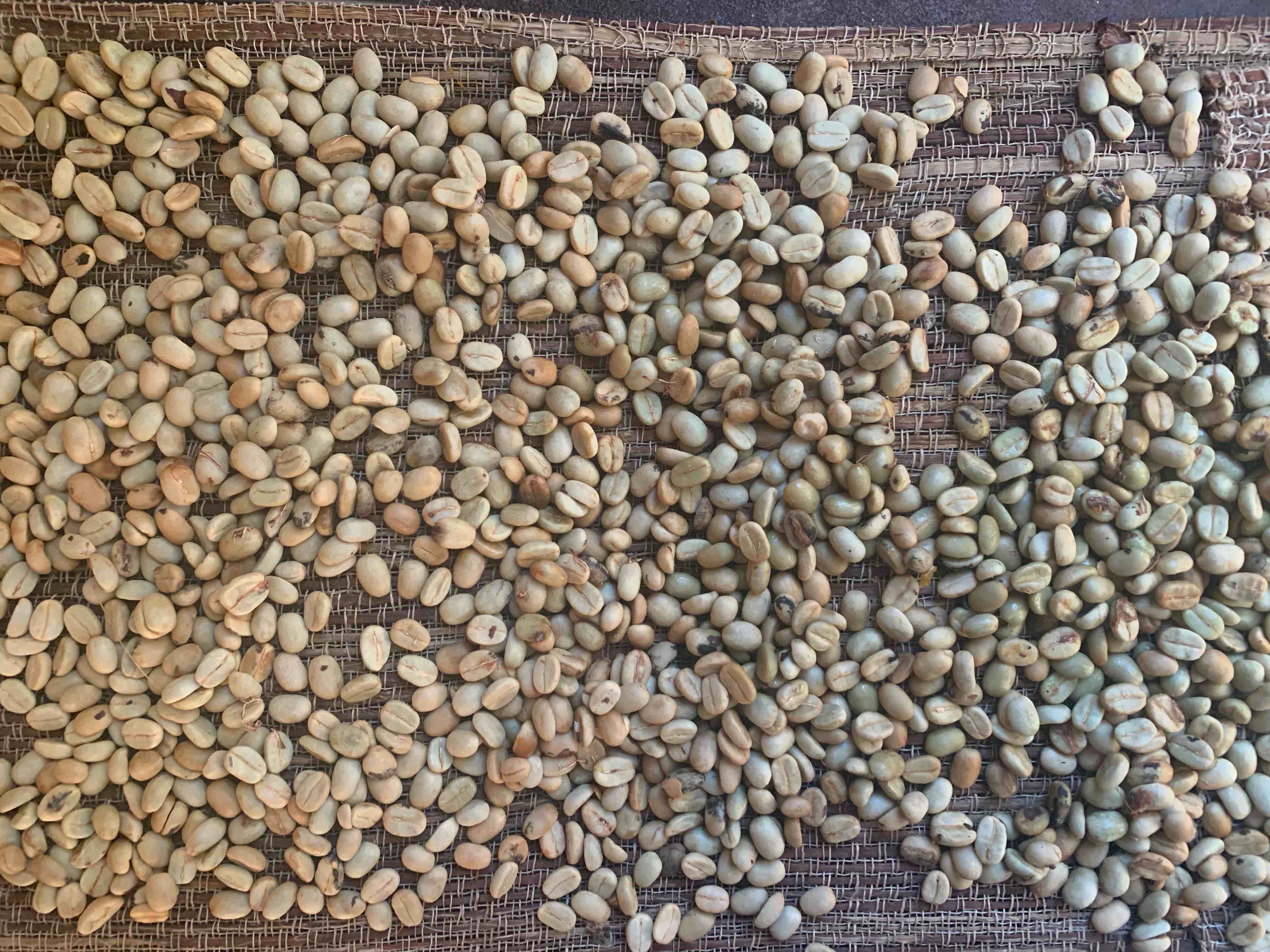
The wet weight of the washed coffee is irrelevant, but for comparison purposes I will note it here and then weigh the coffee again once dried. Although many coffee processing mills dry coffee on large patios with direct exposure to the sun, there is some belief that drying without direct exposure to the sun conveys some advantages to the final taste of the coffee. So, that is what we will do with this coffee. When it is fully dried, I will post again to explain the differences in the coffees process this way, and those processed the other most common way.

From Farm To Yard And Back Again


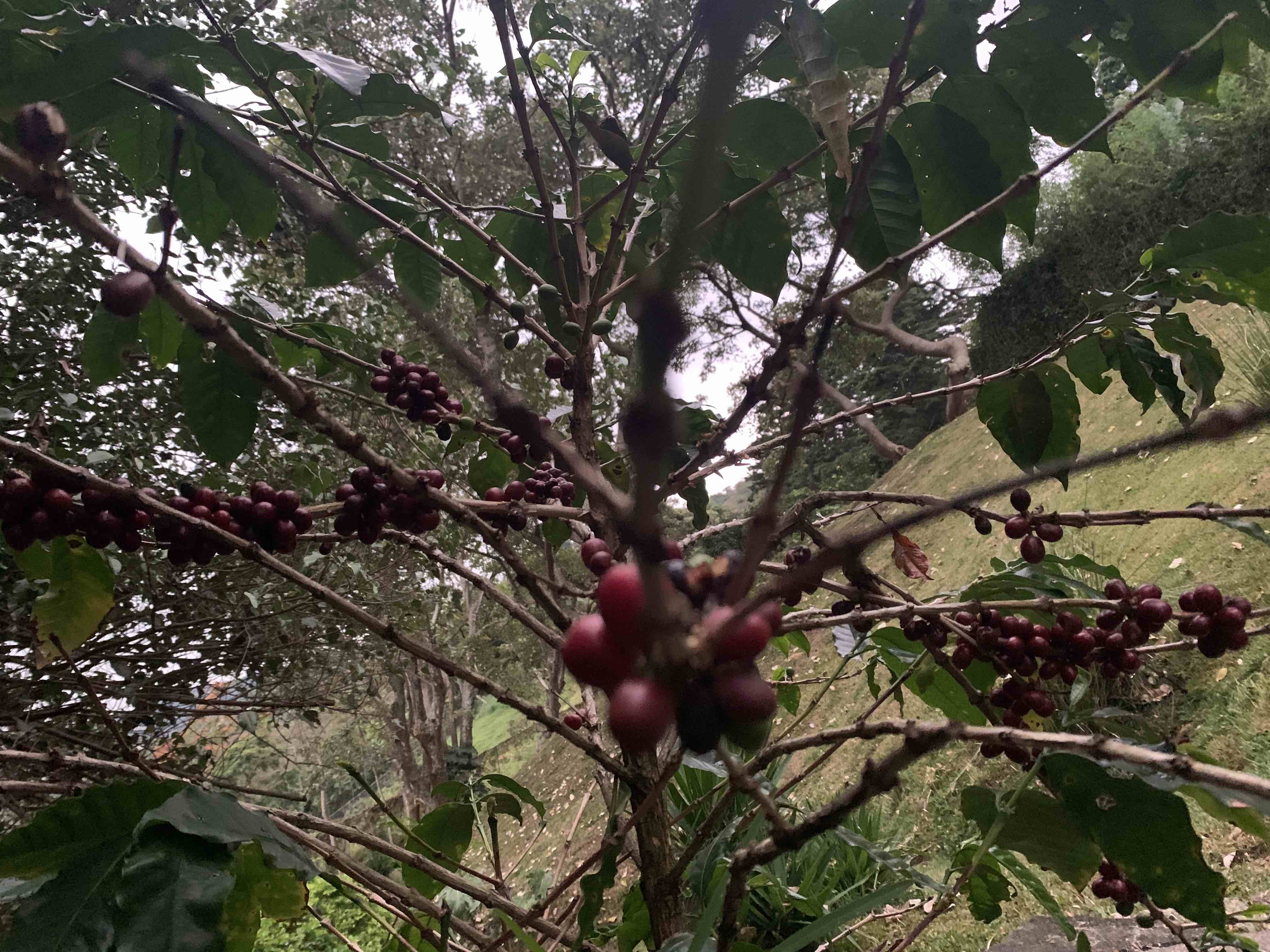
It is time to harvest these cherries from the several coffee trees that held their ground for more than two decades since this land was converted from farm to yard. In our conversion of yard to farm, these ripe cherries will provide the seeds for replanting the land after processing them in the simplest manner. Tomorrow I will show that process.

One More Eel Mystery Revealed

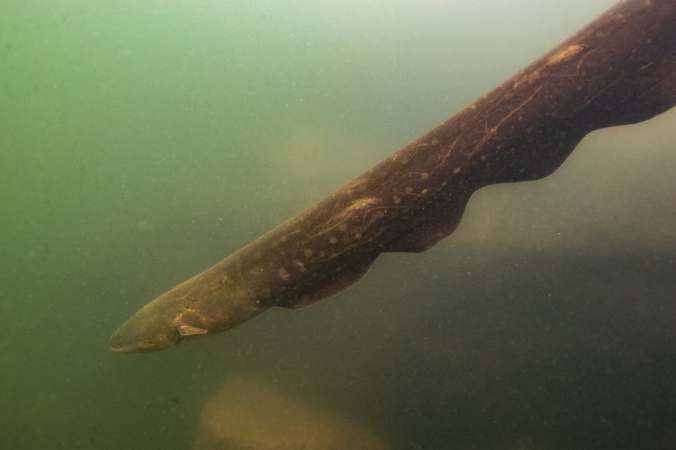
A Volta’s electric eel in the Xingu River in northern Brazil. L. Sousa

Our attention to eels is only occasional, but the mysteries keep coming.  The article contains an amazing video of this pack-hunting phenomenon. Thanks to Annie Roth for this:

Electric Eels Hunt in Packs, Shocking Prey and Scientists

The behavior, used by wolves and orcas to run down fast prey, is rarely seen in fish.

In August 2012, Douglas Bastos, then a graduate student at Brazil’s Instituto Nacional de Pesquisas da Amazônia, was exploring a remote waterway in the Amazon rainforest when he came across a small lake teeming with electric eels. Continue reading
The Mural Is The Thing

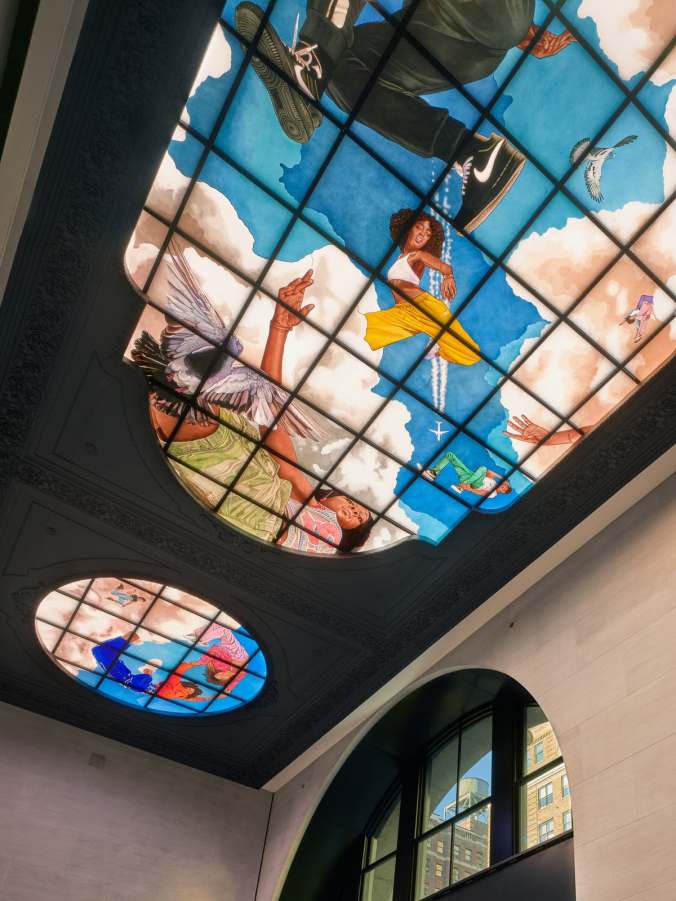
Kehinde Wiley’s backlit, hand-painted, stained-glass triptych called “Go” depicts sneaker-clad break dancers who appear to float across a blue sky. The woman’s pointing finger nods to the Sistine Chapel’s “Creation of Adam.” Andrew Moore for The New York Times

In the mid-1980s we lived a few blocks south of Penn Station, and avoided it studiously. If I could right now, I would rush to see it, thanks to Ian Volner’s essay below. I recommend reading it in full because it is neither puff piece nor fashion statement, but a comment on important issues of our day. Like the two essays I referenced earlier by Casey Cep, this essay makes me believe in the importance of this project, as if the project itself is a public statement of intent. The description of the stained glass mural was more than sufficient, but still I had to find an image of it (the one above is from a review I missed a few weeks ago in the New York Times).

The Moynihan Train Hall’s Glorious Arrival

The new transit hub redeems the destruction of the original Penn Station. Photograph by Mark Kauzlarich / Bloomberg / Getty

The film noir “Killer’s Kiss,” from 1955, is an almost perfect dud. But because it was filmed on location in New York—and because its director was a twenty-seven-year-old photographer named Stanley Kubrick—it’s worth watching for the first scene and the last, which occur in the same place: the passenger concourse of the original Pennsylvania Station in Manhattan, where the protagonist, having escaped from shadowy thugs, waits impatiently for his lover. Kubrick captures the hero from a low angle, and, overhead, the arched trusses holding up the station’s glass-and-iron roof seem impossibly high. The building looks very dirty, but the ambient soot in the air catches the sunshine as it streams down from above, making the light appear more abundant, almost solid. Continue reading