Coffee In Space

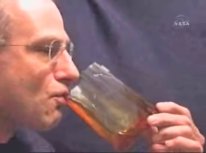
Donald Pettit demonstrated his zero-gravity coffee cup on the space station in 2008. NASA TV

Thanks to Mary Robinette Kowal for this very brief note from history demonstrating how the need for caffeine was the mother of invention:

The first patented invention made in space was a coffee cup.

In November 2008, Donald Pettit wanted to drink his tea and coffee from an open vessel.

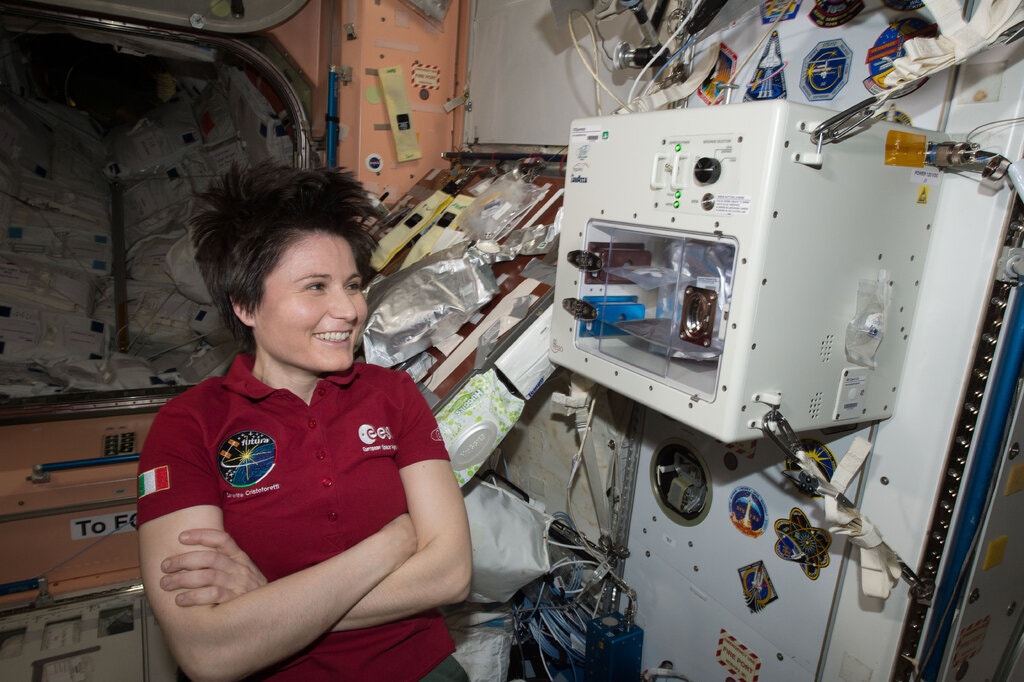
Samantha Cristoforetti, a European Space Agency astronaut, with the new ISSpresso machine in 2015. NASA

While aboard the I.S.S., he tore out a plastic divider from his Flight Data File and used the magic of fluid dynamics to create an open cup. Until then, astronauts drank everything out of a plastic bag with a straw.

We interact with coffee through aroma as much as through taste. In a bag, half of the experience was gone; Dr. Pettit said that he wanted to add “back the dimension of what it’s like to be a human being.” Continue reading

Prospects For Green Hydrogen

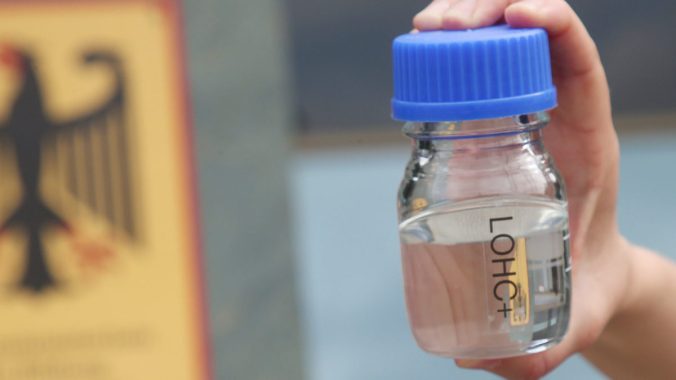
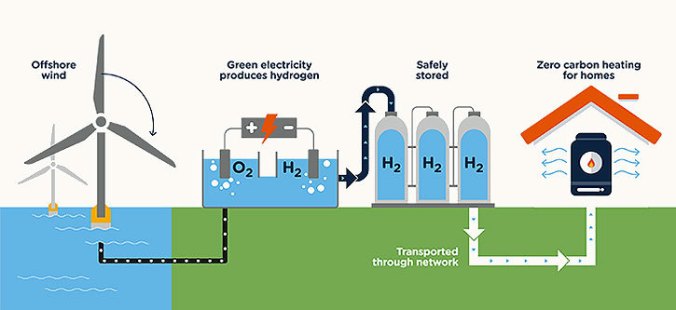
Green hydrogen can be stored in a liquid form. WOLFGANG KUMM/PICTURE-ALLIANCE/DPA/AP IMAGES

Thanks to Yale e360, as always, for news on innovative uses of water related to green energy:

Green Hydrogen: Could It Be Key to a Carbon-Free Economy?

Green hydrogen, which uses renewable energy to produce hydrogen from water, is taking off around the globe. Its boosters say the fuel could play an important role in decarbonizing hard-to-electrify sectors of the economy, such as long-haul trucking, aviation, and heavy manufacturing.

Green hydrogen is produced using renewable energy, making it a CO2-free source of fuel. SGN

Saudi Arabia is constructing a futuristic city in the desert on the Red Sea called Neom. The $500 billion city — complete with flying taxis and robotic domestic help — is being built from scratch and will be home to a million people. And what energy product will be used both to power this city and sell to the world? Not oil. The Saudis are going big on something called green hydrogen — a carbon-free fuel made from water by using renewably produced electricity to split hydrogen molecules from oxygen molecules. Continue reading

Foodways As Tangible & Intangible Heritage

In the 1960s, the Green Revolution placed a premium on high crop yields over factors such as crop diversity and soil preservation. Photograph: Rupak de Chowdhuri/Reuters

2010-2017, from our base in Kerala, India one of our primary activities was food heritage preservation. And it is a constant theme in these pages. Along the way it became clear that both foodstuffs, the tangible things that are used to make food, and foodways, the intangible knowhow for using foodstuffs to make food, are equally worthy of our attention. Thanks to the Guardian for sharing this:

‘Mind-boggling variety’: the food crusaders preserving India’s heritage

A rich range of native crops and seeds is being nurtured in an effort to halt the country’s rapidly vanishing food diversity

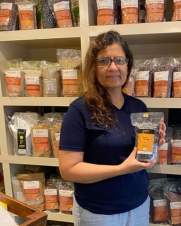
Babita Bhatt left a career in software to launch her own business in natural products grown in the Himalayas. Photograph: Handout

A small army of botanical heritage enthusiasts is spearheading a movement in India for the revival and preservation of the country’s rapidly vanishing food biodiversity by bringing back the rich crop varieties that thrived in the past, but are now on the verge of extinction.

Babita Bhatt, a 43-year-old former software professional, is just one of these crusaders, who are eschewing established careers and fat pay packets to become farmers, activists and entrepreneurs.

Fear of feeding her young daughter foods covered in pesticides was the trigger for Bhatt to move to the hills of Uttarakhand. Trading a steady income for the financial insecurity of an entrepreneur, she launched Himalaya2Home, a self-funded venture, in 2018. Continue reading

For Everyone In The USA

We studiously avoid politics, though we never hesitate to highlight policies we agree with and especially those we disagree with. But today, unlike any day since we started this platform in mid-2011, we cannot not notice that it is a politics-crazy day in the USA. So, we only go as far as noting that, and share what may be an antidote to the craze. The title says it all (click above).

Hornet Hunters of Paris

Urban beekeeping has exploded in Paris, and the honeybees have become an easy target for invasive wasps.

We recently published some good news about a similar invasive insect in Washington State, but it’s important to note that the species on the prowl in Paris is related, but not the same.  Although far less dangerous (tell that to the honeybee prey…) they still are a menace to other insects, especially honeybees. The good news here is that the hornets have been in France for well over a decade, and the human wasp controllers have the skills and tools to combat them, protecting the thriving businesses of urban apiculture.

The Murder Hornet Hunters of Paris

And other tales of hives and honeybees in the City of Light.

“The queen is dead?” a preschool administrator in suburban Paris asked Matthieu Bize, a wasp controller who had come to rid the schoolyard of Asian hornets.

On the ground, a nest was in tatters. Twenty minutes earlier, it had been high up in an ivy-choked tree, where it looked like a jumbo gray-brown balloon. Mr. Bize, 32, had sent a telescopic pole through the canopy, injected a paralyzing white powder into the hornets’ home, and knocked it down. The colony’s larvae, future queens among them, were strewn about. “Nearly finished here,” he said.

In English, the Bize family name is pronounced “bees”; in French, it is “bise” (short for kisses). Dozens of times a day, when Mr. Bize answers his cellphone — “C’est Monsieur Bize” — this gentle phrasing sweetens an otherwise sting-y situation.

For Mr. Bize doesn’t hunt just any pest. One-third of the nests to which he responds belong to a species of dreaded “murder hornet,” a type of wasp that beheads and feeds to its larvae an insect that is very important to, and symbolic of, France: the honeybee.

Beyond the fact that Napoleon chose the honeybee for his logo in the early 19th century (the emperor favored the insect for its tenacity), France is the European Union’s largest agricultural producer, and generally known for pollinator-friendly policies. It is also one of Europe’s major honey trade hubs.

Continue reading

The Language We Use To Know About Plants

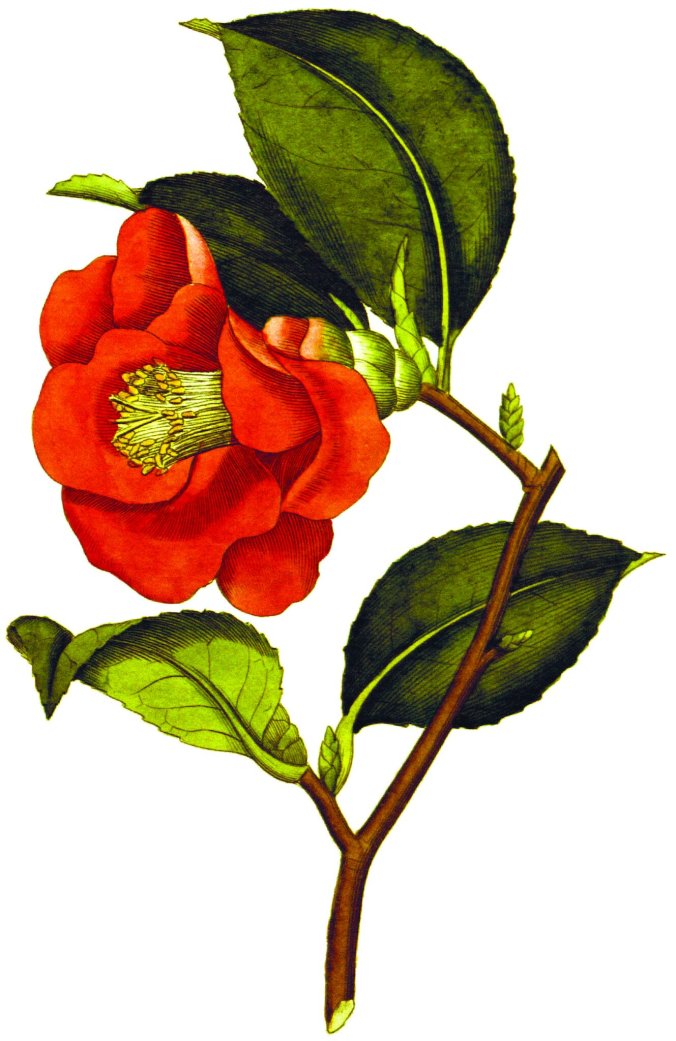
Like Magnolia, Begonia, Iris and a few others, the genus name Camellia has been assimilated into English, rather than having a common name assigned to it. “A handful of iconic garden plants have names that are easy to pronounce and spell, and are so widely used that they’re devoid of dread,” said Ross Bayton, the author of “The Gardener’s Botanical: An Encyclopedia of Latin Plant Names.” Drawing from “The Gardener’s Botanical.”

Thanks to Margaret Roach for this review, whose subtitle–Latin might seem like an obscure, inscrutable language for naming plants. But it can open up the botanical world in ways you can’t imagine–is its central recommendation. Things I can’t imagine, maybe especially when I need to make a Plan B for planting, are a welcome resource these days. As always, if you decide to acquire this book and can do so from an independent bookseller you will be doing the world a favor:
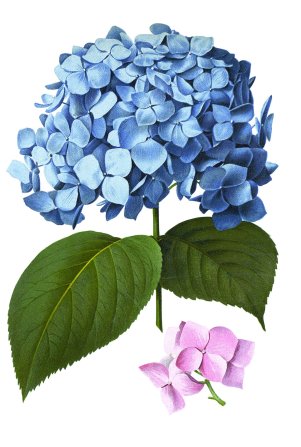
Simply knowing a plant’s genus, such as Hydrangea, doesn’t tell you the whole story. The second word in the botanical Latin binomial — the species name or specific epithet modifying the genus — offers further clues, perhaps describing the plant’s place of origin or its appearance. In the case of Hydrangea macrophylla, it means big leaf. Drawing from “The Gardener’s Botanical.”

The plants are trying to tell us something — if only we’d learn their official language, botanical Latin.

“I am the Allium with just one leaf,” says Allium unifolium. (Get it?)

“I am the juniper that carpets the ground,” says Juniperus horizontalis (whose alternate name, Juniperus prostrata, nails its appearance, too).

And Aster alpinus chimes in: “My ancestors hailed from above the timber line — you know, like, the Alps. I won’t appreciate some sodden, clayey spot in your garden.”

Not all plant names offer such easy clues about traits like appearance, preferred conditions or place of origin. Continue reading

Uncommon Response To An Uncommon Ocean Spill

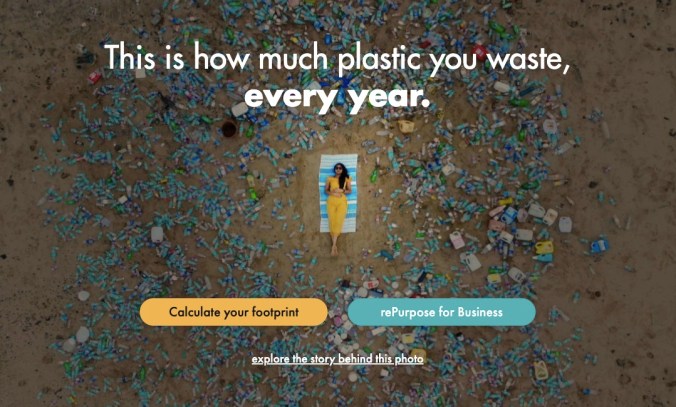
Replica Air Jordans, constructed by the artist Andy Yoder’s from trash gathered on dumpster dives, evoke the Great Sneaker Spill of 1990. Greg Staley

We shared another story years ago about a creative response to an ocean spill, but it was the frequent kind of spill, involving oil. More common in our pages are stories about creative responses to the plague of waste, especially that from plastic. Today’s story is in good company:

If the Shoe Floats

Over the decades, a mass of flotsam from a freighter accident has inspired scientific discovery, urban legend and, now, an art exhibition commemorating the Great Sneaker Spill of 1990.

Mr. Yoder wields a glue gun to create a sneaker replica for an installation that also stands as commentary on environmental destruction. Greg Staley

It seemingly happened so long ago that the event has assumed elements of urban legend — the saga of the Great Sneaker Spill.

Sometimes referred to as the Great Shoe Spill, the tale recounts an event on May 27, 1990, when, during a sudden violent storm in the North Pacific, five shipping containers were swept off the deck of the freighter Hansea Carrier somewhere between Seoul and Seattle.

Of the 40-foot steel boxes that broke loose and crashed into the ocean, one sank to the bottom and four broke open to spill out a stream of contents that included computer monitors, sex toys and 61,280 Nike sneakers destined for America’s basketball courts and city streets.

… cartons from McDonald’s takeout meals … Greg Staley

The incident went on to become a parable of environmental disaster, as well as a red-letter event in the history of sneakerheads. For months, the buoyant flotilla drifted, carried by wind and currents until, in early 1991, beachcombers reported coming upon batches of the sneakers off Vancouver Island in Canada, pushed north on the Davidson Current. That spring, driven southward by opposing breezes, more of them turned up along the coastlines of Washington and Oregon.

… and posters from a David Hockney exhibition. Greg Staley

The Great Sneaker Spill might have gone unremembered had it not been for the enterprising scavengers who washed and resold the flotsam and Curtis Ebbesmeyer, an oceanographer who, alerted to the spill’s existence by his mother, later used it as the basis for a study of little-known currents. Continue reading

Character & Entrepreneurial Conservation

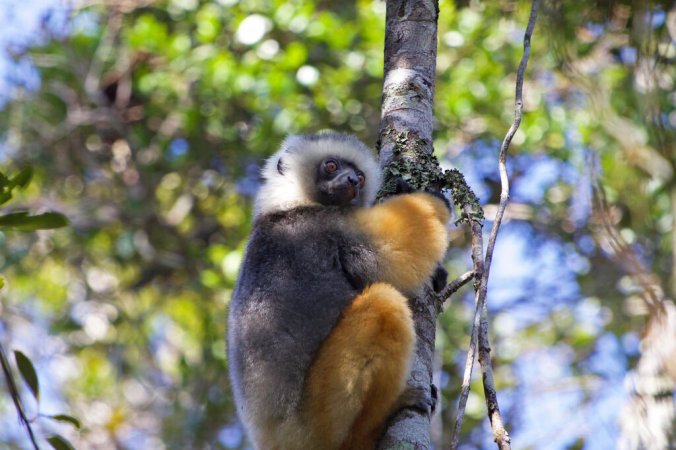
A diadem sifaka, a type of lemur, in northern Madagascar. Erik Vance/The New York Times

Erik Vance, whose work I have not seen in more than three years, caught my attention again this week. Then it was in National Geographic and from my perch in Belize his story had an obvious connection to my location. This story, in the New York Times, is read from a perch in Costa Rica. My perspective, as ever, is influenced by the search for examples of entrepreneurial conservation. I am happy to read about this one full of interesting characters, in a country I have yet to visit, where there is resonance with some of my experience in Costa Rica. Creative people, knowing that the country’s public conservation commitments have their limits, achieve remarkable conservation goals through private reserves that add to the public good. The section describing a small park with big potential could have also been written about Seth’s workplace last year:

In Madagascar, Endangered Lemurs Find a Private Refuge

Climate change is shifting the habitats of endangered species and requiring conservation scientists to think outside traditional park boundaries.

Sambava, Madagascar — Madagascar has always been one of the best places on Earth to study the natural world. Continue reading

From Seedlings To Saplings in 90 Days

PoroSeedlings

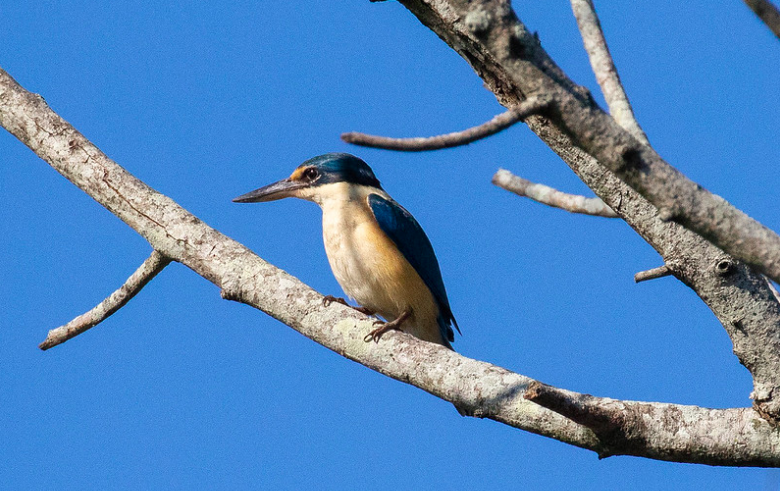
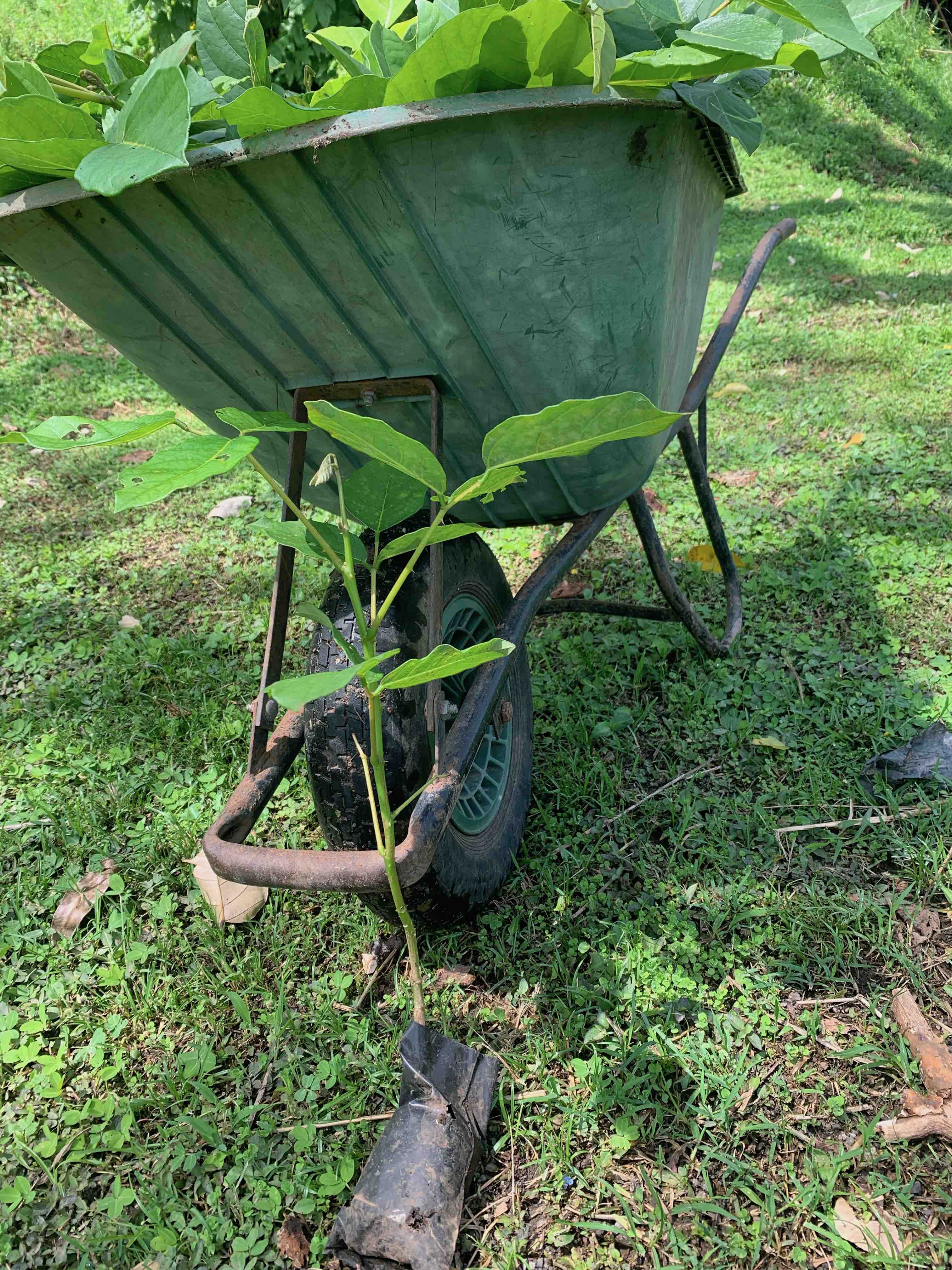
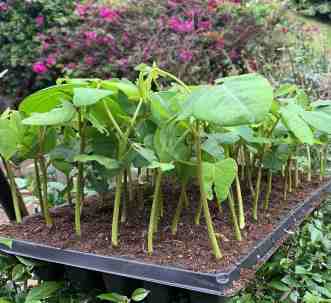
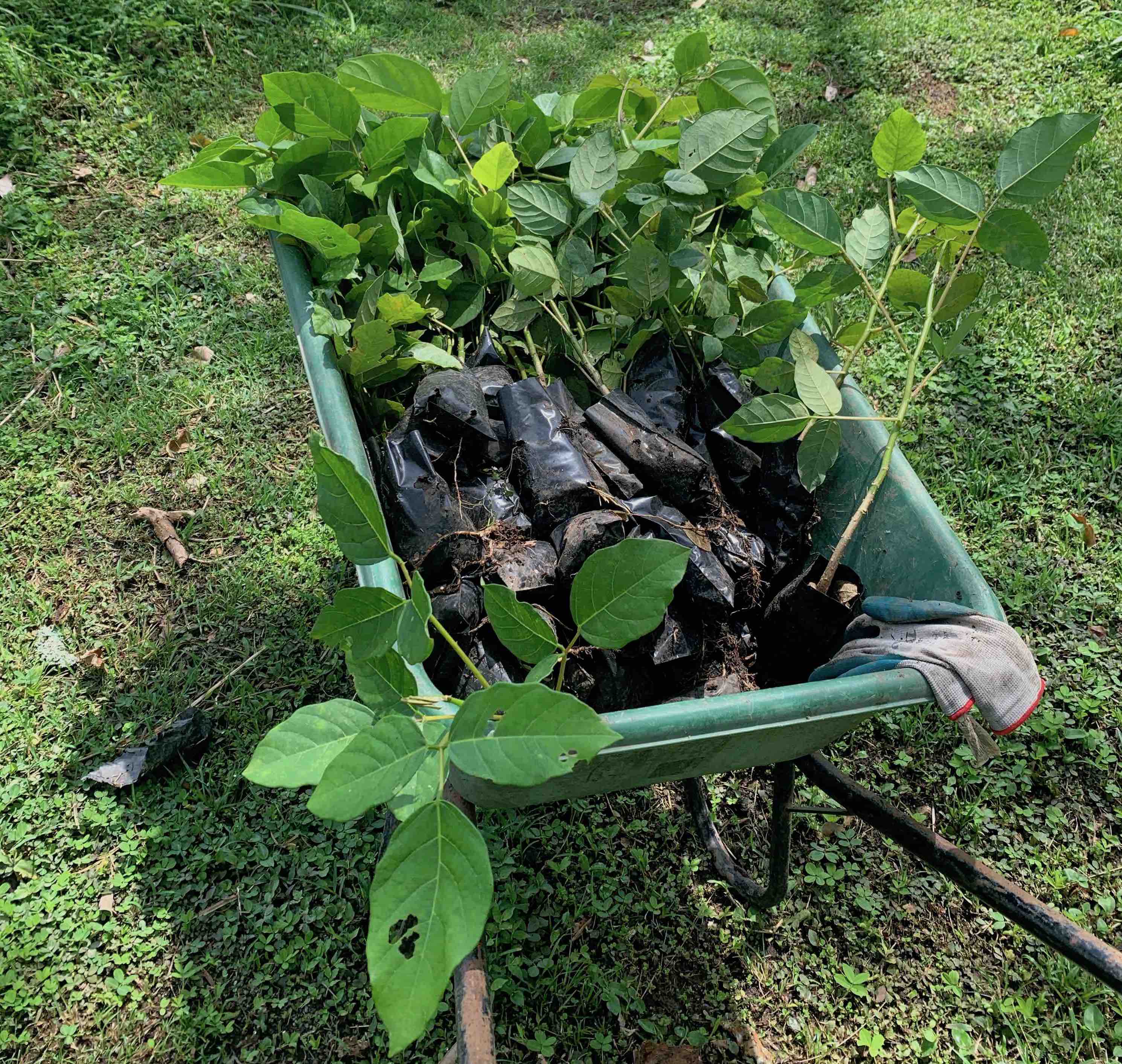
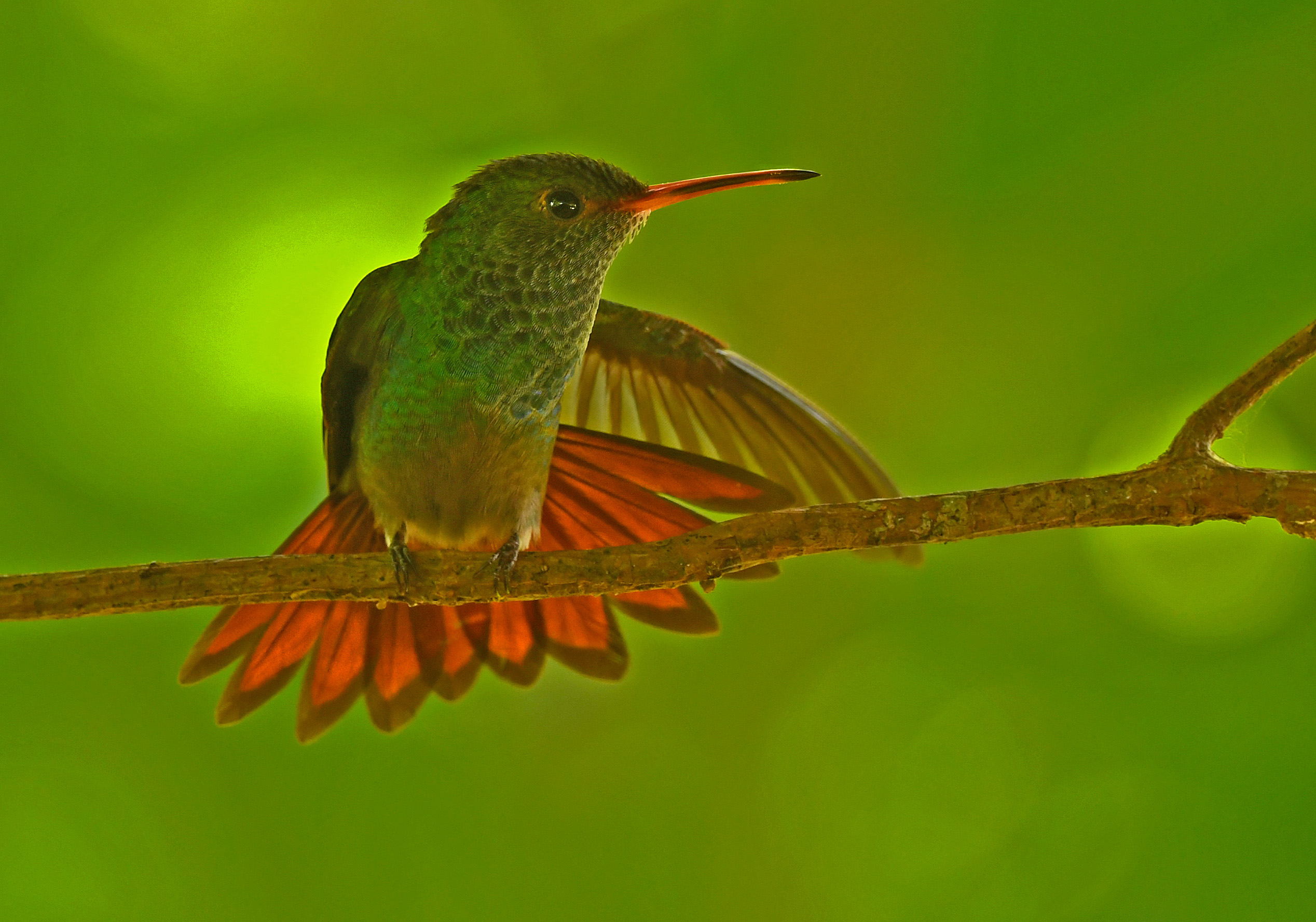
Last mention of poro tree seedlings was three months ago. We are regenerating bird habitat by restoring a portion of an erstwhile coffee estate.

Those six-inch seedlings have become two-foot saplings over the three months since that post. Yesterday we started planting those. 60 so far.