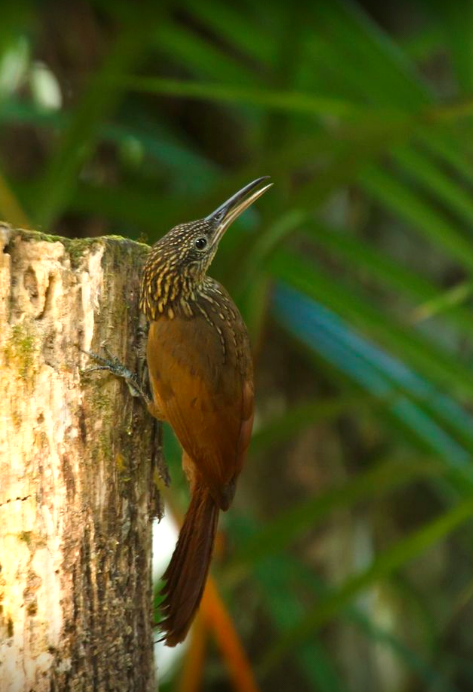
Macaw Lodge, Costa Rica
Macaw Lodge, Costa Rica
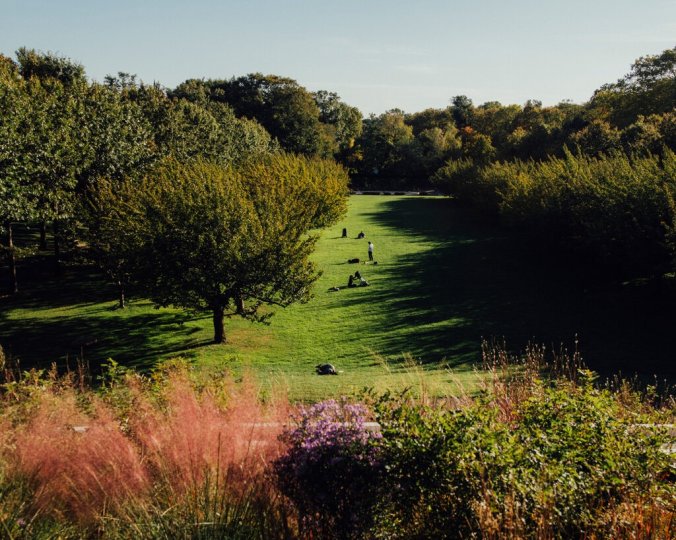
A view of the Cherry Esplanade from the top of the Robert W. Wilson Overlook at the Brooklyn Botanic Garden. George Etheredge for The New York Times
Beyond books and other published material, New Yorkers have plenty of places to see natural spectacles, places where nature can be better understood in an otherwise concrete jungle. Ecological ethos describes the new feel of the intimate 52 acres in one of those places:
Brooklyn Botanic Garden Turns Over a New Leaf
A wild meadow and woodland ‘ruin’ are now on exuberant display. The new, ecologically minded garden boasts shaggy clouds of vegetation.
Lavender asters burst through ground-hugging meadow species at the overlook. George Etheredge for The New York Times
Only a skeleton staff at the Brooklyn Botanic Garden witnessed the blizzard of cherry blossoms scattered by spring breezes during the pandemic shutdown. Delicate blooms of wisteria tumbled over pergolas and plump roses unfurled with no appreciative fans to say “Oooh.”
The garden reopened in August for a limited daily number of socially distanced visitors. Now, as fall’s vibrant, showy display begins, meadow and woodland gardens completed at last winter’s onset are finally coming into their own. They are the culmination of a yearslong evolution, as the garden turns over a new leaf with the selection in September of Adrian Benepe, a former commissioner of the New York City Department of Parks and Recreation, as the new president and chief executive. Continue reading
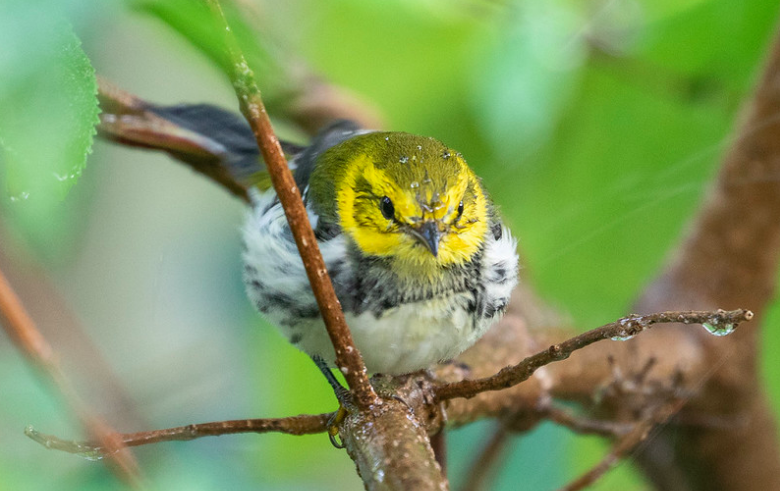
Williamson, TX
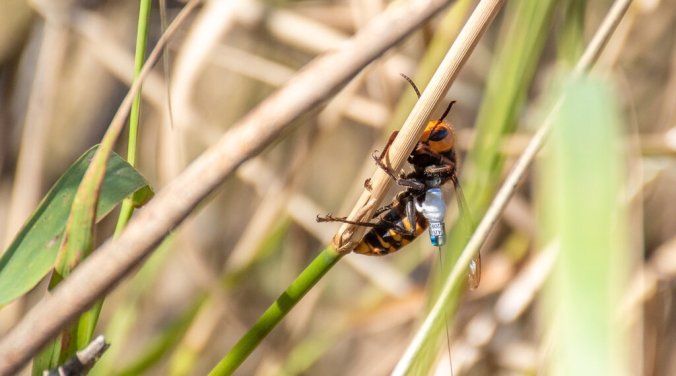
Hornets with radio trackers attached led entomologists to the nest. Washington State Department of Agriculture
If you noted the danger five months ago, and find this topic newsworthy, you know how important it was to find the nest. Finally, after an exhaustive search, they found it and it seems we should count this as good news, especially in a year like 2020:
Murder Hornet Nest, First in U.S., Is Found in Washington State
Officials said they planned to destroy the nest in Blaine, Wash., on Saturday before the voracious Asian giant hornets could multiply and lay waste to bees.
Like detectives closing in on a fugitive hide-out deep in the woods, officials in Washington State announced on Friday that they had located the first murder hornet nest in the United States, tucked in a tree hollow near the Canadian border.
The officials said they planned to destroy the nest in Blaine, Wash., on Saturday before the voracious Asian giant hornets could multiply and begin laying waste to bees that are vital to the survival of the region’s raspberries, blueberries and other crops. Continue reading
Macaw Lodge, Costa Rica

Europe’s main farming lobby group says it is “cultural hijacking” to place a vegan burger, right, in the same category as a beef burger. Carsten Koall/EPA, via Shutterstock; Daniel Roland/Agence France-Presse — Getty Images
Since 2011 we have looked far and wide for information as well as inspiration related to our primary interest, entrepreneurial conservation. Sometimes, instead of inspiration we find its dark counterpart, and the result is exasperation. Reducing consumption of animal protein has been just one topical focus in our pages. We have been inspired by the innovations around meat alternatives.
We know that what’s in a name is important to how we think about a product. How we should refer to plant-based meat alternatives is one of those cases. Thanks to Isabella Kwai, today we see some potentially exasperating news from a region of the world we normally are inspired by, not least for its regulatory muscle:
E.U. Debates Whether a Veggie Burger Is Really a Burger
The European Parliament is voting on proposals that would ban products without meat from being labeled burgers or sausages, drawing ire from environmentalists and manufacturers.
LONDON — When is a burger not a burger? When it contains no meat, according to a divisive proposed amendment on which the European Parliament is scheduled to vote on Friday, part of a set of measures that would ban products without meat or dairy from using associated terms in their labeling. Continue reading
Costa Rica
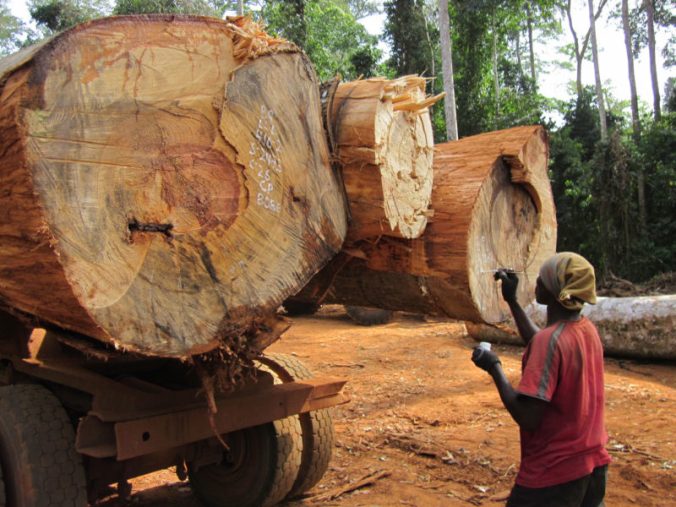
A local logger marks wood for transit to a milling facility in Ghana. MARIEKE WIT/TROPENBOS INTERNATIONAL
There was a time, just a few decades ago, when small, nimble groups of loggers in remote tropical forest areas–including here in Costa Rica–were considered a serious threat. They knew the lay of the land because they were local, and could get in and out of primary forests with valuable tree trunks, often without being detected. Thanks to reporting by Fred Pearce we can see where and how perspective has changed on this part of the forestry value chain:
How Small-Scale Loggers Can Help Save Africa’s Tropical Forests
Small-time loggers providing timber to local villages have long been seen as a threat to forests in Africa. But that view is changing, as evidence mounts that these communities can be better forest protectors than the governments that are sanctioning large-scale commercial operations.
The man with the chainsaw paid the farmer $50, as his gang climbed a hillside in western Ghana. The gang passed coffee fields until they came to a giant hardwood tree. The farmer, who was pleased to have the money in his back pocket, watched as as the gang cut down the tree and used the chainsaw to dismember it deftly into quarters and then into crude planks. Continue reading

Eaglenest Wildlife Sanctuary, Arunachal Pradesh

A dust cloud over the Bovina Cattle Company’s feed yard near Bovina, Texas.
As we all hopefully make progress on our reduction of meat consumption, the science writer Henry Fountain and George Steinmetz (photographs and video) add to our understanding of how cattle are raised now, and what could change to reduce the carbon footprint:
Belching Cows and Endless Feedlots: Fixing Cattle’s Climate Issues
The United States is home to 95 million cattle, and changing what they eat could have a significant effect on emissions of greenhouse gases like methane that are warming the world.
HAPPY, Texas — Randy Shields looked out at a sea of cattle at the sprawling Wrangler Feedyard — 46,000 animals milling about in the dry Panhandle air as a feed truck swept by on its way to their pens. Continue reading
male – Baja California Sur, Mexico

Mysterious in effect, the Louvre is delightfully mysterious in history, too. Illustration by Vincent Mahé

Audio: Listen to this article.To hear more, download Audm for iPhone or Android
If you favor essayists, you read essays on topics far afield, as well as more familiar topics like this one, at least as much for the quality of writing as for the topic. You can hear (click above), or read (below) this as a book review, but as in any well-crafted essay there are also ideas–in this case much more broadly related to art and relics and museums–that go beyond the title subject. My favorite two-liner, about half way through this essay, caused me to pause and smile:
The Parthenon Marbles are part of a still existent if damaged architectural whole, and the splendor of the Acropolis Museum is that it looks directly out on the original site. They ought to be returned.
I happen to agree. Others may not. But the essayist makes clear how this statement relates to other examples of plundering that would not be considered acceptable by most people today, as well as plundering that we have somehow come to accept as part of being civilized. Legitimacy is a key point in this essay, which makes it all the more frustrating when the online publication of the essay directs you to the most monopolistic option of where to buy the book being reviewed:
…Mysterious in effect, the Louvre is delightfully mysterious in history, too, as James Gardner shows in “The Louvre: The Many Lives of the World’s Most Famous Museum” (Atlantic Monthly Press). No one knows why the Louvre is called the Louvre. You would think that it has some relation to “Lutetia,” the Roman name for Paris, or the like, but not a bit; the origin of the name is as opaque as the French love of Johnny Hallyday. Even so, the name has stuck through the site’s transition from citadel to showplace. The continuity the Louvre represents is the continuity of the French state. Gardner relates the long story of the Louvre, starting around the thirteenth century, when it was simply a castle, through its elevation as a palace, and then, in the seventeenth century, its expansion into service as an office building for French royalty. Continue reading
Costa Rica
 In these pages the impacts of the pandemic have not been a regular feature, but since early on it was clear we would be feeling the impact for a long time. Each passing week has given us reason to think about how we can adjust what we do. Click the image to the right for a conversation with an illustrator who captures that spirit of adjustment in his own context. At the end of the conversation you can see past cover illustrations that have themes related to bicycles. Not a bad way to start a new week:
As covid-19 infection rates have risen in New York, and the city braces for winter, it can be hard to see a reason for optimism. For his latest New Yorker cover, R. Kikuo Johnson finds one: the welcome surge of cycling across the boroughs. We recently talked to Johnson about biking, working from home, and one of his favorite views in the city.
This is such a lovely image amid dark times. Was there a moment when inspiration struck?
When I think of New York City, the first image that comes to mind is the view from the Williamsburg Bridge. From the top, you see the whole city at once: skyscrapers, graffiti, at least four bridges, the Statue of Liberty, sweating crowds in a rush. Continue reading
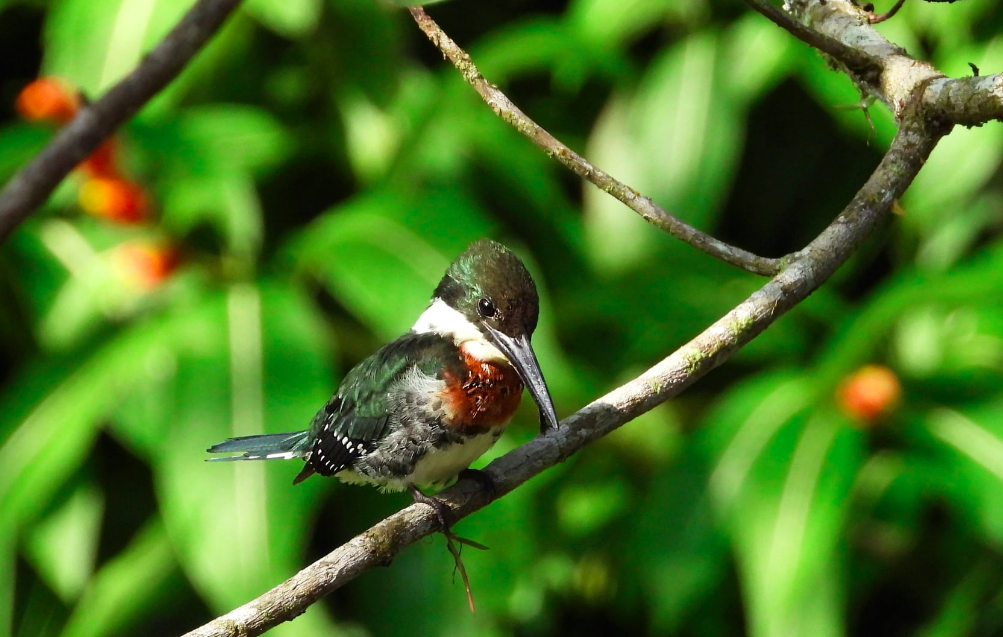
Macaw Lodge, Costa Rica
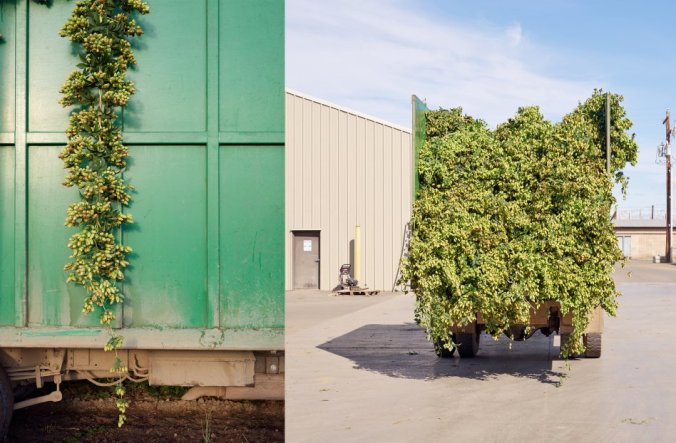
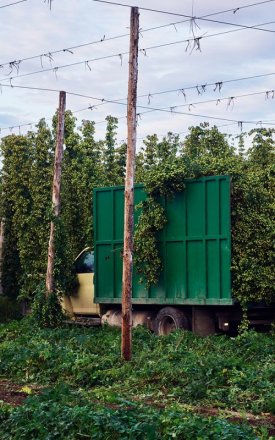
Trucks loaded with hops (Photo: Spencer Lowell)
Outside Magazine offers this primer on the ascendence of one of the key ingredients in one of the oldest fermented beverages:
How Hops Became the Star of American Brewing
The craft beer revolution turned the tall cousin of cannabis into a breakout ingredient, infusing your brew with flavors and aromas that range from stone fruit to barrel oak. Christopher Solomon hits the road to understand why hop madness isn’t over yet—and why brewers and plant breeders are always on the prowl for the next big thing.
Hop harvesting in Washington State’s Yakima Valley (Photo: Spencer Lowell)
The 2019 American Hop Convention, held in January in Monterey, California, was part agriculture conference and part old-home week. Almost all of the nation’s beer hops—and roughly 40 percent of all hops in the world—are grown by about 75 farms in Washington, Oregon, and Idaho, many of them owned by families who have farmed hops for four or five generations. At the convention, everybody seemed to know everybody. This gave a loose feel to the proceedings, which recognize and celebrate the fact that only one thing can be done with the crop the conventioneers produce: mix it with malt and water, ferment the liquid, and drink the beer you’ll get after a few weeks. During afternoon coffee breaks, everybody cracked a cold one.
That wasn’t the only reason for the festive mood. The past 15 years have witnessed a spectacular surge in craft brewing in the United States; more than 85 percent of Americans now live within ten miles of a brewery. U.S. beer culture, once a punchline, has become the most vibrant on earth.
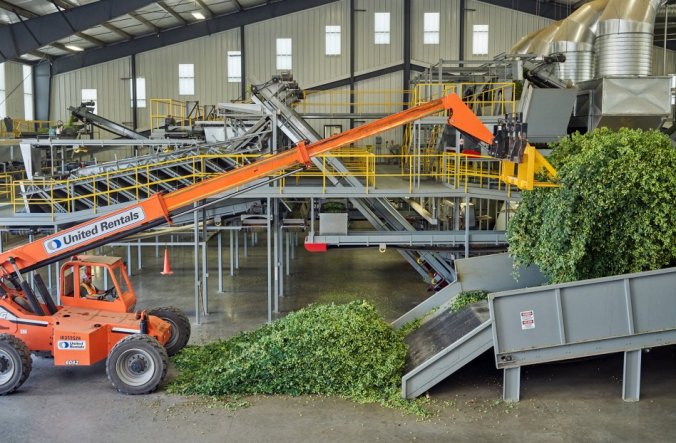
Hop bines being loaded into a machine that shakes out the aromatic cones (Photo: Spencer Lowell)
The hop industry has been a beneficiary and driver of this renaissance. Hops once were considered a drab ingredient, tossed in mainly to preserve the beer, thanks to antibacterial properties of the resins found in hop flowers, which are also called cones. Today, hops are the star of American brewing. Continue reading
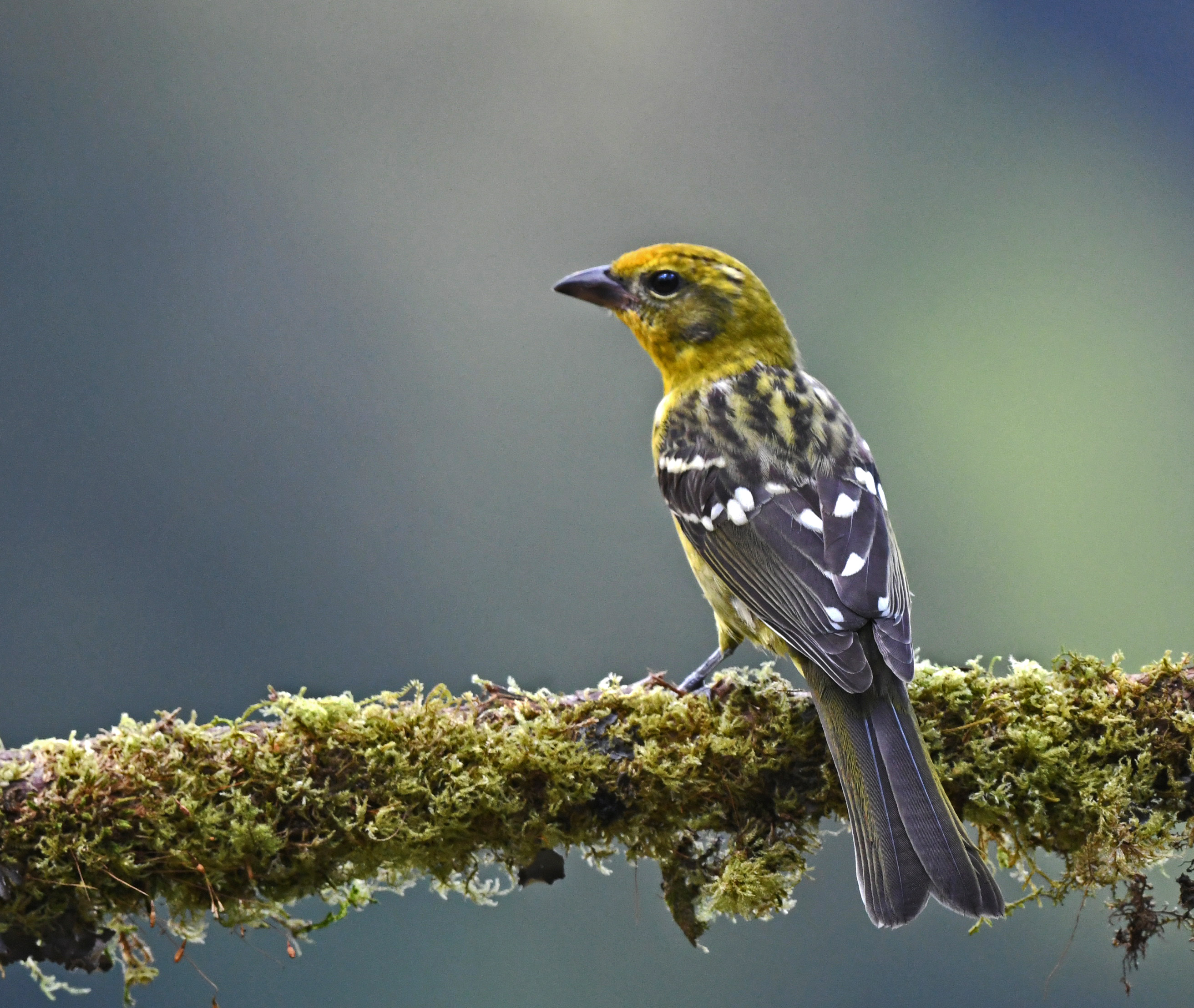
female – San Gerardo de Dota, Costa Rica

You had us at hello. By the time we saw welcome, we were already in:
Welcome to the Community!
If you’re a fan of national parks, you’ve come to the right place. Heck, if you’ve got even a fleeting curiosity about national parks, you’ve come to the right place. It doesn’t matter if you’re an ardent backpacker, a casual day-tripper, a glamper, or a full-time RVer, national parks are for everyone, and Hello Ranger is here to celebrate you all. Continue reading
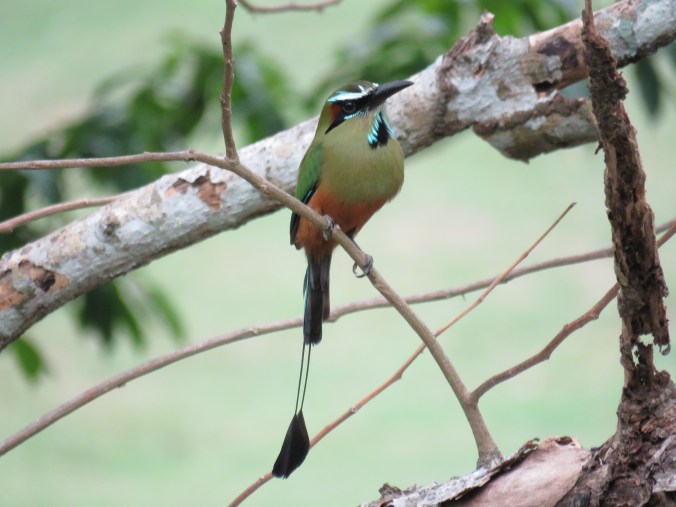
Marriott Los Sueños, Costa Rica
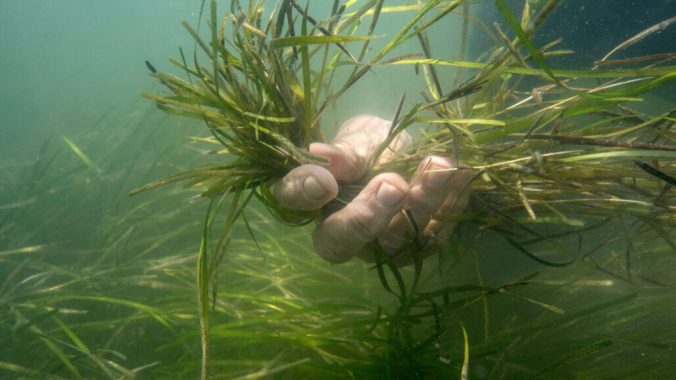
Seagrass beds off Virginia’s Eastern Shore went from barren sediment to abundant meadows in 20 years in the world’s largest restoration project. credit: JAY FLEMING
Thanks for Science News for this wonderful example of successful ecosystem restoration.
How planting 70 million eelgrass seeds led to an ecosystem’s rapid recovery
The study is a blueprint for capitalizing on this habitat’s capacity to store carbon
In the world’s largest seagrass restoration project, scientists have observed an ecosystem from birth to full flowering.
As part of a 20-plus-years project, researchers and volunteers spread more than 70 million eelgrass seeds over plots covering more than 200 hectares, just beyond the wide expanses of salt marsh off the southern end of Virginia’s Eastern Shore. Long-term monitoring of the restored seagrass beds reveals a remarkably hardy ecosystem that is trapping carbon and nitrogen that would otherwise contribute to global warming and pollution, the team reports October 7 in Science Advances. That success provides a glimmer of hope for the climate and for ecosystems, the researchers say.
The project, led by the Virginia Institute of Marine Science and The Nature Conservancy, has now grown to cover 3,612 hectares — and counting — in new seagrass beds. By comparison, the largest such project in Australia aims to restore 10 hectares of seagrass.
The results are “a game changer,” says Carlos Duarte. Continue reading

 Organikos