The Slow Ways App, For Right Of Way Walkers

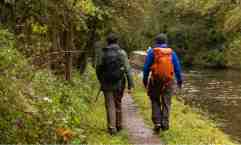
The Slow Ways founder, Daniel Raven-Ellison (right) walks with the Guardian’s Patrick Barkham as they verify a route between Congleton and Macclesfield. Photograph: Fabio De Paola/The Guardian

The right of way is a theme we love, and now there is a technology to assist our pursuit of those rights, at least in one country.

Our thanks to and the Guardian for their coverage of this development:

Walk the walk: the app mapping 140,000 miles of public right of way

Slow Ways was set up during the pandemic when frustrated locked-down walkers drew up more than 9,000 walking routes across Great Britain. Photograph: Fabio De Paola/The Guardian

Community-based, Slow Ways has verified 60% of a network of pedestrian-friendly routes across Great Britain

I meet up with Daniel Raven-Ellison, the brains behind the Slow Ways walking network, in the darkness of a drizzly dawn at Kidsgrove railway station in Staffordshire. Our mission? To walk and verify the final 17-mile (27km) link in the route between Birmingham and Manchester. Continue reading
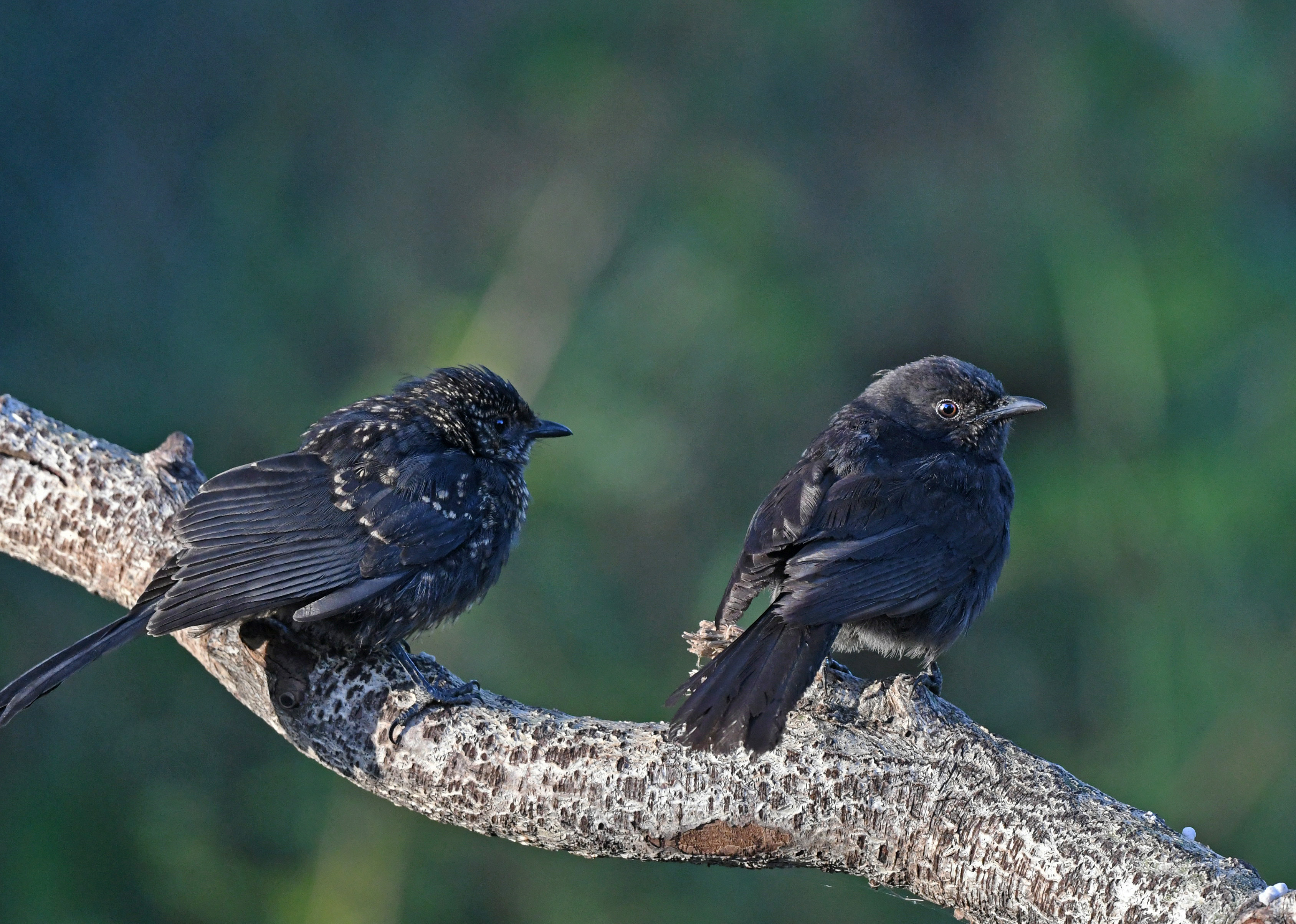
Understanding Seawalls, Their Promise & Their Limits

Daniel A. Gross does some heavy lifting on behalf of all of us, especially those in coastal areas. This technology is foreign to most of us, except the Dutch. We can hope all we want, but now might be a good time to start thinking more seriously about whether this technology is fit for the task:

Can Seawalls Save Us?

Huge coastal barriers could protect the world’s cities. But they’ll have unexpected costs.

Pacifica, California, just south of San Francisco, is the kind of beachfront community that longtime residents compare to Heaven. One of its streets is called Paradise Drive; local fishermen brag that Pacifica Pier is among the state’s best places to catch salmon, striped bass, and crab. Every few years, a superbloom blankets the coast with golden wildflowers. When the sun cuts through the region’s famous fog, the sky sometimes glows, as in a Turner painting.

Some of Pacifica’s most dramatic views could be found on Esplanade Drive, where mid-century developers built bungalows on top of a cliff. For almost fifty years, residents gazed out from their back yards to see whales splashing in the Pacific. Then, in 1998, a group of homeowners gathered to say goodbye. “I cannot express how spectacular it has been living here,” one of them, Joe Parker, said at the time. “I’ve seen dolphins out there. I recognize all the seabirds.” Beverly Axelrod, who had spent fourteen years on Esplanade Drive, recalled how her ocean view had “healed everything.” Continue reading

Heirloom Captures Carbon

Heirloom’s plant in Tracy, Calif., pulls carbon dioxide from the air so it can be sealed permanently in concrete. Jim Wilson/The New York Times

We have been waiting for this day to arrive:

In a U.S. First, a Commercial Plant Starts Pulling Carbon From the Air

The technique is expensive but it could help fight climate change. Backers hope fast growth can bring down costs.

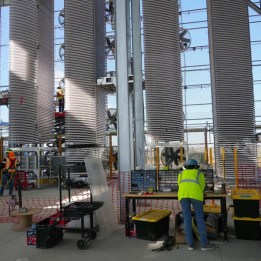
In an open-air warehouse in California’s Central Valley, 40-foot-tall racks hold hundreds of trays filled with a white powder that turns crusty as it absorbs carbon dioxide from the sky.

The start-up that built the facility, Heirloom Carbon Technologies, calls it the first commercial plant in the United States to use direct air capture, which involves vacuuming greenhouse gases from the atmosphere. Continue reading
Industrial Meat, Fascinating & Disgusting

The “cultivation room” at Upside Foods in Emeryville, California. The company is one of two now approved to sell lab-grown meat to U.S. consumers. Upside Foods

We appreciate Garth Brown writing in New Atlantis for this rather disgusting explanation of one big part of our industrial meat system:

Oiling the Chicken Machine

Queasy about lab-grown meat? Too bad — you’ve pretty much been eating it for decades.

In her community, it’s common knowledge that my mom is a soft touch when it comes to chickens. She maintains a motley flock of adoptees — backyard hens whose owners have moved, scrawny layers too old to be worth their feed, the pets of children who never much wanted them in the first place. She knows most of the people who donate the birds, or at least knows how they connect to her capacious social circle. Continue reading
Starbucks Puzzles

Hannah Rosenberg/Sun File Photo. Cornell will be terminating its partnership with Starbucks following a recent National Labor Relations Board ruling.

While lecturing on social enterprise recently, as I have done each semester in recent years, I learned the following news from a student and found the article below in the University’s newspaper to explain it:

Cornell to End Partnership With Starbucks by June 2025

Cornell will be terminating its partnership with Starbucks no later than the expiration of its current contract, Student Assembly President Patrick Kuehl ’24 announced in an Aug. 16 email to the student body. The contract is set to expire in June 2025…

Thanks to Jonathan Mong at the Cornell Daily Sun for that clear explanation, worth reading in full if you care about the coffee business, and/or the basics of labor law in the USA. Bravo to the University for its consistent stand upholding those labor laws. Starbucks, a company I once admired without reservation, now primarily puzzles and frequently disappoints me:

Starbucks increases U.S. hourly wages and adds other benefits for non-union workers

Starbucks is increasing pay and benefits for most of its U.S. hourly workers after ending its fiscal year with record sales. Continue reading

Endangered Eating By Sarah Lohman

The author, culinary historian Sarah Lohman, came to our attention at the time her previous book was being published, and we are happy to see more of her work. From her own website:

American food traditions are in danger of being lost. How do we save them?

Apples, a common New England crop, have been called the United States’ “most endangered food.” The iconic Texas Longhorn Cattle is categorized at “critical” risk for extinction. Unique date palms, found nowhere else on the planet, grow in California’s Coachella Valley —but the family farms that caretake them are shutting down…

And the reviews suggest that the book is every bit as good as the author had hoped it would be.

Cruise Ships Constantly Careless

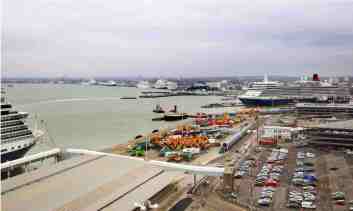
Cruise ships docked in Southampton, where an analysis of ship schedules found most did not make use of onshore power facilities. Photograph: Chris Ison/PA

We have pointed in this direction plenty of times over the years, so by now you might say it is caveat emptor:

Cruise ships polluting UK coast as they ignore greener power options

Most liners rely on marine gas oil when docked, despite claims they reduce emissions by plugging into low-carbon electricity

Cruise ships visiting Britain are frequently failing to plug into “zero emission” onshore power and instead running their engines and polluting the local environment with fumes. Continue reading

Nature Conservancy 2023 Global Photo Contest Winners

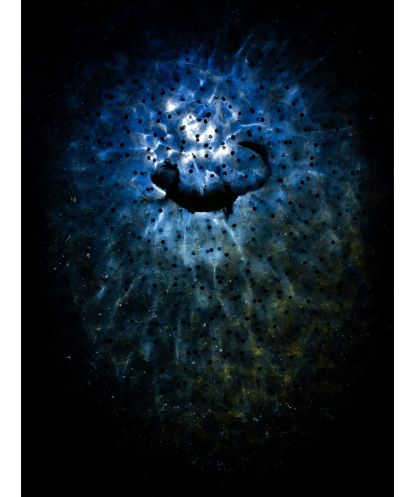
BETWEEN THE STARS I photographed this moment underwater. I was able to do it by putting my camera in an underwater case, attaching it to a metal weight and placing it all under the eggs. I waited nearby for it to be dark, and when the newt appeared, I lit it with an LED lamp. I started the camera with a home-made wired remote release. It turned out 1-2 sharp pictures. © Tibor Litauszki/TNC Photo Contest 2023

We appreciate the break from the news of the day:

The Nature Conservancy is proud to announce the winners of the 2023 photo contest.

Your images gave voice to nature and showed us the power and peril of the natural world.

The following photos submitted to our 2023 photo contest captivated our judges the most.

This image is a clear display of the patience, coincidence, technical adaptability and composition that earns top choice in the competition. Well-constructed and simply beautiful. The outward simplicity of the photo almost makes it easy to forget how much waiting is required to get a shot like this. The high-speed nature of the subject means you have to be dialed in perfectly when the shot arrives.
— Cole Sprouse, Celebrity Guest Judge

We are happy to see Alan Taylor‘s photography in the mix this year:

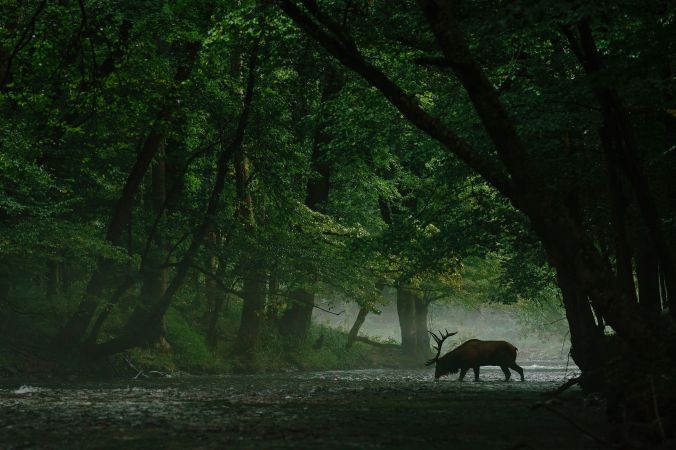
A COOL DRINK A bull elk stopping in the Oconaluftee River in the Great Smoky Mountains National Park to a refreshing drink © Alan Taylor/TNC Photo Contest 2023

This year the categories are: Continue reading

Save The Wave In Iceland

Surfers believe that construction work at Þorlákshöfn could ruin conditions. Photograph: Sigga Ella/The Guardian

Female surfer and business co-owner from Reykjavík, Elín Kristjánsdóttir Photograph: Sebastien Drews

Protecting waves from the effects of development, for surfing, has featured in two previous posts. Those were in locations more commonly associated with the sport. Iceland has featured in our pages many more times over the years, not once in relation to waves or surfing. Until today:

Improvements in wetsuit technology mean surfers can enjoy the waters in Iceland all year round. Photograph: Sigga Ella/The Guardian

Icelandic surfers fear port development will ruin ‘perfect point break’

Volcanoes, northern lights and midnight sun are all on offer at this haven, which locals want to preserve

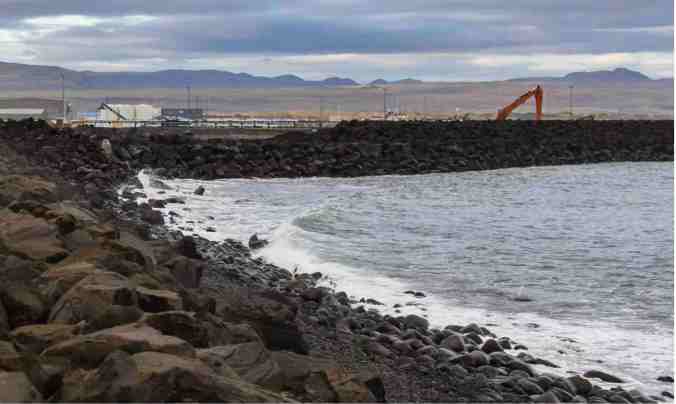
Look at this wave,” says Mathis Blache, pointing to the sea from the shore’s black rocks as a swell rolls in. “It’s just perfect.” Despite air and water temperatures in the single digits, the 27-year-old student and surfer points out two other surfers – and a couple of seals – delighting in the conditions at Þorlákshöfn in south-west Iceland.

This spot, where surfers can enjoy either the midnight sun or the northern lights depending on the time of year, has in recent years become the heart of Iceland’s rapidly growing surfing community. Continue reading